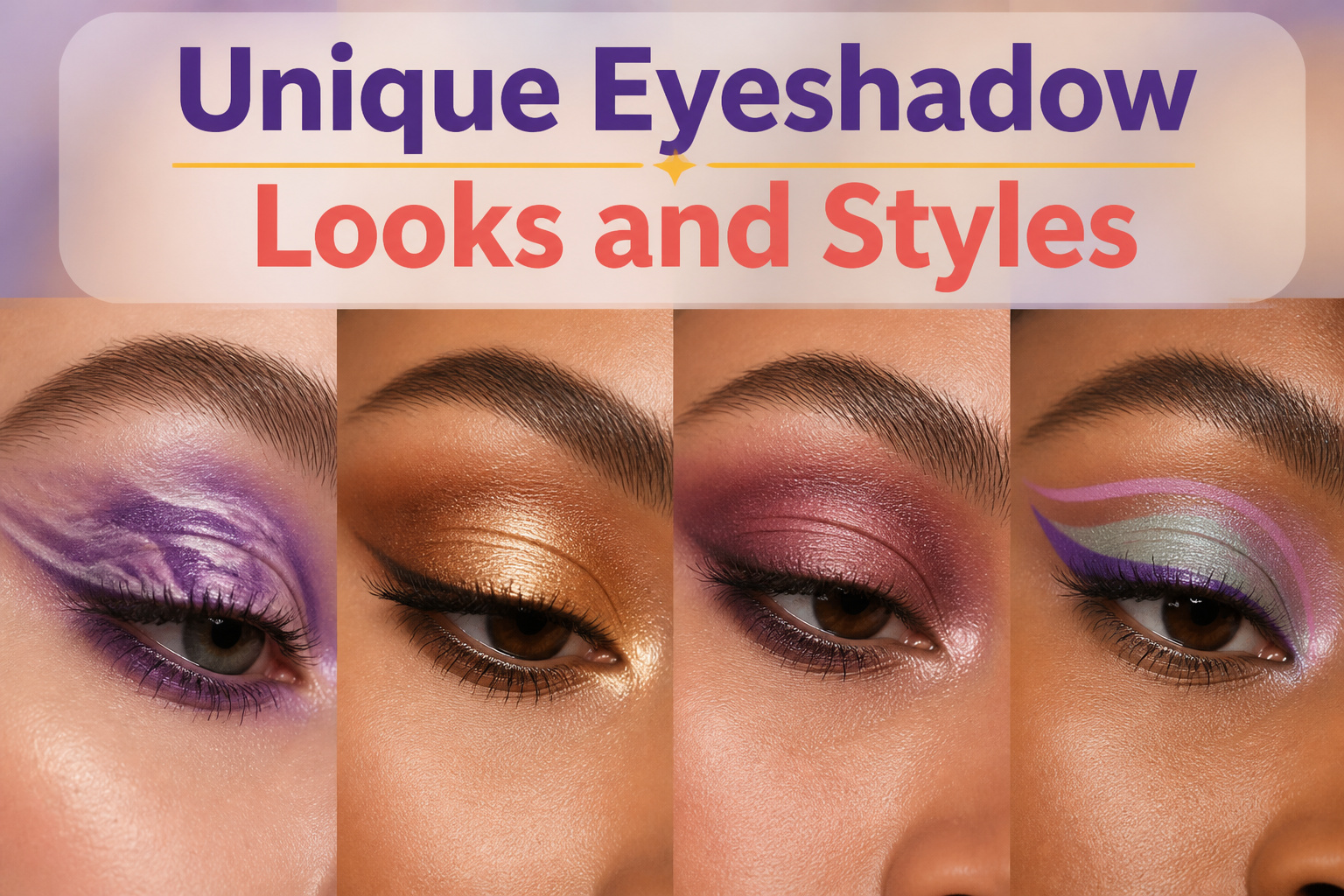
The nineteen looks below range from a sixty-second taupe stick to a carved-out crease that demands concealer and a squared shader, so the deciding factor is how much architecture your morning allows.
Most trip up on undertone: a cool taupe recedes like real shadow while warm brown sits on the lid like makeup, and that single choice separates the no-makeup effect from the trying-too-hard one.
O’Leary’s smoky plum and Spencer’s Vaseline gloss both prove the same palette laws don’t govern every eye; what changes is whether you want the color to follow your bone structure or redraw it entirely.
1. Cool Taupe
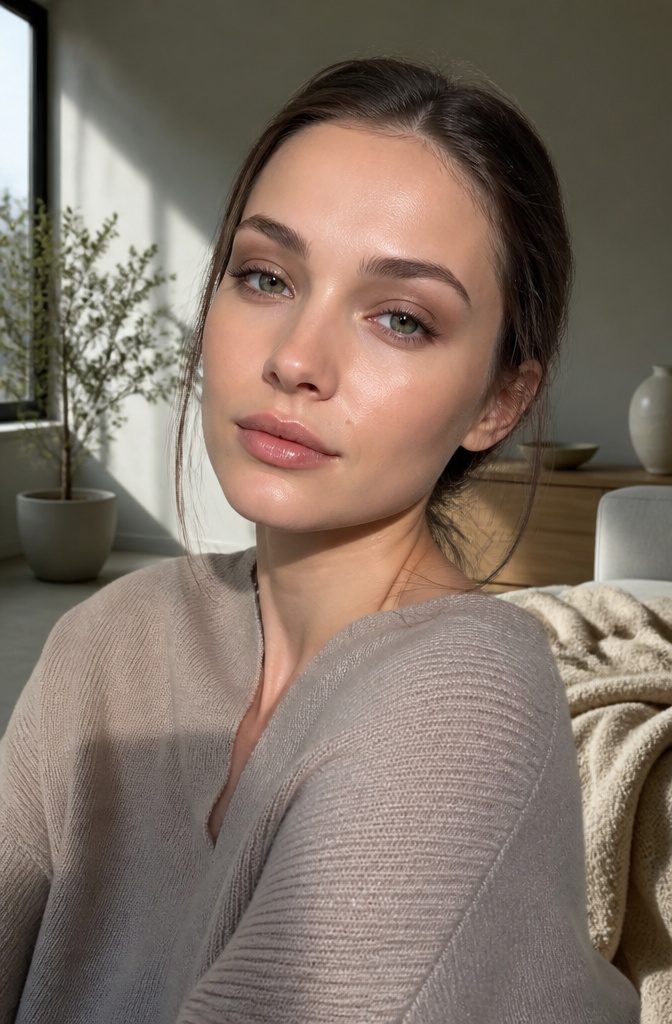
A cool-toned wash of taupe does something warm browns rarely manage: it builds depth without registering as makeup at all. The trick lies in the undertone.
Opting for a cool-toned wash will help give eyes dimension without looking like too much, and the shade needs to sit at or slightly deeper than your skin tone to avoid that chalky, washed-out finish.
For application, creamy shadow sticks remove every variable.
The Laura Mercier Caviar Stick Eye Shadow glides on with enough playtime to blend before it sets. The R.e.m.
Beauty Midnight Shadows Multi-Use Eye Stick works the same way, scribble across the lid and smudge out with a ring finger. Either one gives a finished eye in under a minute, no brush required.

Long-Lasting Wear: Award-winning eye shadow provides up to 12 hours of wear for a flawless look.

【ALL-MATTE EYESHADOW FOR MATURE WOMEN】Erinde 10-color eyeshadow palette series 04# Cement, "ALL MATTE" eyeshadow palette with a range of warm and cool tones, from soft matte light gray to rich dark brown, suitable for older women who like natural eye makeup and young people who need dignified eye makeup.

【Vibrant Color Selection】Choose from 22 stunning shades, including 15 mattes (Snow, Gray, Spicy, Forest, Sea, Blue Sky, Dark, Buff, Coffee, Light Beige, Misty Mauve Gray, Dusty Rose Pink, Caramel Brown, Misty Taupe, Earthy Brown), 3 soft shimmers (Blue Spark, Tapestry Taupe, Cocoa Brown Shimmer ), and 4 high-shine glitter shades (Moonlight, Saturn, Glass, Champagne), perfect for daily wear, festivals, and performances.
2. Peach
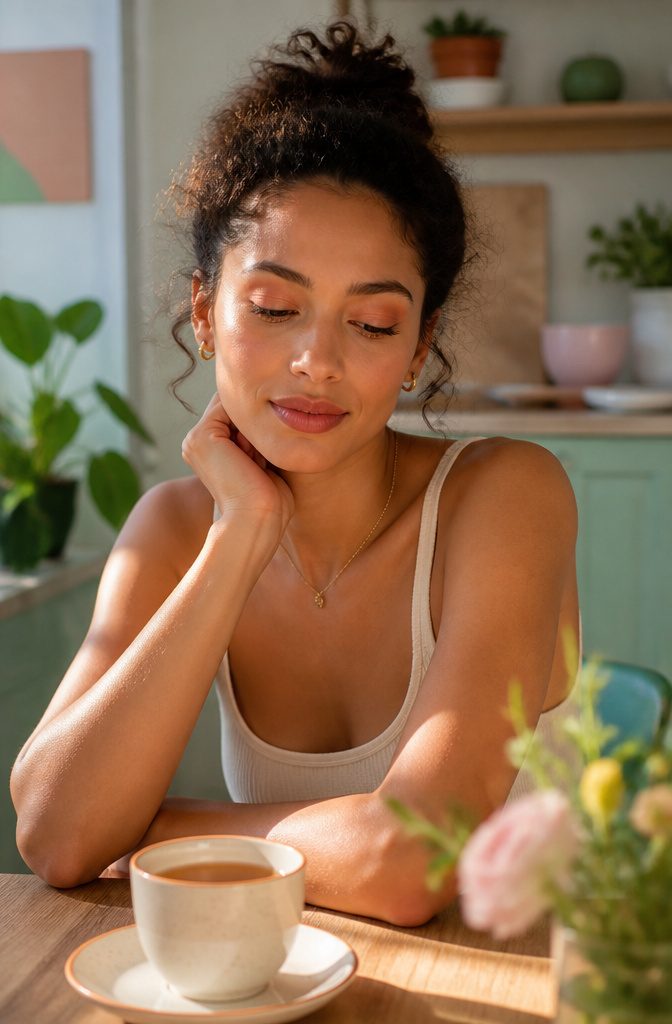
Peach across the lid and along the lower lash line reads as skin tone warmed up just enough to register as makeup without announcing itself.
The trick is keeping it matte. Powder shadows with no glitter or sheen look most natural, and that flat finish is what stops the color from tipping into costume territory on lighter complexions.
Fenty’s Snap Shadows Mix & Match Eyeshadow Palette carries three peachy mattes if you want the shade range in one compact, plus subtle shimmers for evening.
Haus Labs by Lady Gaga also makes a Hy-Power Eye, Cheek & Lip Pigment Paint in peach if you prefer a single pot that handles lid, cheek, and lip.
A three-in-one pigment saves space and keeps the tone consistent across the face, though you’ll want to set it with powder if your lids tend to crease.

A Soft, Peachy Palette - Our orange and coral shadow palette is guaranteed to be the star of your makeup collection. Featuring 9 richly pigmented shadows in every shade of orange, coral and gold you could ever possibly imagine, this palette has it all. From glitter, to metallic or matte, this palette has a finish for everyone.

Peachy Glam: This monochromatic eyeshadow palette includes 9 warm peaches and sparkling neutrals to create the perfect soft glam.

UCANBE 40 Color Eyeshadow Palette have all the colors you like. Featuring 18 matte and 22 shimmer shades to create unique and beautiful eye makeup looks from natural looking makeup to smokey eyes looks in one swipe.
3. Dewy Taupe
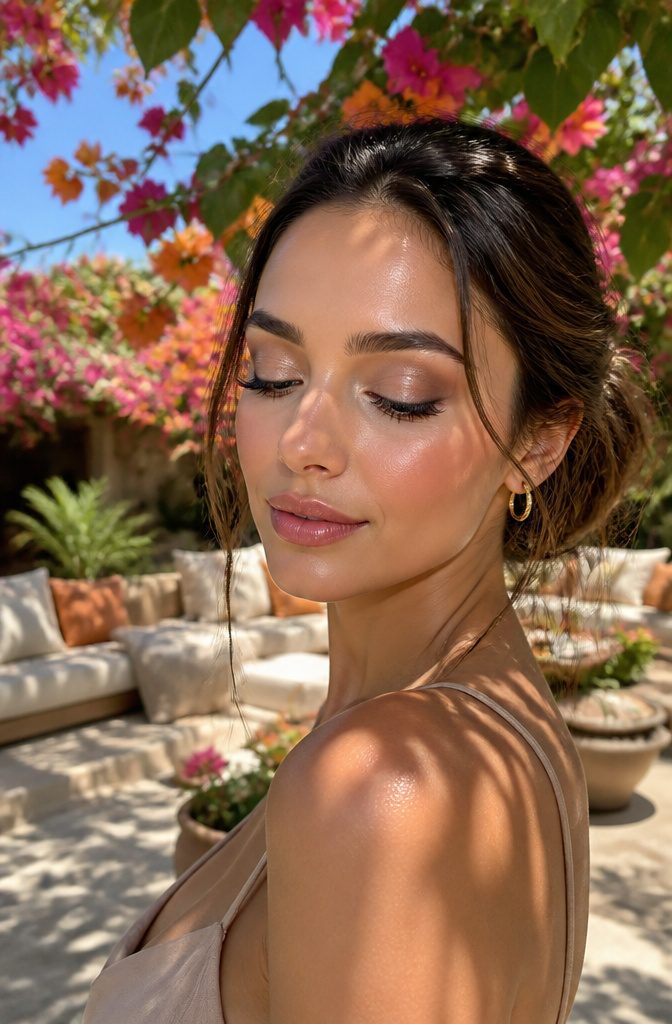
A wet-look shimmer across the lid paired with super-long lashes reads as the ultimate summer eye look, and taupe is what keeps it from tipping into disco territory.
The sources describe this as dewy taupe: "Super-long lashes with a subtle wet-look shimmer over lids seem like the ultimate summer eye look."
Armani’s Eye Tint in Rose Ashes handles the finish without drying chalky or over-pigmenting. The liquid stays movable enough that the sheen looks like skin, not product.
For a cream-to-powder route that keeps the metallic glow, Ilia’s Liquid Powder Eye Shadow Tint in Burnish trades some of that literal wetness for a more practical wear.
Either way, the lash length matters as much as the shadow choice; without the extension, the lid reads greasy instead of intentional.
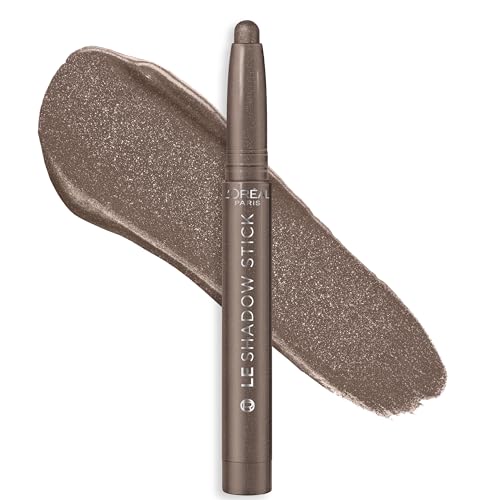
Enhance Your Look: Your make up look isn't complete without L'Oreal Paris Le Shadow Stick. This eyeshadow stick glides on effortlessly & evenly for a rich look on a variety of skin tones. Bold, creamy color available in smokey, matte and shimmer shades

Eyeliner Crayon: This blendable radiant eyeliner crayon is a total triple threat; Use your Jumbo Eyeliner Pencil as a creamy eyeshadow, eyeliner and highlighter; Apply it to your water lines, inner corners and entire eye lid for a pop of intense color

Unleash Your Style with Matte Eyeshadow Stick: From subtle nudes to striking taupes, our eyeshadow stick offers both matte and shimmer finishes that let you create any look, from everyday elegance to sultry smoky eyes. This cream eyeshadow stick suits all preferences and enhances your beauty effortlessly any occasions
4. Golden
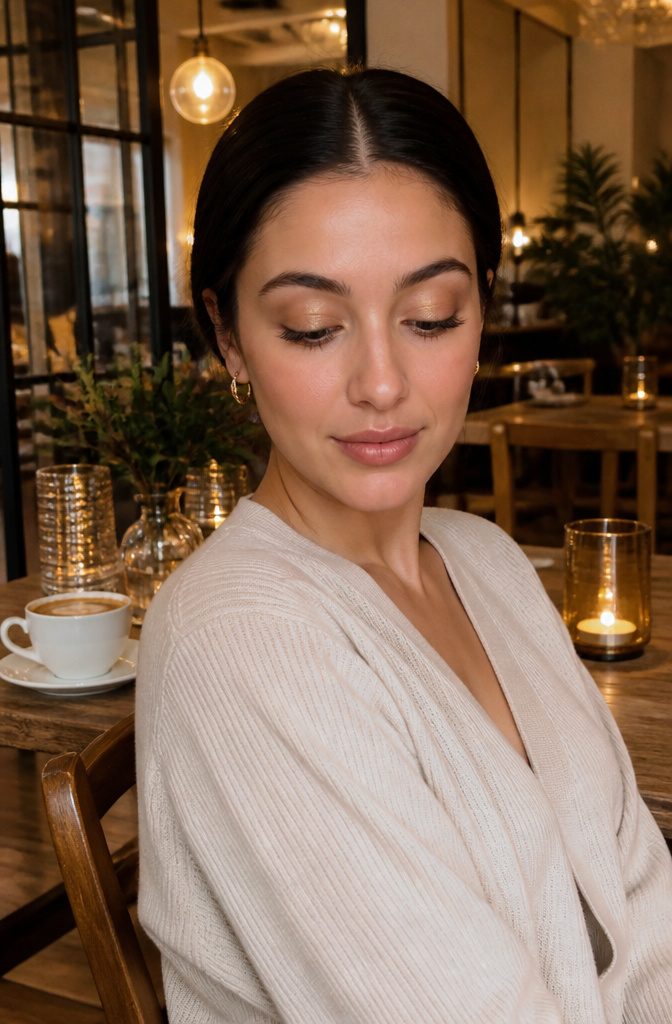
Pressing a slightly shimmery gold shadow onto lids delivers an elevated, low-effort look that reads expensive without reading like you’re trying.
The mistake most people make with gold is reaching for the high-shine, glittery finishes that feel suited only to nights out.
A gold shadow without tons of pigment changes that entirely: it catches light softly, brightens the eye area, and still looks appropriate under fluorescent office lights or weekend coffee shop lamps.
The Dior 5 Colors Couture Eyeshadow Palette handles this balance well. Its quad isn’t built on rich pigment; instead, the shades give lids a summer-ready, shimmering finish that layers up if you want more presence.
My current move is a dab of the peachy shade in the inner corners, blended into one of the deeper brown shades through the crease.
For something even simpler, Charlotte Tilbury’s Eyes to Mesmerize Cream Eyeshadow works because the liquid-cream formulation stays crease-free and applies with a fingertip. No brush required, no fallout on your cheekbones, no mirror check an hour later.

Long-Lasting Color: Wugbc cream eyeshadow stick provides highly pigmented vibrant shades in one swipe- no patchiness! The smooth creamy texture glides on effortlessly and stays for long lasting wear without fading or creasing. Suitable for daily makeup or special events

Shimmer That Stays: Maybelline Shadow Drip, the shimmering liquid eyeshadow tint that delivers captivating eye looks without compromising on comfort. Lightweight, refreshing feel and high-impact shimmer that stays put up to 16 hours

Creamy Blendable Formula: Features a velvety matte & shimmer finish that glides on smoothly for effortless blending. Experience long lasting color with Wugbc highly pigmented eyeshadow stick without smudging or fading. Ideal for creating natural eye makeup looks with ease
5. Soft Pink
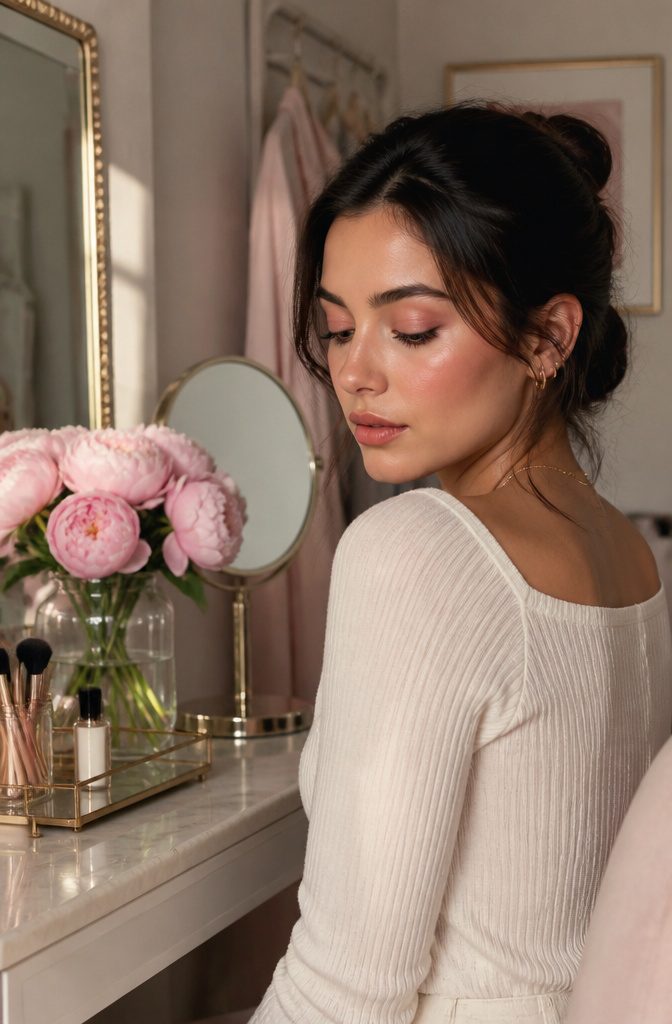
Light baby pink is the shade that makes pink eyeshadow wearable at all. Bolder pinks pull blood to the surface and read as irritation on the lid, but a soft, muted tone stays quietly flattering.
A very subtle shimmer keeps the effect dimensional without drifting into swollen territory, and skipping the lower lash line prevents any pooling of color that would exaggerate puffiness.
Glossier’s Lidstar in Slip has become my default recommendation for this.
The cream formula spreads thin with a finger or brush, and the glitter is present but restrained enough for daylight. Rare Beauty’s Vulnerable Liquid Eyeshadow serves the same purpose with a slightly heavier pigment load.
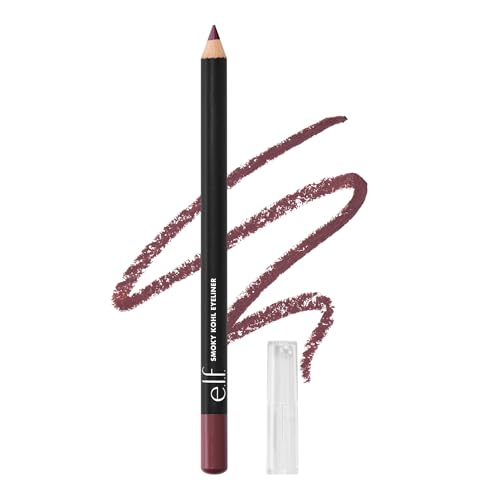
SILKY SMOOTH KOHL EYELINER PENCIL: Ideal for creating crisp lines or sultry, smoky eye looks—available in smoldering shades!
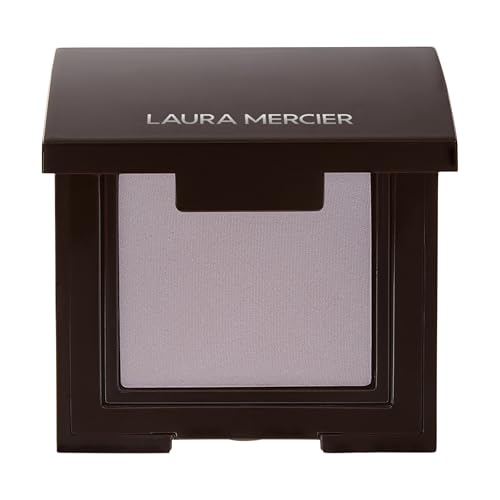
Pure Matte Payoff: This matte eyeshadow delivers intense, long-lasting color in a single stroke with a smooth, creamy feel on the lid. Sheer it out for a soft finish or layer to full intensity, with no fallout and no creasing.

❤️【Eyeshadow Stick 】35 classic colors,including the most popular shimmer and matte eyeshadow colors for girls,you no longer have to struggle to choose a color,is enough to fully meet all the needs of girls. It can be used to create smoky,sultry,luminous,metallic finish,and also works well as a highlighter and Eyeliner Pencil.
6. Tightliner
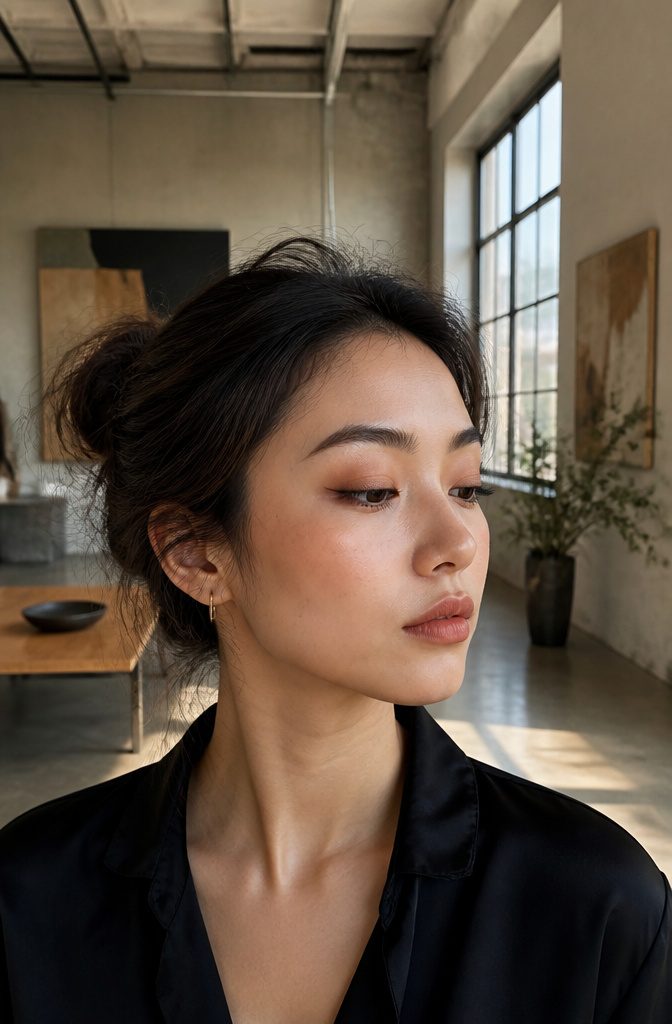
The most natural eye shadow trick is to graduate color from darkest at the lash line to lightest closer to the brow.
Three shades make it manageable: a rich color pressed right against the lashes, a transitional tone on the mobile lid, and the lightest shade swept underneath the brow bone.
Tightlining itself means working a black shadow or creamy liner into the lash line and smudging it just enough to suggest thicker lashes without the weight of a full rim.
The smudging is where I used to lose the plot; too heavy and the eye closes in, too light and the definition vanishes by noon.
The graduation above the line is what keeps the whole thing from looking like a stage eye.
A creamy shadow stick has more blendability than a standard pencil liner but more hold than a loose black shadow, which matters when you are pushing product between lashes rather than drawing above them.
The precise point on a slim pencil makes the placement easier if your lashes are dense enough to fight back.
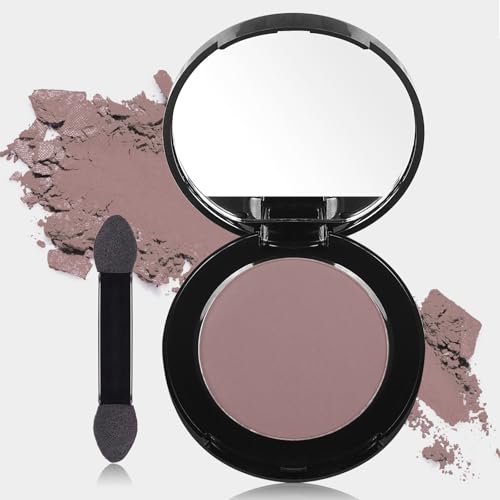
Vibrant Color Range: MEICOLY offer a diverse range of shades for eyeshadow,including off white(beige) eyeshadow,white,black,blue,light blue,green,coffee(brown),red,macaron grey,violet,forest green,taupe,champagne,beige brown eyeshadow,catering to various preferences and allowing you to find your perfect match.All MEICOLY matte eye shadow come with mirror and brush.Gently remove the sealing film from the mirror before using the eyeshadow.

Highly Pigmented & Buildable Coverage: Transform your look instantly with Wugbc highly pigmented liquid eyeshadow. Whether you desire a soft, romantic glow for a morning date or a bold eye look for a night out, the buildable formula lets you layer colors effortlessly

Cool-Toned & Ready - Full of cool, neutral taupe shadows in matte and metallic finishes to create the most flattering looks from smokey to everyday, natural makeup.
7. Smoke
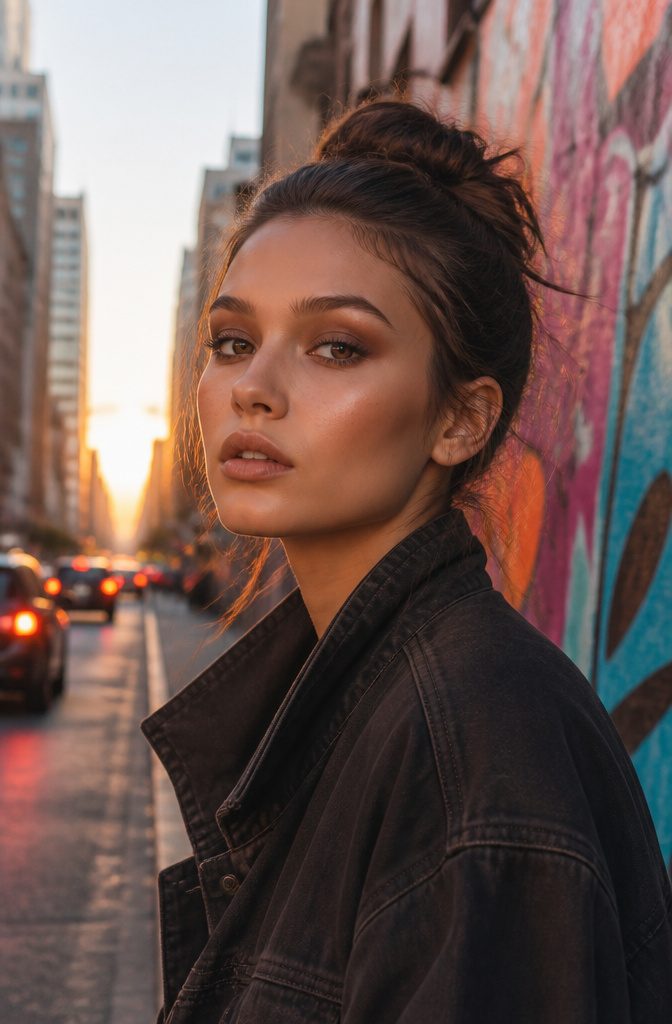
A smoky eye does not have to read as after-hours drama. The matte browns in Chanel’s Les 4 Ombres Multi-Effect Quadra Eyeshadow prove the point: the palette steers clear of black, and that restraint keeps the effect light enough for daylight.
Spencer’s rule for natural shadow is to follow your own hollows and the places light already hits, rather than drawing a shape from scratch. The browns layer into those contours without the hard edge that black deposits even when blended.
For a cooler version, Covergirl’s Trunaked Eyeshadow Palette builds the same structure in gray over a nude base. Either approach relies on matte formulas for the seamless finish that makes smoke look like depth rather than decoration.

【Matte Creamy Peach Eyeshadow Palette】The eyeshadow palette contains high pigment matte shades with good coloring and fine smooth powder texture, which can enhance the quality and look of eye makeup.

1️⃣ Peach Nude Matte Eyeshadow for Daily & Mature Makeup This matte eyeshadow palette features peach nude eyeshadow, rosy beige and neutral brown eyeshadow shades, perfect for daily makeup, office makeup and natural looks, especially suitable for mature women and mature eyes.

【Nude Peach Eyeshadow Palette】The eyeshadow palette contains high pigment matte shades and shimmer peral shades, with good coloring and fine smooth powder texture, which can enhance the quality and look of eye makeup.
8. Gloss
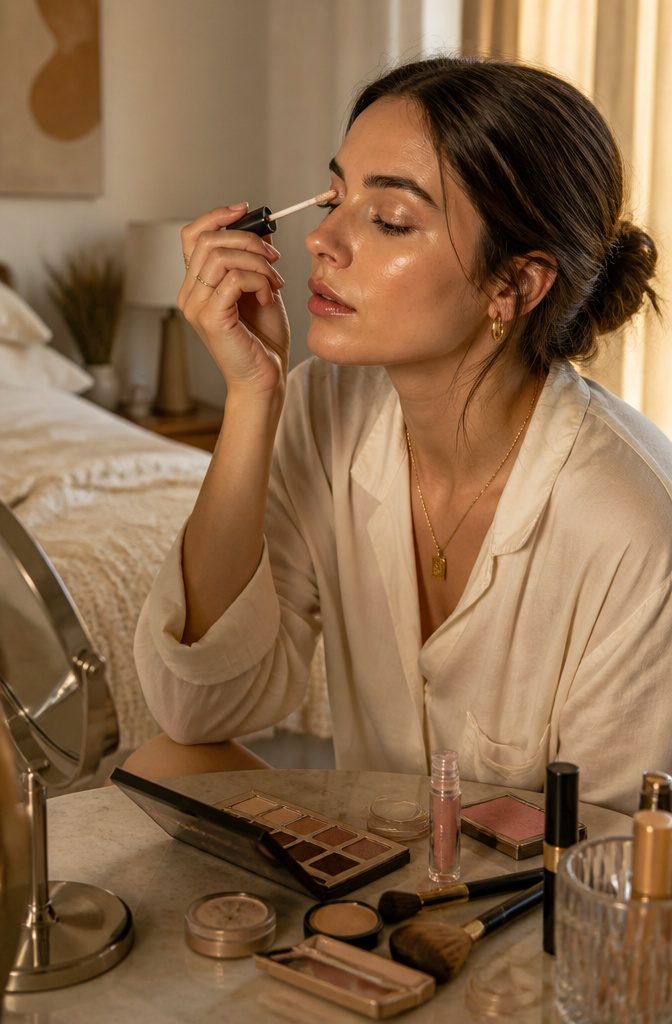
A little eye gloss or even plain Vaseline patted across the lid catches light in a way powder never manages on its own.
Makeup artist Spencer puts it plainly: "If shadow scares you and you want something very natural, smudge a little eye gloss or dab a little bit of Vaseline on your lid to add dimension." The trick is restraint.
Too much and the lids look wet in the wrong way, sticky, creased within the hour.
I find a fingertip works better than a brush for control. Tap, do not swipe.
For a product that stays put, Danessa Myricks Colorfix in Clear layers cleanly over whatever base you already have on.
A thin coat over taupe powder keeps the finish dewy without sliding. Pure petroleum jelly does the same job at lower stakes and lower cost, though it migrates more freely in heat.
Either way, the dimension arrives from the contrast between the matte underneath and the gloss on top, not from the gloss alone.

THE #1 LONG-WEAR CREAM SHADOW STICK IN THE U.S.*: Source: Circana, LLC, US Prestige Beauty Total Measured Market, Makeup Eyeshadow by Product, Dollar and Unit Sales, Makeup Form: Stick, 12 months ending January 2025.

All-in-1 Eye Shadow, Eye Liner and Eyeshadow Primer: Maybelline’s Color Tattoo Eye Shadow Sticks deliver 24HR tattoo performance for all day wear in a multi-use stick. It primes, defines, lines and highlights lids with ease

CREAM SHADOW STICK - Superhero No-Tug Waterproof Shadow Sticks are everything you love about long-wear eyeshadow, now in an easy-to-use, cream shadow stick. Available in 12 buildable pearl and matte shades.
9. Shimmer
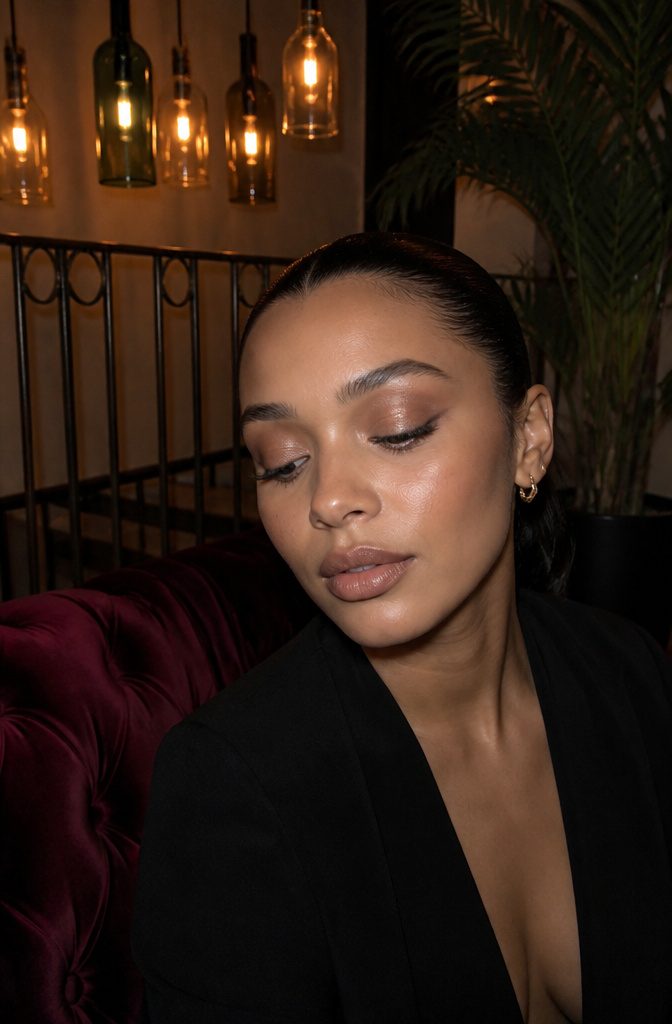
Shimmer reads as evening on most faces, but a light-brown wash changes the register entirely.
The trick is taking that wash across the entire lid and blending it up to the brow bone, so the shimmer has something grounded to sit against instead of floating on bare skin.
Hailey Bieber’s makeup artist Nina Park uses exactly this move for what I’d call a natural-looking evening eye.
The shimmer itself stays minimal: a small amount of creamy product pressed into the inner corners, then blended upward with a small brush so the light catches when you turn your head but doesn’t announce itself head-on.
Apply the shimmer only after the brown wash is fully blended; reversed, the cream drags the matte into streaks.
A doe-foot applicator lays down the thin line you need in the inner corner, and a small brush finishes the upward blend.
The Urban Decay Naked3 palette carries the full range of browns for the base, while Gen See’s Mixed Media Metallic Liquid Eyeshadow in First Light gives that specific creamy inner-corner brightness.

Smooth Texture & Effortless Application:Formulated with a cream texture, cream eyeshadow sticks glides smoothly on eyelids and blends effortlessly. It delivers a flawless finish without caking or tugging, helping you create seamless, natural eye looks with ease.

Shimmer That Stays: Maybelline Shadow Drip, the shimmering liquid eyeshadow tint that delivers captivating eye looks without compromising on comfort. Lightweight, refreshing feel and high-impact shimmer that stays put up to 16 hours

【Vibrant Color Selection】Choose from 22 stunning shades, including 15 mattes (Snow, Gray, Spicy, Forest, Sea, Blue Sky, Dark, Buff, Coffee, Light Beige, Misty Mauve Gray, Dusty Rose Pink, Caramel Brown, Misty Taupe, Earthy Brown), 3 soft shimmers (Blue Spark, Tapestry Taupe, Cocoa Brown Shimmer ), and 4 high-shine glitter shades (Moonlight, Saturn, Glass, Champagne), perfect for daily wear, festivals, and performances.
10. Classic Cut Crease
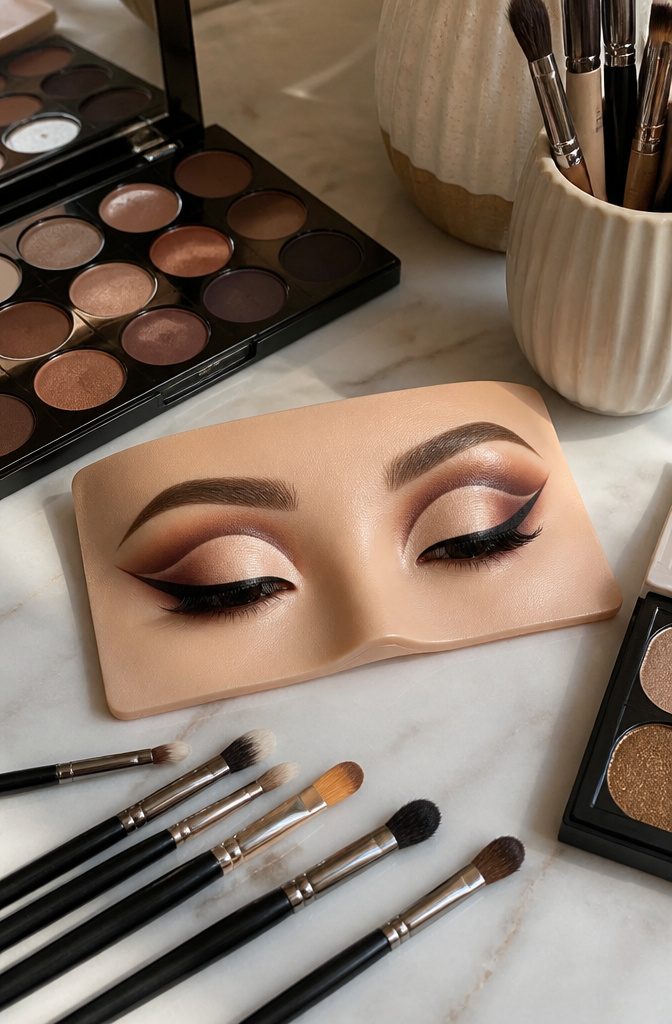
A cut crease is technically an eyeliner trick: liner drawn along the natural crease creates an outline, not a shadow gradient, which gives the look its sharp, graphic quality.
That outline becomes the architecture; shadow simply fills the lid beneath it.
The execution is straightforward. Blend your chosen shadow across the lid first, then run a pencil liner from the inner corner to the outer corner, tracing the crease exactly.
O’Leary recommends prepping with an eyeshadow primer before any color goes down, specifically the MAC Paint Pot in Painterly or Soft Ochre, or the NARS Eyeshadow Base.
The primer keeps shadow smoother and extends wear, but more practically it creates a canvas that keeps the cut line from muddying.

Long-Lasting Crease-Proof Formula: Wugbc cream eyeshadow stick delivers a smooth, highly pigmented matte or glitter finish that stays through the day without fading, smudging, or creasing, even on mature eyelids with fine lines

Dual-Ended Design: This 2-in-1 eyeshadow stick features a dual-ended design - one side delivers high pigmented color & the built-in smudger brush on the other allows for seamless blending. No extra tools are needed for a portable eye makeup application anytime, anywhere

Silky Smooth Precision: Unique crayon tip design offers dual functionality - the wide end delivers quick, full-color coverage, while the narrow tip allows for detailed definition. The ultra-creamy texture glides on without tugging, making this cream eyeshadow easy to apply anywhere, anytime
11. Carved-Out Crease
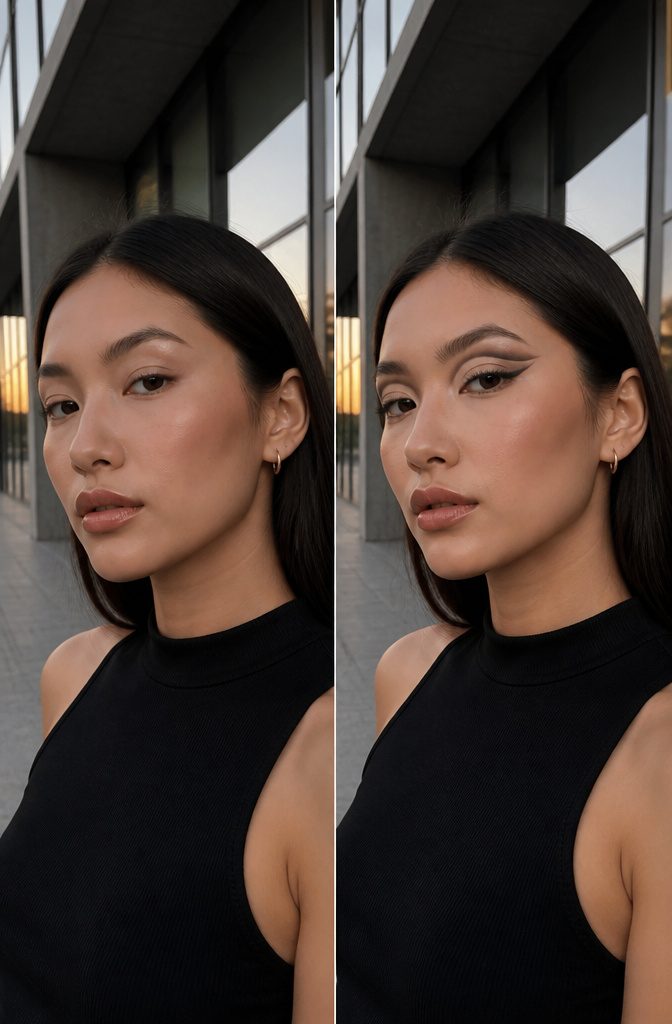
A carved-out crease takes the classic cut crease and sharpens it into something almost architectural.
Where a standard cut crease blends the lid shade softly into the brow bone, this version keeps the edge crisp enough to read from across a room.
The contrast between the two tones needs to be stronger than you think, a full two to three shades apart at minimum, or the carved effect disappears in anything but direct light.
The technique itself is straightforward but unforgiving. Lay down your deeper crease shade first, then clean the lid space with a flat brush dipped in concealer rather than blending the two together.
That negative space is the whole point. I have seen tutorials suggest a small brush for the edge, but a flat synthetic shader with a squared-off tip gives the straighter line this look demands.
One pass too many and the carve softens back into a regular cut crease, so stop once the boundary reads clean.
Placement matters more than color choice here. The line sits slightly above the natural fold for most eye shapes, which means looking straight ahead into a mirror while you work, not tilting your chin down the way we usually do.
Hooded lids need the line placed highest, sometimes a full centimeter above the fold, or the carve vanishes the moment you open your eyes.
The payoff is a look that photographs with real dimension, though it reads more editorial than wearable for a standard office day.
12. Smoky Eye
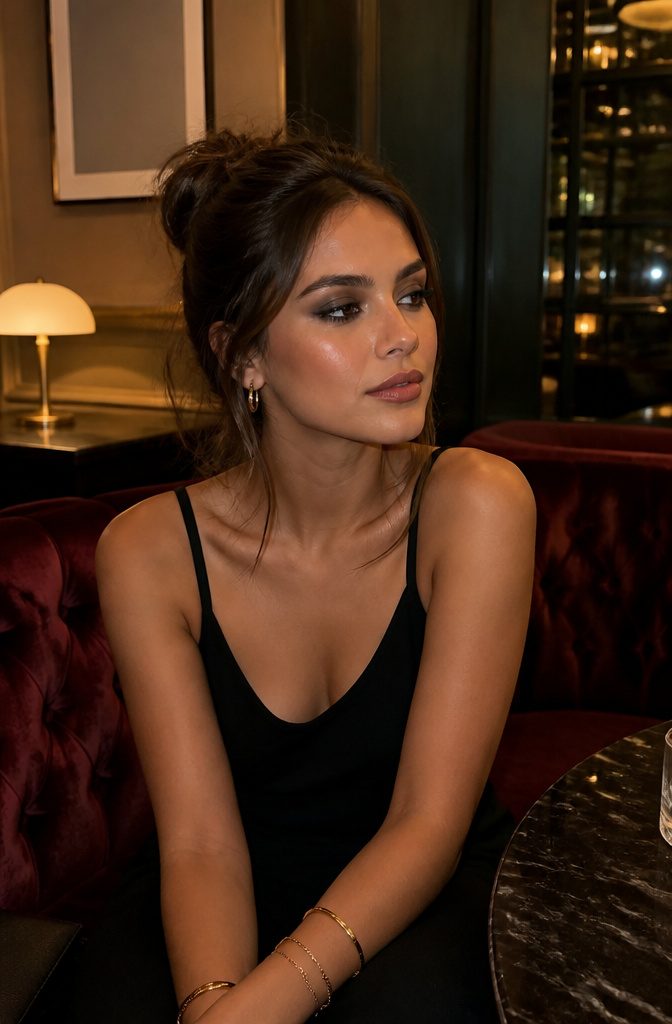
The smoky eye only sounds hard because people keep reaching for charcoal or black and calling it done.
Makeup artist O’Leary puts it plainly: "you can do this with any eyeshadow color of your choosing." That single shift opens the whole thing up.
A plum, a moss green, even a warm rust can smoke out just as well as the usual neutrals, and the technique stays the same.
She works a single shade across the top lid and drags it along the lower lash line. The darkness level is what changes the mood, not the color family.
A deep neutral does read more sultry after dark, but a burgundy or slate blue smoked out the same way holds up for dinner without looking like you borrowed the look from a runway you never asked about.
The flexibility is the point.
13. Winged Shadow
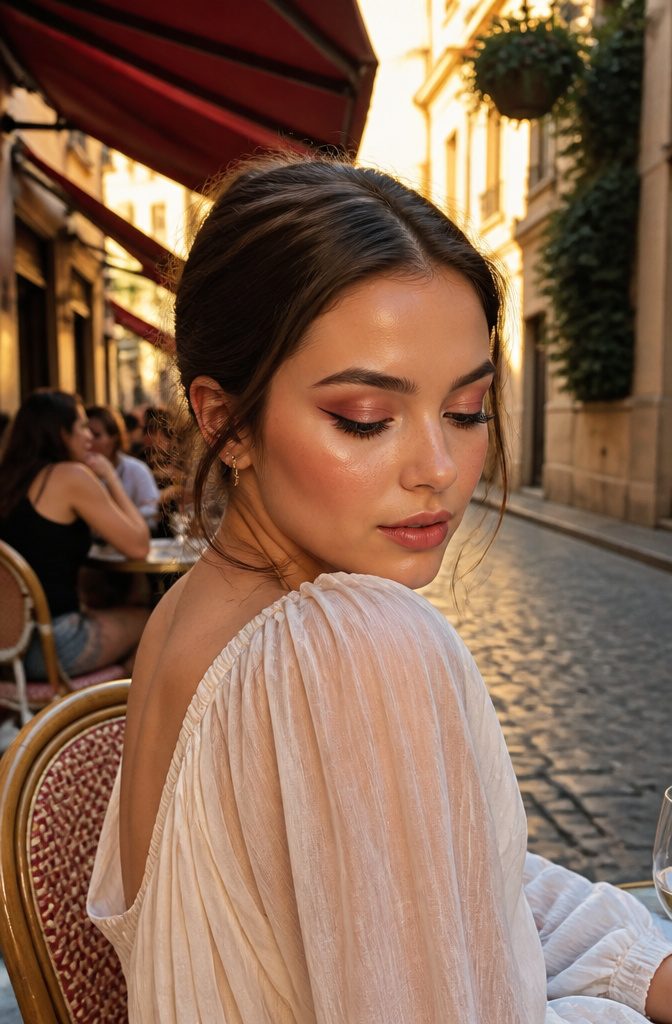
Winged shadow sits somewhere between liner and full lid work, and that middle ground is exactly why it reads as one of the more unique eyeshadow looks for 2026.
The shape extends past the outer corner without the hard edge of liquid liner, so you get lift without the precision anxiety.
The ombre winged liner technique starts with brown liquid shadow washed across the entire lid, edges blended soft for warmth.
A pat of matching shimmer over that brown bridges the gap before any liner touches skin. Inner corner highlight goes on early, while the lid is still open and accessible.
For the wing itself, draw just the tail first, extending to the end of the eye. Blue liner then runs the upper lash line, thin at the inner corner and thickening as it climbs toward the outer wing.
Where blue meets white, a flat shader brush with small side-to-side motions blends the two with a touch of blue shadow. The motion is careful; too much pressure and the white disappears entirely.
A concealer hack cleans the underside of the wing if the shape wanders. The concealer gives a smooth edge without starting over.
Finish with an inner corner wing, mascara, and lashes if you want the full shape. The look works because the brown base does most of the blending before the liner ever arrives.
14. Waterlined Effect
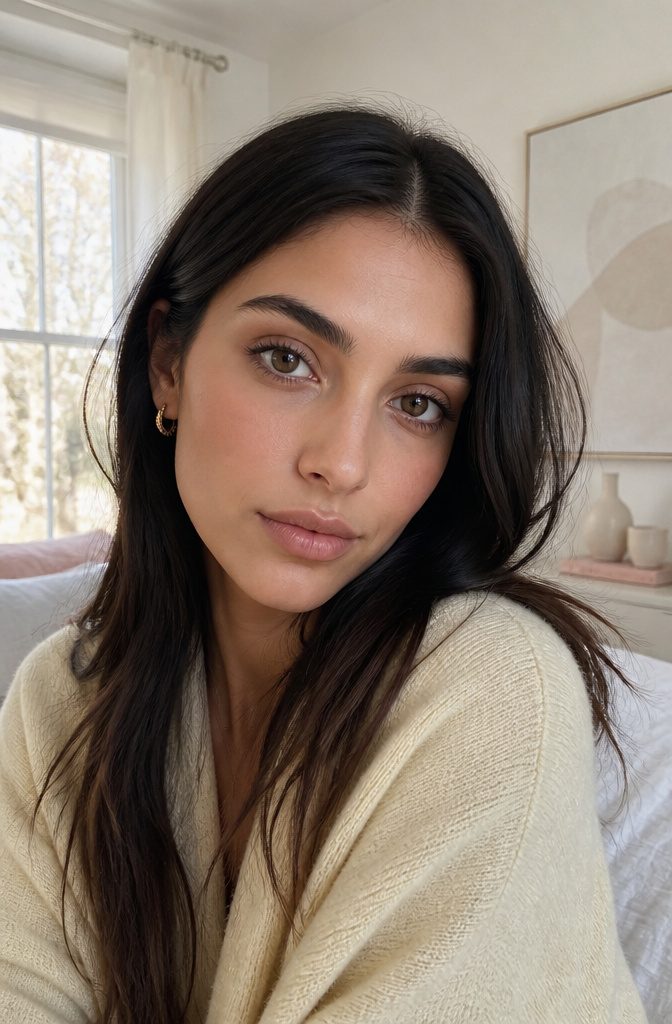
A waterlined effect defines the eye without the hard edge of liner drawn across the lid.
The technique sits pigment right on the inner rim, that strip of skin between the lower lashes and the eye itself, so the definition reads as shadow rather than line.
I learned the hard way that color choice matters more here than anywhere else on the eye.
A shade that complements your iris, purple against brown for instance, creates contrast against neutral shadow on the lid and actually opens the eye instead of closing it in.
Black on the waterline, by comparison, tends to shrink the whole look; it is the default most of us started with, and the one worth reconsidering.
The application itself is simple enough: a soft pencil, a gentle pull on the lower lid, and short strokes from the inner corner outward.
What takes practice is stopping before the pigment travels, which it will if the pencil is too creamy or the eye too watery.
A matte formula stays put better than anything slick or metallic, and the effect stays subtle only if you resist building it up. One pass is usually the right call.
15. Fairy Eyes
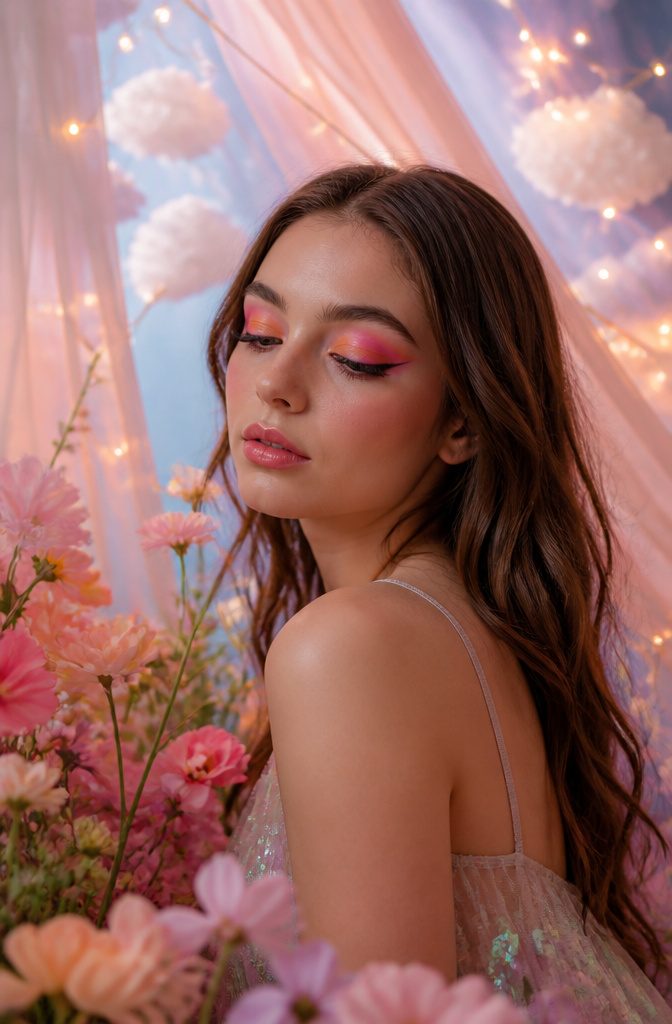
The fairy eye look lives in bright color laid down with a soft hand.
Pink cream shadow swept across the outer half of the lid and pulled along the lower lash line gives the shape; the edges get blended out until they disappear into skin.
For the inner portion, a soft orange shade curves around in a backward C, carried right into the inner corner so the color wraps the eye instead of sitting on top of it.
Where the two shades meet at center lid, a red shimmer pressed on with a dampened brush bridges them without muddying either tone.
Keep the concentration of that red exactly on the center and feather only the edges, or the whole lid flattens into one warm haze.
A brown liner half-wing at the outer corner, tightlined through the lashes, keeps the look from floating away entirely.
Black liner in the inner corner adds the small sharp point that finishes the shape. Mascara and false lashes last, once the color is locked where you want it.
16. Smudged Shadow
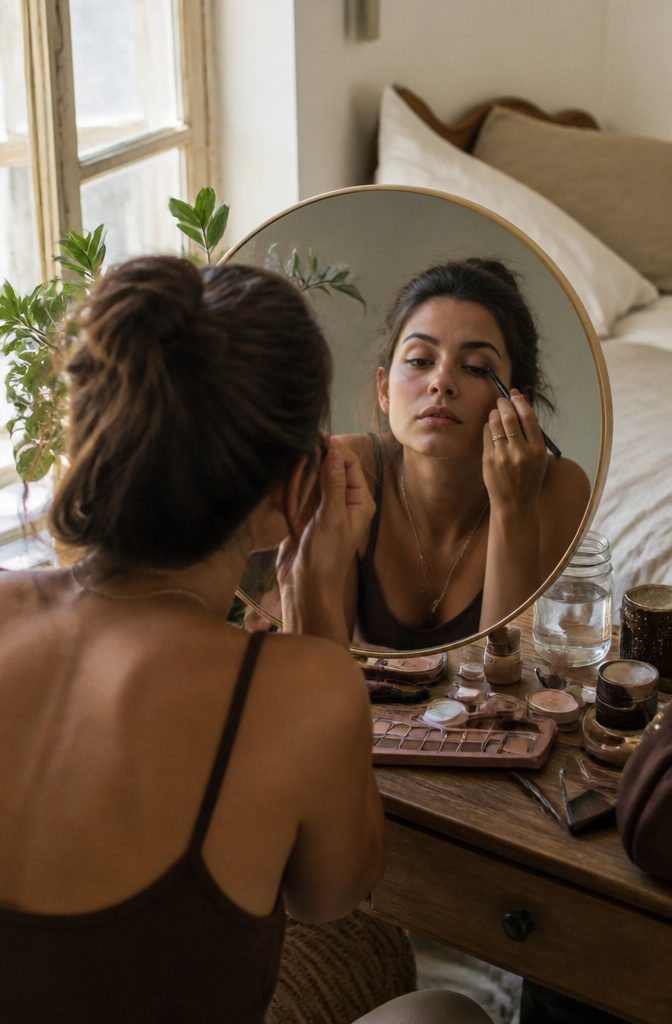
A smudge-y, just-woke-up-like-this look around the eyes does not require sleeping in your eyeliner. The trick is using an eyeliner brush with shorter, stiffer bristles and sweeping eyeshadow along both the upper and lower lash lines.
The result reads as effort rather than precision, which is exactly the point. Brown shadow worked over the lid with a finger does the same work for someone who wants the effect without any tools at all.
I have seen strong graphic eyes on other people and appreciated them, but the artistic ability to execute that precision is not the point here.
This is the style for mornings when you want definition that looks like it happened overnight, not like you spent twenty minutes building it.
17. Everyday Eyes

Matte shadow in the right nude shade does more for an everyday eye than any shimmer ever could. The mistake most people make is reaching for a tone lighter than their skin, which turns chalky by noon.
A cool taupe or soft brown that matches or sits slightly deeper than your lid gives real dimension without looking like effort.
Powder formulas blend out more forgivingly for this than creams if you are building shape rather than washing color across.
Define the crease with a soft brown, keep the lid in beige, and the whole thing reads as bone structure rather than makeup. The sculpted effect comes from where you place the matte, not from how much you use.
For speed, a shadow stick in a creamy taupe can be scribbled across the lid and smudged out with a ring finger.
The finish is less precise than powder but takes under thirty seconds, and the natural result holds up for a full workday.
18. Graphic Eyes
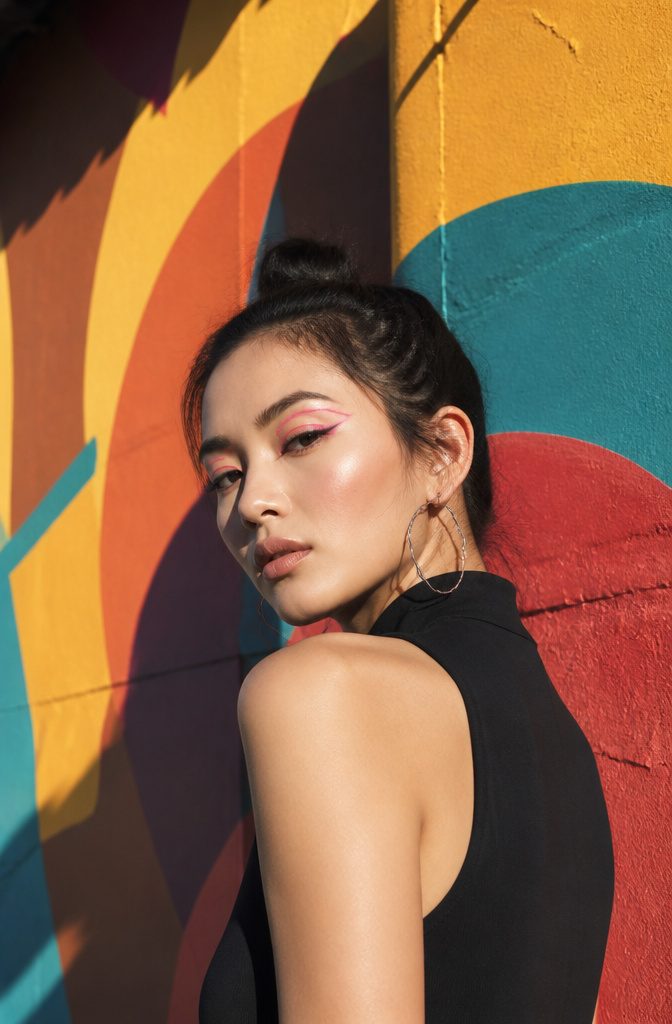
Graphic eyes work best when the liner does the talking and the shadow stays quiet. A small, colorful wing drawn with pencil or liquid liner gives the shape; tapping a translucent shadow over the lid keeps the color from competing.
Hooded eyes especially benefit from this restraint, since a heavy lid can swallow a complex shadow look whole.
For a sharper take, forest green graphic eyeliner with a thinner line toward the inner corner builds drama without closing the eye.
Ashley Kaylamakeup’s approach starts with a standard upper lash line, then swoops upward along the lower lash line’s slope before pulling inward to follow the crease.
Little strokes matter more than a single confident sweep, and a freshly sharpened pencil saves the line from going soft at the critical moment. A black inner corner wing and tight-lining in the same green finish the look.
The yellow shimmer on her lid and the brown in the outer corner stay low enough in saturation that the green still reads as the point of the whole thing.
19. Matte Shadow
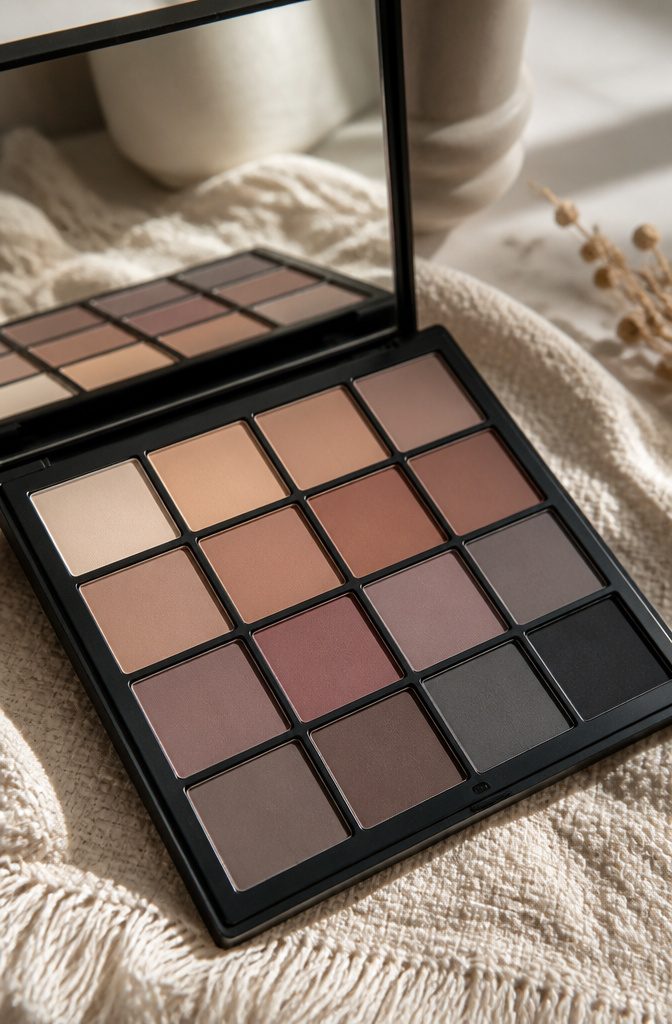
Matte shadow still does the heavy lifting for any eye look that needs to read as skin first, makeup second.
The finish absorbs light instead of bouncing it back, which means the shape you build with it actually looks like shadow rather than product sitting on top of lid.
That is why matte browns and taupes work for sculpting: you can lay down a soft contour in the crease or along the lash line, blend the edge with a clean brush, and the result follows your bone structure instead of announcing itself.
Nude palettes lean on this finish for exactly that reason.
A quad of matte beiges and soft browns gives you the range to deepen where your eye naturally hollows and leave the high points untouched, which is the difference between "no-makeup makeup" and simply not wearing any.
The forgiving part is real, too. Shimmer catches on every uneven blend; matte diffuses it.
For someone still learning where their crease actually falls, or how far to take a color before it starts looking like evening, matte shadow buys you time to correct before the mistake sets.
A true no-liner look needs this finish most. Peachy matte washed across the lid, nothing but mascara after, and the eye looks awake without the architecture of a full face.
The same shade family smoked out with a slightly deeper tone at the outer corner gives you the Laura Harrier effect: natural shape, just intensified.
Powder formulas blend out more cleanly for this than creams, which grab and streak if the lid has any oil to it.
Application Techniques by Eye Shape
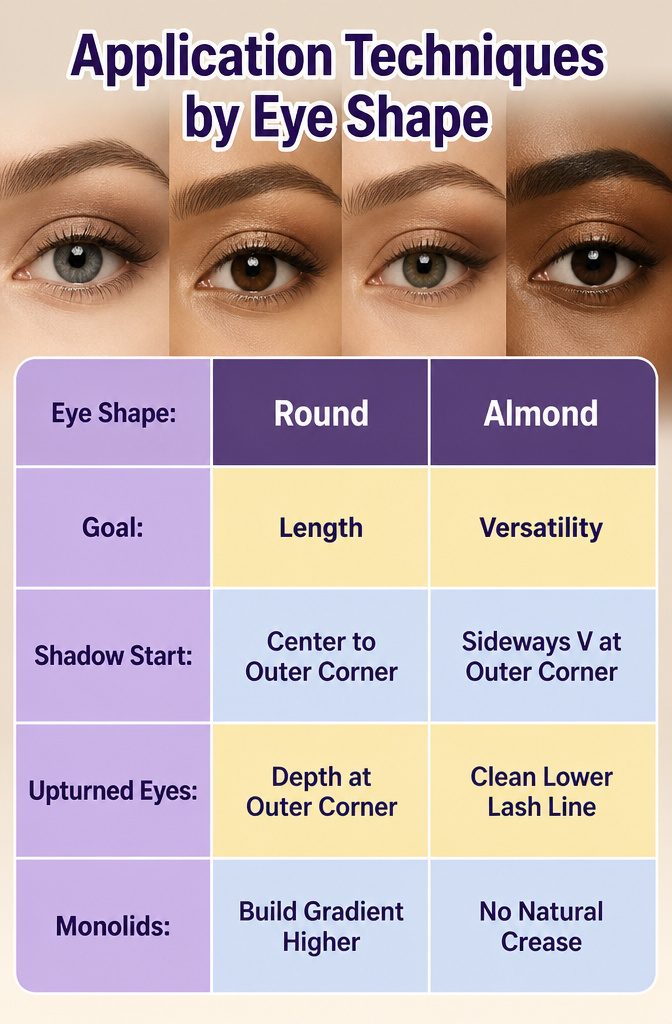
Light colors bring the brow bone forward; dark colors push the crease back. Where you place that contrast changes how the eye reads, which is why the same palette can look completely different on round eyes than on almond.
For round eyes, the goal is usually length, not more width.
Starting shadow at the center of the lid and extending past the outer corner creates that elongated, slightly lifted shape. A smoky eye works too, but it reads softer and less doe-eyed than all-over color.
Almond eyes carry more options. A sideways V of dark shadow at the outer corner, set over a light base that sweeps the whole lid, flatters without fighting the natural shape.
Upturned and downturned eyes both respond to where you stop the dark color. On downturned eyes, keeping depth at the outer upper corner and leaving the lower outer lash line clean prevents pulling the shape further down.
Monolids have no natural crease to recede, so the dark-to-light gradient has to be built deliberately, often higher on the lid than instinct suggests, or the color disappears when the eyes open.
The placement matters more than the shade. A mid-tone brown in the wrong spot does nothing; in the right spot it restructures the whole eye.
Frequently Asked Questions
What are the best eyeshadow products for a smoky look?
Skip black entirely and reach for matte browns or soft grays instead.
The article recommends Chanel’s Les 4 Ombres Multi-Effect Quadra Eyeshadow for its brown-only quad, or Covergirl’s Trunaked Eyeshadow Palette if you want a cooler gray smoke over a nude base.
The restraint on darkness is what keeps the effect wearable past sunset.
What eyeshadow works best for vibrant, colorful looks?
Highly pigmented singles in bright blue, green, or pink deliver the saturation you need, and cream or liquid formulas hold the intensity longest.
The article’s fairy eye look uses exactly this approach: pink cream shadow across the outer lid, soft orange curved around the inner corner in a backward C, and red shimmer pressed at center lid with a dampened brush to bridge the two without muddying.
What type of eyeshadow is best for a sculpted, natural look?
Stick to nude shades like beige, taupe, and soft brown in matte finishes, since matte absorbs light and reads as actual shadow rather than product sitting on skin.
The article specifies that the sculpting tone should match or sit slightly deeper than your lid, never lighter, or the effect turns chalky by noon. Powder blends more forgivingly than cream for building shape.
What eyeshadow is best for a shimmering or glowing effect?
Shimmer, glitter, and metallic finishes all bounce light back, though the article warns that shimmer needs a grounded base to avoid floating on bare skin.
For a wet-look glow specifically, a thin layer of eye gloss or even Vaseline patted over a matte taupe base gives dimension through contrast; Armani’s Eye Tint in Rose Ashes or Danessa Myricks Colorfix in Clear keep the finish from sliding.
What are the different types of eyeshadow forms and finishes?
Eyeshadow comes in multiple formulas, each with distinct behavior.
The article covers powder, which blends most forgivingly for sculpting; cream and liquid, which deposit more pigment and stay movable longer; shadow sticks, which set fast and need no brush; and eye gloss, which adds dimension over a base rather than wearing alone.
Finishes range from flat matte through satin shimmer to full metallic or wet-look gloss.