Every gown here puts its detail in one place: the sleeve, the fabric, the bodice or the train. They range from satin ball gowns and pleated A-lines to sequins, lace corset maxis and dramatic cape gowns.
Decide where you want the eye to land, whether the fitted bodice, the lantern sleeves or the sequins, then keep everything else about the dress quiet.
1. Floor-Length Gowns
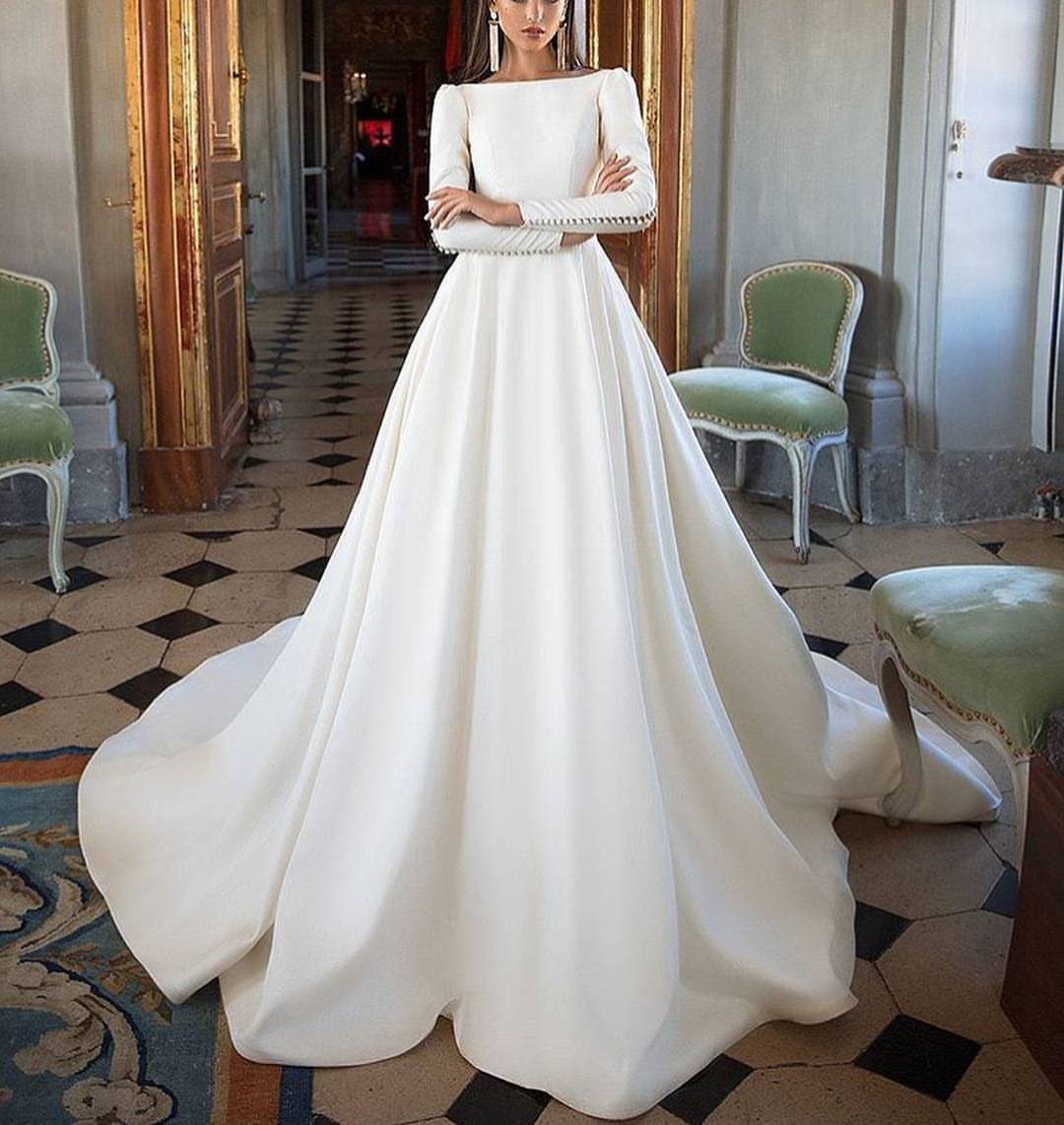
A hem that reaches the floor settles the dress code before anyone reads the invitation. With a full white skirt and long sleeves, the gown already reads as black-tie or gala territory.
Try it on with the heels you plan to wear. I would pick the hem length for those shoes, since a skirt this full hides your feet and drags if it’s even slightly too long.
2. Pleated A-Line Dresses
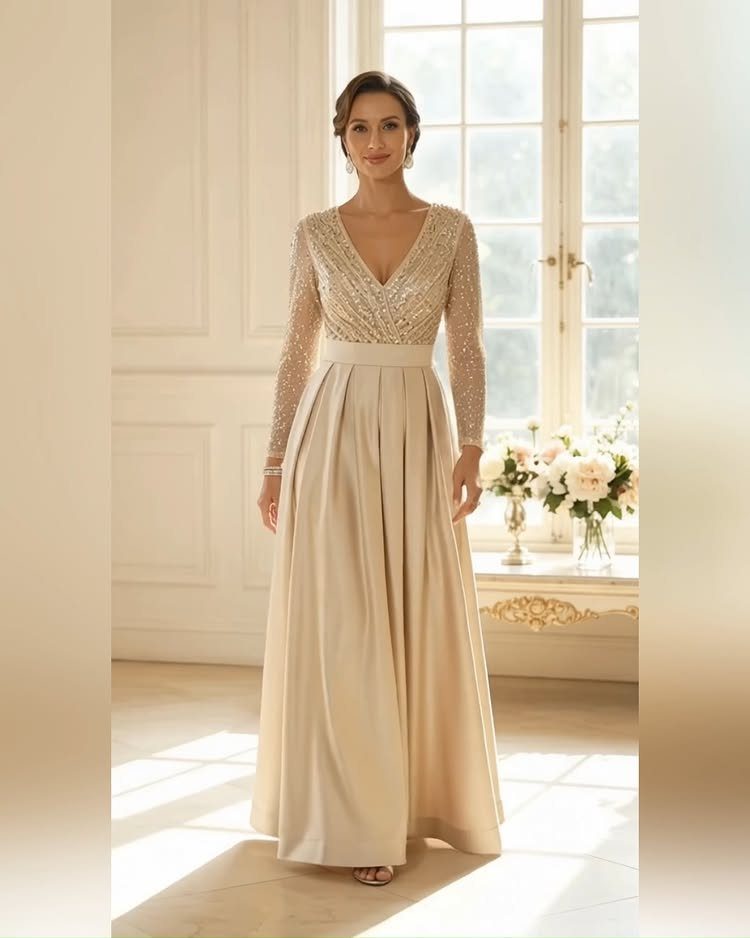
Pleats give a champagne A-line skirt its movement. The fabric swings with each step instead of hanging flat, and the shape stays easy to wear from the waist down.
Embellished sleeves already carry the detail, so I would keep earrings small and skip a statement necklace. If you like a quieter gown with a little shine, this is the version I’d reach for.
3. Softly Draped Silhouettes
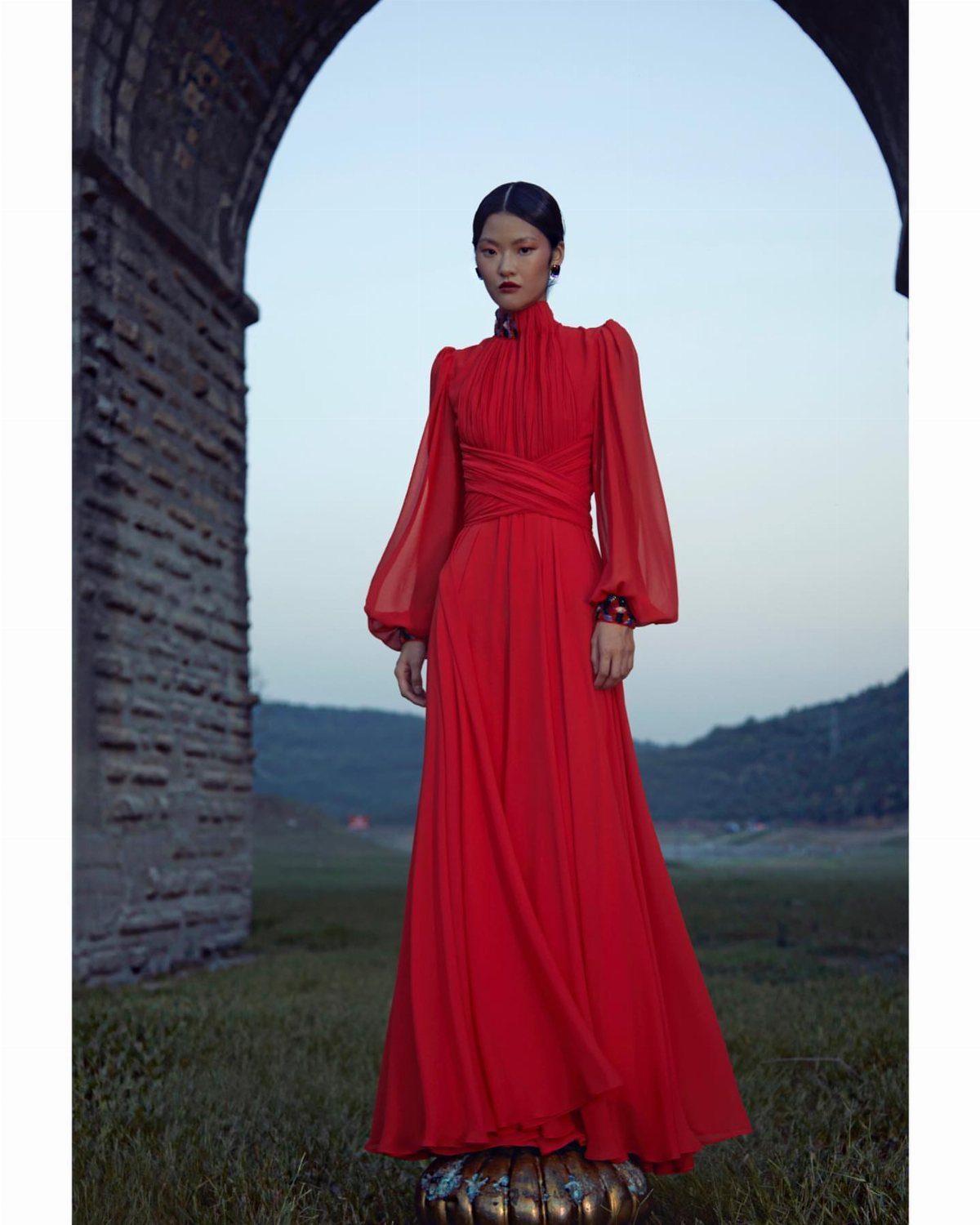
Gathered, draped fabric across the bodice makes a red gown look softer than one built from hard seams. The sleeves keep it formal, while the folds keep it from looking stiff.
Red does plenty of work alone, so I would leave out heavy jewelry and let the drape be the detail. This suits anyone who wants an evening dress that feels relaxed without losing its polish.
4. Fitted Bodice
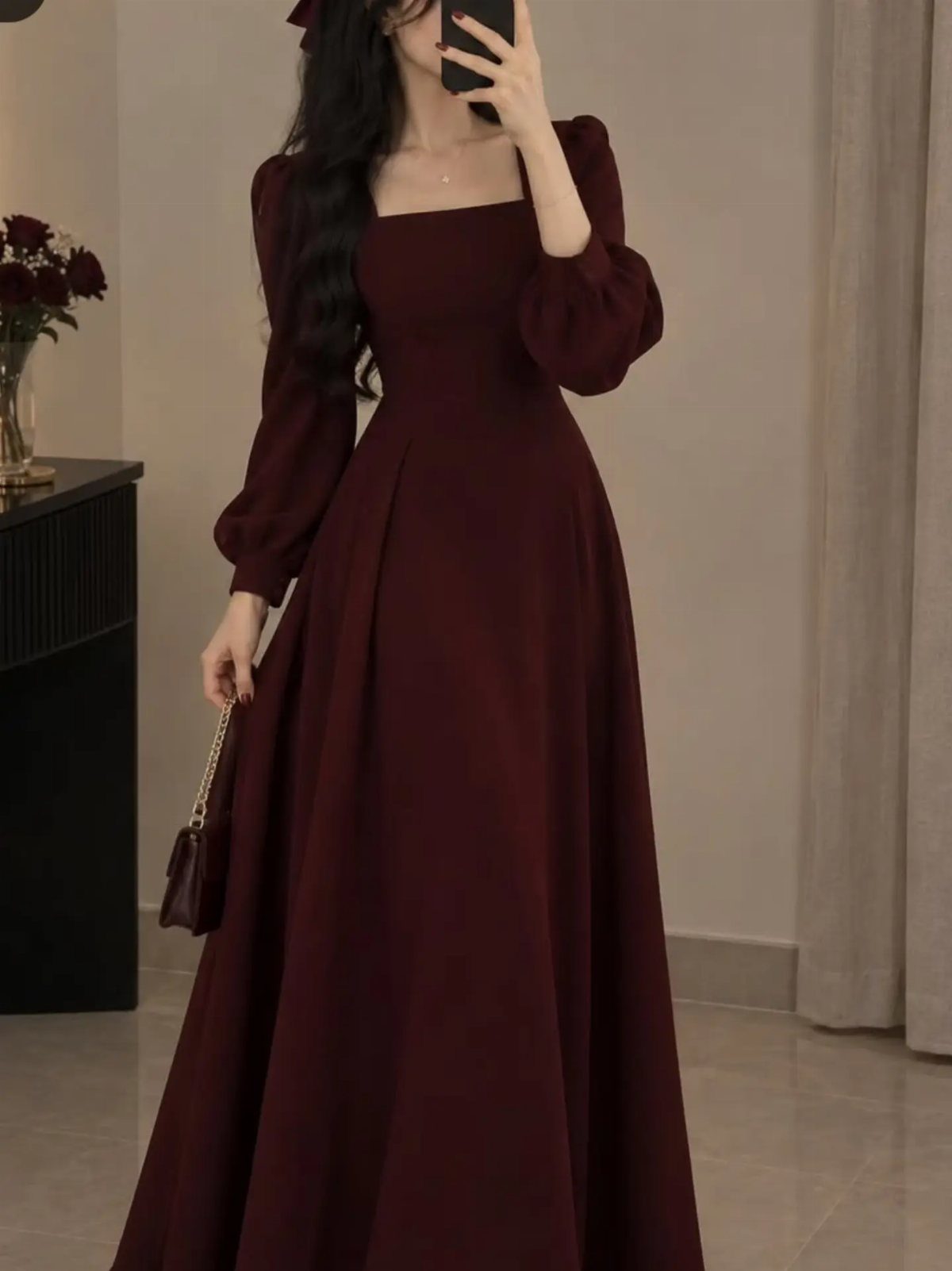
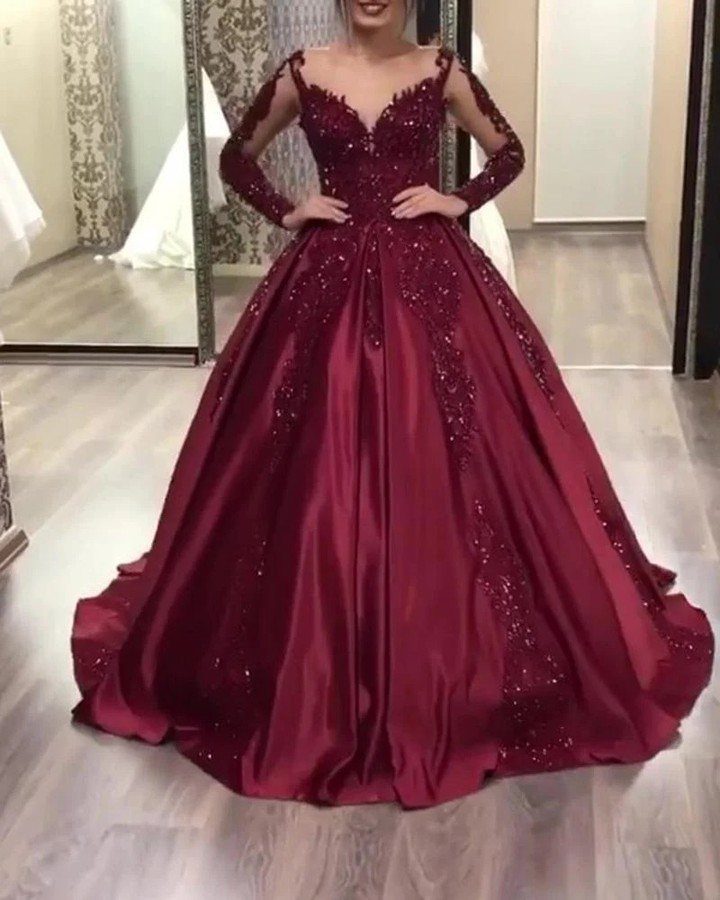
Size to the bodice. On a burgundy ball dress with a fitted top and a full floor-length skirt, the upper half is where fit shows, and a skirt this wide can be hemmed or adjusted far more easily.
The contrast between snug and flowing is what gives this silhouette its shape. Long sleeves finish it neatly, and a deep wine shade keeps the look rich without extra trim.
5. Lantern Sleeves
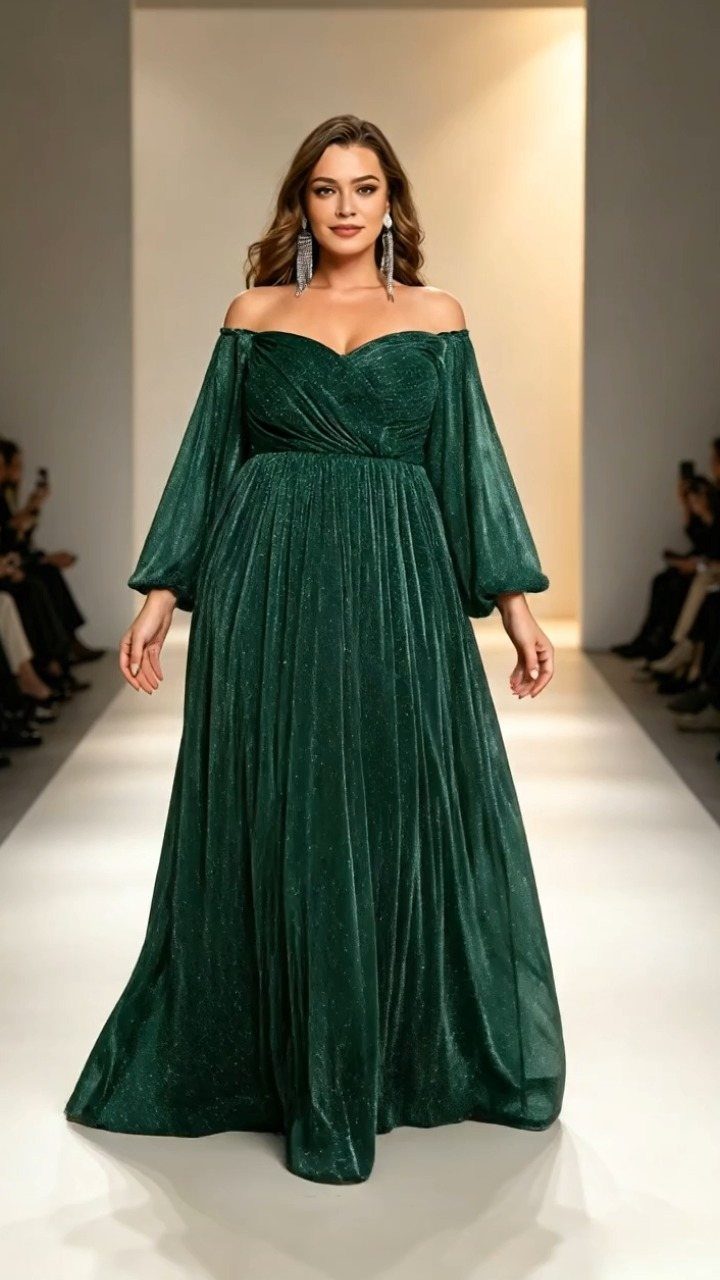
Volume at the sleeve changes how a gown moves, and lantern sleeves, full through the arm and gathered at the cuff, show it best. On an off-the-shoulder emerald gown, they balance the bare neckline.
I would wear hair up so the sleeve shape stays visible. With a shimmering fabric and sleeves this full, keep the necklace simple and let the sleeves be the statement.
6. Sequin Fabric
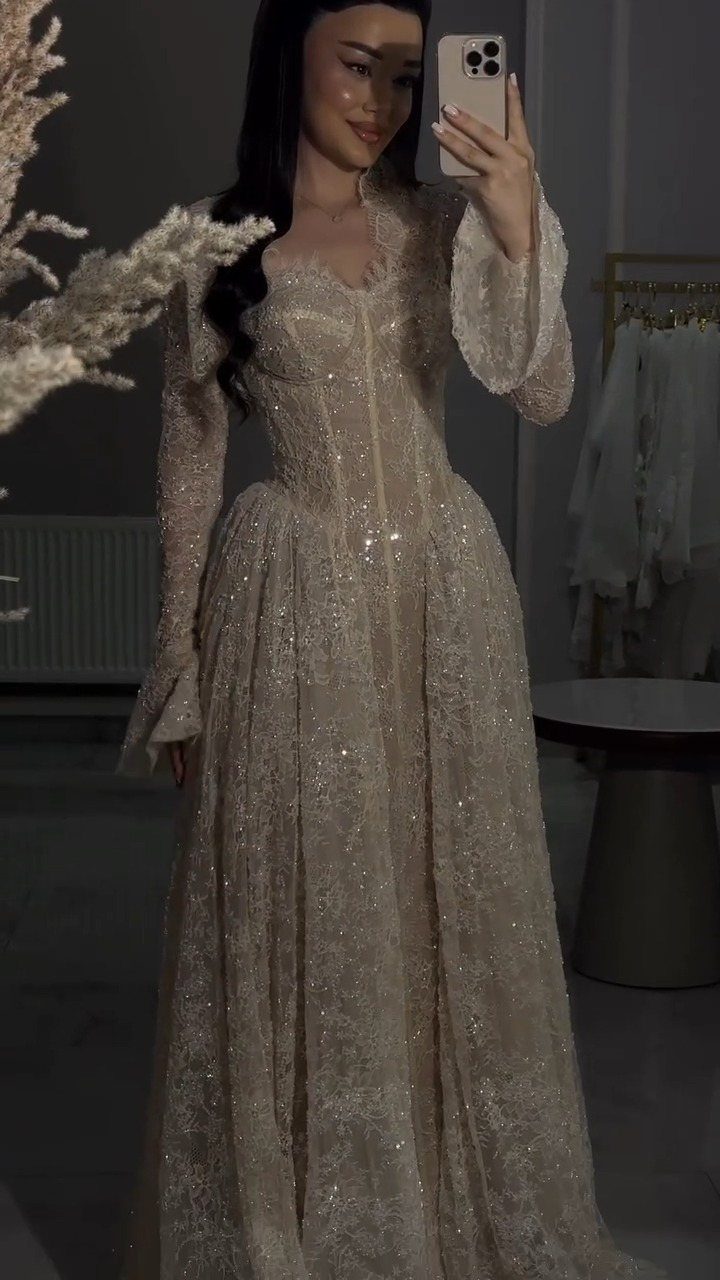
Sequins turn the whole surface of a dress into something that catches light. A champagne gown with long sleeves and a fitted bodice gets all its drama from the fabric, so the cut can stay clean.
Keep the rest quiet: matte shoes, a plain clutch, small earrings. 2 shiny things compete, and the sequins win only when nothing else is asking for attention.
7. Lace Corset Maxi
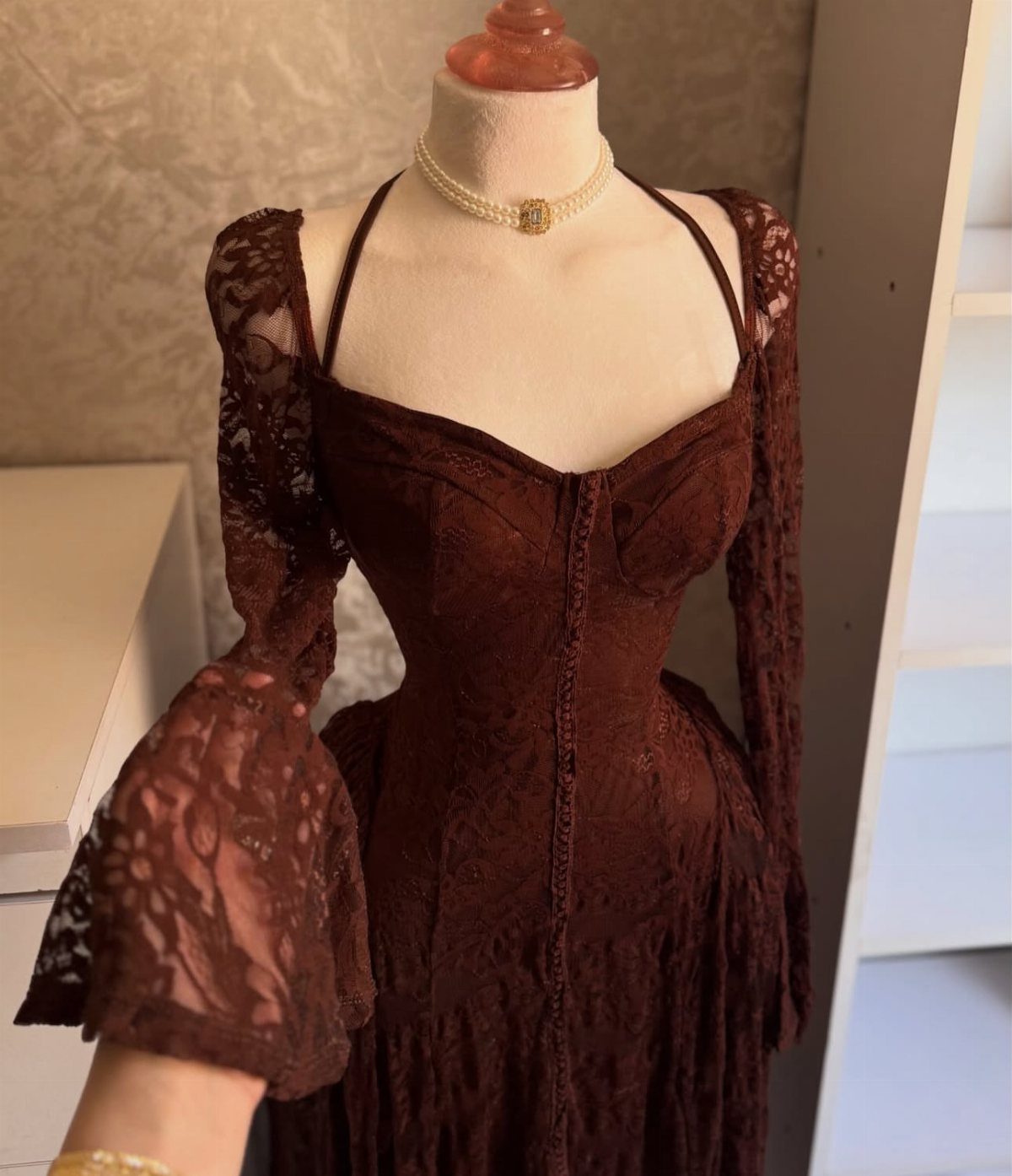
A corset waist on a maxi skirt gives lace a structure it rarely has alone. With burgundy lace and flared long sleeves, the dress keeps its shape through the torso while the length stays floor-bound and formal.
Pearls suit it well. I would keep the necklace as the only jewelry and let the lace pattern do the rest.
8. Bridal Ball Gowns
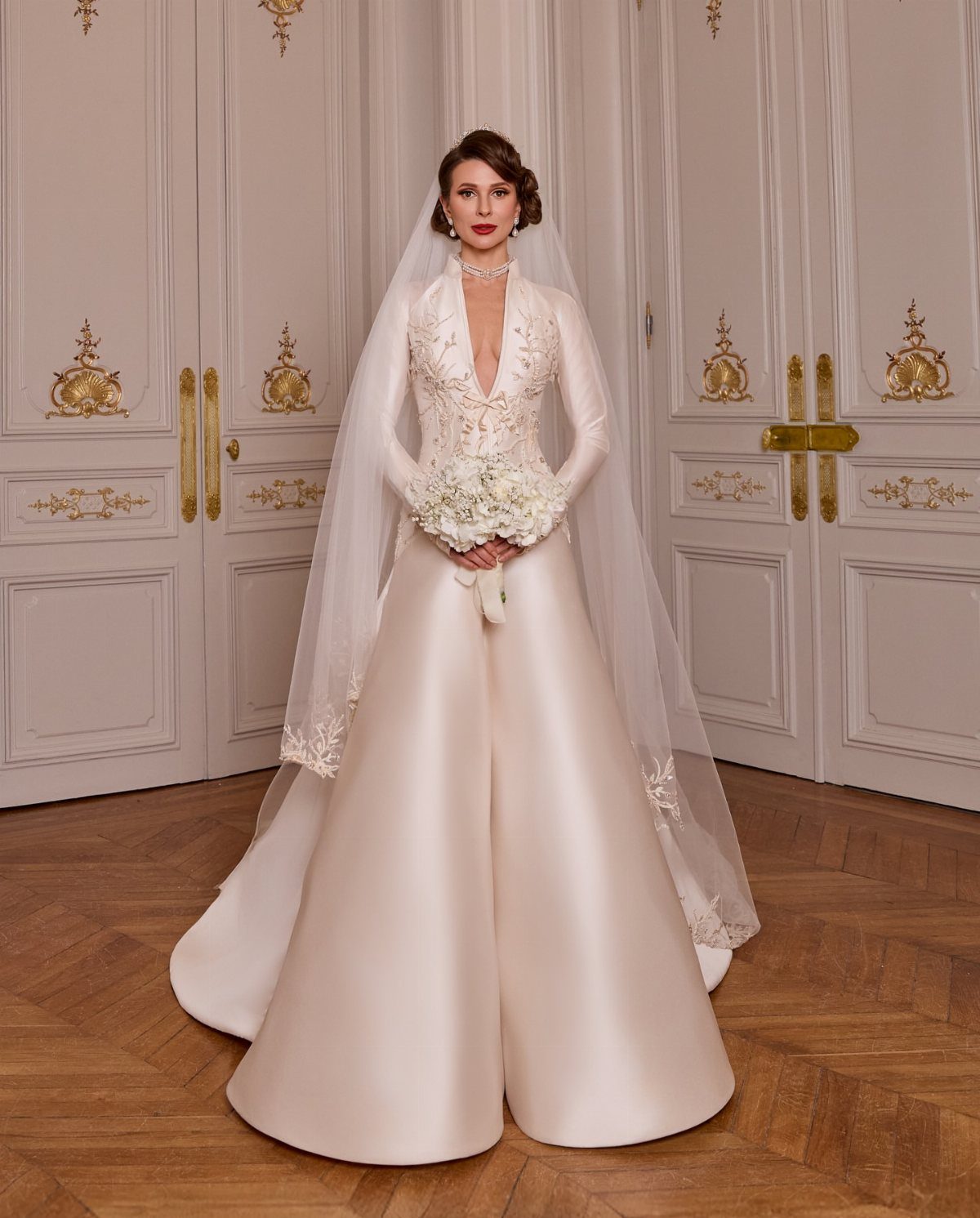
White satin gives a bridal ball gown its clean, polished surface, and long sleeves make it read as traditional rather than bare. A veil and a simple bouquet are enough finishing; the dress already supplies the formality.
If you want the sleeves to stay the focus, I would choose a plain veil without heavy edging. Satin shows every line, so try the gown on before deciding anything about fit.
9. Ruffled High-Neck Gown
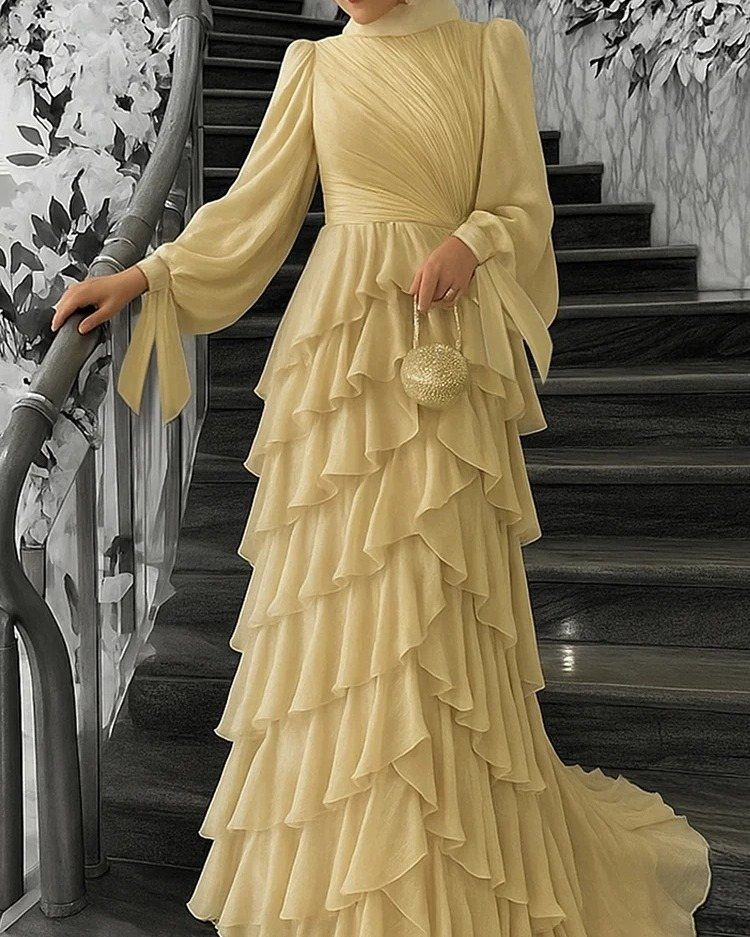
Pale yellow with a high neckline and a ruffled skirt is a soft combination, and the long sleeves keep it formal. Ruffles add movement at the hem, so the skirt does the talking from the waist down.
A small gold bag fits the color without crowding it. For me, this is the pick for a ball where you want something lighter than the usual jewel tones.
10. Belted Puff-Sleeve Gown
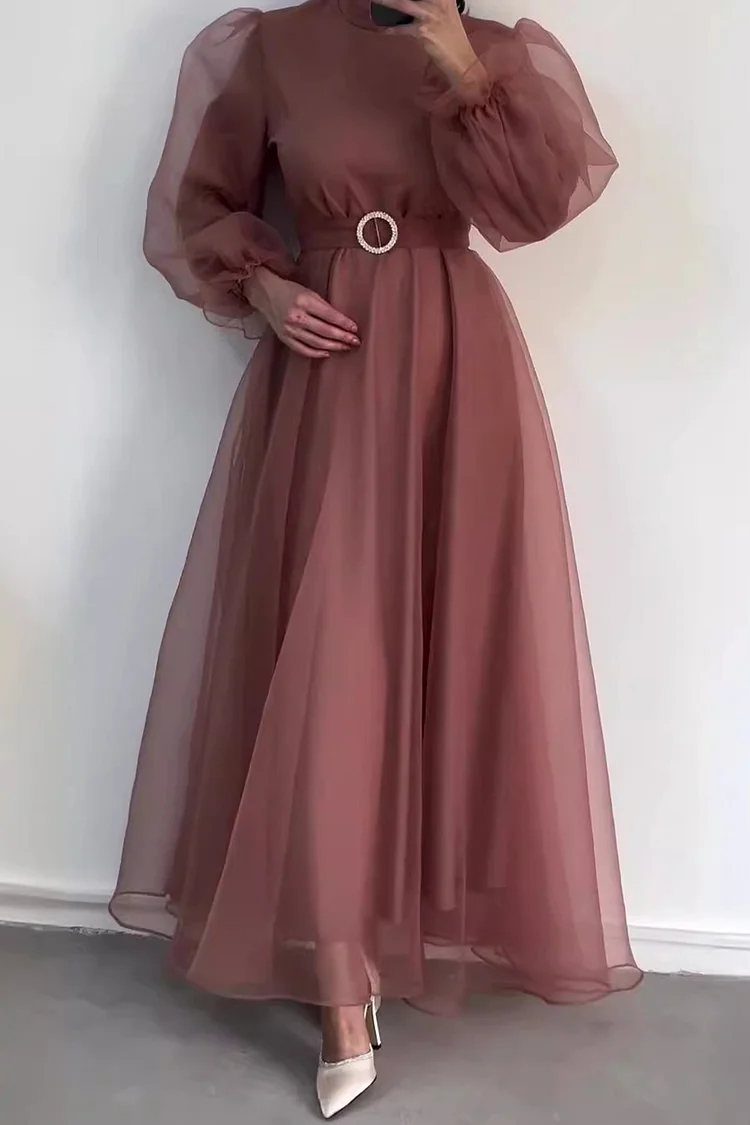
Sheer puff sleeves add volume without weight, and a matching belt with a round buckle marks the waist in the same mauve. Because the belt is tone on tone, the gown reads as one long line rather than two pieces.
Hair up shows off the sleeves. I would skip a necklace here, since the high sleeve volume and the buckle already give the eye 2 places to land.
11. Satin Ball Gowns
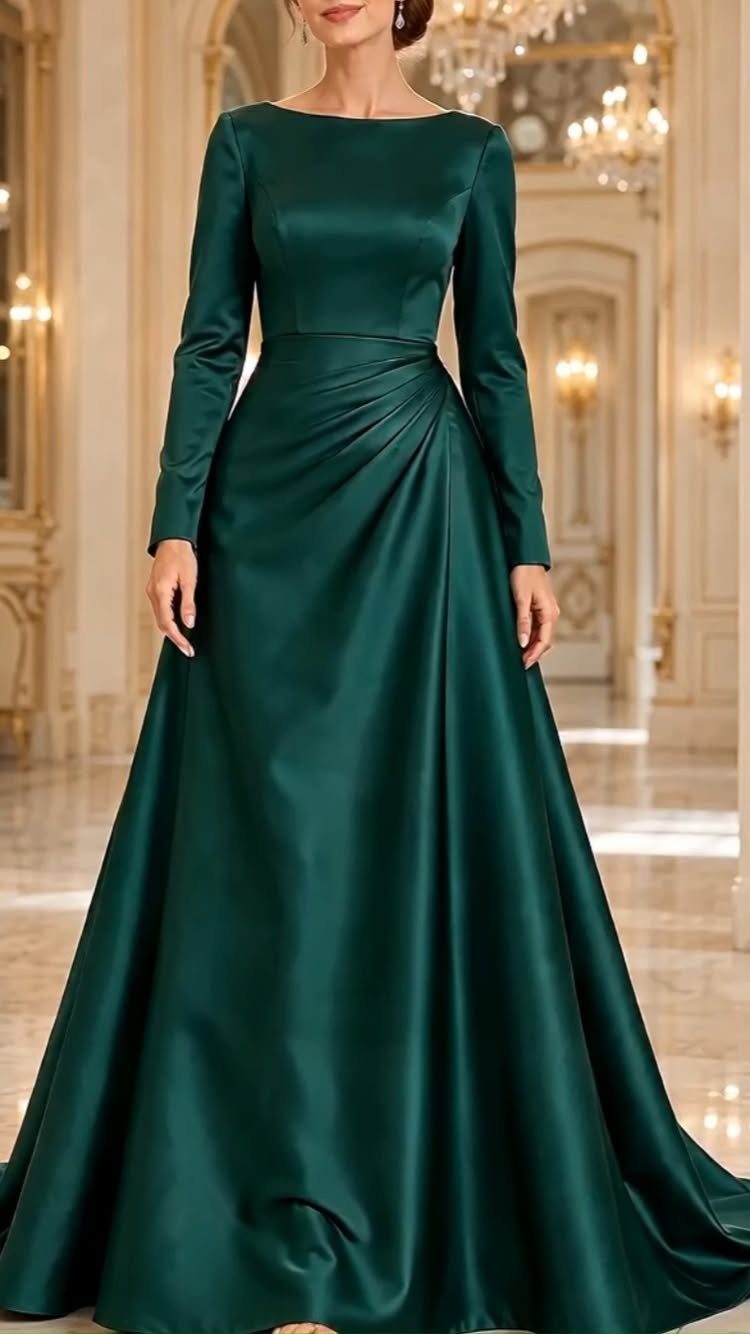
Smooth satin makes a floor-length, long-sleeved gown look formal right away, and a draped waist adds shape without any trim.
White, red, green and teal all work in this fabric, though deep emerald is the one I would choose for a ballroom with gold details.
Satin is unforgiving, so the fit has to be right. Pick a shade you love, because the fabric has nothing else to hide behind.
12. Embroidered Ball Gowns
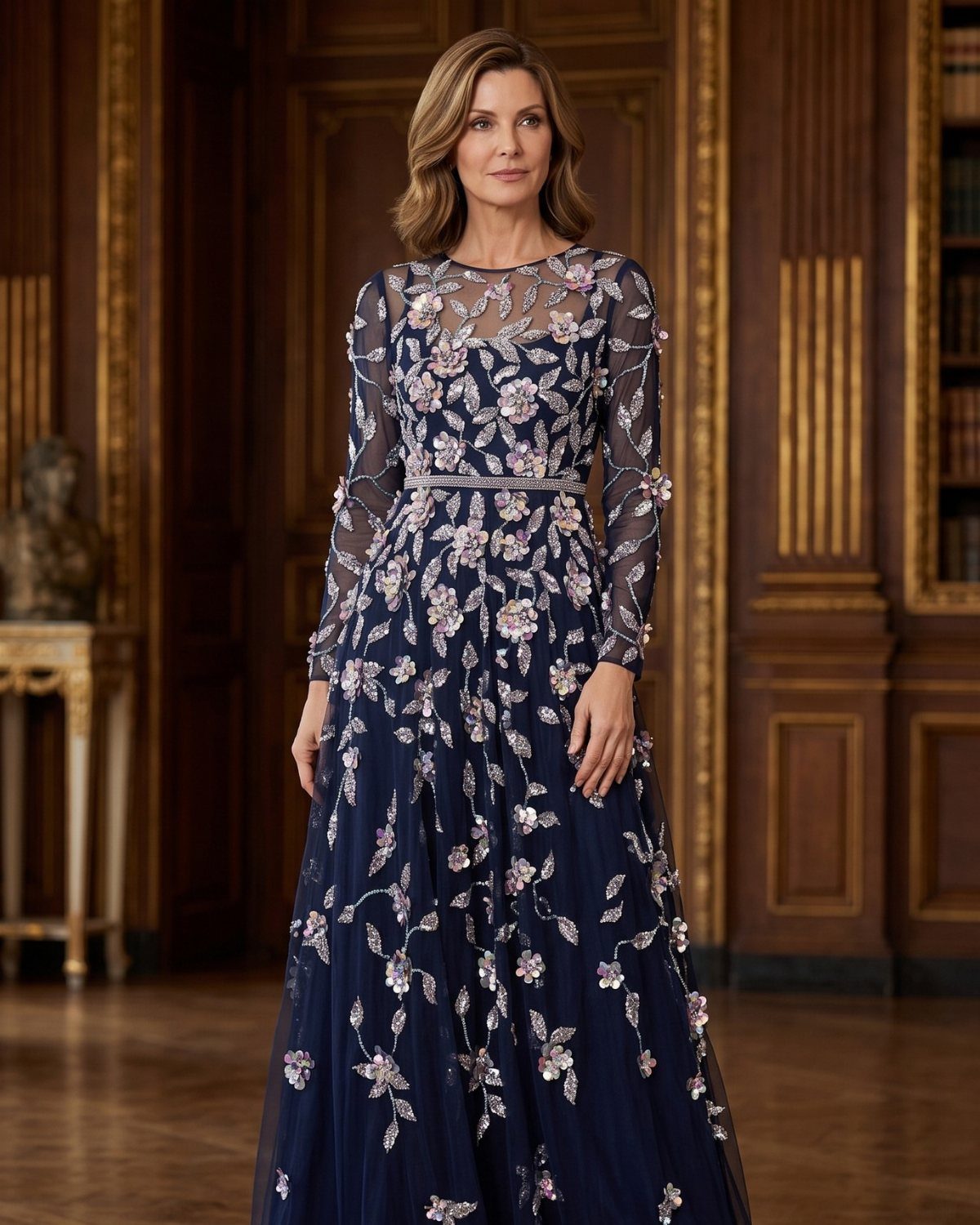
Floral embroidery gives a navy gown its pattern in thread rather than print, which keeps the dark base calm and formal. Long sleeves carry the stitching down the arm, so the dress feels finished from shoulder to hem.
Navy lets the embroidery stand out, so I would keep accessories minimal. This is a good choice if you want detail that reads as classic and not flashy.
13. Lace-Sleeved Gowns
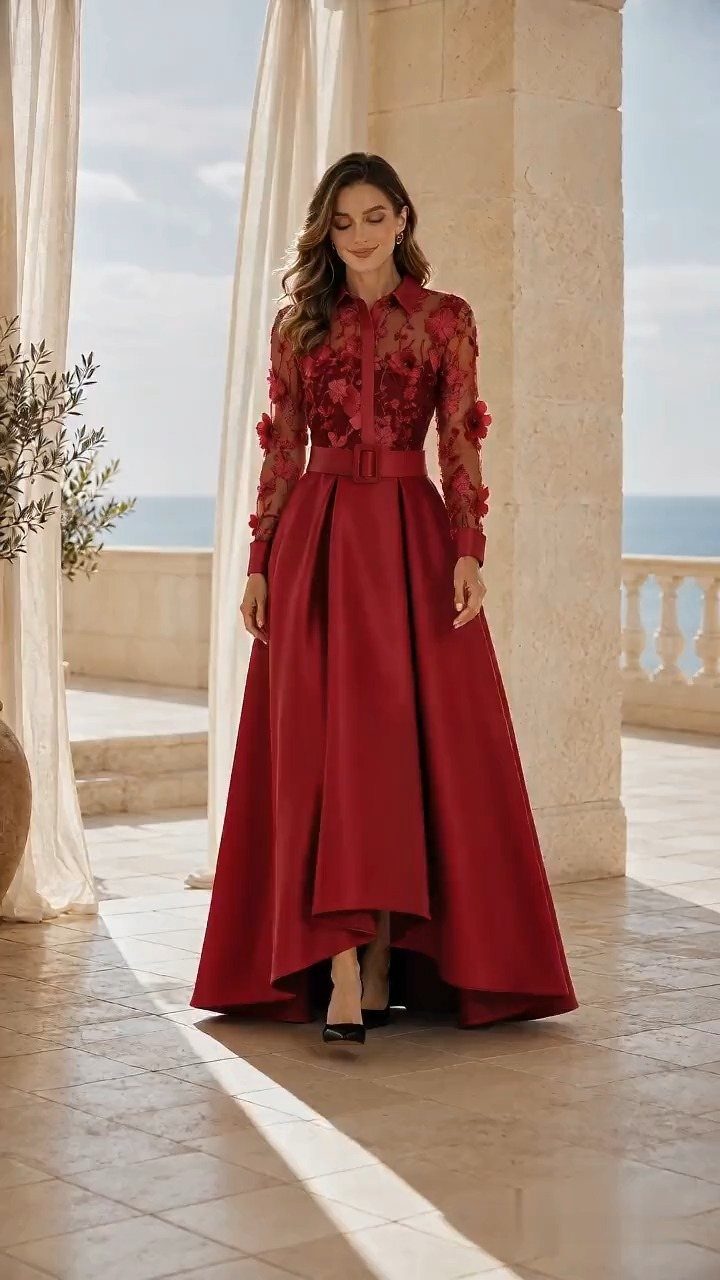
Lace sleeves give a red gown its detail where the eye lands first: the arm. With the full skirt below, the dress stays formal from cuff to hem, and the lace adds texture a plain sleeve would not.
Red lace needs little help, so I would keep jewelry to a pair of small earrings. If you want the sleeves to show, wear your hair back and choose a neckline that leaves the lace unobstructed.
14. Dramatic Cape Gowns
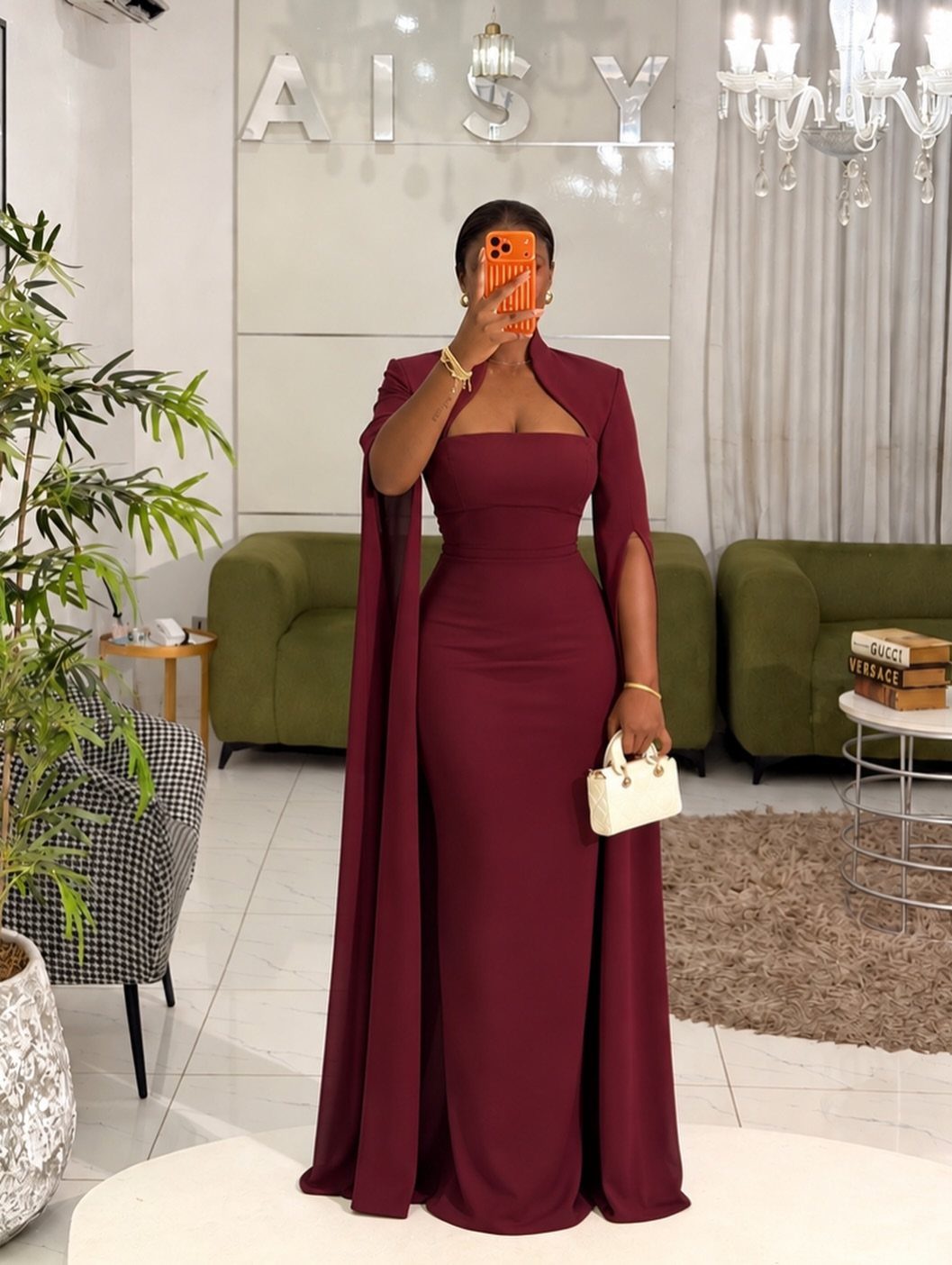
A cape drape or train changes how a gown leaves the room. In burgundy, the long sleeves keep the shape formal while the extra fabric behind adds movement a standard skirt lacks.
Try the dress on and walk in it before you commit, since a train needs room to move.
A rich shade like this carries the drama alone, so I would pick the dress for the drape and leave the accessories plain.