
The dresses here run from a tweed mini for coffee runs to a floor-length royal blue gown with a high slit, with velvet, corduroy, satin and denim in between.
Where you’ll wear it decides the pick: errands and office days suit tweed, a shirt dress or a sweater knit, while weddings and galas call for velvet or satin plus a wrap or long coat for the cold.
A heavier cloth like ponte, crepe, or a knit with some thickness hangs better and holds warmth, while thin jersey grabs every curve and leaves you cold by January.
1. Blue Dress for Coffee Runs
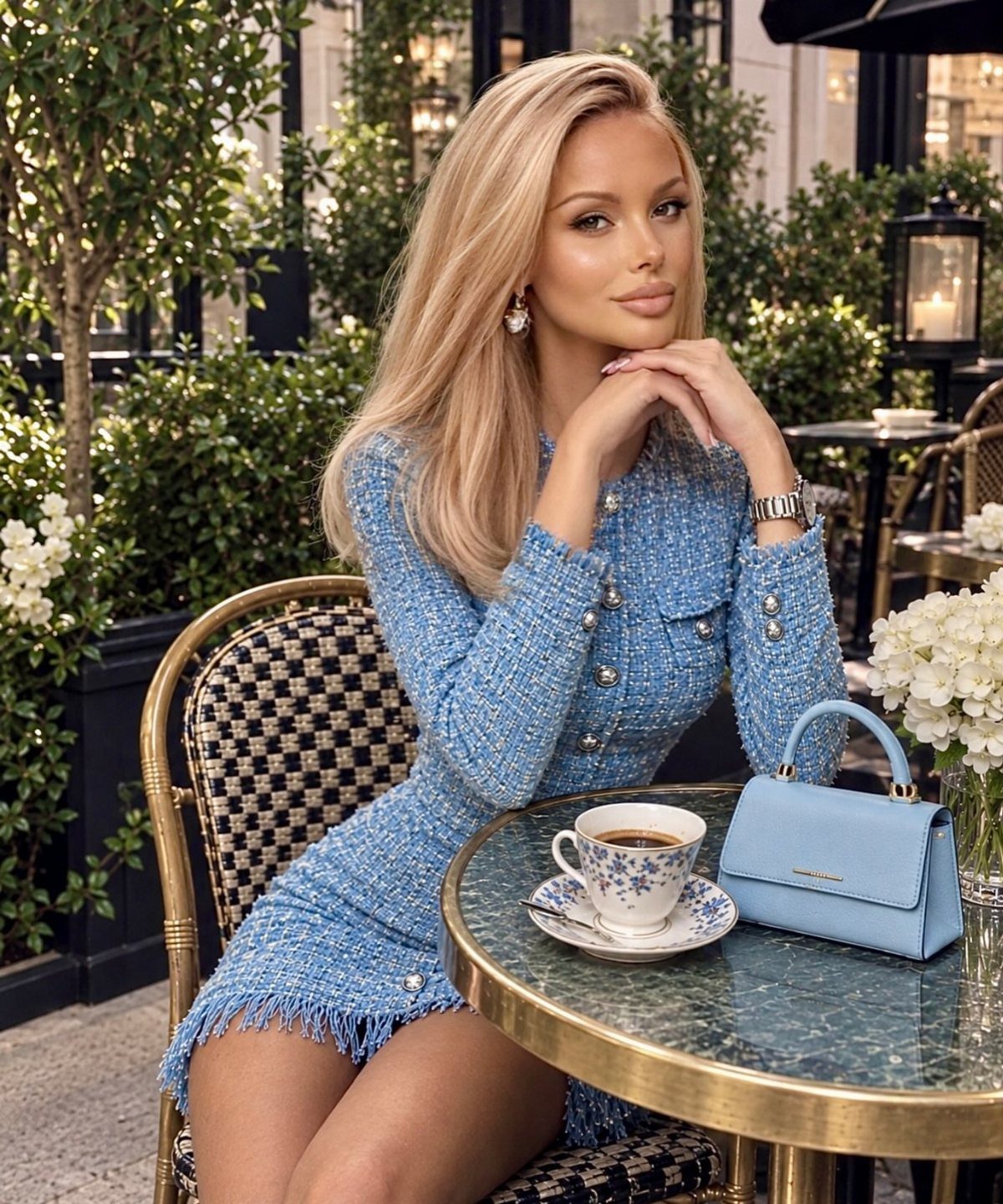
Tweed does the quiet work in a blue dress for errands. The woven texture reads dressed up even when the shape is a simple mini, so a stop for coffee never looks like you tried too hard.
A matching blue bag, as seen here, ties the outfit together without adding another print. I’d keep everything else plain: bare or sheer-tight legs, a flat or low boot, and nothing fussy at the neck.
2. Navy Office-ready Dress
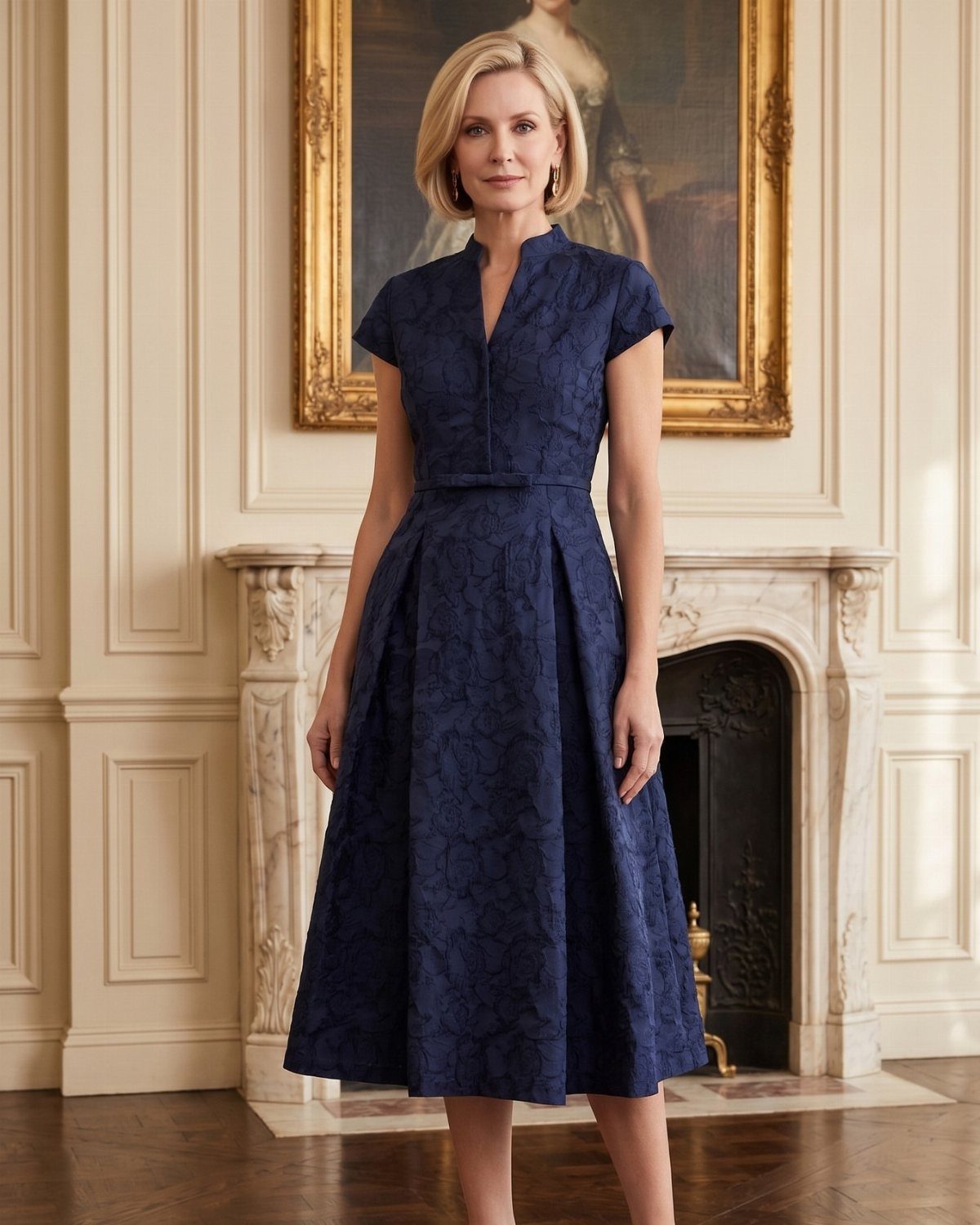
Navy with a woven texture is my pick for work, because the pattern in the fabric adds interest while the color stays serious.
A short-sleeve A-line cut like this one keeps the skirt moving and skips any clingy fit through the hip.
In winter, add a fitted blazer or a long coat over it, and wear opaque tights with a closed-toe shoe.
Check the size guide against your bust and waist measurements before ordering, since an A-line only looks sharp when the shoulders and chest sit right.
3. Soft Sky Blue Dress
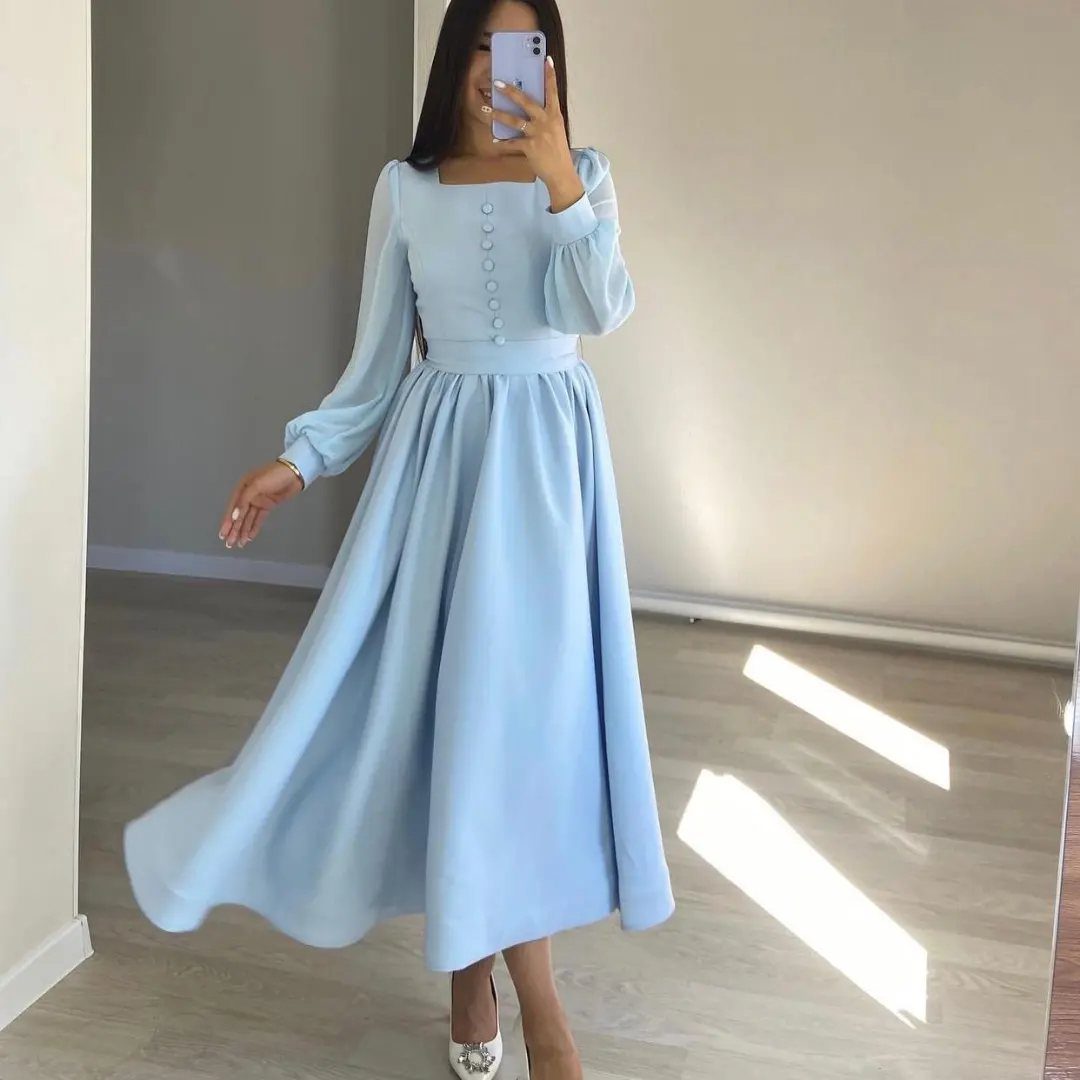
Pale sky blue feels soft in winter, which is exactly why it works against gray days. Long sleeves, a button front and a belt give this version enough structure to wear to lunch or a casual office day.
The belt is the part I’d use on purpose: cinch it at your natural waist and the flared skirt falls from there. Pale shades show light through thin fabric, so hold the dress up to a window before you commit.
Pair it with tan or white boots and a camel coat.
4. Vivid Blue Shades
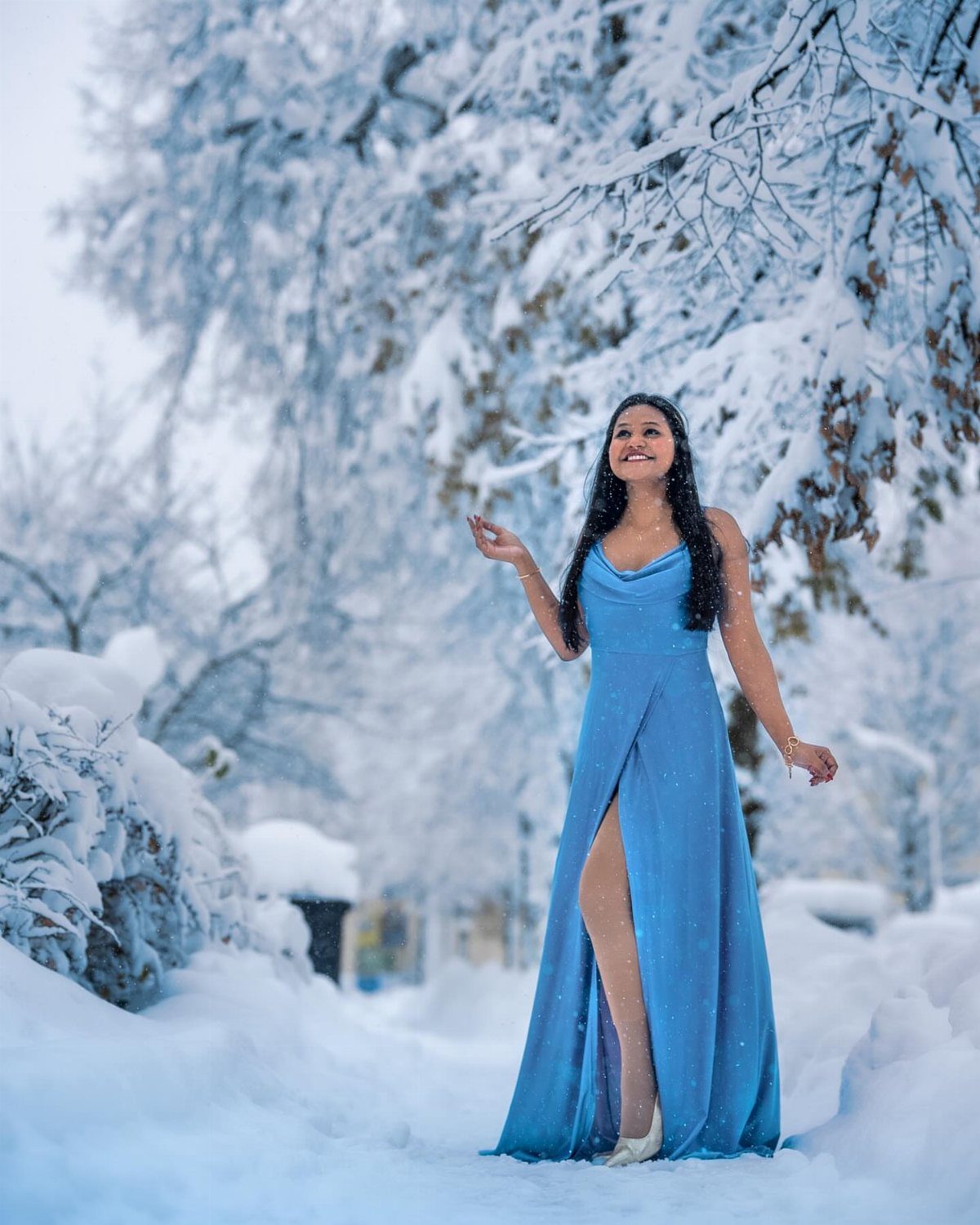
A saturated blue like cobalt or royal holds its own against snow and gray skies, so keep everything else quiet: black tights, a camel coat, nothing that competes.
This floor-length gown with a high slit is a formal pick, so the shade does most of the styling and the jewelry can stay minimal.
Choose by undertone: bright cobalt and royal tones suit most skin tones, but try them in daylight since they can look different under store lighting.
A long coat in black or cream keeps the color clean. The slit is lovely for walking, though in real cold it means a warm layer is non-negotiable.
5. Shirt Dresses
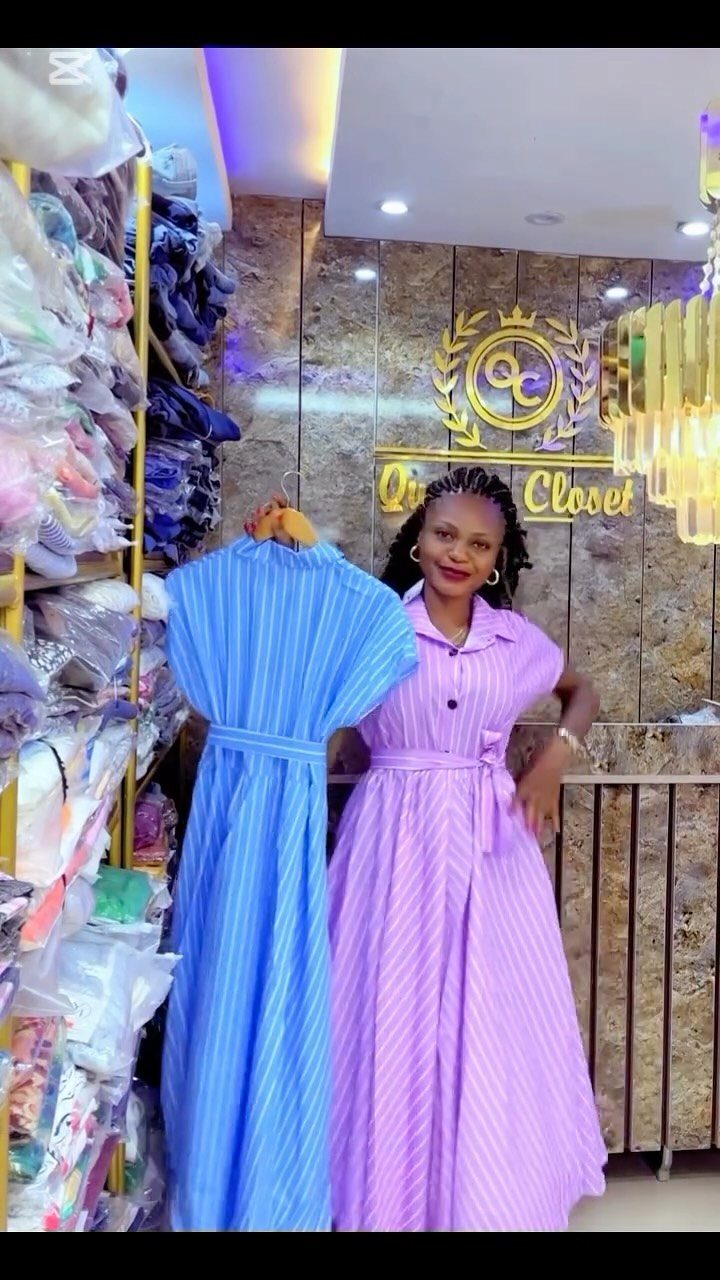
Stripes plus a collar-and-placket cut give a shirt dress its crisp, tailored feel, and the blue-and-white version is the easiest of all to wear again and again.
It runs from errands to a casual office day with only the shoes changing.
Belt it if you want shape, or leave it loose for comfort. For winter, layer a fine knit under the collar, then add tights and ankle boots.
Check the length in the size guide, because shirt dresses vary a lot from mini to midi, and the hem decides how versatile it is.
6. Jersey Dresses
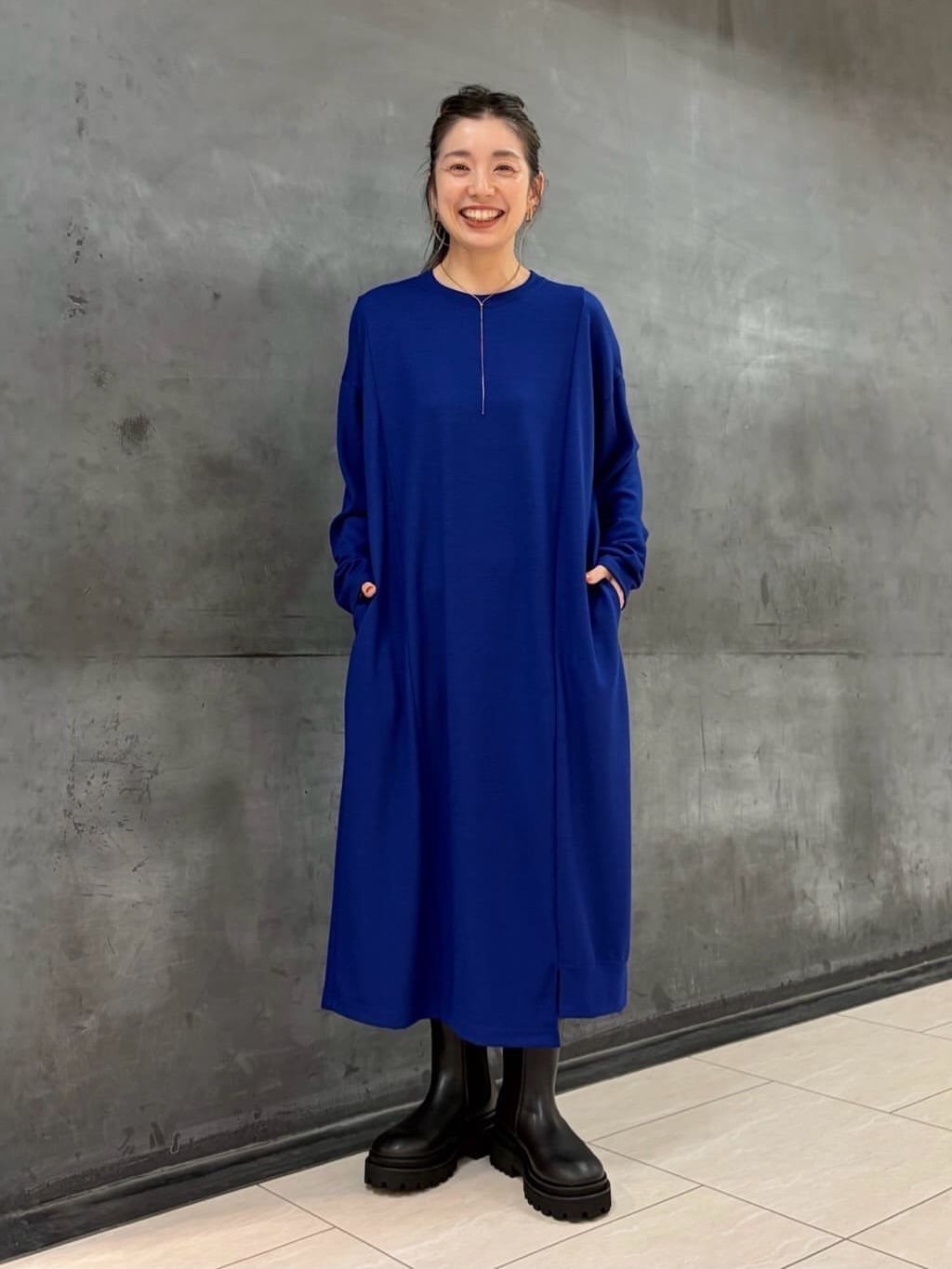
Jersey is the comfortable choice: it stretches, drapes and packs without wrinkling, which makes a long-sleeved royal blue midi the most low-effort winter dress you can own. It moves with you through a full day of plans.
Jersey shows every line underneath, and that is its one real drawback; a smooth slip with bonded, flat edges keeps the silhouette clean. Chunky black boots balance the soft drape and add weight at the hem.
Look for a medium-weight knit; thin jersey clings and feels cold in January. Add a long coat and you’re set.
7. Sweater Dresses
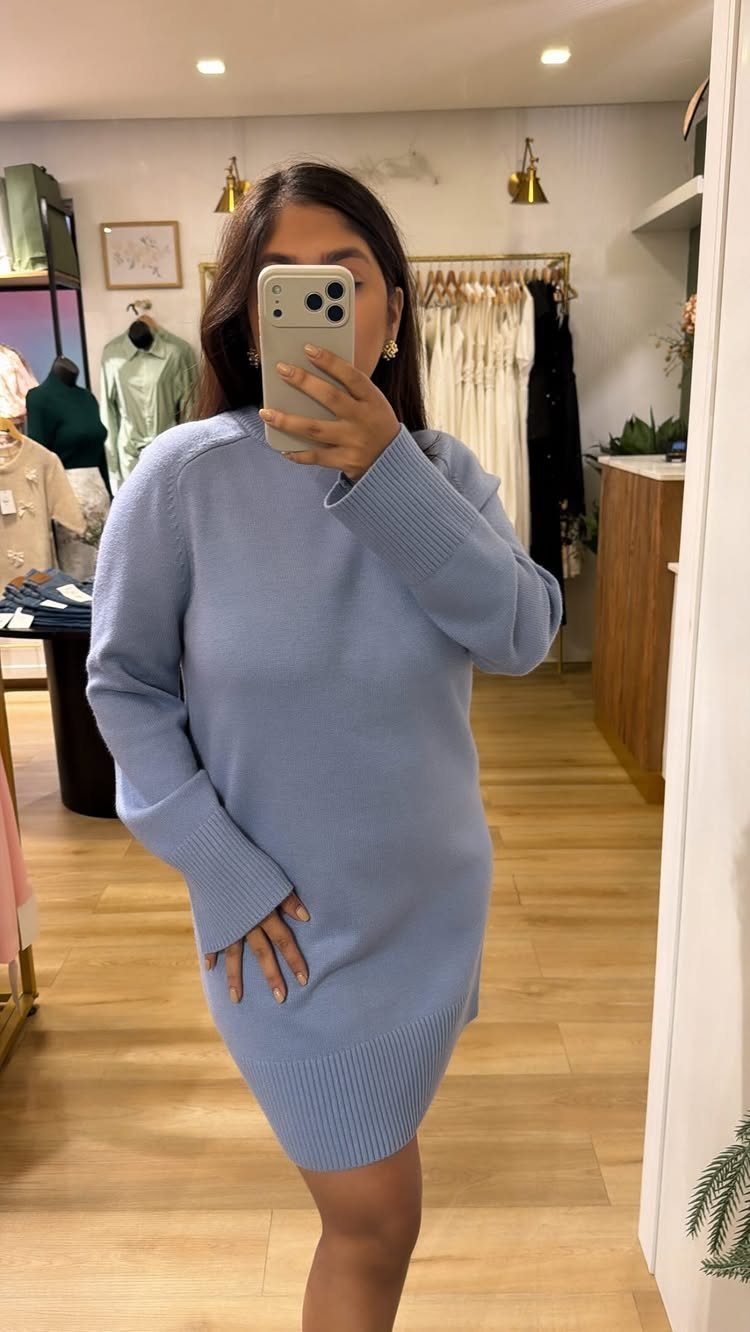
Light blue knit makes the coziest version of a winter dress, and a long-sleeved sweater shape needs very little added to it. Tights and ankle boots are enough, with a coat in camel or cream over the top.
Choose a medium-weight knit with some body, because a thin one clings and loses its shape by afternoon. A belt at the waist is optional, and I’d only reach for one if the dress runs boxy.
8. Ruching Details
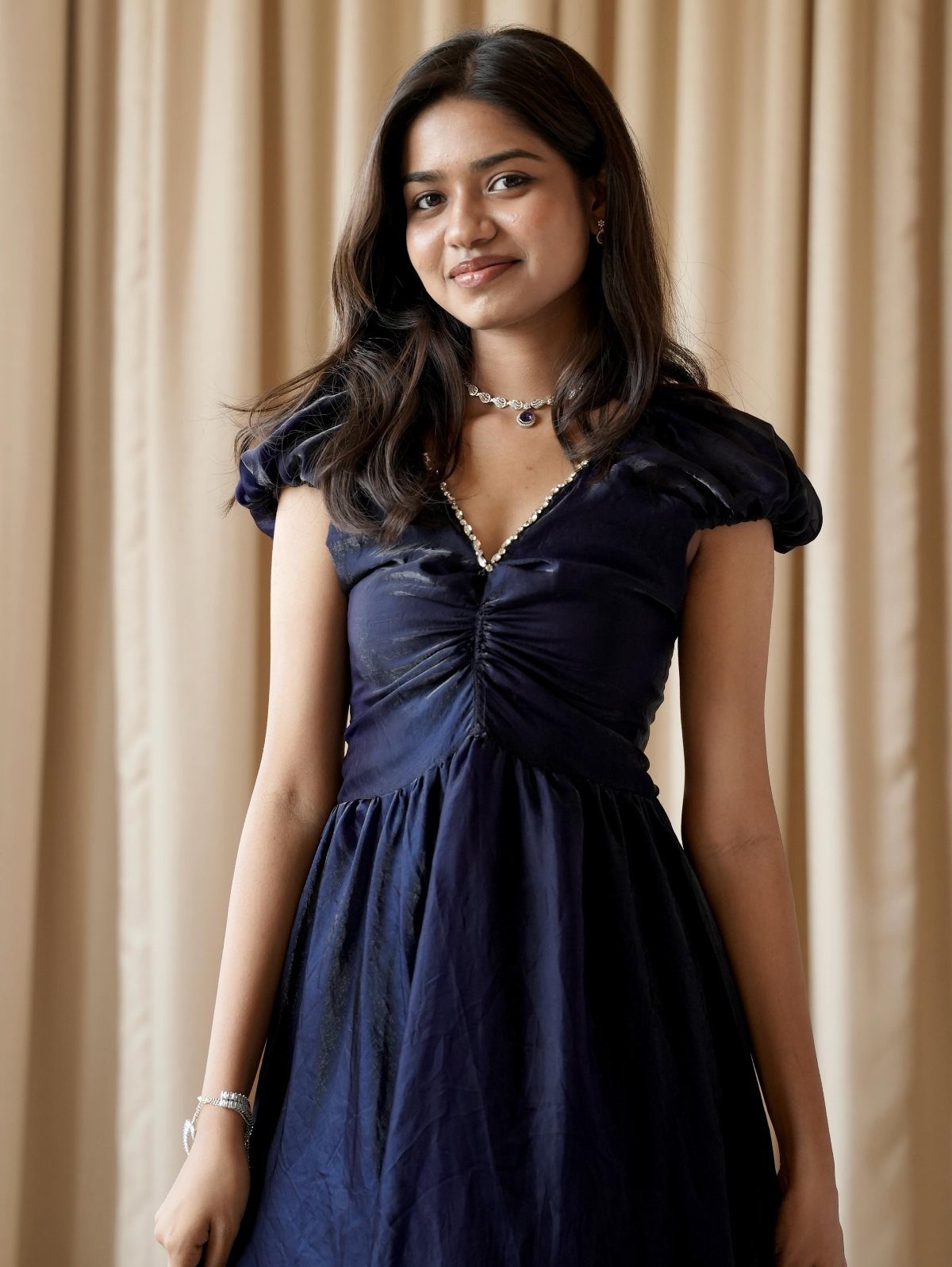
Navy with ruching across the bodice looks dressed up before you add a single accessory. The gathered fabric draws the eye to the middle of the dress and adds texture without a print.
Keep the jewelry simple, like the delicate necklace here, so the gathers stay the focus. Ruching sits right over the bust and waist, so measure both and compare them to the size guide before ordering.
9. Denim Dresses
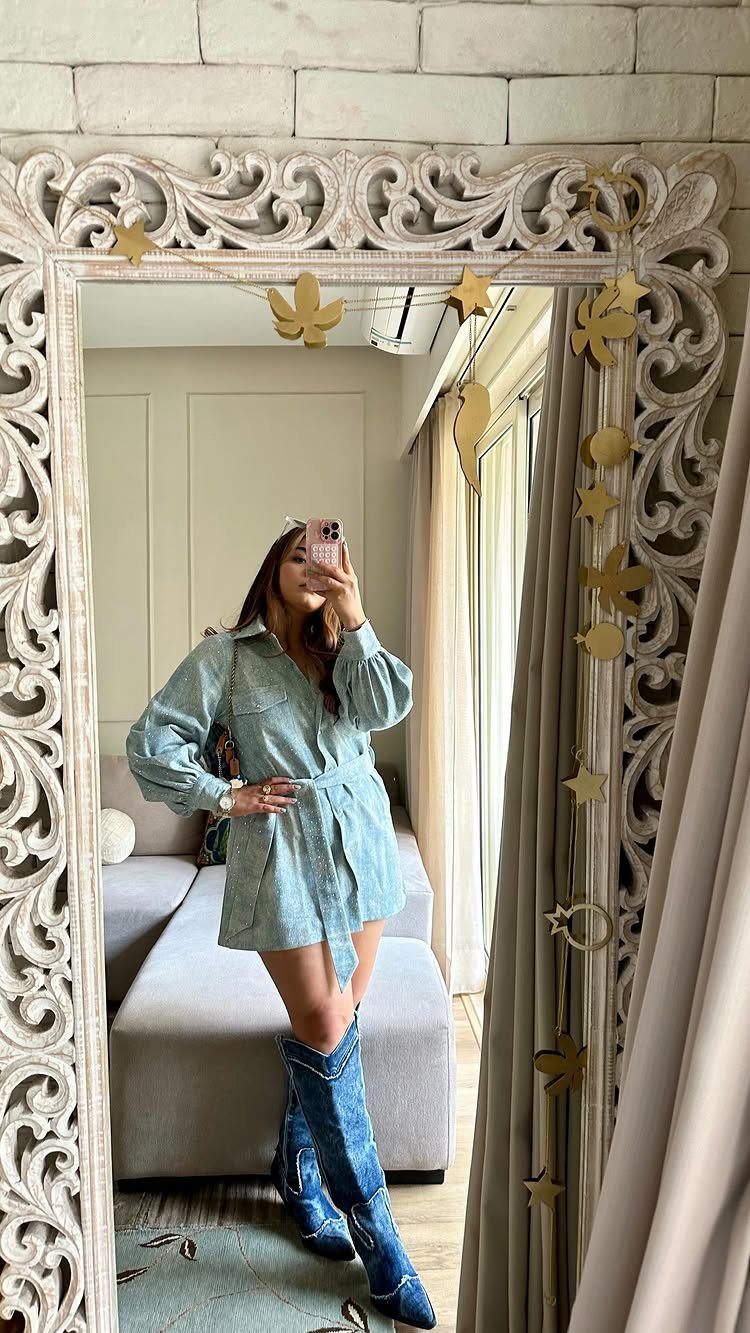
A light blue denim shirt dress with boots in a matching blue is a tonal look, and I like it far more than I expected to.
Keeping the denim in one family of shades makes the outfit read as a single, long line.
If that feels like too much blue, switch to brown or black boots and let the dress stand alone. Check where the hem lands against the top of the boot, since a few inches of gap changes the whole proportion.
10. Waisted Dresses
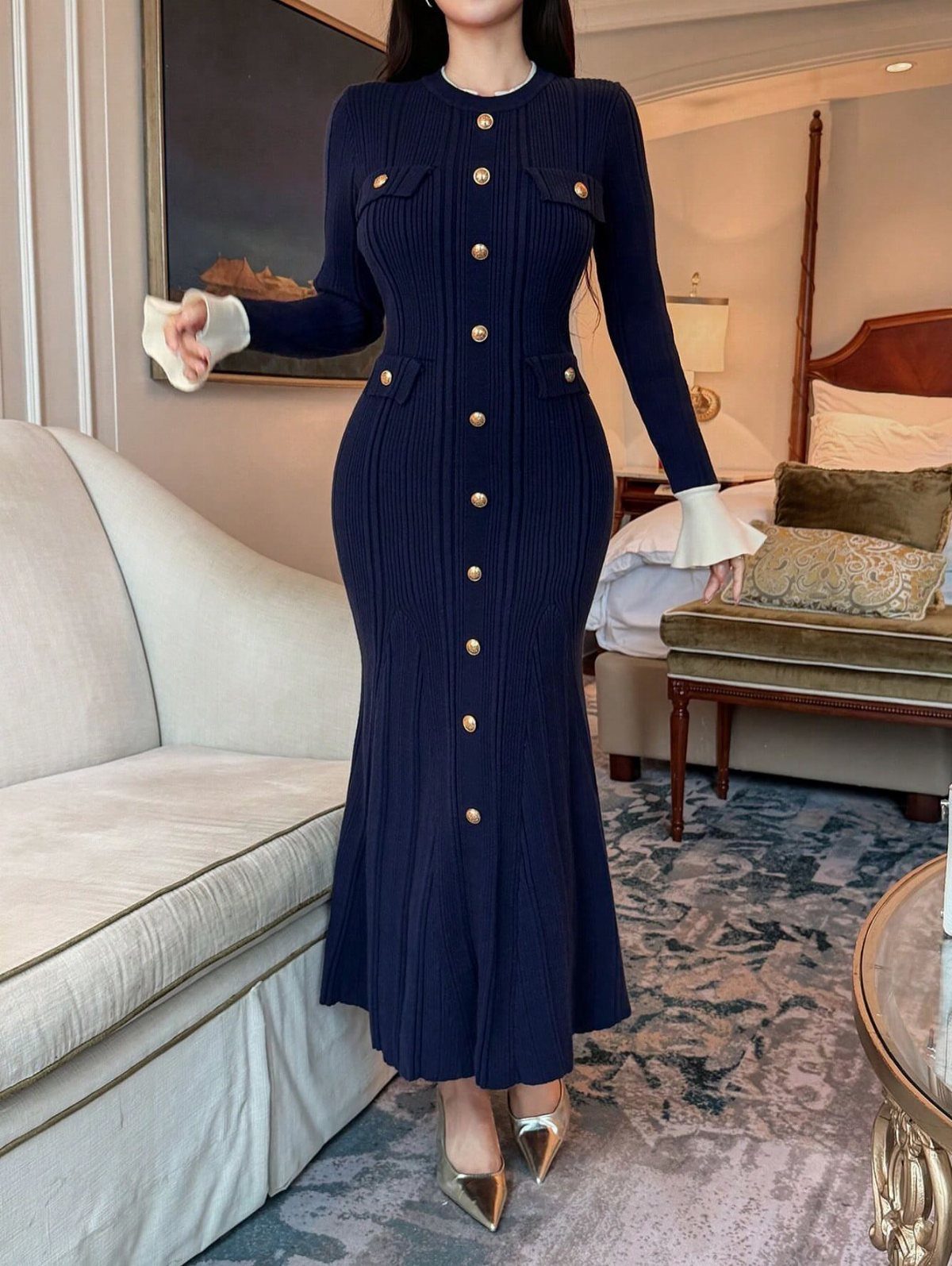
Ribbed knit with a defined waist does the shaping for you, so skip the extra belt.
On a navy waisted dress, gold buttons and white cuffs add enough detail at the chest and wrists that you can skip a necklace and extra accessories.
Gold earrings pick up the buttons without competing with them. For cold days, add opaque tights and low boots, and wear a long coat that leaves the waist visible when it’s open.
11. Fit and Flare Dresses
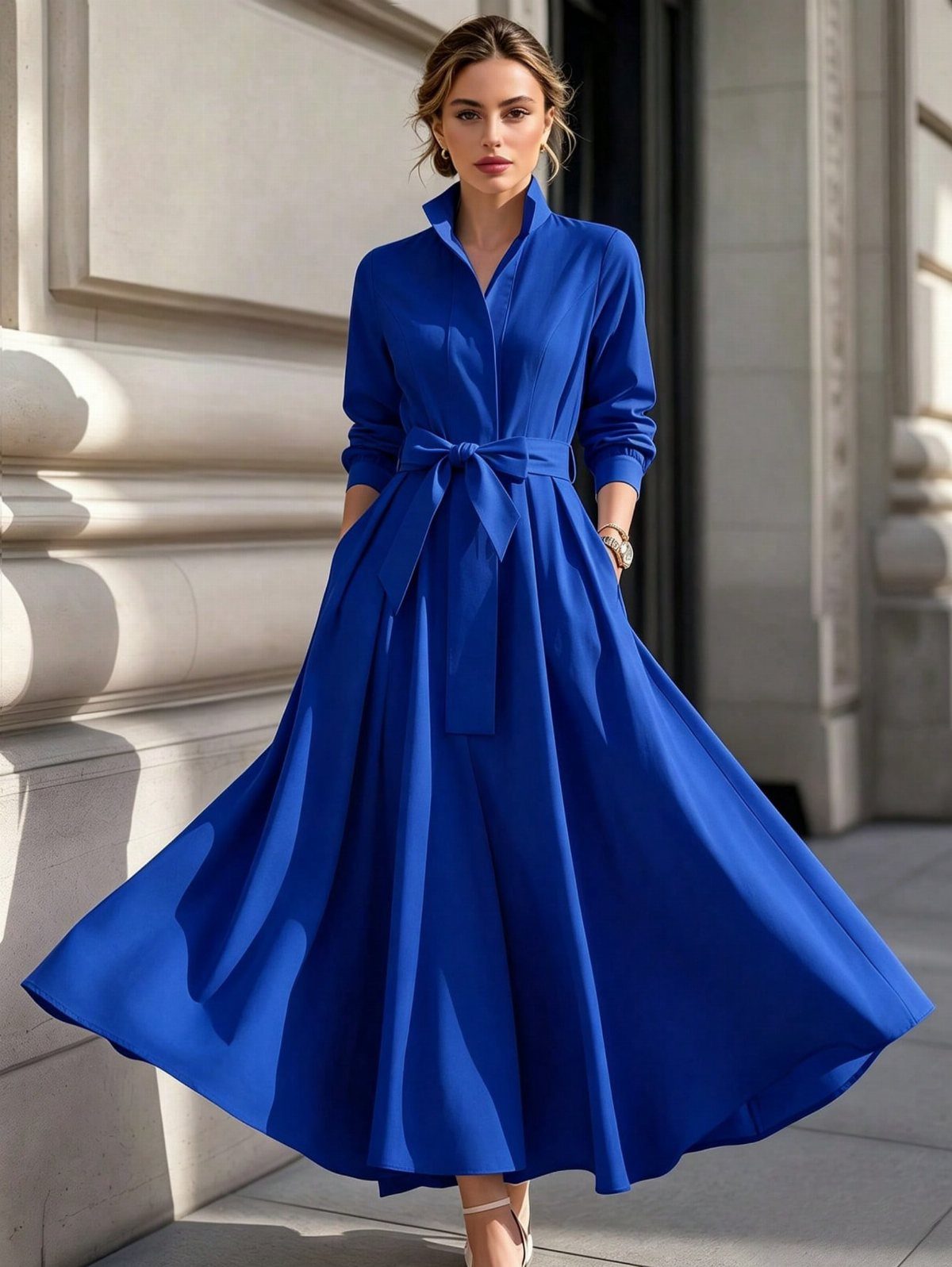
Royal blue with a flared skirt and a tie at the waist is a shape that suits almost any body, because the fitted top half and the skirt swinging from the waist do the balancing.
Pull the tie snug, then let the skirt fall naturally.
Size by bust and waist and let the skirt take care of itself. A cropped jacket or fitted coat keeps the flare visible, whereas a long, straight coat hides it.
12. Slip Dresses
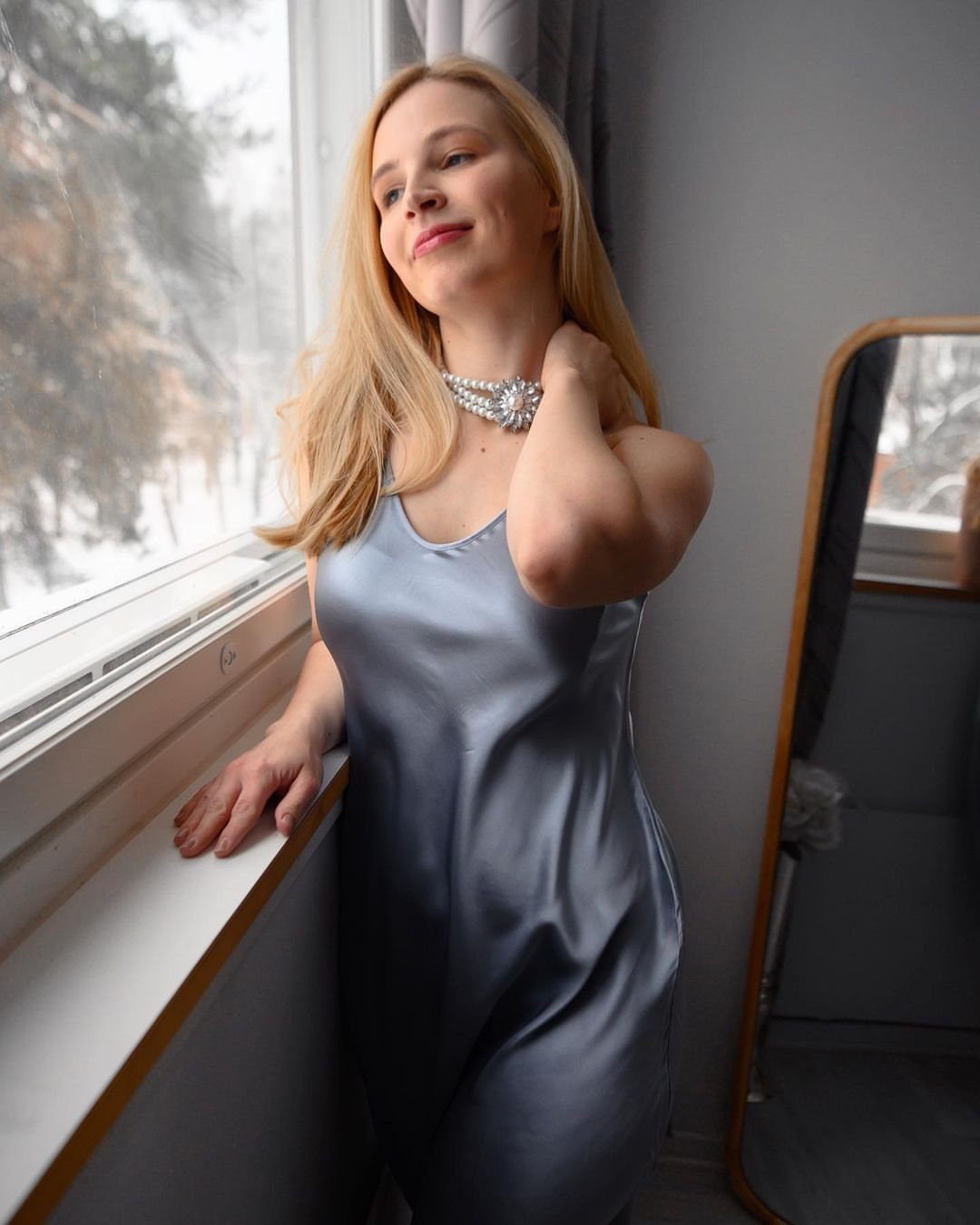
A blue satin slip dress is the lightest dress you can wear in winter, so styling it is mostly about what goes over and under it.
Wear a fine turtleneck beneath, or a chunky knit or wool coat on top, and add tights.
Pearls, as seen here, make it feel formal enough for dinner. For daytime, swap them for a plain chain and let the sweater do the talking.
13. Kaftan Dresses
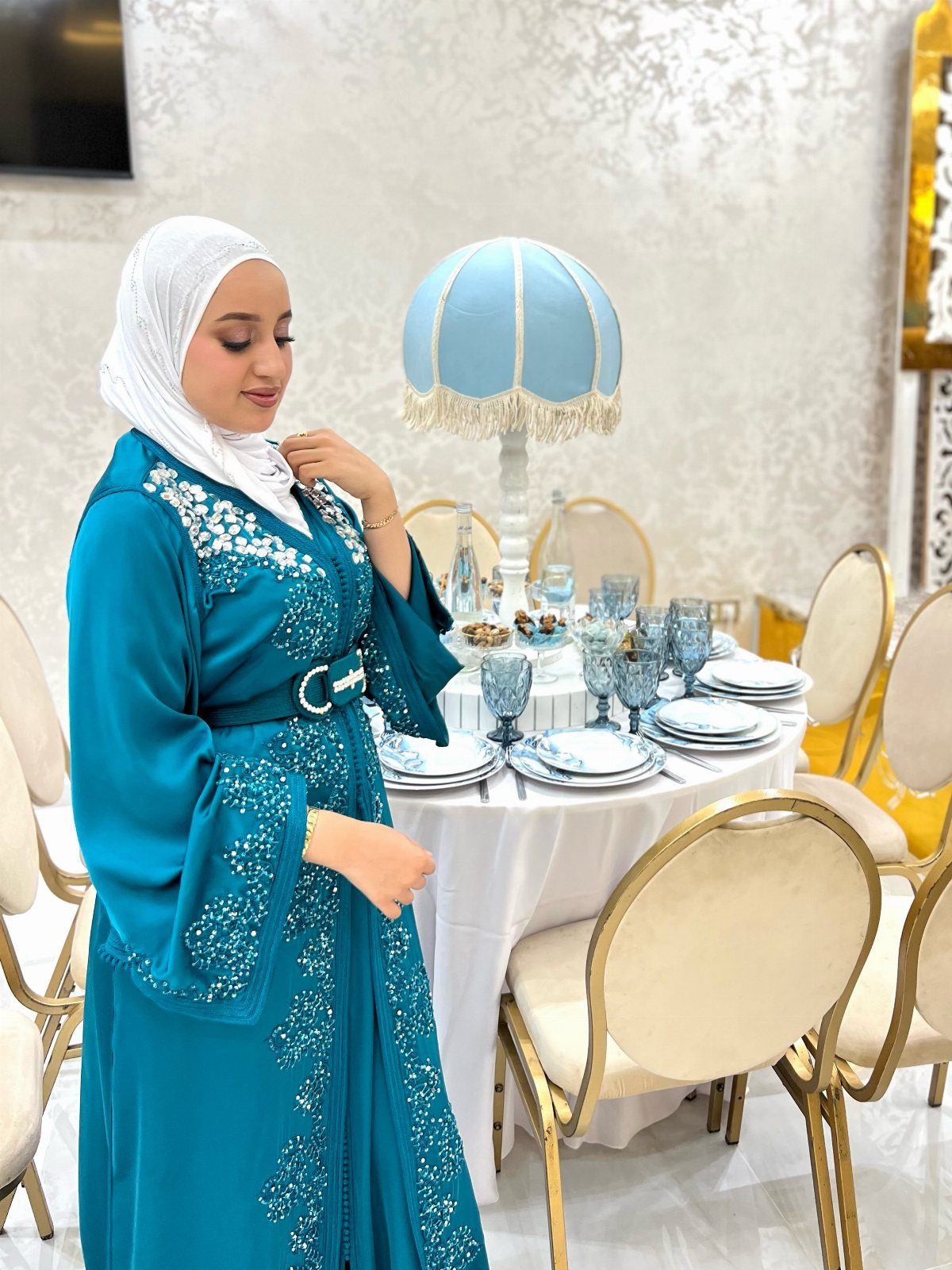
A kaftan cut skips the waist seam altogether, so the fabric falls loose from the shoulders and the embellishment carries the dress. In teal blue with embroidery down the front, it needs almost no styling.
Because it’s roomy, size by shoulder and bust measurements in the size guide, and let the rest hang.
In winter, a long coat or open cardigan in a neutral shade fits over the loose sleeves better than a fitted jacket would.
I’d keep shoes and bag plain, so the embroidery stays the one detail people notice.
14. Pinafore Dresses
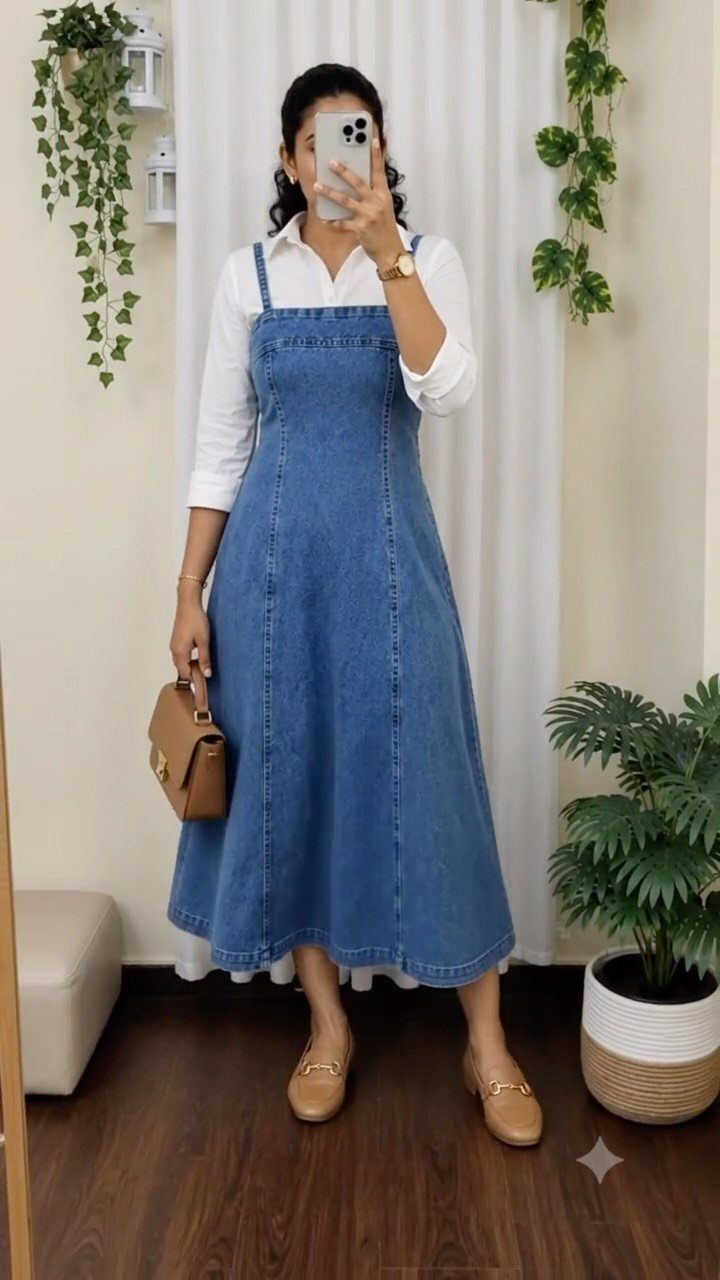
Denim pinafores work for everyday plans because the dress is basically a layering piece: the shirt underneath sets the mood.
A white collared long-sleeved shirt, as here, reads neat and a little preppy, while a fine knit turtleneck makes it warmer for January.
Long hems like this one look best with flat boots or clean sneakers. Check the armholes against the size guide, since a pinafore sits over another layer and a tight cut will bunch the sleeves.
A brown bag and shoes keep the blue denim from feeling flat.
15. Striped Dresses
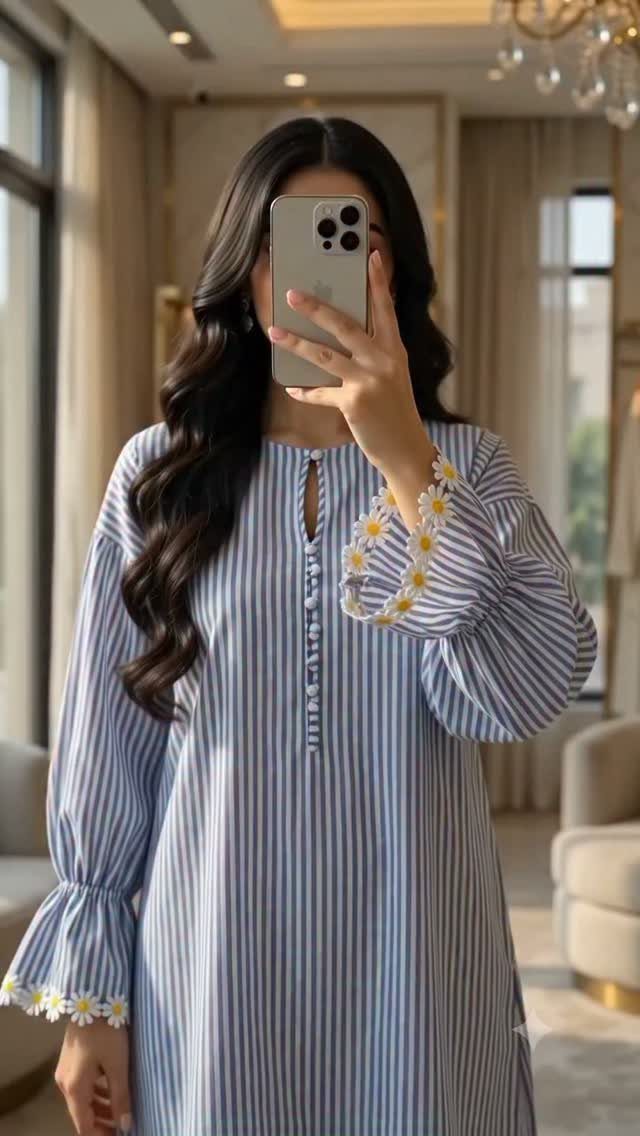
Blue and white stripes are a classic, and small embroidered daisies on the cuffs and neckline make this one softer than a plain stripe.
The detail sits at the wrists and collar, right where a coat opens, so it stays visible even with outerwear on.
Wear it with opaque tights and ankle boots in winter, and skip a necklace so the neckline embroidery isn’t crowded. Long sleeves make this an easy fit for casual office days as well as weekend plans.
If the stripes are wide, check how they run across the bust in the size guide measurements before ordering.
16. Checked Dresses
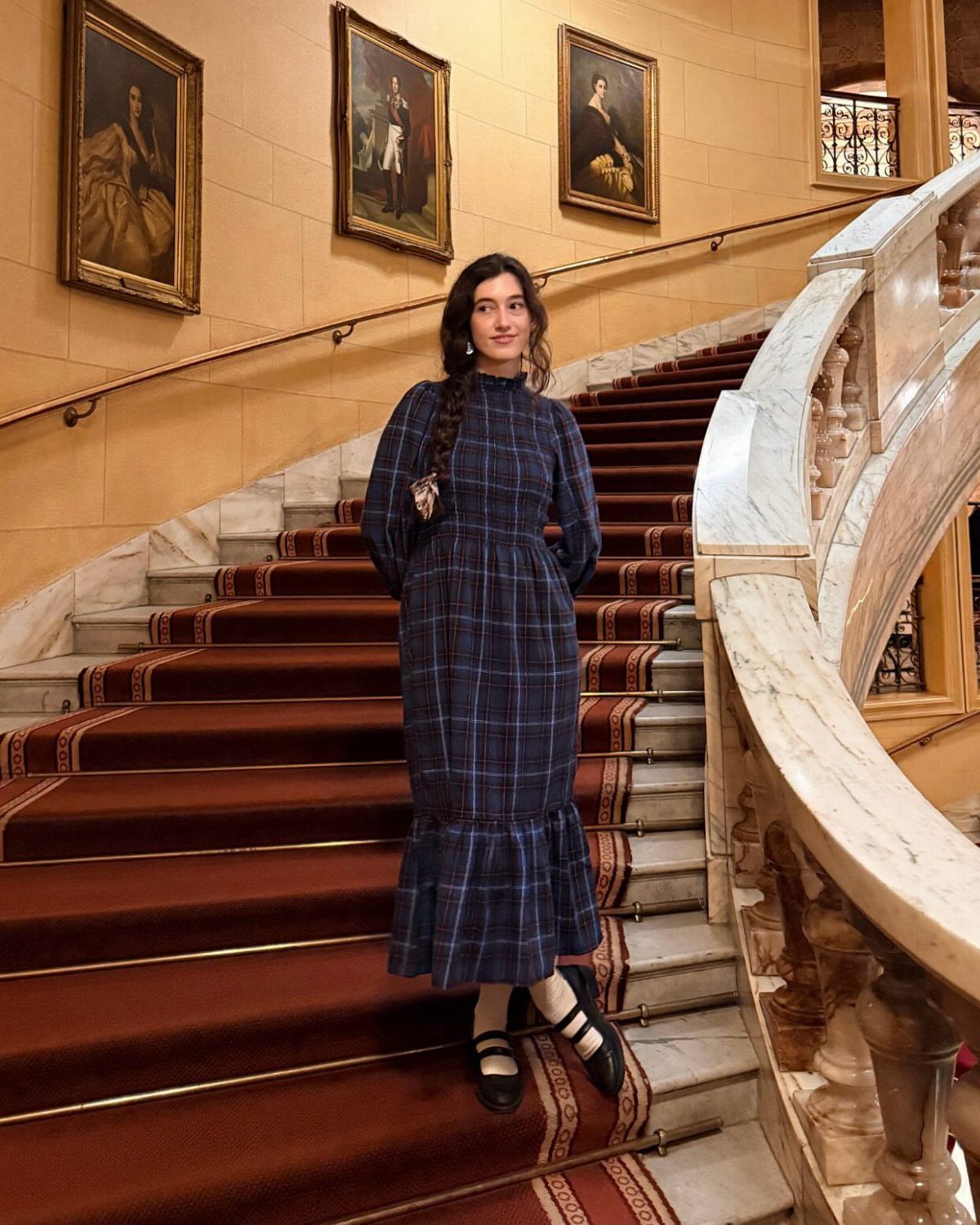
Navy checks read quieter than most patterns, which is why a long-sleeved checked dress moves easily from work to dinner.
The darker the base color, the more formal the check looks, so this is a good pick for office days in winter.
Black shoes and opaque tights keep the outfit dark and tidy. Choose a small to medium check; large squares can make a body look wider and are harder to match at the seams.
A camel coat or a fitted blazer over the top finishes the look without any extra effort.
17. Satin Dresses
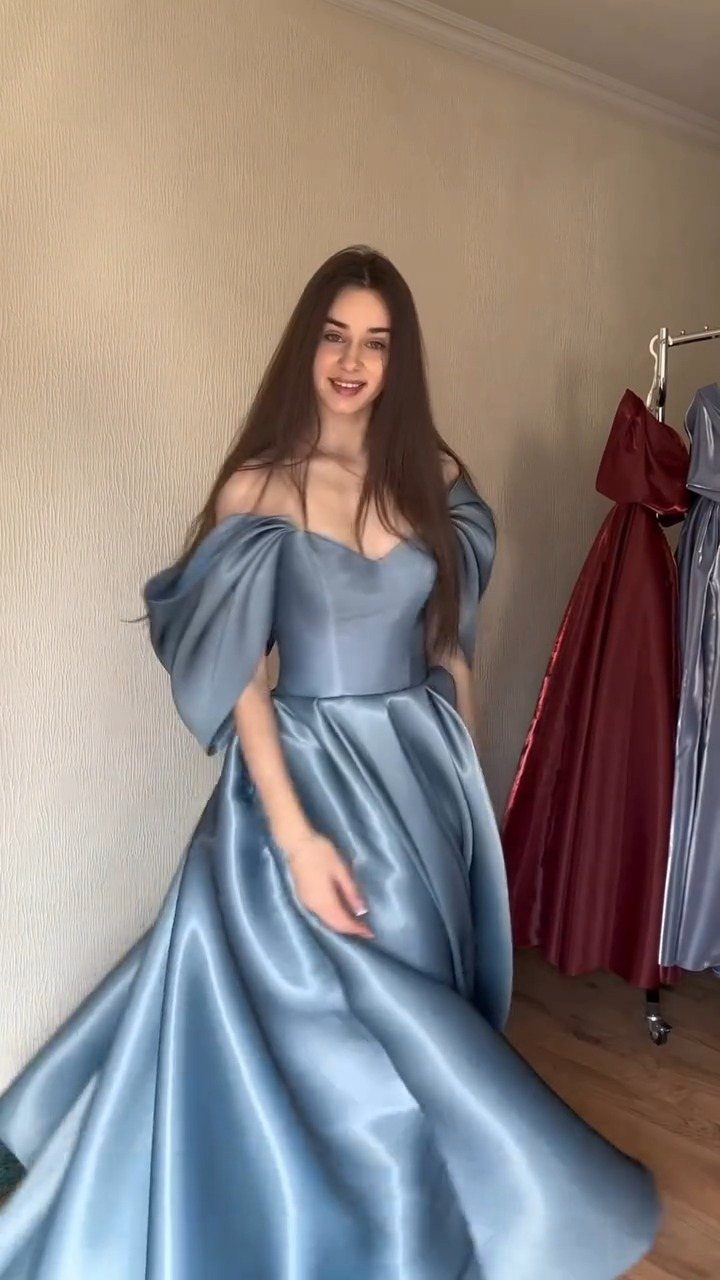
Satin catches light on every fold, so a pale blue gown with off-the-shoulder sleeves gets its drama from the fabric alone. It is a formal choice, best for weddings, galas and winter parties rather than errands.
Bare shoulders and cold weather don’t mix, so plan a wrap, faux fur stole or long coat for arriving and leaving. Satin also marks easily and shows every line underneath, so a smooth slip and careful steaming matter.
Keep jewelry minimal, since a voluminous skirt like this one is already the main event.
18. Velvet Dresses
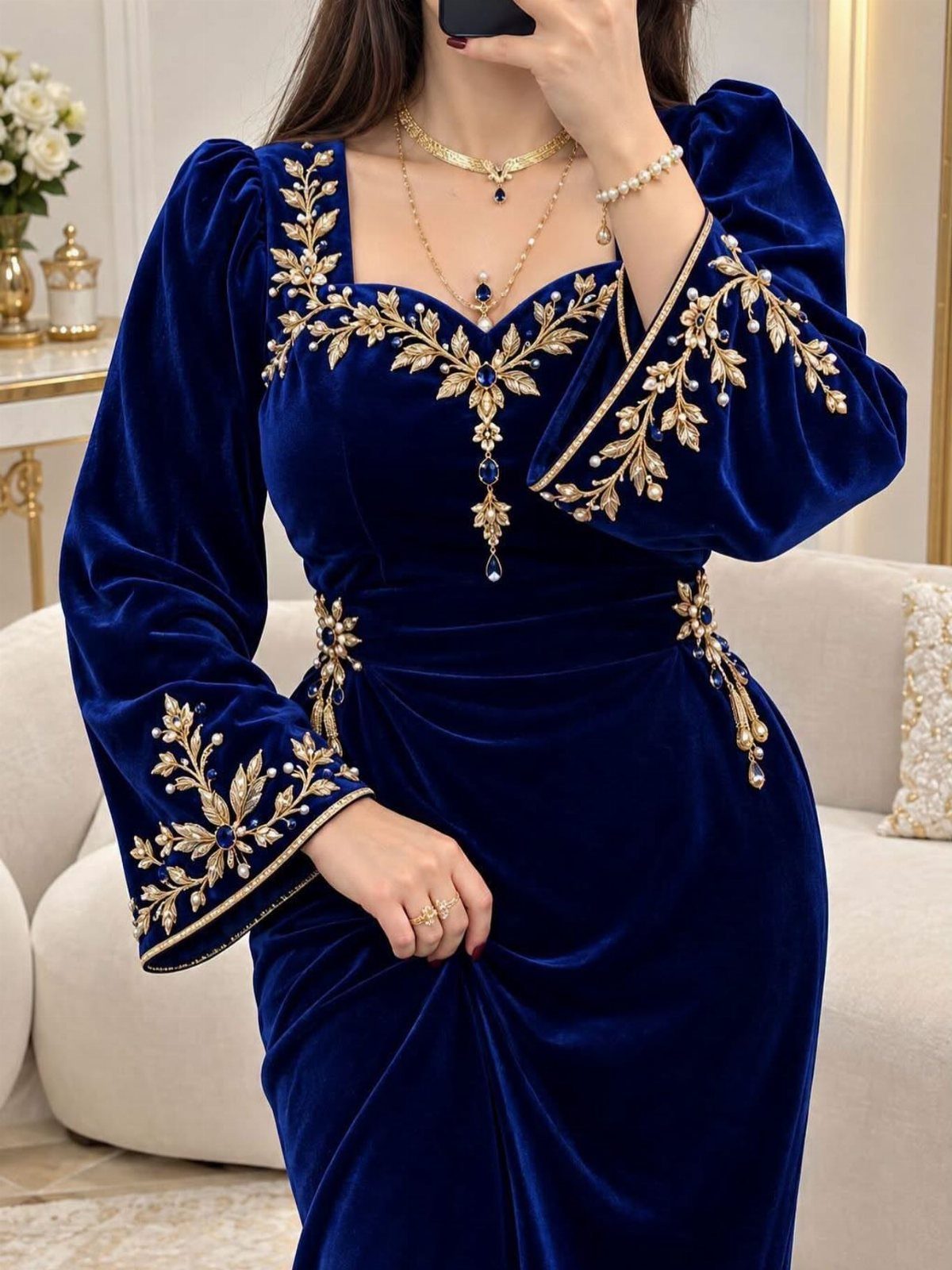
Velvet is the winter fabric that looks expensive by default, and royal blue is the shade that shows its depth best. Gold embroidery and long puffed sleeves, as seen here, push it into occasion territory: holiday dinners, weddings, evening events.
Gold necklaces suit the embroidery, but keep the rest simple so the sleeves and stitching stay the focus. Velvet is warm, though it crushes and marks if it’s packed tightly, so hang it and steam it from the inside.
I’d wear it with a long black coat and skip the tights if the weather allows.
19. Corduroy Dresses
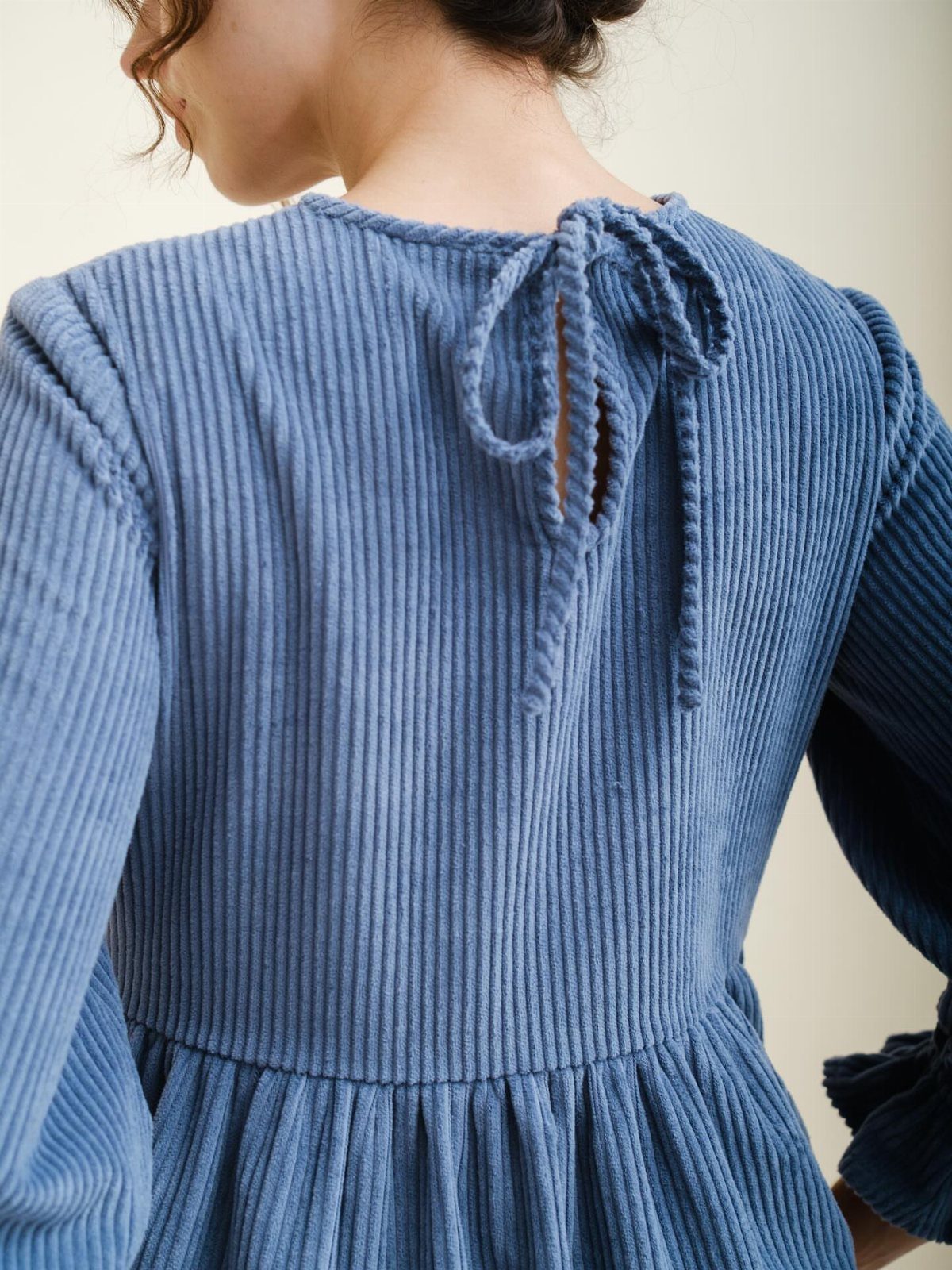
The tie at the back of the neckline sets this corduroy dress apart from a plain winter shift, and you control it: loose for a relaxed look, snug for a neater line.
Long sleeves and a gathered waist make it a practical pick for cold weekdays, since corduroy is a heavier fabric than jersey or satin.
Check your waist measurement in the size guide, because gathers hang softly only when there’s room in them. A pair of opaque tights, low-heeled boots, and an ivory coat over the top will let the blue do the talking.
20. Button-through Fronts
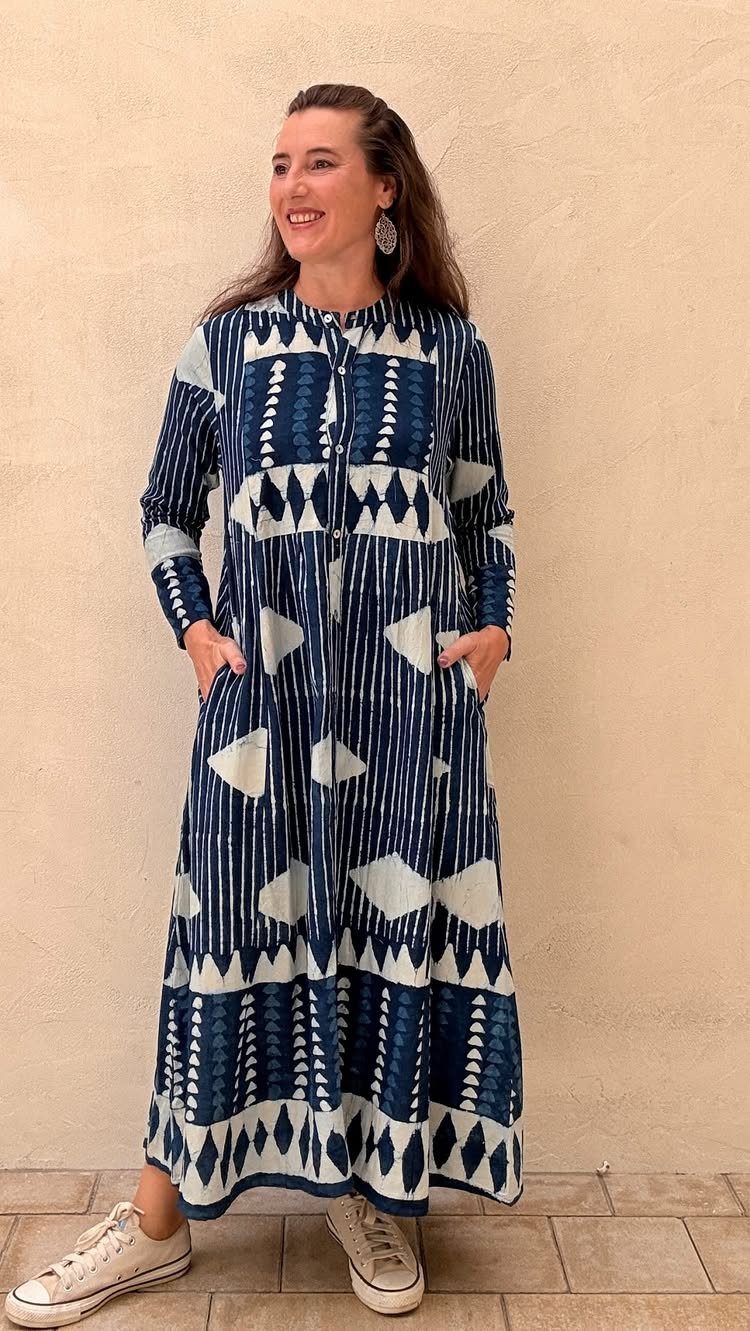
A button-through front makes a long dress easy to live in, because you can open the lower buttons to walk or climb stairs and close them again for sitting.
This blue and white patterned maxi with long sleeves is an everyday pick, and white sneakers keep it casual.
Check the bust in the size guide first, since buttons gape there before anywhere else. Add a belt if the cut is loose, and in winter wear a fitted knit underneath with a long coat on top.
I’d choose ankle boots over sneakers once the temperature drops.
21. Wedding Guest Dresses
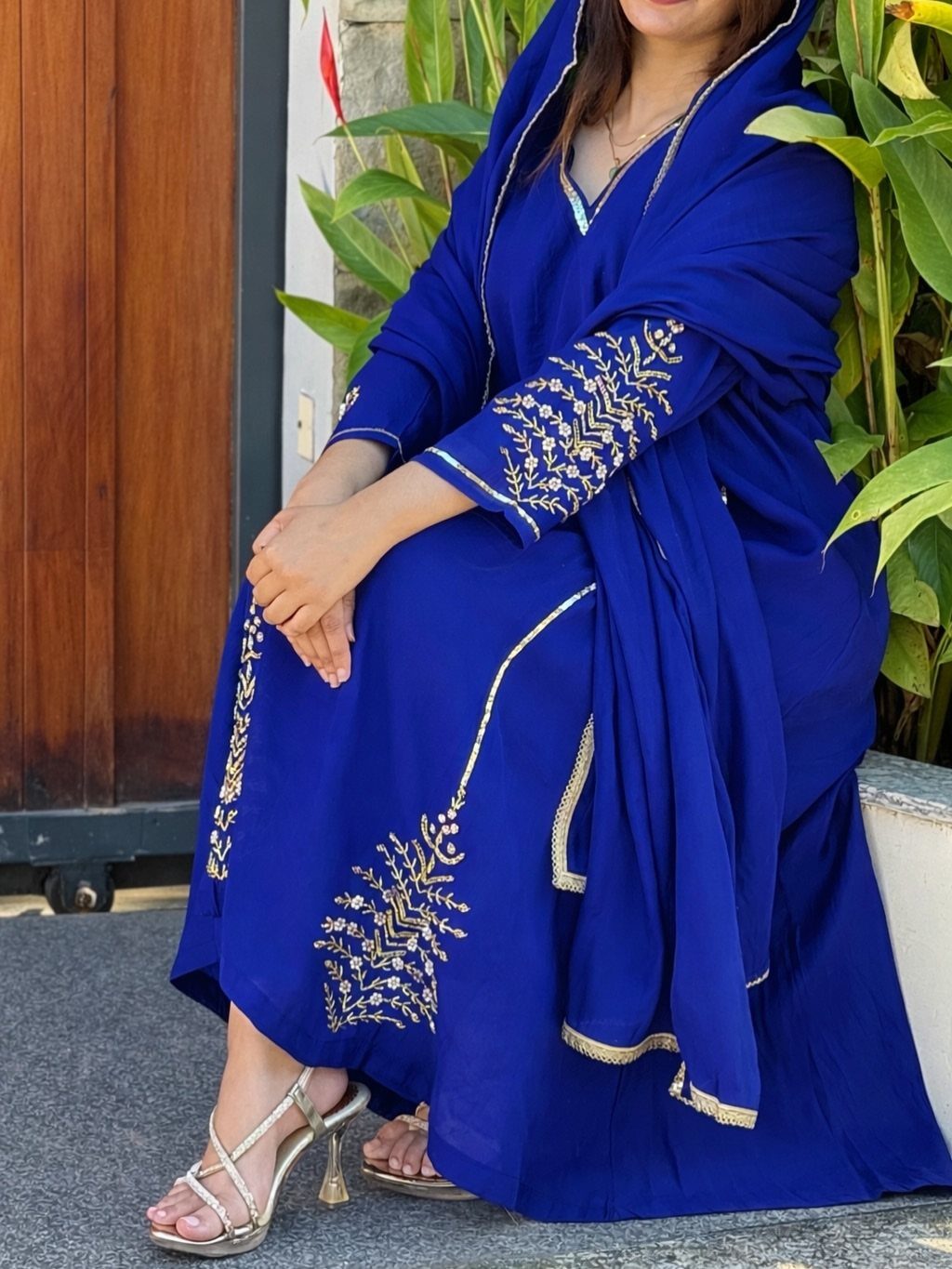
Royal blue with gold embroidery is a combination that photographs well and suits a wedding guest, and gold strappy heels pick up the thread work without adding anything new.
Because the embroidery is the main detail, keep earrings and bag simple.
Check the dress code with the couple if you’re unsure, and skip white as a general rule. Embroidered outfits often need small alterations, so order early enough to have them done.
For a winter ceremony, bring a shawl or long coat in black or cream for arriving and leaving.
22. Blue Dress with Cardigan
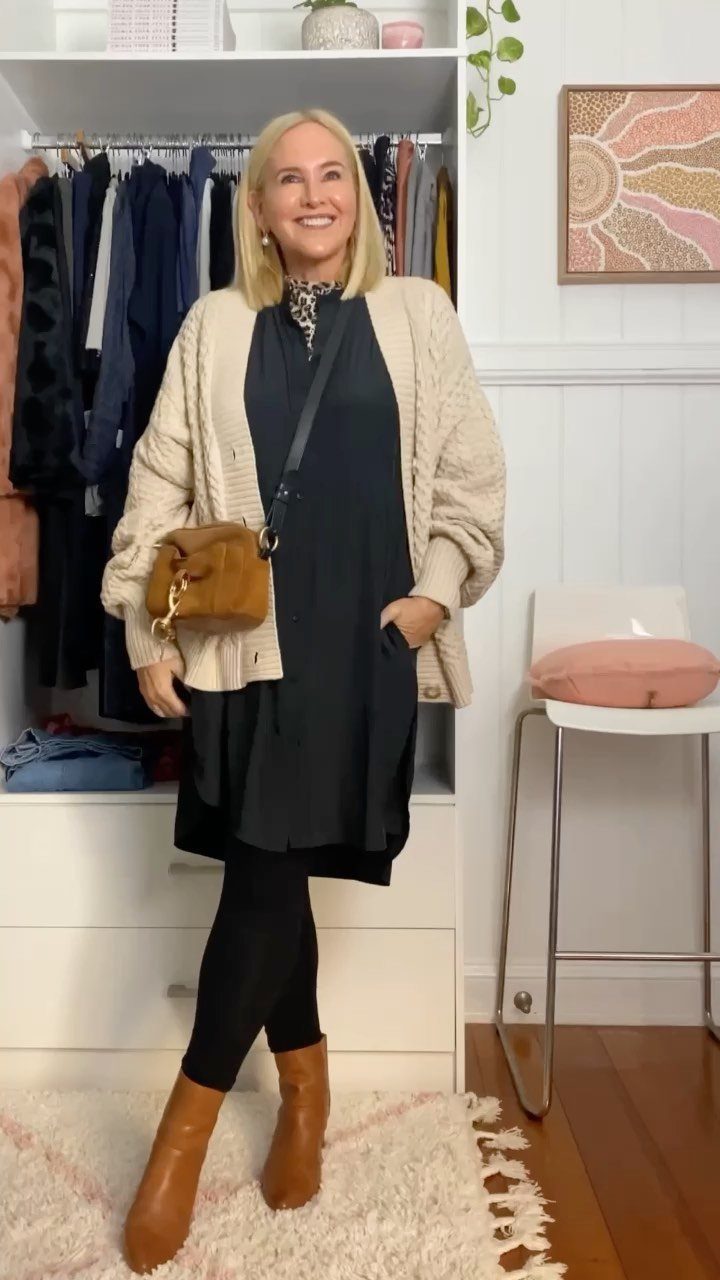
Navy dress, chunky cream cardigan, black leggings, brown boots: this is a cozy outfit for days with plans but no dress code. Leggings under the dress add warmth, and the cream layer softens the dark navy.
Make sure the dress hem sits lower than the cardigan hem, or the proportions look stacked. Wear the cardigan open so the dress shows down the middle.
Brown boots are a better match for navy than black ones, and I’d keep jewelry small so the knit stays the texture people notice.
23. Sparkly Navy Evening Dress
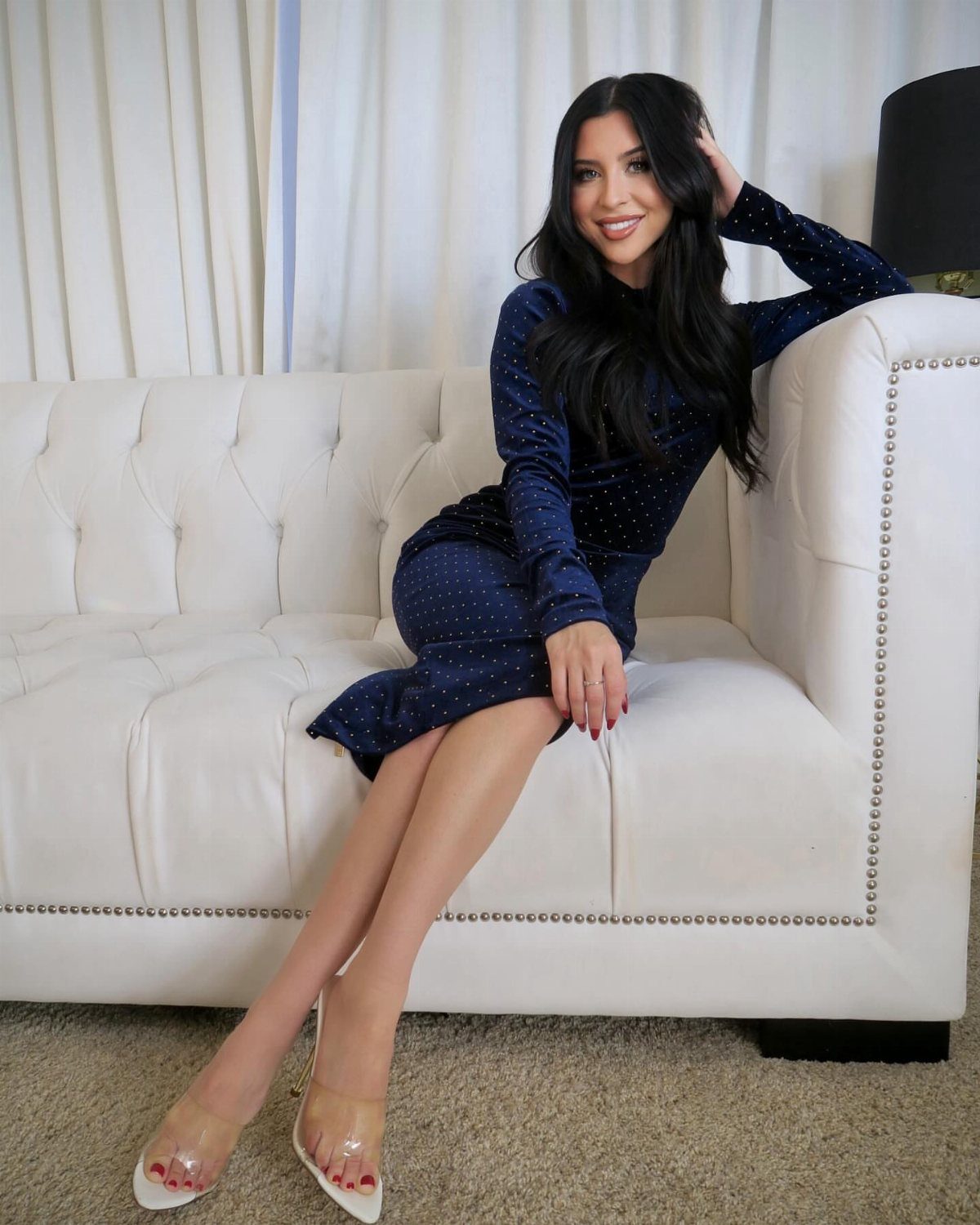
Small sparkles read as texture rather than glitter, which is why a long-sleeved navy dress like this one works for dressy evenings without looking costume-like.
The sleeves also take care of most of the cold, so a winter party needs just a coat for the walk in.
Clear heels keep the focus on the dress, and a plain clutch and small earrings are enough. Hold the dress under bright light before buying to see how strong the shine looks.
A black or navy coat keeps everything in one dark color family.
24. Embroidered Blue Occasion Dress
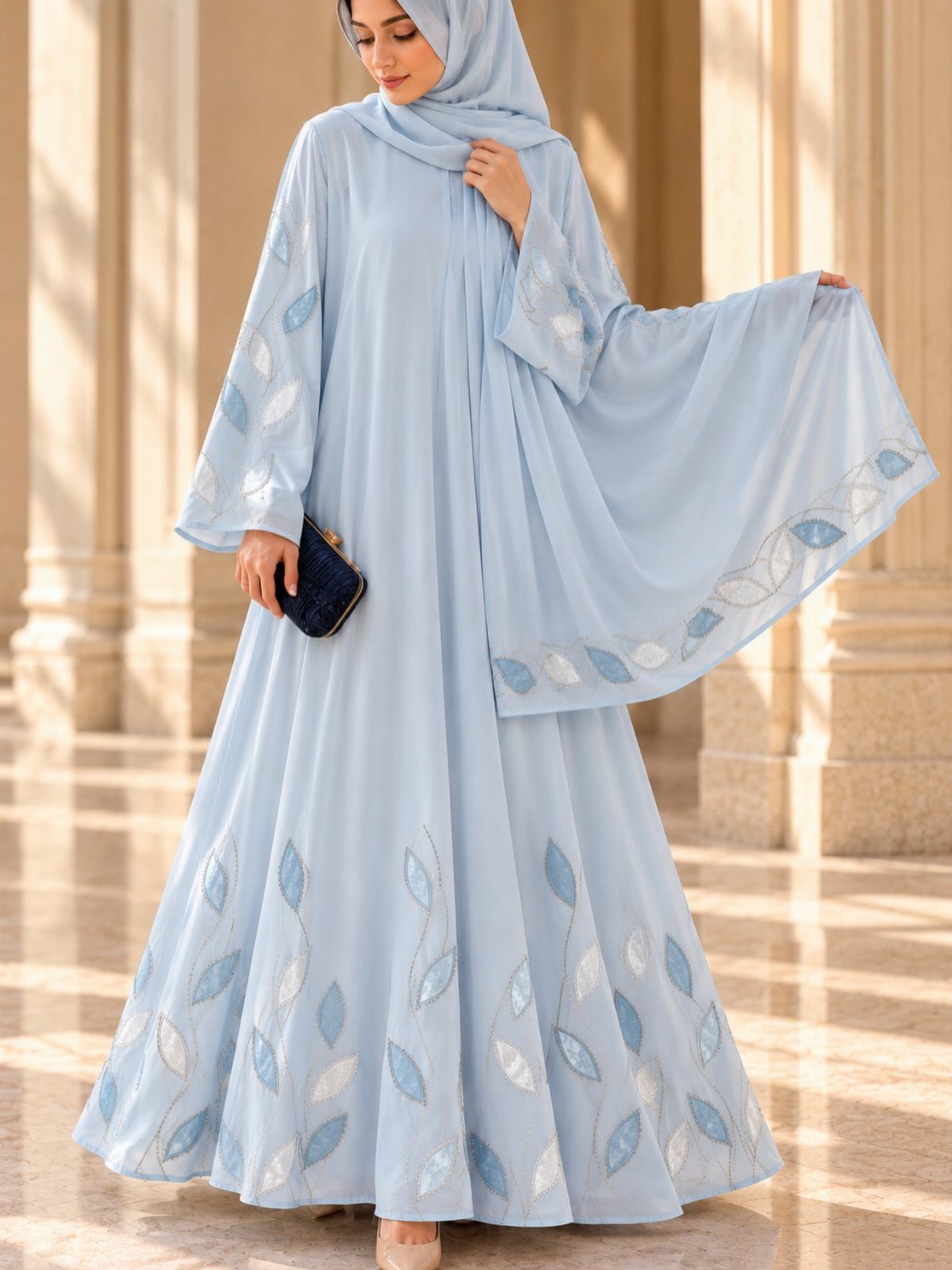
A matching hijab turns a light blue embroidered maxi into one unbroken column of color, and the dark clutch gives the outfit a single point of contrast. That restraint lets the embroidery do the talking.
Size by shoulder and bust in the size guide, and check the hem length against the shoes you plan to wear, since a maxi should clear the floor without dragging.
For winter occasions, a long coat in cream or gray goes over the top without hiding the stitching. Keep jewelry minimal.
25. Blue Floral Midi Dress
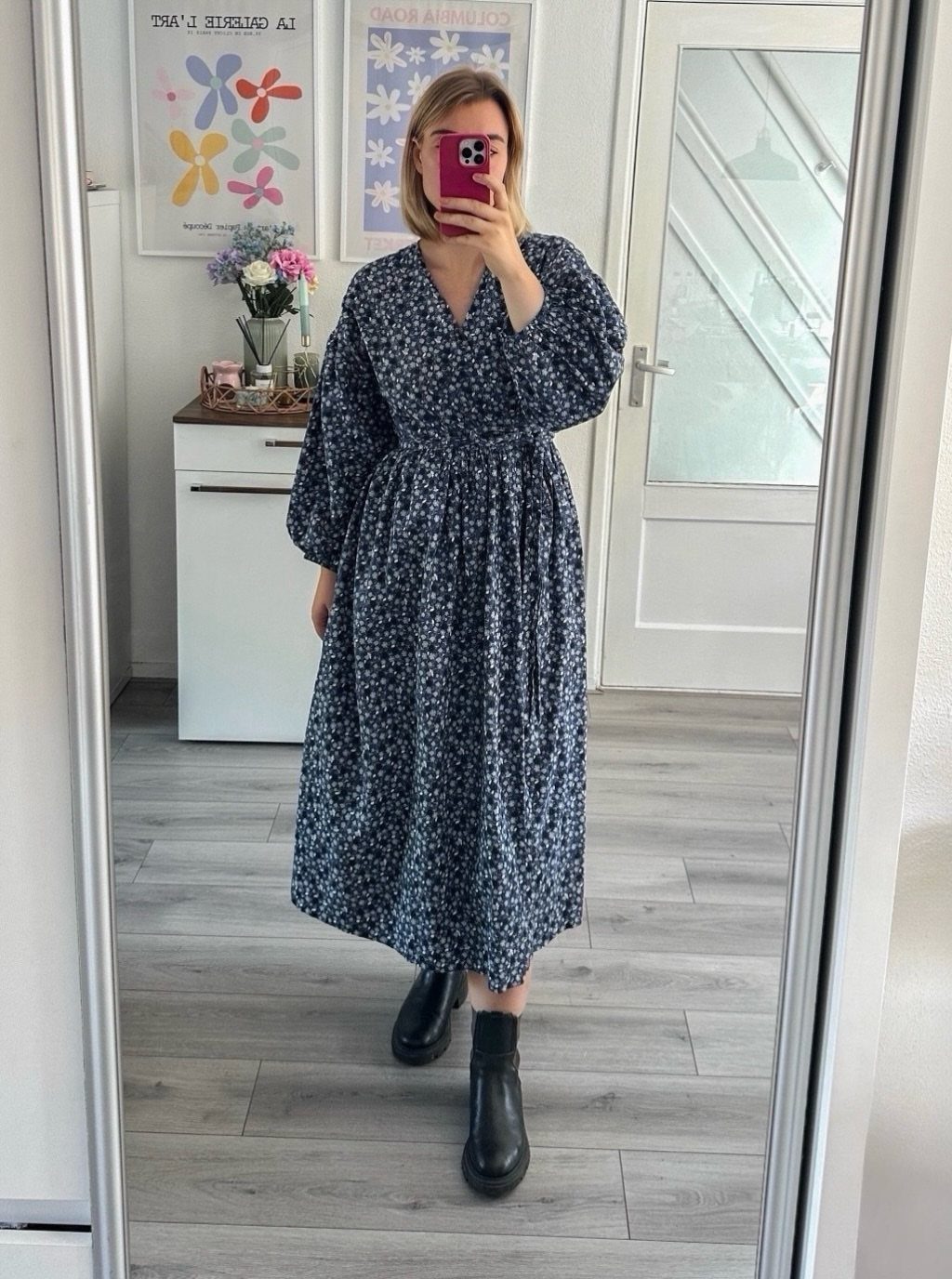
Small navy florals read as nearly solid from a distance, which makes this long-sleeved midi easy to wear on a regular weekday. The cinched waist gives the shape, so the print can stay quiet.
Black ankle boots keep it grounded for cold months. Check the waist measurement in the size guide, because a cinched seam that sits too high or too tight is the first thing to bother you by midafternoon.
Add opaque tights and a long coat in a neutral shade, and leave the jewelry small.
26. Tiered Fringe Knit Dress
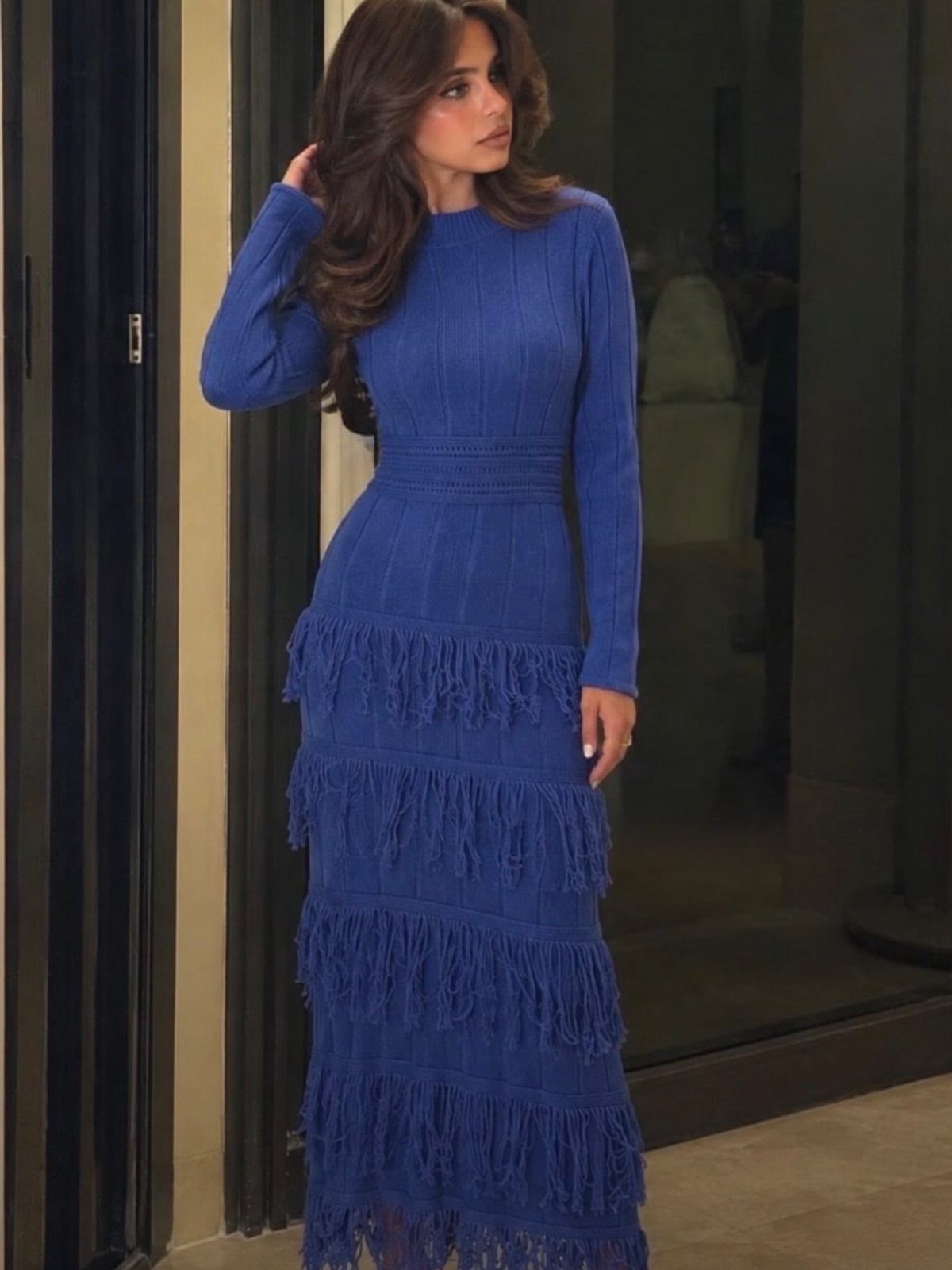
Fringe on a knit skirt moves with every step, and that is the whole appeal of this royal blue dress. The ribbed bodice and long sleeves stay plain, so the tiers get all the attention.
Fringe catches on bags and coat buttons, so carry a clutch or a slim crossbody and wear a coat that stays open or sits above the hem.
Ribbed knit stretches, but check the bust and waist against the size guide anyway, since tiers add weight at the hip.
I’d skip a necklace and let the texture speak. Nude or black heels, or tall boots, work well here.
27. Blue Paisley Maxi Dress
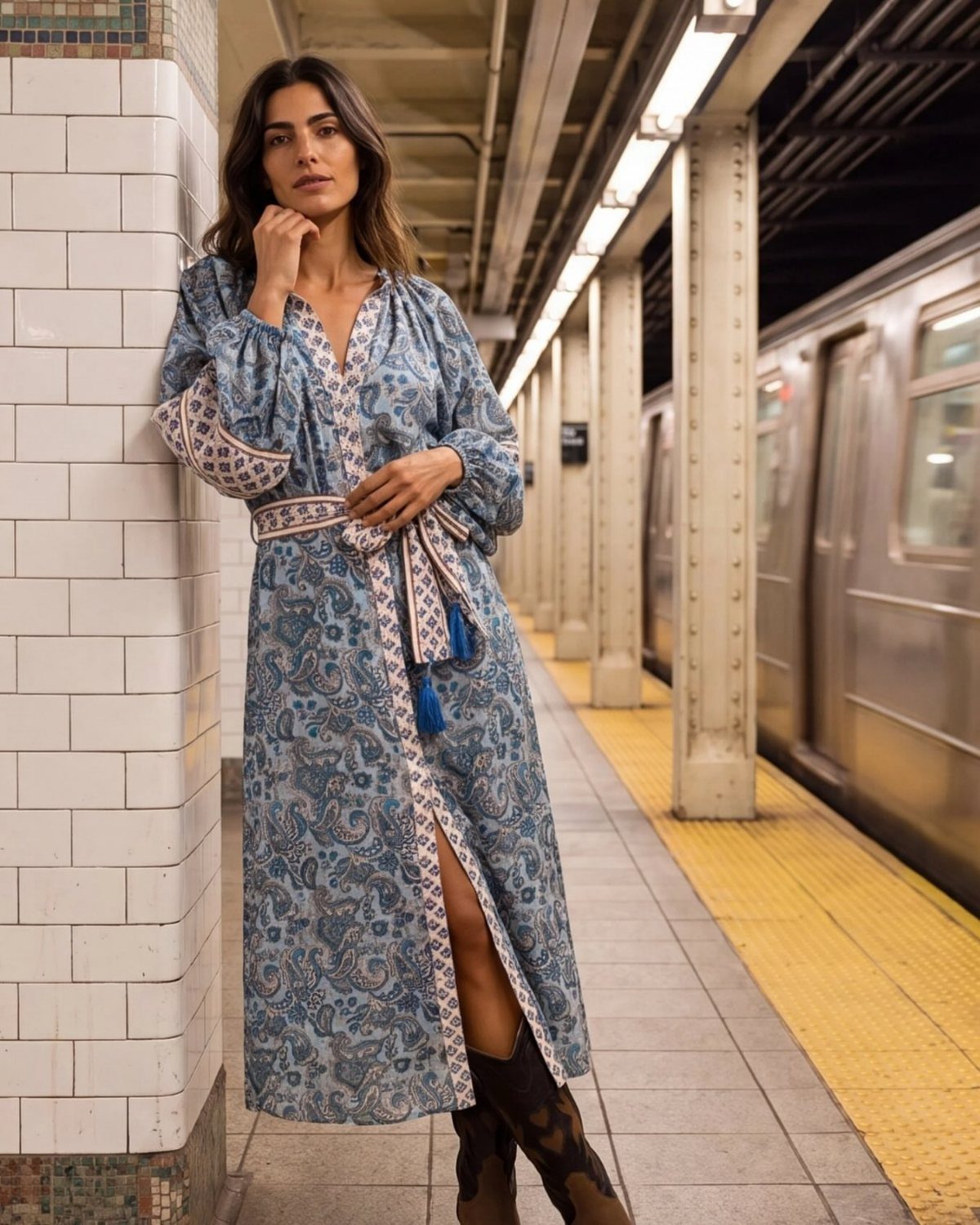
Paisley in blue and white gives a maxi dress some pattern without much noise, and a belt pulls the long length in at the waist. The high slit makes walking easy, which matters on a dress this long.
Brown boots, as here, ground the cool blue with something warmer. In winter, wear tights under the slit and a fitted knit beneath if the fabric is thin.
Check the hem against your boot height before ordering. A belt can slide on a slippery fabric, so pick one with a firm buckle.
28. Blue Dress in the Snow
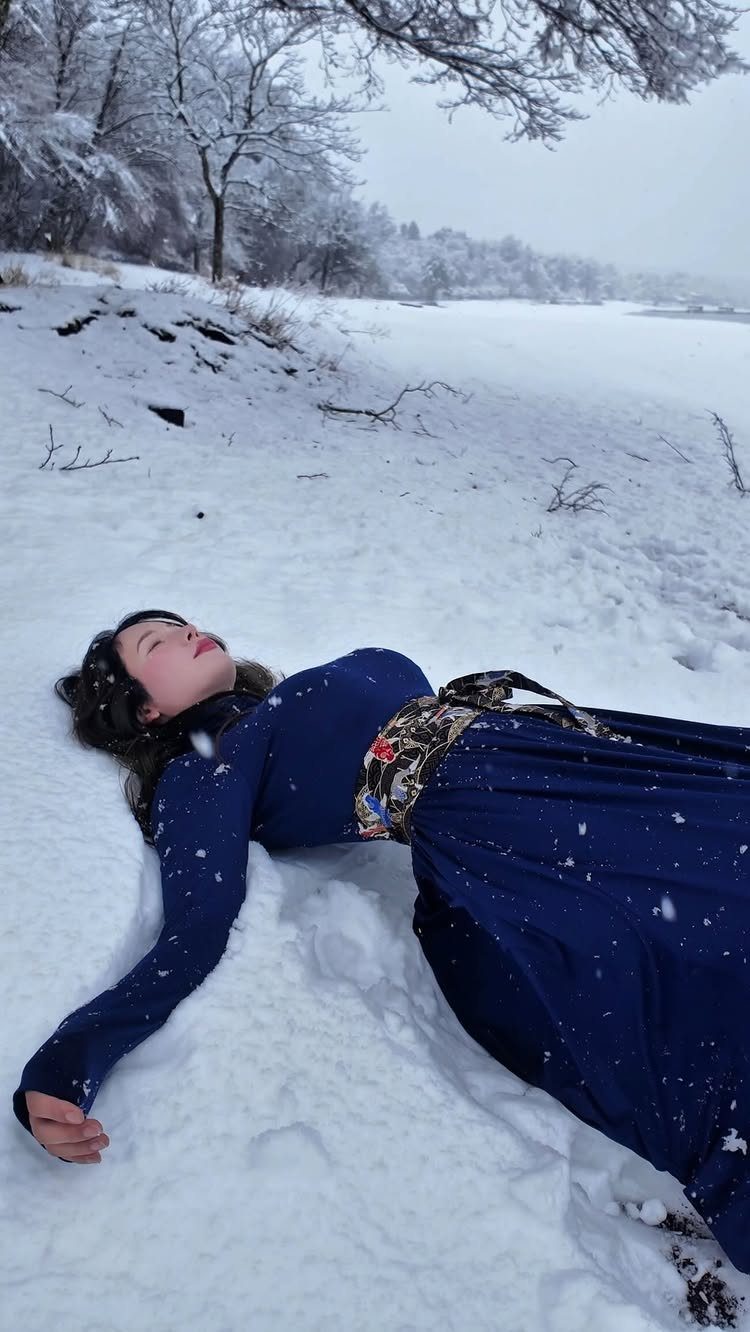
Royal blue is about the strongest color you can put against snow, so a plain long-sleeved dress with one patterned belt already looks finished. The belt is the only detail, which keeps the shot clean.
For real snow, plan the practical layers: a long coat you can take off for photos, thick tights, and waterproof boots. Dark winter trees behind a bright dress make the color pop even more.
Skip anything with a loose, floaty hem if you will be kneeling or lying down. A fitted cut stays put.
29. Layered Winter Dress
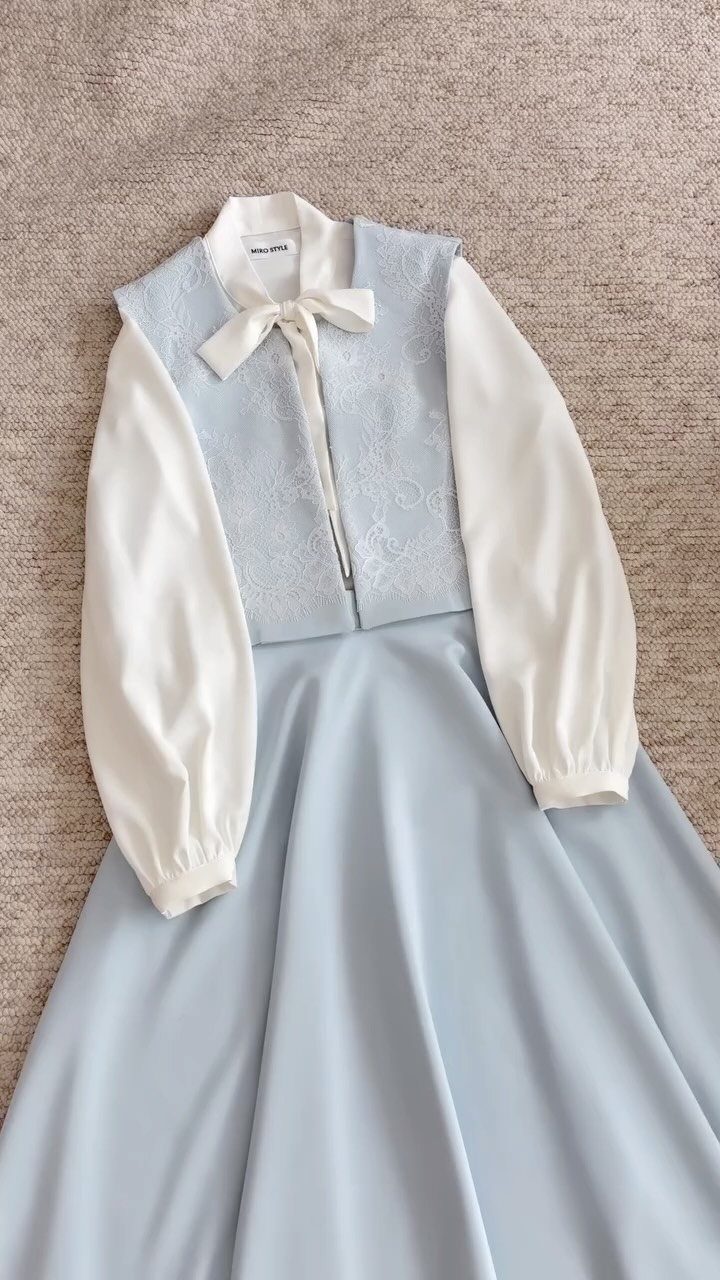
Layering a sleeveless light blue dress over a white long-sleeved blouse is the easiest way to make a spring-weight piece work in winter.
The lace-textured bodice and bow at the neckline give it a soft, slightly vintage look without extra accessories.
Choose a blouse with sleeves slim enough to fit under the dress armholes; bulky cuffs bunch at the shoulder.
Armhole depth decides whether a sweater or blazer will sit smoothly over this dress, so look for that measurement in the size chart before you buy.
Add opaque tights and flat boots, and a camel or gray coat. I’d keep jewelry off the neckline, since the bow already fills the space.
30. Blue Dress with Winter Accessories
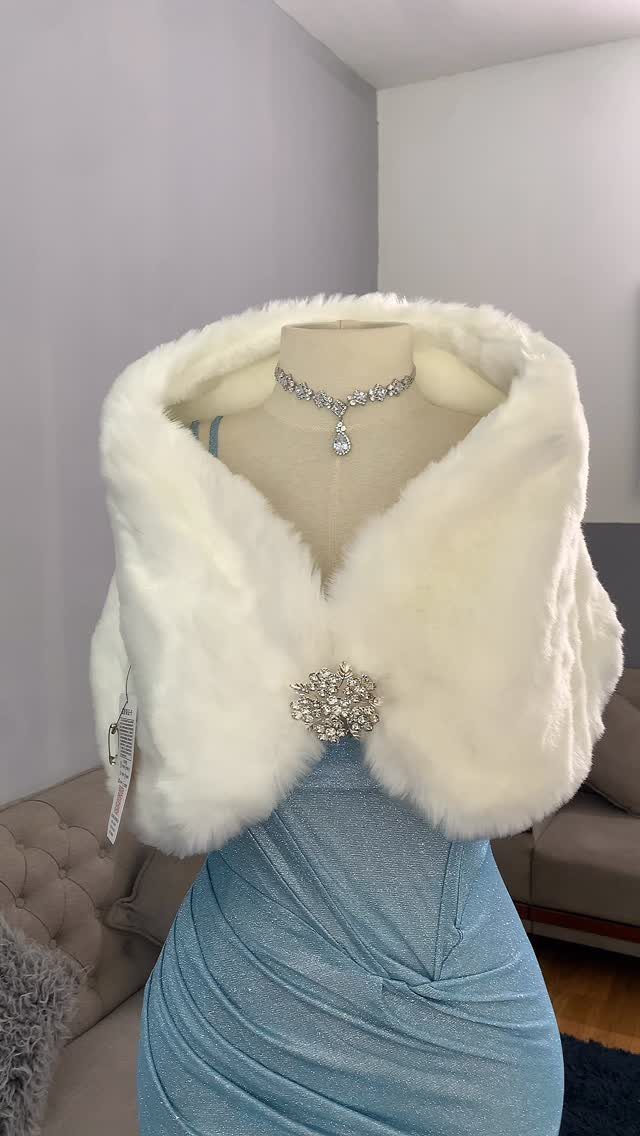
Accessories can make a dressy winter outfit out of a single shimmering light blue dress. A white faux-fur stole takes care of the cold shoulders, and a sparkling necklace and brooch finish the look in silver tones.
Silver suits light blue better than gold, which can look muddy against the shimmer. Pin the brooch on the stole or the dress, not both.
Faux fur sheds a bit and flattens when crushed, so hang it rather than folding it. Keep shoes and bag simple, in silver or nude, and the stole stays the star.
31. Structured Collared Dress
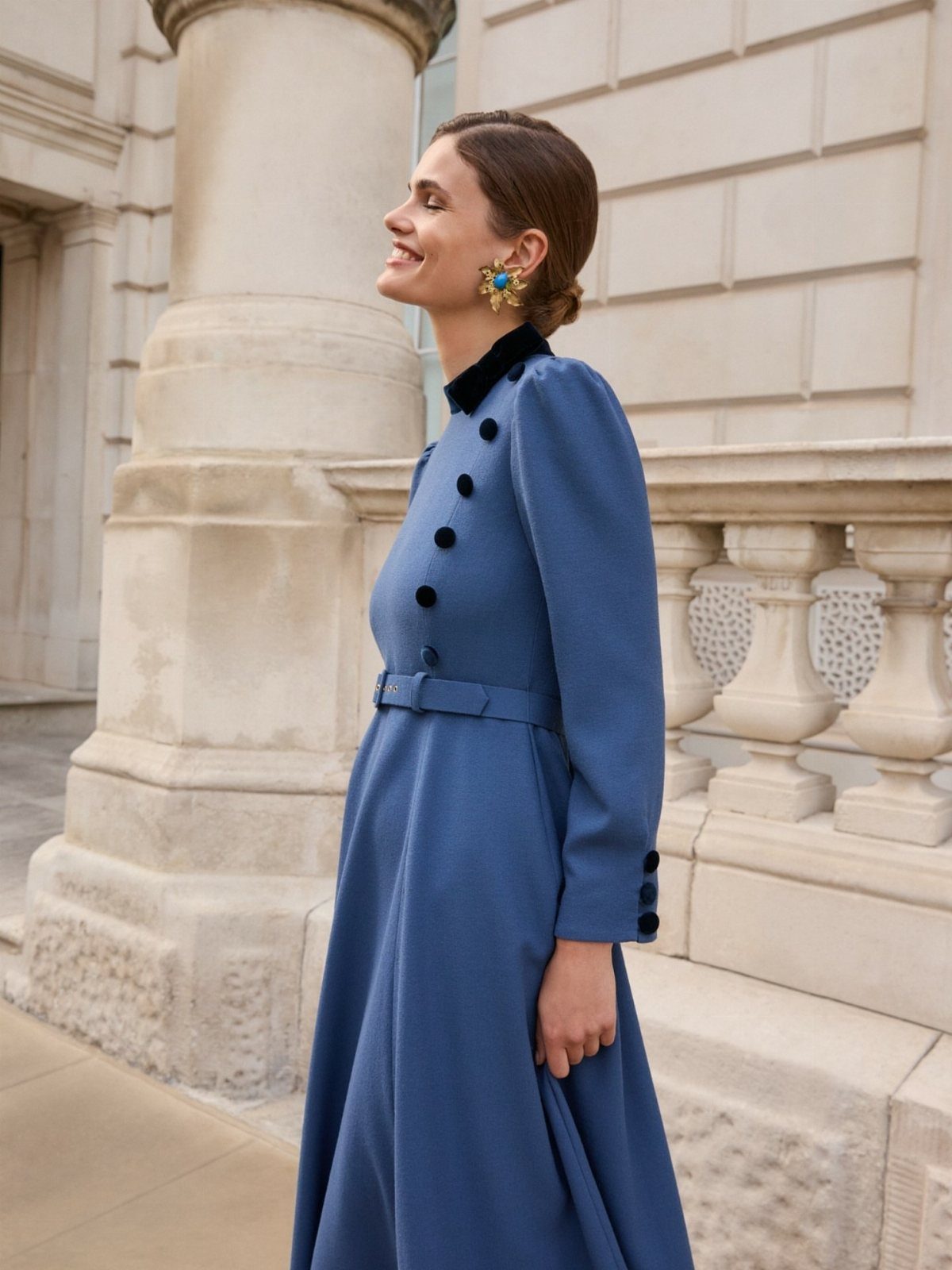
A black collar and black belt on a blue dress give it the tailored look of a jacket without the extra layer.
The buttons down the front and the long sleeves keep the line neat, which suits office days and errands in cold weather.
Contrast trim works best when the black pieces match: a belt and collar in the same shade look planned.
Check the bust and waist in the size guide, since a belted, buttoned dress shows a poor fit faster than a loose one.
Opaque black tights and ankle boots carry the trim color down to the hem.
A collared neckline already draws the eye up to the face, so jewelry at the throat only crowds it; a pair of small studs does the job.