
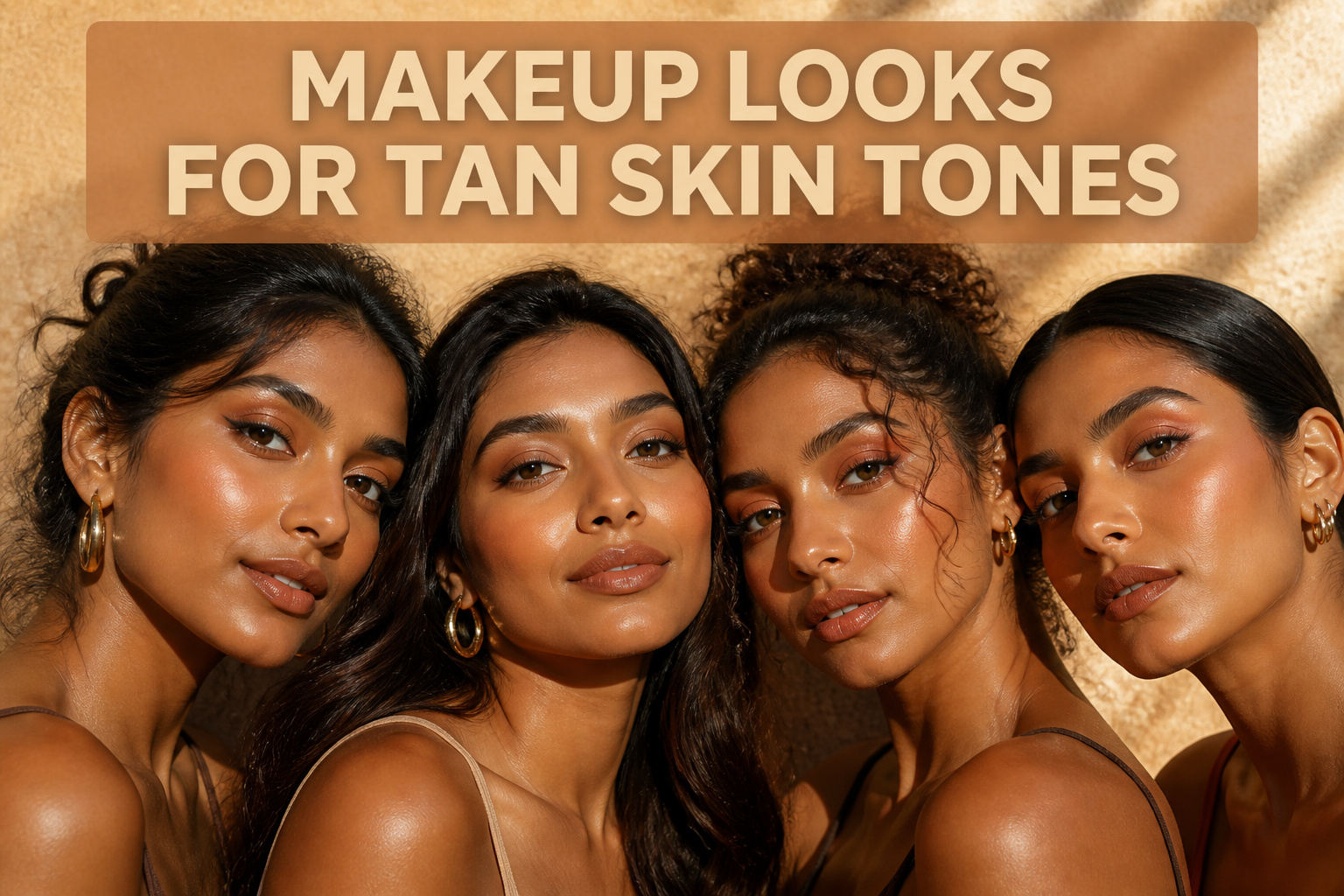
The single most important thing to get right is foundation undertone, not depth. Most tan skin reads golden or amber in daylight, and a shade that matches your depth but misses that warmth will sit as a visible stripe against your jaw. L’Oreal Paris marks its warm shades with a W; Mented builds its tan range specifically for golden undertones. If your veins look blue or purple instead of green, or silver jewelry flatters you more than gold, every recommendation below shifts.
1. Foundation Shades That Actually Match
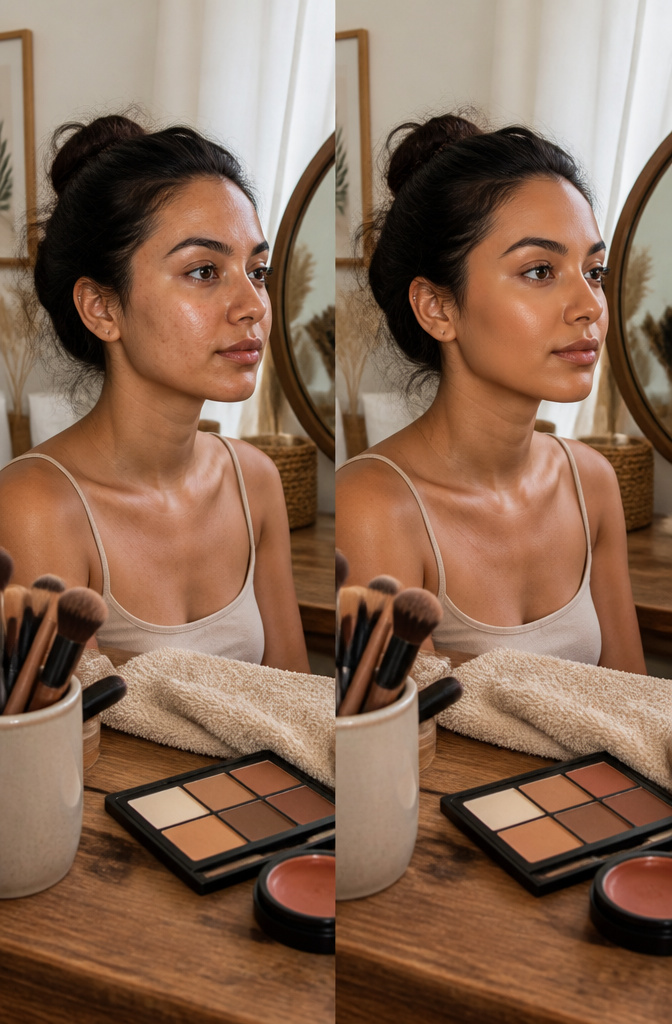
Tan skin carries warm, golden undertones that read yellow or amber in daylight, not pink or neutral. That warmth is the first thing a foundation has to match, and most mismatches happen when the depth looks right but the undertone does not.
The descriptors to look for are golden, warm beige, and warm medium-to-deep. Anything labeled plain "neutral" without a warm qualifier often skews pink, and on tan skin it sits visibly apart from the neck. L’Oreal Paris True Match marks its warm shades with a W, which is the code to check. Mented organizes its sticks into tan, medium, deep, and light categories, with the tan range built specifically for golden undertones.
A mismatched foundation turns ashy, orange, or cakey against the jawline. The test is simple: swipe at the jaw, step into natural light, and wait for the line to settle. The right shade disappears. The wrong one announces itself as a stripe.

This creamy, oil free formula provides a natural matte finish and leave skin breathable and flawless for up to 12 hours

PRESSED POWDER FOUNDATION: Preserve your naturally glowing complexion with the Mineral Fusion Powder Foundation. This makeup foundation is triple-milled for a smooth finish that airbrushes pores, ensuring that you stay shine-free and photo-ready
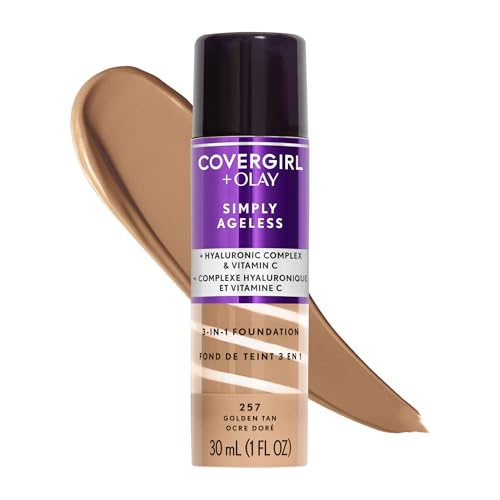
REDUCES WRINKLES: Anti-aging foundation instantly reduces the look of wrinkles for a smoother, more youthful appearance
2. Concealer Without the Ashy Cast
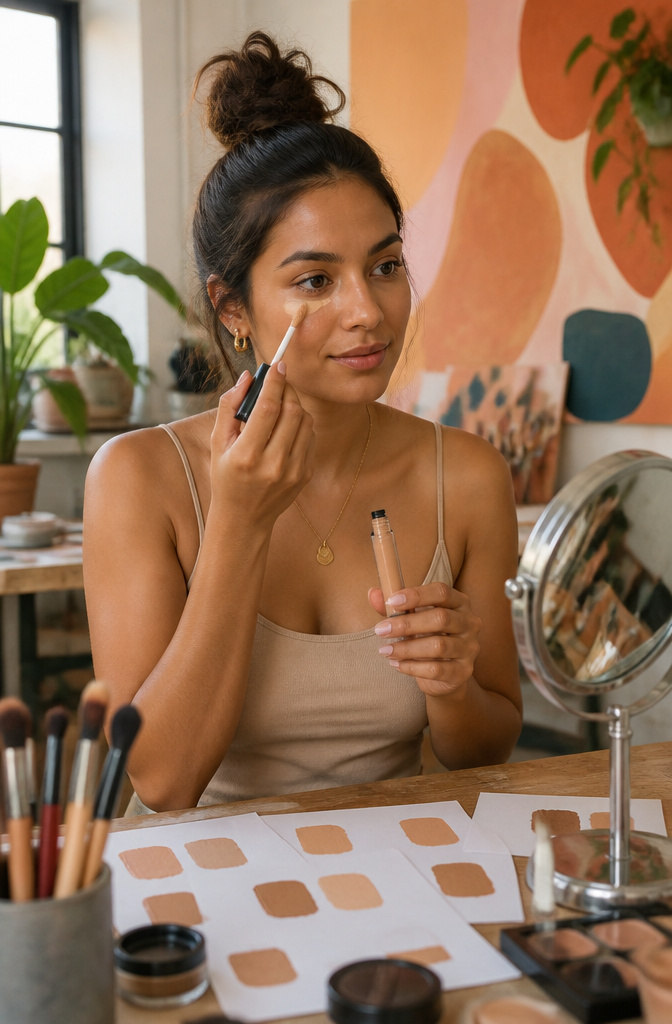
A concealer that reads one to two shades lighter than foundation is the standard rule, but on tan skin the undertone matters just as much as the depth. Cool or pink-based formulas settle into something that looks distinctly gray, especially beneath the eyes where the skin is thinner and the contrast turns muddy. What convinced me, reading through the shade ranges that actually cater to deeper complexions, is how often the lighter options still lean golden or warm peach rather than neutral or rose. Warm undertones in a lighter concealer lift without ashing out; the color corrects and brightens without fighting the skin’s own golden quality. Silver or icy brighteners do the same flat, disconnected thing under the eye that they do on the cheekbone. The sources confirm the one-to-two-shade rule repeatedly, but they leave the product specifics thin, so the principle is worth more than a brand name: reach for descriptors like golden, warm beige, or warm peach, and swatch in natural light where the pink or cool base will show itself before you buy.

Full Coverage, All-Day Wear: Our best-selling anti-aging concealer delivers instant, highly pigmented full coverage and flawless finish for up to 24 hours without settling into fine lines. Suitable for all skin types, including mature skin, a pinhead-sized amount is all you need for a smoother, more radiant-looking eye area. Warm the product between fingers first for the smoothest blend for a natural finish. A little amount of this color-correcting cream concealer goes a long way to provide full coverage. Build coverage gradually in thin layers for the most natural, seamless finish.

Multi-Use Formula Conceals, Contours, Highlights & Retouches Makeup. Can Be Used as Concealer or Foundation

KISS PRO TOUCH FULL COVER CONCEALER: Consumers’ Choice #1 Concealer! Boast unbelievable coverage as you moisturize and nourish your skin
3. Blush in Peach and Coral
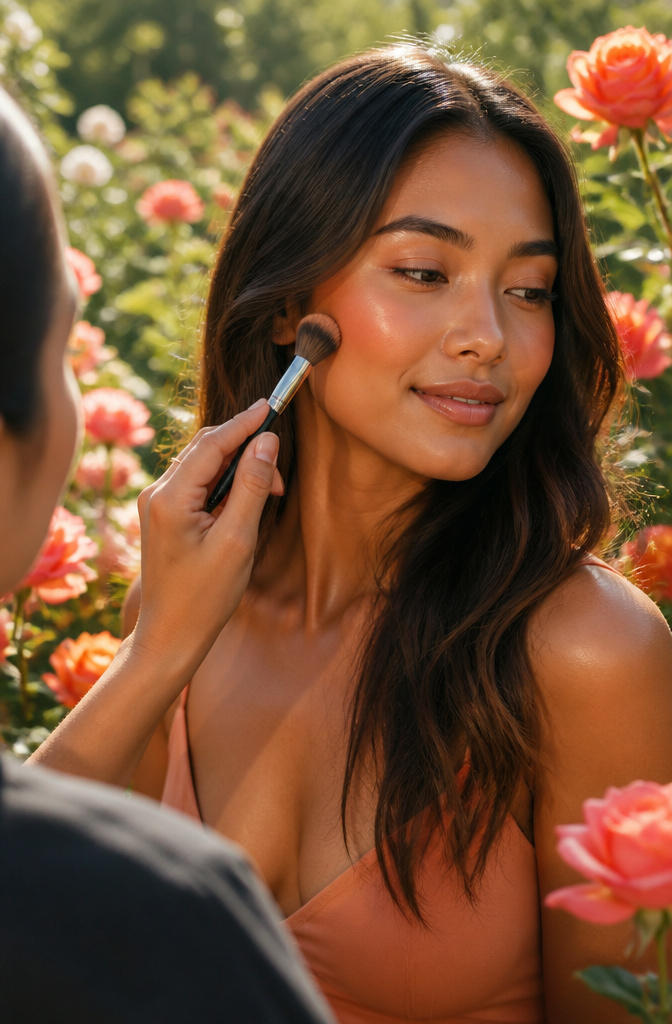
Cool pink blush on tan skin reads like a separate layer sitting on top rather than warmth coming from within. The undertones clash: your complexion carries yellow and gold, and a true pink with cool undertones can pull sallow against that register. Warm peach, apricot, and coral share the same golden-warm frequency, so they look like a flush that belongs there.
Placement changes the register too. For daytime, a softer sweep starting at the apples of the cheeks and blending back toward the temples keeps the effect natural; the blendability matters more than the exact shade. For evening, a warm coral built to more vivid intensity gives the same golden-warm structure but with presence. A golden bronzer with warm undertone layered underneath deepens the warmth without turning muddy, and that combination, peach or coral over bronzer, is what carries tan skin through both settings without the color looking borrowed from someone else’s palette.
The shades to skip are the ones with purple or taupe in them, and the true cool pinks that would read correct on cooler, pinker skin. Rose with a bit of red or orange in it works; strawberry or cranberry tones lean warm enough to harmonize. The rule is simple: the warmer, the better.

PEACH COLOR CORRECTOR: Camouflages spots and darkness found under the eyes in fair to medium skin tones.

Lightweight serum-like formula brightens and hydrates under eyes

INSTANTLY BRIGHTEN: Color correct dark circles for a refreshed, well-rested look with this viral under eye brightener. The creamy formula helps neutralize the look of discoloration and bluish tones for brighter, more radiant-looking under eyes.
4. Eyeshadow in Warm Earth
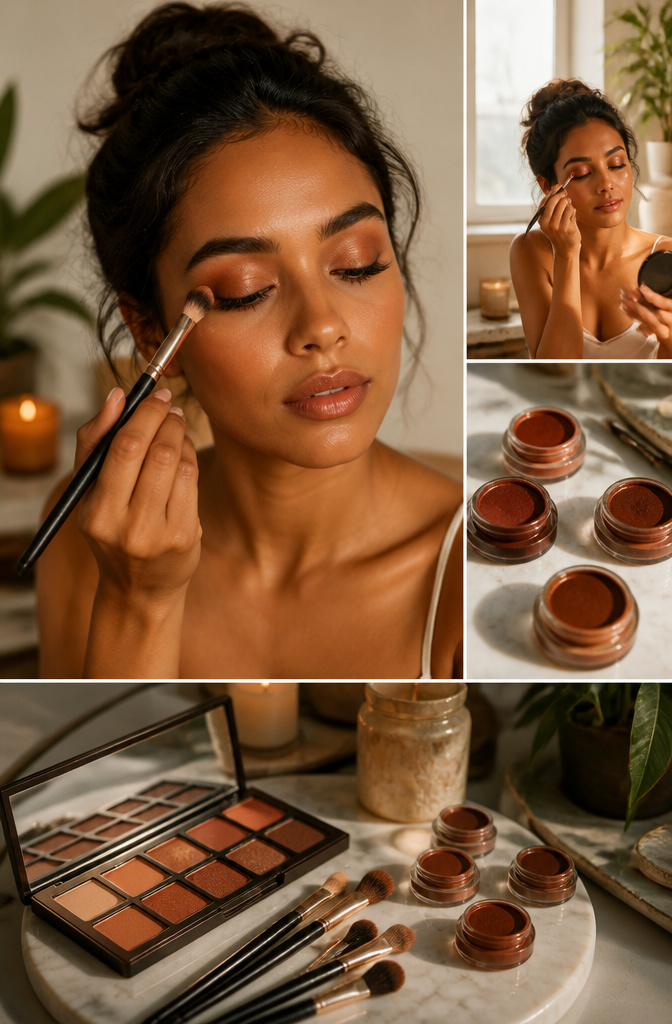
Terracotta sits on the lid like a natural extension of tan skin’s golden warmth rather than sitting on top of it. That distinction matters because cool taupes and ashy browns read as a separate layer, something that ends at the lash line instead of blending into the complexion. Burnished bronze adds metallic dimension where silver or gunmetal would turn flat and chalky against those same undertones.
Rich sienna and warm chocolate brown function as the sophisticated neutrals here, more interesting than standard brown with enough red and orange base to stay cohesive. The build from lid to crease follows temperature, not just depth: terracotta across the mobile lid, sienna swept through the socket, chocolate brown pressed tight against the upper lash line for definition. Skip anything with a gray or purple shift; those undertones drift cool mid-day and undo the warmth that makes the whole thing read as intentional rather than mismatched.

8 Hour Wear - A weightless, creamy formula that delivers a fresh, healthy glow while lasting up to eight hours without fading. Now in a gorgeous pearl finish!

Weightless balm is ultra-blendable, buildable and glides on effortlessly.
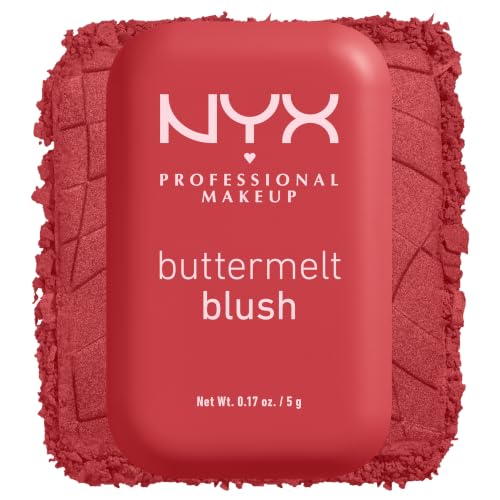
Booming Pigment, Butta Blend & Butta Wear: See up to 12HRs of pigmented powder blush wear with Buttermelt Blush. This blush for cheeks has been infused with mango butter, almond butter and shea butter. Fade and transfer-resistant makeup blush formula
5. Lip Color in Warm Nudes and Corals
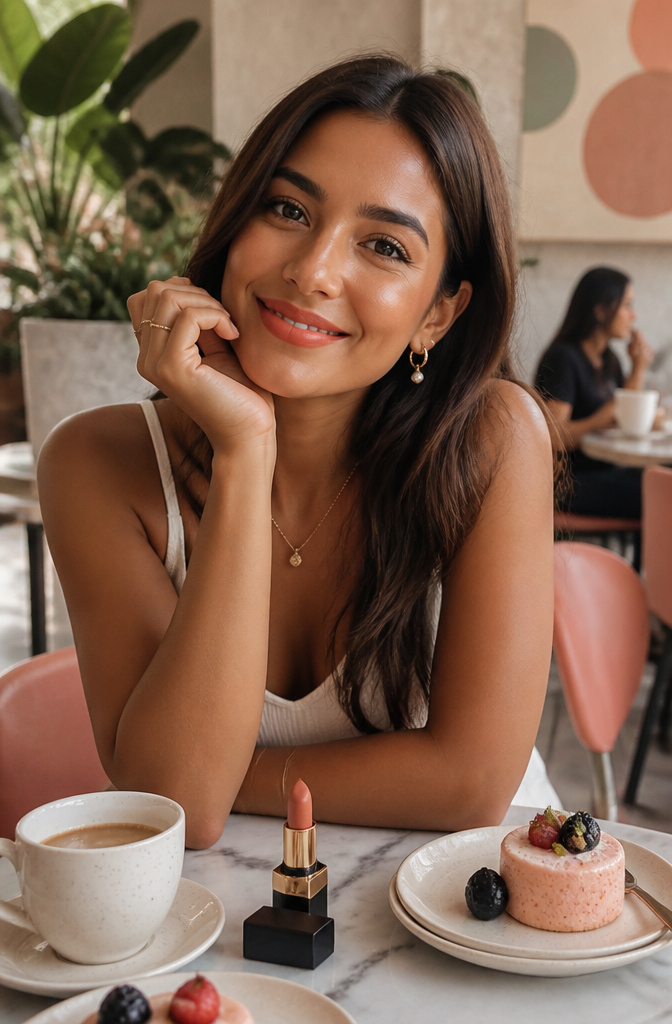
Vivid coral on tan skin does something cool-toned formulas never quite manage. The warm orange-red echoes the yellow and gold already in the complexion, so the contrast reads vivid without tipping into garish. Warm raspberry works the same way, enough red depth to look sophisticated while staying in the same temperature family. I have watched cool pink lipsticks pull ashy against warm undertones, creating that split where the face looks like two different palettes collided.
Rich terracotta has become the statement shade that actually belongs on tan skin. Earthy and vivid at once, it photographs with the same cohesion coral manages in person. For a caramel nude, the warmth matters more than the depth. A golden-brown base creates the your-lips-but-better effect; a cool nude with gray or mauve undertones tends to read alien against warm skin, like the color is sitting on top rather than growing from it.
Day to evening is a question of intensity, not temperature. A sheer wash of coral or warm nude works for daytime alongside peach blush and terracotta shadow. For evening, deepen the same warmth rather than cooling it down. Burnished bronze eyes with a rich terracotta lip keep the palette unified. Silver or icy shimmer tempts after dark, but on tan skin it creates the temperature split that warm nudes avoid.
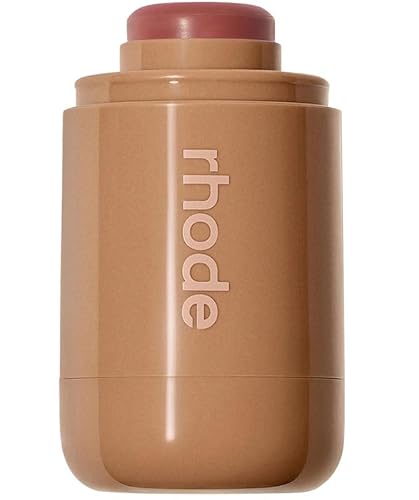

BUILDABLE CREAM FORMULA: Rhode Pocket Blush features a hydrating cream texture that blends seamlessly into skin for a natural, customizable flush you can build from subtle to bold

【Texture】This blush has a matte, powdery texture that’s smooth and soft, making it easy to apply. Its neutral peach shade is perfect for everyday use on natural, medium skin tones.
6. Highlighter in Golden Champagne
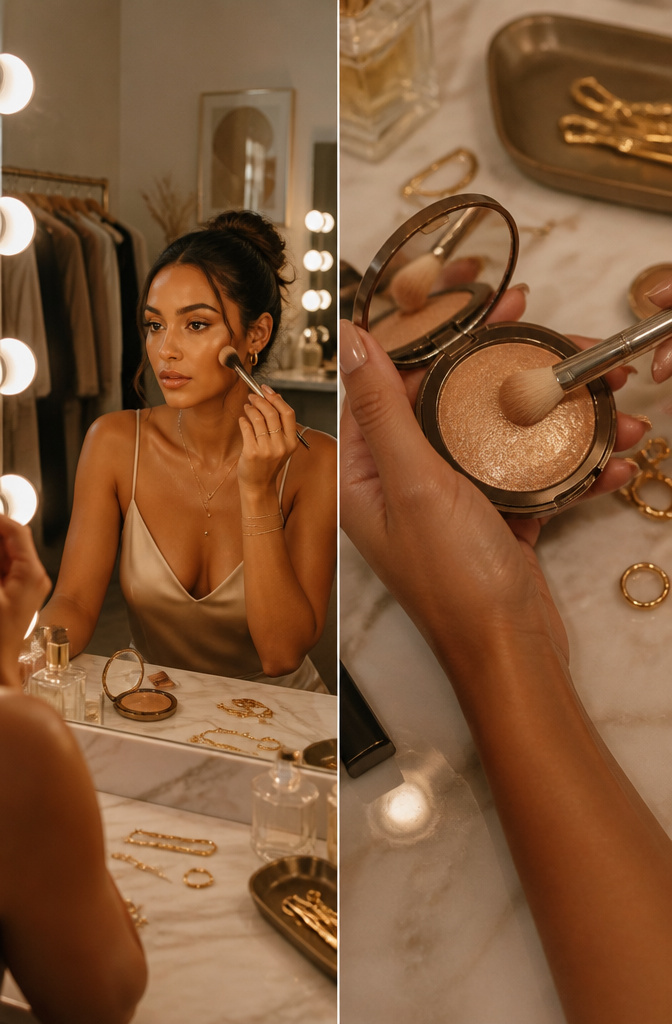
Golden champagne highlighter does something silver and icy formulas simply cannot on tan skin. Warm undertones in the skin read as flat or grey when a cool metallic fights them rather than amplifies them. A golden champagne finish catches light the way natural skin does, extending the warmth instead of frosting over it.
Placement matters more than pigment. I sweep the high point of the cheekbone where the light actually hits, then soften the edge so no line of shimmer remains. A stripe of product is a stripe of product; blended, it becomes a believable lift. The same warmth in blush and eye color meets here, so the face reads as one coherent tone rather than competing temperatures. Cooler formulas would fracture that.

NATURAL RADIANT FINISH: Luminous Silk Foundation delivers a silky, semi-matte to luminous finish that enhances your complexion with a natural, healthy glow inspired by luxurious Charmeuse silk

THE POWDER FOUNDATION FOR OLDER WOMEN: Trusted by women 40, 50, 60 and beyond who finally found a formula that covers beautifully without settling into fine lines, looking cakey, or feeling heavy.

Buildable Mineral Coverage: Made with 5 clean, vegan ingredients, this lightweight loose powder foundation builds from sheer to full coverage while minimizing pores and imperfections with a luminous natural finish; clinically proven to promote clearer-looking skin in 6 weeks.
What Warm Undertones Actually Look Like
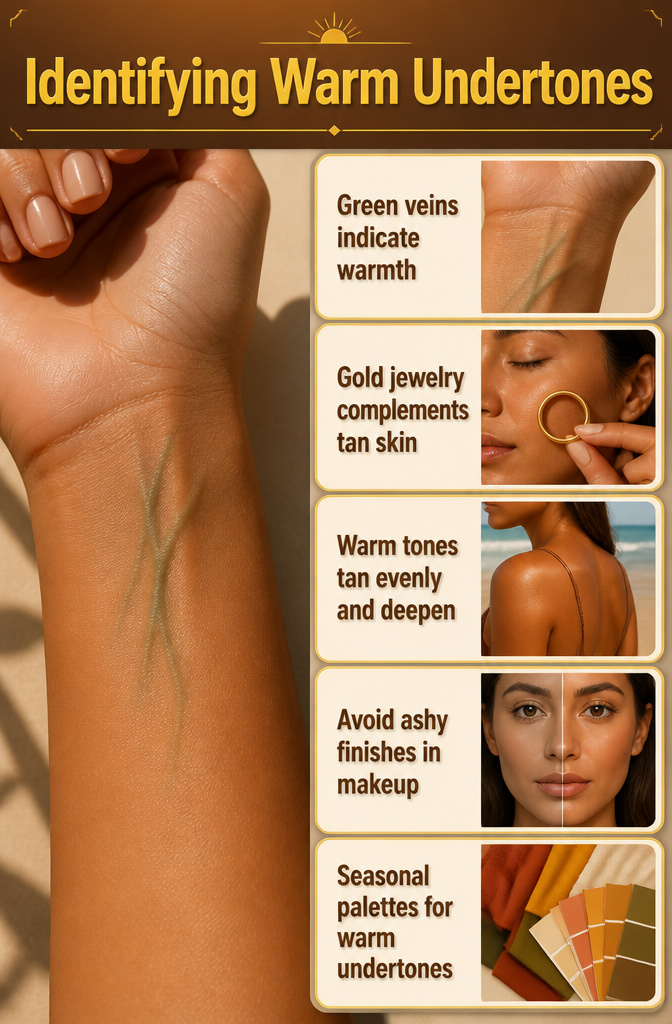
The quickest way to tell if your tan skin carries warm undertones is to check the veins on the inside of your wrist in natural light. Green-leaning veins point to warmth; blue or purple ones signal coolness. Most naturally tan complexions fall into the warm camp, with that underlying yellow-gold cast that reads bronze rather than rosy.
Gold jewelry tends to sit better against warm tan skin than silver does, which can look flat or steely by comparison. You can test this with pieces you already own: hold a yellow-gold ring against your cheek, then a white-gold one, and the metal that disappears into your skin is your match.
How you tan matters too. Warm undertones usually deepen to golden or caramel brown in the sun, while cooler undertones tend to burn first or take on a reddish cast. If you darken evenly and pick up a honeyed tone by August, that warmth is what the terracotta eyeshadows and coral lip shades in the sections above are built to echo.
Knowing this before you shop keeps you from defaulting to the shade range that happens to be displayed. Warm Autumn, Deep Autumn, and Warm Spring seasonal palettes all accommodate tan skin with warm undertones; your hair and eye color nudge you toward one or another. The wrong undertone in your foundation or blush is what creates that ashy, mask-like finish so many tan-skinned women have learned to settle for.

PRO-LEVEL PERFORMANCE: Experience professional-grade, creamy coverage that effortlessly corrects, conceals, contours, and highlights with a long-lasting, crease-resistant finish for flawless, all-day wear.

KISS PRO TOUCH FULL COVER CONCEALER: Consumers’ Choice #1 Concealer! Boast unbelievable coverage as you moisturize and nourish your skin

Wide Range of Shades: Suitable for all skin tones.
Summer Heat Adaptations
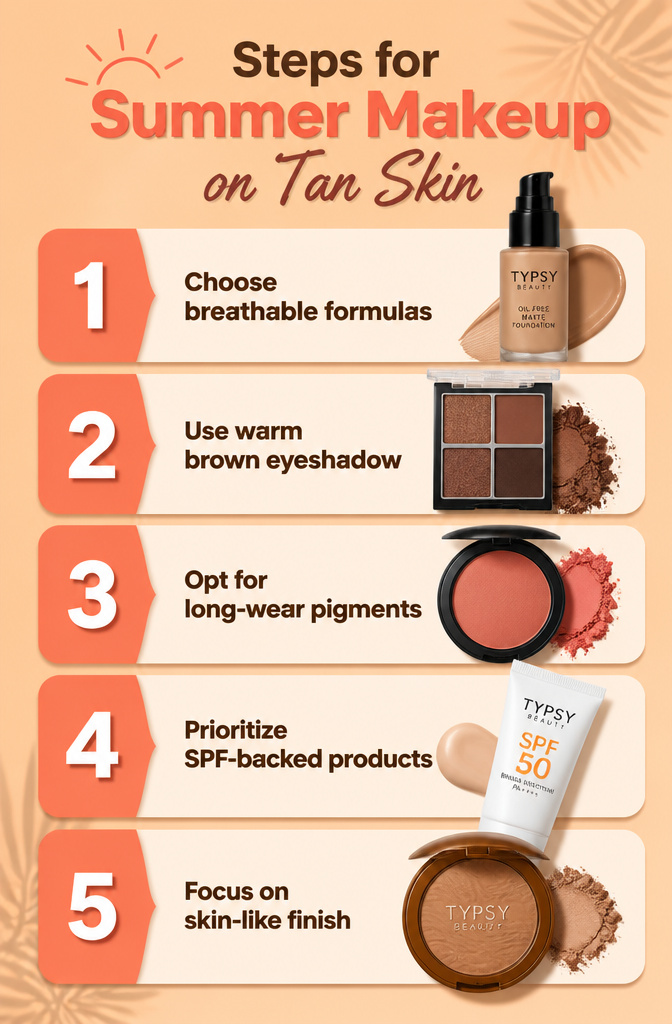
Typsy Beauty builds its summer line around the insight that tan skin with warm or olive undertones usually reads as combination skin, which means the same heat that brings out a golden glow also sends oil production upward. Sweat-proof and mattifying formulas are the move, but the trick is choosing ones that stay breathable rather than masking that warmth with chalky finish.
The color principles do not change when the texture shifts. A warm brown eyeshadow still harmonizes better than a cool taupe, and peach or coral blush still reads as natural on tan skin, but in summer the longer-wear versions of those shades matter more. I look for pigment-rich formulas that do not need layering, because building coverage in humidity is where the tone drifts ashy.
SPF-backed products get preference in my own kit, though I treat the SPF as backup rather than primary sun protection. The real test is whether a bronzer or blush still looks like skin after three hours of actual heat, and the ones that pass are typically the oil-free, breathable textures Typsy Beauty puts forward, not the full-matte masks that turn flat by noon.

Lightweight, creamy texture

Creamy Concealer: Our creamy crease-resistant formula is infused with hyaluronic acid for the smoothest glide ever. Never dry & never draggy. With a buildable medium-coverage concealer formula with 12-hour hydration for a natural skin-like finish.

INSTANTLY BRIGHTEN: Color correct dark circles for a refreshed, well-rested look with this viral under eye brightener. The creamy formula helps neutralize the look of discoloration and bluish tones for brighter, more radiant-looking under eyes. INSTANTLY BRIGHTEN: Color correct dark circles for a refreshed, well-rested look with this TikTok viral under eye brightener. The creamy formula helps neutralize the look of discoloration and bluish tones for brighter, more radiant-looking under eyes.
Seasonal Color Palettes That Fit
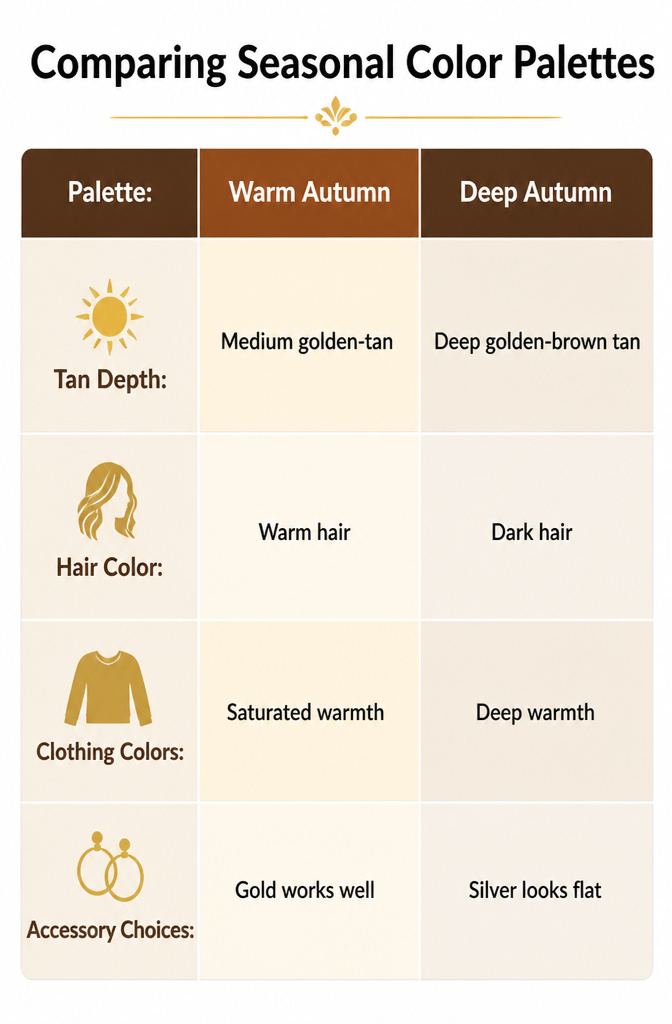
Warm undertones in tan skin most commonly map to three seasonal palettes: Warm Autumn, Deep Autumn, or Warm Spring. The difference comes down to depth and contrast. Warm Autumn suits medium golden-tan with warm hair; Deep Autumn takes deeper golden-brown tan with dark hair; Warm Spring fits lighter, peachier golden-tan with lighter hair. Your hair and eye color do the sorting, not the tan alone.
This framework extends past makeup into the wardrobe itself. A woman who lands in Deep Autumn, for instance, knows her clothing should carry the same saturated warmth her bronze eyeshadow does, not the dusty rose that flatters a Soft Summer. The same principle governs accessories: gold reads harmonious against the Warm Autumn palette where silver turns flat.
For shoppers moving away from trend cycles toward pieces that actually work together, this is a practical filter. Instead of buying a blouse because the color is current, you buy it because it sits within your verified warm range and therefore pairs with the camel coat and cognac boots already in rotation. The seasonal label becomes a shorthand for coordination, not a restriction.
The palettes do require honest assessment of depth. Someone with naturally medium golden-tan who deepens in summer may shift between Warm Spring and Warm Autumn depending on the month, which means a core wardrobe in the overlapping warm earth tones bridges both states without a second closet.

Glitter Blush Palette - Featuring a 3D embossed rose design, this blush has a silky texture and weightless feel. Available in 4 vivid shades with a sparkling yet natural finish. It delivers build-able color for every skin tone, from fair to deep. Simply beautiful on every skin tone. The versatile blush palette adapts seamlessly to any makeup style.

WATERPROOF: The waterproof formula allows you to wear this blush all day without worrying about smudging or fading.

Soft Texture: With a soft, powder texture, Oulac Blush goes on smooth and blends evenly into skin to naturally brighten up your complexion
Frequently Asked Questions
What makeup looks best on tan skin?
Warm earthy eyeshadows, warm lip colors, warm blush, and golden champagne highlight all look best on tan skin. The consistent principle is warmth: products with warm undertones resonate with tan skin’s natural golden quality and create a cohesive, luminous look. Cool tones tend to read as a separate layer sitting on top rather than blending in.
What foundation shade is best for tan skin?
Look for foundations labeled golden, warm beige, or warm medium-to-deep. The undertone matters as much as the depth; a foundation with pink or neutral undertone at the right depth will still look slightly off against warm tan skin. Test by swiping on your jawline in natural light and checking whether it disappears or leaves a visible stripe.
What blush color is best for tan skin?
Warm peach, apricot, and warm coral blush shades work best for tan skin. These share the same warm-golden temperature as the complexion, so they look like natural warmth rather than something applied on top. Cool pink or purple-leaning blush creates a temperature mismatch that looks artificial against warm tan skin.
What lip color suits tan skin?
Vivid coral, warm raspberry, rich terracotta, and warm caramel nude all suit tan skin beautifully. Tan skin’s warmth makes vivid warm lip colors look vibrant and deliberate, while cool nude lipsticks and cool pink shades tend to look flat or disconnected from the complexion’s golden quality.
What eyeshadow colors work for tan skin?
Warm terracotta, burnished bronze, rich sienna, and warm chocolate brown eyeshadows work especially well for tan skin. These warm earthy tones resonate with the skin’s golden quality and look effortlessly cohesive. Cool taupes and gray eyeshadows can look flat or slightly ashy against tan skin’s warmth.