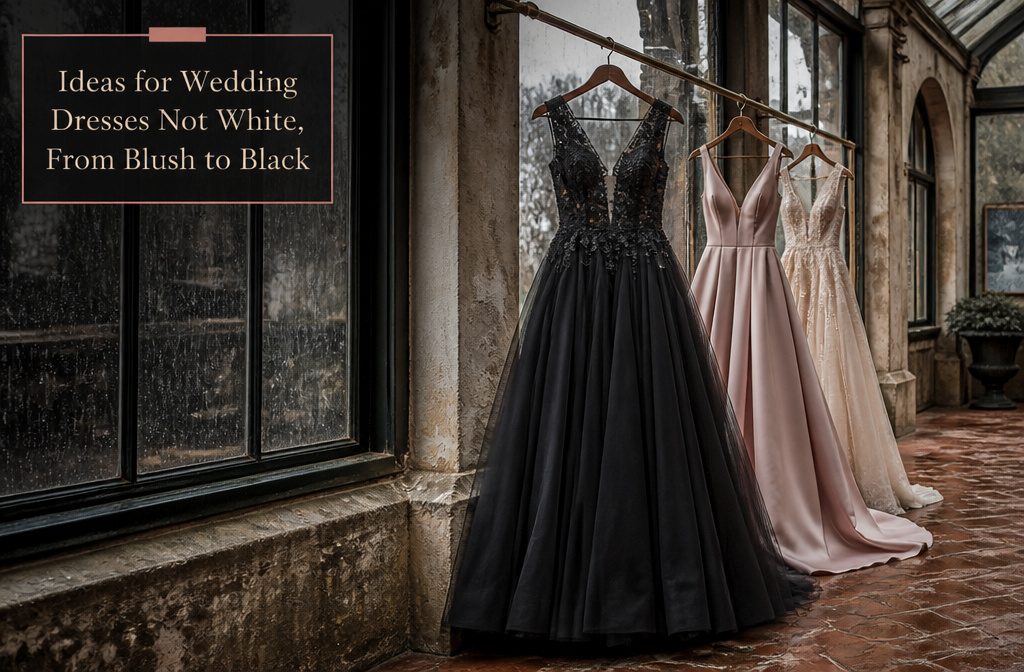
Colors run from champagne and taupe, barely off ivory, to red worn for good fortune or black tulle for a winter black-tie night, and the wedding’s season and formality usually pick the shade.
A colored dress only reads as bridal in a classic silhouette, such as an A-line or mermaid, in tulle, satin or lace.
1. Neutral Shades
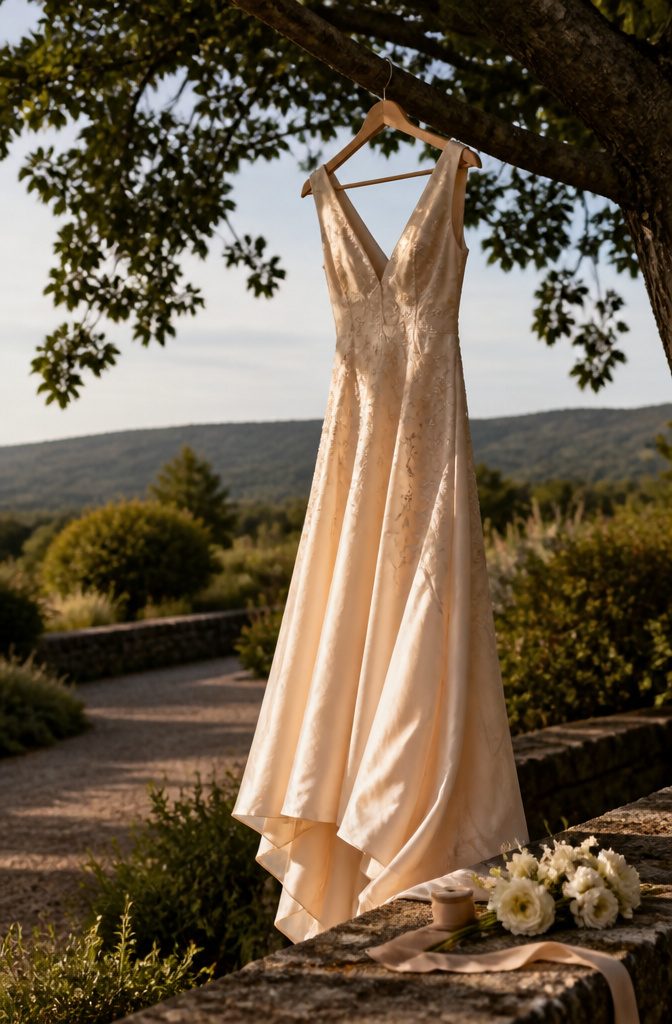
Champagne, taupe and gray are the quietest step away from white. They add color without a bold statement, so they suit anyone easing out of ivory.
Champagne is the softest, warmest of the three, and it’s where I’d start. Taupe and gray read cooler and a little more modern.
Neutrals also fit outdoor weddings and elopements well, because a muted tone sits easily in open, natural settings and doesn’t compete with the scenery.
Neutral shades give up contrast, so a blush or champagne gown can blur into pale skin and soft flowers in photos.
A plain neutral gown can look flat, so texture or detail has to carry it. Tonena’s gray dress with embroidered flowers, listed at $680+, is a good example: the gray stays calm while the embroidery supplies the interest.
2. Blush, Lavender and Soft Pinks
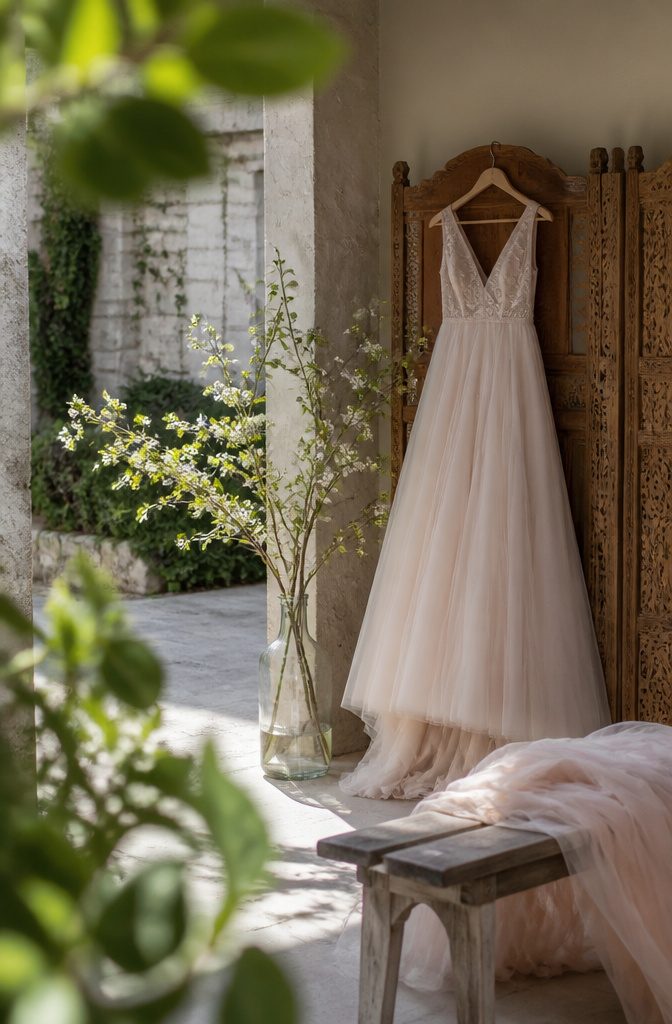
Blush and rose gold are the gentlest way to leave white behind, since both sit so close to ivory that they still read as bridal.
Pink belongs to spring and summer weddings, and it suits a castle, a beach or a backyard equally well.
If you’ve pictured yourself in a Bridgerton-style gown, this is the color that gets you there without tipping into costume. Rose gold adds warmth, so I’d try it first if blush looks washed out against your skin.
Lavender and lilac run cooler and quieter. They work best in simple silhouettes, because a pale cool color has little else to lean on, and I’d pick them over pink for a bride who wants romance without sweetness.
Hold each shade up in daylight before you commit, since pastels shift more than deeper colors do.
3. Blue
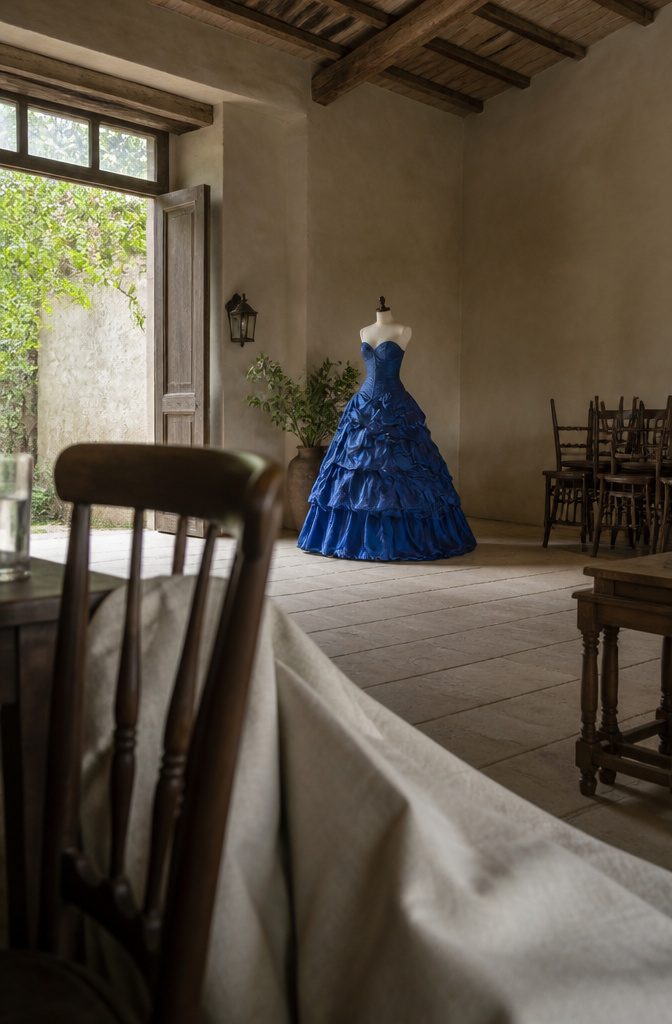
A blue dress covers the "something blue" line of the old rhyme in one piece, so the garter or the ribbon sewn into the hem can go.
Blue also reads as calm and pure, which is part of why it feels bridal without any white.
For a spring or summer wedding, light blue is the strongest pick. It looks soft, feminine and delicate in daylight, and I’d choose it over a heavier slate for an outdoor ceremony in warm weather.
For more drama, go the other direction.
A handmade, layered gown in a brilliant blue runs $950, and it suits a bride who loves rich color. On a plain venue, I’d take that over a muted shade, because the dress then carries the room.
4. Red
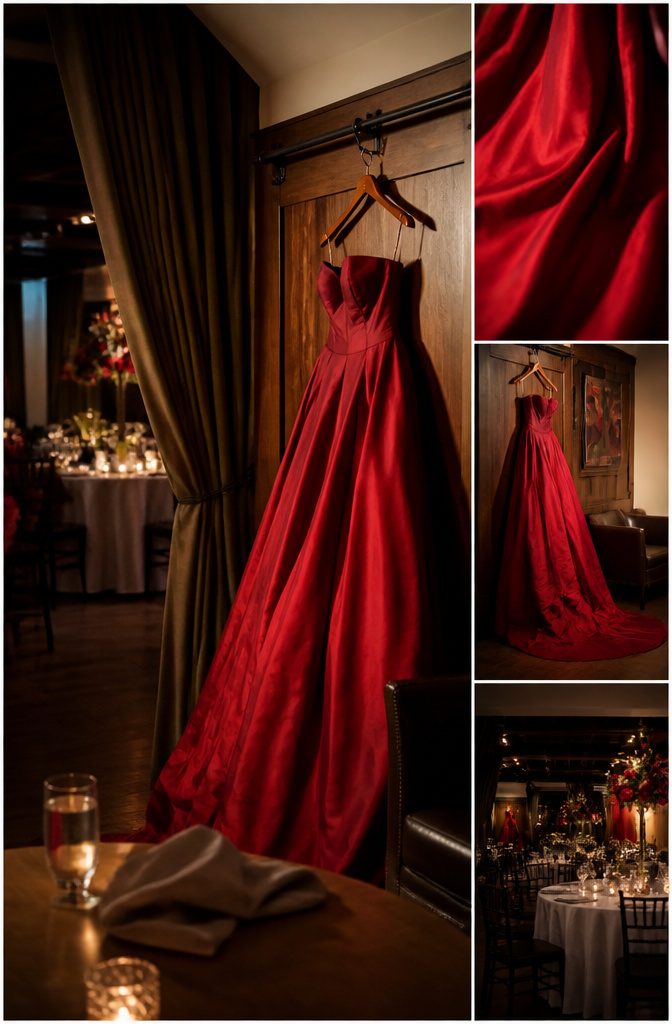
Red carries more meaning than any other non-white choice. In Chinese and Indian traditions, the bride wears it for good fortune, fertility and prosperity, and it is a traditional bridal color in many other cultures too.
Even outside those traditions, it reads as love and romance, which suits a wedding better than most colors do.
It is also the boldest pick on this list, and I’d say that is the reason to choose it. If red is your power color, wear it down the aisle.
If red all day feels like too much attention, change into it for the reception and keep the ceremony look quieter. You still get the dramatic entrance, just later in the evening.
5. Black and Dark Jewel Tones
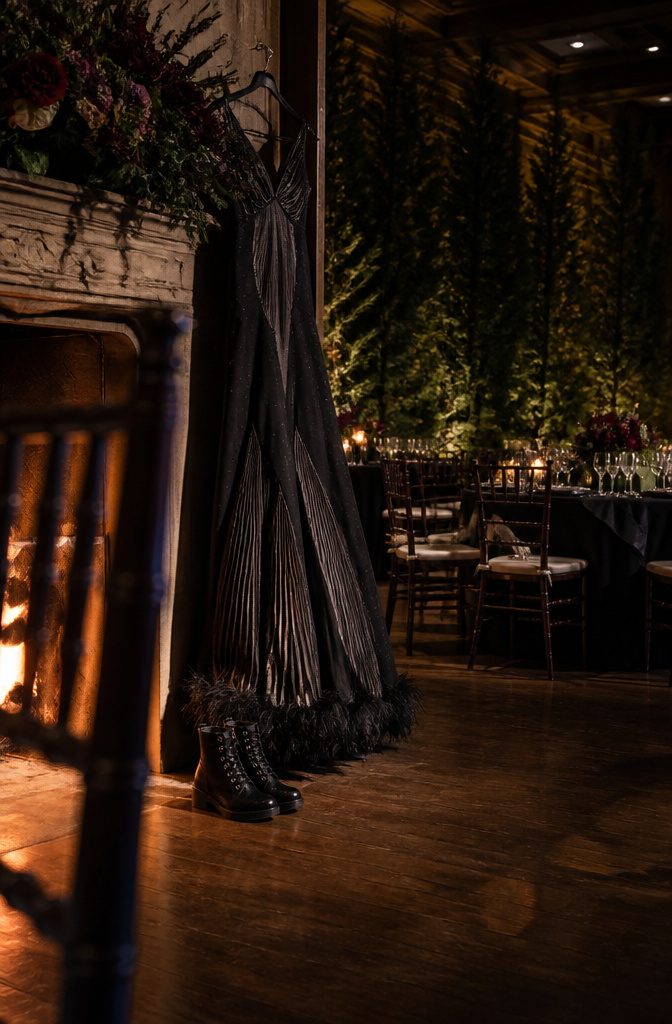
Black works best at a fall or winter wedding with a black-tie dress code, where its sophistication reads as intended.
You can commit to a full black gown or keep the drama to a black tulle skirt, and winter boots finish either one.
Detail keeps black from feeling severe: pleated inserts, feather trims and rhinestones give a dark dress the same dressed-up weight as a traditional one, and they help you feel comfortable and confident from ceremony to last dance.
Emerald, sapphire, burgundy and plum follow the same logic in my book: deep shades for cold-weather evenings and formal rooms.
At a casual summer daytime wedding, I’d expect any of them to feel heavy, so I’d choose a lighter color there.
6. Print, Embroidery and Floral Detail
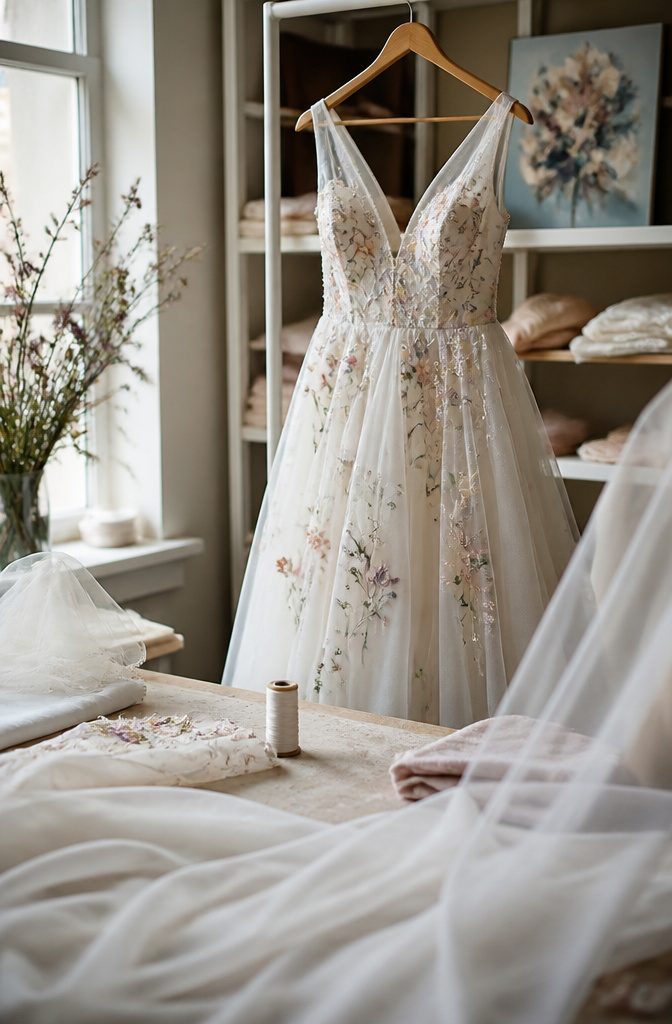
A mesh or chiffon overlay with floral embroidery or colored beads is the easiest way to add color without leaving a white-leaning gown behind, because the base stays quiet.
Programs like Personalize It! let you swap overlays and embellishments, and named styles such as Annie AA2440 give you a starting point.
For louder texture, Jordan Deruiter’s floral gown is covered in 3D flowers at $798.
Flora and Lane’s rust dress, with its embroidery, starts at $850+. Needle & Thread is my pick for embroidery on a white gown, and it sells capes and veils to match.
A slight print is the gentler route, and bridal separates with a colorful skirt are another. Etsy and independent handmade designers are the places to look for one-off detail.
7. Jumpsuits, Separates and Outfit Changes
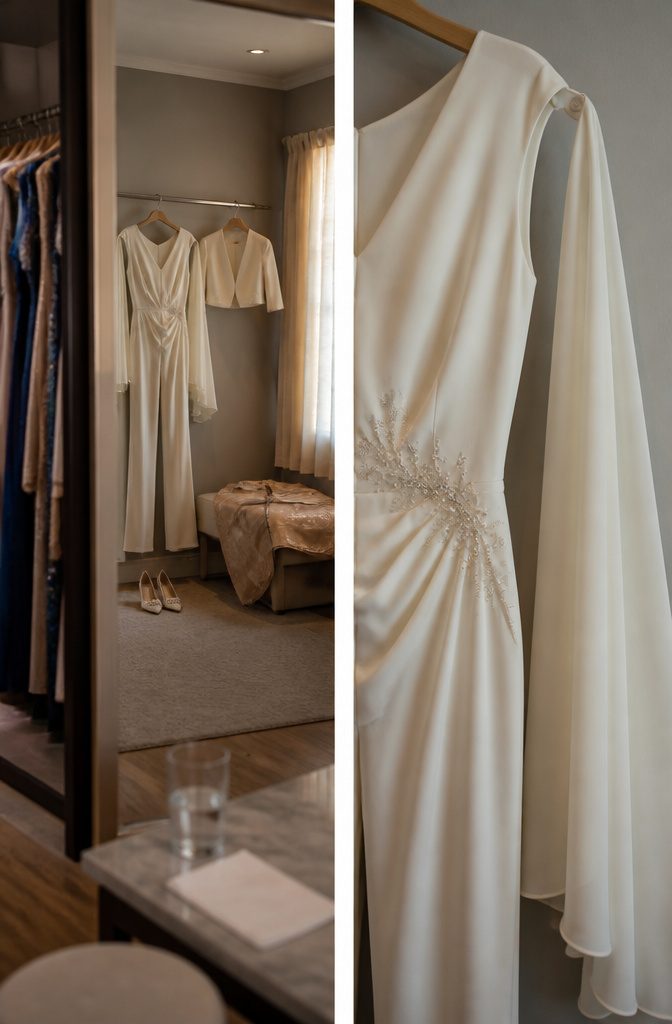
A jumpsuit brings as much glamour as a gown and moves better between the dance floor, the bar and the photographer.
Crystal embellishment, strapless cuts and draping keep it formal. A mini dress suits warm-weather weddings, Vegas and legal ceremonies, and a tailored short jacket works well for a courthouse.
For one outfit that covers the whole day, I like Cove LP2446 from La Perle by Calla Blanche. Its detachable bell sleeves give you two looks in one, ceremony to reception, and it also comes in ivory.
Sequins suit a reception change too: a sequin dress or jumpsuit is easier to commit to for a few hours than for a full day.
Try prom or bridesmaid dresses at a local boutique, and search "formal gown," "evening gown" or "ball gown" online.
Make a Colored Dress Read as Bridal
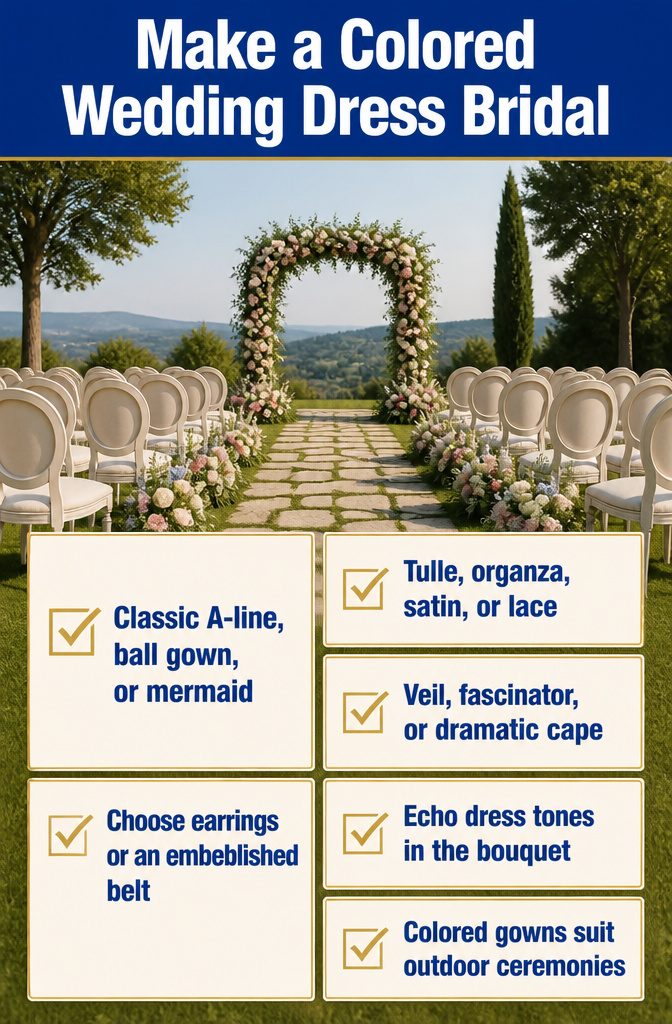
A colored dress needs a few cues before it reads as a wedding dress and not a formal gown. Here is what I’d check, in order of impact:
- Choose a classic silhouette. An A-line, ball gown or mermaid shape carries the ceremonial feel, and it anchors an unexpected color better than any other single choice.
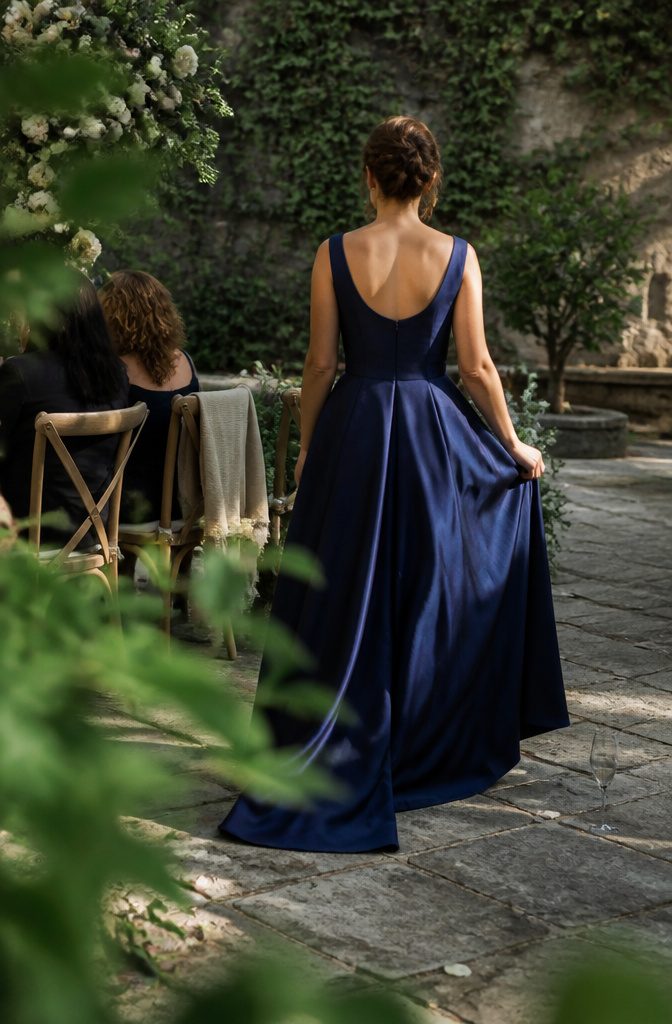
- Stick to tulle, organza, satin or lace. A blush tulle ball gown or a navy satin column with a small train looks bridal on sight.
- Add a veil or a fascinator. A dramatic cape also works if you want more presence.
- Pick one accent: statement earrings or an embellished belt. Wearing both competes with the dress.
- Echo the dress tones in your bouquet. Flowers held against a rich color are the most unmistakably bridal moment in the photos.
- Let the venue weigh in. A colored gown suits an outdoor ceremony especially well.
White Is Not Required
White became the default in 1840, when Queen Victoria wore a white gown and turned it into a symbol.
Before that, brides wore their best dress in whatever color they owned: red, blue, silver. A colored dress is closer to the old habit than a break from it.
I take a plain position here: a bride owes no one a reason for choosing color. "It feels more like me" is reason enough, and it beats any argument about tradition.
Anyone can wear a unique dress, from the minimalist to the sensational, and the only test worth applying is whether it reflects your own style and leaves you feeling confident when you walk in.
Frequently Asked Questions
Do wedding dresses have to be white?
No. White only became the default in 1840, after Queen Victoria wore a white gown, and earlier brides wore their best dress in whatever color they had.
Any bride can pick the color and style that suits her, and a dress that reflects your taste and makes you feel confident is the only test that counts.
How do I start looking for a unique wedding dress?
Pick a base style that matches your taste, then narrow it using your skin tone, wedding theme, venue and season.
Lighter shades like blush and light blue fit spring and summer, while black and jewel tones suit fall and winter evenings. Hold any pastel up in daylight before you commit, since those shades shift more than deeper ones.
What can I customize on a non-white wedding dress?
You can change the color, the fabric overlays, the embellishments, the train and dress length, and the style of the back closure.
Accessories such as a veil, earrings or a crown help finish the look. A mesh or chiffon overlay with floral embroidery or colored beads is the easiest way to add color while the base stays quiet.