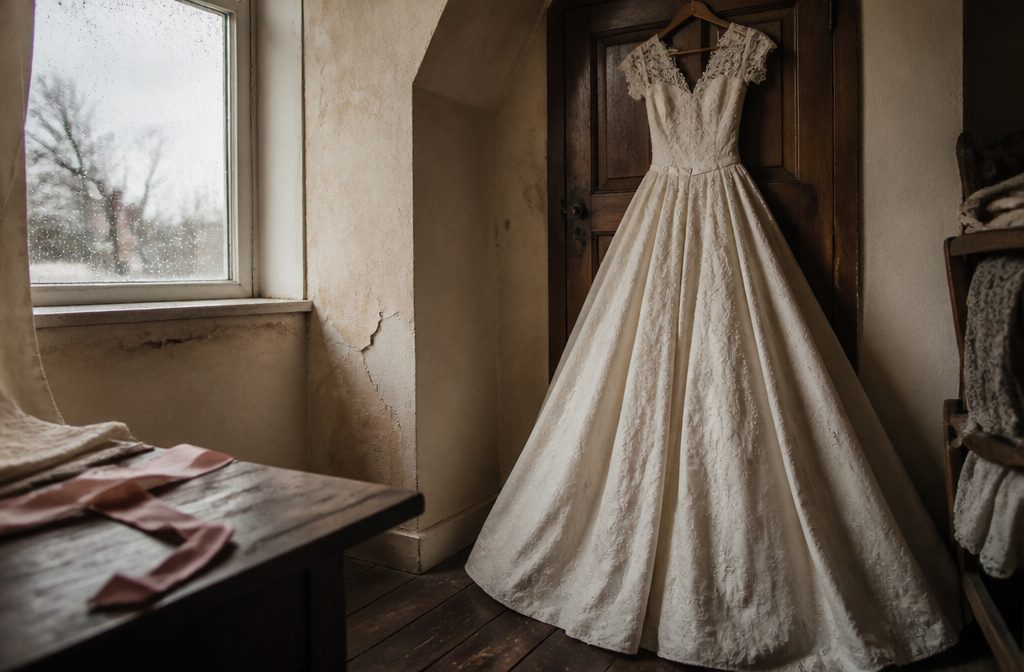
A vintage wedding dress is an authentic gown at least 20 years old, with styles running from 1800s high necks to 1980s puffed sleeves.
Vintage sizing was never standardized, and 1800s fabric is too fragile to wear, so measure first and choose a reproduction for that century. The 1950s full skirt is the safest pick for most bodies.
1800s and Edwardian Gowns
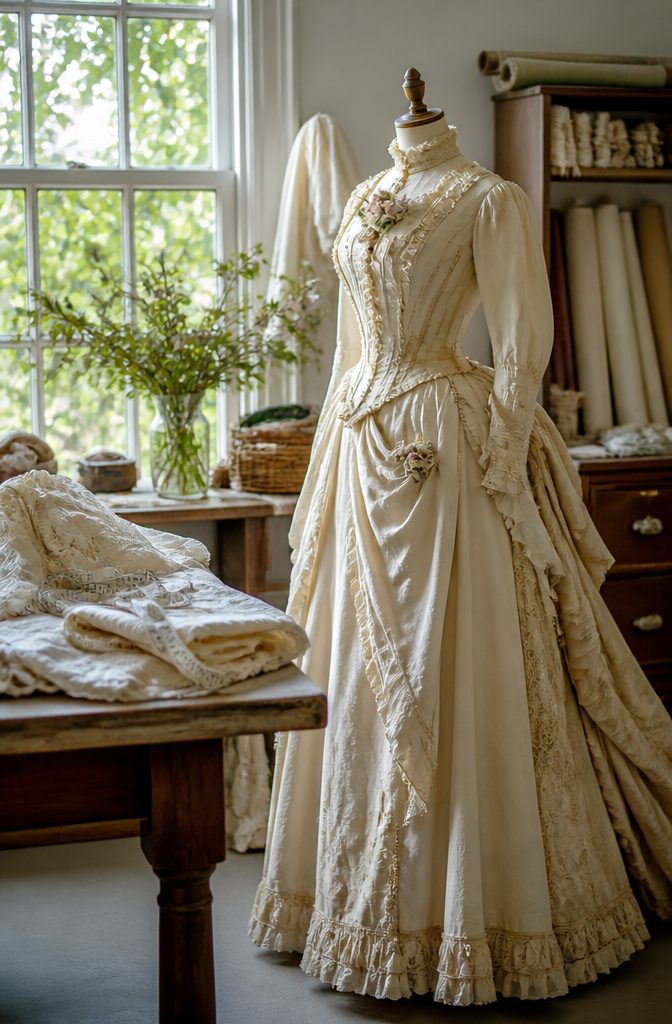
Before the 1800s, most brides married in the best dress they already owned. Dedicated wedding gowns arrived over that century, mostly for wealthy brides, and the shift sped up after Queen Victoria wore a white gown and changed bridal fashion.
The look is easy to spot: high necks, floral adornments, frills and structured silhouettes, all of which carry into the Edwardian years. The high neckline is the easiest idea to borrow, since it reads as period without tipping into costume.
The dated gown history here starts in 1878, and intact, wearable gowns from this era are the hardest to find.
Fabric this old is fragile, so I’d treat an original as a keepsake and choose a vintage-inspired reproduction for walking down the aisle.
The 1920s Drop Waist
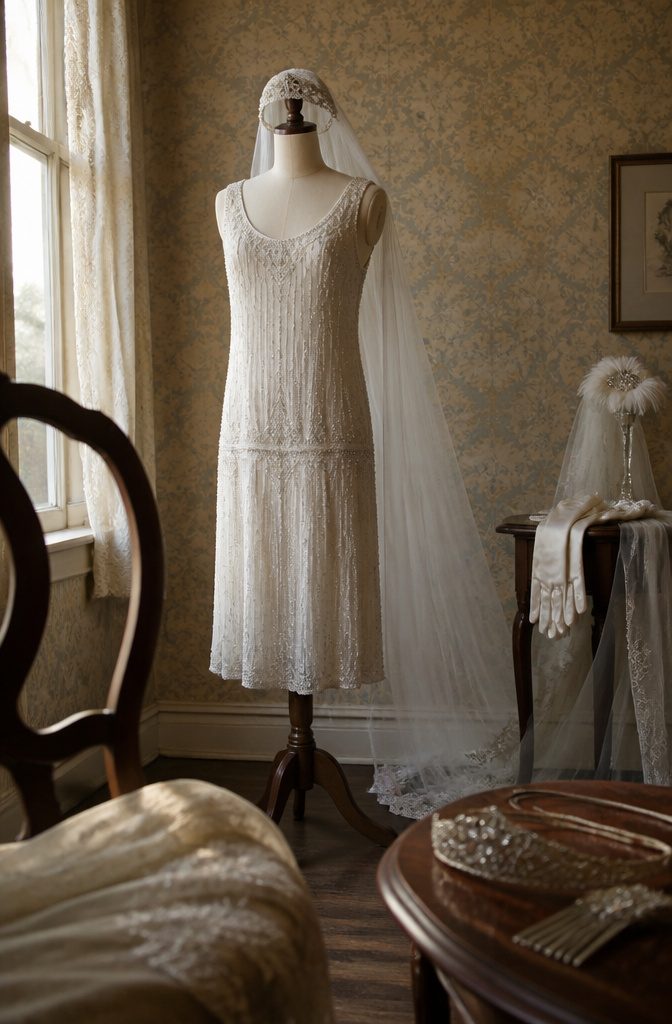
The 1920s dress skims the body instead of shaping it. Straight, loose cuts with a sheath or shift-like line, strappy sleeves and a drop waist replaced the corseted look, and many brides wore a short hemline for the first time.
Full-length gowns still existed, and some brides simply chose a pretty dress that wasn’t bridal at all.
Headwear carried the drama. The Juliet cap veil dominated, while hats, diamond tiaras and floral crowns paired with long gloves and cathedral-length veils.
This shape suits a straight or narrow-hipped frame best. Anyone who wants a defined waist should look to another era, because a drop waist sits low and gives a curvy figure no waist definition.
If an original won’t fit, Kashlynn by Maggie Sottero and Danica by Sottero and Midgley are 1920s-inspired alternatives.
1930s Silk and Satin
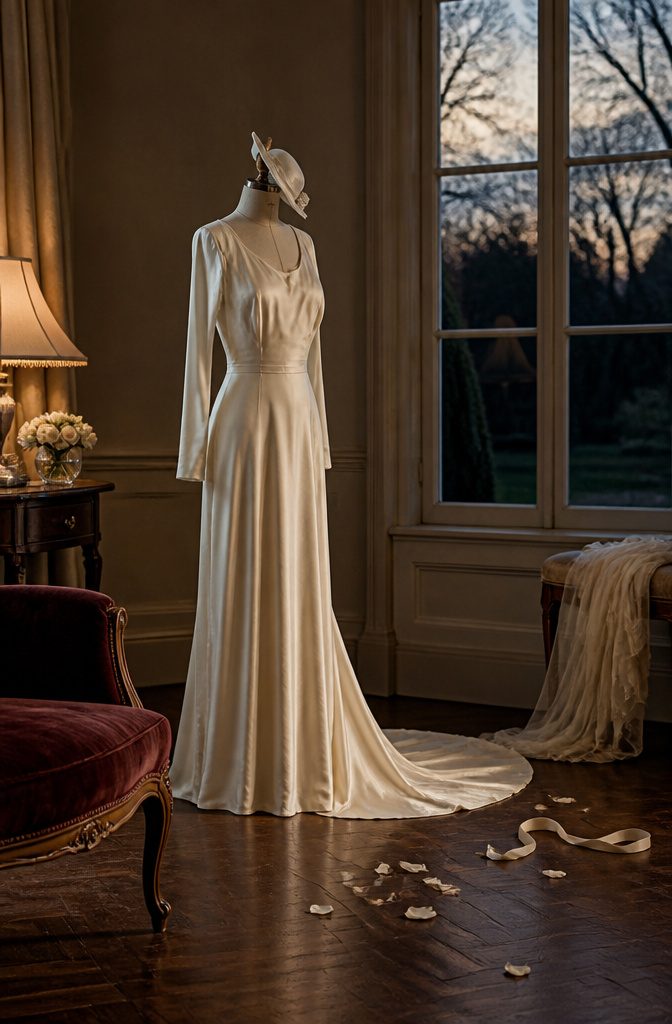
Silk and satin did the work in the 1930s, and the dress stayed quiet about it. Skirts fell long and softly draped, sleeves ran to the wrist, and the train stayed short instead of sweeping out behind.
Trim was minimal, so the decade reads as a calm turn after the 1920s dresses that came before it. Old-Hollywood glamor and a taste for romantic escapism shaped the look.
Decoration crept back in as the decade went on, so an early-1930s gown and a late one are not the same dress.
For the cleanest version, I’d look for long sleeves, a short train and very little trim. Top the veil with a headpiece or a small white hat, and carry a bouquet, which grew popular in these years.
1940s Wartime Simplicity
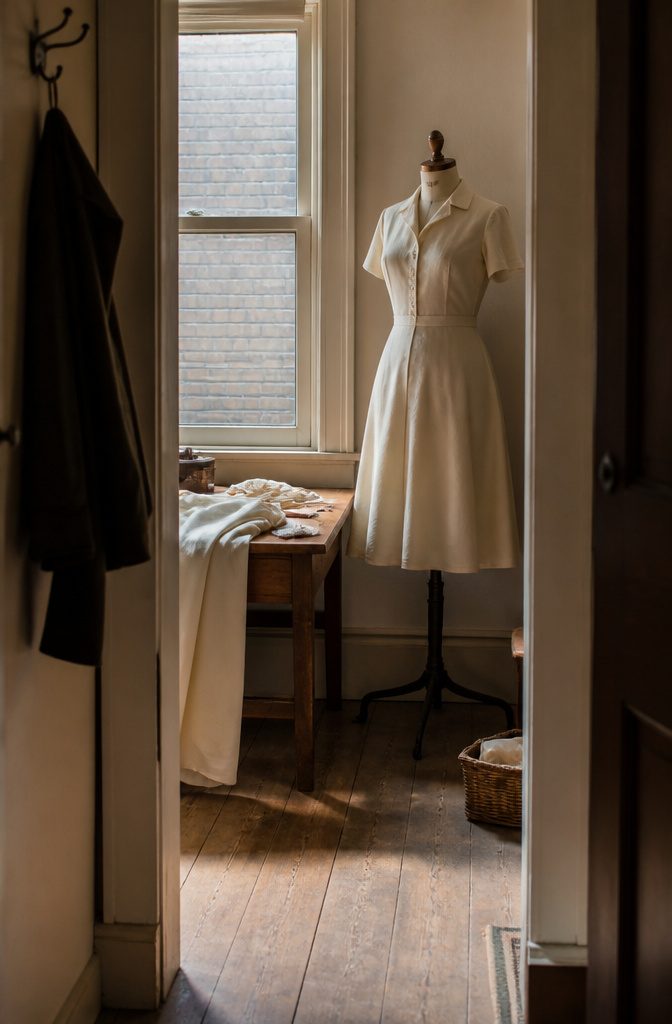
Wartime rationing in the 1940s sent brides to their own closets.
Many wore a formal piece they already owned: a tailored, high-waisted top with an A-line skirt that stopped at the knee. Ava Gardner married in a suit, which shows how loose the idea of a wedding dress had become.
The decade’s most glamorous wedding stayed restrained. Queen Elizabeth married Prince Philip in 1947 in an ivory silk dress with a scoop neck and pearl embroidery.
For a short, practical dress, this is the best of the old fashion wedding dresses to borrow from.
The knee-length skirt moves easily, and the structured top gives shape without piles of tulle. I’d choose it over any later decade for a dress you’ll wear again.
1950s Full Skirts
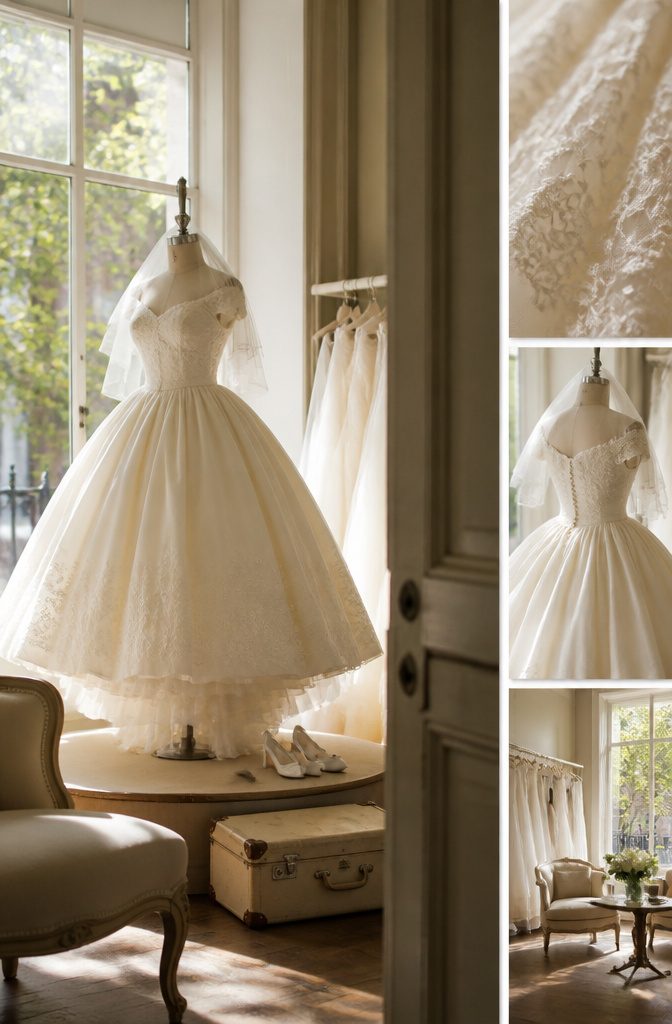
Of all the old fashion wedding dresses, the 1950s tea-length style with a full skirt is the one I’d steer most brides toward first.
The bodice is cinched at the waist and the skirt flares out from there, so the dress defines the waist and floats over the hips instead of clinging to them.
That shape is why it’s the safest vintage choice for most bodies and venues.
Fabrics turned richer and more detailed in this decade, so the dress does the work without much help.
Veils ran shorter for the same reason, which keeps attention on the skirt. A hem above the ankle also means no train to manage, whether the day is a courthouse ceremony or a long reception on a dance floor.
A full 1950s skirt takes a lot of volume, and that volume means layers of tulle or a stiff petticoat underneath. A full skirt takes up room, so check how it moves through doorways and into a car before committing.
1960s Through the 1980s
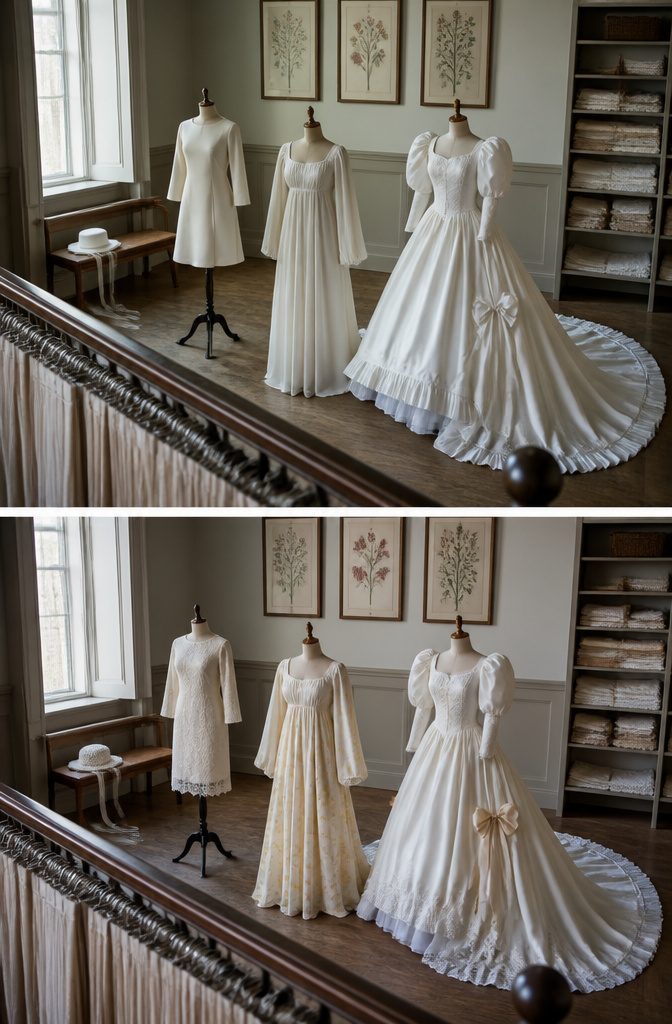
These three decades share almost nothing, so pick by silhouette, not by span. The 1960s are short and clean: mod minis, sleek sheaths, A-line and shift cuts, three-quarter sleeves, structured fabric.
Sharon Tate’s short babydoll dress in 1968 shows how far that went. The 1970s turn billowy and bohemian, with empire waists, ethereal sleeves, wrist cuffs and high necks.
Ribbons and hats replaced veils, and flowing cotton carried floral motifs. The 1980s run on "more is more": voluminous skirts, puffed sleeves, bows, lace trim and long trains, all set by Princess Diana’s gown.
For a dress that skims the body, choose the 1960s; for volume and drama, the 1980s. I’d call the 1970s the softest middle ground.
Fit, Measurements and Alterations
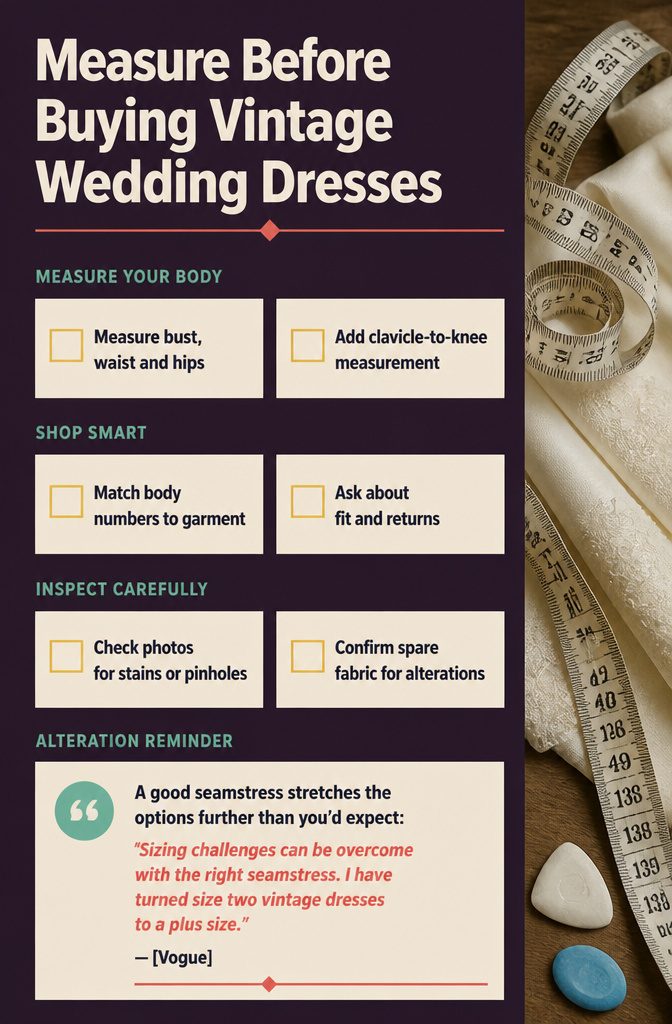
Vintage sizes were never standardized, and a previous owner may have altered the dress anyway, so ignore the tag and work from numbers.
- Get measured by a tailor first: waist, bust and hips, plus clavicle to knee if you can.
- Compare those numbers with the garment measurements online sellers list. Handmade dresses often need altering.
- Ask about size, condition, dating, interior construction, fit allowance and return policy.
- I’d skip no-return sellers, and check photos for pinholes and stains.
- Try several eras and fabrics, because a dress can look different on the body than on a hanger.
A good seamstress stretches the options further than you’d expect:
Sizing challenges can be overcome with the right seamstress. I have turned size two vintage dresses to a plus size.
— Vogue
That only works when spare fabric exists in the hem, train or sleeves to add side-seam panels.
Where to Shop
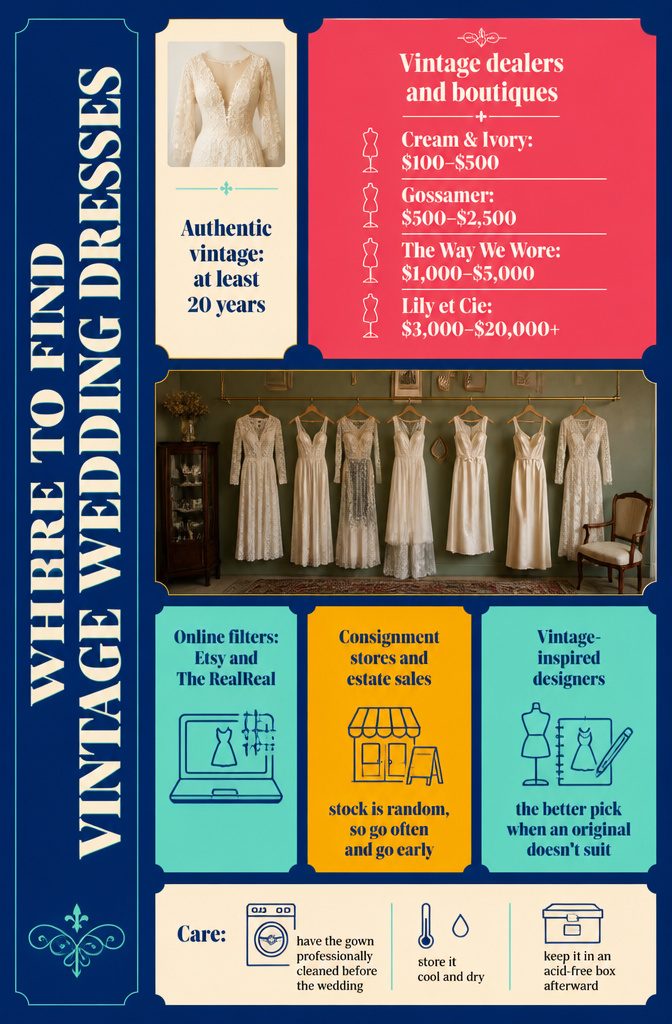
A vintage wedding dress is an authentic gown at least 20 years old, and the exact dress from a photo or runway almost never turns up.
Pick out the features you love, such as the neckline, sleeve or waist, and widen the search around them.
- Vintage dealers and boutiques: Cream & Ivory runs $100–$500, Gossamer $500–$2,500, The Way We Wore $1,000–$5,000 and Lily et Cie $3,000–$20,000+. Prices vary widely by shop.
- Consignment stores and estate sales: stock is random, so go often and go early.
- Etsy and The RealReal: the easiest way to filter by era and silhouette from home.
- Vintage-inspired designers: the better pick when an original doesn’t suit.
- Care: have the gown professionally cleaned before the wedding, store it cool and dry, and keep it in an acid-free box afterward.
Frequently Asked Questions
What is a vintage wedding dress?
A vintage wedding dress is an authentic bridal gown that is at least 20 years old.
That makes a 1990s gown technically vintage, though most people searching for old fashion wedding dresses mean styles from the 1800s through the 1980s. A new dress modeled on an older style is vintage-inspired, not vintage.
What are the most popular styles of old fashion wedding dresses?
The most popular are the 1920s drop-waist gown, the 1950s tea-length dress with a full skirt, the 1960s mod mini or sleek sheath, the 1970s bohemian empire-waist dress and the 1980s puff-sleeve ball gown.
The 1950s tea-length style is the safest first pick for most bodies and venues because it defines the waist without a train to manage.
Why choose a vintage wedding dress, and is it eco-friendly?
Vintage gives you a one-of-a-kind dress with older craftsmanship and a history behind it, and the price can come in lower than new, though shops range from about $100 to $20,000+.
It is also a sustainable choice. Reusing an existing gown avoids demand for new production and cuts the waste and manufacturing impact of new textiles.
How do I find the right vintage wedding dress?
Start by choosing an era and silhouette, then list the features you love, such as the neckline, sleeve or waist, because the exact dress from a photo rarely turns up.
Get measured by a tailor and compare your numbers with the seller’s garment measurements, since vintage sizing was never standardized. Ask about condition and the return policy before you buy, and stay open to alterations.
Where can I buy a vintage wedding dress?
Shop vintage dealers and boutiques, consignment stores, estate sales, Etsy and The RealReal.
Boutique prices vary widely: Cream & Ivory runs $100–$500, while Lily et Cie runs $3,000–$20,000+. Etsy and The RealReal make it easy to filter by era and silhouette from home, and vintage-inspired designers are the better route when an original doesn’t fit.
How do I care for and preserve a vintage wedding dress?
Have the gown professionally cleaned, and any repairs made, before the wedding.
Store it somewhere cool and dry, out of direct sunlight, and skip plastic bags because they trap moisture. After the wedding, have it cleaned again and keep it in an acid-free box.