Asian eye makeup is the practice of applying color and liner to eye structures common across East and Southeast Asian populations: monolids without a crease, double eyelids with one, hooded lids where skin folds over.
The techniques differ from Western tutorials because the same shadow placement that flatters a deep-set eye can disappear entirely or collect in muddy lines on a flatter lid plane.
A vertical gradient, with darker tone at the lash line softening upward, keeps a monolid open where a cut crease would vanish the moment you look straight ahead.
Monolid Makeup Techniques
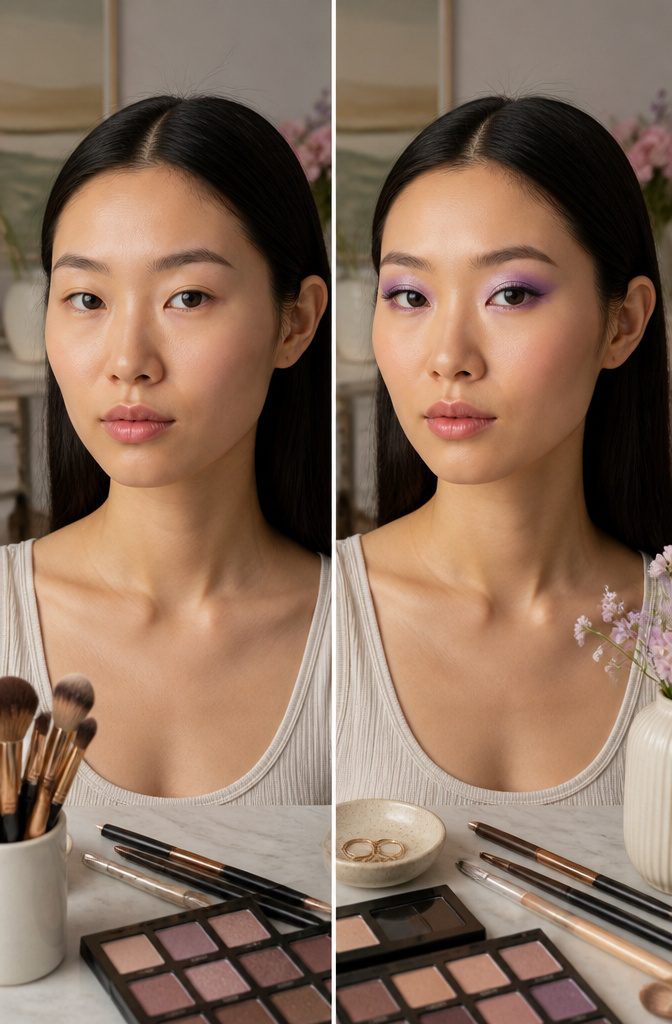
The vertical gradient method changes everything for monolids.
Darker shadow sits right at the lash line, then softens upward through lighter shades toward the brow bone. No crease means no natural stopping point, so the depth builds downward, not inward, and the eye keeps its open shape.
Western cut-crease tutorials never worked on my lids. The color would disappear the moment I opened my eyes, or worse, collect in a muddy line where I tried to force a fold.
The gradient approach skips that fight entirely. Tightlining the upper waterline adds definition without stealing the lid space the shadow needs.
Shimmer placement matters more here than on double lids. A touch on the center of the lid catches light and creates the roundness that monolids can otherwise flatten.
The lower lash line gets attention too, aegyo-sal style, which brings the whole eye forward rather than letting it recede behind heavy top-lid work.

Double Eyelid Makeup Techniques
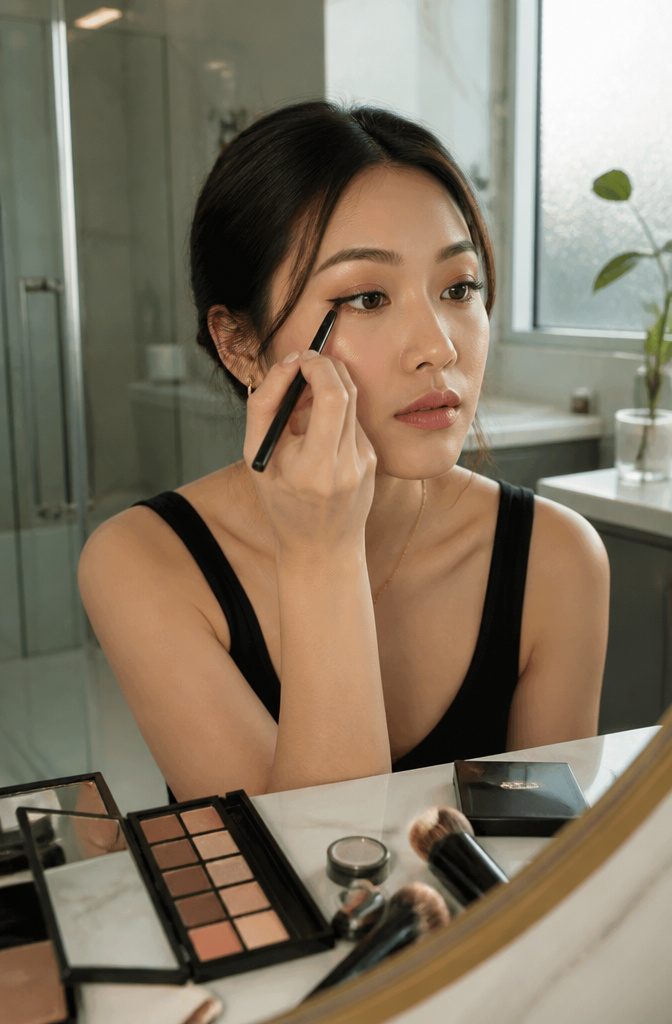
The visible crease of a double eyelid gives more lid space to work with, which sounds like an advantage until you darken it too heavily and the whole eye collapses inward.
I learned this the hard way with a charcoal palette that looked elegant in the pan and bruised on my face.
The crease is a guideline, not a trench; a medium matte shade swept into it with a blending brush should soften at the edges until you cannot see where color starts and skin stops.
For clean placement, apply shadow while looking straight into a mirror with your eyes open. Only then can you tell whether the color stays visible above the fold when your lids are relaxed.
A vertical gradient solves the disappearing-shadow problem that frustrates anyone with a deeper fold: carry the tone higher than instinct suggests, blending upward rather than stopping at the crease line.
Japanese techniques often sweep a deeper tone just past the outer corner in a horizontal V, which elongates the eye without the harsh geometry of a Western cut crease.
Liner should stay close and thin. A brown or deep black traced tight to the upper lash line defines without claiming territory; tightline the upper waterline for the same effect from a shorter distance.
Skip the dramatic wing. Thick liner on a double eyelid eats the very space the shadow was meant to display, and the result reads crowded rather than striking.

Matte & Shimmer Set: Includes matte and shimmer cream sticks across light-to-deep shades; matte for base and definition, shimmer for luminous accent and inner-corner glow

【Instant Eye Lift & Definition】 Transform your eyes in seconds! Our invisible double eyelid tape provides an immediate lift for hooded, sagging, or monolid eyes. Achieve a natural, wide-awake look and more defined eyelids without the need for expensive or painful cosmetic procedures.

Kevyn Aucoin Duet Shadow Brush: An expertly designed dual-ended shadow brush for effortless application and blending. The “BASE” end acts like the shape of your finger to apply your eyeshadow base or an allover quick shadow look. Flip the brush, to use The “BLEND” end -an ultra-flexible, tapered fluffy brush that seamlessly buffs shadow into the crease and softens the edges
Almond Eye Makeup Techniques
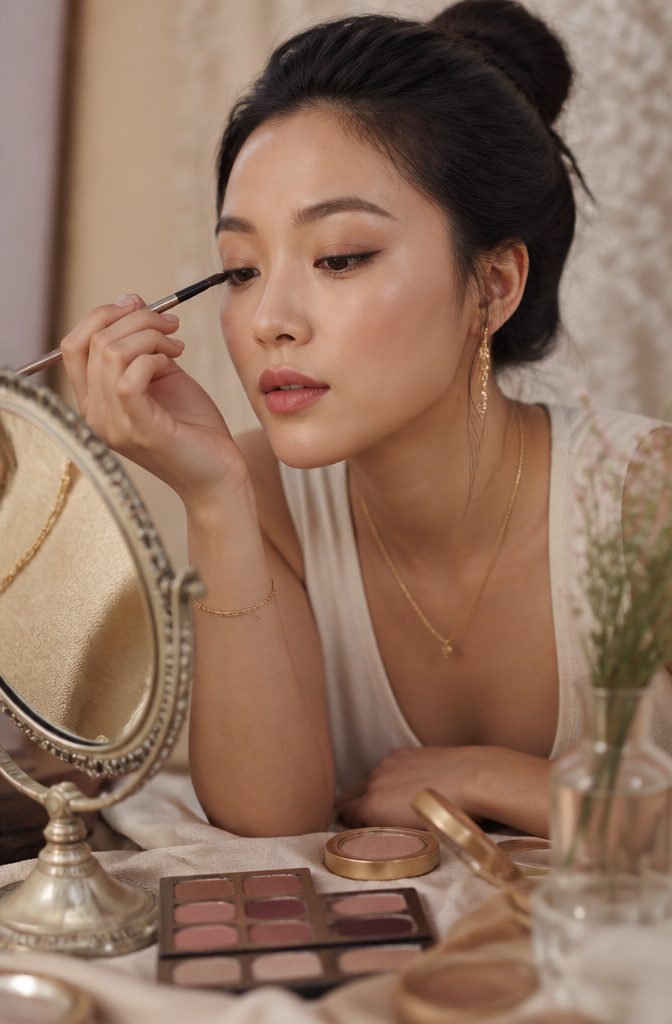
Almond-shaped eyes already carry their own symmetry, so the work is enhancement rather than correction.
A thin line of pencil or gel drawn exactly along the lash line, staying tight to the roots and tapering only slightly at the inner corner, keeps the natural curve intact without hardening it.
Winged liner can fight this shape if the flick climbs too high or too far outward; the lift should follow where the lid actually ends, not where an idealized diagram says it should.
Shadow placement matters more than color choice here. A medium tone worked into the outer third of the socket, blended inward without crossing the center of the eye, adds depth without flattening the dimension that makes almond eyes distinctive.
Bringing color too far across the lid erases the very contour that defines the shape.
Curling lashes before mascara opens the eye without competing with the liner. Two coats on the outer lashes, one on the inner, keeps the balance weighted where the natural shape already draws attention.
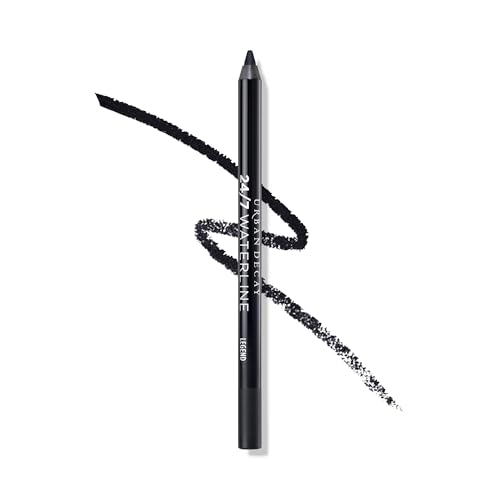
WATERLINE SAFE: Urban Decay 24/7 Glide-On Eyeliner Pencils are award-winning, waterproof eyeliners delivering intense, long-wearing color that will not budge. Available in versatile shades including white, brown, nude, gray, and black to deepen or brighten your eyes.

Waterproof and Richly Pigmented: Eyeliner specifically formulated for the waterline to provide gentle, yet intensely pigmented definition to the eyes.

12-HOUR WATERPROOF WEAR: Endless play from one go-to pencil sets in seconds and delivers 12-hour color-rich, fade-proof and sweat-proof wear.
Downturned Eye Makeup Techniques
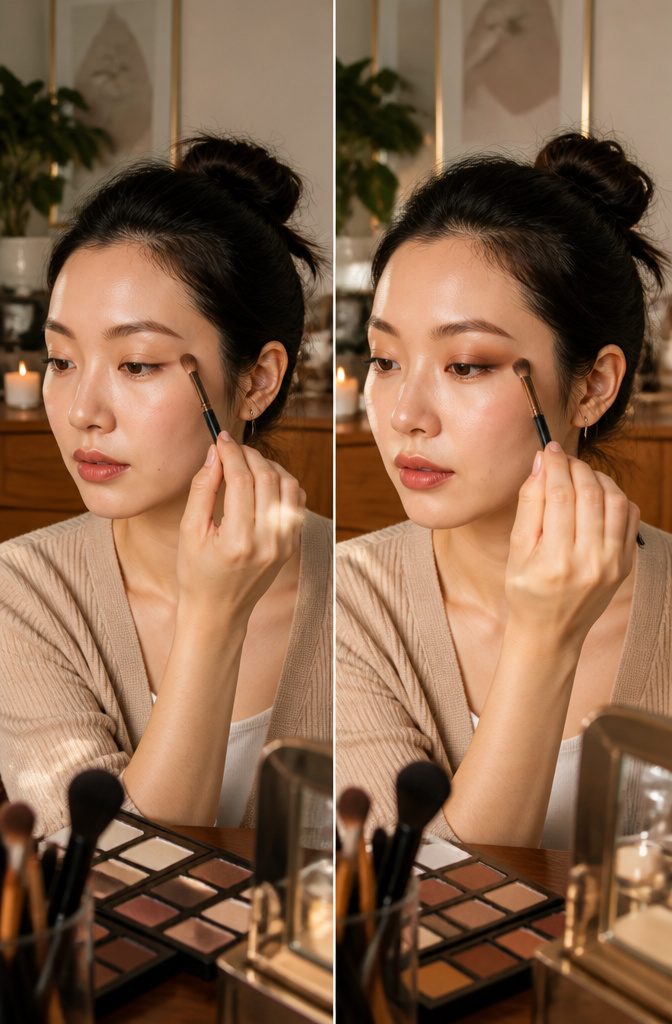
Downturned eyes carry a gentle slope at the outer corners that can read as tired when makeup drags the line further down.
The fix is a soft upward diagonal on the outer third of the lid, not a cat-eye flick that fights the shape with harsh contrast.
I start shadow from the center of the lid, not the inner corner, and keep the darkest tone concentrated on that outer third.
Blending upward and slightly inward, toward the brow bone, creates lift without the obvious geometry of a wing. Rosy taupes and warm nudes do this more forgivingly than deep smokies, which tend to close the eye off.
Eyeliner follows the same principle. A liquid pen works well for control: trace from the midpoint of the lash line outward, letting the line taper to almost nothing rather than building a thick tail.
The goal is to redirect the visual angle, not to draw a new one. D-Up and Uzu make pens precise enough for this kind of fine correction.
Mascara placement finishes the lift. Concentrate on the center and outer lashes, and use a primer or fiber formula that holds curl.
Opening the inner corner with a small highlight helps too, and a touch of shimmer under the lower lash line at the inner third balances the whole shape with a soft, bright point.

DUAL-ENDED DESIGN: Features two distinct brush heads in one tool — a large blending head to seamlessly soften eyeshadow edges and a small detail smudger for precise lower...
Key Techniques for Asian Eye Makeup
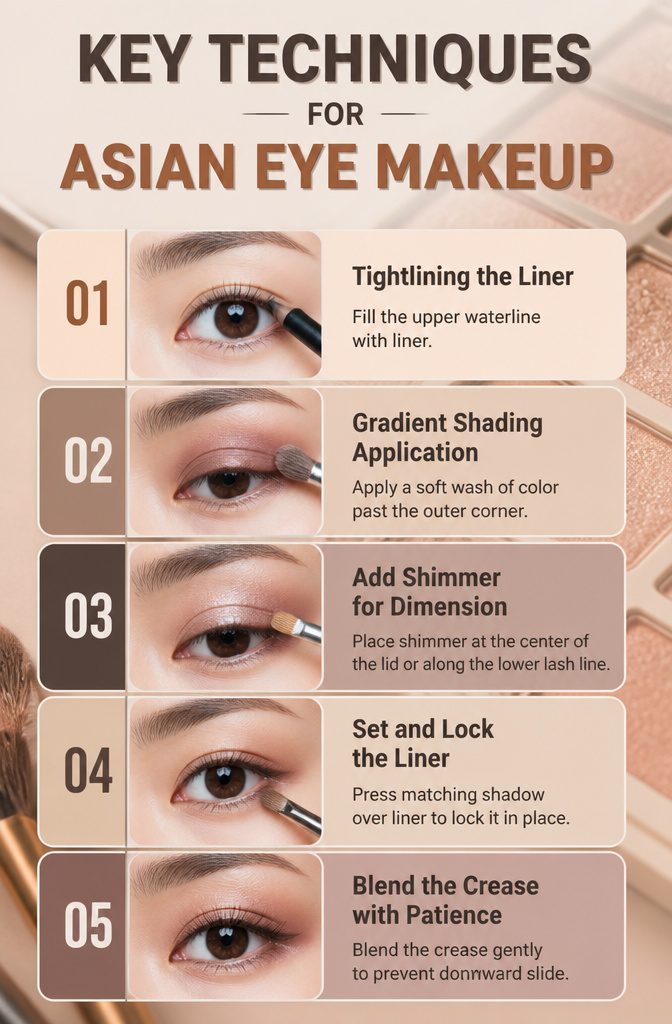
Tightlining changed how I use eyeliner. Pressing a fine pencil or liquid pen between the upper lashes fills the waterline without claiming any lid space, which matters when that space is already limited.
The lashes look denser, the eye reads more open, and the liner stays invisible until someone is close enough to notice the effect.
Gradient shading works better than sharp contours on most Asian eye structures. A soft, diffused wash of color, kept gentle past the outer corner, respects the natural lid plane rather than fighting it.
Matte shadows recede; shimmer catches light and builds dimension, especially at the center of the lid or along the lower lash line where aegyo-sal or Douyin-style placement creates roundness.
The choice between them depends on what you want to push back or bring forward.
Blending is what keeps either choice from disappearing or migrating.
Unset liner smudges; unblended shadow pools or vanishes. A small brush of matching shadow pressed over liner locks it in place, and patience with the crease line prevents the whole look from sliding downward by noon.
Understanding Eye Shapes
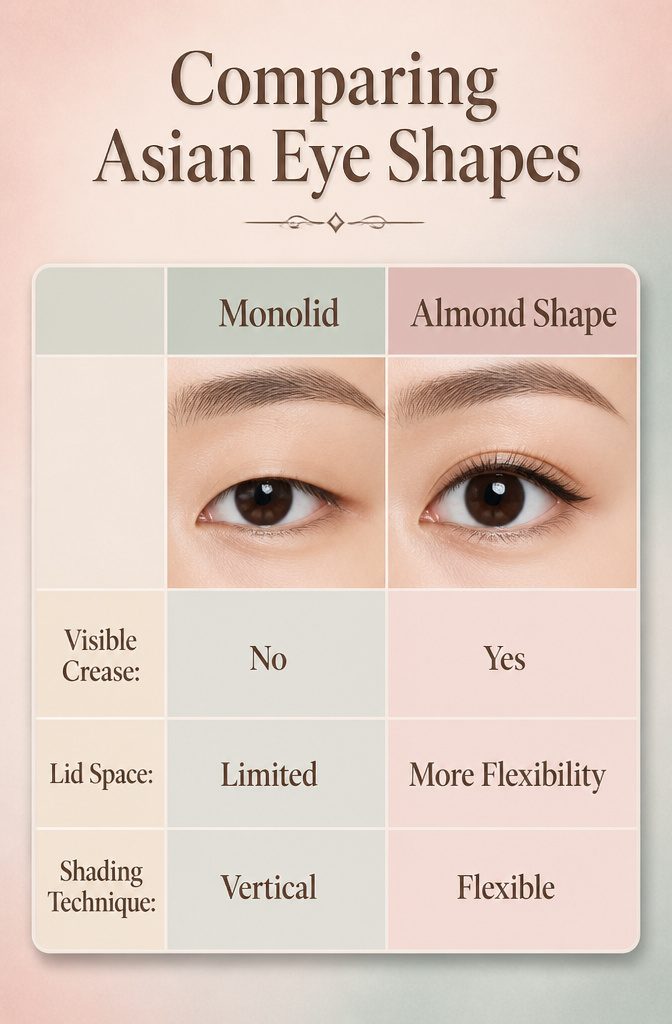
Asian eye patterns fall into four main structures: monolids without a visible crease, hooded lids where skin folds over the crease, tapered lids with a crease that narrows toward the inner corner, and almond shapes with visible crease and slightly pointed outer corners.
Each changes how light hits the lid and how pigment sits.
The point of mapping your own shape is stopping the fight against your features. A monolid, for instance, gains dimension from vertical shadow placement and the illusion of depth rather than from following standard crease tutorials.
Hooded lids demand that color stays visible with the eye open, which means rethinking where the transition shade lives. Almond shapes carry the most flexibility, though even they read differently depending on how pronounced the outer point reads in person.
I spent years applying shadow as if I had more lid space than I do, and the result vanished the moment I opened my eyes.
The shift came when I started identifying the shape first and choosing technique second: lighter tones on the lid with darkness concentrated at the lash line for monolids, keeping pigment above the fold for hooded lids so it does not disappear.
Enhancement works better than correction once you know what you are actually working with.

EYESHADOW WITH MATTE FINISH: Your favorite easy-to-use No Budge Shadow Sticks are now available in a matte finish! Play up your eyes with a new range of eight highly pigmented, far-out shades inspired by the '70s.

INNOVATIVE 2-IN-1 EYESHADOW STICK:Exmiloo cream eyeshadow stick with a unique dual-ended design,featuring a matte shades on one end and a shimmer shades on the other. This dual-ended eye shadow stick allows you to create stunning eye looks effortlessly, perfect for transitioning from day to night!
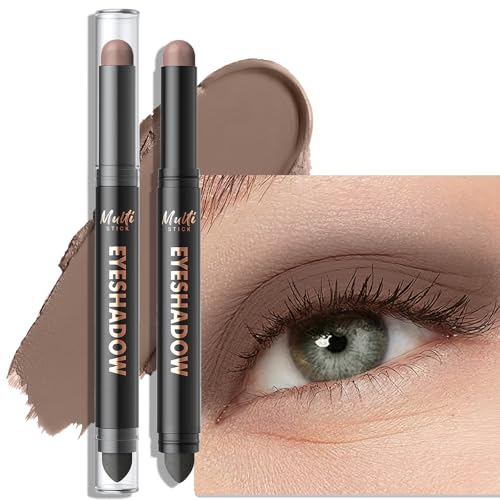
High-Pigmentation & Crease-Proof Formula: Wugbc eyeshadow stick delivers high pigmented color with a crease-proof finish in a single swipe. Choose from matte or shimmer options to suit your style for vibrant, long-lasting eye makeup
Product Recommendations
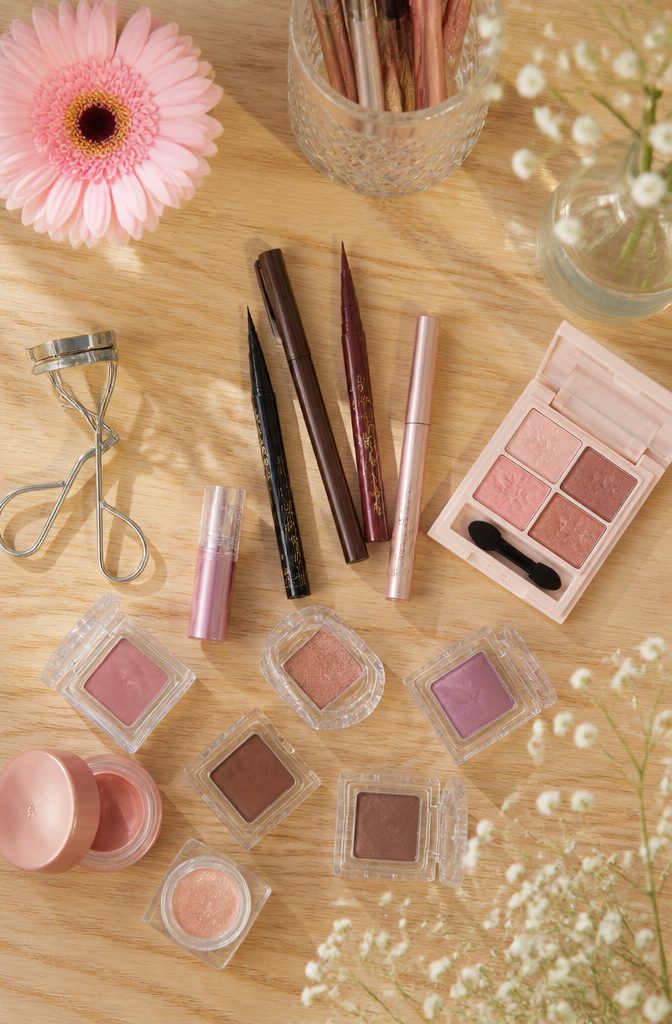
Japanese drugstore brands have spent decades solving problems Western liners and curlers never addressed in the first place.
Kiss Me Heroine Make’s liquid liner stays put through humidity and the natural oilier lid common to many monolids; the brush tip is fine enough to draw a tight line without skipping at the lash line, where a crease would otherwise break the stroke.
Kate’s shadow palettes run smaller and more tightly coordinated than American equivalents, which matters when a monolid shows the full lid color rather than tucking half of it into a fold.
The finishes lean satin and low shimmer, so the shape reads as depth rather than sparkle sitting on top.
Canmake’s cream shadows work as a wash that sets fast enough not to transfer upward, and their lash curler has a flatter curve than the Shu Uemura standard that dominates US shelves.
That flatter arc catches straight lashes at the root instead of crimping them at a single midpoint.
Majolica Majorca builds volume mascaras that pair with it; the comb separates before the formula sets, which prevents the clumped-spike look that heavier Western formulas give on finer lash hair.
The combination, used together, gives a curl that holds past midday without the waterproof removal battle Heroine Make demands at night.

【High Intensity Color for an Instant Impact】BEPHOLAN’s black eyeliner pencil delivers rich, highly pigmented color that defines and frames your eyes for a bold, beautiful look

Rich Brown Color, Soft Definition - BEPHOLAN D-tip gel eyeliner delivers smooth, even brown pigment with one swipe, enhancing your eyes with naturally soft definition for a refined, everyday look

WATERLINE SAFE: Urban Decay 24/7 Glide-On Eyeliner Pencils are award-winning, waterproof eyeliners delivering intense, long-wearing color that will not budge. Available in versatile shades including white, brown, nude, gray, and black to deepen or brighten your eyes.
Cultural Trends
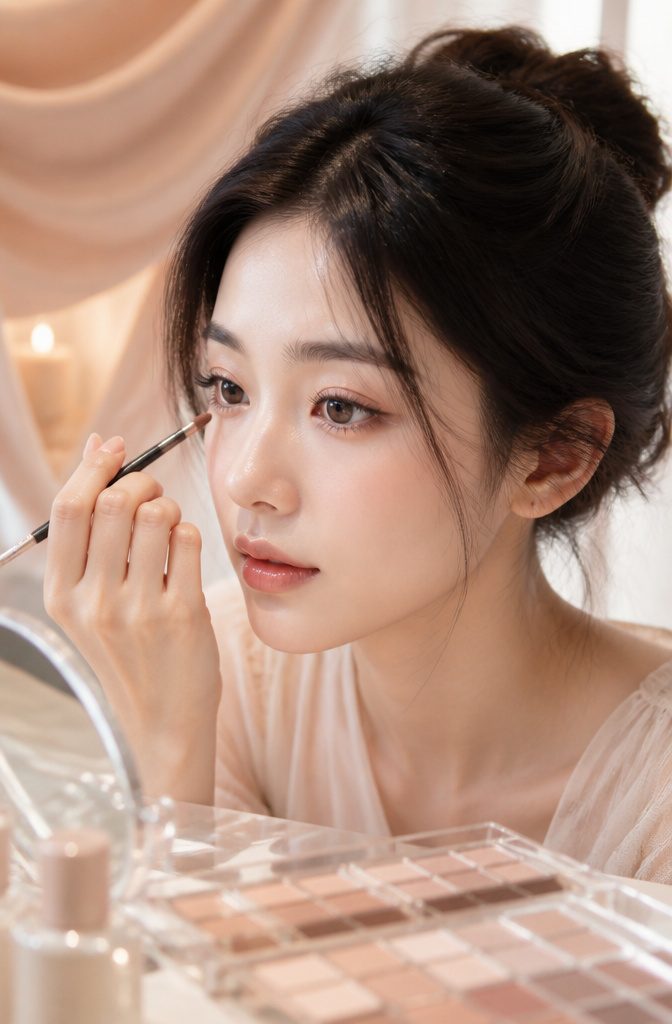
Aegyo-sal, the soft pouch beneath the lower lash line, is the detail Western tutorials usually miss.
K-beauty treats this as a feature to accentuate, not a flaw to conceal: a sweep of champagne shimmer or pale pink shadow right under the eye, with a slightly darker line tucked beneath to cast a gentle shadow.
The effect reads as rested and young rather than overtly made-up.
Three regional styles worth telling apart. K-beauty keeps the skin dewy and the eye definition soft, with gradients of brown or rose that melt upward toward the brow bone.
J-beauty tends toward even less pigment, favoring curled lashes and a single wash of color with skin showing through.
Douyin makeup, the style coming out of Chinese short-video platforms, builds more contrast: sharper liner, stronger contour, and the aegyo-sal technique pushed slightly further under studio lighting. The same face in daylight would look overdone, which is the tradeoff.
I spent a while watching how creators in each region handle the transition from under-eye to cheek.
K-beauty keeps it blurred; Douyin often adds a small highlight dot at the inner corner and a defined line at the outer edge of the pouch.
The wrong one for your setting is obvious within about ten minutes of bathroom-mirror checking.
Frequently Asked Questions
What is the Asian makeup style called?
The three dominant styles are K-beauty, J-beauty, and Douyin makeup from China. K-beauty favors dewy skin and soft gradients of brown or rose that melt upward.
J-beauty uses even less pigment, prioritizing curled lashes and a single wash of color with skin showing through. Douyin makeup builds sharper contrast with stronger liner and contour, designed for short-video lighting rather than everyday wear.
What color eyeshadow is best for Asian eyes?
Neutral and warm tones like peach, copper, soft browns, and taupes work best on most Asian eye structures.
These shades add depth without overwhelming smaller lid spaces, and they blend cleanly on flatter contours. Rosy taupes and warm nudes are especially forgiving on downturned eyes, where deep smokies tend to close the eye off.
How do you apply eyeliner to hooded Asian eyes?
Apply waterproof liner close to the lash line and tightline the upper waterline, which fills the space between lashes without claiming lid surface.
Press a fine pencil or liquid pen between the upper lashes so the liner stays invisible until someone is close.
Set it by pressing a matching shadow over the line with a small brush, which locks the pigment in place and prevents migration.
What are the key techniques in eye makeup for Asian eyes?
The three core techniques are tightlining, gradient shading, and strategic shimmer placement.
Tightlining fills the upper waterline to define without stealing lid space. Gradient shading builds color vertically on monolids or carries tone above the crease on double lids, avoiding sharp contours that fight natural structure.
Shimmer at the center of the lid or along the lower lash line creates roundness and dimension where matte shadows would flatten.