The styles here run from a fabric headband with no braiding and no parting to Dutch braids traced into a heart and cornrows that call for a practice run before picture day.
What picks one is how long your child can sit still and how much of the morning you have: a headband or double braids need a few minutes and a comb, while the showpiece styles need a long session and some braiding skill.
1. Half Up, Half Down
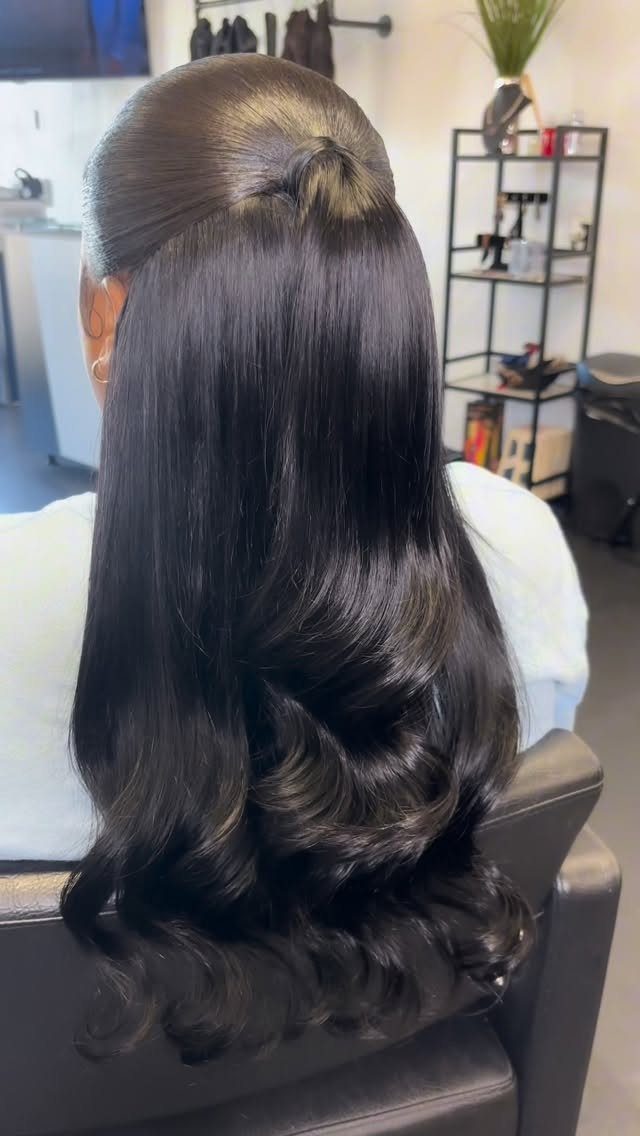
Only the top section gets pulled back here. Everything below falls loose over the shoulders, so the face is open while the length stays on show.
Secure the top first, then deal with the lower half.
Curls at the ends give this style body, but straight hair works just as well. It’s my pick for a child who wants her hair down but needs it off her face.
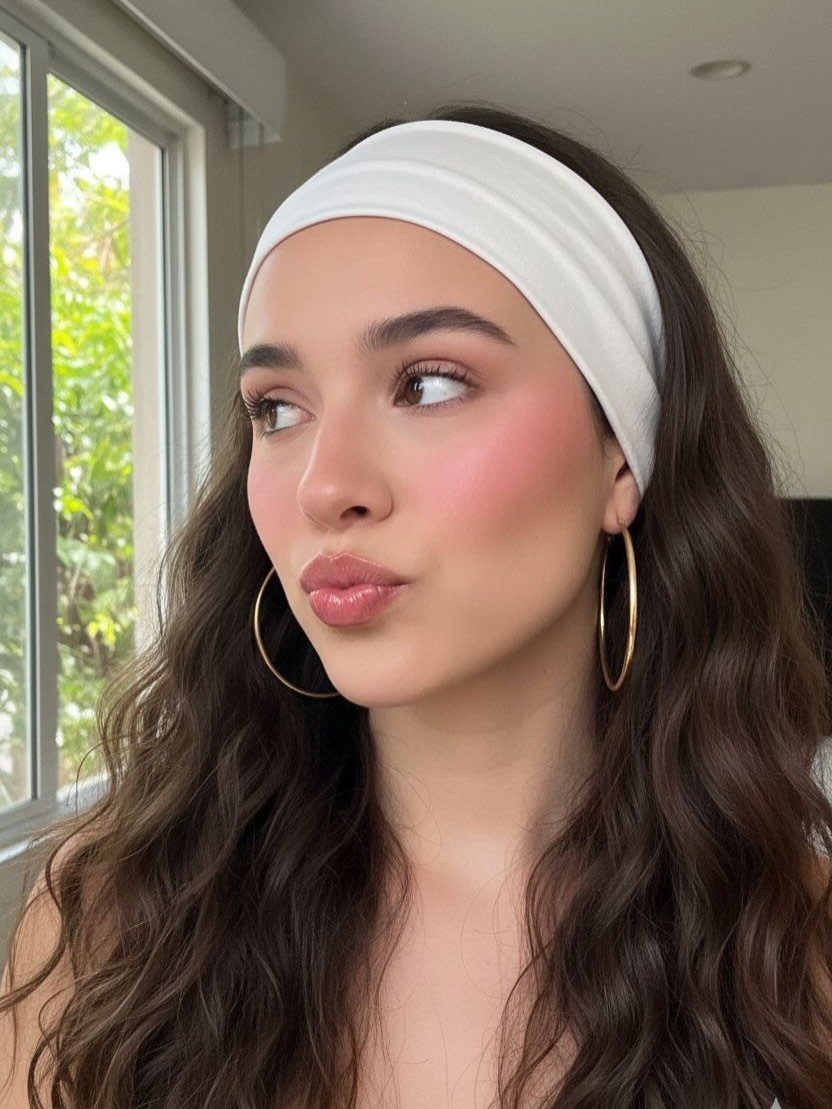
2. Headband
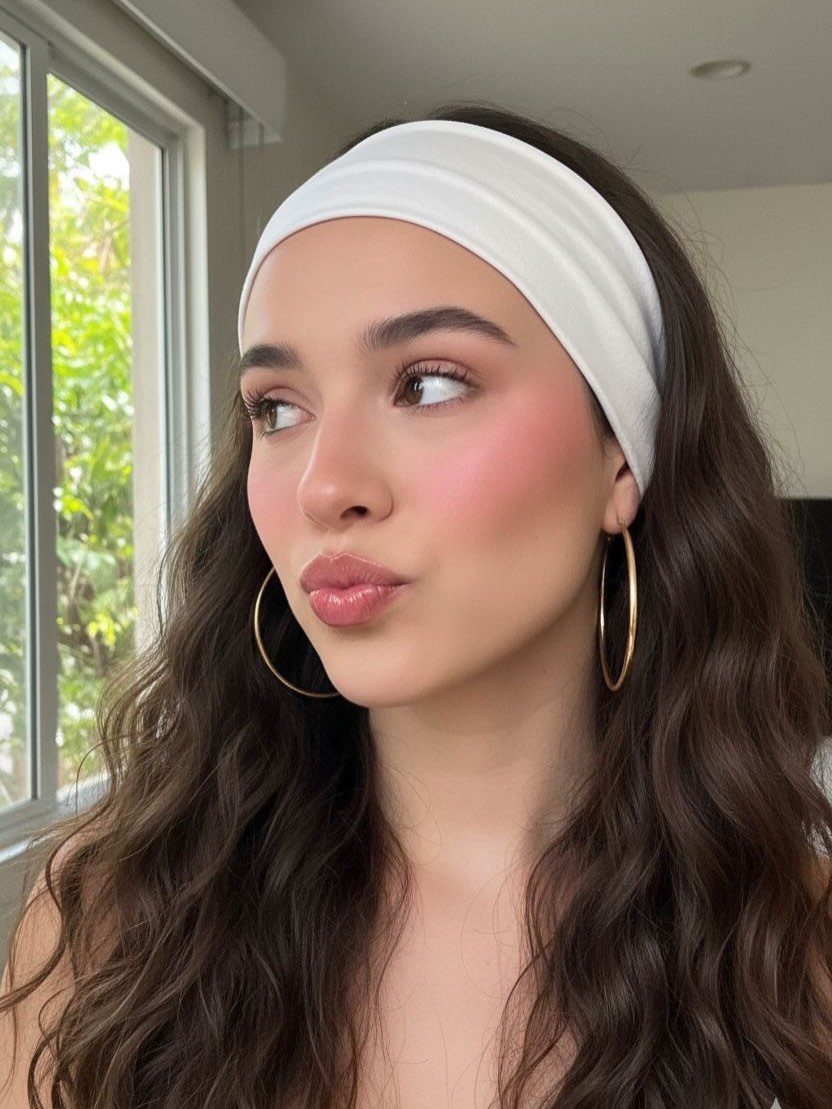
A wide fabric band does all the work in this style: hair stays down, and the strands that would fall across the face get held back.
Slide the band to just behind the hairline so the forehead shows.
A solid color, like white, is what I’d choose for a photo, since a plain band doesn’t compete with the outfit. There’s no braiding and no parting, which makes it a good fit for a rushed morning.
3. Braided Headband
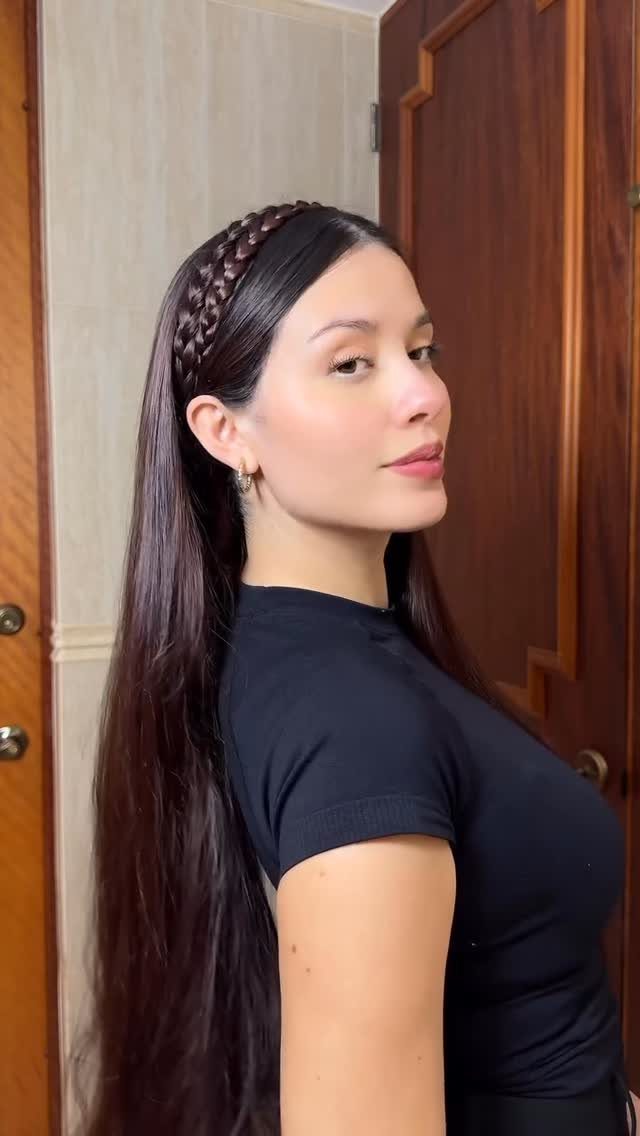
Here the headband is made from the hair itself: a braid worn across the head that keeps strands out of the eyes.
It takes more time than a fabric band, and some braiding skill helps.
Nothing needs to be bought or matched to the outfit, because the band is made from your own hair. Start with a thin section so the braid sits close to the head, and leave the rest of the hair down.
4. Curls
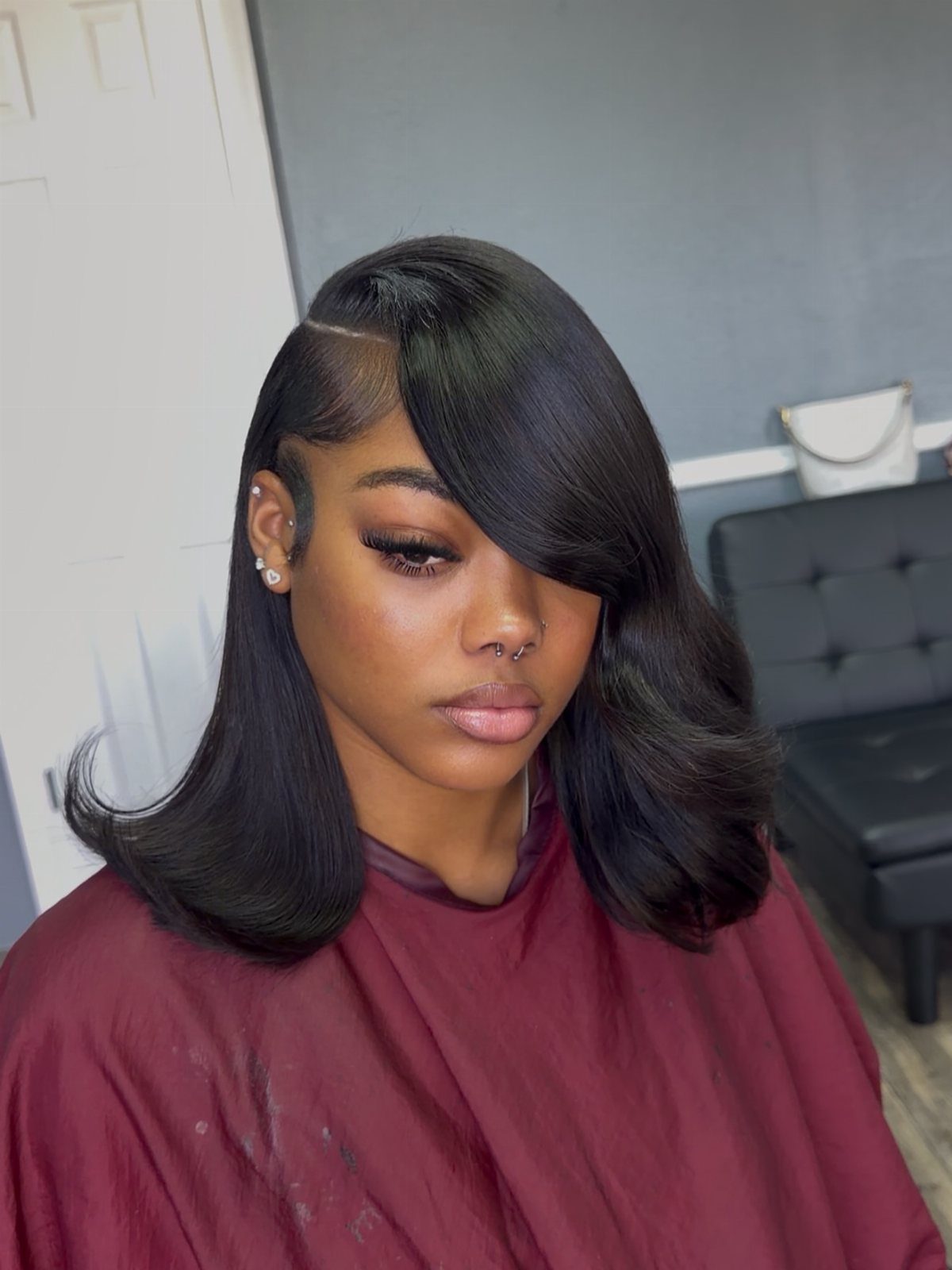
Curling only the ends leaves the hair above them sleek, with a side part framing the face. It looks finished without looking fussy.
This is the easier curl option for a morning with little time, because the work is limited to the bottom of the hair.
I like it on shoulder-length hair, where those curled ends turn out just enough to be noticed. Keep the rest smooth.
5. Voluminous Curls
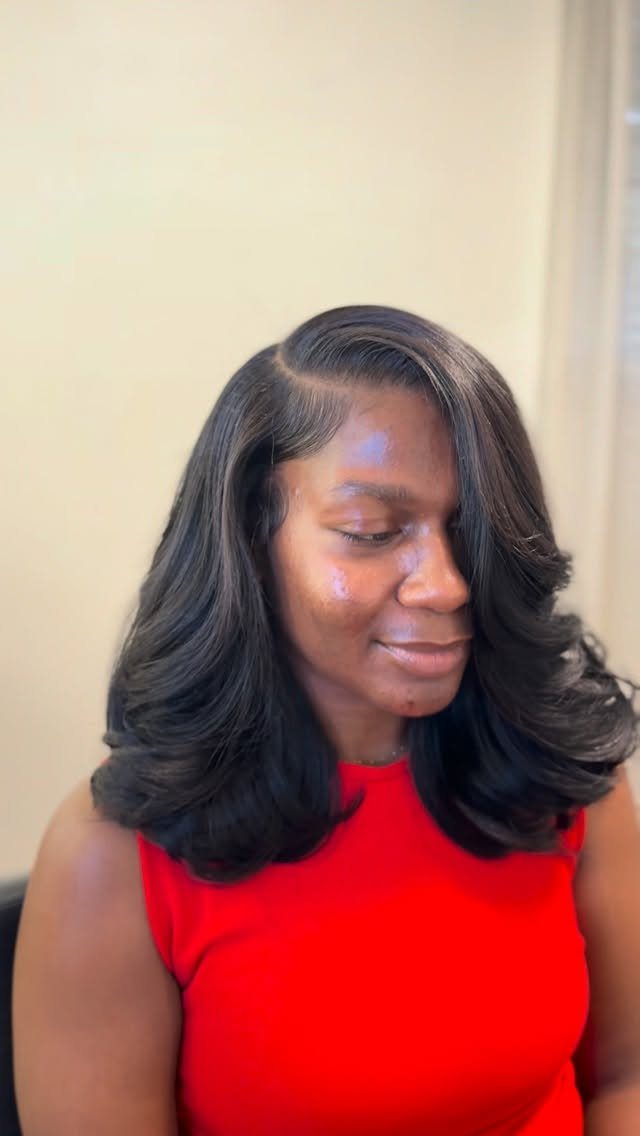
Full, bouncy curls with a side part: this is the bigger sibling of the curled-ends style, and it asks for more of the morning.
Give it room in the schedule, since curling the whole head takes longer than curling only the ends. A side part helps the volume sit to one side instead of straight down the middle.
6. High Bun
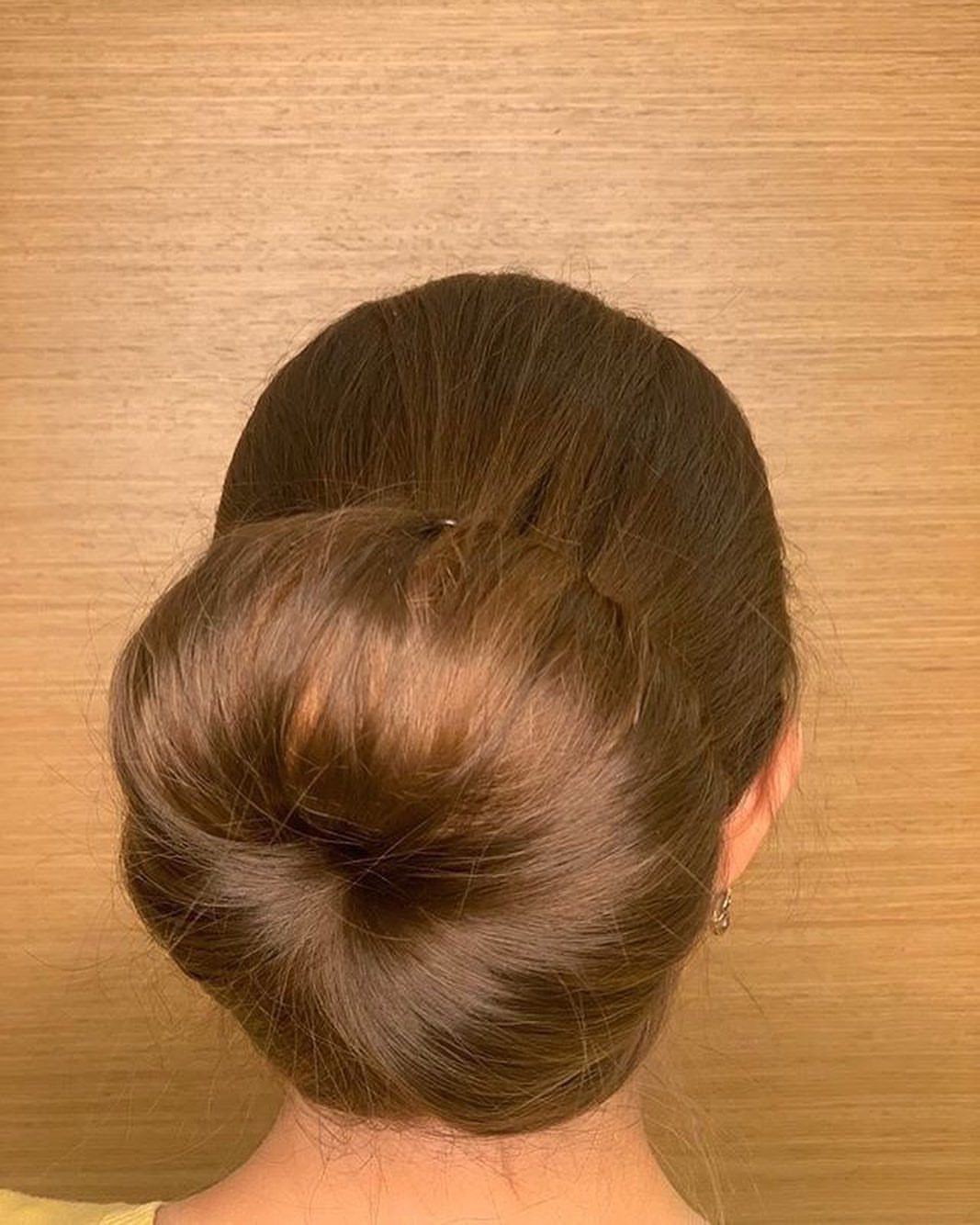
Everything is lifted away from the face and neck, so the high bun puts the face, jawline and any makeup in clear view.
Smooth the sides before you secure it, and set the bun high on the crown.
A neat bun is the whole look, and with nothing hanging down, loose flyaways show. If your child likes the feel of hair on her shoulders, one of the half-up styles will suit her better.
7. Sleek and Straight
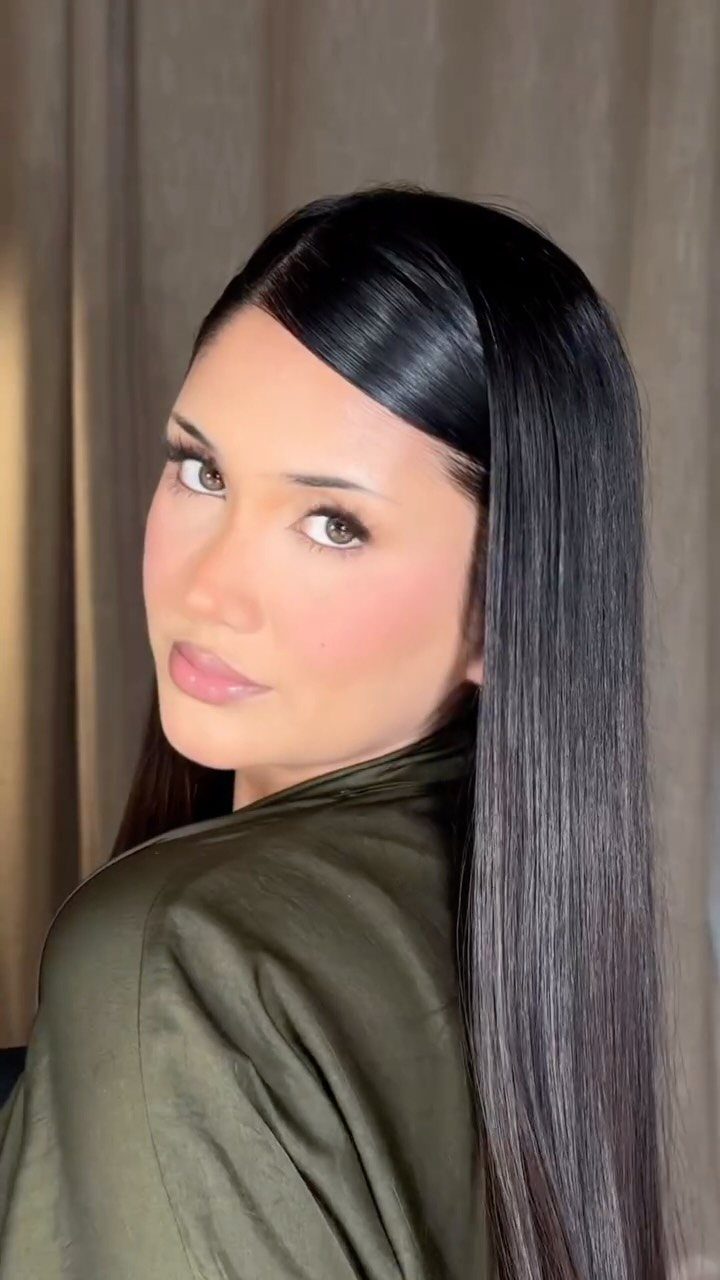
Smooth, straightened hair with a side part gives picture day a polished, put-together finish. Long black hair shows every strand, so a glossy surface is the whole look.
Flat-iron it dry and keep the sections small. Stray hairs near the part will catch the light in a photo, so tame them before the bus arrives.
For a child who wants nothing in her face and nothing to fuss with, this is my pick for the least styling hardware.
8. Fishtail Braid
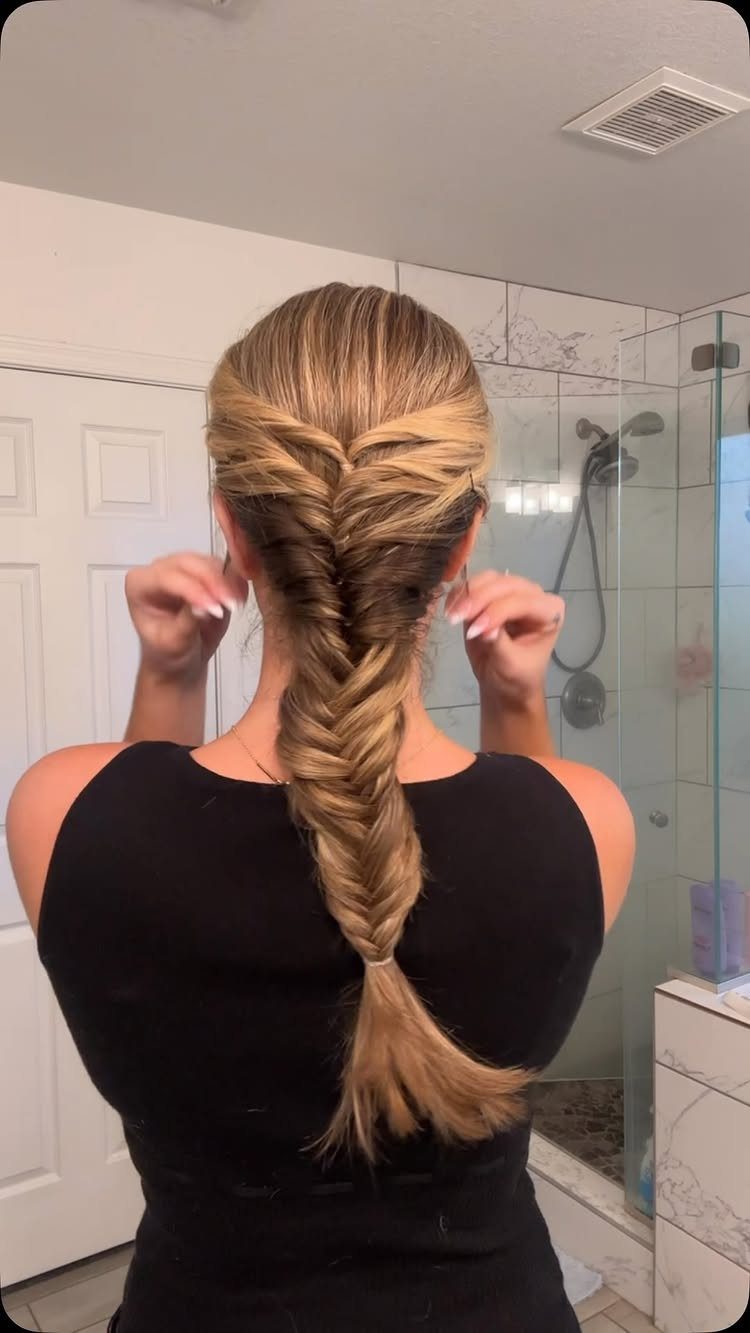
A thick fishtail braid ending in a ponytail takes the place of a plain side-swept pony, and the woven texture is what makes people look twice.
Fishtail asks for patience.
You split the hair into 2 halves and pass thin strands from the outside of each half to the inside of the other, so a child with a short fuse for sitting still may be better served by a regular braid.
Practice once on a weekend. I’d keep the braid loose enough to look full.
9. Dutch Pigtails
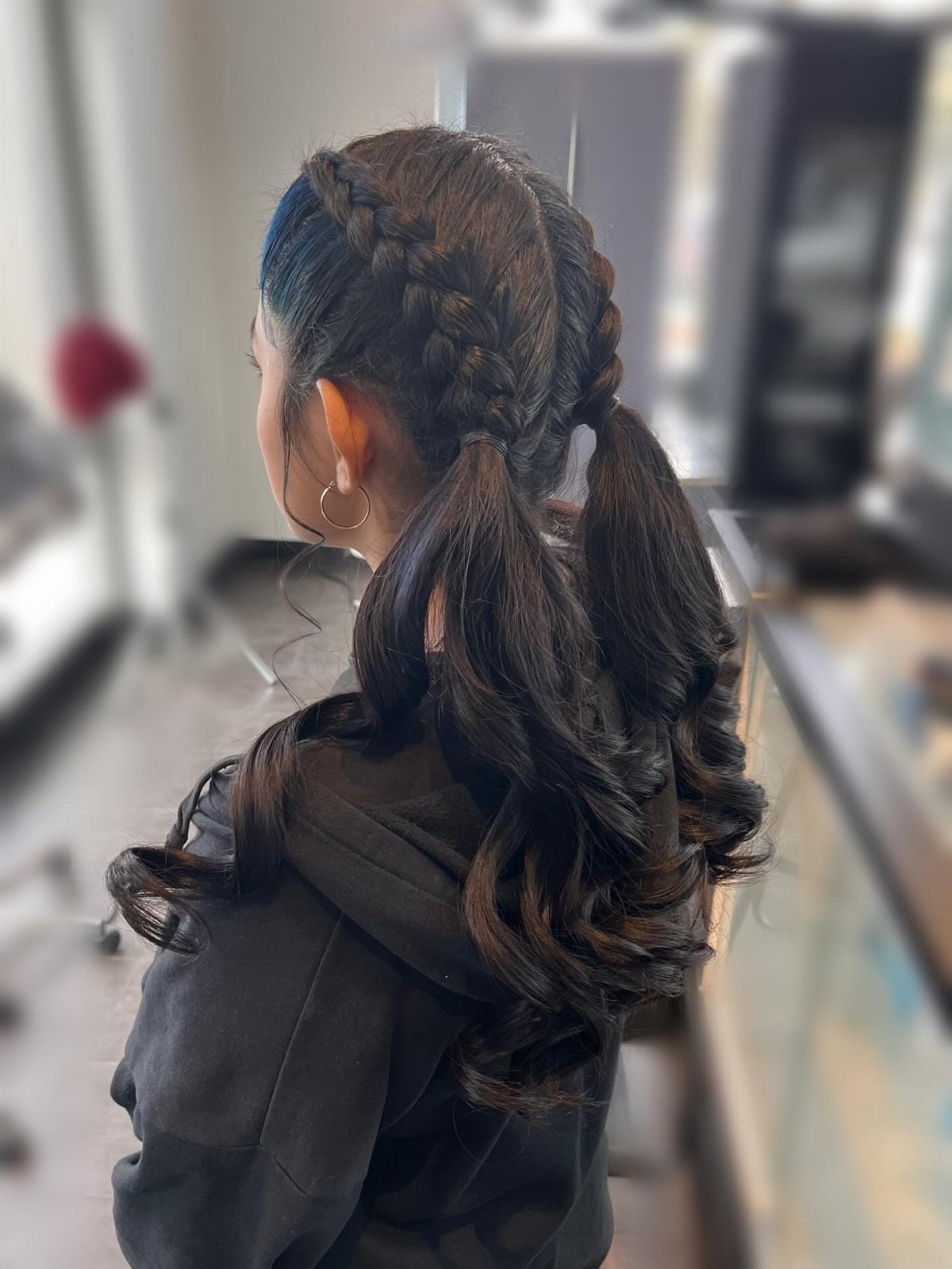
Dutch braids on both sides, finished as curly pigtails, read as older than ordinary pigtails because the braids sit on top of the head instead of lying flat beneath it.
Dutch braiding means crossing the strands under, not over, which is the one move to learn.
A clean center part drawn with a comb tail comes first, since any wobble shows up in both braids once they hang side by side.
Curly ends give a soft contrast to the braid, and I like that on dark hair, where the pattern stays clear. It’s a good step up for a child past the basic pigtail stage.
10. Low Side Bun
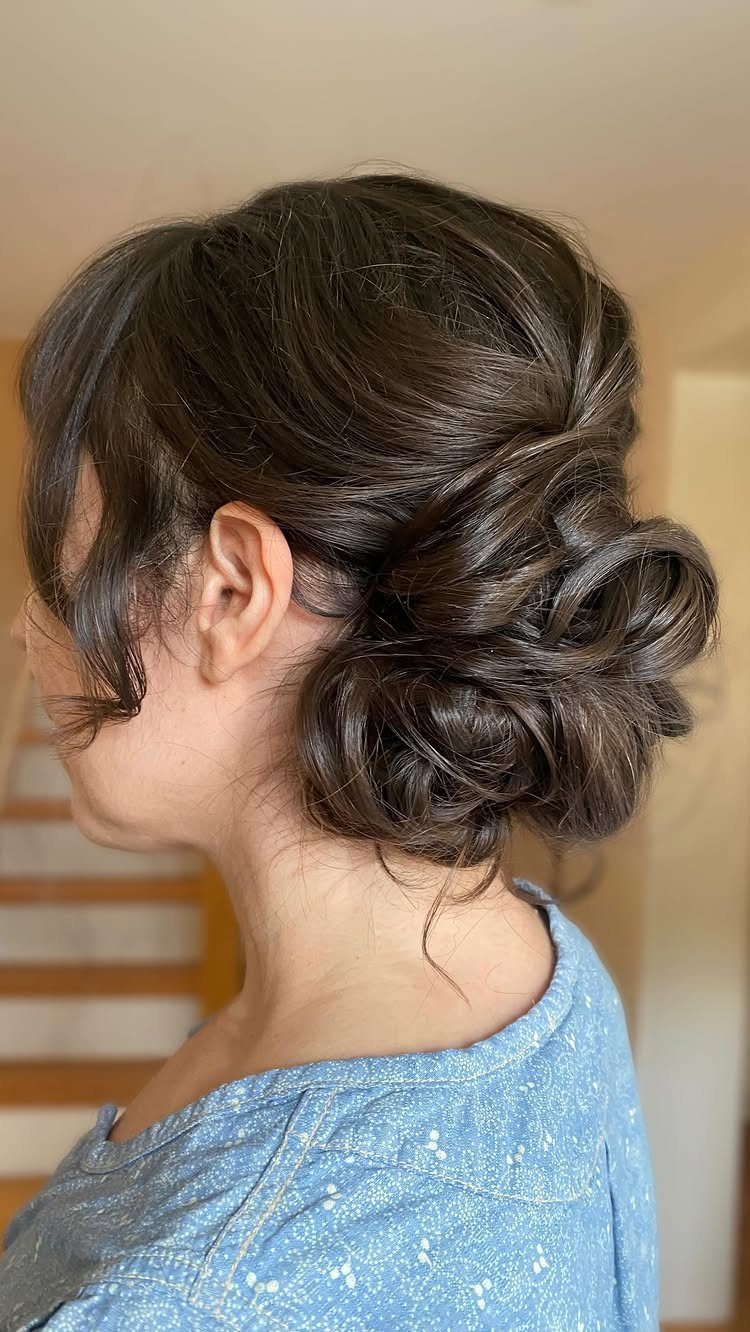
Hair twisted into a bun that sits low on one side gives a relaxed, textured shape that feels softer than a high bun.
Gather everything over one shoulder, twist, and pin the bun near the nape. Pull a few loose curls free around the face; they keep the style from looking stiff.
This is more forgiving than the high bun in entry 6, since a few stray pieces look intentional here. For a child who dislikes tight hair, I’d choose this one.
11. Braided Curly Ponytail
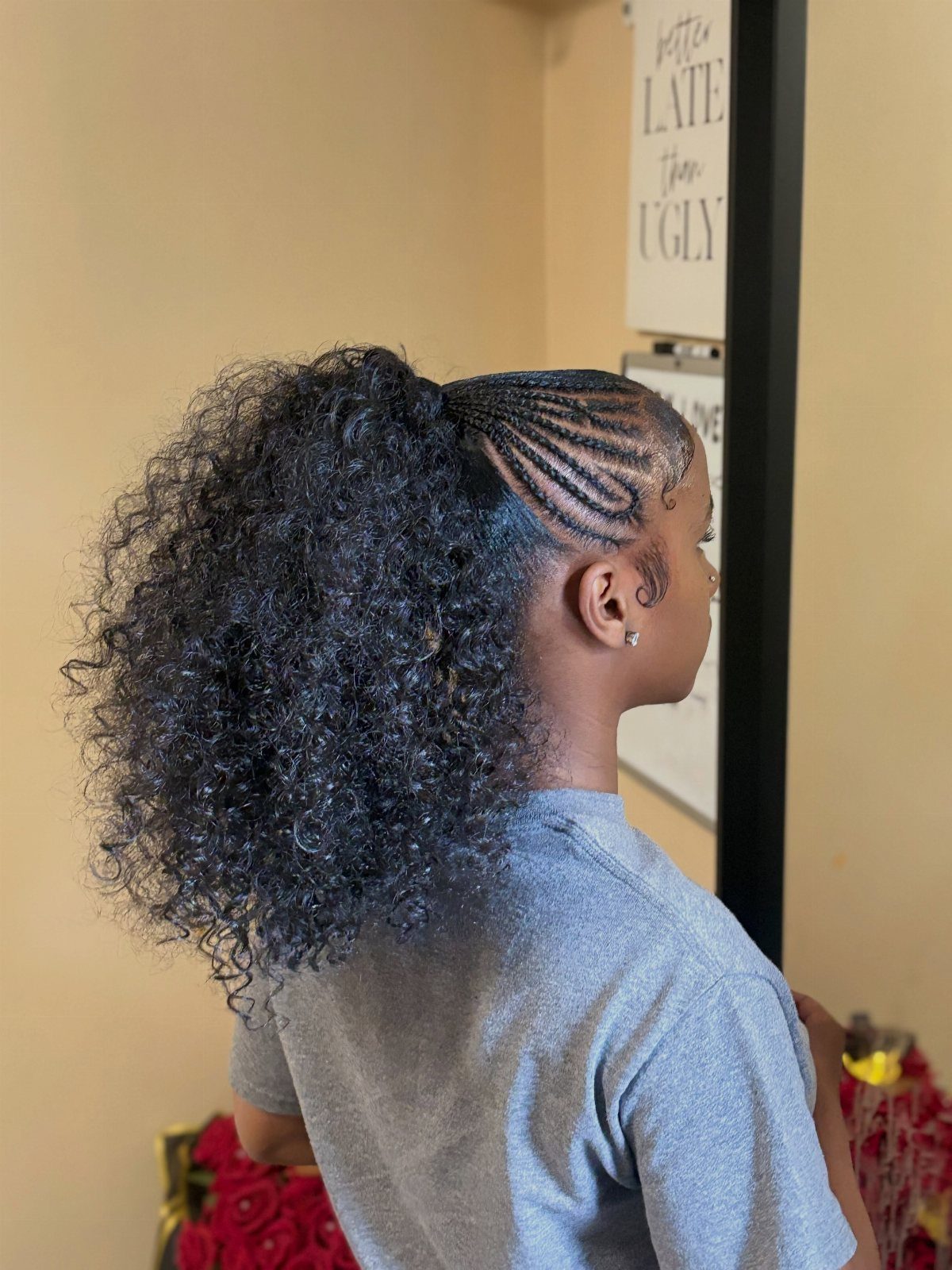
Small cornrows run along the sides of the head and lead into a high, full curly ponytail. The braids hold the edges flat while the curls on top get all the volume.
Do the cornrows first, working back toward the crown, then gather the curls into the ponytail.
Cornrows take real skill and time, so this is a style to book ahead or practice before the big morning. When it’s done well, it lasts through a long school day with very little upkeep.
12. Bow Ponytail
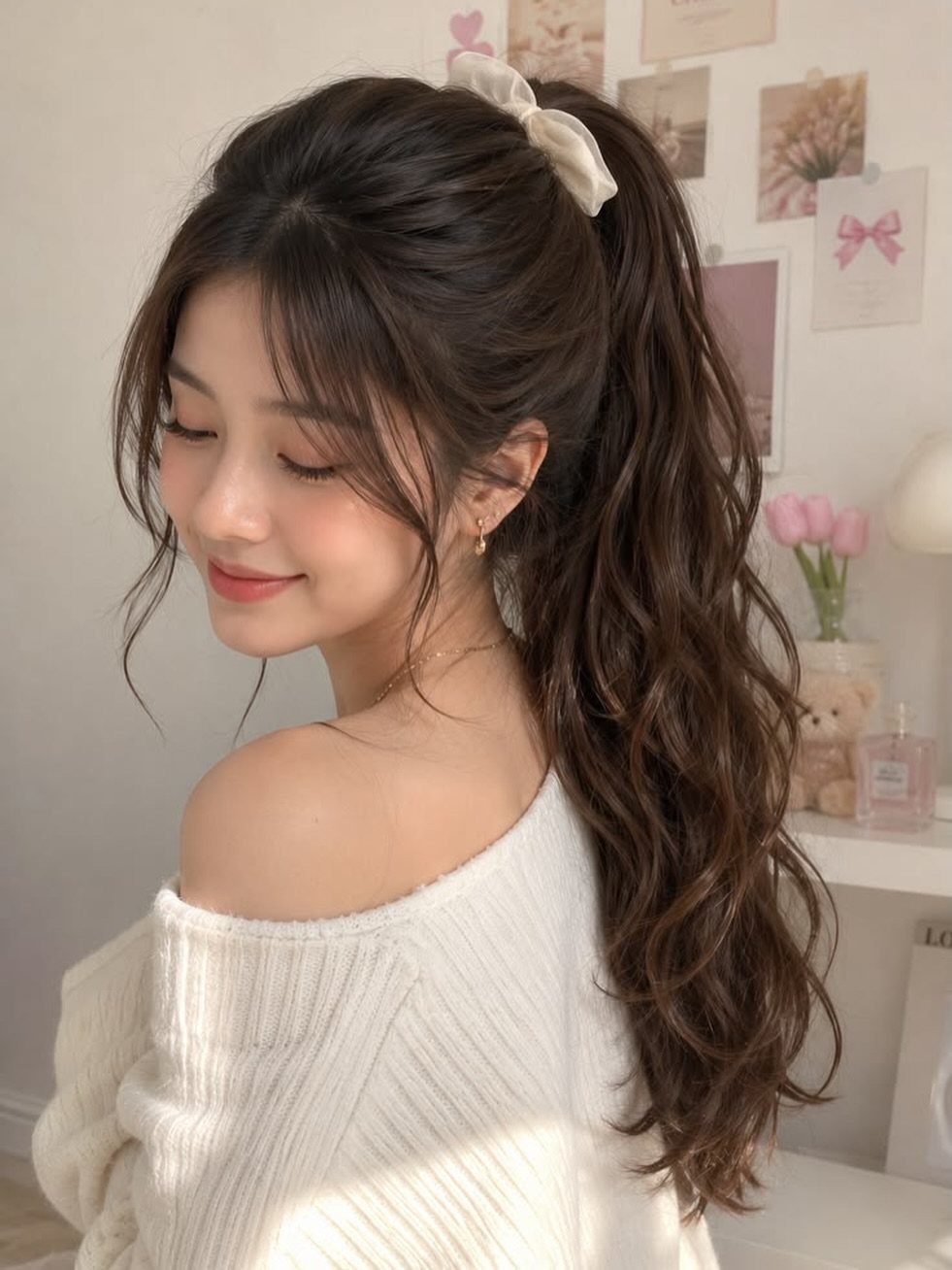
Long, wavy hair pulled into a high ponytail and finished with a white bow is simple, and the bow carries the whole effect.
Set the ponytail high on the head, then tie the bow over the elastic so it hides it. White looks crisp in a photo; I’d pick it for a child in a solid or neutral top.
Keep the waves soft and loose. If her hair is straight, a light curl on the length will give the same movement.
13. Double Braids
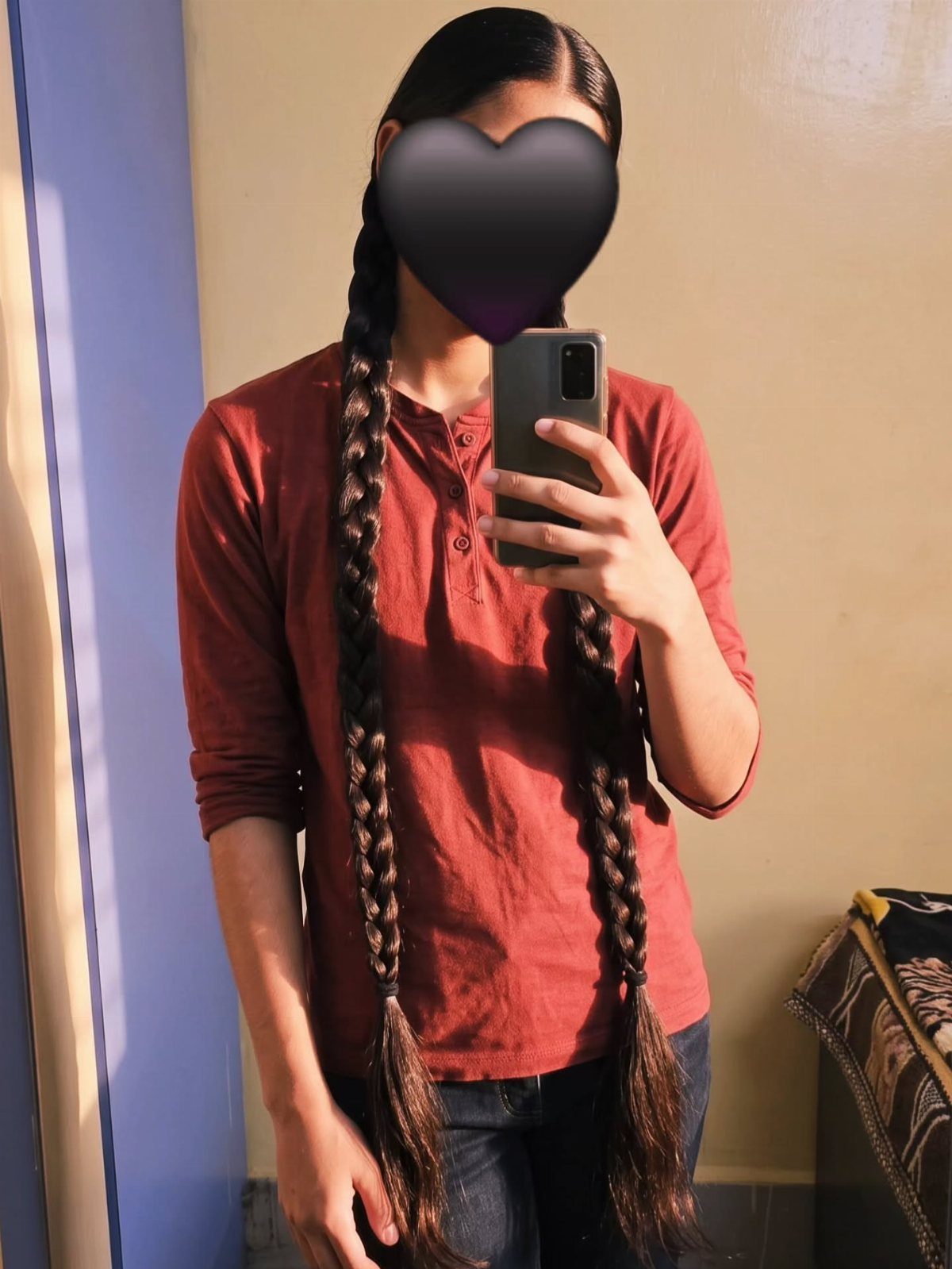
Two braids, one on each side, hang forward over the shoulders and keep all the length in view.
A straight center part comes first, since both braids sit side by side and any crooked line shows twice. Braid each side to the same length and use matching elastics at the ends.
This is the style I’d pick for a child who can sit through a few minutes of braiding, because it needs only a comb and two elastics and asks for nothing beyond a basic three-strand braid.
14. Heart-pattern Braids
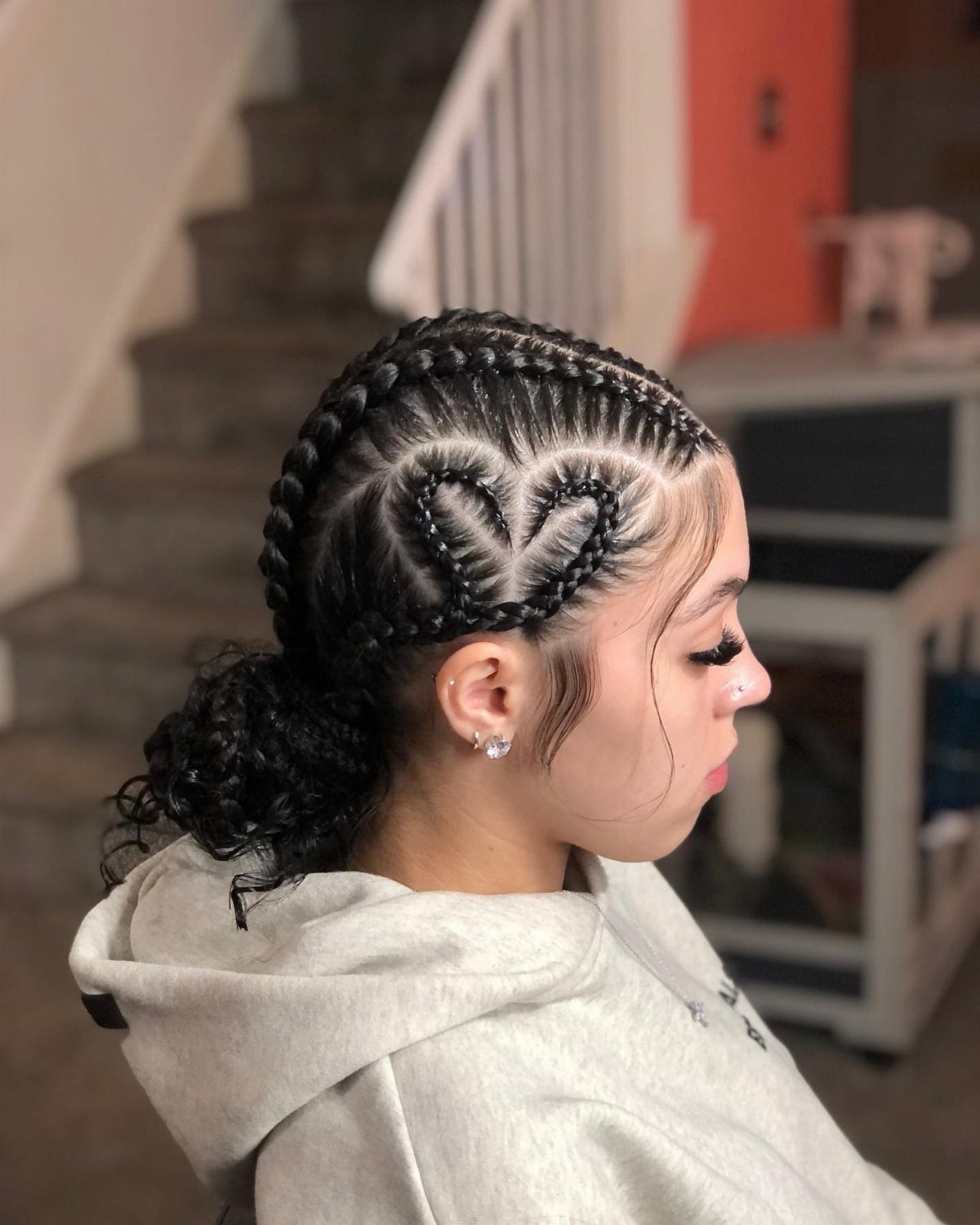
Dutch braids trace a heart along the side of the head, then lead into a curly low bun at the back.
The heart is the hardest part, so give it a weekend practice run before picture day. Plan the braid path first, then follow it with a comb tail so the lines stay clean.
I’d choose this for a child who enjoys a showpiece style and can sit through a longer session. For a rushed morning, a plain Dutch braid ending in the same low bun is the easier version.
15. Short Highlighted Pixie
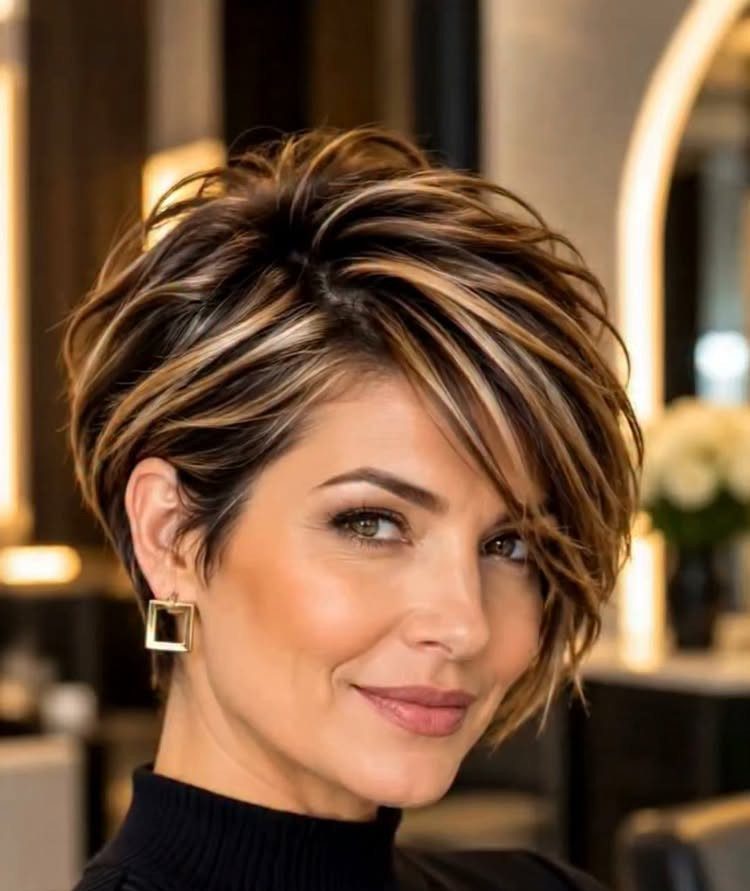
A short, layered pixie with light highlights depends on the cut itself, so the shape does the work in a close-up and there is very little styling to get wrong.
Morning work is small: shape the layers with your fingers and keep the top soft.
The blonde highlights add dimension against the brown, so skip heavy product that could flatten them. Gold earrings and a dark turtleneck, as visible here, are the sort of simple extras that suit a pixie.
Styles That Last Through School
Picture day often starts at breakfast and ends after recess. Braids, ponytails and buns stay put through a school day, but clips and fussy styles often look sweet at 8 a.m. and are loose or gone by the last recess.
Test the style at home first. Let your child run and play for a while, then check what shifted; that tells you more than a mirror does.
If you use clips or a headband, fasten them firmly so they can’t slide loose during the day.
Comfort decides how long any style lasts. A style that feels tight or bothersome gets pulled at and taken out, so loosen it a little if she keeps reaching for it.
Keep the Photo Framing in Mind
Before you leave the house, stand your child in front of you and look only at the front. Some accessories look cute from the side or back but vanish, or distract, once the camera faces her.
A slicked-back ponytail can stay neat all day, yet the camera sees it from the front, where almost no hair shows. Before settling on a style, picture the shot from the front and check that enough hair will actually show.
Pigtails, front braids and hair brushed down around the face stay visible and give the photo something to frame.
Keep accessories small.
A small clip or headband adds a touch of style, stays visible from the front and leaves the face as the focus; an oversized bow can be cut off by a tight crop or take over the frame.
Frequently Asked Questions
What hairstyle should I do for picture day?
Half up, half down is my pick for a child who wants her hair down but off her face: only the top section is pulled back and the rest falls loose.
Double braids, one on each side with a straight center part, suit a child who can sit for a few minutes of basic three-strand braiding.
Whatever you choose, a style your child already knows is safer than something brand new on the morning itself.
What hairstyle looks best in pictures?
A style that keeps the face open and shows plenty of hair from the front photographs best.
Three looks read well on camera: soft curls at the ends with a side part, a half-up, half-down style, or sleek straight hair parted to one side.
On straight hair, a glossy finish and tamed strays near the part matter, because loose hairs catch the light on camera.
A deep side part is flattering, and sweeping the hair to one side lets you keep the length on the side your child likes less.
Can a child easily mess it up or remove clips on school picture day?
Once it’s secured with a hair tie, a braid, ponytail or bun will last through a school day; barrettes and intricate styles tend to slip out before recess.
Fasten any clip or headband firmly, then test the style at home by letting your child run and play and checking what shifted.
A style that pulls on the scalp won’t last, because kids tug at whatever bothers them. If she keeps touching it, loosen the tie slightly.
Can you see their hair from the front only in a picture day photo?
The camera faces your child, so judge the style from the front.
For hair that shows up on camera, pick styles with volume at the front: pigtails, braids that fall over the shoulders, or loose hair brushed forward around the face.
A big bow is a risky pick, since a tight crop can cut it off and, if it survives, it pulls the eye away from her face. A small bow or thin ribbon is safer.