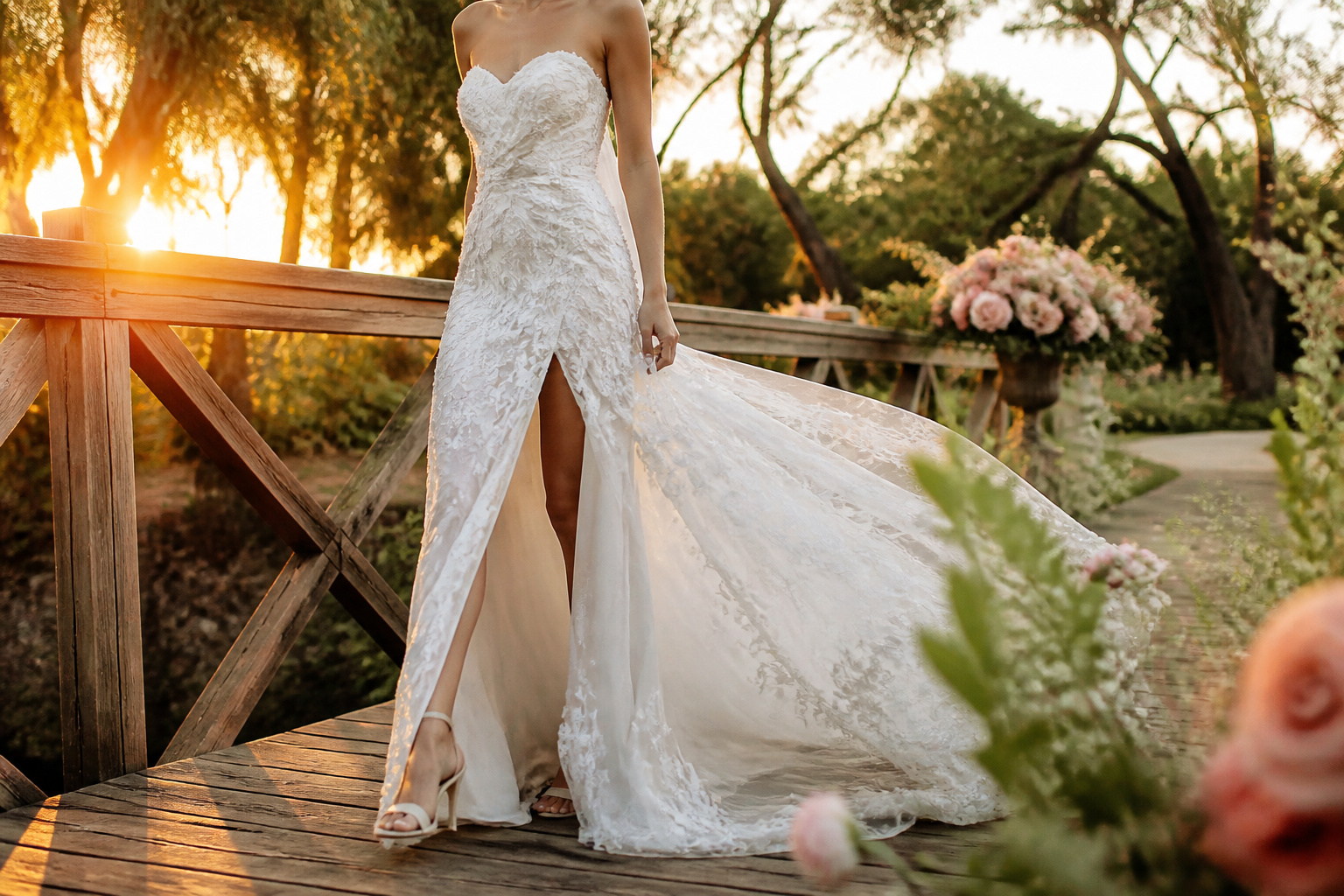
The most popular Vera Wang wedding dresses are not the ones that photograph best in a studio. They are the silhouettes that survive real venues, real movement, and the alteration table. A strapless gown with a train and slit endures because Wang builds adjustability into the structure: the slit prevents a tall bride from disappearing into fabric, while the train length can be calibrated to grass, sand, or ballroom floor. Lana Condor wore exactly this combination for her 2024 Malibu wedding, noting that it felt "timeless and classic, while still youthful and playful." That balance of ceremony and stride is what separates a style that trends from one that lasts.
1. Strapless Gown with a Train and Slit
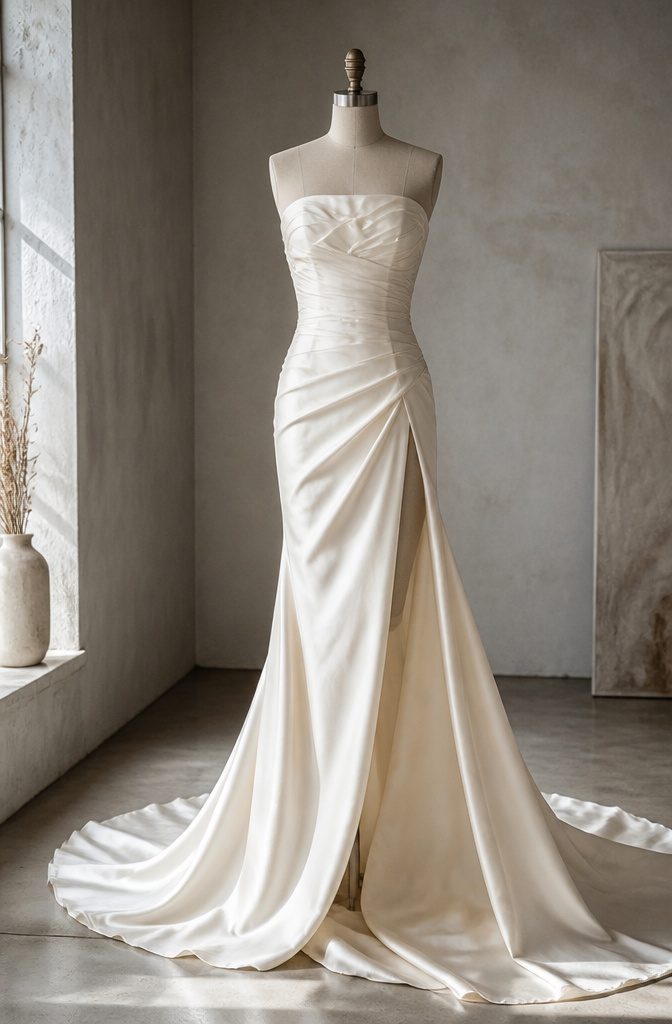
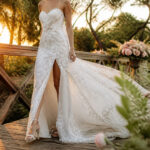
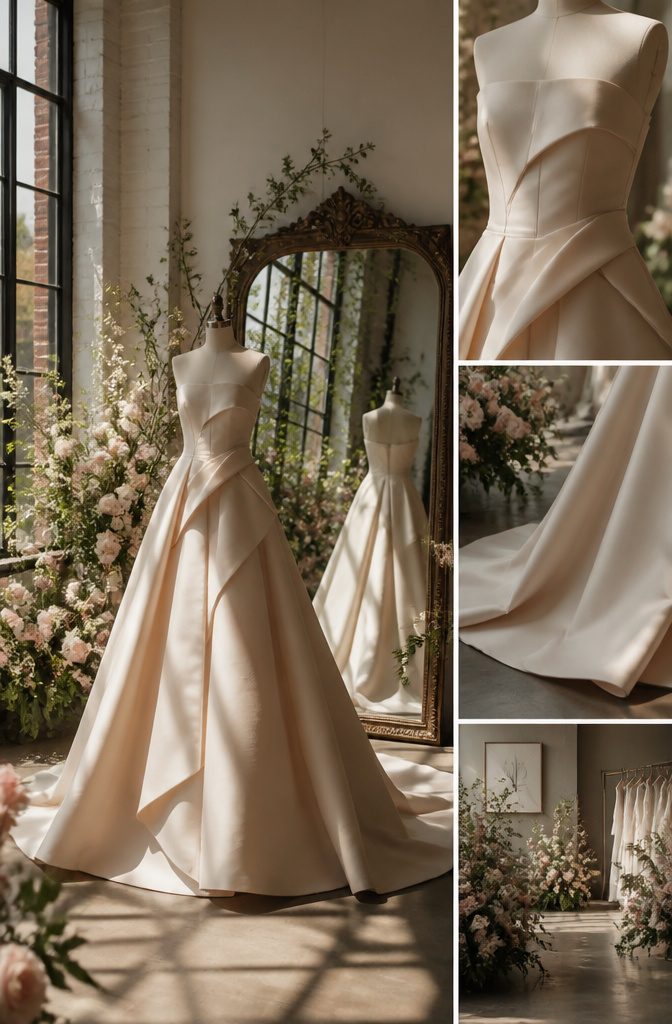
The strapless Vera Wang gown with a train and slit sits at the intersection of ceremony and movement, and that is exactly why it keeps surfacing on lists of the most popular Vera Wang wedding dresses. The slit gives the bride a stride instead of a shuffle, while the train preserves the formality of the entrance. Lana Condor wore this combination for her 2024 Malibu wedding, noting that the dress felt "timeless and classic, while still youthful and playful." The balance she describes is structural: the slit draws the eye vertically, which lengthens the leg line, and the train adds volume where a strapless bodice might otherwise read as top-heavy.
This silhouette favors the woman who wants definition at the waist without sacrificing the ability to move. The strapless cut emphasizes the shoulders and collarbone, and the train’s weight pulls the skirt into a clean line over the hips. For a taller frame, the slit prevents the gown from swallowing height; for a smaller frame, a slightly higher slit and abbreviated train keep proportions in check rather than overwhelming it. The style works as well for a Malibu cliffside ceremony as for a city ballroom, provided the train length is calibrated to the aisle: too long on grass or sand, and the bride collects debris; too short under chandeliers, and the drama falls flat. Vera Wang’s collections build in that adjustability, which is part of why the silhouette endures across body types and settings.

ELEGANT DESIGN: Stunning A-line wedding dress featuring a sweetheart neckline and beautifully detailed bodice with intricate embellishments

Design: This elegant sequin formal gown for women features a sexy strapless sweetheart and a sleek mermaid/sheath silhouette. The bodycon fit accentuates curves, flowing into a dramatic train, while a high slit leg adds a modern, sexy touch.

【Unique Design 】This white wedding dress is a new style for 2026,it is a soft satin wedding dresses, flowy satin bridal ball gown,strapless wedding dress for brides,off shoulder ball gowns,lightweight lining a line wedding bridal gown for bride.the strapless and satin creates an elegant and unique style.It also has other design details worth paying attention to,strapless,sweetheart,aline,backless,corest back,v neck,ruched,empire waist.
2. Vintage Gown
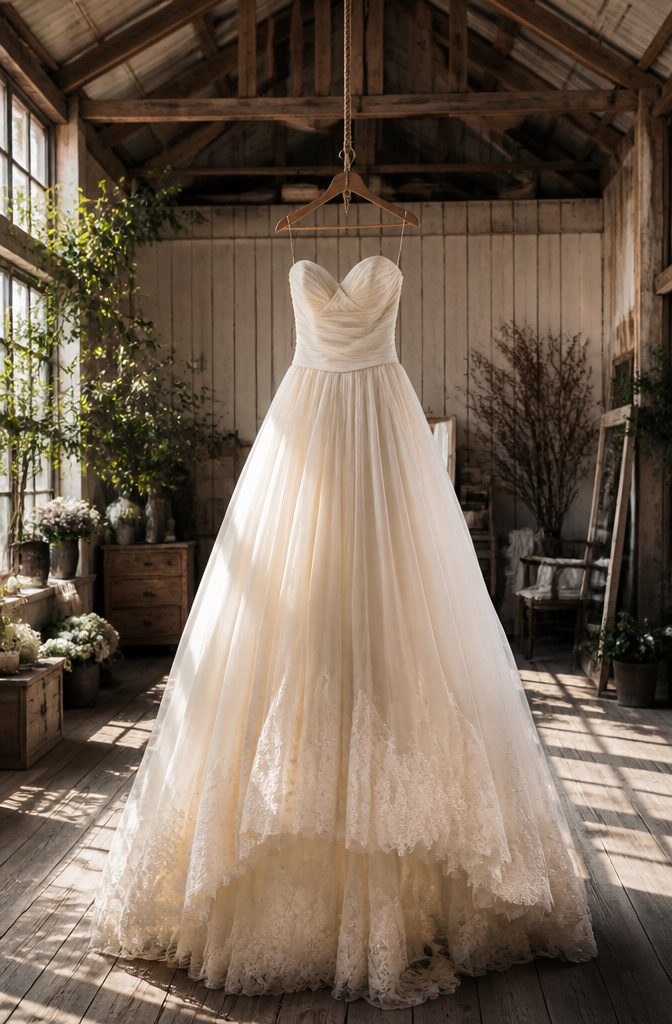
A vintage-inspired Vera Wang gown reads as modern because of the tension she builds between reference and restraint. The silhouette might nod to 1950s couture, but the proportion stays clean, the waist sits where a contemporary eye expects it, and the fabric handling keeps the line architectural rather than costume.
The materials do the real work. Layered tulle, organza, and silk mikado create depth without the weight that would make a gown feel like a reproduction piece. Sheer overlays and asymmetrical draping break up any period pastiche, and the palette stays muted, ivory and champagne rather than theatrical white or aged ivory that would signal "vintage" too literally.
What separates these from actual period dresses is the construction. Corsetry provides structure, but the airiness around it, the movement where the body meets the skirt, keeps the gown from reading as preserved rather than worn. The balance of drama and restraint is the detail to watch: too much reference and the bride looks styled for a theme, too little and the vintage label means nothing. Wang’s version lands in the narrow space where a grandmother might recognize the echo while a twenty-five-year-old sees only the cut.
ELEGANT DESIGN: Stunning A-line wedding dress featuring a sweetheart neckline and beautifully detailed bodice with intricate embellishments

Luxurious Satin – Elevate Your Dress: High-quality satin adds rich gloss and gorgeous flow, making your dress elegant and formal for any special occasion.

💃【Elegant Long A-Line Silhouette】 This floor-length A-Line skirt elongates the figure to create a tall, statuesque profile – ideal for petite brides seeking a taller appearance. The satin fabric drapes softly and moves gracefully when walking or dancing, adding a dramatic touch to your entrance.
3. Multi-Tiered Tulle Gown with a Cape
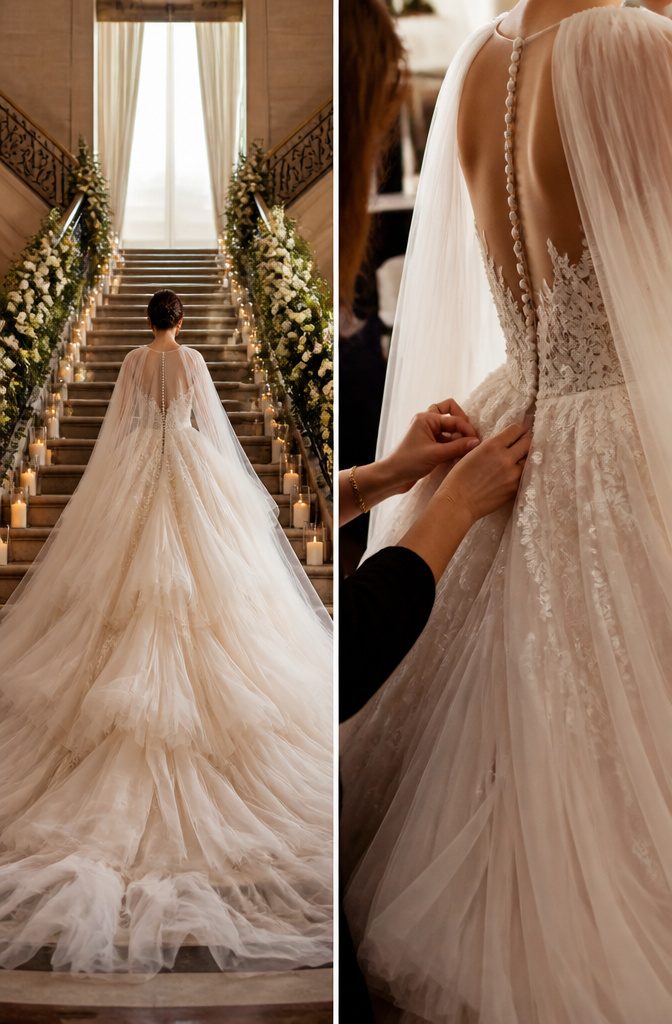
A multi-tiered tulle ballgown can swallow a frame whole, but the cape changes the physics entirely. The vertical line pulls the eye upward, so the volume reads as intention rather than excess. Jess Wolfe of Lucius chose exactly this combination for her Los Angeles wedding, and the effect was what she called "effortlessly ethereal"—the kind of word brides actually use when a dress does the work for them.
Wang builds these gowns from layered tulle, organza, and silk mikado, the same materials that give her ballgowns their signature airiness. The difference is architectural: the cape adds structure without corsetry, creating that play between drama and restraint that defines her work. On a real body, not a runway, this matters because the skirt’s volume stays light enough to move in while the cape provides the ceremonial presence a formal venue demands. The muted palette—ivory, blush, champagne—keeps the silhouette from tipping into costume.
What separates this from a standard princess gown is proportion. The fitted bodice anchors the fullness, and the cape frames rather than conceals. For a bride who wants the grandeur without the feeling of being worn by her own dress, the balance is deliberate and wearable.

Retro Vintage Style,Crew Neck,Gorgeous Short Sleeves,Peplum/Ruffle Waist Design,Back Split,Knee Length Bodycon Sheath Pencil Dress,Finished off with a hidden zipper at the back.

Soft Stretch Dress with Chiffon Cape: The inner dress offers a soft, smooth feel with gentle stretch for comfortable movement and a graceful drape. The lightweight chiffon cape adds an airy, elegant finish.

Fabric: Comfortable lining, not see-through, soft enough to hug your body while offer complete freedom of movement
4. Minimalist Sheath Dress
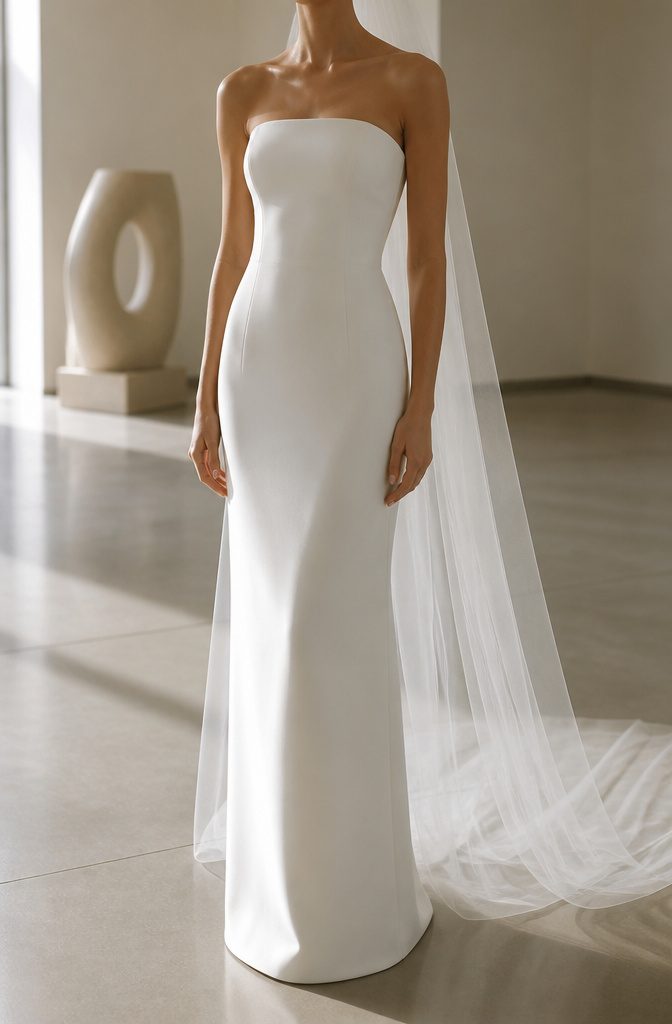
Silk mikado carries a sheath dress the way concrete carries a roof: the material does the work, and the eye reads the engineering, not the trim. Wang’s clean columns hold their line without lace, without beading, without the tulle explosions that made her name in the 1990s. The contrast is deliberate. Where a ballgown sculpts space around the body, a sheath sculpts the body itself.
Vanessa Hudgens chose exactly this for her Los Angeles wedding, a minimalist Vera Wang sheath paired with a custom veil. The dress did the confidence work she described, the sexiness and the femininity, through cut alone. A sheath flatters most where a bride is already proportionate, the waist defined, the hip line steady. It asks the body to supply the architecture rather than borrowing it from crinoline.
Ariana Grande’s silk column worked the same logic. The fabric holds structure without ornament; the bride supplies the occasion. For anyone shaped more straight through the middle, or carrying weight at the hip, this silhouette offers less forgiveness than Wang’s voluminous work. The trade is explicit: the sheath gives movement and modernity, but it keeps none of the secrets that a full skirt keeps.

Feature: Lace Appliques gothic wedding dress; layered tulle victorian dresses for women; short sleeve princess costumes; sweetheart 1800s victorian costume; vintage wedding gown; ruffle tulle prom dress evening gown

Feature: lace appliques vintage wedding dresses with cape; puffy tulle victorian wedding dress; layered wedding dress for bride; sweetheart ruffle wedding gown; long tulle bridal gown; strapless prom eveing gowns

Satin: Stretchy Cuffs with Ruffles.
5. Form-Fitting Lace Gown with Juliet Sleeves
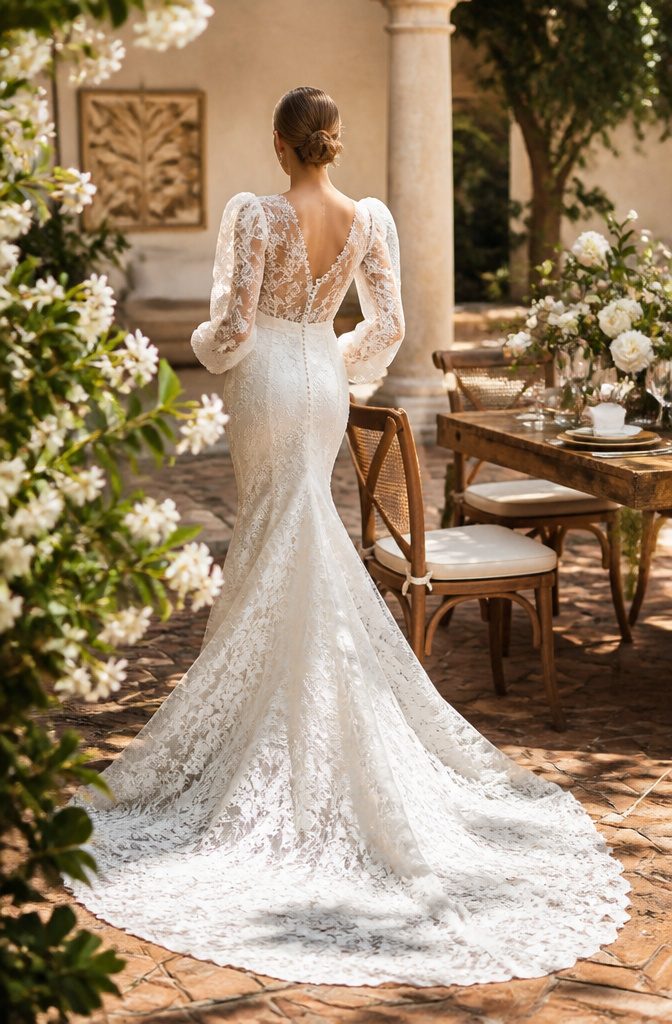
Juliet sleeves carry a very specific history, puffed at the shoulder and tapering to a fitted wrist, and Vera Wang’s use of them on a lace gown pulls that history into something the body does rather than something it wears. The volume at the top creates a frame that makes the fitted torso below read as smaller by contrast, while the lace keeps the sleeve from feeling costumed. Either element alone tilts toward theater: the sleeve toward Renaissance fair, the lace toward straightforward romance. Together they meet in the middle, giving the bride the coverage some women want for a church ceremony without the matronly effect of standard long sleeves.
The fitted silhouette is where Wang anchors the look. Without that structure, the sleeves would float; without the sleeves, the lace sheath would be one of dozens. The combination works because the lace is placed where the eye already travels, along the arms and down the torso, rather than scattered as all-over pattern.
This sits in an interesting spot between dated and enduring. Juliet sleeves cycled through the 1970s and the 1990s, so they carry nostalgia without being tied to one decade. For a 2026 bride, that ambiguity is useful. The dress photographs as timeless in black and white, reads as slightly fashion-forward in color, and avoids the risk of looking like last year’s trend.

Design: Versatile 2-in-1 Design:Features a detachable large satin bow — switch between a sweet bow-accented look or a sleek minimalist style to match flower girl duties,...
6. Custom Gown Inspired by Venue
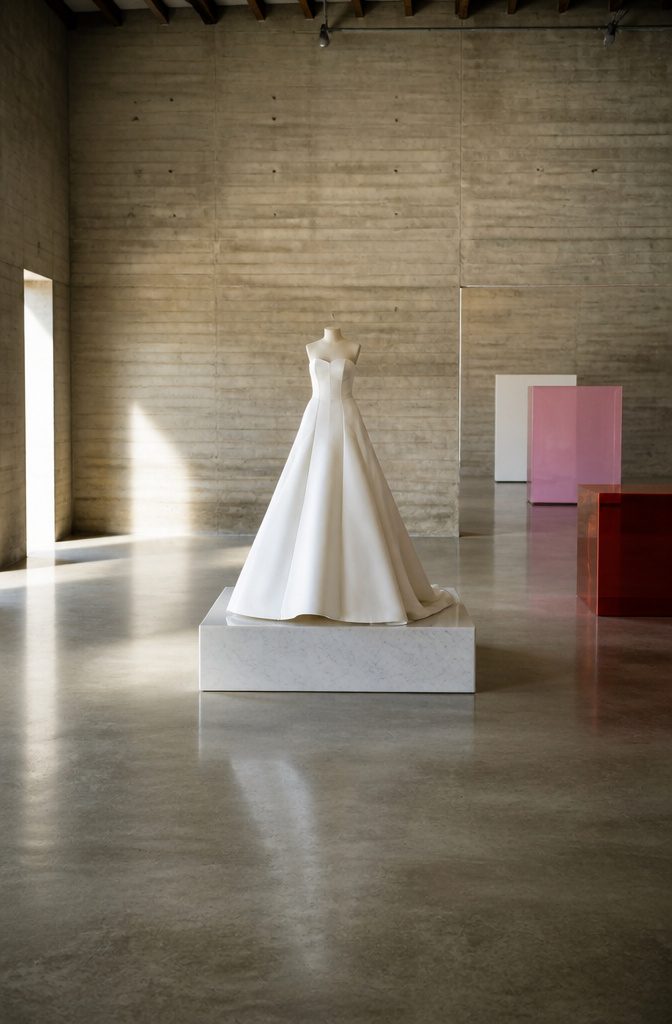
Vera Wang treats the venue as a design brief, not a backdrop. Sarah Levine’s wedding at the Arena at the Chinati Foundation shows how this works: she wanted the clean lines of Donald Judd’s architecture translated into fabric, and the team spent seven months refining a gown that answered that specific space. The result is a dress that would look wrong borrowed for a garden or a cathedral; it belongs to one room on one day.
This is the opposite of buying a stock gown and hoping the location flatters it. The bride becomes a collaborator, bringing the spirit of the place into fittings rather than arriving with a Pinterest board of disconnected ideas. Quinn Jackson, Wang’s goddaughter, described her own process as trust-based: "Everything else was just trusting the process" once the direction was set. That trust is earned through iteration, not imposed.
What the process asks is patience and specificity. The bride must know what her location feels like, not just what it looks like in photographs. She has to articulate that feeling to a team that will test it against seam lines, weight, and movement. The payoff is a gown that reads as inevitable, the way good architecture does, because every choice was made against a real constraint rather than an abstract ideal of "bridal."

♥Features:Strapless Satin Wedding Dresses for Bride,Satin Lace Wedding Dresses for Women,Mermaid Satin Bridal Dress for Bride,Satin Wedding Dresses 2026,Mermaid Lace Wedding Bride Dresses for Women,Off Shoulder Lace Bridal Ball Gowns,Off Shoulder,Satin,Lace,Mermaid,Pleated,V Neck,built in bra.The elegant wedding dress is suitable for every bride!

Features: Wedding dresses for bride 2024 features lace, tulle, off shoulder, strapless, v-neck, sleeveless, a-line ball gown, corset back, train, long, side slit, built-in bra. Lace on the wedding dress makes the bridal dress elegant and charming.

【Unique Design 】This Ivory wedding dress is a new style for 2026,it is a soft satin wedding dresses, flowy satin bridal ball gown,strapless wedding dress for brides,off shoulder ball gowns,lightweight lining a line wedding bridal gown for bride.the strapless and satin creates an elegant and unique style.It also has other design details worth paying attention to,strapless,sweetheart,aline,backless,corest back,v neck,ruched,empire waist.
7. A-Line Gown with Sheer Corset Bodice
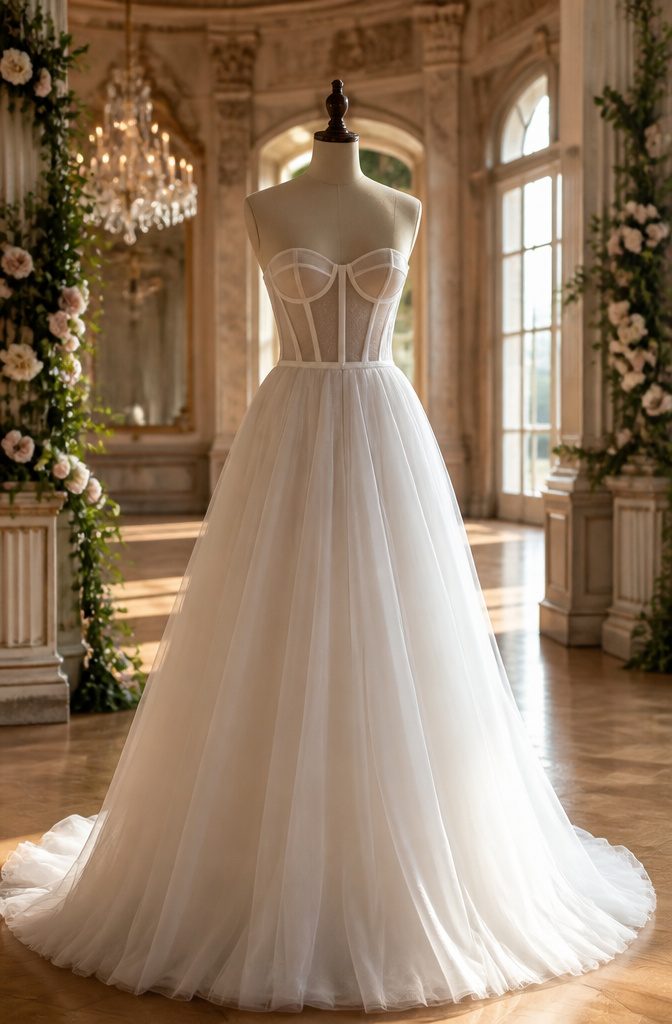
The sheer corset bodice is where Vera Wang’s technical reputation was built. She treats transparency as architecture, not exposure: boning, seaming, and interior structure remain visible but read as deliberate scaffolding rather than skin on display. On an A-line skirt, that contrast between a disciplined bodice and a releasing skirt gives the body a defined waist without the costume quality of a full ballgown.
The engineering is harder than it looks. Mesh or organza has to hold tension across the bust and ribs without rippling or going slack after an hour of wear. What convinced me, reading through construction notes on these, is that the sheer panels are underlined with self-fabric or very fine tulle at precise stress points. You see the bone channels, but you do not see strain.
Fit is where this style makes its demands. The corset needs to sit flush at the underbust with no gaping when you raise your arms, which means the neckline curve and strap placement have to be dialed in during alteration, not guessed from a size chart. The A-line skirt forgives hips and thighs, but the bodice does not forgive a loose ribcage measurement. Size up for the waist and take the bodice in, not the reverse.

Tailored mermaid long train silhouette with multi-layer soft tulle, specially designed to lift and support the trailing hem of mermaid wedding gowns, creating elegant natural curved shape without rigid metal hoops

Size: Please check Our Size Chart before you placed the order.

Size Tips: Designed with high-stretch fabric to provide a comfortable, flexible fit across different body types. Please refer to the size chart before ordering to select your best fit
8. Strapless Gown with Illusion Lace Bolero
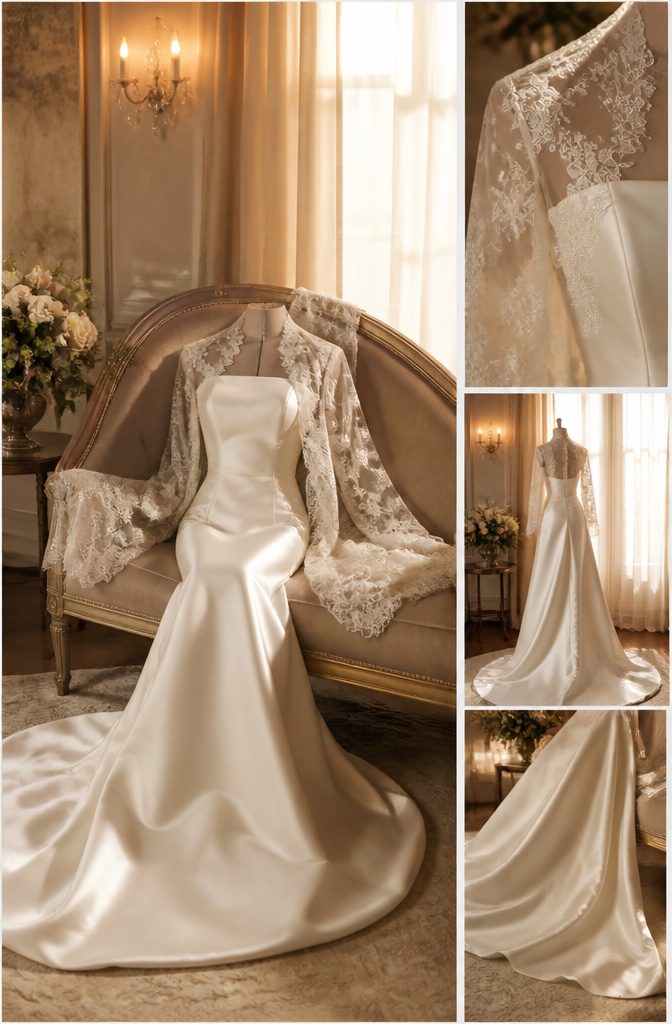
Illusion lace on a bolero behaves differently than when it is sewn directly onto a bodice. The sheer panel sits away from the skin, suspended on its own layer, which means the lace pattern reads as a floating texture rather than a flat applique. That separation is what lets a bride keep the strapless silhouette for the ceremony and photographs, then add coverage for the reception without a full costume change.
The two-piece reading also changes how the eye moves. A strapless gown alone draws a horizontal line at the collarbone; the bolero interrupts that with vertical lace edges that lengthen the neck. The effect is closer to a portrait neckline than to a true sleeve, but the coverage stops at the shoulder rather than continuing down the arm. For someone who wants to hide the upper arm without looking like she is wearing her grandmother’s jacket, the proportions land in a narrow middle ground that full sleeves rarely hit.
Integrated versions save the trouble of alignment, though removable ones let the bride decide in the moment whether the lace still feels necessary after the third glass of wine.

Women's Formal Dress: Mid calf !!! Cocktail dresses for women 2026 wedding guest are perfect for daily work, which will help you balance your weekend fun and work dress needs. aline, detachable decorative belt - all designs are for your semi formal needs

[1950s dress for women vintage] This vintage cocktail dress features with cap sleeve, sweetheart neckline, back center zipper, empire waist, knee length.

9. Slip Dress with Custom Diagonal Strap
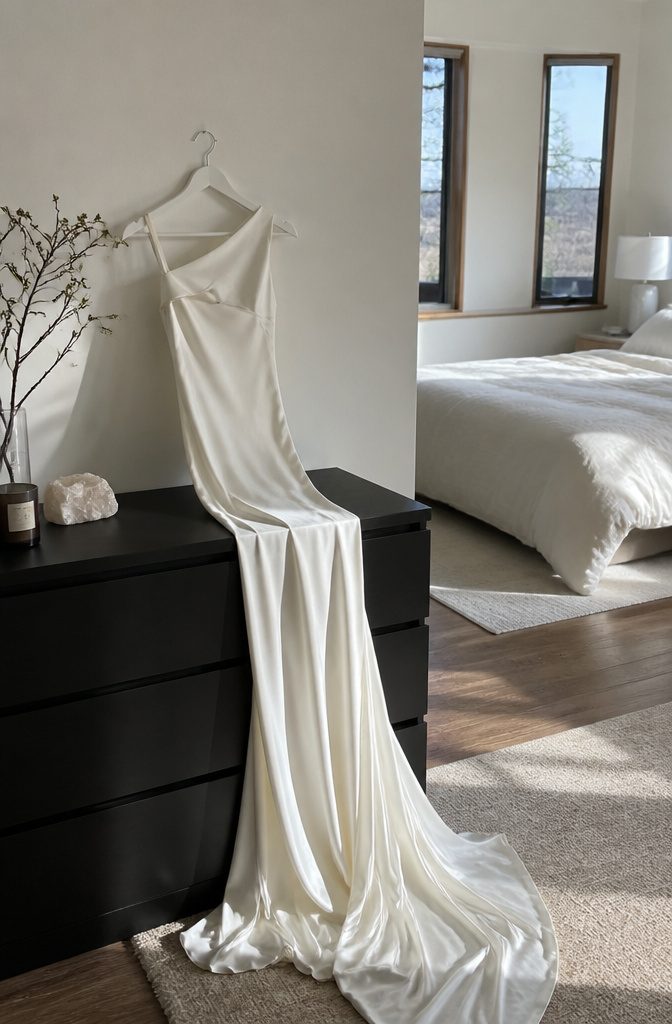
The slip dress silhouette reads as effortless, but the diagonal strap on this style is engineered, not draped. A true draped strap hangs from a fixed point and lets gravity do the work. Wang’s version is cut on the bias and stitched to create tension across the collarbone so the line stays crisp through an entire reception of hugging and dancing. That construction choice is what separates a $2,800 ready-to-wear piece from a $5,000 custom iteration where the angle is plotted to your shoulder width.
The 1990s reference is deliberate. Calvin Klein and Narciso Rodriguez built their names on slip dresses that looked like lingerie but moved like liquid. Wang borrows that vocabulary and gives it structural backbone. The result flatters women who want the body-skimming effect without the constant adjustment that pure silk charmeuse demands. In my reading, the women who return this style least often are the ones who sized for the ribcage and let the hip fall where it may rather than ordering to their largest measurement and losing the intended line.

Layered Design: This corset dress features a double-layered bodice and a voluminous three-layered skirt, thoughtfully structured to provide both support and comfort. The soft lining ensures coverage and comfort, while the flowy hemline enhances movement, adding a touch of romance and grace to every step

Sold by the Yard for your convenience: This sheer organza fabric is offered conveniently by the yard, allowing you to purchase the exact amount needed for your project. We offer 3 different sizes for you to choose from, including 1 yard/36 inch x 60 inch width, 3 yards/108 inch x 60 inch width, and 10 yards/360 inch x 60 inch width
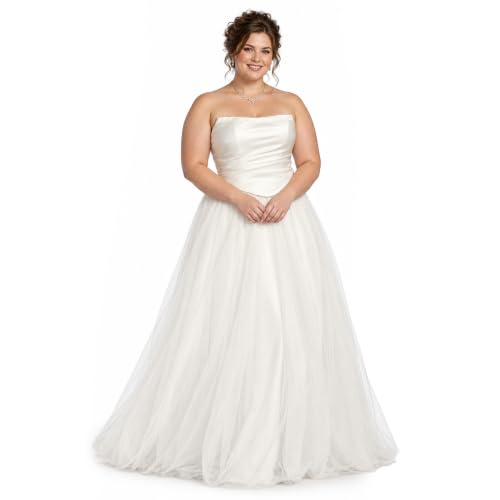
THE EDIT BY DB STUDIO: A curated collection by David's Bridal, offering trendy, versatile dresses for every special moment—from weddings to everyday celebrations.
10. Sleeveless Gown with Lace Overlay
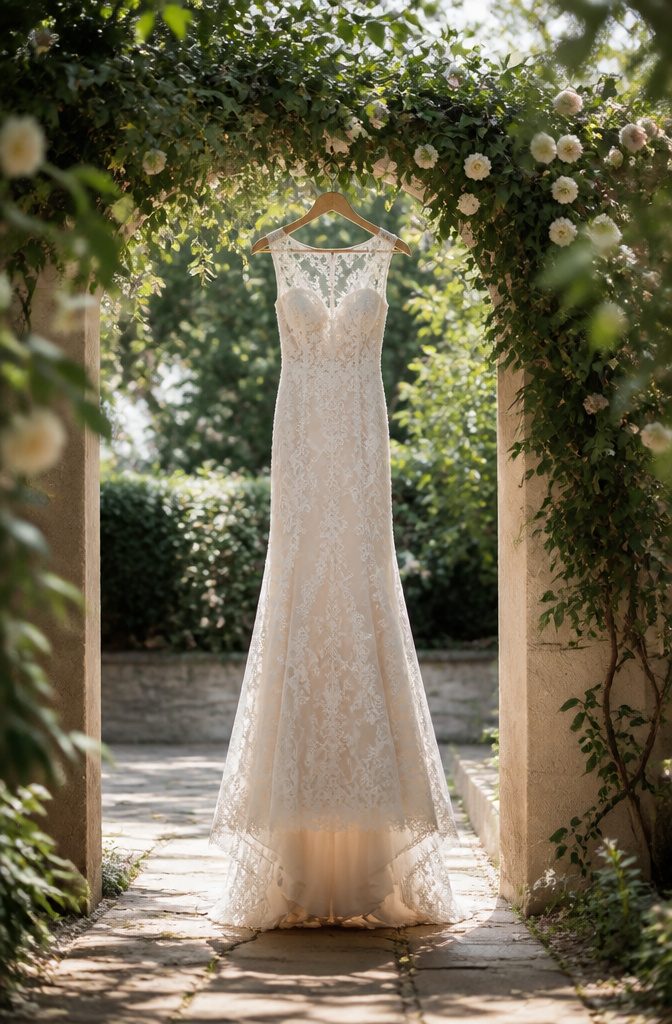
A sleeveless gown with lace overlay sits apart from dresses where the lace is built into the foundation fabric. The overlay is a separate layer, floated on top of silk or crepe and attached only at strategic points. This changes everything about how the dress moves and what the lace itself can do.
The edge where overlay stops or continues is the telling detail. Wang typically lets the lace terminate at the neckline and armholes with a clean, unadorned cut rather than folding it under or binding it with satin. That raw-finished edge reads as intentional, not unfinished, and it keeps the lace from looking appliquéd. Where the overlay continues past the bodice into a skirt panel, the underlayer shows through just enough to create depth withoutcostume.
Construction demands here are specific. The underlayer must be cut slightly smaller so the lace lies flat without pooling; too loose and the overlay bags at the waist, too tight and it strains at the hips. The seamstress has to decide whether to stitch through both layers at each seam or to let the lace hang independently, and that choice determines whether the dress reads as one textile or two. Most of Wang’s versions favor the latter, which is why the lace seems to drift rather than cling.
11. Long-Sleeved Gown with French Lace Bodice
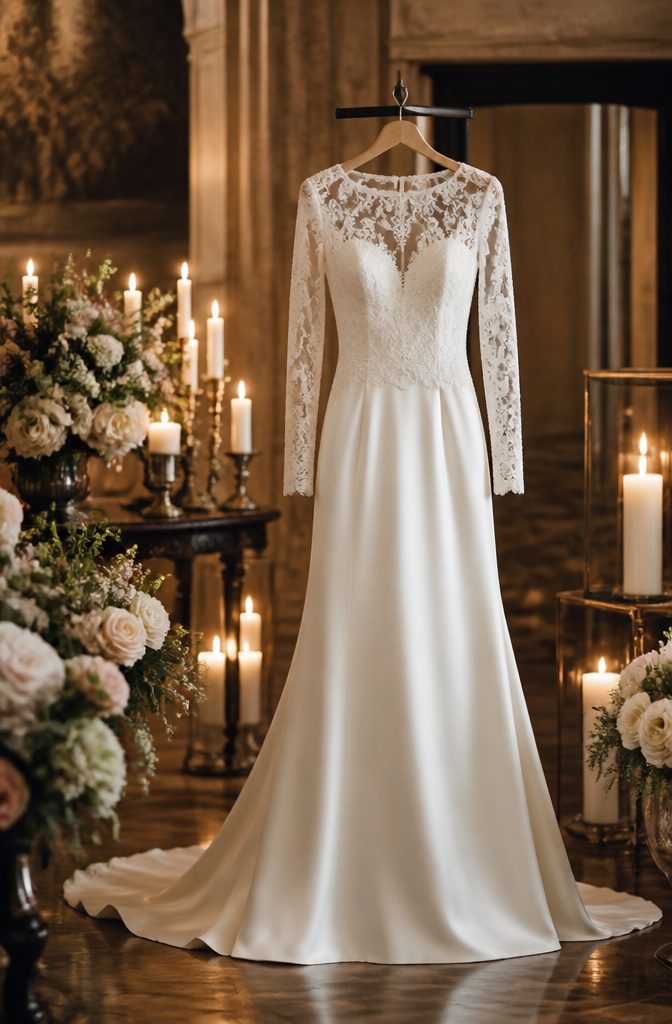
French lace on a Vera Wang bodice reads as ornament rather than costume because the pattern stays small and the ground fabric sheer enough that skin shows through the negative space. The long sleeves carry the same lace in the same scale, so the arm does not look like an afterthought bolted onto a different dress. What convinced me, looking through collections where this pairing returns, is the balance at the wrist: the lace ends without a cuff, a ruffle, or any flourish that would thicken the silhouette. The line stays continuous from shoulder to fingertip.
That restraint matters for coverage in formal or religious settings where bare arms would feel exposed, yet the bride still wants to read as herself rather than as someone playing a historical part. The lace is dense enough for a church or a black-tie evening, sheer enough that the shape of the arm still registers. Weight is the risk with long sleeves, and Wang avoids it by keeping the skirt comparatively clean; the volume lives at the bodice and sleeve, then drops away. The result photographs well in candlelight, where the lace catches shadow, and in daylight, where the pattern holds detail without shouting.
12. A-Line Gown with Tulle Train
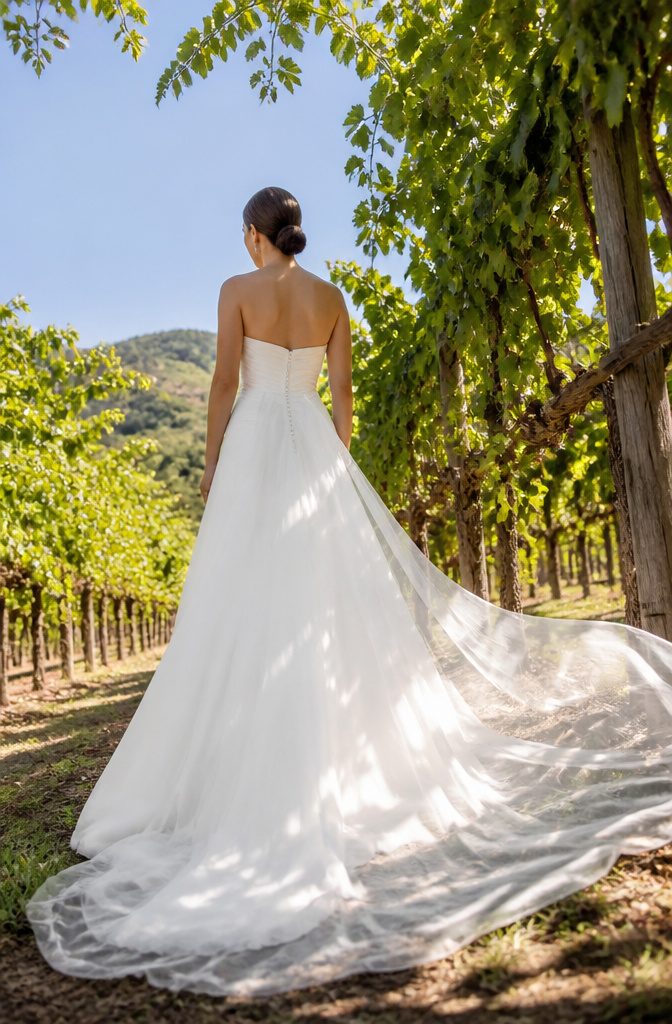
The A-line with a tulle train sits in a quieter register than Wang’s more theatrical pieces. Where the strapless train-and-slit style frames the body as architecture, this silhouette lets the fabric do the talking, and the difference matters for anyone building a wedding look from pieces they already own or can realistically source.
Pure tulle reads as event without reading as costume. Mixed materials, the kind that layer lace over crepe or beadwork over satin, ask the eye to keep track of multiple textures at once. Tulle alone simplifies the equation: volume where you want it, transparency where you need it, and a train that photographs well from the back without requiring a separate entrance strategy. A single material means one alteration timeline, one cleaning consideration, one thing going wrong instead of three.
In Wang’s range, this is the middle volume option, and that middle position is more useful than the extremes. The multi-tiered tulle gown with a cape demands a certain doorway width and a certain bridal confidence; the minimalist sheath asks for perfect underpinnings and not much else. The A-line tulle train splits the difference, giving movement without bulk, presence without performance. For the bride who wants to dance and also wants the portrait shot in the garden, it removes the choice between the two.
13. Custom Gown with Low Back and Sculpted Neckline
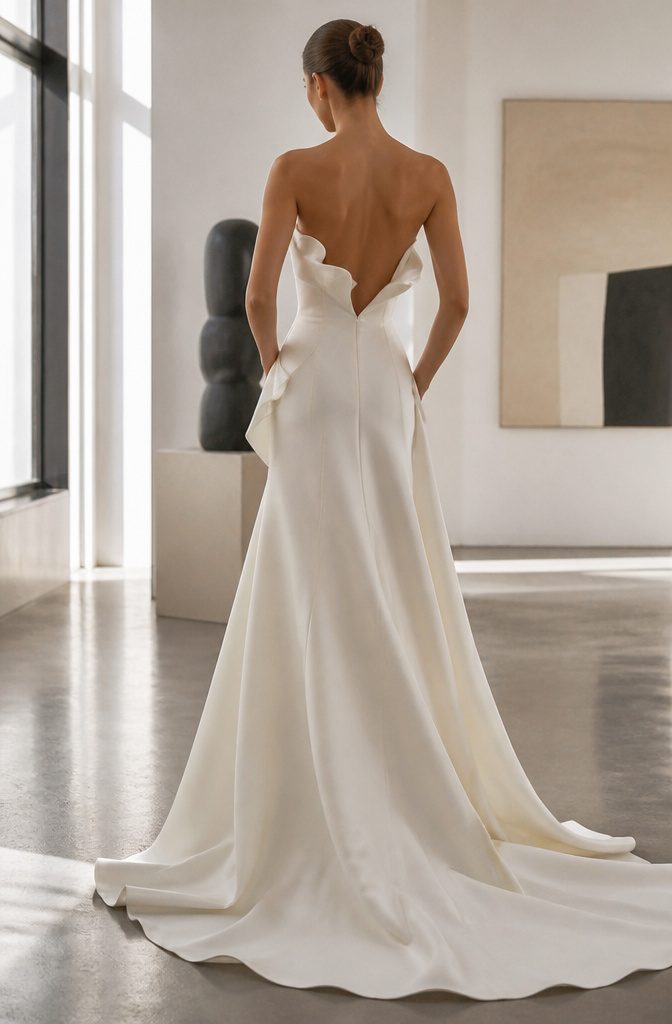
A low back and a sculpted neckline fight each other by nature. The open back wants the bodice loose enough to disappear, while a structured neckline needs anchoring to hold its shape. Wang solves this with internal architecture you never see from the outside.
The support comes from layered construction rather than obvious corsetry. Silk mikado or organza builds the shell, and underneath, boning channels are placed to carry tension without breaking the clean surface. The weight of the skirt helps, too. A ball gown or even a moderate train pulls downward, which steadies the bodice against the shoulders and lets the neckline sit precisely where it should.
What you get from this balance is a gown that reads as effortless from behind and intentional from the front. The bride gets the drama of exposure without the risk of the whole bodice collapsing into a soft line. In Wang’s work, this particular tension between structure and airiness shows up repeatedly. She trained her eye at Vogue on proportion and movement, and the discipline carries into bridal. The neckline stays architectural, the back stays open, and neither compromises the other.
14. Strapless Crepe Sheath
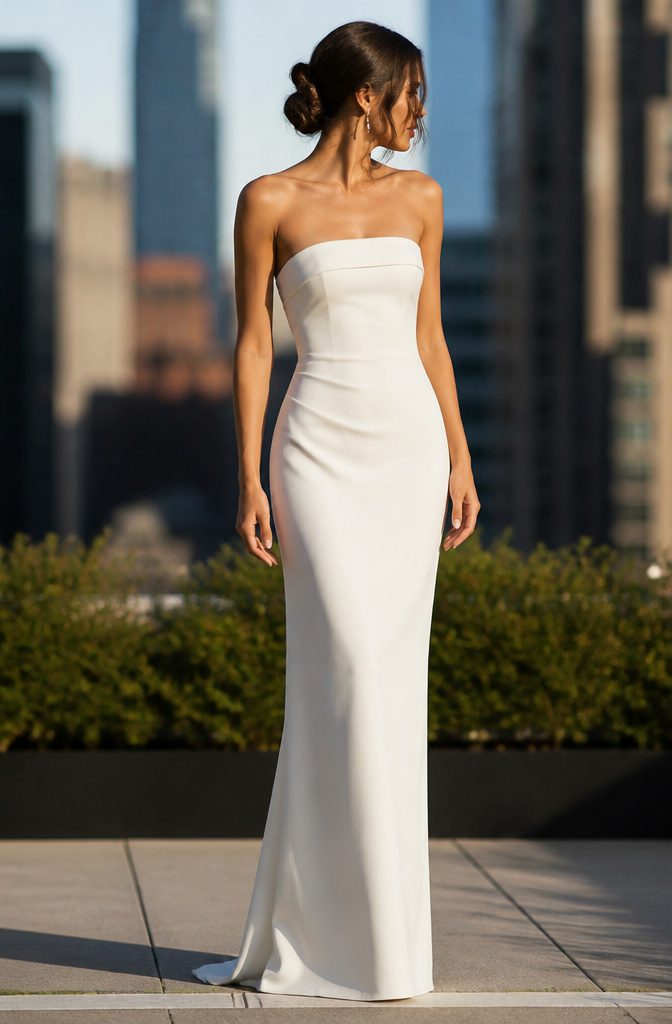
Crepe changes the whole proposition from the stiffer mikado sheath that sits earlier on most Vera Wang racks. Where mikado holds its architecture and lets you hear it move, crepe drapes closer to the body and stays quiet. Up close, the surface has a dry, almost chalky texture that reads as intentional rather than unfinished; from fifteen feet away, that same texture flattens into a single matte plane that lengthens the silhouette without catching light. The difference matters most in daylight weddings, where a glossy fabric can throw reflections across the room and crepe simply absorbs. A strapless cut in this material depends more on internal construction than a busier neckline would. The bodice needs real boning and a grip strip at the top edge, because crepe’s weight pulls downward over hours of wear. Without that structure, the dress pools at the waist by the end of the reception. I have watched brides choose this style for city hall ceremonies and then struggle to make it read formal enough for an evening party afterward. The simplicity is the point, but it leaves nowhere to hide if the tailoring slips even fractionally.
15. A-Line Gown with Oversized Sleeves
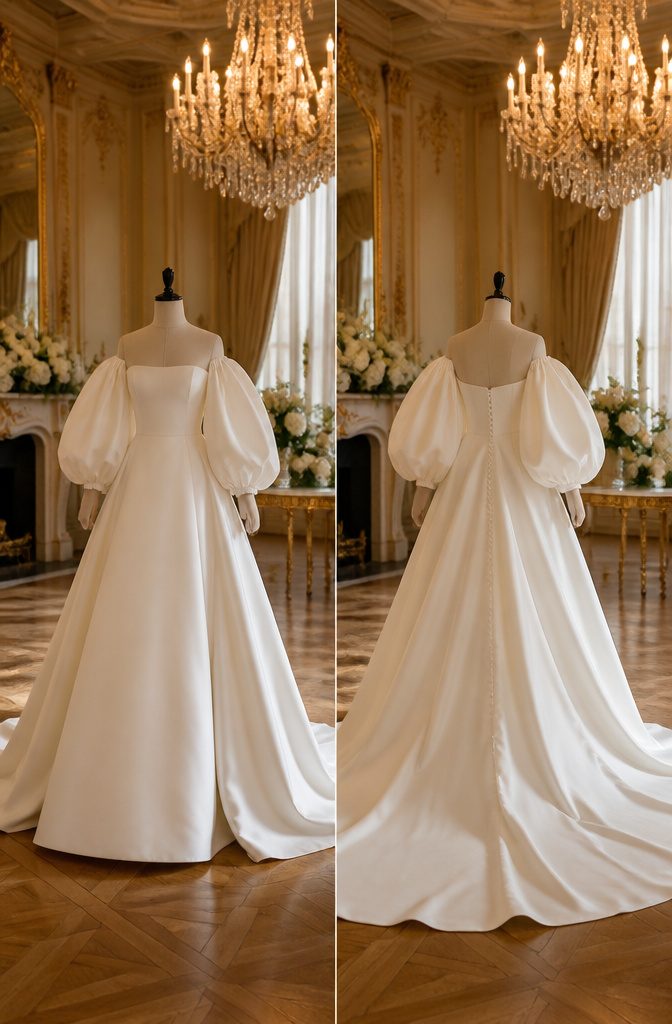
Wang’s oversized sleeves work because she anchors them to a disciplined A-line rather than letting volume compete with volume. The skirt stays narrow through the hip and flares only below mid-thigh, so the dramatic sleeve becomes the single statement instead of one exaggeration fighting another. Other designers often pair big sleeves with equally full skirts, which photographs well but reads as costume in person.
The alteration reality is the part most brides miss. Draped oversized sleeves attach at a precise shoulder point that is integrated into the bodice structure, not simply sewn on. Taking in the waist or adjusting the bust later requires re-engineering that attachment point, which means the sleeve drape shifts and the original proportion is lost. A skilled tailor can manage it, but the cost runs high and the result is never quite Wang’s intended balance.
The short light ivory macrame gown with long draped oversized sleeves and watteau train shows this principle in reverse: the abbreviated skirt lets the sleeve and train carry all the drama. The Victorian-inspired tulle collar adds a third vertical element, yet the eye still reads the silhouette as controlled because the waist remains defined and the skirt never overwhelms the frame. Ivory here reads softer than stark white would, keeping the architectural shapes from feeling theatrical rather than modern.
16. Macrame Lace Mermaid Gown
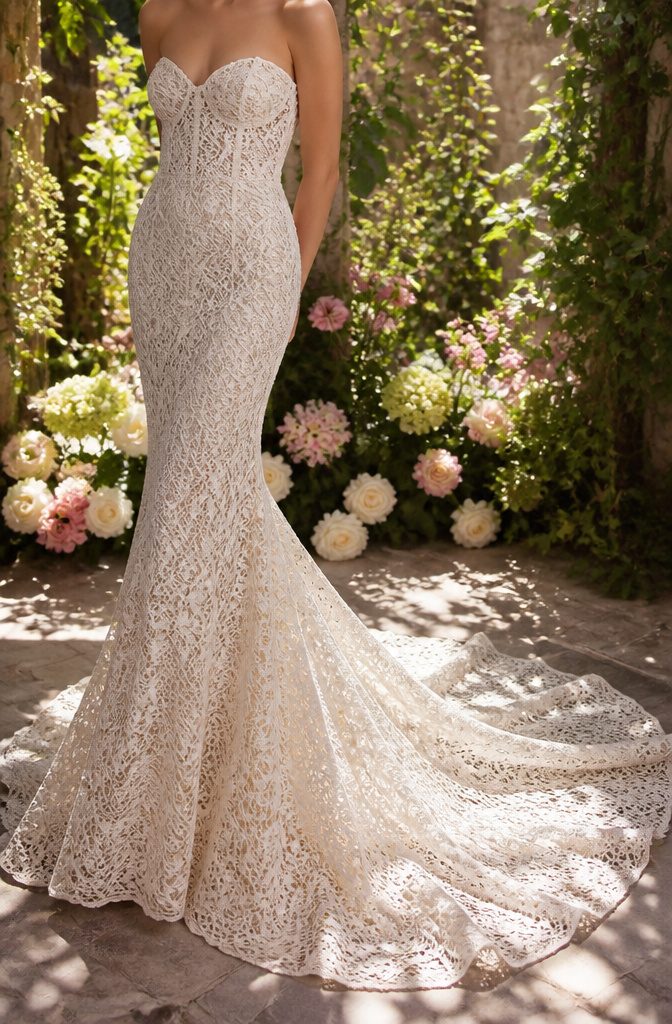
Macrame lace is knotted, not woven, which gives it a dimensional grid that reads almost like shadow on bare skin. On a mermaid silhouette, that texture has to sit flat through the hip and thigh or the flare point turns into a shelf instead of a sweep. Vera Wang’s versions keep the knotwork fine enough to stretch and settle against the body, then let it open into slightly larger pattern as the skirt kicks out below the knee, so the eye travels down without catching on bulk.
The same lace behaves like two different fabrics depending on the light. Under ceremony conditions, daylight or bright chapel spots flatten the dimension and the gown reads as refined, almost quiet. Move it into reception lighting, warm and low and angled, and those knots throw tiny shadows that make the surface flicker with movement even when the wearer is standing still. For a bride planning photos, that shift is worth timing: the ceremony shots stay clean and architectural, while the evening ones pick up texture the camera actually registers.
The risk is choosing this for a midday garden wedding where the sun stays high through the dancing. Without that contrast of light, the macrame can look busy without reward, and the mermaid line loses some of its drama. Better to let this one have its moment after dark, or at least under a tent where the lighting designer can work with it.
17. Tulle Gown with Lace Accents
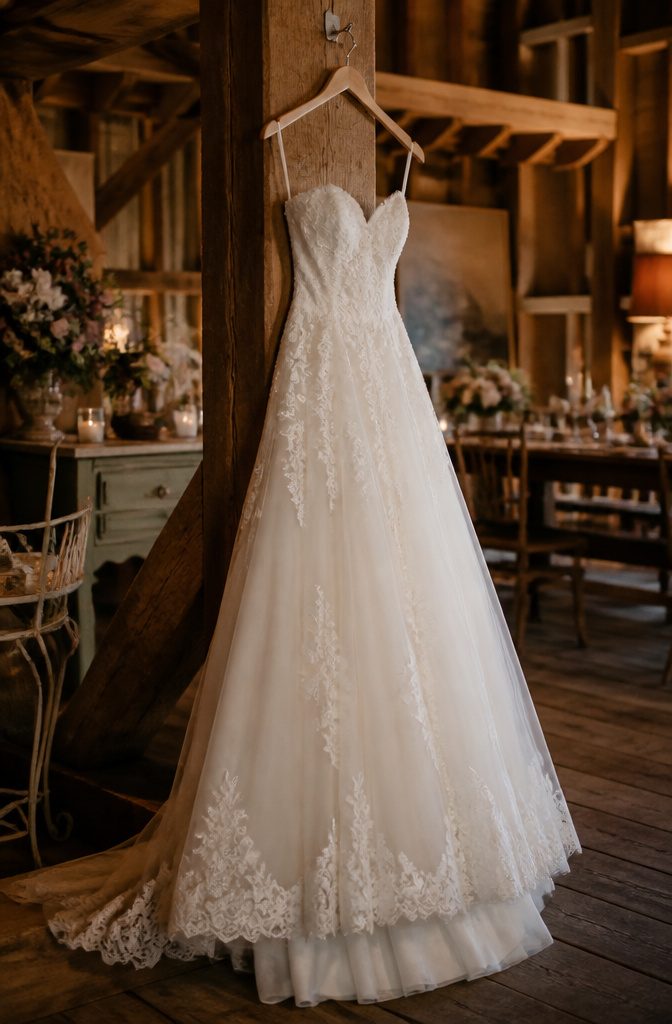
Tulle with lace accents is a quieter move than the full-volume tiered gowns that dominate so many Vera Wang collections. The lace sits at specific points rather than blanketing the skirt or climbing the entire bodice, which means the eye travels to those spots deliberately. A vine tracing the neckline, a panel at the hip, or edging along the hem creates a path for attention instead of demanding it everywhere at once.
This approach flatters women who carry weight in the midsection or hips because the eye stops at the accent rather than scanning continuously across the body. Placing lace where you want to be seen, not where tradition dictates, is the practical difference between wearing the dress and letting it wear you. The tulle still gives the bridal volume most women want for the ceremony itself, but the restraint keeps the silhouette from overwhelming a frame under 5’6".
The risk is under-scaling: accents too small read as apologetic, and the gown loses its reason for being. What convinced me, looking through dozens of these, was that the successful versions used lace at a scale you could register from fifteen feet away, not just in the photos afterward.
18. Strapless Gown with Tulle Neck Collar
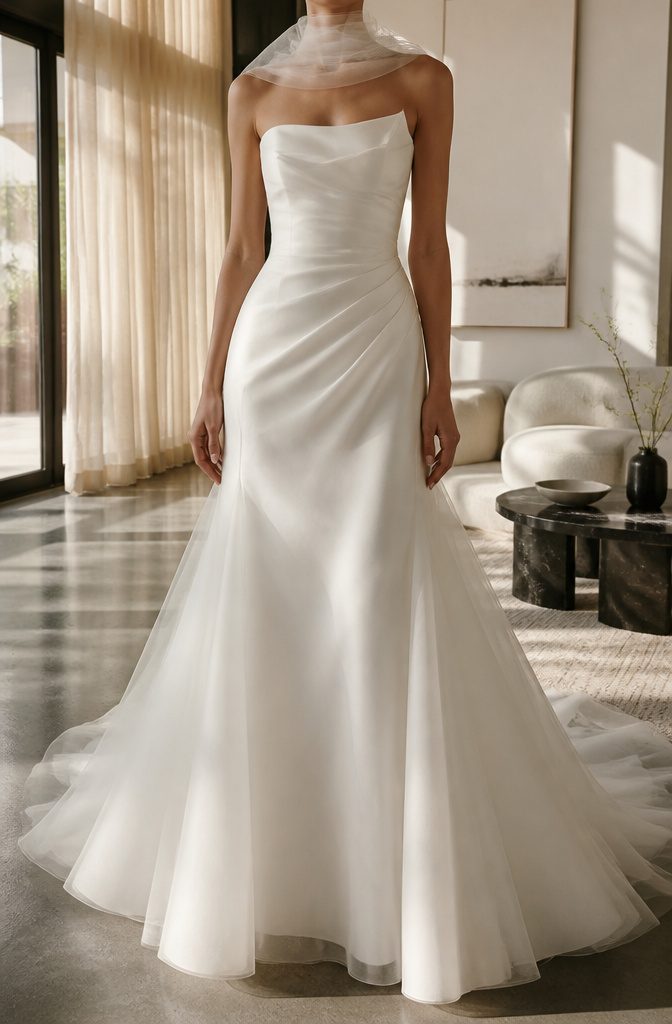
The tulle neck collar on this strapless Vera Wang sits as its own piece, neither jacket nor cape, and that distinction matters when you are trying to keep a clean line through the torso. A bolero would break the silhouette at the bust or waist; a cape would billow behind and compete with the skirt. The collar instead rises from the neckline itself, a single sculpted ring of tulle that frames the jaw and the collarbones without adding volume at the shoulders or back.
What sold me, looking at how this reads in photographs versus in motion, is the way the sheer layer softens the transition between skin and dress without becoming a second garment to manage. The strapless base still reads as bare and formal; the collar adds architecture. For women who want the openness of strapless but feel exposed in it, this is the middle path. It gives you something to turn toward the camera, a line that catches light differently than skin alone, yet you never feel you are wearing two things at once.
Celebrity Influence on Wang’s Popularity
Celebrity weddings have a way of locking a dress into the public imagination long after the vows. When Victoria Beckham chose a structured champagne-colored Vera Wang gown in the late 1990s, the silhouette became shorthand for red-carpet bridal glamour overnight. Ariana Grande’s sleek silk column dress showed a different side entirely: proof that Wang could whisper instead of shout. Gwen Stefani brought her own edge, and Vanessa Hudgens later echoed that minimalist confidence in a sheath dress paired with a custom veil, citing Wang’s history of dressing women for "the most important day of their lives" as the deciding factor.
That history started in 1990, when Wang opened her first bridal boutique. Three decades later, those early foundations still matter because celebrity choice sets expectations about fit and customization that everyday brides then bring into their appointments. A gown made for a stage performance or a magazine cover is not the same garment that arrives at your fitting, but the visual reference travels faster than that distinction.
Celebrity brides like Mariah Carey, Gwen Stefani, Victoria Beckham, and Issa Rae have chose to wear the designer’s gowns for their own wedding day.
— Vogue
Seeing those names on the list steers demand, though it can also flatten the reality of what Wang’s house actually builds for clients without stylists and alteration budgets. The trick is borrowing the mood, not measuring your reception hall against a celebrity’s.
Signature Materials and Construction
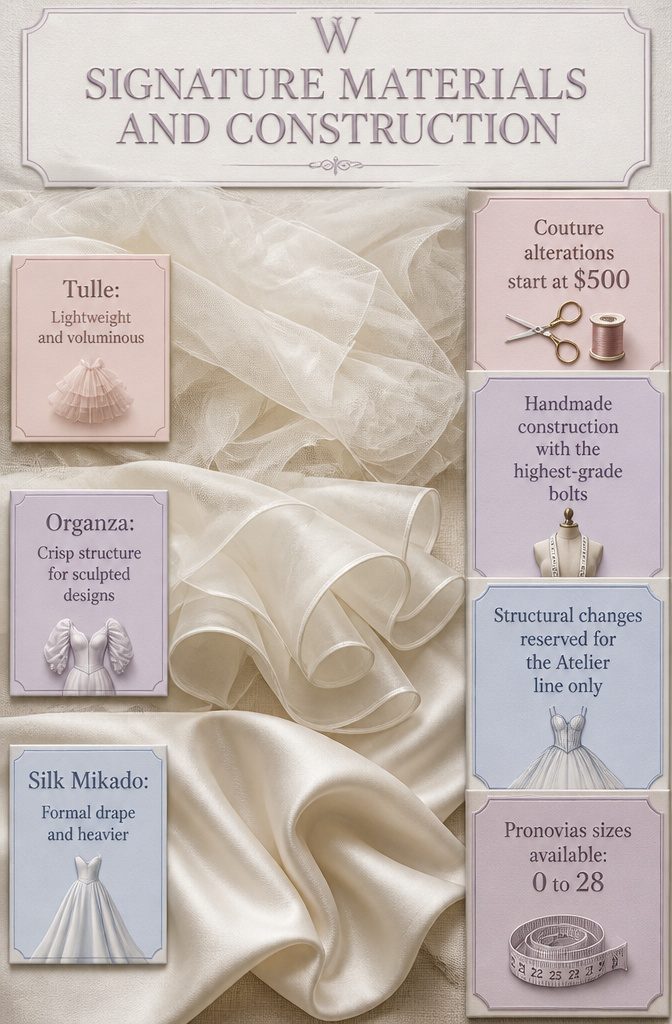
Tulle, organza, and silk mikado do noticeably different jobs across Vera Wang’s lines, and the choice shapes how the dress wears all day. Tulle builds volume without weight; layers of it float rather than press, which matters if you’re dancing or outdoors in heat. Organza holds crisper structure, so the sculpted necklines and oversized sleeves keep their shape through hours of standing and hugging. Silk mikado is heavier, with a slight sheen that reads formal under indoor light, and that density means it drapes close to the body rather than floating away from it.
The Couture collection uses each of these at their most labor-intensive: handmade construction with the highest-grade bolts, which shows in how the seams lie flat and the skirt recovers its shape after you sit. That density also means alterations on Couture pieces start at $500 for structural work like shortening the torso or combining elements from two styles, and not every seamstress will touch them.
For the Pronovias collaboration, the range runs size 0 to 28, with the company making to order from size 18 up at additional cost. Sample dresses in stores typically sit at bridal 10–14, so ordering outside that window means planning further ahead and budgeting for the upcharge. Simple customizations like length or strap adjustments are possible on the standard and Privée collections; structural changes are reserved for the Atelier line only.
Frequently Asked Questions
What makes a Vera Wang wedding dress iconic?
A Vera Wang wedding dress is iconic because of its design integrity, architectural silhouettes, and unique details that define bridal fashion. Her gowns are instantly recognizable not because they follow trends, but because they set them, carrying a quiet power that speaks to individuality, artistry, and timeless elegance. The signature style blends romantic elements with structural precision and emotional resonance.
How do I choose the right Vera Wang bridal gown for my body type?
Vera Wang offers a wide variety of silhouettes designed to flatter different body types, so the key is matching structure to your frame. A strapless gown with a train and slit favors women who want waist definition without sacrificing movement, while a sheath flatters brides who are already proportionate through the middle. The multi-tiered tulle ballgown with a cape pulls the eye upward, making volume read as intention rather than excess. For hips and thighs, an A-line skirt forgives where a fitted bodice does not.
What are the customization options for Vera Wang wedding dresses?
Customization ranges from minor alterations to fully custom gowns built around a specific venue or vision. Some brides adjust train length or swap a bolero for coverage, while others spend seven months collaborating on a dress engineered for one location. The slip dress with diagonal strap, for example, is plotted to individual shoulder width rather than draped generically. Alteration limits vary by style: oversized sleeves attach at integrated shoulder points that shift if the bodice is taken in, so those changes cost more and never fully recover the original proportion.