A neckline is not decorative. It sets the proportion of the whole dress, and choosing the wrong one for your frame turns an otherwise right garment into something that looks slightly off without the wearer knowing why.
The difference between a cowl neck that reads expensive and one that looks like a bedsheet comes down to fabric weight. A heavier silk or structured crepe holds the fold’s architecture; lightweight jersey collapses into a limp puddle.
1. Apron Neckline
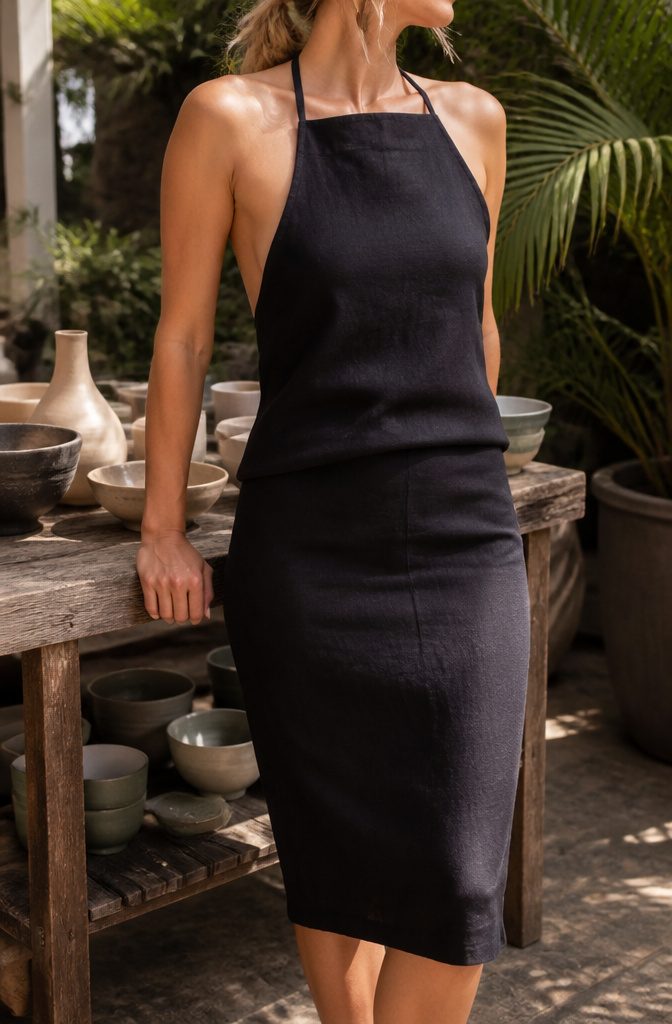
An apron neckline sits like a bib across the chest, with straps that tie at the back of the neck.
The back stays open or nearly so, leaving the shoulders and upper back bare in a way that reads practical rather than formal.
This cut favors broader shoulders and defined arms, since the bare shoulder blades and tied neck draw the eye straight across.
On narrower frames the bib front can look like excess fabric hanging from too little structure; the straps help, but the style needs some width to fill it out.
In a working wardrobe the apron neckline functions as a single-statement piece. It does not layer cleanly under cardigans or blazers because the neck ties create bulk, and the open back limits bra options to strapless or adhesive styles.
The bib shape also breaks a continuous vertical line, so it pairs better with simple bottoms that do not compete: a pencil skirt in the same fabric, or straight trousers without pattern.
For mixing and matching, treat it as an event top rather than a daily workhorse.
The cotton pinafore versions read craft-fair; the same cut in silk or a dark linen holds up for dinner out. That gap is wide, and the fabric choice decides which side you land on.

Summer Mini Dress For Women Is Made Of 95%PolySter 5%Elastane, Super Soft, Stretchy And Comfy Against The Skin.

MATERIAL: This Long Formal Dresses Crafted From A Blend Of Rayon And Elastane, Soft And Breathable, Comfort With Fully Lined No See-Through, Ruched Drop Waist Dress Hugs Your Curves Well. Boat Neck Maxi Dress For Women Providing Ultimate Cozy And Versatile For All-Day Wear In Any Season.
2. Boat Neck
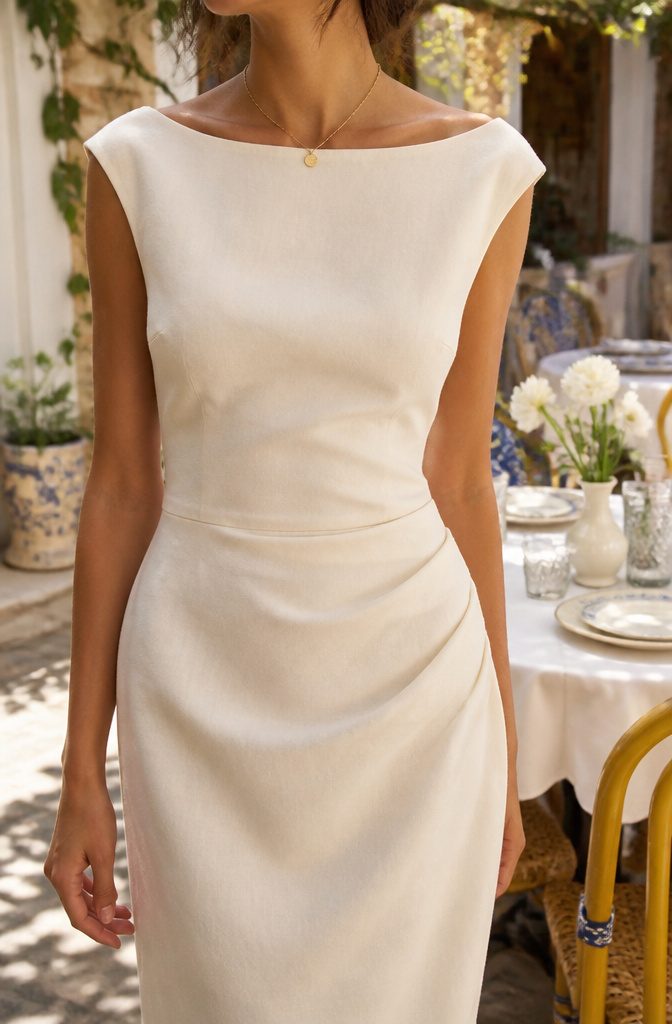
A boat neck, or bateau neckline, runs wide and horizontal from shoulder to shoulder, grazing the collarbone.
That straight edge visually broadens the shoulders, which makes it a strong choice for pear-shaped figures or anyone with narrower shoulders who wants balance against wider hips.
The name comes from the slight curve resembling a boat in profile, and the style carries that Audrey Hepburn association from her Sabrina dress.
Jewelry sits awkwardly against that wide, unbroken line. A short pendant drops too low and fights the horizontal; earrings or a sleek updo keep the focus where the neckline places it.
I wore one wrong to a summer wedding once, choosing a heavy statement necklace that kept slipping and sat crooked against the flat edge.
The neckline itself was doing work I didn’t let it finish. Now I leave the collarbone bare and add interest through sleeve length instead: cap, short, or long sleeves all read differently with that same boat-shaped cut.

Material: Polyester, spandex. Double-sided thick satin, without lining, white dress is a bit see-through.

Material: Polyester, spandex. Double-sided thick satin, without lining, white dress is a bit see-through.

Material: Polyester, spandex. Double-sided thick satin, without lining, white dress is a bit see-through.
3. Collared Dresses
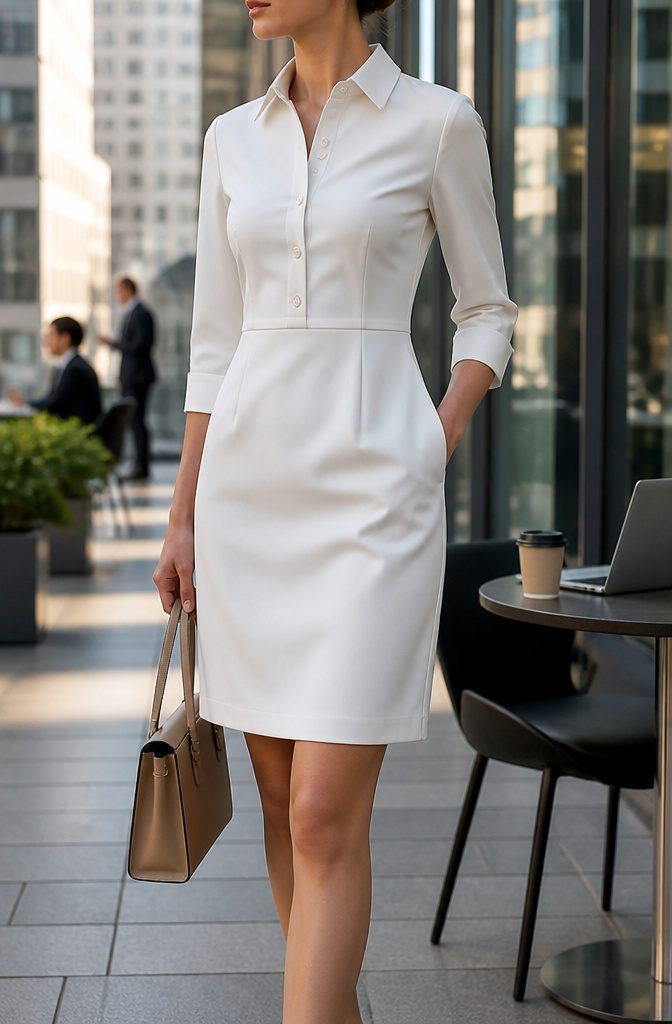
A collar that folds down like the one on a man’s dress shirt is the defining feature here, and that borrowed-from-him energy is exactly what makes the style so useful.
The same dress reads office-ready with the collar buttoned to the top and loosens into something off-duty when you leave the top buttons undone or roll the sleeves.
Proportion is where this neckline lives or dies.
A collar that sits too high or too wide for your frame looks like you are wearing someone else’s shirt rather than borrowing the reference on purpose. The lapels should frame your face, not compete with it.
The shift between work and weekend is built into the piece, which makes collared dresses a practical choice if you are trying to own fewer things that do more.
The structure gives an outfit immediate intention; you look dressed because the collar did some of the deciding for you.

【Soft & Breathable】Slip on this lightweight fake collar for all-season comfort! Made of silky-soft fabric that wicks sweat in summer and locks warmth in winter. Whether replacing a shirt collar or styling outfits, it fits perfectly. This lightweight and durable fake collar can be machine - washed countless times without fading. You'll wear it stylishly for years

Stretchy Fabric: The dress shirts for women is made from high quality material for maximum comfort and ensure the button down shirt women is soft, breathable, stretchy and lightweight enough to give you incredible wearing experience even for warmer weather

【WRINKLE FREE,SUPER SOFT & STRETCH】Women's dress shirts are made of SA-3.5 US STANDARD SMOOTHNESS-GRADE,high-quality, non-iron fabric that helps minimize wrinkles. Designed to maintain a smooth appearance throughout the day, reducing the hassle of ironing. Additionally, 3% spandex is added to the fabric, making the shirt elastic and providing expandable comfort, bringing you a soft touch experience.
4. Cowl Neck
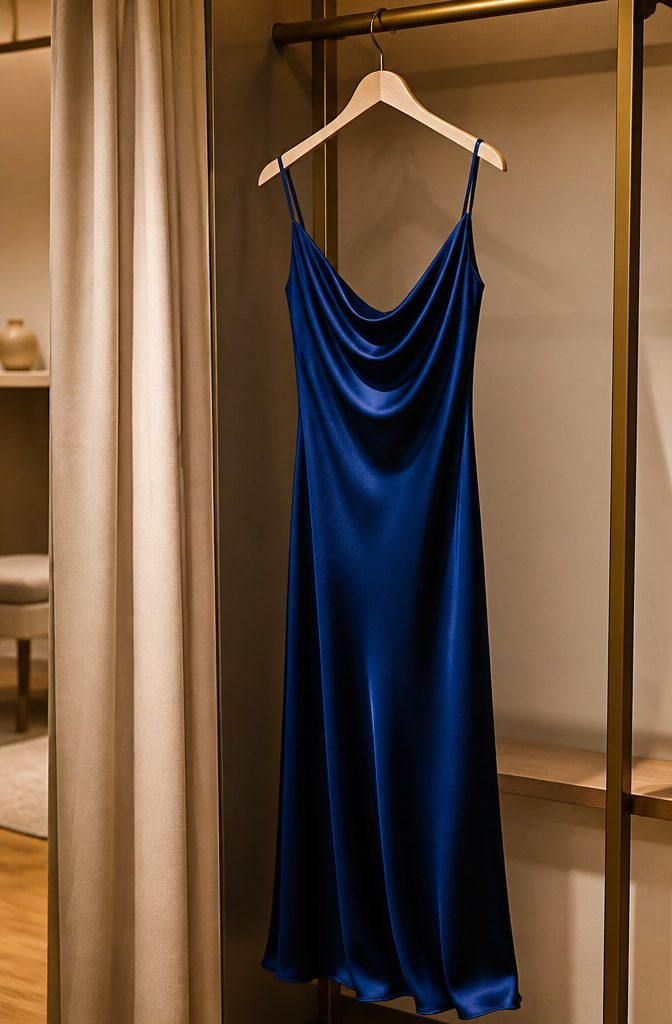
The cowl neck is draped fabric folded into soft, rippling pleats at the neckline.
That drape can range from a shallow mid-neck ruffle to a deep plunge, and where it lands makes the difference between looking expensive and looking like you grabbed a bedsheet.
Fabric weight is what separates the two. A heavier silk or structured crepe holds the fold’s architecture; lightweight jersey collapses into a limp puddle that reads as sloppy rather than relaxed.
The same drape that adds volume around a smaller bust can overwhelm a fuller one if the fabric is too thin and the folds collapse outward instead of falling in clean lines.
For narrower shoulders or a longer neck, the extra volume at the neckline brings the eye up and balances the silhouette.
Angular features soften under those rounded folds, and the style creates curves without relying on structure underneath. The payoff is an intentionally unconstructed look, but unconstructed only works when the material has enough body to mean it.

Calvin Klein Scuba Crepe Square Neck A-Line Dress.

Fabric: A-line midi dress is made of super soft fabric, breathable and lightweight, perfect for spring and summer. Superior high elasticity is not picky about body shape, showing a beautiful silhouette. With a built-in liner, it’s completely opaque for worry-free wear

50s VINTAGE DRESS WITH LINING: Made from 94% nylon and 6% elastane, this stretchy, lined dress offers flexibility and comfort for formal occasions. A practical choice among church dresses and formal dresses for women.
5. Halter Neck
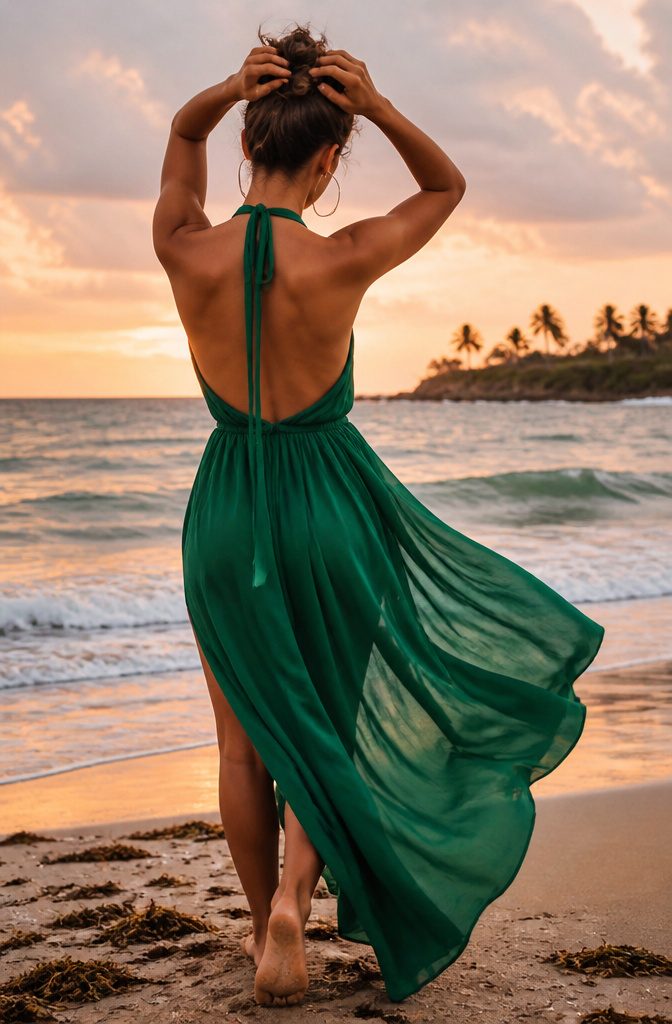
A halter neck wraps around the back of the neck and leaves the shoulders and upper back completely open. That exposure is the whole point, but it comes with two practical realities worth sorting before you commit.
The tan line situation is unavoidable: a halter strap sits right where a standard tank or tee does not, so the stripe shows across your upper back unless you planned for it. The bra situation is equally specific.
A standard strapless will slide without anything to hook onto at the shoulder, so the workable options are a halter bra with a single strap you reroute, adhesive cups, or simply choosing a dress with a built-in shelf.
I have seen women spend an evening hiking up a strapless that was never going to stay put with this cut; the wrong underlayer turns a confident shape into a maintenance job.
The sources split on who this flatters most. One line of thinking puts halter necklines on athletic builds and broad shoulders, letting the cut show off toned arms and a strong upper back.
Another groups them with boat and off-the-shoulder styles as the right move for straight and hourglass figures, drawing the eye upward.
What both agree on: pear shapes and narrow shoulders get no help here, since the halter visually widens the top half rather than balancing it.
The fabric and finish separate formal from casual. A polished halter in a heavier drape reads evening or wedding guest; the same shape in cotton jersey or a sportier closed-back version works for daytime.
Adrianna Papell’s collection leans into that first category, using weightier fabrics and cleaner construction to refine what can otherwise feel beach-adjacent.
The high-neck variant adds fabric across the bodice top, closing some of the openness while keeping the same shoulder line.

SIZE ATTENTION: S=US 4-6, M=US 8-10, L=US 12-14, XL=US 16-18, XXL=US 20. Summer Bodycon Dresses for Women Crafted from Super Soft and Stretchy Material, Offering Comfort and Ease Without Feeling Constricted Throughout the Day

Comfortable and breathable design: Made from woven fabric with high stretch, this midi dress provides a comfortable wearing experience, ensuring breathability and flexibility for all-day wear, allowing for unrestricted movement and a perfect fit that adapts to your body's contours

Comfortable & Stretchy Fabric:Crafted from 100% Polyester , this mini dress offers a soft, flexible feel that moves with your body. The 100% Polyester lining ensures a smooth, irritation-free wear against your skin.
6. Mock Neck
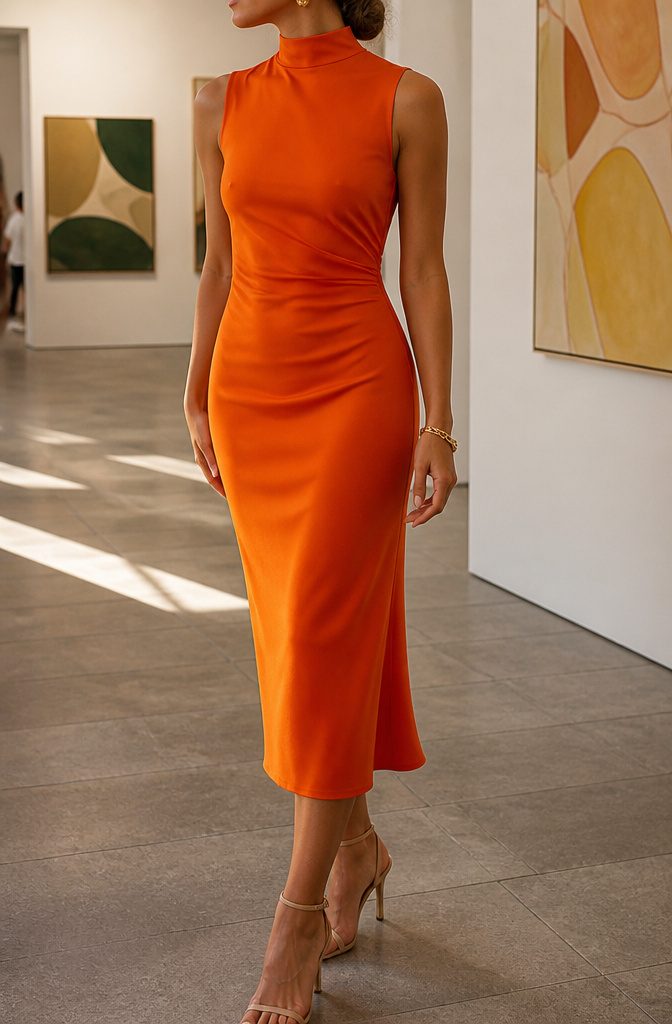
A mock neck sits right where a turtleneck would, but the single fold that folds over is gone.
That one difference changes everything about how the dress reads. Without the roll, the line stays cleaner, more architectural, and the eye moves straight to the face instead of stopping at a stack of fabric.
The sources describe it as sitting snugly around the base of the neck rather than extending upward, which keeps it from looking like a turtleneck that got interrupted.
Whether this reads modern or merely unfinished depends almost entirely on what happens below the neck. A sleeveless mock neck in a fluid fabric can look deliberate and current, like something from the early 1960s updated for now.
The same neckline with long, tight sleeves risks looking like a layering piece that lost its sweater. Three-quarter sleeves or a short cap sleeve tend to balance the coverage up top, giving the silhouette somewhere to breathe.
In my own judgment, a mock neck dress works best when at least one other element, the hemline, the fabric weight, or the sleeve, provides contrast against that contained neck.

MATERIAL: Satin maxi dress is made of lightweight and breathable polyester, the satin dress bring you smooth delicate silky touching experience, not see through
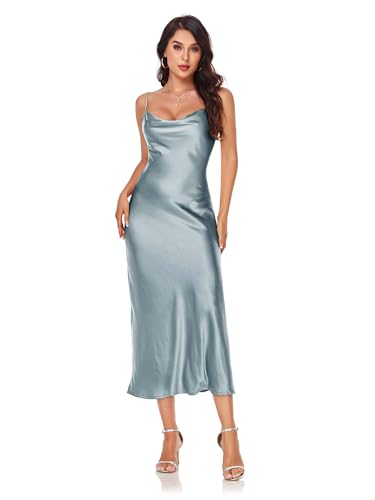
Material: Polyester, spandex. Double-sided thick satin, without lining, white dress is a bit see-through.

Fabric has non stretch
7. Off-the-Shoulder
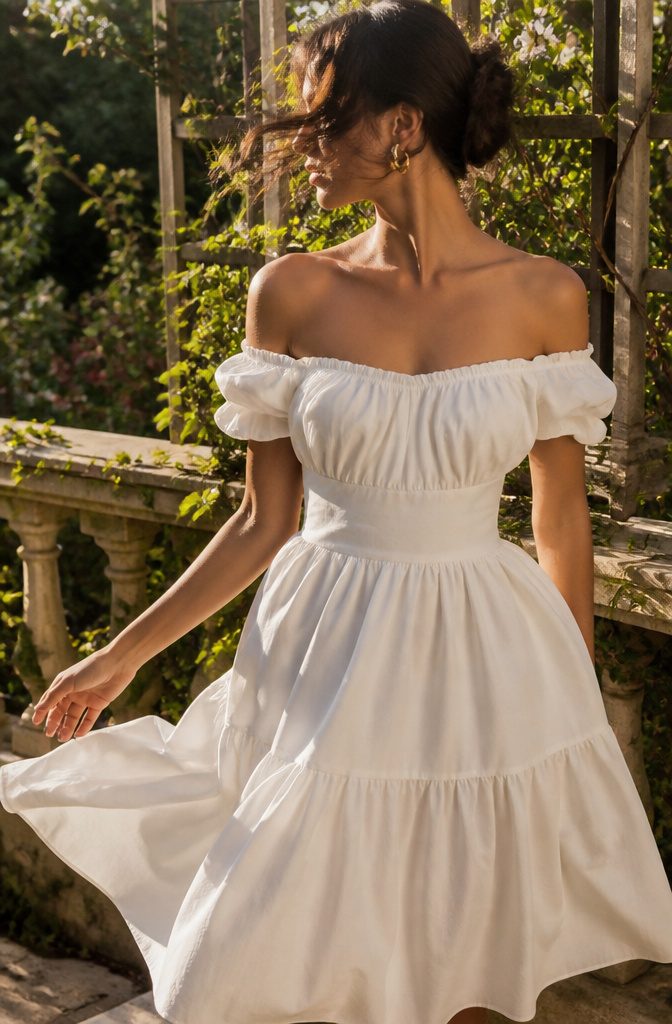
An off-the-shoulder neckline sits below the shoulders and collarbone, leaving both bare while sleeves or straps rest on the upper arms.
The style traces back to the Regency and Victorian eras, when Charles Frederick Worth designed elaborate off-the-shoulder bodices for figures like Empress Eugenie, then found a second wave in the 1960s through Brigitte Bardot, who paired the tops with everything from midi skirts to pants and earned the style its occasional "Bardot" nickname.
The upward tug is the real flaw. Fabric that sits below the natural shoulder line has nowhere secure to anchor, so the neckline creeps up with every reach or walk.
Dresses with tighter elastic or structured boning through the bodice hold position better than loose, fluttery versions, but no construction fully solves it.
In actual summer heat, the exposed shoulders and collarbone help with cooling, yet the close fit across the upper chest and arms can trap warmth where the fabric sits.
Sleeve length matters here: a flutter sleeve offers more airflow than a fitted one, but both versions leave the underarm covered, which is where I overheat first.
For outdoor events above 85 degrees, I reach for cotton or linen off-the-shoulder pieces rather than synthetic linings, and I size carefully, a bodice too loose slides up constantly, too tight restricts movement and breathing.


【WRINKLE FREE,SUPER SOFT & STRETCH】Women's dress shirts are made of SA-3.5 US STANDARD SMOOTHNESS-GRADE,high-quality, non-iron fabric that helps minimize wrinkles. Designed to maintain a smooth appearance throughout the day, reducing the hassle of ironing. Additionally, 3% spandex is added to the fabric, making the shirt elastic and providing expandable comfort, bringing you a soft touch experience.

Feature: Short Sleeve,V Neck, Solid Color, Polka Dot,Leopard Printed,Striped,Front Pockets, Collar Shirt for women
8. One-Shoulder
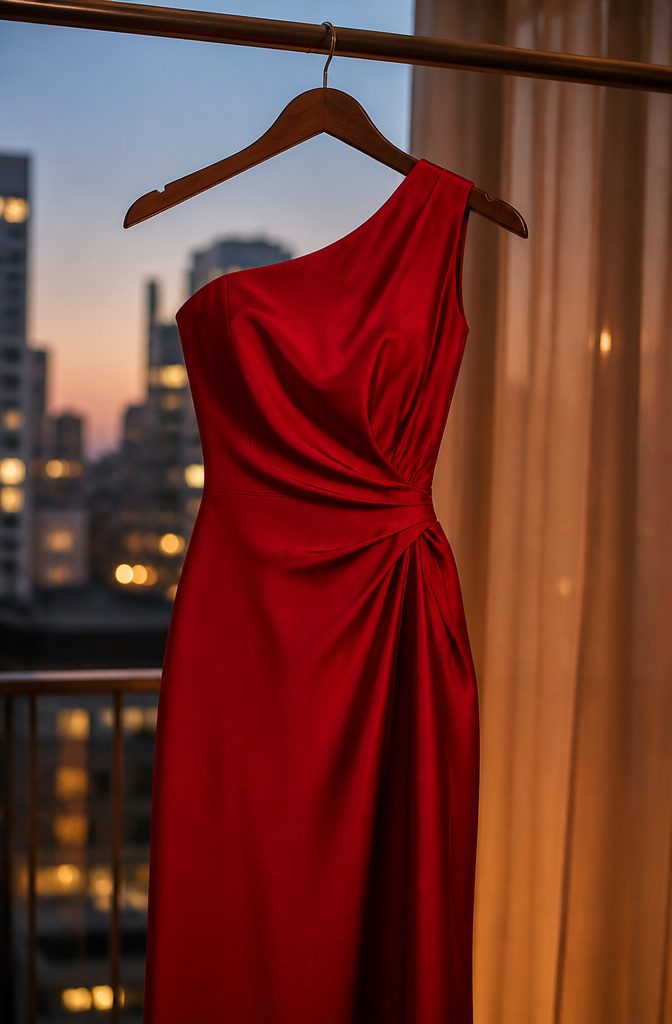
Asymmetry reads as confidence on a body, but only if the dress does the engineering instead of leaving it to you.
A one-shoulder cut leaves one side completely bare, the other anchored by anything from a delicate spaghetti strap to a full sleeve.
The variation matters more than most necklines because the bra situation is not optional here — a standard strap ruins the line entirely, so the dress either needs built-in structure or you are committed to adhesive or strapless engineering that actually holds through an evening.
The bare shoulder photographs beautifully in stillness, catching light along the collarbone and creating a natural focal point. In motion, though, the cut can shift toward costume if the fabric is too stiff or the single sleeve too theatrical.
Ancient Roman togas and South Asian saris are cited as origins, which explains why the look tips ceremonial so easily.
For modern wear, the balance is in the fabric drape: soft enough to follow the body, substantial enough that the single shoulder does not look like a mistake you are compensating for.
Statement earrings work with this neckline because the eye is already traveling diagonally. The asymmetry does the framing; jewelry just extends the line.

COMFY & SOFT MATERIAL : This sexy square neck bodycon dress is made of superior polyster and spandex, soft, breathable, friendly to skin, slightly elastic, not see through, makes it comfortable to wear in any event. And makes you look elegant and generous!

1. Material: Structured matte crepe fabric with smooth lining, holds the tailored sheath silhouette.

Square neckline with sparkling embellishment detail and short sleeves creates an elegant silhouette that flatters while the ankle-length hem adds sophisticated drama to your look
9. Round Neck
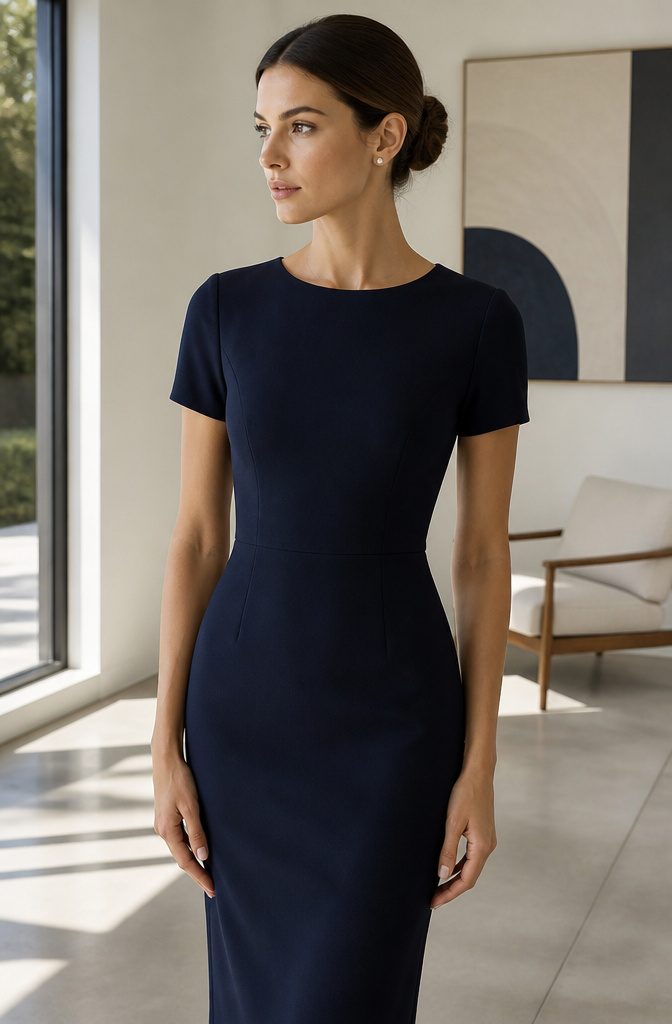
A round neckline sits at the base of the neck in a simple circle, and that placement is what separates the style from a crew neck.
The crew cuts closer, riding right by the collarbones with a ribbed band, while the round version drops back just enough to expose the collarbones themselves.
That small gap changes what jewelry reads as intentional versus apologetic.
A round neckline gives you room for almost any necklace length, or a brooch pinned slightly off-center. Crew necks fight longer chains; the fabric band competes with anything that does not sit equally close to the throat.
What makes a round neckline look classic rather than basic is the fit through the shoulder and the fabric weight.
In a crisp cotton or structured crepe, the circle holds its shape and frames the face cleanly. In a thin jersey with a loose band, the same cut collapses into something that reads as the default, not the choice.
The sheath dresses that use this neckline for office wear depend on that structure; without it, the simplicity becomes plainness.
Sleeve length shifts the formality more than you might expect.
Sleeveless reads evening, long sleeve reads work, and the neckline itself stays neutral enough to carry either. The versatility is genuine, but it is not automatic; the circle has to sit at exactly the right depth to allow it.

Modern Style: This Tommy Hilfiger women's sleeveless sheath dress features a boat neckline and elegant side drape detail for a polished, sophisticated look

SLIM FIT: Fitted to the body through the shoulders, body and sleeves

【VERSATILE OCCASION】Perfect for formal events, parties,dinners, celebrations, weddings, and any special occasion requiring elegant attire.
10. Scoop Neck
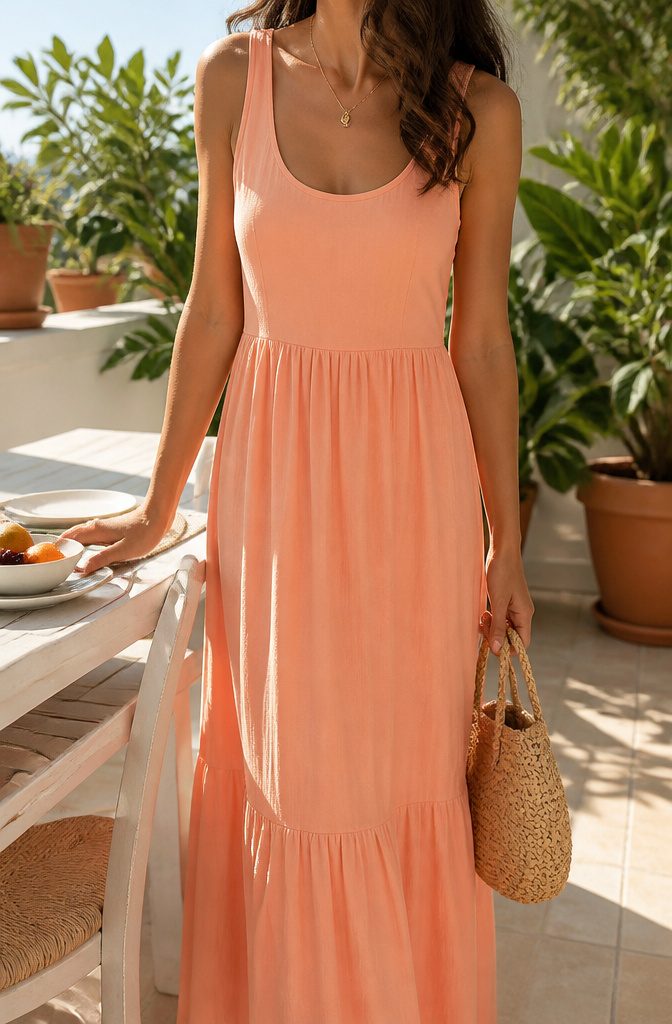
A scoop neck drops lower than a round neckline in a smooth U-shape, and that curve depth changes everything about how the dress reads.
A shallow U keeps the line near the collarbone, elongating the neck without opening up the chest; a deeper plunge moves toward the sternum and starts to behave almost like a V-neck but softer, rounder, less directional.
The arms of the U hang on the shoulders, usually with thinner straps than you’d see on a square or round neck, which gives the whole thing a vest-like simplicity.
This is one of the more forgiving shapes I’ve noticed in practice.
The rounded front doesn’t dip to a point the way a sweetheart does, so it frames rather than exposes, and that extra coverage tends to work across bust sizes without looking either matronly or deliberately modest.
I’ve seen it go wrong when the U is too wide, pushed out toward the shoulders; then the neckline competes with the straps and the whole upper body looks pulled apart.
Better to keep the curve contained, the width moderate, and let the collarbone do the framing.

Material: Polyester, spandex. Double-sided thick satin, without lining, white dress is a bit see-through.

MATERIAL: Satin maxi dress is made of lightweight and breathable polyester, the satin dress bring you smooth delicate silky touching experience, not see through
11. Square Neck
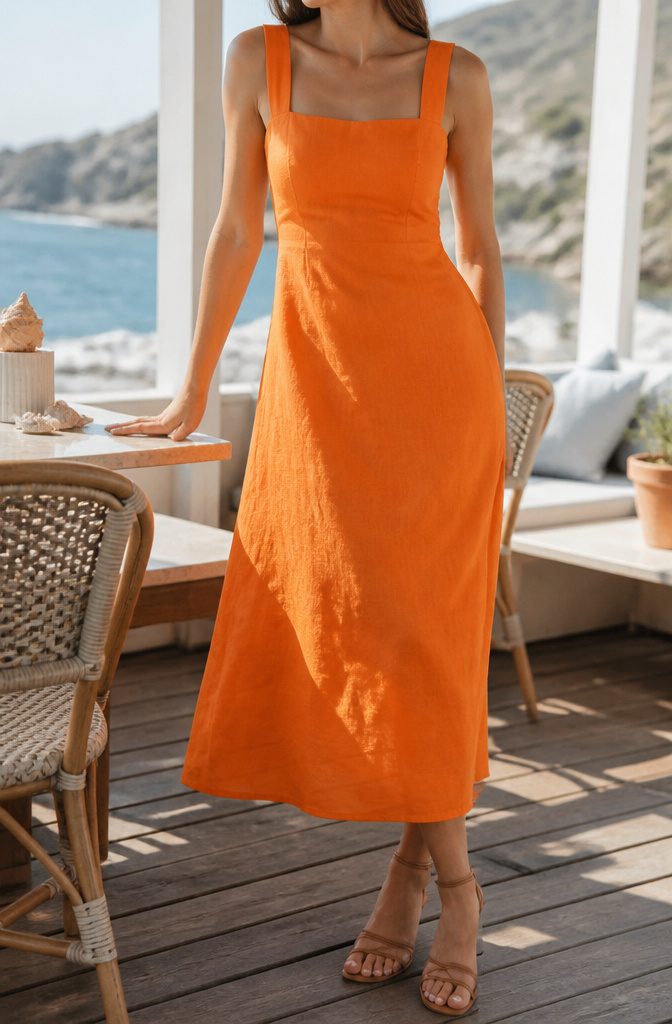
The square neckline cuts straight across the collarbone with three clean edges, the bottom line meeting the sides at right angles, wider straps carrying the shape.
That geometry is not new; wedding dresses have used it since at least the 1800s, and the style was common for dresses generally in the 1870s.
The straight horizontal line broadens the chest visually, which balances wider hips and works for pear, hourglass, and rectangular shapes.
The corners matter more than people expect.
When they hit too wide, the frame looks stretched; too narrow, and the effect is closer to a slot neckline, that variant where the side edges sit roughly at the width of the collarbone points.
For fuller busts, the square shape offers support and reads as modest, especially with a structured bodice.
The line also creates contrast against curves and draws attention to the collarbone, though on narrow shoulders it can read as the best option rather than a universal one.
The risk is placement: the horizontal edge sits just above the bust, and if the corners fall at the wrong point on your frame, the tailored, minimalist effect turns into something that looks slightly off without the wearer knowing why.
12. Straight Neckline
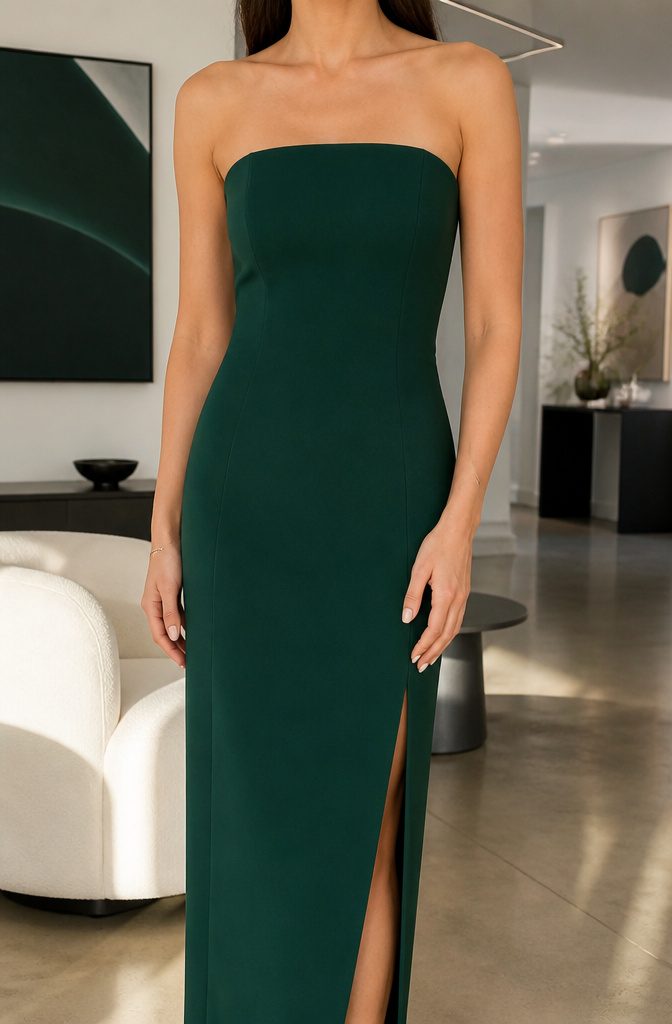
A straight neckline draws a clean horizontal line across the chest, usually sitting just below the collarbone.
It occupies a middle ground between true strapless and something with straps, which means the question of how it stays up deserves more attention than buyers often give it.
The bodice needs real structure to hold that line level through an evening of sitting, standing, and reaching for a drink.
Spaghetti straps help, as do wider straps that partially cover the shoulder, but the work of staying up is mostly done by the internal construction.
A straight neckline paired with a flimsy bodice will slide, gap, or require constant hitch-and-tug adjustments. Structured fabric and boning change the equation entirely.
This neckline broadens the visual width of the chest, which balances wider hips nicely.
Pear-shaped and hourglass figures tend to find it flattering for that reason, though anyone with sloping shoulders should check that the line actually reads as horizontal on their frame rather than dipping at the outer edges.
Occasions where it belongs run toward the clean and modern: cocktail events, certain weddings, anywhere the dress code calls for polished without plunging.
It is not quite formal enough for black-tie unless the fabric and cut elevate it significantly, and it is too bare for most conservative daytime settings.
The straight line reads deliberate, almost architectural, which works when the rest of the outfit supports that mood and looks unfinished when it does not.
13. Strapless
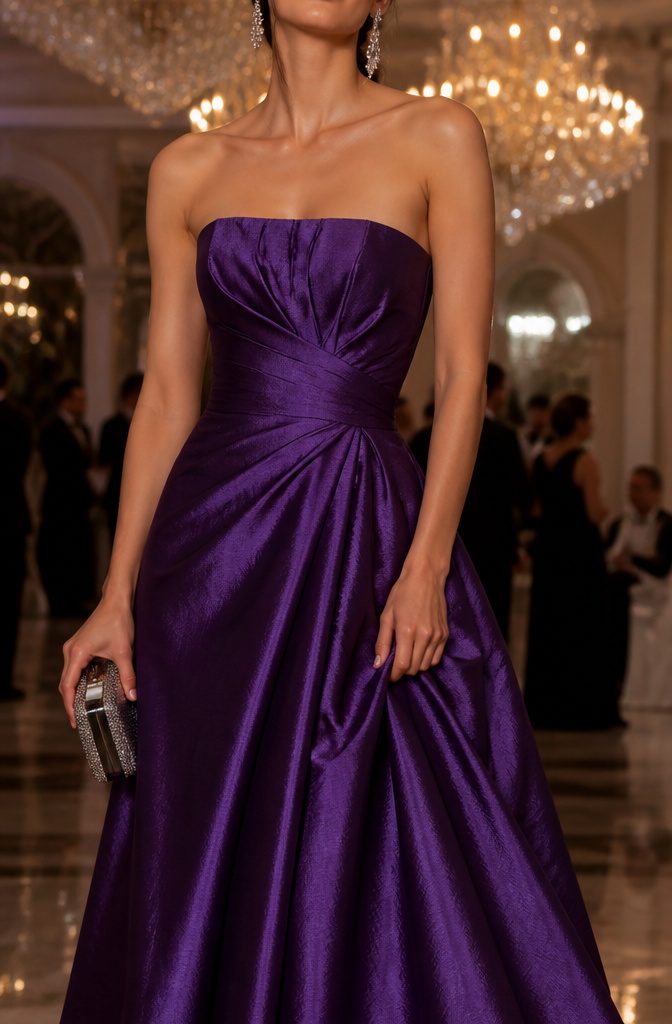
A strapless neckline sits above the bust with shoulders and arms completely bare, which sounds simple until you try keeping it there through an evening of reaching for canapés.
The engineering is what separates the wearable ones from the disasters: internal boning, gripper elastic, and those hidden no-slip strips that leave angry red welts by midnight but at least keep the dress from sliding south.
Torso length matters more here than with almost any other neckline. A short torso turns strapless into a constant tug-of-war; a long one gives the structure room to anchor.
This neckline dominates formalwear not because it is easy but because nothing else frames the face and shoulders so cleanly for statement earrings or an updo.
Sweetheart, straight-across, or rounded cuts all share the same problem: the architecture required to make them stay put is invisible until it fails.
The work is worth it for a gala, but the same engineering that holds a gown in place reads as overbuilt for everyday wear. Leave it out of the office entirely.
14. Surplice
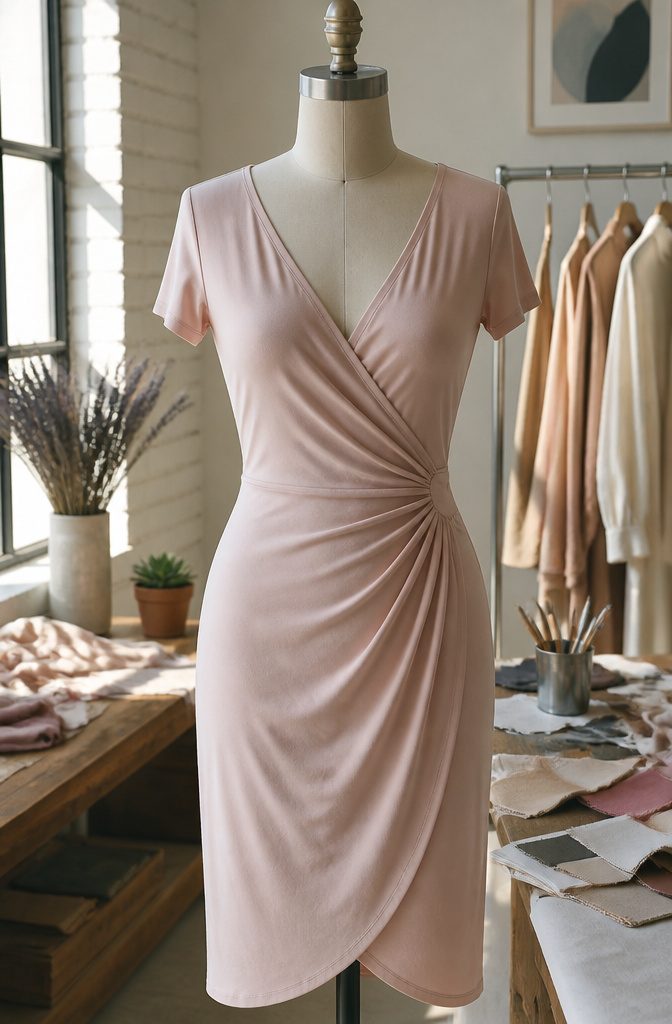
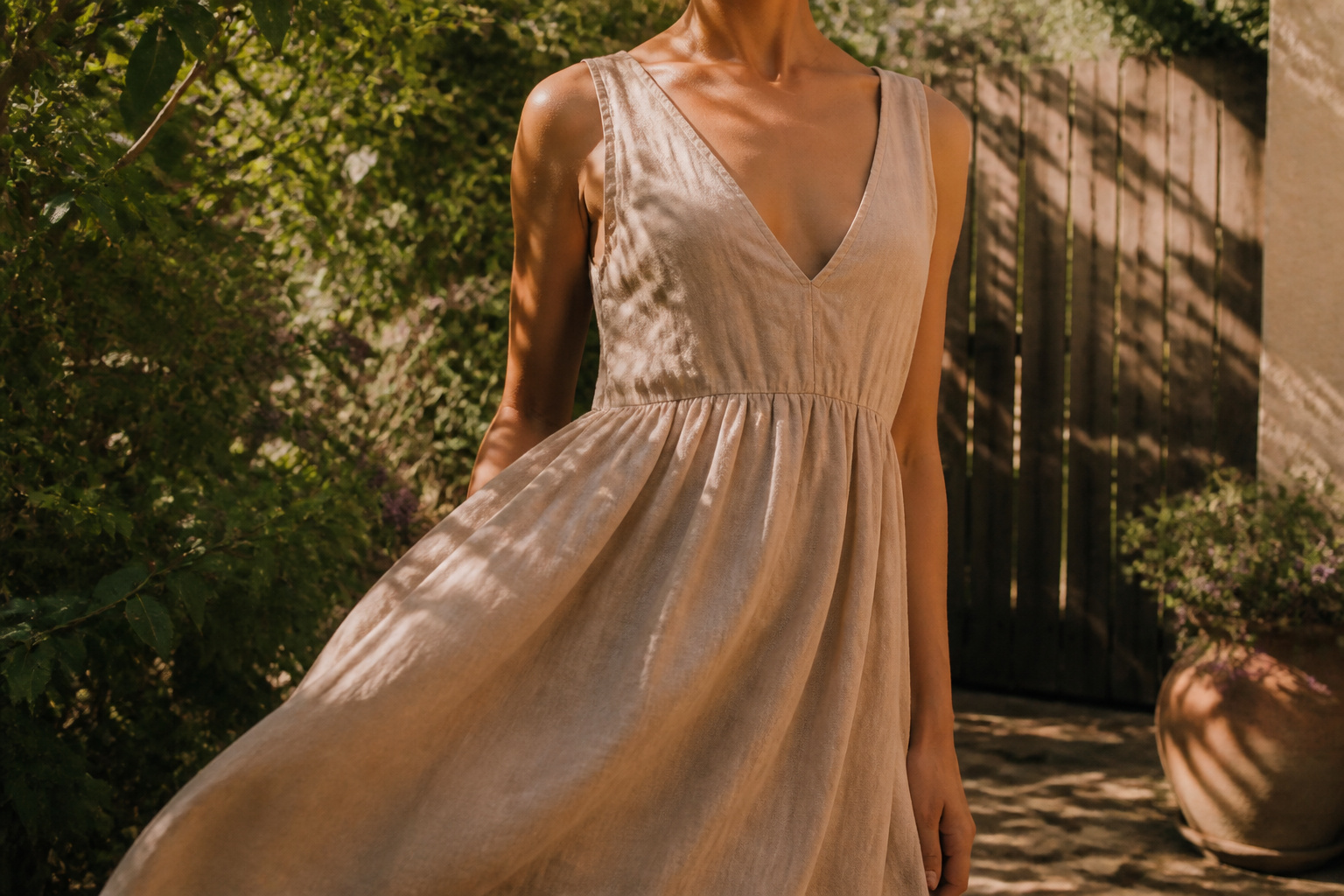
A surplice neckline drapes one panel of fabric across the other to form a V, rather than cutting the V directly into a single piece.
The overlap is what separates it from a plain V-neck, and that same overlap is why the surplice is almost always sewn shut at the side seam or fixed under the bust, where a true wrap dress stays open and ties.
The extra fabric gives more coverage than a cut V of the same depth, but the crossed front can gape when you bend forward unless the lower layer is anchored.
In a dress, the lower panel is typically stitched to the upper just beneath the bust line, which keeps the neckline from sliding but still lets the drape move.
Without that anchor, or with a stretch knit that relaxes through the day, the V widens and the whole thing starts to read as unintentional rather than designed.
A surplice reads as softer and slightly more formal than a simple V, though the difference is subtle enough that retailers often label both as "V-neck" and let the image do the work.
The distinction matters most in how the dress behaves in motion: the surplice stays closed, the wrap does not.
15. Sweetheart
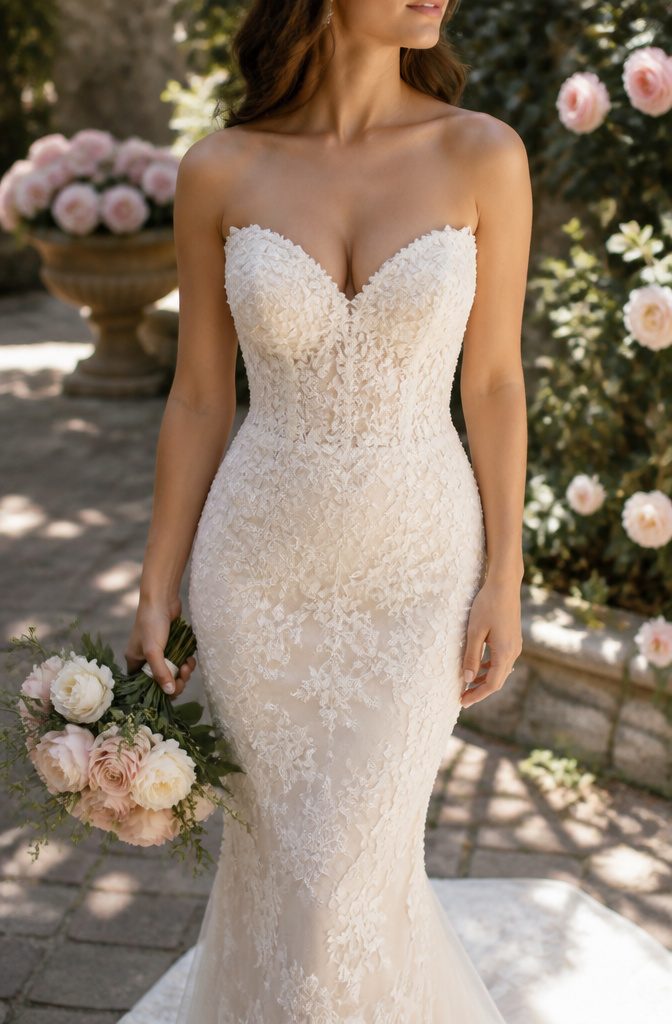
The sweetheart neckline curves down in a heart-shaped dip at the center front, scalloped along its lower edge so the two upper halves of the heart meet at the bust.
Side edges often angle upward toward the neck, sometimes meeting it like a halter, sometimes leaving the shoulders bare entirely.
Strapless versions dominate wedding dresses and prom gowns for a reason that has held since the nineteenth century: the shape reads as overtly feminine and romantic.
The curve emphasizes the upper breast while the central dip elongates the neck, a combination that flatters medium to full busts particularly well. Narrow shoulders and fuller hips also balance against this framing.
The depth of that center dip varies considerably. Some sit relatively high and rounded; others plunge lower and come to a sharper point.
That range matters for coverage and for what jewelry sits cleanly above it, delicate pieces tending to work better than heavy or long pendants that compete with the scalloped edge.
What keeps the sweetheart from looking dated, century after century, is its structural honesty. It does not drape or cowl; it cuts a clean, intentional shape and holds it.
16. Turtleneck
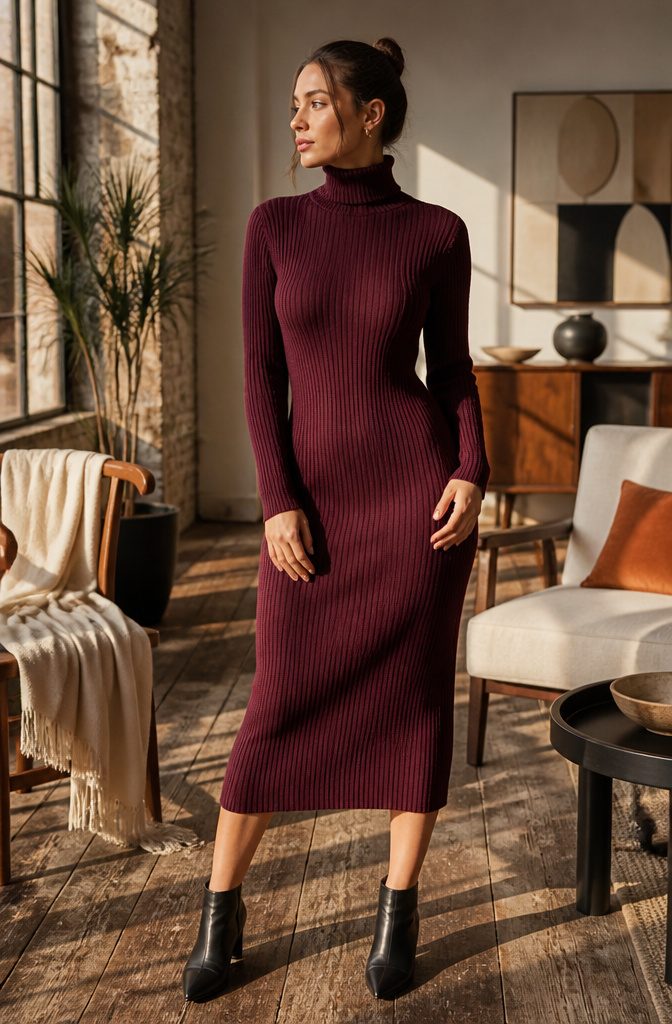
A turtleneck neckline wraps the entire neck and folds over on itself, rising high enough to hide the throat and often the jawline’s bottom edge.
The proportion shift is immediate: the eye reads a single vertical column from chest to crown, which lengthens the torso but can just as easily compress a shorter neck into nothing.
What separates the sophisticated from the swallowed is the fold’s height relative to your own neck length.
On a long neck, the roll frames the face like a soft pedestal. On a short or thick neck, the same height pushes the visual weight upward until the head appears to sit directly on the shoulders.
Rib knit, the usual collar material, clings and holds its cylinder; this structure reads as crisp and intentional rather than slouchy.
Cold-weather dresses favor it for obvious reasons, though the neckline’s formality depends almost entirely on how much neck remains visible above the fold.
Too high, and the wearer disappears into cloth. Low enough to show a sliver of throat, and the line becomes elegant, architectural, deliberate.
17. V-Neck
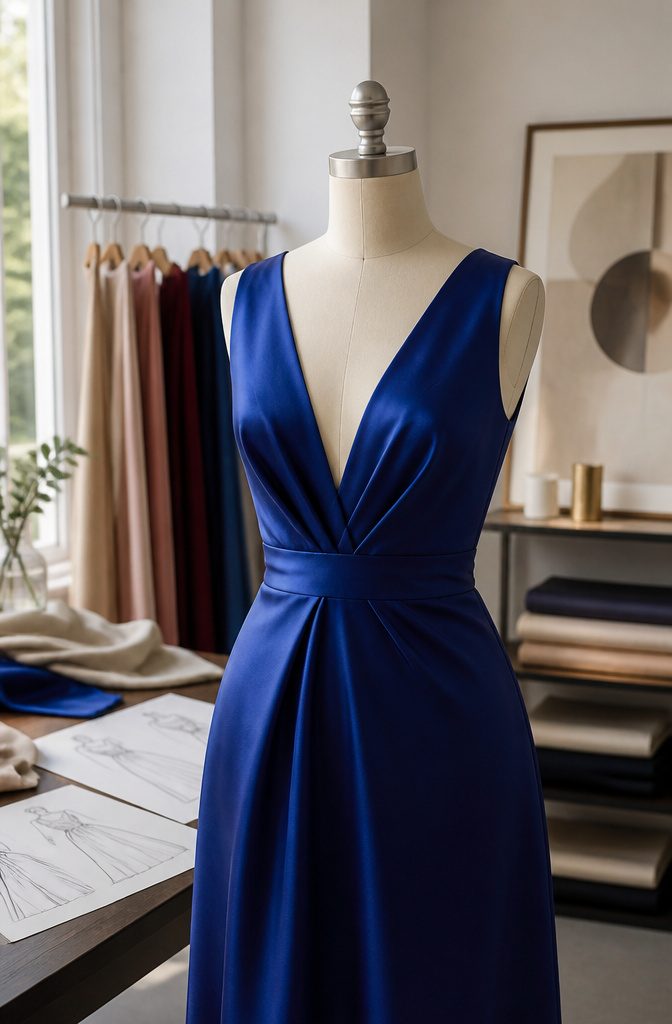
A V-neck forms its shape with two straight edges meeting at a point that falls between the collarbones.
The depth and width of that V can shift dramatically from one dress to another, which is where most of the variation happens.
A shallow V reads almost like a gentle scoop; a deep plunge changes the whole proportion of the torso.
The elongating effect on the neck is what makes this neckline universally flattering in practice. The downward point draws the eye vertically, creating length where a higher, horizontal line would cut the neck short.
This is less theory than something you notice in the mirror: the same person in a crew neck and a V-neck can look like they shifted their posture even when they haven’t.
My own experiments with placement mostly involved marking where the point hits relative to the sternum. Too high and the lengthening effect disappears; too low and the frame starts to read as costume rather than clothing.
The workable range sits narrower than most racks suggest. Width matters too, a wide V on narrow shoulders can look borrowed, while a narrow V on a broader frame disappears entirely.
Neckline and Body Shape
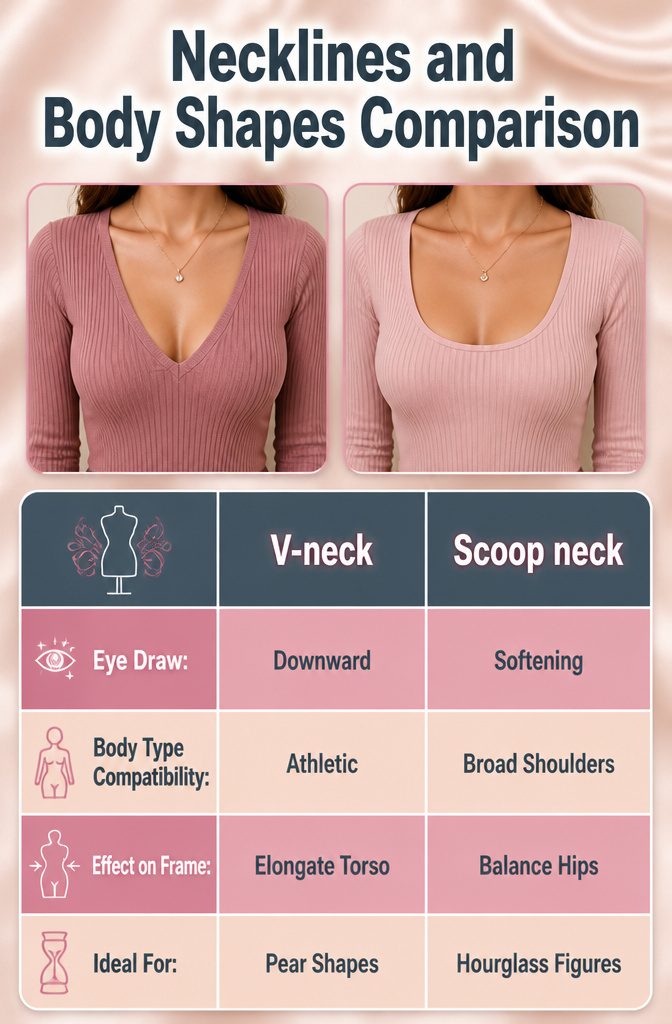
V-necks and scoop necks get called universally flattering, but that phrase deserves some pressure-testing before you buy. A V-neck draws the eye downward, which can elongate a short torso or balance a full bust by breaking up the chest line.
On a petite frame, that vertical line reads as extra height. The catch is depth: too steep a plunge on a broader shoulder width, and the neckline starts to compete with the bust rather than frame it.
I’ve seen that tension in fittings where the V looked elegant on the hanger and somehow off once it sat on an athletic build with narrow hips.
Scoop necks soften sharp angles and balance broader shoulders against narrower hips, which is why they work across so many body types.
The curve sits lower than a straight crew but higher than a deep V, so it opens the collarbone without the same vertical pull.
That said, a wide scoop on a petite frame can swallow the shoulder line and make the neck look shorter rather than longer.
Hourglass figures carry most necklines well, though sweetheart and V-necks emphasize the waist best.
Pear shapes benefit from off-the-shoulder or boat necklines that build visual width across the top half. For straight athletic builds, cowl and halter necklines add the softness and shape that a V or scoop might not supply on their own.
Dress Codes and Occasions
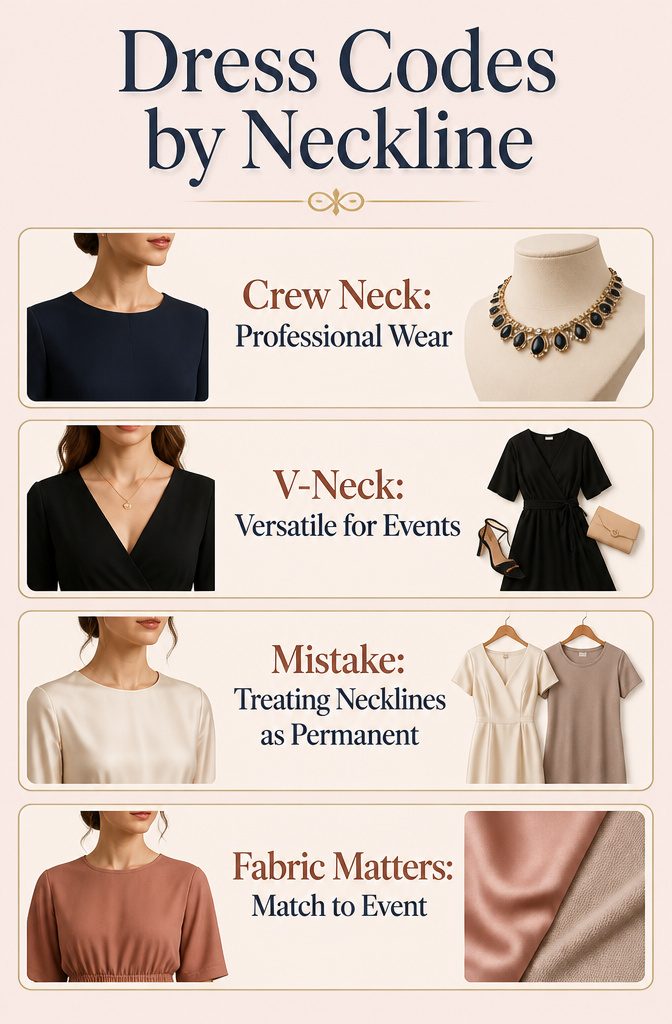
A neckline can shift a dress from boardroom to backyard barbecue without changing anything else. Crew necklines sit close and rounded right at the collarbones, reading conservative enough for client meetings or anything professional.
They pair well with a statement necklace that mirrors that same close-to-the-neck line, especially if you have a longer neck to show off.
V-necks handle the opposite end of the calendar. The shape flatters most bodies, and the coverage stays light enough for summer heat without going too bare.
I’ve worn the same black v-neck wrap dress to a morning funeral and, with different shoes, to an outdoor dinner that same evening.
The real mistake is treating necklines as permanent.
A crew neck in stiff silk reads formal; the same shape in washed cotton becomes weekend wear. The fabric and the event have to agree, or you end up either underdressed or trying too hard.
Most of us own two or three necklines we default to, but the shape framing your face does more work than the rest of the dress combined.
A v-neck that works everywhere still needs the right depth: too low and the versatility collapses into one occasion, too high and the summer comfort disappears.
Jewelry and Hair That Works
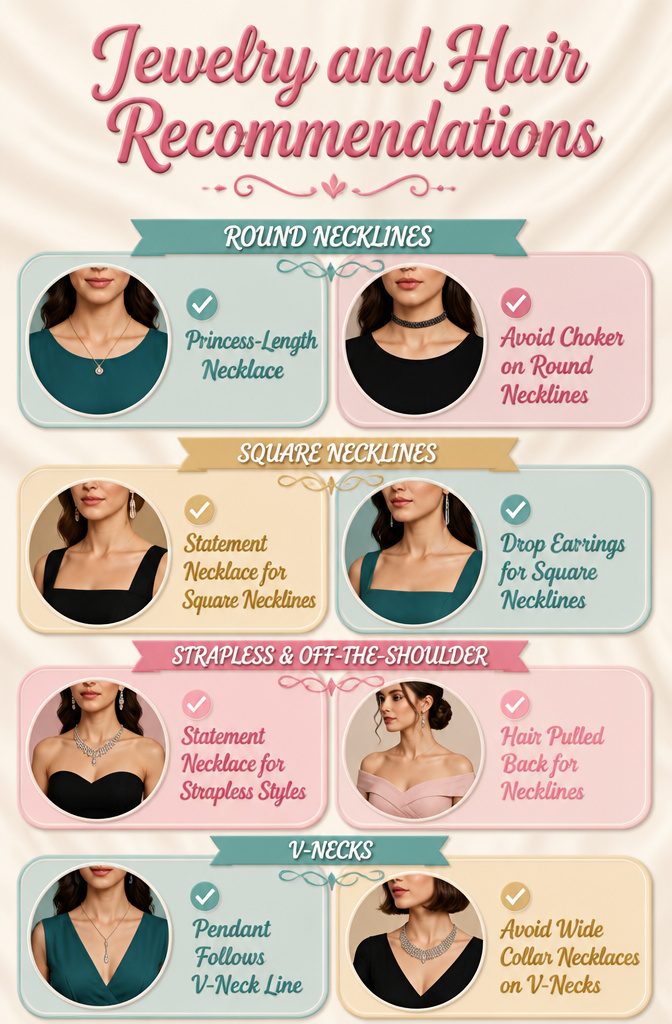
A princess-length necklace, sitting roughly 18 inches on most women, fills a round neckline without crowding it, while a choker above the collarbone fights the space and looks pinched.
The same round neckline also accepts a brooch at the shoulder if you prefer to keep the throat bare.
With a square neckline, the straight horizontal edge already provides its own geometry, so a statement necklace that echoes that line, or no necklace at all, cooperates better than something that competes for the same visual territory.
Drop earrings work here because they move in a different direction entirely.
For strapless and off-the-shoulder styles, the bare shoulder and upper chest become the frame, which is why a statement necklace and earrings together can complete the look rather than overwhelm it.
The hair matters as much as the jewelry: swept up or pulled back keeps the shoulder line clean, while hair falling forward onto the collarbone competes with whatever you place there and breaks the silhouette in half.
A V-neck, especially a deep one that plunges toward the bust, has vertical momentum. A pendant that follows that same line extends it, but a wide, short collar necklace arrests the eye too soon and stalls the effect.
Hair worn down and parted to expose the neck on one side keeps the elongation going; a high chignon or a bob that ends right at the jaw competes with the neckline’s point and shortens what the cut was meant to lengthen.
Frequently Asked Questions
What are the different types of dress necklines?
Common types of dress necklines include V-neck, sweetheart, halter, square, scoop, off-the-shoulder, boat, cowl, mock neck, straight, strapless, surplice, one-shoulder, round, collared, apron, and turtleneck.
Each cut frames the face and shoulders differently, and the right choice depends on your body shape, the occasion, and how much structure or drape you want in the fabric.
Which neckline suits which body type?
V-necks and scoop necks work for nearly everyone. Pear shapes balance well with boat, off-the-shoulder, square, and sweetheart necklines that broaden the upper body.
Hourglass figures can wear most styles but shine in sweetheart and V-necks. Athletic builds gain softness from cowl and halter cuts.
Petite frames look taller in V-necks and square necks. Fuller busts get support from sweetheart, halter, and square styles with structured bodices.
What is the most attractive neckline?
Sweetheart and V-neck necklines are widely considered the most flattering. The sweetheart’s heart-shaped curve emphasizes the bust while elongating the neck, and the V-neck’s downward point draws the eye vertically, creating length.
Both have held their appeal across decades because they frame the face cleanly and work across a range of body types.