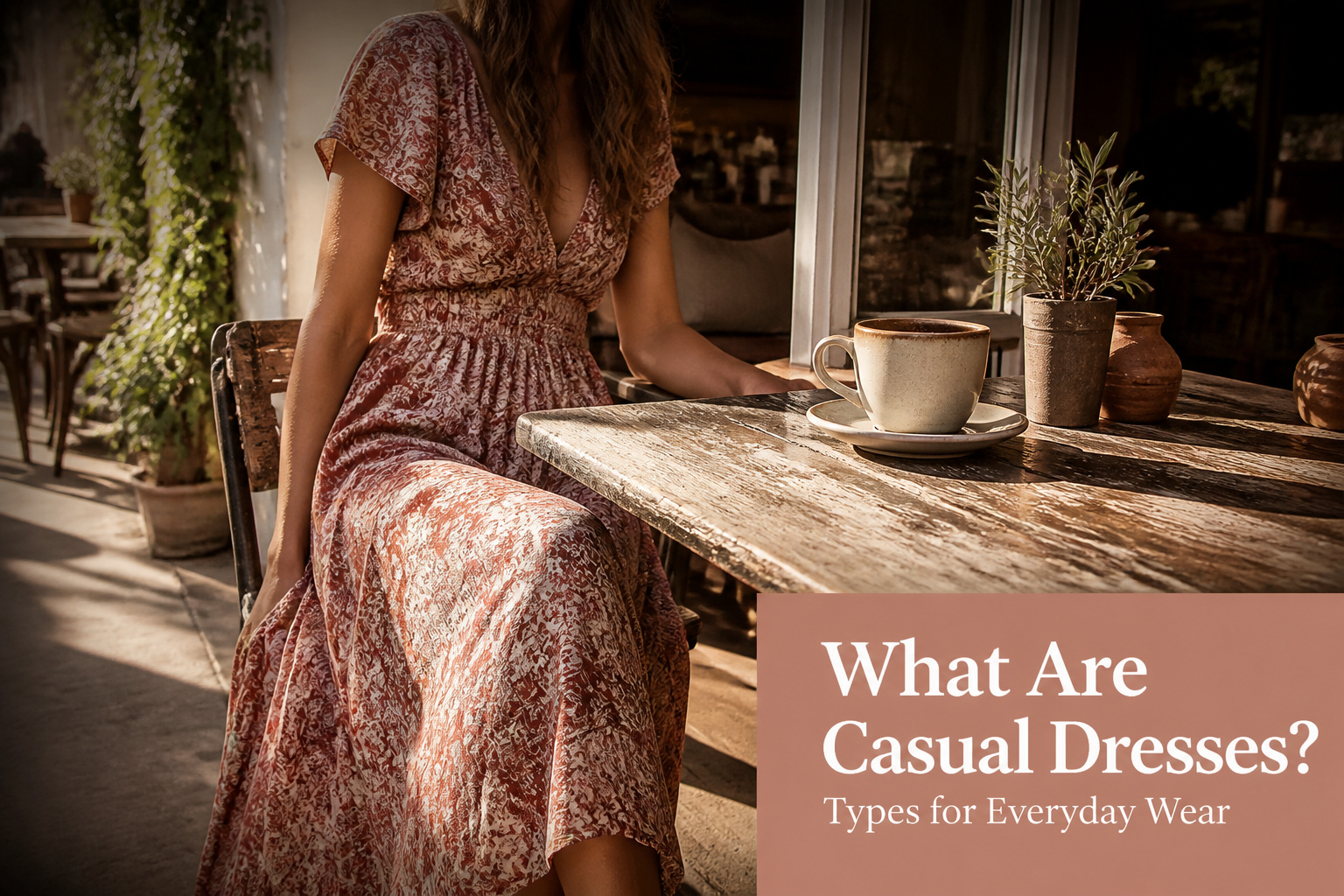
Casual dresses are relaxed, everyday pieces that replace the puzzle of separates with one intentional garment. The catch is that relaxed stops reading as styled the moment structure disappears: a soft jersey dress with a defined shoulder looks pulled together, while the same fabric without seams looks like you gave up. A t-shirt dress needs fabric closer to 220 gsm, not the 160–180 gsm of an actual tee, or the hem collapses into a tent.
1. Shirt Dress
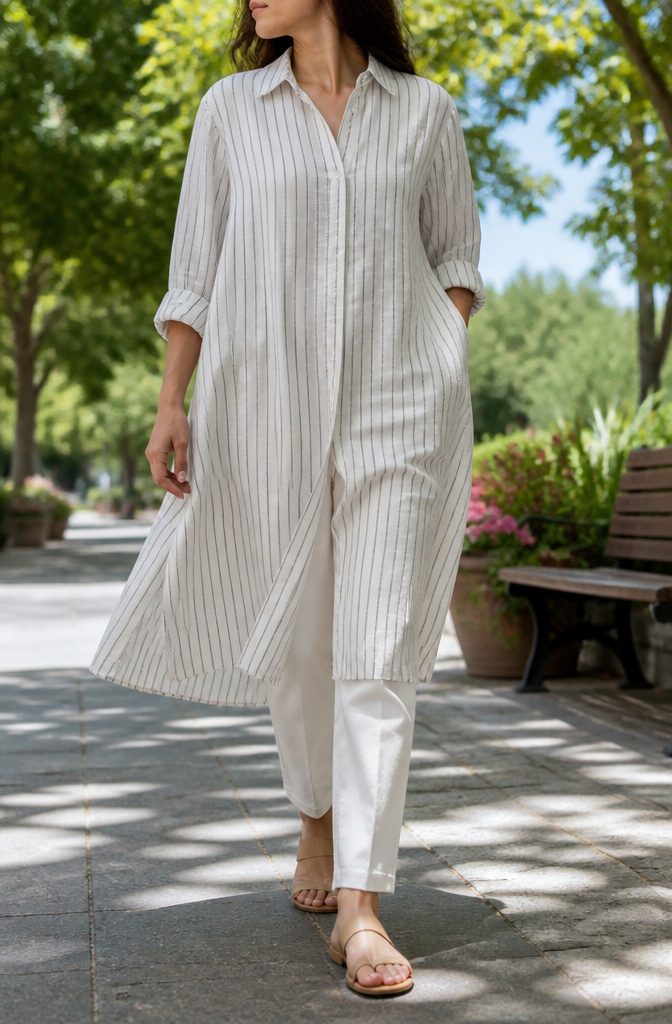
A shirt dress borrows its whole vocabulary from menswear: button-front closure, a point collar, and sleeves that end in a proper cuff. Cotton and linen are the usual fabrics, which keeps the thing breathable and stops the borrowed tailoring from reading as costume. The hybrid works because the structure does the styling for you. Half the days I reach for mine, I leave it unbelted over slim pants and it registers as a long jacket; the other half I cinch it and it is simply a dress that looks like I thought about it more than I did.
The waist seam or drawstring is what makes it wearable on a torso with any curve at all. Without that, the straight column of a classic button-down shirt dress can read as a sack on a pear shape and as too boxy on anyone who carries weight through the middle. The collar adds vertical line through the neck, which helps a rounder face, and the sleeve cuff breaks the arm at a deliberate point, so the proportion flatters shoulders that are broader or narrower than average. Polished enough for a meeting where no one is in a suit, relaxed enough that you do not feel dressed up for errands.
2. Wrap Dress
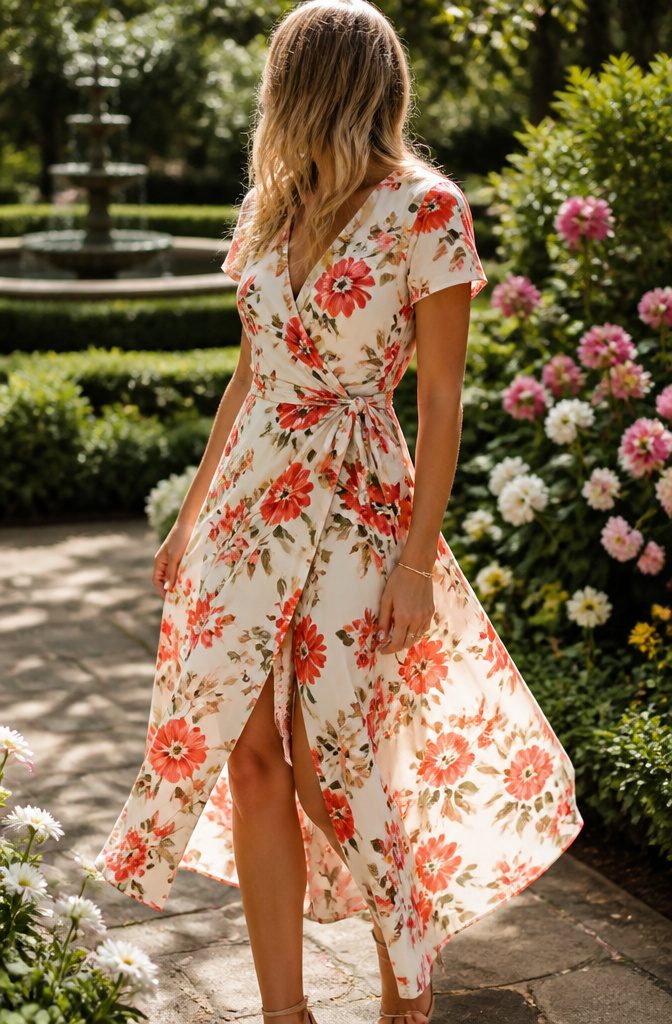
The wrap dress starts with an open front that crosses over itself and fastens at the side, creating that V-neckline and pulling the fabric in at the waist. Sources call it universally flattering because the adjustable tie lets you control the fit rather than relying on fixed seams. The waist cinches where you place it, and the skirt drapes from that point rather than clinging to hips or midsection.
The sizing flexibility is real but not automatic. A wrap dress can accommodate weight shifts or between-size buyers because the tie has several inches of play. The mistake is tying it too loose, which gaps at the chest and loses the waist definition that makes the shape work, or too tight, which pulls the skirt open at the hem and strains the fabric across the back. The tie should sit flat against your body with no pulling at the neckline or gaping at the crossover point. About two fingers of ease at the waist usually gets it right.
3. Midi Dress
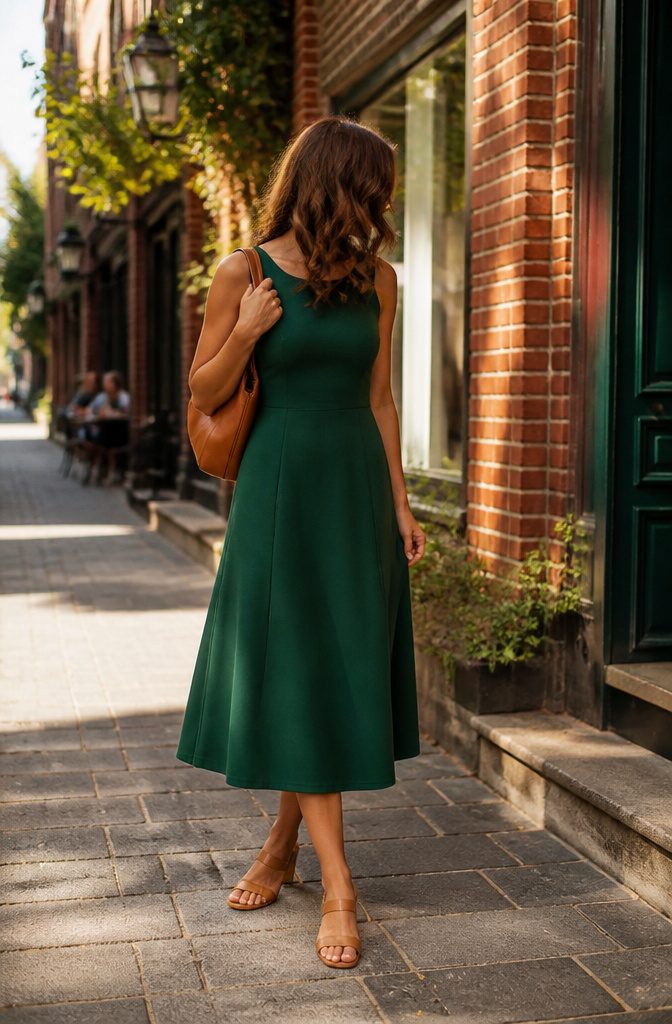
The midi dress sits at that tricky spot between knee and ankle, and the length is exactly why it reads as polished rather than lazy. Hit too close to the calf’s widest point and the silhouette flattens; hem two inches above or below and the whole line changes. I learned to check this in a mirror with shoes on, not barefoot, because the eye reads the total length from floor to shoulder.
Shoes make or break it. A midi with flats can shorten the leg unless the hem clears the ankle bone cleanly; a low heel or pointed toe usually solves the proportion. Boots work only when the dress hem meets the shaft or leaves a visible gap, never that half-inch overlap that chops the line. A picnic or a vineyard wedding both work because the dress itself signals intention, not accident: the mid-length says you chose restraint, not that you couldn’t commit to maxi or mini.
4. Short Dress
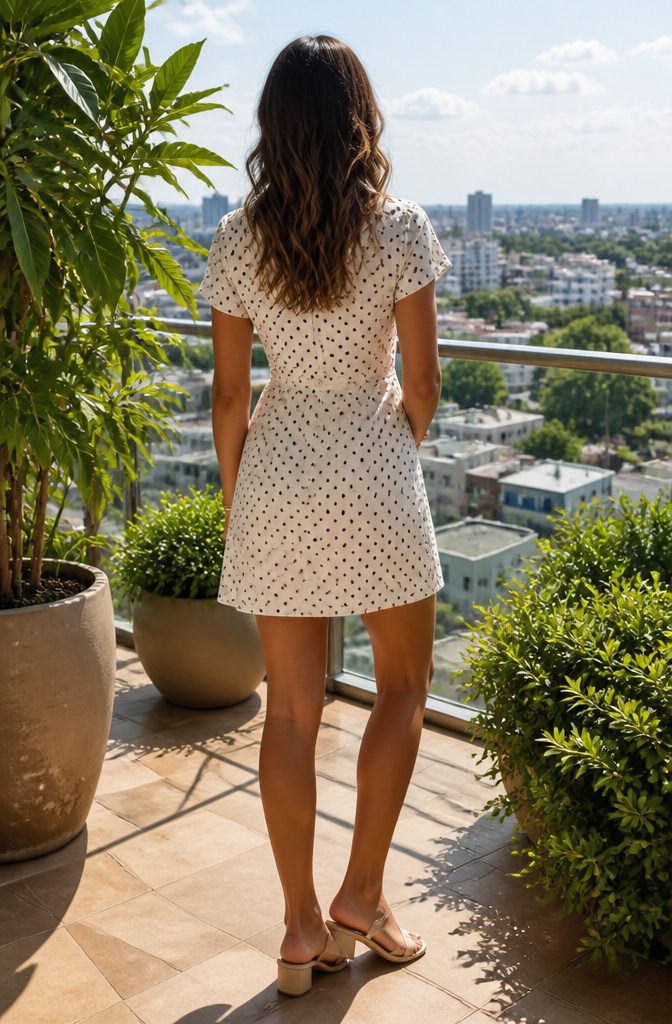
Short dresses carry the bulk of everyday dressing because one piece replaces the puzzle of separates. The trick is choosing a length that looks chosen rather than like something shrank in the wash. Three to four inches above the knee tends to read intentional on most bodies, while anything higher risks costume territory unless the fabric is substantial or the cut is deliberately architectural.
Silhouette matters more than hemline for keeping the look grounded. A-line and shift shapes in cotton or linen read as pulled-together without trying; bodycon or bandage styles in the same length fight the casual label. After thirty, structure becomes your ally. A short dress with a defined waist, a collar, or sleeves worn with flat sandals or low boots looks considered, not girlish. Bare legs and stilettos tilt the same dress toward evening no matter the fabric.
Color and print steer the message too. Navy, olive, or a small geometric pattern wears differently than neon or oversized florals. The wardrobe job of this piece is to let you walk out in ten minutes and not think about your clothes again until you take them off.
5. Slip Dress
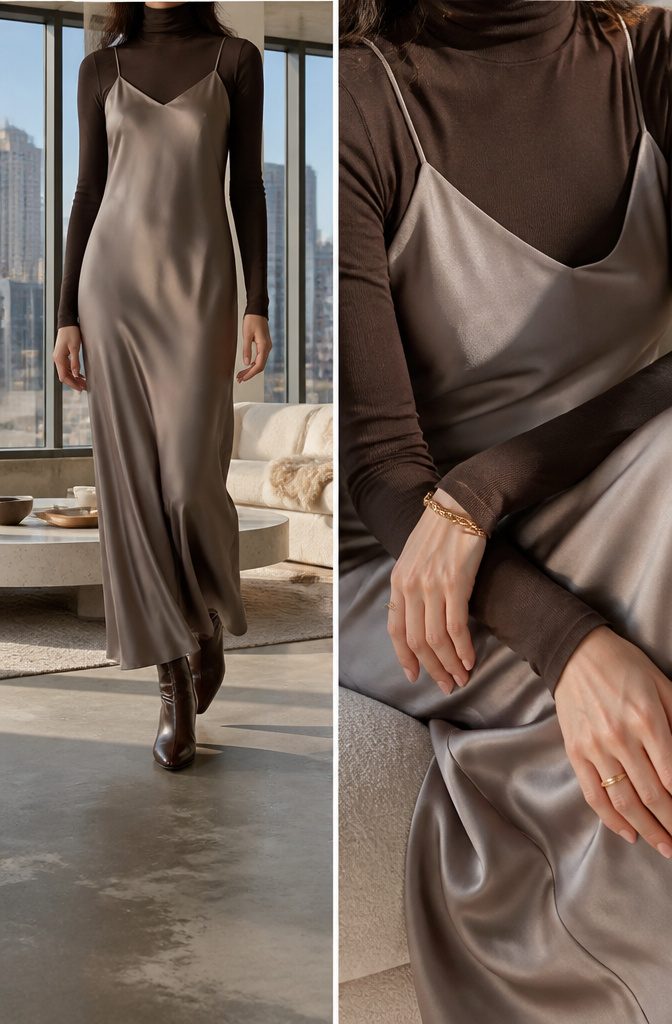
A slip dress began as an undergarment worn beneath sheer or structured dresses, meant to stay hidden. The 1990s pulled it into daylight, and what saved it from looking like you forgot the rest of your outfit was the fabric. A heavier silk with a matte surface reads as intentional; anything too thin or too shiny keeps the bedroom association.
Layering is what makes it wearable before evening. A fitted turtleneck underneath, or a crew-neck tee, turns the same dress into something you can wear to a coffee meeting. Sneakers and a baseball cap push it further into casual territory, while a structured coat and slingback heels pull it back out for dinner.
The fabric weight is the dividing line between styled and stuck. Too light, and the dress needs constant adjustment and reads as lingerie. The right weight lets the cut do the work without demanding attention.
6. Maxi Dress

Ankle-length fabric has a way of swallowing a frame if the cut is wrong. The waist seam matters more here than in almost any other casual dress: without one, the line runs straight from shoulder to hem and the wearer becomes a column of cloth. I look for an empire waist or a drawstring that sits at the actual narrowest point, not the one the designer assumed.
Prints behave differently at full length. A dense floral or vertical stripe keeps the eye moving up and down, which helps; a wide horizontal band or oversized motif stops it flat and adds visual width. Small, repeated patterns read as texture from a few feet away and travel better across seasons.
A heel of one to two inches is the practical ceiling for daily wear. Anything higher tilts the wearer forward against the hemline, and anything flat lets the skirt pool on stairs and escalators. I have seen women gather six inches of fabric in one hand to climb a curb; the right shoe height prevents that entirely.
7. Kaftan
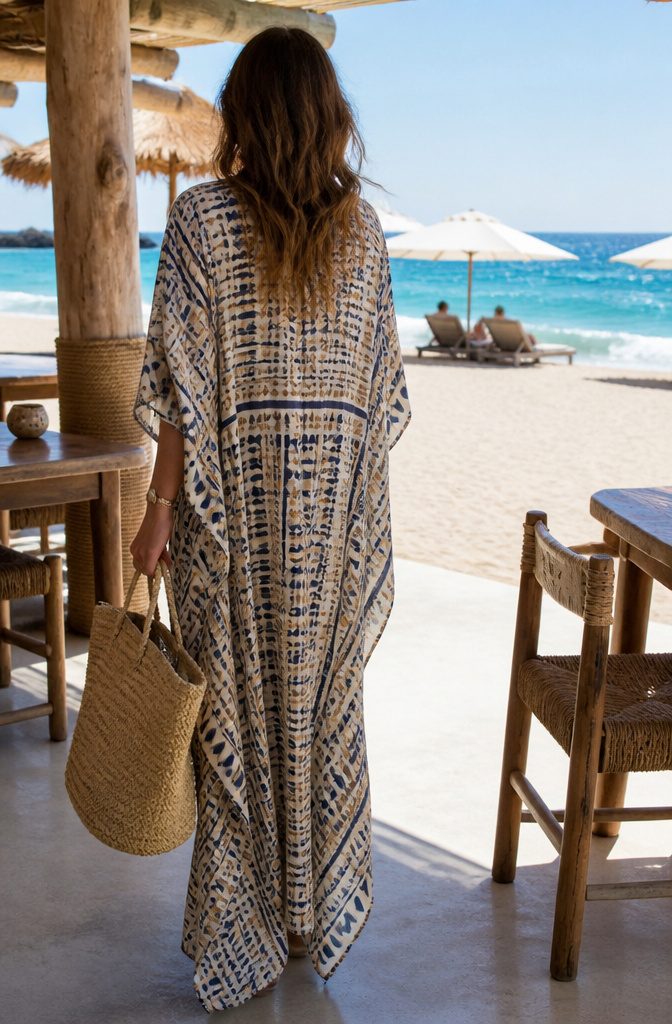
Kaftans sat out roughly forty years between their 1960s and 1970s heyday and the resurgence that started about a decade ago. Breathable, lightweight fabrics have always been their summer strength, though you will now see velvet and silk versions with embroidery that belong to resort dinners, not grocery runs.
The question is where the shape crosses from vacationwear to everyday. A belt decides it. Without one, the cut hangs straight from the shoulder and reads poolside. Cinched at the waist, the same piece becomes a dress you can wear to a casual office or a Saturday lunch.
Fabric weight matters more than print. The lighter cottons and linens that make a kaftan comfortable in July will billow in a breeze and look like a tent if the hem hits below mid-calf. A slightly heavier hand, or a lining that adds body, keeps the silhouette from overwhelming a smaller frame. The 1960s originals worked partly because they stopped at the knee; the modern maxi length needs that structure even more.
Belt it, or keep it above the ankle if you want it to look like clothes rather than luggage.
8. A-Line Dress
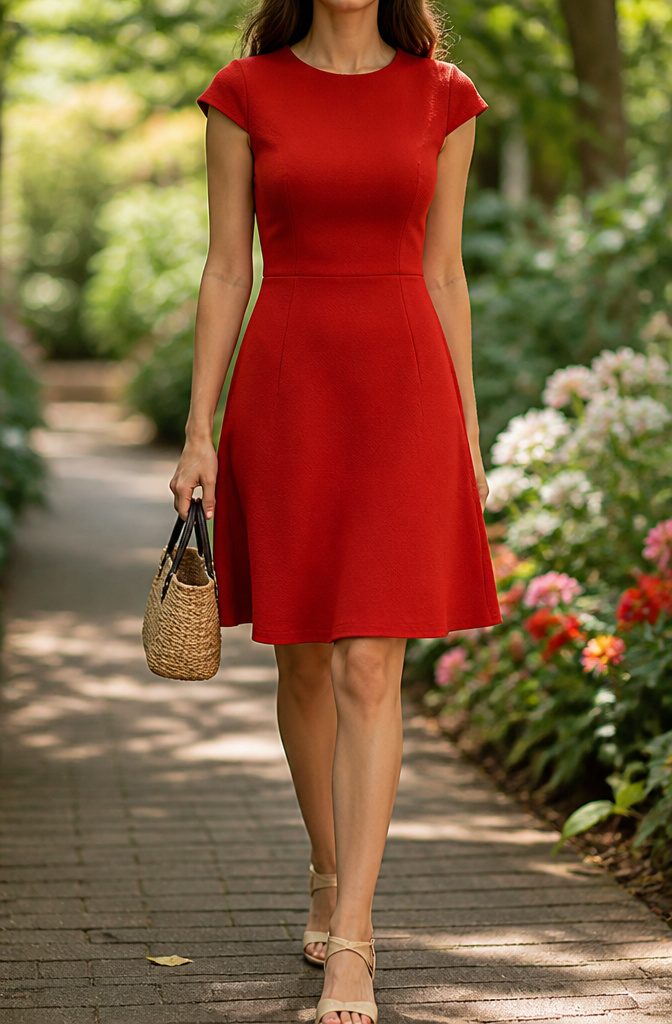
The A-line silhouette starts with a fitted bodice and widens gradually toward the hem, forming that clean triangular shape the letter names. Christian Dior’s 1955 line first marketed the cut as a deliberate departure from wartime rationing, and the shape stuck because it does something almost no other casual dress manages: it skims the midsection without clinging, creating structure without announcing where the structure starts.
What separates a true A-line from a dress that is simply wide is the seam engineering. A genuine cut carries the flare from the natural waist or slightly below, with the skirt panels cut narrower at top than bottom so the fabric hangs in a controlled cone. A dress that is just voluminous floats outward from the chest or drops straight from the shoulders, which adds fabric without adding shape. The waist seam placement tells you which you are looking at; anything starting above the narrowest point of the torso will read as tent-like rather than architectural.
For everyday wear in 2026, the A-line works best in heavier cottons or light wools that hold the line rather than collapsing into the body. I reach for mine when I need to look considered in under ten minutes; the cut carries enough intention that jewelry and shoes matter less.
9. Fit and Flare Dress
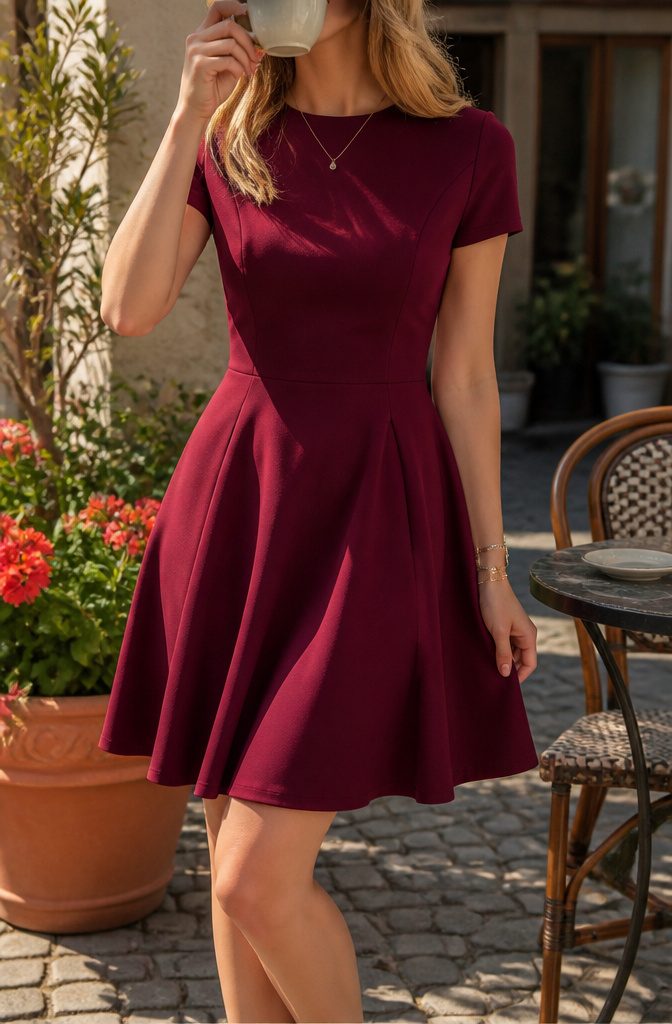
A fit and flare dress carries its structure in the waist seam, and that seam placement an inch above or below your natural waist changes everything. Too low, and the flare starts from your hips and adds width you did not ask for. Too high, and you get an empire effect that reads maternity rather than intentional. The sweet spot sits right at the narrowest point, letting the skirt fall from a defined center rather than fighting your middle.
The skirt volume demands restraint. Two or three panels of gentle flare move with you and read as everyday; gather too much fabric into that waist seam and the whole thing tips toward costume territory, something for a garden party you were not invited to. I have learned to hold the skirt out at the sides in a mirror: if it forms a perfect bell, that is too much. You want a soft A, not a capital letter shouting for attention.
The fitted bodice creates a bra problem that looser dresses do not. Structured cups show seams through the fabric, while a bandeau or soft bralette lets the bodice do its own shaping. Straps need to stay hidden, which means planning your underlayer before you plan your shoes.
10. Sheath Dress
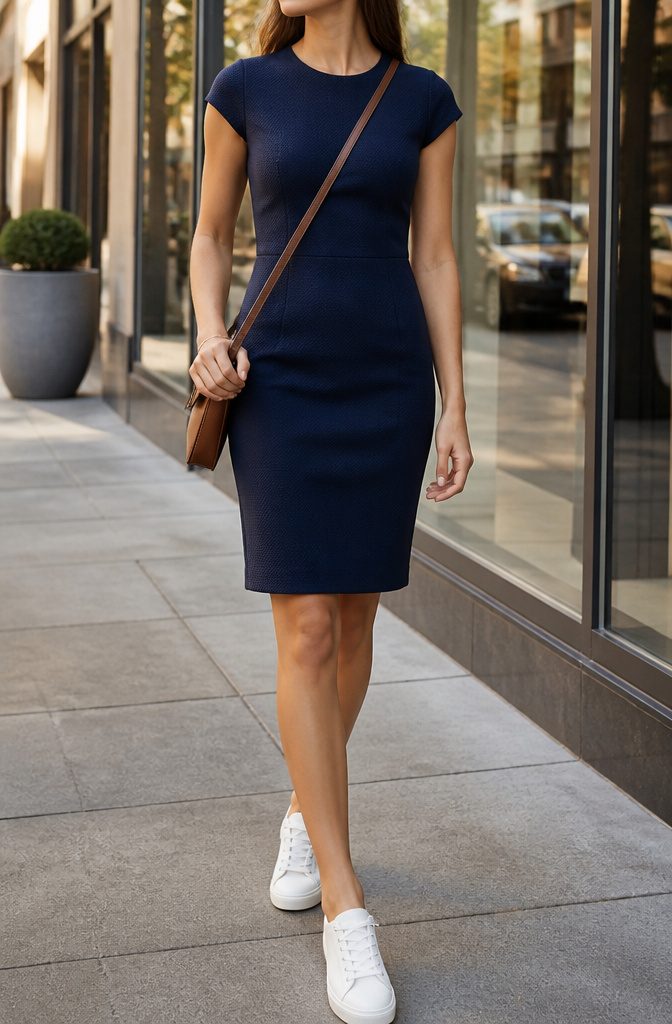
A sheath dress sits closer to the body than most casual shapes, but the cut stops short of the stretch-wrapped compression that defines bodycon. Structure is the difference: a sheath relies on seaming and fabric weight to follow the silhouette, where bodycon needs elastic recovery to pull everything in. That distinction matters for what goes underneath. A sheath in a heavier cotton ponte or lined linen demands seamless shaping shorts and a bodysuit with no waistband seam, because any ridge shows at the hip or midriff where the fabric lies flat. I learned this ordering a size up in a sheath that skimmed instead of gripped, only to find the extra fabric buckled at the small of my back when I sat.
The right occasions for a sheath are the slightly elevated end of casual: a client lunch, a Saturday gallery opening, dinner where jeans feel too relaxed but a cocktail dress reads too prepared. It does not do brunch errands or playground duty; the fitted line restricts reaching and bending in ways that read as tension, not ease. For my money, a navy or charcoal sheath with a cropped cardigan and clean white sneakers hits the exact register of dressed-but-not-trying that the best casual dressing aims for.
11. T-Shirt Dress
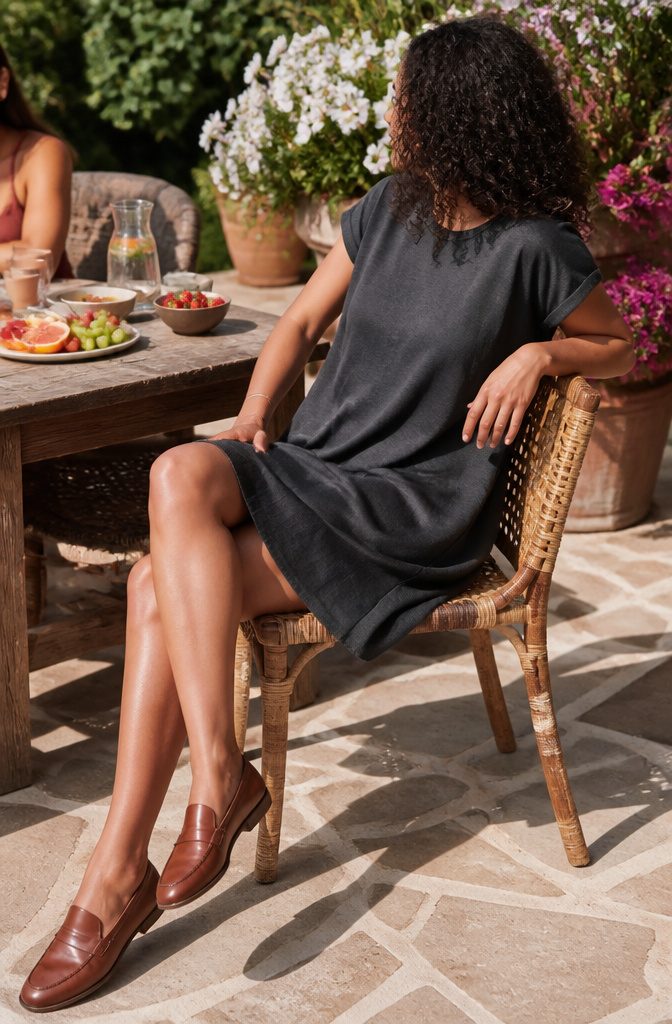
A t-shirt dress reads as lazy unless the fabric has enough body to hold a shape. The cotton jersey that works for an actual tee, around 160–180 gsm, collapses into a tent on a longer cut. What you want is closer to 220 gsm or a cotton-modal blend with some rib structure; it still drapes, but the hem falls straight rather than clinging to every line underneath.
The shoe choice is where most people lose the plot. Running shoes or flat sandals tip the whole look into errand territory. A leather loafer, even a soft driving style, or a low block-heel sandal gives the dress enough intention to sit at brunch without apology. I have seen the same charcoal t-shirt dress look pulled-together with loafers and slightly off with white sneakers; the difference is that stark.
There is a hard limit, though. Anything with a collar and a client on the other side of the table is too formal for this dress, no matter how nice the fabric. The neckline and lack of tailoring signal leisure, and in settings where someone else is dressing up, that reads as indifference rather than ease. Save it for days when the only dress code is your own.
What Casual Wear Means Now
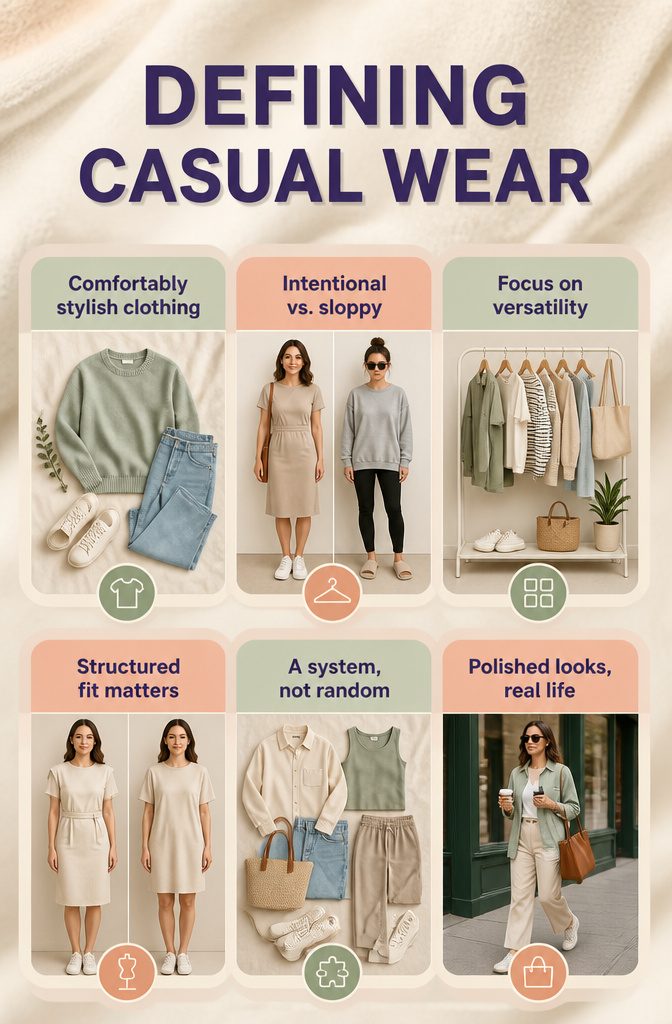
Casual wear is everyday clothing that is relaxed, informal, and comfortable for day-to-day activities, but relaxed does not mean sloppy. The pandemic pushed this line hard. Kitchen-table Zooms made leggings and oversized knits the uniform, and many of us lost the habit of looking put-together without looking like we were trying too hard.
What separates the two now is structure and intention. A soft jersey dress with a defined shoulder reads as styled; the same fabric without seams or shape reads as given up. Versatility matters more than ever: pieces that work together in combinations, not single-statement items that need a specific shoe or occasion.
The approach I find most useful treats casual dressing as a system. Jeans, dresses, tops, and co-ord sets that share a palette and weight layer without overthinking. The goal is polished looks that stay functional for actual life, not outfits that photograph well and then restrict how you sit or carry a bag.
How I Style Each Dress for the Day Ahead
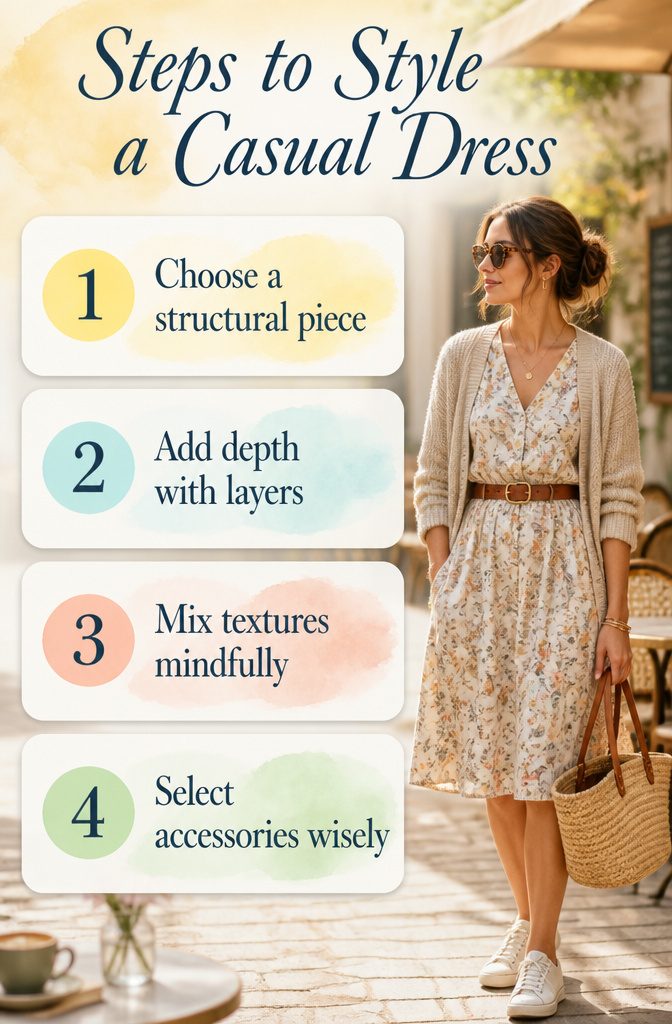
The morning I finally stopped fighting my proportions started with a belted kaftan and a cropped denim jacket. The jacket hit exactly at my waist, which should have worked, but the kaftan’s volume below made my shoulders look pinned. The rule that actually works: one structural piece per outfit. Either the dress carries the shape or the layer does, not both.
Cardigans and shrugs add depth without that boxed-in effect, especially over fitted bodices. For flared skirts, a fitted top half keeps the silhouette from going costume. Reverse it for loose dresses: a belted waist creates structure where the fabric offers none.
Texture mixing is where I still experiment too much. A plain jersey dress with a leather jacket works; a printed scarf over a patterned dress fights itself. The harmony comes from pairing one statement against quiet ground. Solid dresses take the print. Busy dresses take the minimal layer.
Occasion still governs the accessories. Hats and scarves read brunch; the same dress with simplified jewelry shifts to evening. Jewelry is the one category I never skip entirely, but I keep it to one focal piece. Necklaces for open necklines, earrings for high ones, never both competing.
Personal style wins over trend every time. The dresses I reach for are the ones that feel like I already lived in them, not the ones that looked right on someone else.
Why Designer Casual Dresses Hold Up
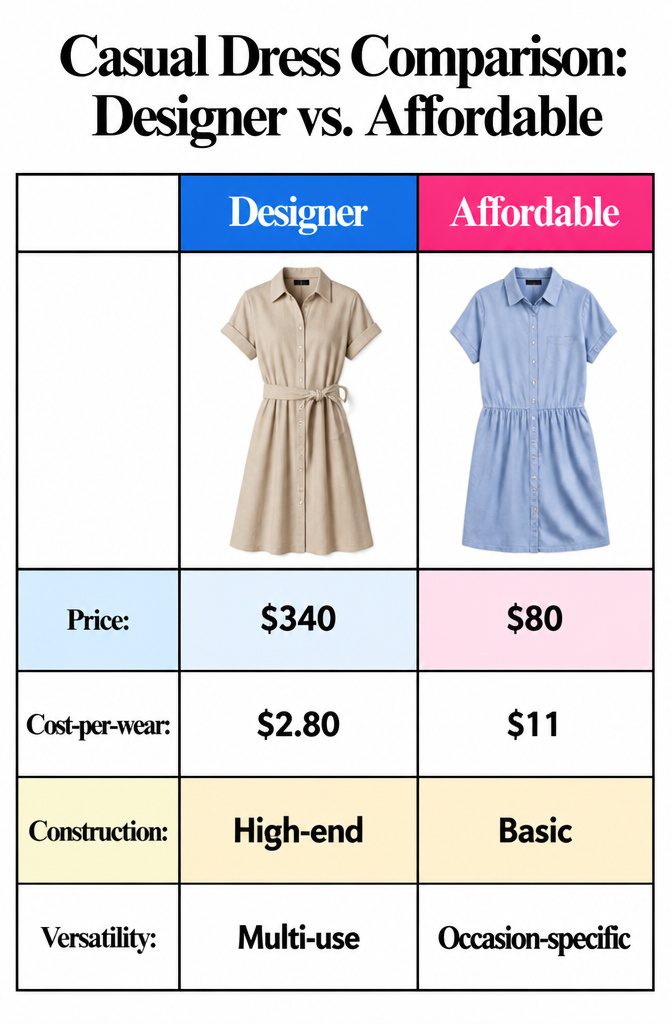
A $340 dress sounds absurd until you run the cost-per-wear against three $80 replacements that fray at the hem by August. I did exactly that last spring: the single dress, worn twice weekly through three seasons, hit $2.80 per wear by October. The three cheaper pieces averaged $11 each before two went to donation with sagging seams and a neckline that refused to lie flat.
Bound seams and edges, hand-stitched buttons, and aligned patterns are the construction details that separate the two tiers. These are not decorative flourishes. A bound seam encloses the raw fabric edge so threads cannot unravel; aligned patterns mean the print matches across seams, which takes extra yardage and labor. Roped shoulders or perfectly proportioned hems signal the same meticulous tailoring that makes a casual piece read as intentional rather than thrown on.
The investment fails when the design is too specific to one occasion. A hand-stitched button loses its value if the cut works only for dinner dates, not grocery runs or the office. Silk and cashmere elevate the feel, but pure cotton or linen in a simple shape wears harder and asks less of your existing wardrobe. I would skip the designer label for anything trend-dependent, no matter how fine the hardware.
Frequently Asked Questions
What is considered casual wear for women?
Casual wear is comfortable, relaxed clothing suitable for everyday, informal activities, but relaxed does not mean sloppy. The pandemic blurred this line, and the difference now comes down to structure and intention. A soft jersey dress with a defined shoulder reads as styled; the same fabric without seams or shape reads as given up.
How do I style a casual dress for different occasions?
Use one structural piece per outfit, either from the dress itself or from a layer, never both competing. Cardigans and shrugs add depth without boxing you in; fitted bodices balance flared skirts, while belts create structure on loose dresses. Let the occasion guide accessories: hats and scarves read brunch, simplified jewelry shifts the same dress to evening.
Are designer casual dresses worth the investment?
They can be, measured in cost-per-wear rather than sticker price. Bound seams, hand-stitched buttons, and aligned patterns mean the piece survives twice-weekly wear across multiple seasons. The investment fails when the design is too specific to one occasion; pure cotton or linen in a simple shape wears harder and layers more easily than trend-dependent pieces.
What are the most popular types of casual dresses today?
The most widely worn casual dress styles include shirt dresses, wrap dresses, midi dresses, short dresses, slip dresses, maxi dresses, kaftans, A-line dresses, fit and flare dresses, sheath dresses, and t-shirt dresses. Each carries a distinct silhouette and proportion rule that determines whether it reads as intentional or accidental on the body.