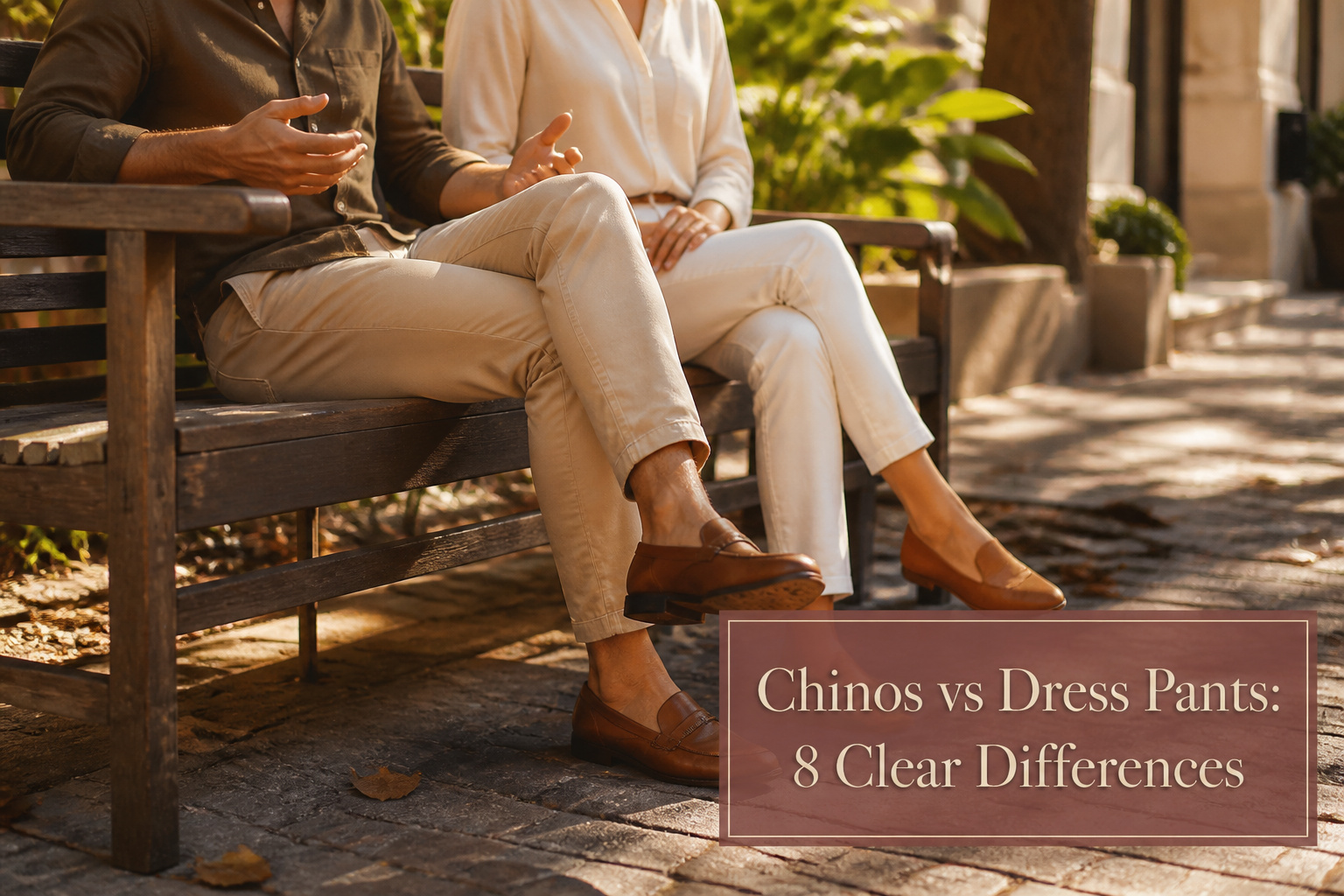
Chinos win for anyone who values ease and cost; dress pants win when the invitation specifies a tie or a suit jacket.
The flip comes down to temperature and movement: cotton twill breathes through summer afternoons and softens in the wash, while wool holds a pressed crease for the office but traps heat and demands dry cleaning.
Material and Fabric Weight
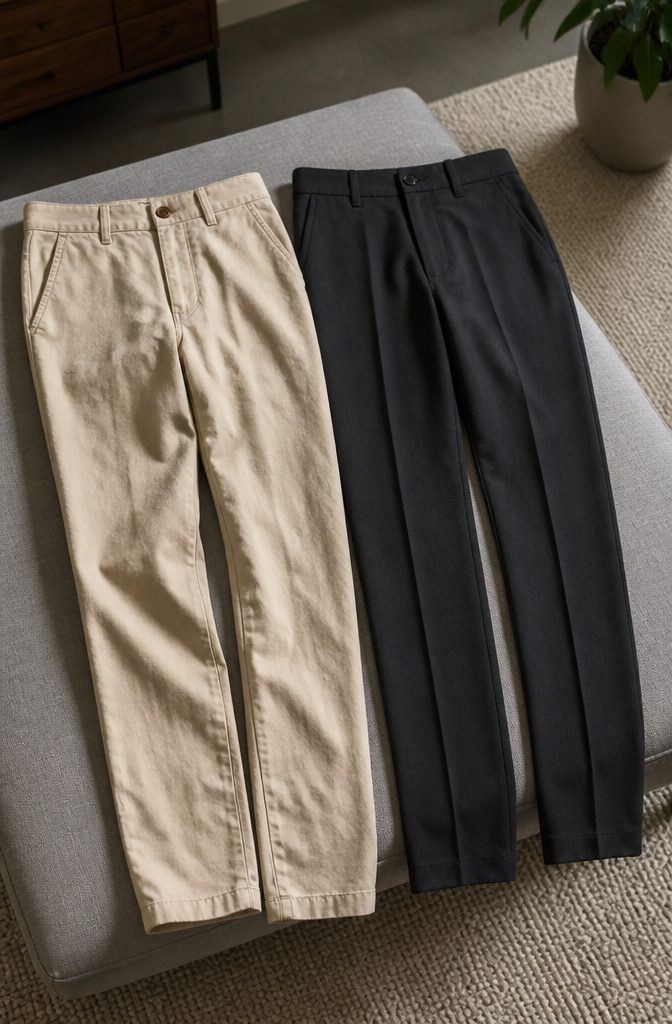
The first thing to check is the label, and even then the answer can lie. Cotton shows up in both chinos and dress pants, which is exactly where the mix-up starts.
Chinos run lightweight, built from cotton or cotton-spandex blends that breathe through summer afternoons and soften with washing. Dress pants lean on wool, polyester, or heavier cotton blends, fabrics chosen for structure and a clean drape rather than airflow.
I learned to tell them apart by weight in hand, not by fiber alone. A cotton chino feels thin and pliable; a cotton-blend dress pant carries the heft of its weave and the stiffness of its lining.
Wool dress trousers add insulation for cooler months, while chinos stay the choice when breathability matters. The same word on the tag does not mean the same garment on the body.

Mens Cotton Jogger Fabric --- These mens jogger cargo pants are made of breathable, high-quality, lightweight, soft micro-elastic fabric, which can provide you with comfort during exercise and a skin-friendly feel in daily wear.

Mens Cotton Jogger Fabric --- These mens jogger cargo pants are made of breathable, high-quality, lightweight, soft micro-elastic fabric, which can provide you with comfort during exercise and a skin-friendly feel in daily wear.
Fit and Silhouette
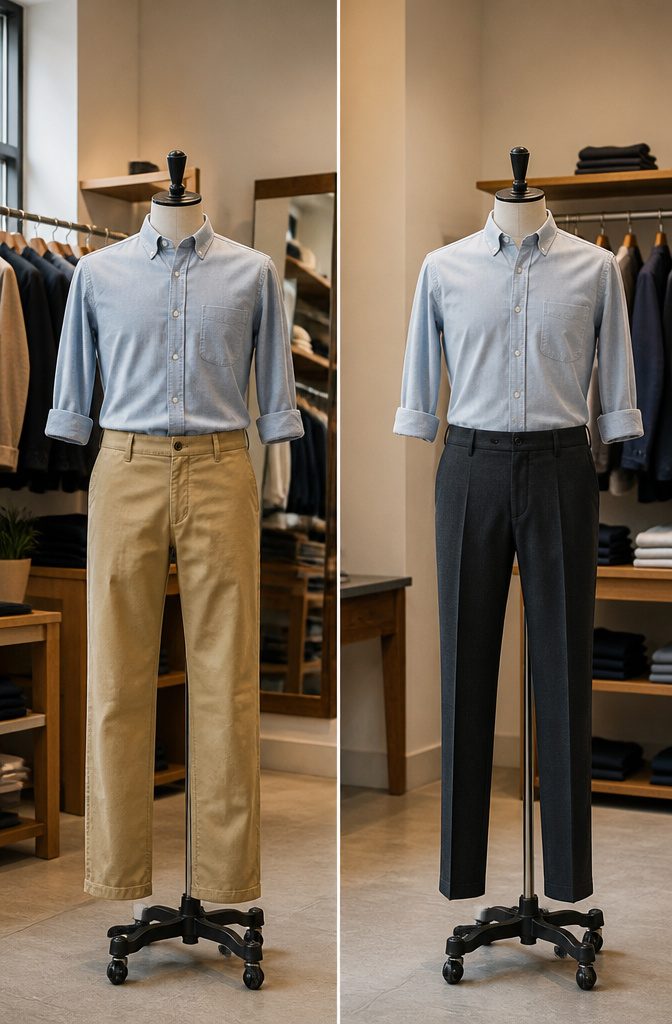
Chinos sit looser on the body, usually in a slim or straight leg that reads relaxed rather than fitted. The cotton twill has some structure but nothing that grips the seat or thigh; the whole point is ease of movement.
Dress pants carry a sharper silhouette, cut closer through the hip and thigh with pleats and a pressed center crease that hold a line from waist to cuff.
The wool or polyester blend drapes with weight, and that weight is what lets the fabric fall straight rather than follow every curve.
Tailoring changes both, but the starting place differs. Chinos often need little beyond hemming; the cut assumes an off-the-rack fit and the softer cloth forgives minor gaps.
Dress pants usually demand more attention at the waistband, cuff, or leg line, and the investment pays off because the tailored finish is what makes the sharper fabric look intentional rather than borrowed.
A bad fit on chinos reads casual; on dress pants it reads careless.

Personalized Fit: Our TH Flex Suit Separate Pants allow you to customize your look to perfection. Choose your ideal size for each piece, suit vest and jacket sold separately, ensuring a flattering fit that suits your unique frame.

Look good and feel great about your purchase from Haggar. This dress pant features a pleat front with hook and bar closure in a classic fit silhouette.

Sustainable: Crafted from recycled plastic bottles and transformed into super smooth and lightweight fabric, these sophisticated flat front pants help you to be kind to Mother Nature and even nicer to your workweek wardrobe.
Where Each One Belongs
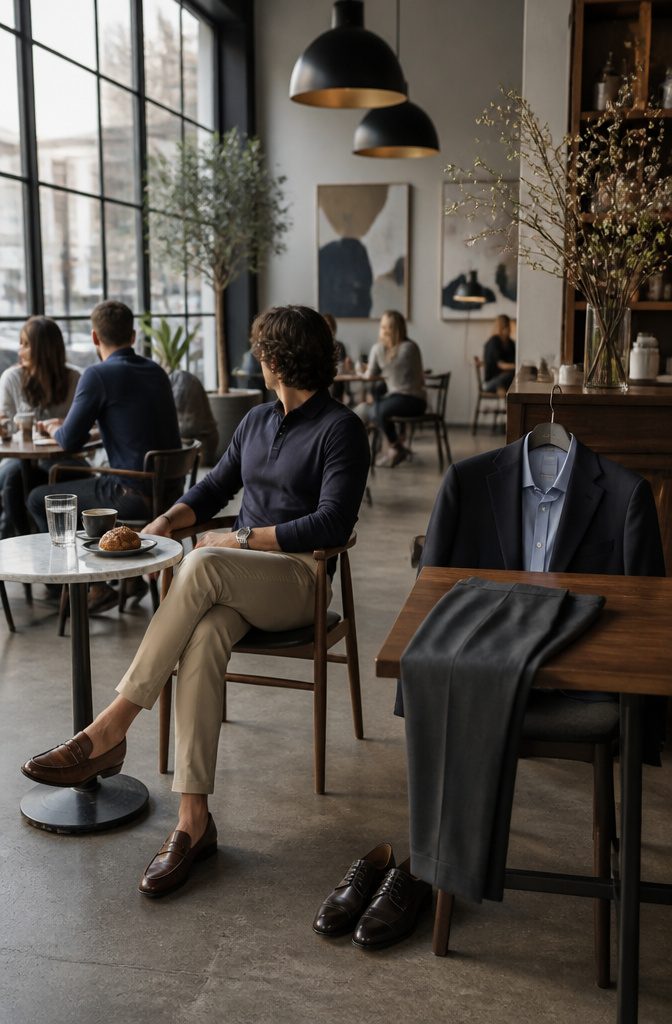
Chinos win the warm-weather smart-casual question hands down. Cotton twill breathes in a way wool dress pants never will, and the slightly rumpled texture looks intentional rather than careless.
The line between them is sharper than most people treat it.
Chinos belong at casual Fridays, weekend brunches, travel days, and any office where the code reads business-casual rather than business-formal. Dress pants carry weddings, job interviews, client presentations, and any event where a necktie is expected.
The sources converge cleanly here: if a blazer and dress shirt are required, dress pants are the base. If a casual button-down or sweater suffices, chinos work equally well and wear more comfortably through a long day.
Owning two or three of each covers almost every non-formal occasion in most wardrobes.
The mistake I see repeatedly is reaching for dress pants on a hot Saturday afternoon because the wearer wants to look polished. The result reads as overdressed and slightly uncomfortable, which shows.

Material:100%Polyester;Soft,lightweight,breathable;womens plus size pants are all made from the highest quality fabric,comfy loose,very durable to keep you cool,dry and comfortable as you work out.

Premium Besoft Nylon-Spandex Fabric: Crafted from 75% nylon and 25% spandex, this knit feels super-soft against skin while offering four-way stretch, breathable airflow, and moisture-wicking comfort. The wrinkle-resistant finish keeps you polished through meetings and travel.
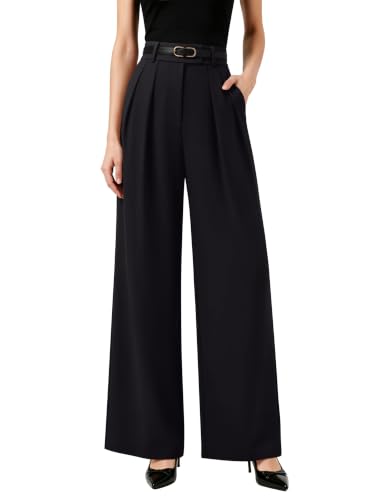
Material: 92% Polyester, 8% Spandex, high quality fabric, soft and breathable, the wide leg pants for women keeps you comfortable, good for all day wearing.
Care and Keeping
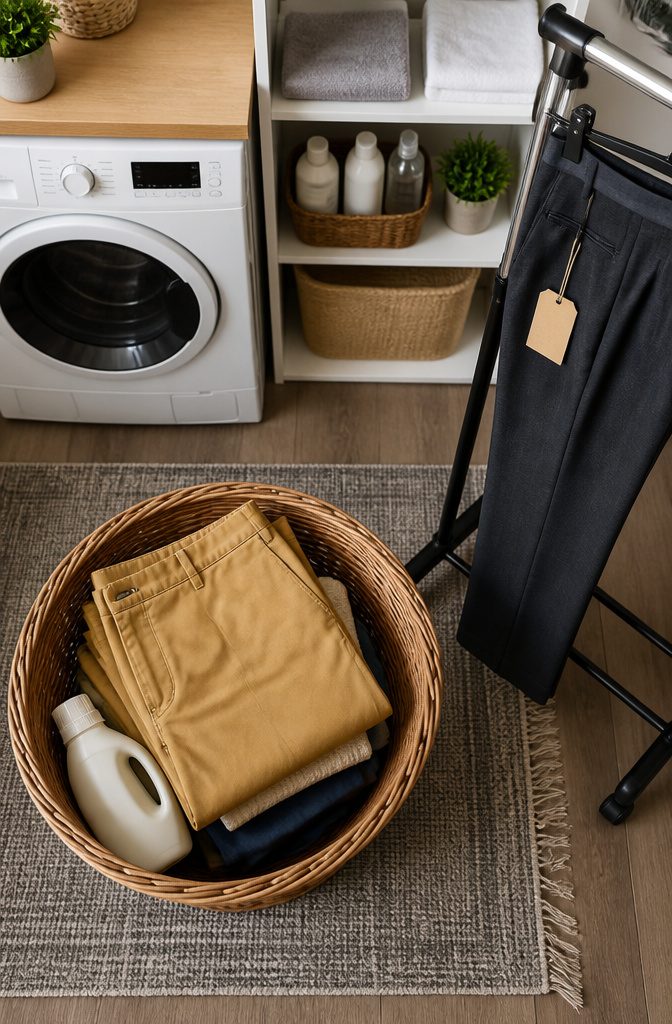
The maintenance gap between these two styles is where the decision usually lands for anyone who actually wears their clothes. Chinos go straight into the machine wash with ordinary cotton care.
Cotton twill shrugs off regular detergent, and a cold cycle followed by either tumble or hang drying keeps the shape intact. No special trips, no bagging them up for the cleaner.
Dress pants, typically built from wool, demand a different rhythm. Running wool through a home washer on cold and air-drying it technically works, but the fabric still shrinks to some degree.
Standard detergents degrade the fibers over time, bringing on fading and pilling that cheapens the whole garment. Dry cleaning preserves the original drape and surface, yet that means budgeting for weekly visits and planning around pickup times.
For someone building a wardrobe around fewer, better pieces, this is a real fork in the road.
Low-effort mornings point toward chinos. Occasions that justify the upkeep point toward dress pants.

Stretchy & Breathable: Made of four-way stretch material, this lightweight business casual pants allows for a full range of motion and wicks miosture away quickly to enhance your daily performance.

Cotton and Linen Material --- These mens cotton linen shorts are made from a premium 80% cotton and 20% linen blend. Unlike pure cotton, which is prone to shrinkage or sweat absorption, this blend wicks away sweat instantly, keeping you cool and dry even on the hottest beach or during strenuous exercise.

Cotton and Linen Material --- These mens cotton linen shorts are made from a premium 80% cotton and 20% linen blend. Unlike pure cotton, which is prone to shrinkage or sweat absorption, this blend wicks away sweat instantly, keeping you cool and dry even on the hottest beach or during strenuous exercise.
Cost Difference
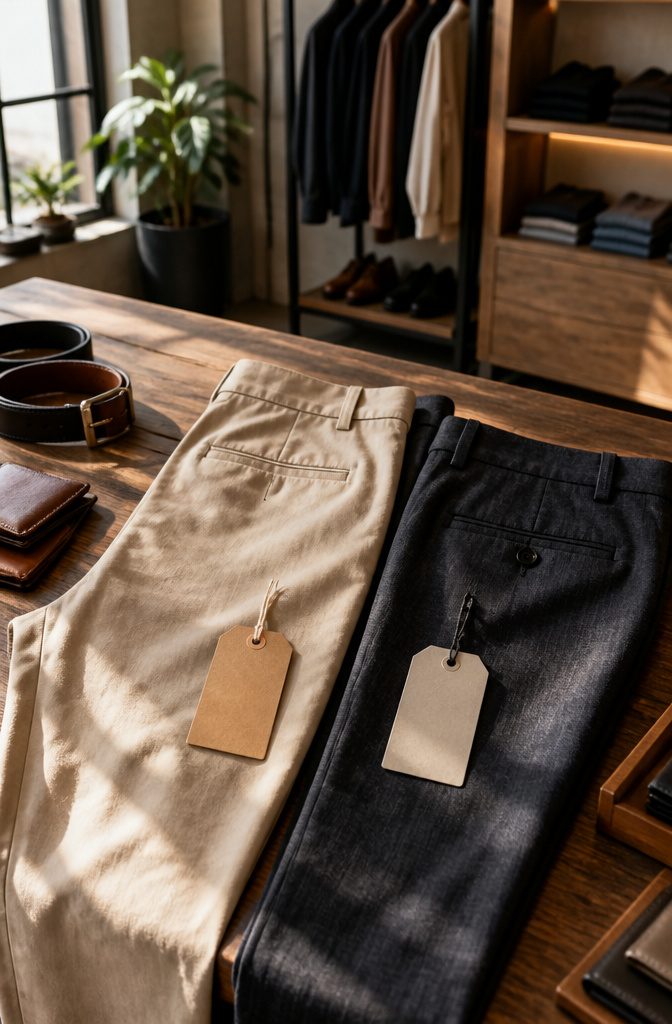
Cotton twill simply costs less to produce than wool, and that gap shows up at the register. Chinos generally run cheaper than dress pants because the starting fabric carries a lower premium.
Wool sits higher on the scale as a raw material, and the construction of dress pants, whether in wool, flannel, or silk blends, asks for more finishing work along the way.
The cheaper entry point for chinos makes them an easy default, but price alone is a shaky guide.
A low-grade wool slack that skimps on the weave will itch and bag where it should drape, while a dense cotton twill in a chino can hold its line for years.
The real cost difference is in what the fabric does after the first ten wears, not the tag in the store.

Rapid Refresh Technology: Clean, deodorize, and remove wrinkles in hand-wash or dry-clean-only clothing in minutes with the at-home dry cleaning kit. A single dryer-activated cleaning cloth is all it takes to leave clothes clean, refreshed and ready to wear in 20 minutes

Look good and feel great about your purchase from Haggar. This dress pant features a pleat front with hook and bar closure in a classic fit silhouette.

At‑home dry cleaning kit refreshes delicates, wool, silk, and dry‑clean‑only clothes, removing odors, light stains, and wrinkles in minutes — perfect for everyday garments and special‑care fabrics.
Seasonal Wear
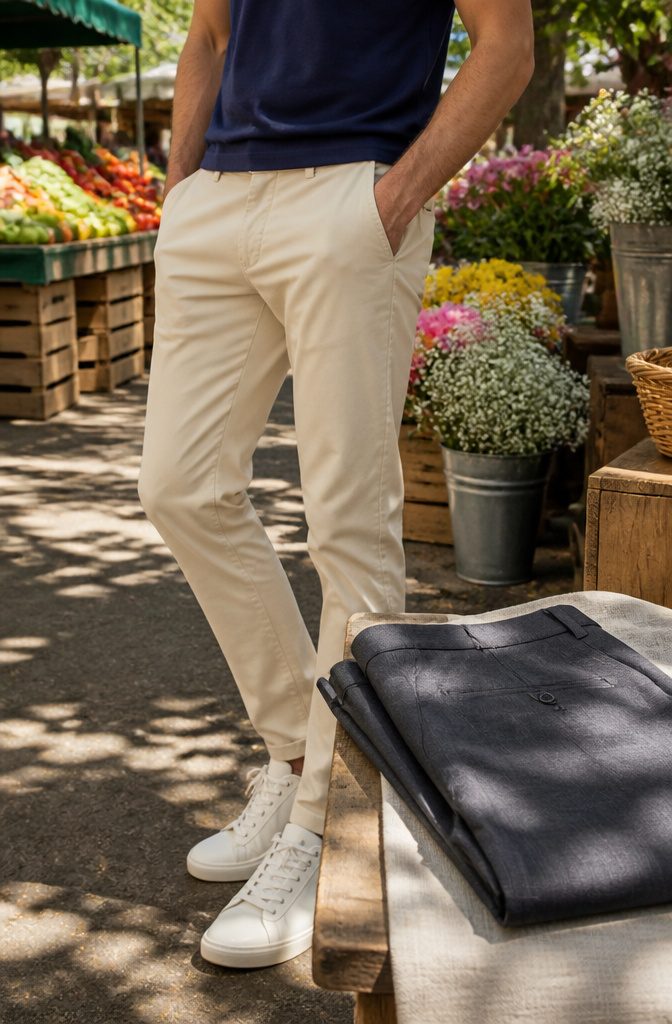
Cotton chinos handle heat the way a good summer shirt does, which is why they stay in rotation from late May through early September.
The fabric breathes, the weave is open enough to move air, and the weight sits light against the leg. I reach for mine on days above 80 degrees without thinking twice.
Dress pants built from wool, flannel, or silk lean the other direction.
The same density that gives them a clean drape and a polished silhouette also traps warmth, making them the logical choice from October through March or in offices where the AC runs cold enough to need a cardigan at your desk.
Spring and fall are where the two overlap.
A mid-September wedding with an outdoor cocktail hour might call for chinos in a darker shade, while a November conference room that overheats the radiator could make wool trousers feel like a mistake.
The deciding factor is less the calendar than whether you will spend the event controlling your own temperature or someone else’s.

Cotton Twill Fabric --- Men's casual shorts are made from soft, skin-friendly cotton fabric that is lightweight, breathable, stretchy, durable, and wrinkle-resistant, making them ideal for sports or casual wear
Cotton and Linen Material --- These mens cotton linen shorts are made from a premium 80% cotton and 20% linen blend. Unlike pure cotton, which is prone to shrinkage or sweat absorption, this blend wicks away sweat instantly, keeping you cool and dry even on the hottest beach or during strenuous exercise.

Cotton Twill Fabric --- Men's casual shorts are made from soft, skin-friendly cotton fabric that is lightweight, breathable, stretchy, durable, and wrinkle-resistant, making them ideal for sports or casual wear
Comfort Factor
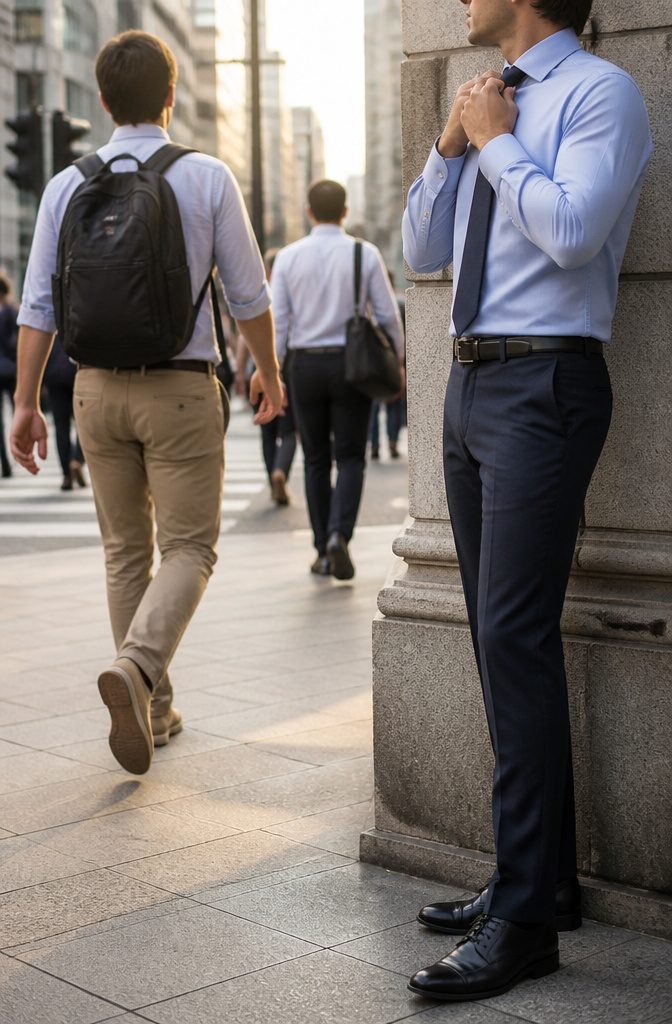
Chinos feel lighter the longer you wear them. The cotton twill breathes, and most pairs carry just enough stretch that sitting through a lunch meeting or chasing a train does not pinch at the waist or bind behind the knee.
I reach for them on days when I will be in and out of cars, up and down stairs, moving more than I am standing still.
Dress pants give you a sharper line at the cost of that ease.
The heavier wool or wool-blend fabric keeps its structure, which means the crease stays crisp and the silhouette stays clean. But that same structure can start to press against you after a few hours at a desk.
The waistband sits firm, the fabric does not give, and by late afternoon you notice the trade. A polished look asks more of your body over a full day.
Neither is wrong; they just answer different questions.
One asks how much you will move. The other asks how much the look matters while you sit still.

Personalized Fit: Our TH Flex Suit Separate Pants allow you to customize your look to perfection. Choose your ideal size for each piece, suit vest and jacket sold separately, ensuring a flattering fit that suits your unique frame.

Personalized Fit: Our TH Flex Suit Separate Pants allow you to customize your look to perfection. Choose your ideal size for each piece, suit vest and jacket sold separately, ensuring a flattering fit that suits your unique frame.

FEATURES: The flat front classic fit pant features a hook and bar closure, off seam front pockets, double welt button through back pocket and a blind hem.
Styling Each One
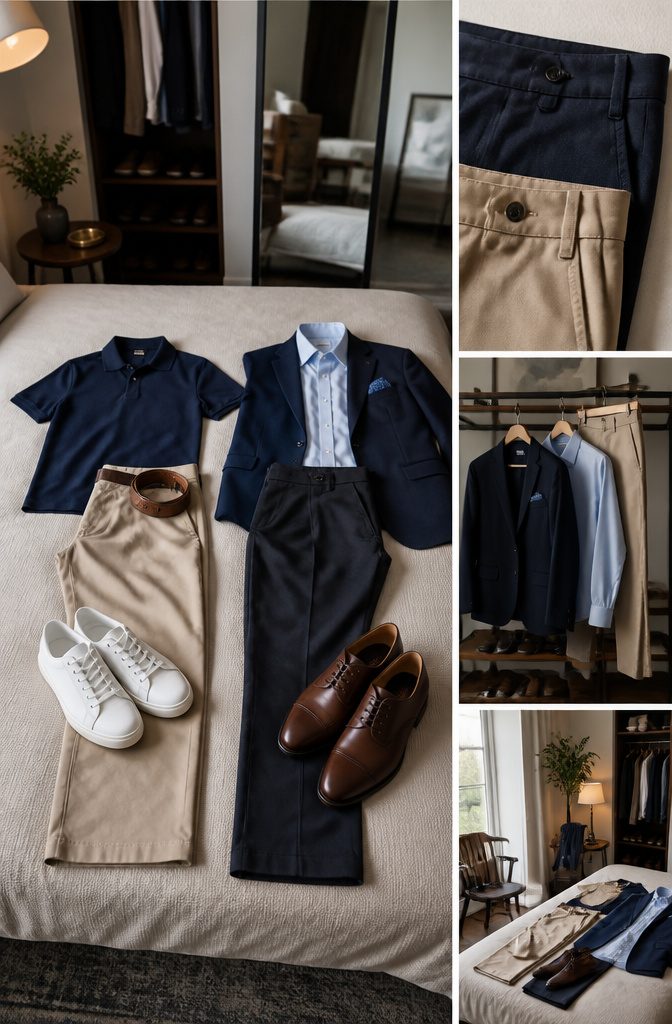
Chinos and dress pants do not swap roles cleanly, and the shoe choice is where that usually shows first. A clean white leather sneaker sits naturally against chino cloth but looks like an afterthought with wool dress trousers.
The same goes for loafers: they bridge both worlds, yet on chinos they read as dressed-up casual and on dress pants as dressed-down formal. The outfit still announces which piece is the anchor.
With chinos, the safest move is a casual shirt, loafers or clean sneakers, and a jacket only if the occasion asks for one layer more.
Dress pants need the full supporting cast: a dress shirt, a blazer or sport coat, and leather shoes, whether an Oxford or a sleek derby.
I have seen chinos pressed and paired with a tie, and the result never quite escapes its origins; the cloth and the stitching still signal weekend.
Dark shades like black, charcoal, or deep navy offer the most versatility for dress pants, but that versatility stays inside the formal lane.
Two ways to play the middle ground: keep chinos relaxed and let the accessories do the lifting, or commit to dress pants and build the outfit upward from there.
The chino route wins for actual versatility, the dress-pant route for occasions where the code is fixed.
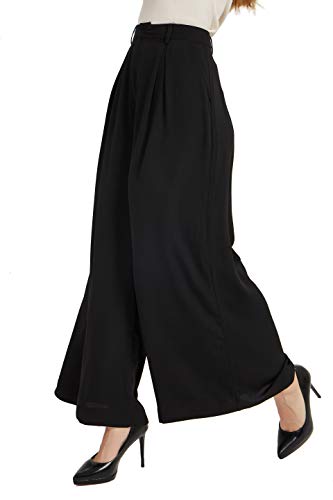
Flowy,Comfy Fabric in Medium Weight much Heavier than Normal Chiffon,Antistatic.

COMFORTABLE FABRIC - Made with 85% Polyester, 10% Viscose, and 5% Elastane, these men's dress pants feature a soft feel and slight stretch for comfortable movement. The fabric helps maintain a neat appearance while providing comfort for all‑day wear.

Textured Waffle Knit: IUGA dress pants for women feature a breathable waffle-knit fabric that drapes smoothly to enhance your leg shape with a structured yet comfortable fit
Fit Variations That Matter
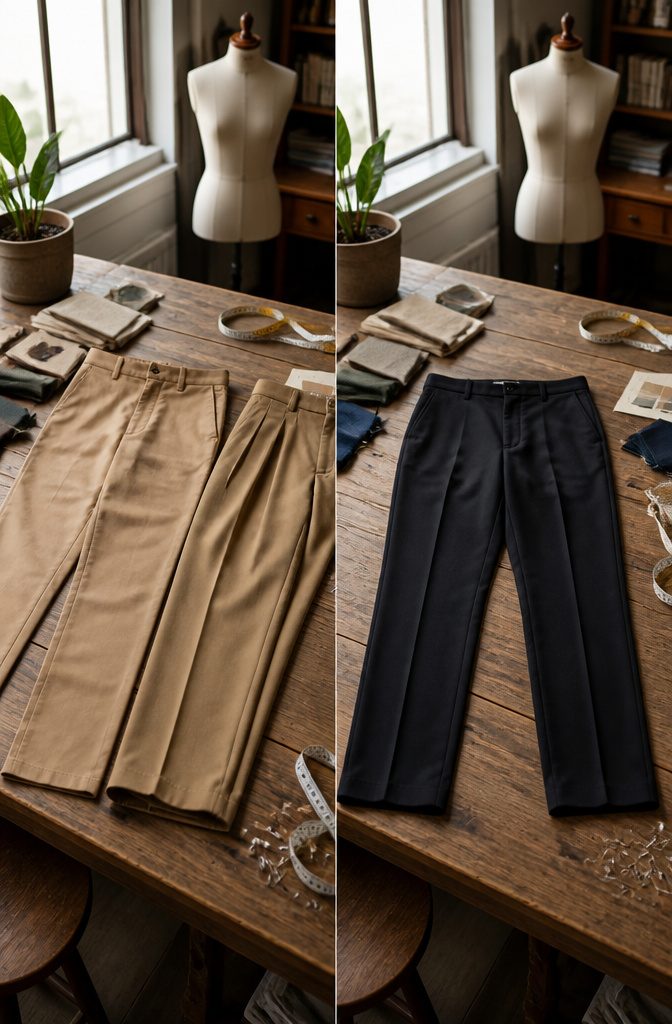
Flat-front and pleated options exist in both chinos and dress pants, which is where the line starts to blur.
A flat-front dress pant sits trim and contemporary, almost like a chino with a sharper crease, while a pleated chino reads more relaxed than its dress-pant cousin but still carries that extra fabric at the hip.
Taper from the knee down changes the formality more than most people expect; a strong taper on a dress pant can look fashion-forward, but the same taper on a chino sometimes just looks like a sizing mistake.
Tailoring has its limits. A tailor can take in a waistband, shorten a cuff, or slim a leg, but moving from pleated to flat-front is essentially rebuilding the garment.
I have learned to buy the front style I actually want rather than hoping alterations will bridge the gap.
The cuts that overlap between categories, slim chinos and relaxed dress pants, complicate the choice because they borrow from each other so deliberately that fabric and finish end up doing more distinguishing work than silhouette does.

Cotton Material --- Mens casual shorts are made of skin-friendly, high-quality pure cotton fabric. Highly elastic fabrics offer great flexibility for everyday activities, making them an ideal choice for sports or leisure wear.

Cotton and Linen Material --- These mens cotton linen shorts are made from a premium 80% cotton and 20% linen blend. Unlike pure cotton, which is prone to shrinkage or sweat absorption, this blend wicks away sweat instantly, keeping you cool and dry even on the hottest beach or during strenuous exercise.

Cotton Twill Fabric --- Men's casual shorts are made from soft, skin-friendly cotton fabric that is lightweight, breathable, stretchy, durable, and wrinkle-resistant, making them ideal for sports or casual wear
How the Names Came to Mean What They Do
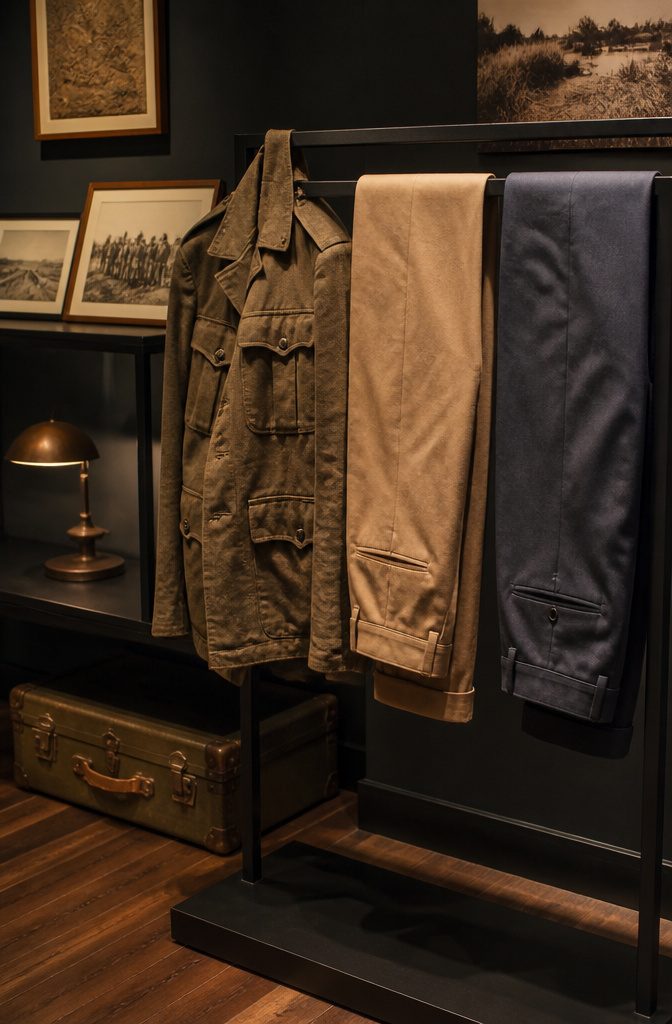
The word chino started as a description of the fabric, not the cut.
American troops in the Spanish-American War received cotton twill uniforms made in China; soldiers called the cloth "chino," Spanish for Chinese, and the name stuck to the trousers themselves.
What began as military-issue gear narrowed over a century into the tapered, flat-front casual pant most of us recognize.
Dress pants followed a separate path from the Western suit tradition. The tailored trouser emerged as half of a matched set, cut from finer woolens and designed to sit higher on the waist with a sharper crease.
Where chinos loosened into weekend wear, dress pants tightened their association with business and formal occasions.
By the 1950s the two had settled into distinct territories that still shape how we shop. Chinos traded their original baggy military cut for a cleaner line but kept the cotton twill and the relaxed feel.
Dress pants held onto the construction details of tailoring, the suspender buttons, the sharper rise, the heavier finishing. The names now signal not just fabric but the whole context of wearing them.

Look good and feel great about your purchase from Haggar. This dress pant features a pleat front with hook and bar closure in a classic fit silhouette.

Look good and feel great about your purchase from Haggar. This dress pant features a pleat front with hook and bar closure in a classic fit silhouette.

FEATURES: The flat front classic fit pant features a hook and bar closure, off seam front pockets, double welt button through back pocket and a blind hem.
Quick Reference: Chinos vs Dress Pants
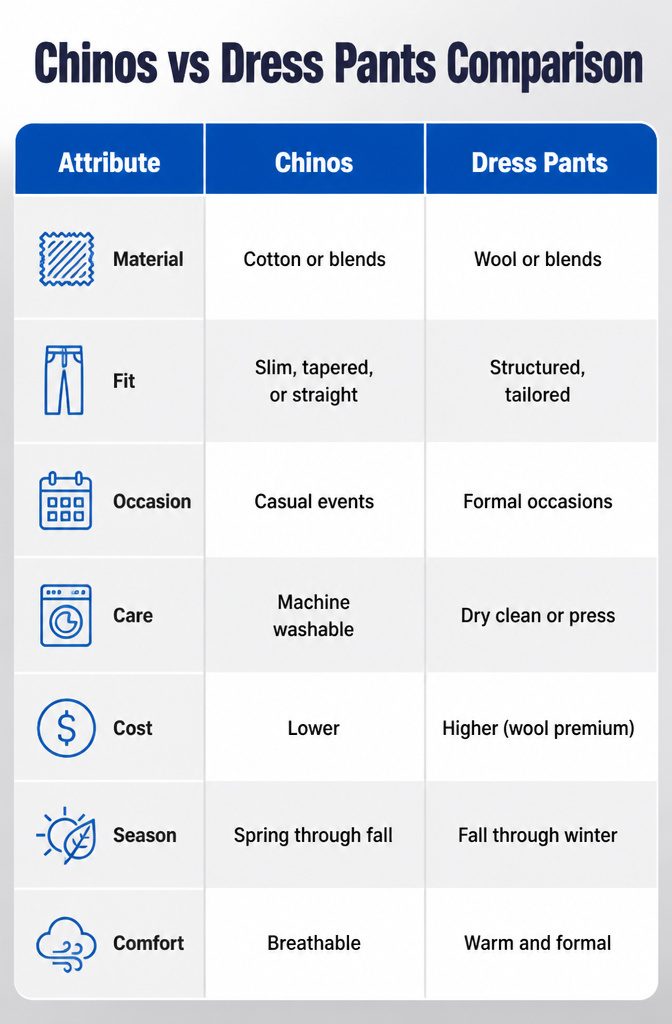
A quick scan across the whole article comes down to seven columns.
Cotton or cotton-blend twill against wool or wool-blend suiting. Slim, tapered, or straight cuts against structured, tailored ones.
Casual offices, dinners, and day events against interviews, weddings, and black-tie occasions. The care is simpler on chinos; dress pants need pressing and usually dry cleaning.
Cost runs higher on dress pants because wool sits at a premium tier. Season and comfort come down to the same fabric split: cotton breathes warm days, wool insulates cold ones.
| Attribute | Chinos | Dress Pants |
|---|---|---|
| Material | Cotton or cotton blends | Wool, wool blends, or synthetics |
| Fit | Slim, tapered, or straight | Structured, tailored |
| Occasion | Casual offices, dinners, day events | Interviews, weddings, formal events |
| Care | Machine washable, low maintenance | Dry clean or press; higher upkeep |
| Cost | Lower | Higher (wool premium) |
| Season | Spring through fall | Fall through winter |
| Comfort | Lighter, more breathable | Warmer, more formal against skin |
Chinos win on ease and cost; dress pants win on formality and presence. The gap is not subtle once you line them up this way.
Frequently Asked Questions
Are chinos the same as dress pants?
No.
Chinos are lightweight, relaxed-fit pants made from cotton or cotton blends, while dress pants are structured and formal, built from wool, polyester, or heavier cotton blends. The fabric weight and intended formality separate them cleanly.
When should you opt for chinos over dress pants for smart casual events?
Pick chinos for smart-casual or semi-formal events on warm days, or any occasion where the dress code stops at business-casual. Cotton twill breathes better than wool, and the slightly rumpled texture reads intentional rather than sloppy.
Do chinos make good formal wear?
No.
Chinos top out at semi-formal or business-casual; they do not belong at weddings, job interviews, or any event requiring a necktie. Dress pants handle those occasions because their sharper drape and heavier fabric signal formality that chino cloth cannot match.