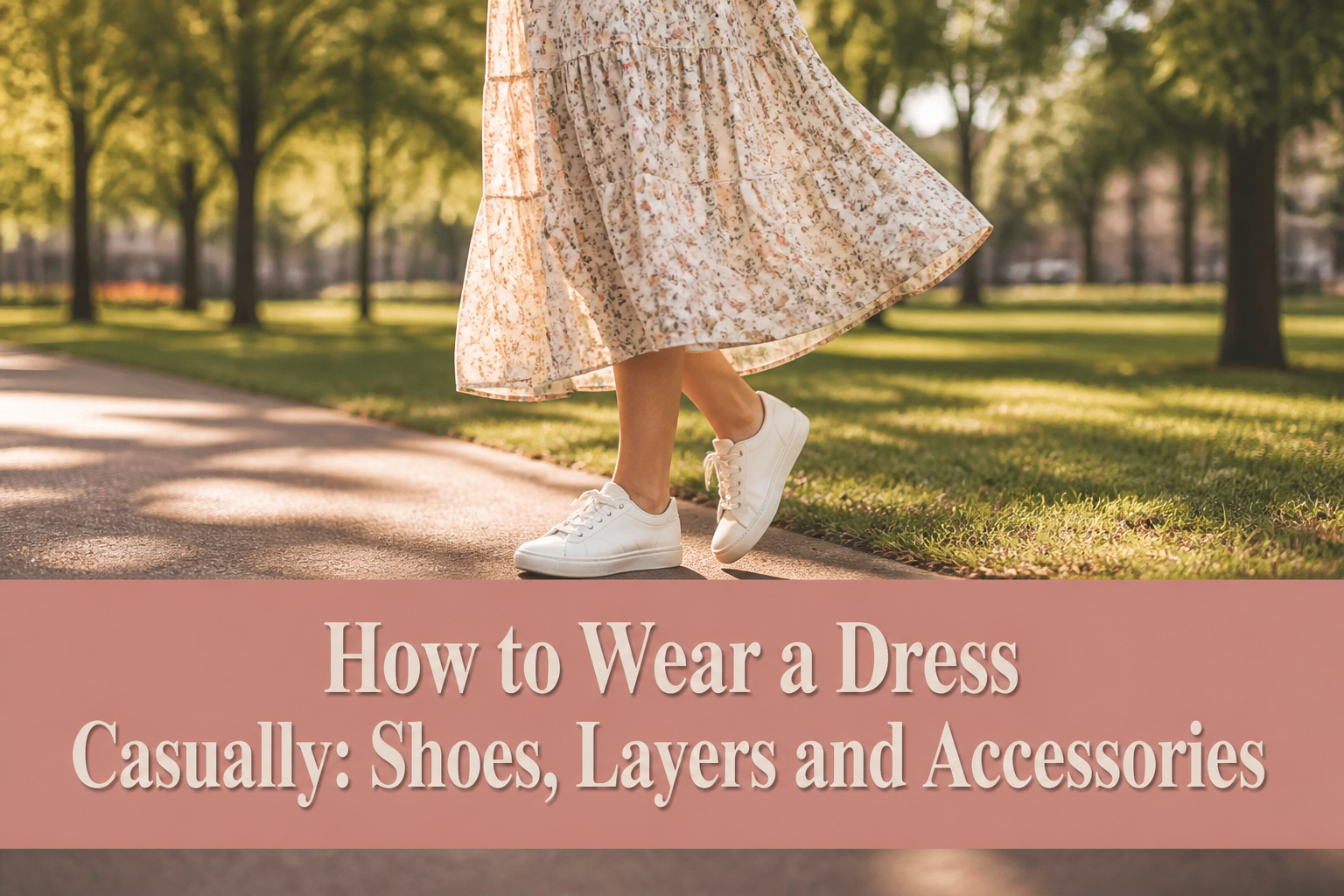
Wearing a dress casually means changing the pieces around it, not the dress itself.
The shoe does almost all the work: a heel pushes even a cotton shift toward evening, while a flat or sneaker pulls a satin slip dress back to daylight.
The real risk is mismatching the contrast, like pairing delicate lace with thick-soled sneakers so neither piece looks like it belongs.
1. Start With the Shoes
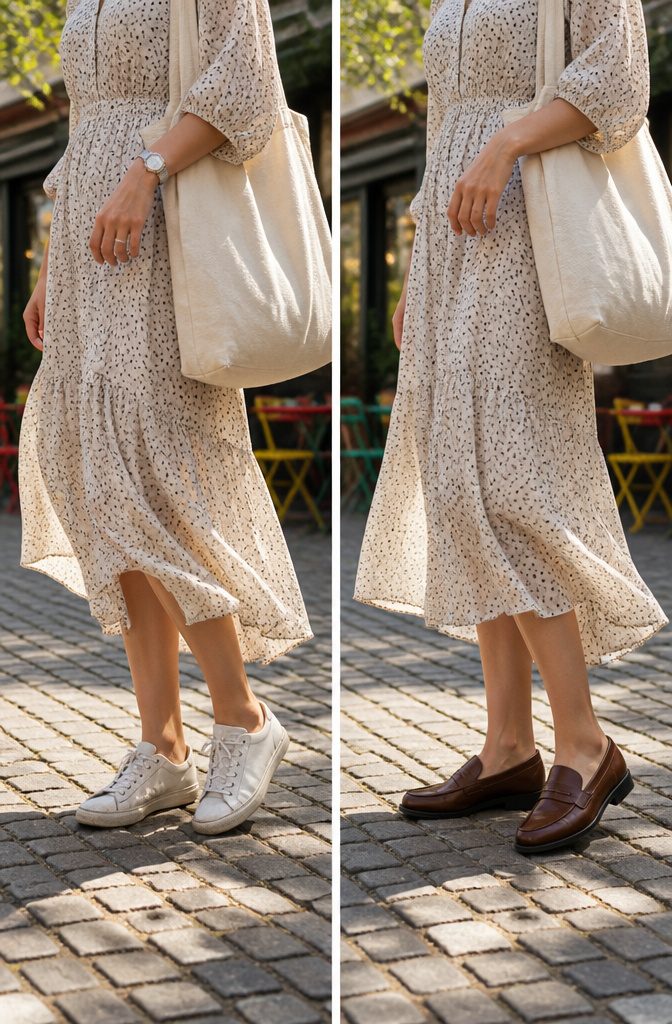
The fastest way to pull a dress back from cocktail territory is to swap the heel for a flat or low shoe. Nothing else changes the mood this completely.
Sneakers work with nearly every dress shape I have tried them against, though a very full skirt can start to look costume-level if the sneaker is too chunky.
Ballet flats do the same job more quietly. Loafers, especially a heavier sole with a visible sock, read as intentional rather than apologetic; I have worn them with a black blazer dress that otherwise felt too office-party for a Saturday.
Chelsea boots with a lug sole add edge without trying hard, and combat boots do too if the dress has enough structure to balance the weight.
Sandals keep things simplest for a day out, particularly with a slip dress or a maxi.
What failed for me was a delicate lace dress with thick-soled sneakers; the contrast was too much and neither piece looked like it belonged.
A simpler sandal or a flat in a matching tone would have absorbed the dressiness instead of fighting it.

Non-Slip Grip Design: No show socks with silicone grips on heel and arch ensure these no show socks for women stay put during running, gym workouts or all-day wear. Low cut socks for women works perfectly with sneakers,loafers,heels,business casual shoes,or boat shoes-no more annoying sock slippage.

EFFORTLESS SLIP-ON DESIGN: These slip on shoes for women feature hands-free entry and a secure Heel Pillow that keeps your foot in place for easy wear

Non-Slip Grip Design: No show socks with silicone grips on heel and arch ensure these no show socks for women stay put during running, gym workouts or all-day wear. Low cut socks for women works perfectly with sneakers,loafers,heels,business casual shoes,or boat shoes-no more annoying sock slippage.
2. Layer Over Everything
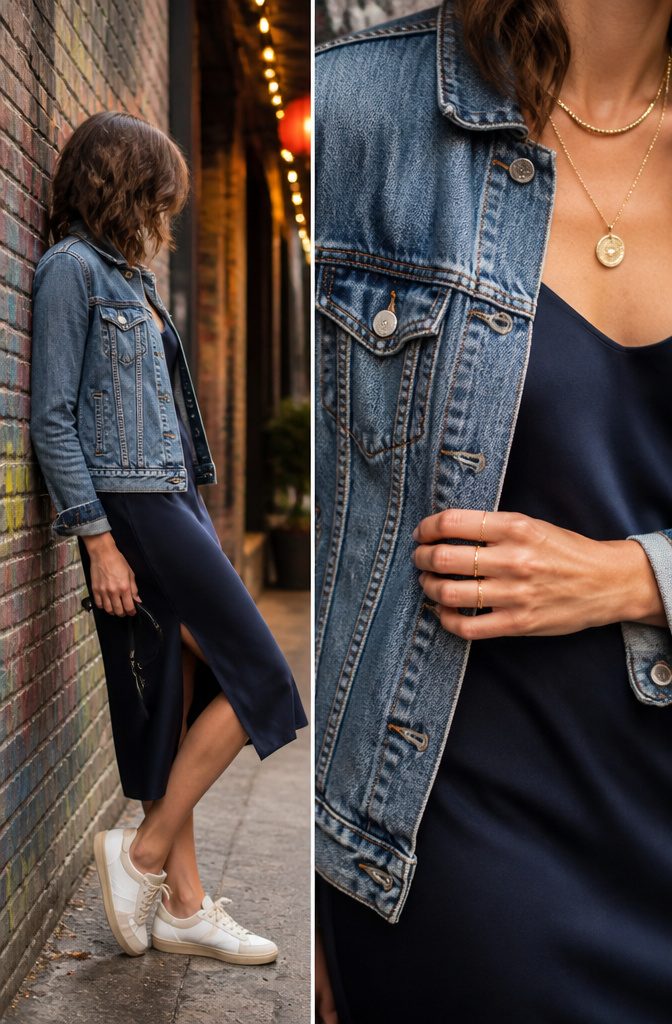
A denim jacket thrown over a slip dress reads as accidental in the best way, the stiffness of the denim breaking the line of something that would otherwise feel like eveningwear.
I used to grab my tailored black blazer for the same job until I noticed it turned every dress into a commute uniform; the denim leaves room for the dress to stay itself.
Cardigans land somewhere between the two.
A thick knit in fall or winter does the warming work of a jacket but keeps the shape soft, which matters more than I expected with jersey or knit dresses that already hang close to the body.
The wrong layer here, a cropped cardigan that hits at the waistband of a longer dress, chops the silhouette in half.
Blazers can still play casual, though the cut has to do the work. A boxy shape, worn open over an unbuttoned shirt or even a tee underneath, borrows from tailoring without delivering a full suit effect.
The satin slip dress that looked ready for a reservation becomes something you could wear to a coffee meeting with that layer change alone.
The common thread: each piece should fight the dress a little. Too matched in formality and you have not dressed the dress down, you have only added a sleeve.

Non-Slip Grip Design: No show socks with silicone grips on heel and arch ensure these no show socks for women stay put during running, gym workouts or all-day wear. Low cut socks for women works perfectly with sneakers,loafers,heels,business casual shoes,or boat shoes-no more annoying sock slippage.

A little titht,wide feet pls size up! 【Breathable & Soft】Ballet Flats are made of upper/lining:PU ; outsole: PVC with Breathable Eyelets,you will feel Breathable while walking all day. Fit with Padded Memory Foam Insole like walking in a cloud.

【Comfortable Flats Shoes】 :Womens black flats shoes upper of this shoe adopts the design of PU leather and soft insole, so it won't feel tired after wearing for a long time. It is very suitable for daily.
3. Add the Right Accessories
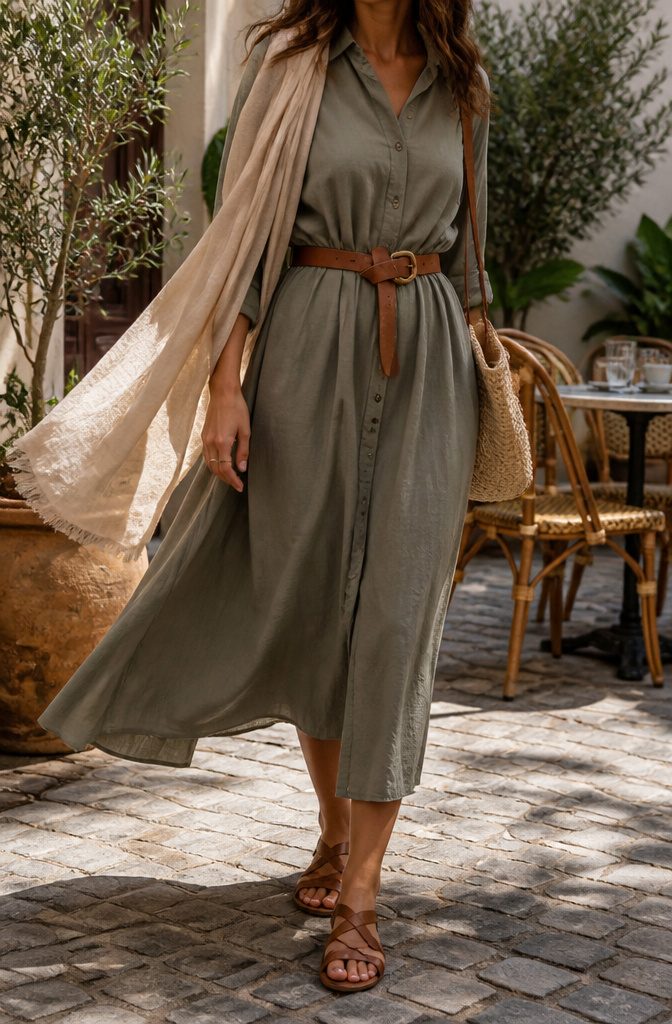
A casual belt does more than hold a dress in place. Worn low on the hips over a loose midi or shirt dress, it breaks the line and keeps the shape from reading as office-bound.
I have a cognac leather belt, about an inch and a quarter wide, that works for this; anything narrower disappears, anything wider starts to look deliberate in the wrong way.
Scarves read as effort in cool weather and as affectation in warm. A lightweight cotton square, loosely knotted at the neck, adds color without the heaviness of a winter wrap.
The mistake is treating it as the main event. Let it sit slightly off-center, let it look found rather than placed.
Jewelry follows the same rule of restraint.
Small hoops, a thin chain, a single ring: these keep a day dress in the realm of the wearable. I tried stacking bangles with a floral wrap dress once and felt overdressed for a coffee run.
The pieces that work are the ones you forget you have on until someone else notices them. Bold jewelry has its place, but that place is evening, not the casual look this reader is after.

Sweet & Timeless: Crafted with a finely stitched toe and adorned with a statement horse-bit detail, these loafers for women blend charm and sophistication.

High-Quality Material: Made Of Top-Grade Black Soft Patent Leather, It Is Finely Polished To Show A Deep And Shiny Texture, Adding An Irresistible Luxury Charm To Men. This Loafer Uses A Non-Slip And Wear-Resistant Rubber Sole. This Sole Design Has Excellent Grip And Wear Resistance, Ensuring The Safety Of The Wearer Even When Walking On Wet Or Uneven Roads.

Elevated Comfort: The 2.6-inch heel and 1.2-inch platform give you lift, while the memory foam cushioning keeps every step in these loafers comfortable.
4. Pick Casual Dress Styles
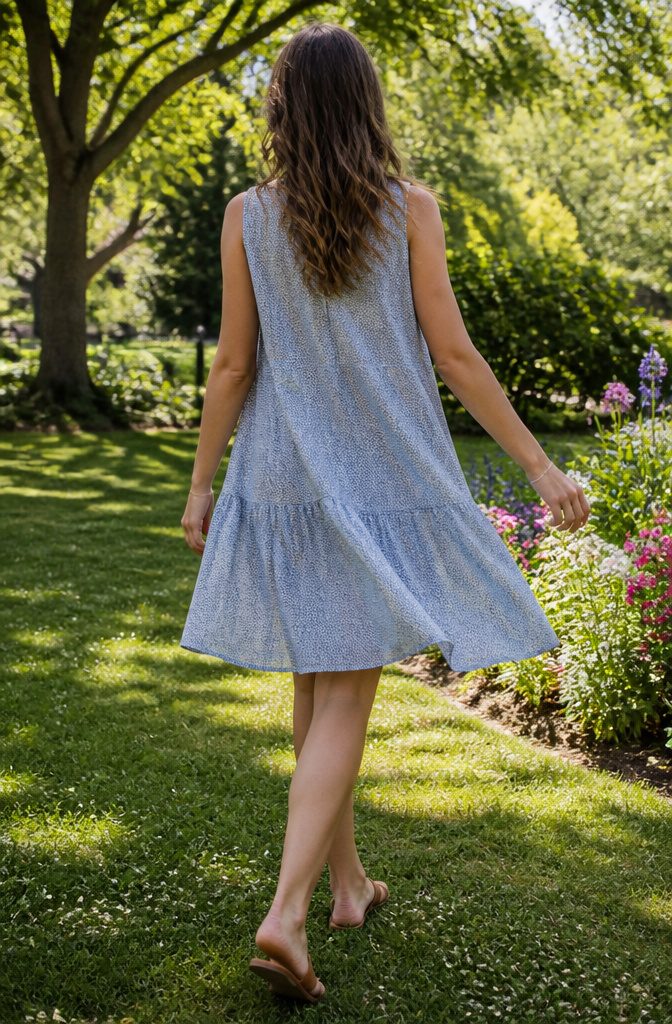
Shirt dresses read as borrowed-from-him territory until you swap the belt for nothing at all and add a pair of cut sandals or sneakers.
The collar and button front do the structure for you; the absence of waist definition keeps it from looking like office hours.
A-line dresses work on nearly every body type because the flare starts at the waist and hides whatever you ate for lunch.
That same flare can swallow a smaller frame, so petite builds need to check the hem doesn’t land mid-calf, which shortens the leg line.
Maxi dresses trade on the assumption that full length equals dressed up, but the right fabric and a flat sandal flip that entirely.
They give full coverage without the heat of trousers, which matters on humid August days when even linen trousers feel like penance.
Wrap dresses adjust to the body you have today, not the one you had in March, and the crossover defines a waist without squeezing one.
The adjustable tie is what makes them worth owning through weight fluctuation, pregnancy, or simply a week of restaurant dinners.
Shift dresses hang straight from the shoulder and read as the most casual of the five, though on softer bodies they can resemble a tent unless the length hits above the knee.


WARDROBE STAPLE. Come rain or shine, a classic denim jacket will always have your back. This stylish take on a wardrobe staple is designed to complete any look. Best of all, it will never go out of style.

Oversized jean jacket for women, front button up closure, single breasted, classic women's casual jackets for spring, fall and winter, denim jacket for women loose fit, oversized boyfriend denim shirt
5. Choose Breathable Fabrics
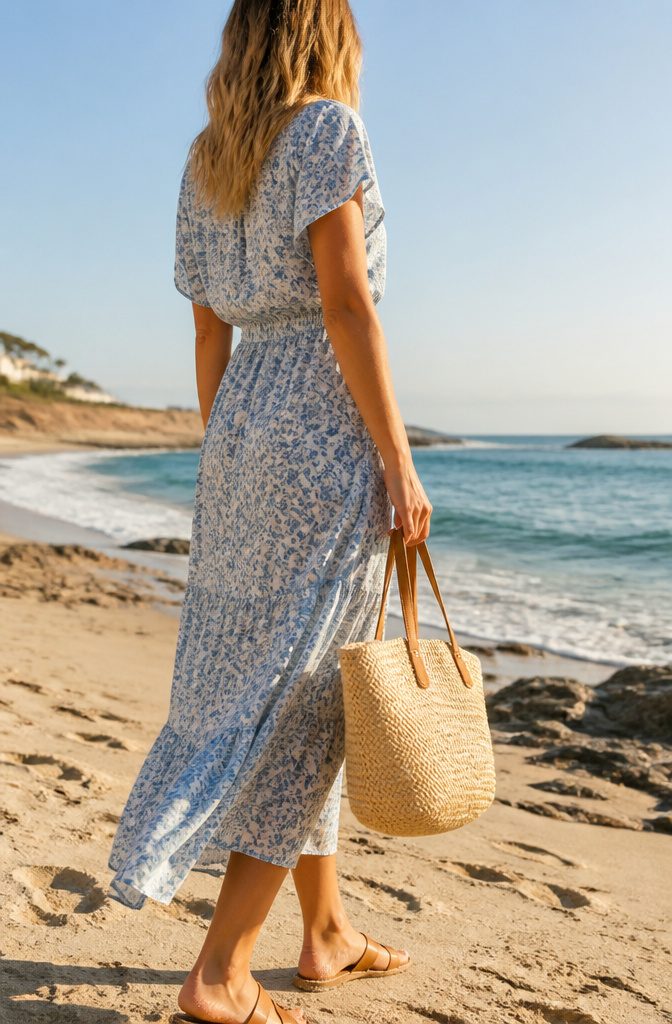
Cotton breathes better than almost anything else, which is why a cotton dress survives a 90-degree July afternoon without turning into a damp shell.
The fabric stays soft against skin and asks for almost no care beyond a wash and dry.
My own cotton dresses have held their shape through years of summer wear, though the lighter weaves do tend to wrinkle where I sit.
Linen works harder in the same heat. It is highly breathable and takes humidity better than cotton, but the trade is real: it wrinkles within an hour of putting it on.
That crumpled look reads as relaxed to some, sloppy to others. A linen dress for me is a weekend-only choice, something I reach for when I am not sitting through meetings.
Jersey solves a different problem. The stretch and softness make it the easiest fabric for dresses that need to move, commute, and recover.
It does not breathe quite like cotton or linen, so jersey works best between 60 and 80 degrees, the range where you need flexibility more than maximum airflow.
In my experience, jersey also pills faster than woven fabrics, so I buy it expecting a shorter life.

Design: Floral belted dress for women, short sleeves, Invisible zipper. Midi Length. The fabric feels soft and comfortable.

Features: Top part and skirt part are in one piece, round neck, short sleeve, ribbed bodice material top, belt tie waist, two sides pockets; Summer work dresses for women, short sleeve summer dress with pockets, dresses for women 2026, womens summer dress

Material:Made of polyester and cotton,soft,non-irritating,the casual style is designed to make you feel comfortable and confident
6. Dress for the Occasion

A midi shirt dress lands in that useful middle ground where the fabric and cut do not announce themselves as either workwear or weekend wear. The difference is what you layer over it and what you put on your feet.
I have seen the same shirt dress read as business casual under a blazer with sensible heels, then read as entirely relaxed the next morning with the blazer swapped for a denim jacket and the heels traded for simple sandals.
The dress itself did not change; the context around it did, and that is where the eye goes first.
The tweed dress works the same way.
It starts out feeling polished, almost too dressed up for a Saturday, but the shift happens fast once you trade the knee-high heeled boot for a loafer or a Mary Jane and add an edgier cropped jacket.
What felt right in that combination was the contrast: the texture of the tweed still gives the outfit some weight, but the flat shoe keeps you grounded in casual territory.
What did not work, at least on me, was trying to split the difference with a low block heel; it left the dress in an uncanny valley between dressed up and dressed down, satisfying neither mood.
Smart casual style revolves around building an outfit that’s relaxed yet still professional.
— Vogue
For the reader, this means the dress is rarely the problem; the surrounding pieces are. The belt, the scarf, the third layer, the shoe: these are what move the same dress from office to outing.
A slip dress with lace detailing, for instance, stays just formal enough in its fabric that a full head-to-toe lace version would feel wrong for daywear, but the right casual third piece pulls it back from the edge.
The wrap dress and the comfortable maxi follow the same rule; their shape is already relaxed, so the wrong shoe or bag is what pushes them into territory they were never meant to hold.

ReserveCush Breeze: Features a breathable knit upper and soft foam insole to manage moisture and keep feet fresh. These walking shoes for men deliver cloud-like comfort from day to night.

ENHANCED NON-SLIP OUTSOLE: The outsole of these non slip work shoes is covered with a professional slip-resistant patch. The material and pattern of the slip-resistant patch have been upgraded to provide extra grip for the shoes, which can be used on slippery and oily floors. If you are in the food service industry or any other industry that requires slip resistant shoes, then these work shoes may be a good choice.

Non-Slip Grip Design: No show socks with silicone grips on heel and arch ensure these no show socks for women stay put during running, gym workouts or all-day wear. Low cut socks for women works perfectly with sneakers,loafers,heels,business casual shoes,or boat shoes-no more annoying sock slippage.
Work With Your Body Shape
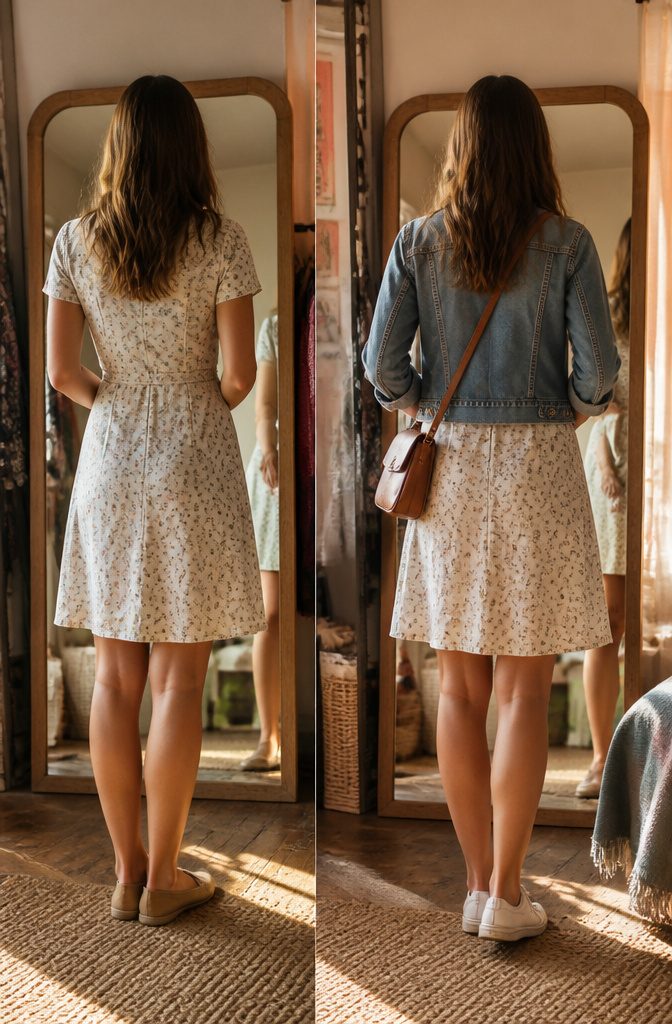
A-line dresses flare from the waist and read as forgiving on most frames, though waist placement is what actually decides the fit.
I spent years assuming a high waist would lengthen my legs; instead it hit at my natural waist and cut me in half. The shift to a slightly lower seam, about an inch below, fixed the proportion without tailoring.
Wrap dresses adjust at the waist, which sounds ideal until the tie sits too far forward and adds bulk there. The ones that work cinch at the side seam, not the center, so the fabric lies flat across the stomach.
Hem length matters more than most guides admit. Maxi dresses pool around the ankles on shorter frames and read as costume rather than casual; a midi that hits mid-calf often works better in practice.
Shoulder width is harder to judge. Shift dresses hang straight from the shoulder, which means a too-narrow cut pulls across the back and rides up with every reach.
The fix is usually sizing up and letting the waist stay loose rather than sizing for the bust and constraining the shoulders.
Shirt dresses bridge the gap because the placket breaks up the torso vertically, but the bust point determines whether the buttons gap. A hidden snap at that stress point, not the listed size, is what keeps the line clean.

Comfortable & Portable: These ballet flat are soft, durable and flexible. They are also foldable and portable that you can put them in your small travelling bags. If you like travelling and wearing flats, these flats shoes are your indispensable companions.

All-Day Comfort & Breathable Knit:Our women's flats feature a stretchy breathable knit upper that keeps feet cool all day The cushioned insole delivers cloud-like comfort reducing fatigue for nurses teachers and anyone on their feet for hours

Soft Lining: The lining of these women's flats provides you with comfort throughout the day.
Adjust for the Season
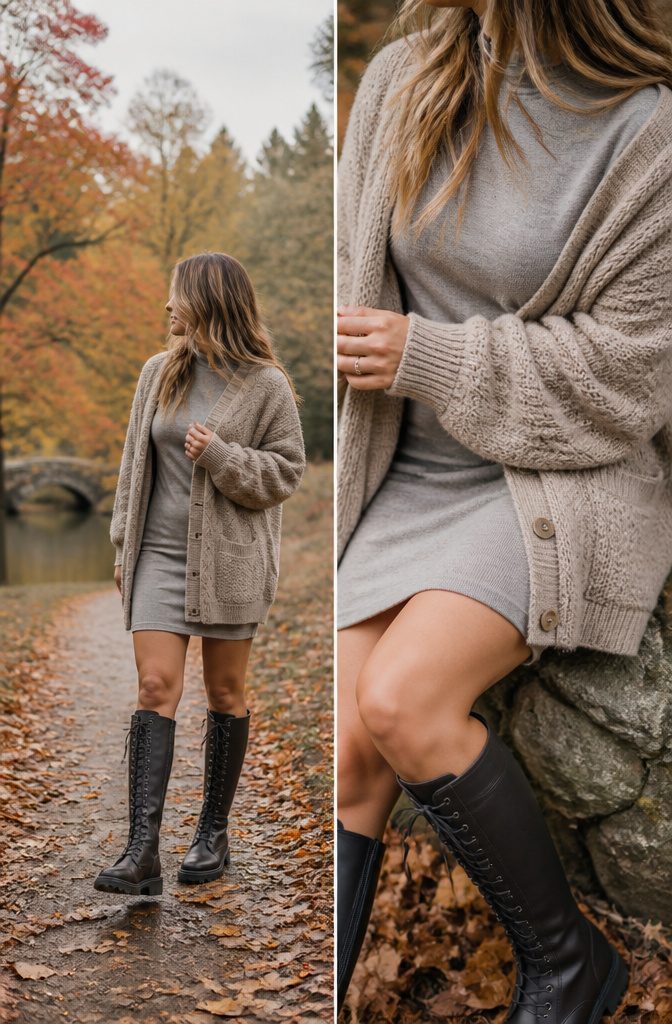
A cotton dress that felt right in July turns drafty by October, so the swap to jersey or a heavier weave matters more than the color change.
Jersey keeps its stretch down to about 50°F if you layer a long-sleeve tee underneath, which buys you an extra month before the coat comes out.
Linen is the opposite problem: that wrinkling some people dislike in summer reads as texture in fall, but the breathability works against you below 60°F no matter what you pair it with.
Combat boots handle the transition better than sneakers once the ground stays wet. A flat knee-high boot does more of the work than the dress itself, letting a lighter floral print read as intentional rather than off-season.
Color shifts follow the same logic as fabric weight. The chambray pieces that look crisp against bare legs in June need tights and a cardigan by November, and the darker wash helps the eye accept the heavier silhouette.
I have not found a shortcut around storing the true summer cottons; they simply look wrong with the bulk a cold day demands.

Non-slip Outsole: These non slip work shoes for women feature a special slip-resistant outsole, providing excellent grip and ensuring you don't have to worry about slipping on various slippery and oily floors. For those working in kitchens, restaurants, or the food service industry, these shoes are especially practical.

【Slip On Loafers】 Great everyday shoes without laces or buckles, slip-on design make it easy to put on and off, the loafers for women chunky heel go great with both formal and casual wear, put a perfect finish on your everyday outfit.

CLASSIC PENNY LOAFER STYLE:Features the timeless penny loafer silhouette with a clean, minimalist vamp that offers understated elegance for any occasion.
Get the Fit Right
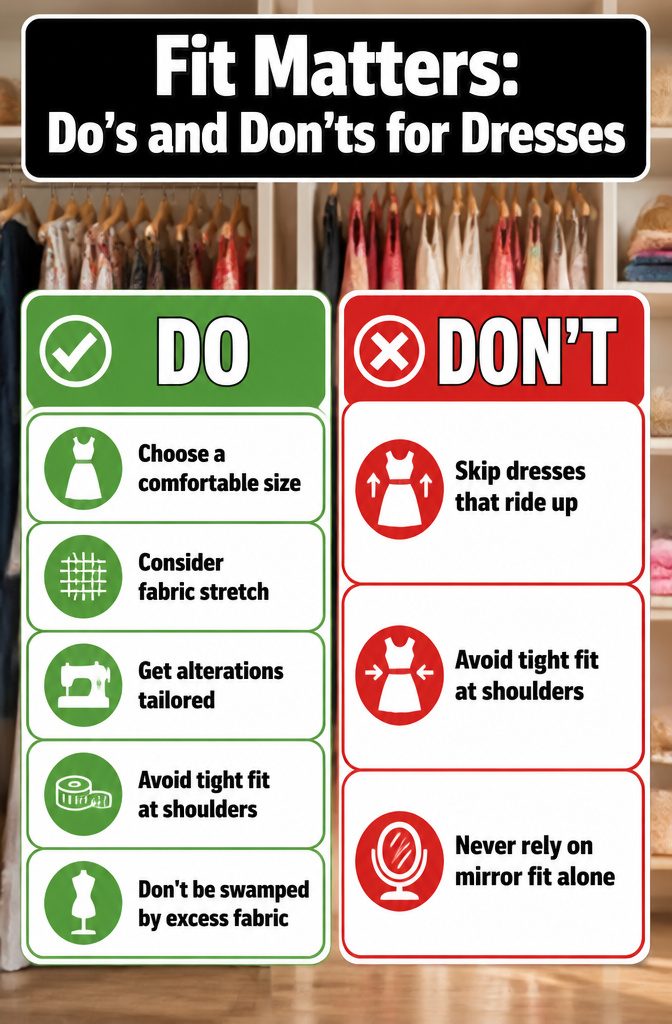
A casual dress only stays casual if you can actually live in it through a full day.
The sources both hit on this, and it matches what I’ve noticed sorting through my own closet: fit determines whether a dress gets worn twice or sits untouched.
The test that matters isn’t the mirror. It’s sitting in a car, bending to pick up a bag, walking eight blocks in heat.
A dress that rides up at the thighs when you sit, or pulls tight across the shoulders when you reach forward, announces itself as wrong within an hour.
Room to move freely is the baseline, but too much room creates its own problems: excess fabric bunches under a jacket, catches wind, looks like you grabbed the wrong size on purpose.
Sizing one step down can solve a tent-like silhouette if the fabric has stretch.
Sizing up rescues a cut that’s too short or too snug through the hips, though it may need the waist taken in. Those alterations are worth budgeting for.
A $20 tailoring fix turns a dress with the right color and fabric into something that actually works on your body. Without it, the dress stays in the category of almost-right, which in practice means unworn.

【Oversized Boyfriend Fit & Size Tip】Designed with a relaxed, oversized boyfriend silhouette that drapes effortlessly without looking boxy. True to size for a classic loose look; we recommend sizing up if you prefer an extra-long, street-style oversized fit. Please refer to our size chart in the product images for detailed bust, shoulder, and sleeve measurements to find your perfect match.

STYLE - Classic superloved pixie feminine fit crop jean jacket with long sleeves, collar, button front and sexy curved body with a slight high low hem.

Fabric Details: this denim cardigan for women is made of 65% Cotton, 33% Polyester, 2% Spandex; Machine Wash Cold with Like Color
Keep Dresses Wearable Longer
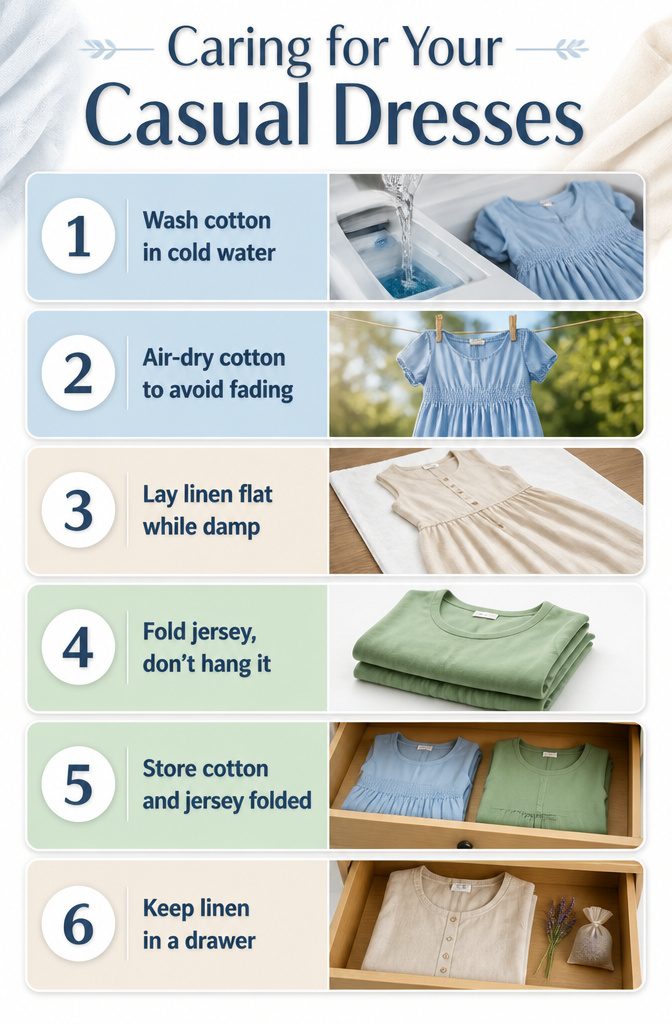
Cotton, linen, and jersey each demand different handling if you want them to look casual rather than careless.
Cotton takes cold water and a low tumble dry without much complaint, though the dryer will eventually roughen the surface and fade saturated colors.
I air-dry mine now after watching a navy dress turn dusty grey in a single summer of weekly hot cycles.
Linen barely tolerates the machine at all; even a gentle warm wash tightens the weave and exaggerates the wrinkles that read as relaxed on the rack but read as slept-in once they’re set deep.
Lay linen flat while it’s damp and let gravity do the work.
Jersey is the most forgiving until it isn’t, stretched out on a hanger or pilled by friction against denim in the wash. Fold it, don’t hang it, and dry it flat or on the lowest heat setting the dryer offers.
Storage matters too. Cotton and jersey both crease less folded than on a wire hanger that distorts the shoulder line; linen benefits from breathing room in a drawer, not compressed under wool sweaters that crush the texture.
The label’s temperature guidelines exist for a reason, but the method of drying and the shape you store it in determine whether that casual dress stays wearable for two seasons or six.

MATERIAL: Polyester & Spandex, Stretchy, Soft and Comfortable Fabric

MATERIAL: This v neck ruffle dress is made from soft fabric, which is comfortable, stretchy, and breathable.

Elegant design:The modest dresses for women features flowy hem design,keep cool in summer and show your cuteness.waist with belt design,can freely control the most comfortable waist feeling,show your sexy curves.
Buy Less and Wear More
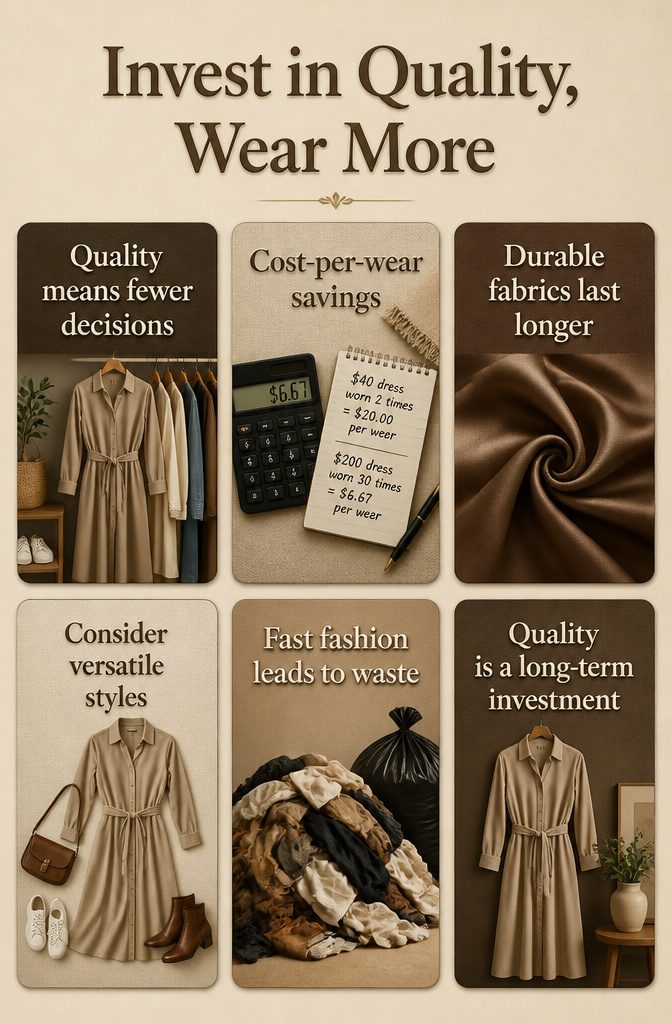
The shift toward buying less and wearing more happened in my closet before I had a name for it. I used to own six or seven fast-fashion dresses that pilled after three washes and never sat right without shapewear underneath.
The cost-per-wear math turned ugly fast: a forty-dollar dress worn twice costs more per wear than a two-hundred-dollar dress worn thirty times. One silk shirt dress I bought in 2019 has outlasted three cheaper replacements combined.
The seams stayed straight, the color did not turn muddy, and the cut works with sneakers, boots, or nothing on my feet at all. That piece taught me that casual styling starts with the garment itself.
If the fabric recovers from sitting and the cut forgives a belt or no belt, you reach for it without thinking. Quality means fewer decisions, not more.
Frequently Asked Questions
How can I dress down a formal dress?
Swap formal shoes for something flat or low, like loafers or Chelsea boots, and layer on an edgy third piece.
A leather jacket or bomber jacket with some hardware works better than a tailored blazer, which tends to push things back toward office territory.
You won’t get a formal dress all the way to weekend-level casual, but you can pull it several notches down from event wear.
What shoes should I wear with a casual dress?
Sneakers, ballet flats, and loafers are the most reliable choices, with combat boots or lug-sole Chelseas if you want more edge.
Sandals keep things simplest for daytime, especially with slip dresses or maxis. What fails is the mismatch: a delicate lace dress with thick-soled sneakers fought itself, while a simpler flat in a matching tone would have absorbed the dressiness instead.
What types of dresses are best for casual wear?
Shirt dresses, A-line dresses, maxi dresses, wrap dresses, and shift dresses each read relaxed in their own way.
Shirt dresses give you built-in structure without needing a belt; A-lines flare from the waist and work across body types; maxis flip from dressed-up to casual with the right fabric and a flat sandal.
Wrap dresses adjust to the body you have today, and shifts hang straight from the shoulder for the easiest silhouette of the five.