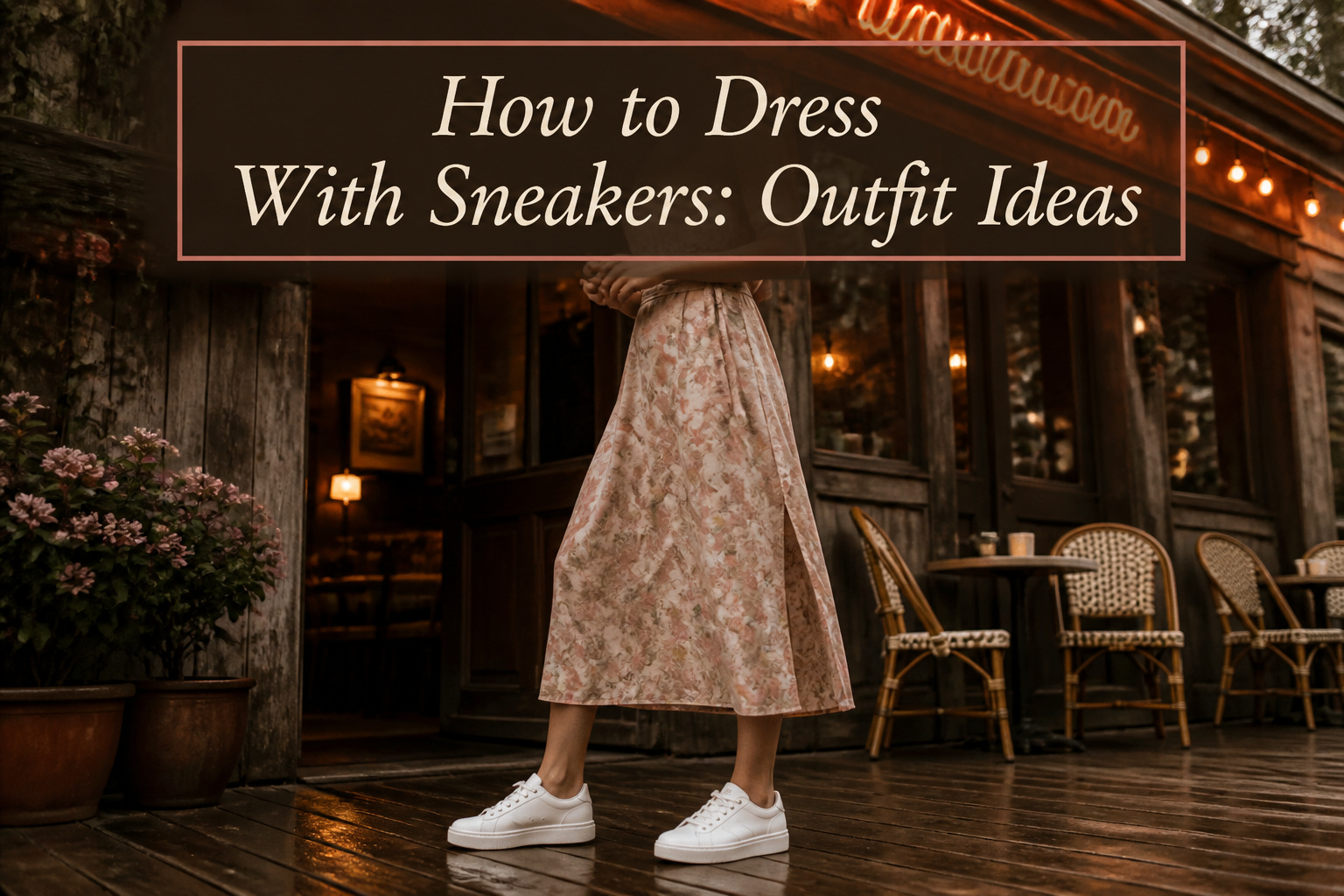
Dressing with sneakers means pairing a dress and athletic shoe so the combination reads intentional, not like you forgot to change footwear. The trick is proportion: a hem that hits at the shin or above leaves enough leg visible to keep the line clean, while a floor-grazing maxi with a bulky sole starts looking accidental. A leather sneaker against a loud floral minidress gives the eye somewhere to rest; reverse that balance and the whole outfit turns to noise.
1. Minidress and Sneakers
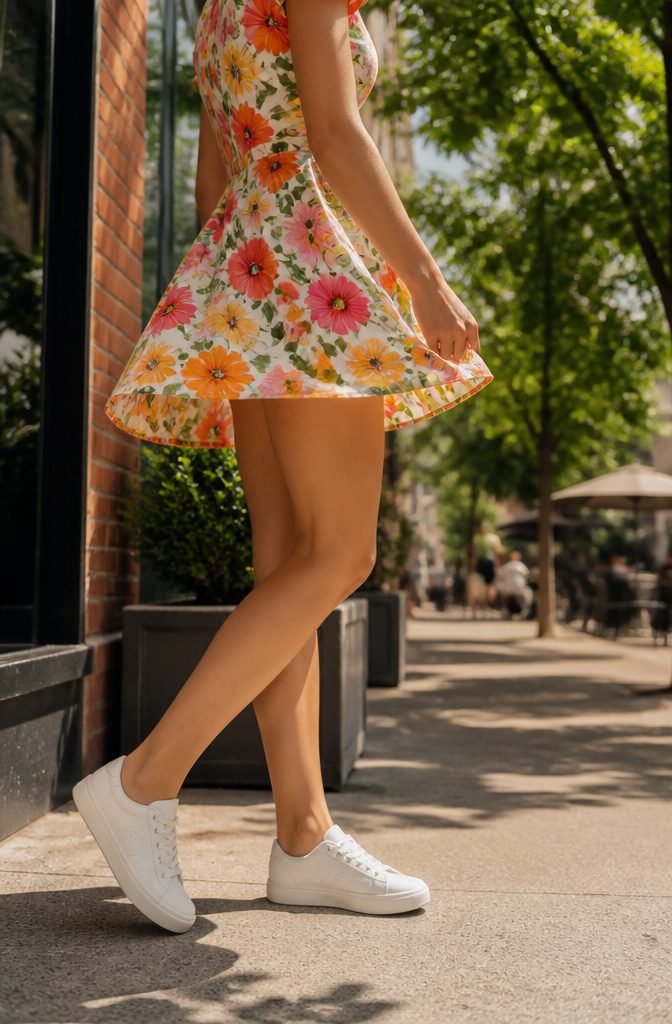
A minidress with leather sneakers hits an easy rhythm that reads as intentional, not lazy. The leather matters here: it keeps the shoe from looking like you grabbed gym gear on the way out, and that slight structure holds its own against shorter hemlines. Bold patterns on the dress need that counterweight. A loud floral or graphic stripe against a clean white or cream leather sneaker lets the eye rest somewhere. Reverse it and the whole thing turns into noise.
This pairing owns casual summer days and errand blocks because it moves. The skirt gives you air, the sneaker gives you miles. A flirty pleated mini against a low-profile leather trainer feels younger than ballet flats and less try-hard than heeled sandals. Keep the sneaker classic when the dress gets loud is the only rule worth remembering.
2. White Dress and Sneakers
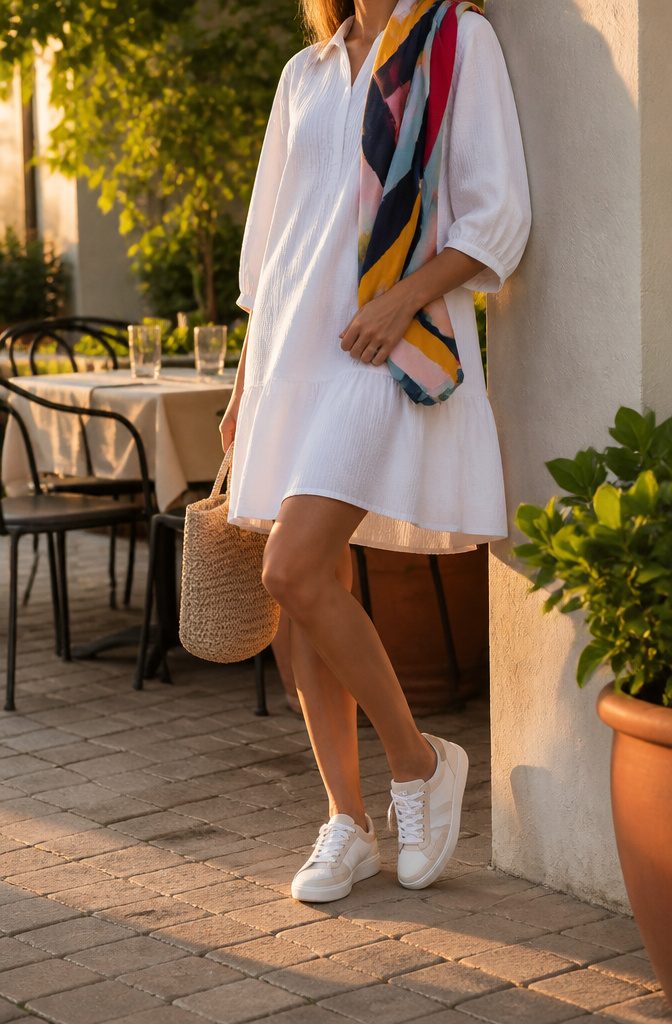
A white dress with sneakers can look like you forgot to change shoes, or it can look like the whole point. The difference is usually the sneaker itself. White retro sneakers or slim, low-profile shapes keep the line clean; chunky dad styles work only when you are deliberately clashing, like throwing them against something frothy or tulle. Most Saturdays, the narrow silhouette wins.
Color is what saves this pairing from becoming a uniform you sleepwalk through. After six wears, the same white-on-white base needs a jolt. A bright jacket or scarf against the dress does the job without touching the shoes. The dress stays the neutral, the accessories move, and the sneakers stay low enough that they do not compete.
Proportion matters more than fabric here. The dress should hit at the shin or above; any longer and the eye starts reading "grandma" instead of "intentional." Linen, poplin, or a soft t-shirt knit all work, but the sneaker must stay slim if the dress has any volume at all.
3. Maxidress and Sneakers
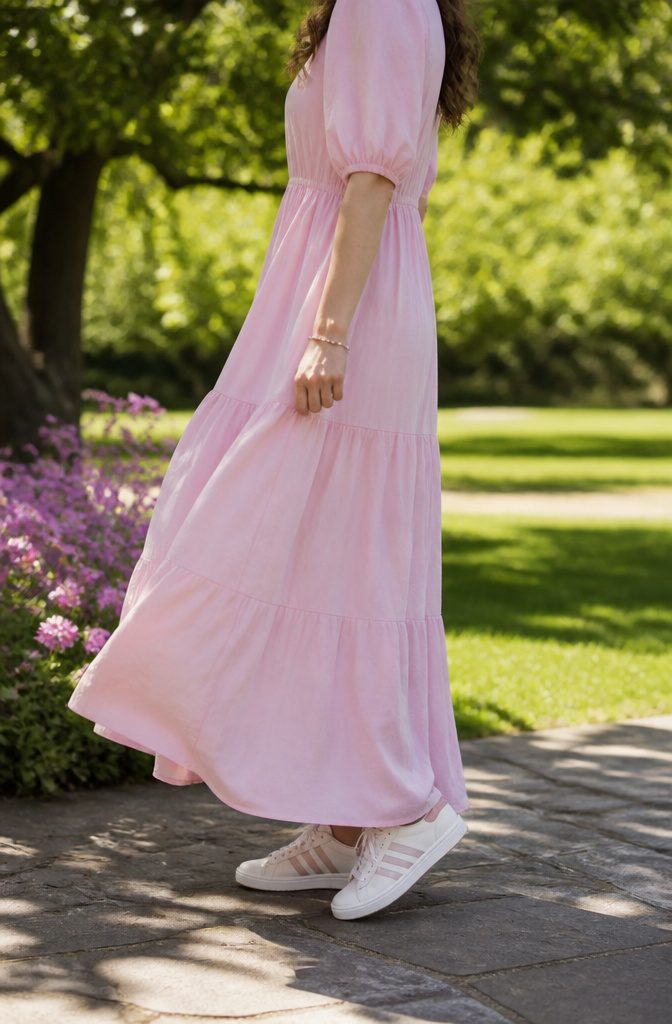
A maxidress with its full skirt and trailing hem can read as evening-only or simply too much fabric for a Tuesday, but the right sneaker cuts through that formality entirely. Retro runners like a pair of New Balances give it the kind of off-duty energy that looks intentional rather than like you forgot to change shoes.
The color coordination is what keeps it polished. A solid-color maxidress with sneakers in a complementary shade, red against pink or baby blue with powder pink, reads editorial rather than sloppy. Classic white Adidas works too, though it is not the only option. What matters is that the sneaker and dress speak to each other rather than compete.
For length, the hem should skim the top of the sneaker without pooling. A true floor-grazing maxi needs a slimmer sole to keep the fabric from dragging; a slightly shorter maxi, one that shows a bit of ankle, can handle a chunkier runner without looking weighted down. The proportion to watch is where the fabric ends and the shoe begins.
4. Cocktail Dress and Sneakers
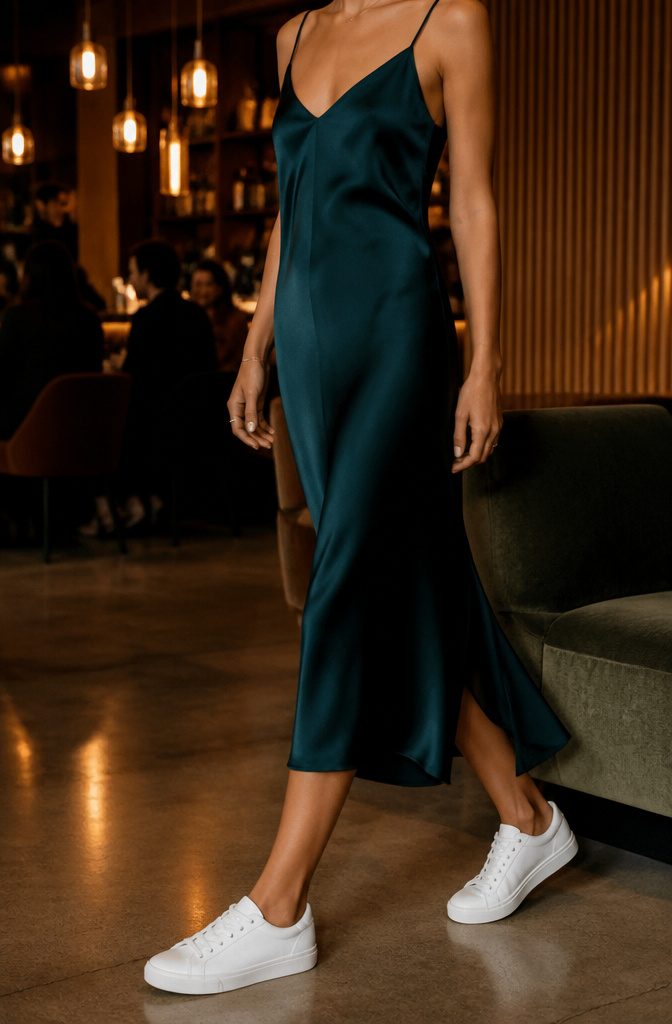
Sneakers stopped being just daytime footwear somewhere around 2015, and by now the move into eveningwear is less about rebellion and more about dressing for what the night actually involves. A slip dress in silk or satin is the cleanest way to make this work; the fabric has enough polish that a low-top Adidas or New Balance reads as intentional rather than apologetic. The key is keeping the sneaker itself restrained: white leather, minimal logos, no visible wear from the commute. A bodycon minidress with a chunky high-top is a different play entirely, bolder and younger, better for a bar than a seated dinner.
Not every cocktail dress survives the swap. Taffeta, heavy beading, or anything that needs a heel to hold its line will look like the shoes were forgotten in the car. The cut matters too: something that skims the body, with a hem that moves, works because the sneaker becomes part of the rhythm of the outfit. Stiff fabric and a floor-length hem fight the shoe instead. I draw the line at actual formal events, where the invitation implies a level of effort that sneakers still break. But for a dinner date with walking after, or a party where most of the night is spent standing, the comfort is real and the look holds up if the dress earns it.
5. Midi-Dress and Sneakers
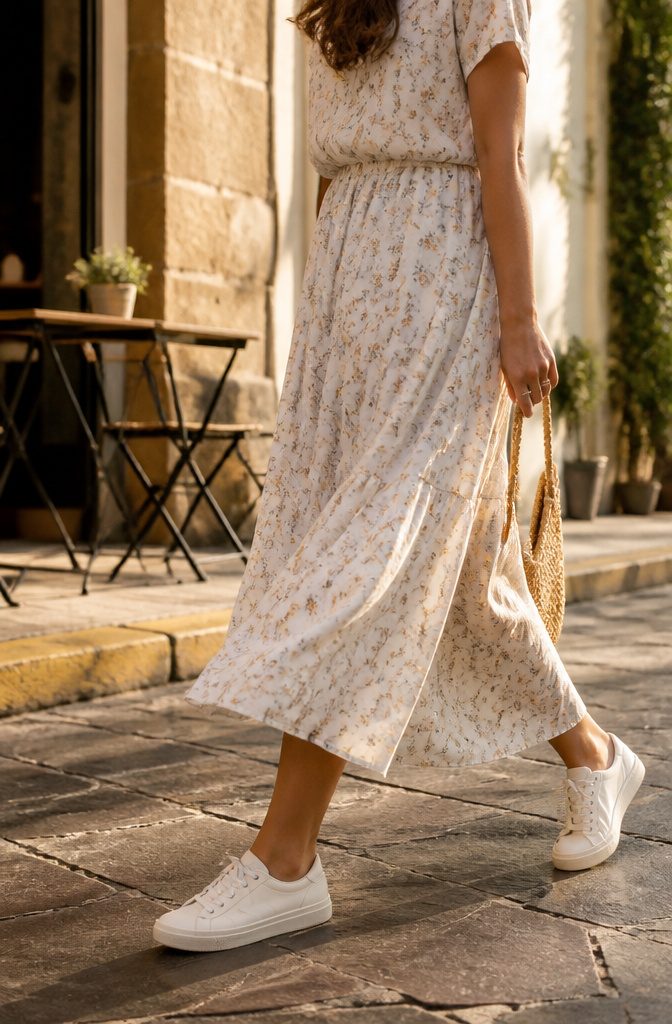
A midi-dress gives you the most mileage with sneakers because the hem sits at the shin or just above, leaving enough leg visible to keep the line from looking chopped off. The sweet spot hits mid-shin: any lower and the eye starts seeing a grandmother’s hemline where the dress and shoe compete for the same visual territory.
Proportion rules shift hard with sole thickness. A fuller, flowier dress needs a slimmer sneaker; the narrow silhouette keeps the volume in check so you don’t look like you’re wearing athletic gear by accident. Chunky soles have their place, but they read gym-first and can overwhelm anything with real drape or a defined waist.
Fabric weight matters more than print. Linen or a soft t-shirt knit falls cleanly and moves with the shoe rather than fighting it. The balanced look comes from one element doing the work: either the dress has structure and the sneaker stays minimal, or the sneaker makes a statement and the dress drops to a simple column shape. Get both pieces shouting and the outfit collapses into costume.
Balancing Proportions and Textures
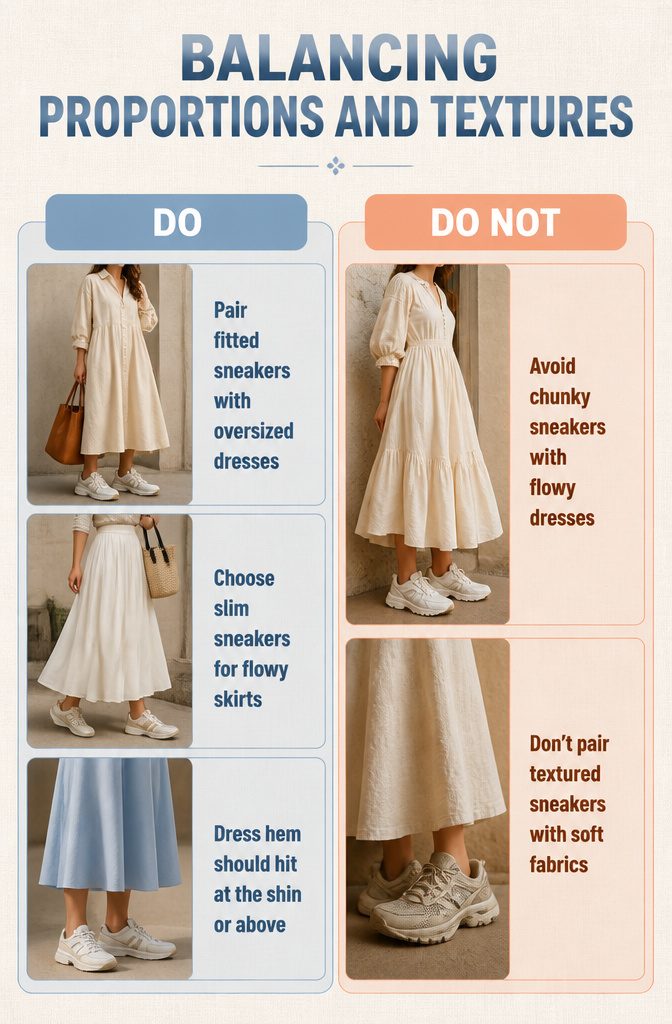
Chunky sneakers and flowy dresses fight each other for attention in a way that reads accidental, not styled. The volume at the hem and the bulk at the foot create two competing focal points, so the eye never settles. Slimmer sneakers, something like a narrow leather New Balance or a ballet sneaker, let an oversized midi or a full skirt breathe. The silhouette stays anchored without being weighed down.
The reverse works too. A fitted sneaker under an oversized shape gives the whole outfit intention; it says you chose the contrast rather than defaulting to comfort. Texture sharpens the message further. Linen or a soft t-shirt dress against smooth leather reads considered, while pairing that same linen with a heavily textured athletic upper can look like you grabbed what was closest.
What convinced me, reading through a dozen of these breakdowns, is that the dress hem should hit at the shin or above. Any lower and the sneaker starts to disappear, which is where the grandma effect creeps in. Proportion is not about matching bulk to bulk; it is about giving each piece enough visual room to do its job.
Dressing for the Occasion
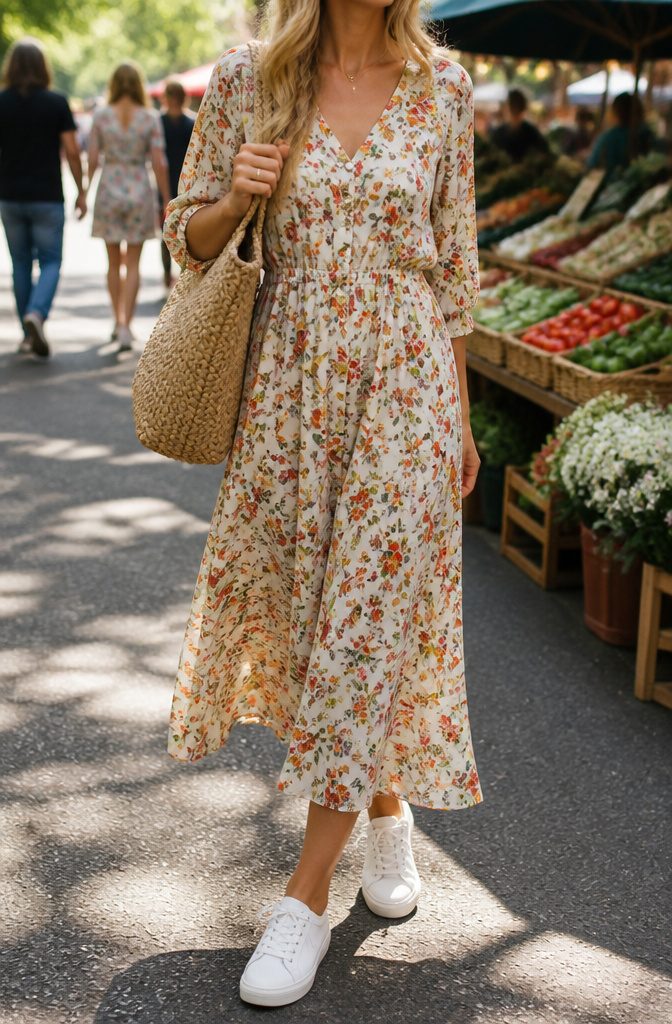
The real question is not whether sneakers work with a dress, but where the pairing stops working. A floral midi dress with clean white sneakers reads perfectly for a Saturday farmers market. The same combination at a wedding reception crosses a line most guests still notice, even if fashion editors call it a flex.
The shift point is usually the shoe’s bulk, not the dress. A narrow sneaker silhouette keeps a midi dress or shirt dress in daytime territory; chunky, athletic styles drag even a casual outfit toward gym wear. Proportion matters here: a fuller dress needs a less bulky white sneaker underneath it, and a hem that hits at the shin or above keeps the look intentional rather than accidental.
Moving up the formality scale takes deliberate work. The sparkle of a cocktail dress actually pairs better with lace-up sneakers than you might expect if the night involves dancing, but Keds or obvious athletic branding still read as underdressed for truly formal events. Accessories do the heavy lifting. A denim jacket over a mini dress with white sneakers is casual; lose the jacket, add small earrings and a structured bag, and the same dress with the same shoes edges closer to dinner-appropriate. Swap the sneakers for sandals after dark, and the outfit completes its shift.
Linen and t-shirt style fabrics keep things casual by nature. Heavier or more structured materials ask more of the shoe to match them, and that is where most attempts fall apart.
Sneaker Brands That Work
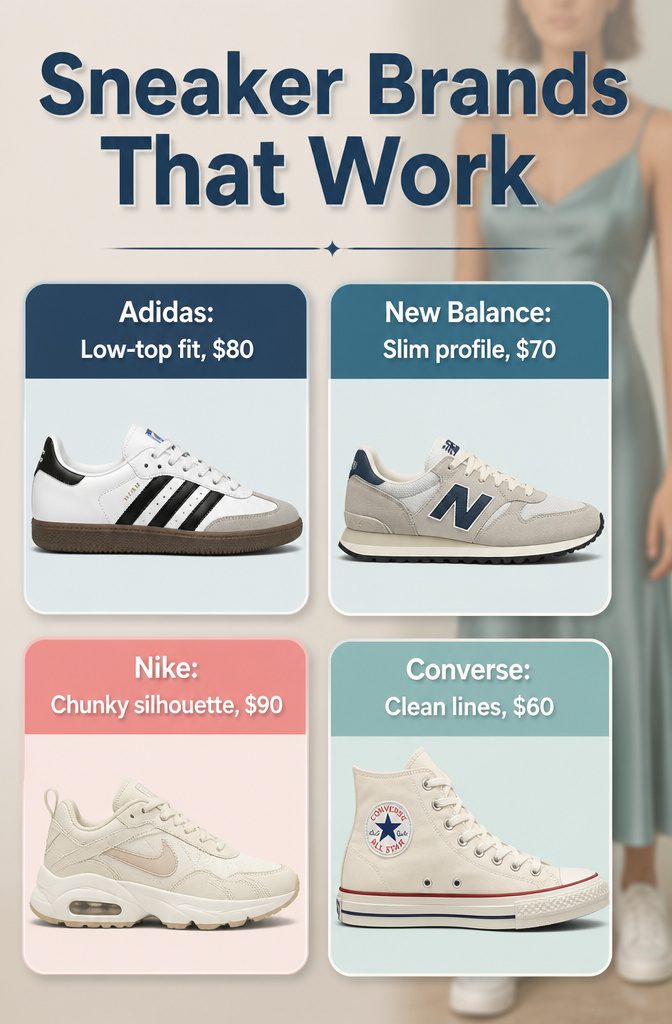
Adidas and New Balance both make low-top sneakers that sit clean against a slip dress without breaking the line, while a chunkier Nike or high-top Converse will push the silhouette wider. The fuller the dress, the less bulky the sneaker should be; a wide midi that hits at the shin needs a slim profile underneath, not a platform sole that competes for space. I have worn Converse with bold patterned minidresses and the simplicity does the balancing work, letting the dress read as the point rather than the shoe. Tube socks or scrunched ankle socks shift the tone toward old-school athleticism, which pairs better with a canvas upper than with leather. Brand loyalty is the wrong filter here. The question is what the dress is already doing: a bodycon minidress wants the visual weight of a chunky sole, a taffeta slip wants the restraint of something low and narrow. Choose the sneaker that answers the dress, not the one with the logo you prefer.
Frequently Asked Questions
How do I wear sneakers with a dress?
Pick a dress that hits at the shin or above, then match the sneaker bulk to the dress volume. A full skirt needs a slim profile underneath; a fitted mini can handle a chunkier sole. The eye should settle on one focal point, not fight between two competing shapes.
What types of dresses go well with sneakers?
Minidresses, midi-dresses, maxidresses, white dresses, and even cocktail dresses in silk or satin all work. The cut and fabric matter more than the category: linen, poplin, and soft knits move with the shoe, while stiff taffeta or heavy beading fight it.
Can I wear sneakers with a formal dress?
For seated dinners and events where the invitation implies real formality, sneakers still break the dress code. Slip dresses in silk or satin paired with clean, minimal sneakers work for standing-room parties or dinner dates with walking after, but actual black-tie occasions need a heel.