
Curl pattern decides which of these cuts and styles is yours: tighter curls take to voluminous shapes and wash-and-go styles, while looser curls suit softer, beachy looks.
Some of these, like the messy bun and beach waves, take almost no effort, while Art Deco waves ask for a stylist’s skill and a longer stretch of time.
1. Half-Up, Half-Down
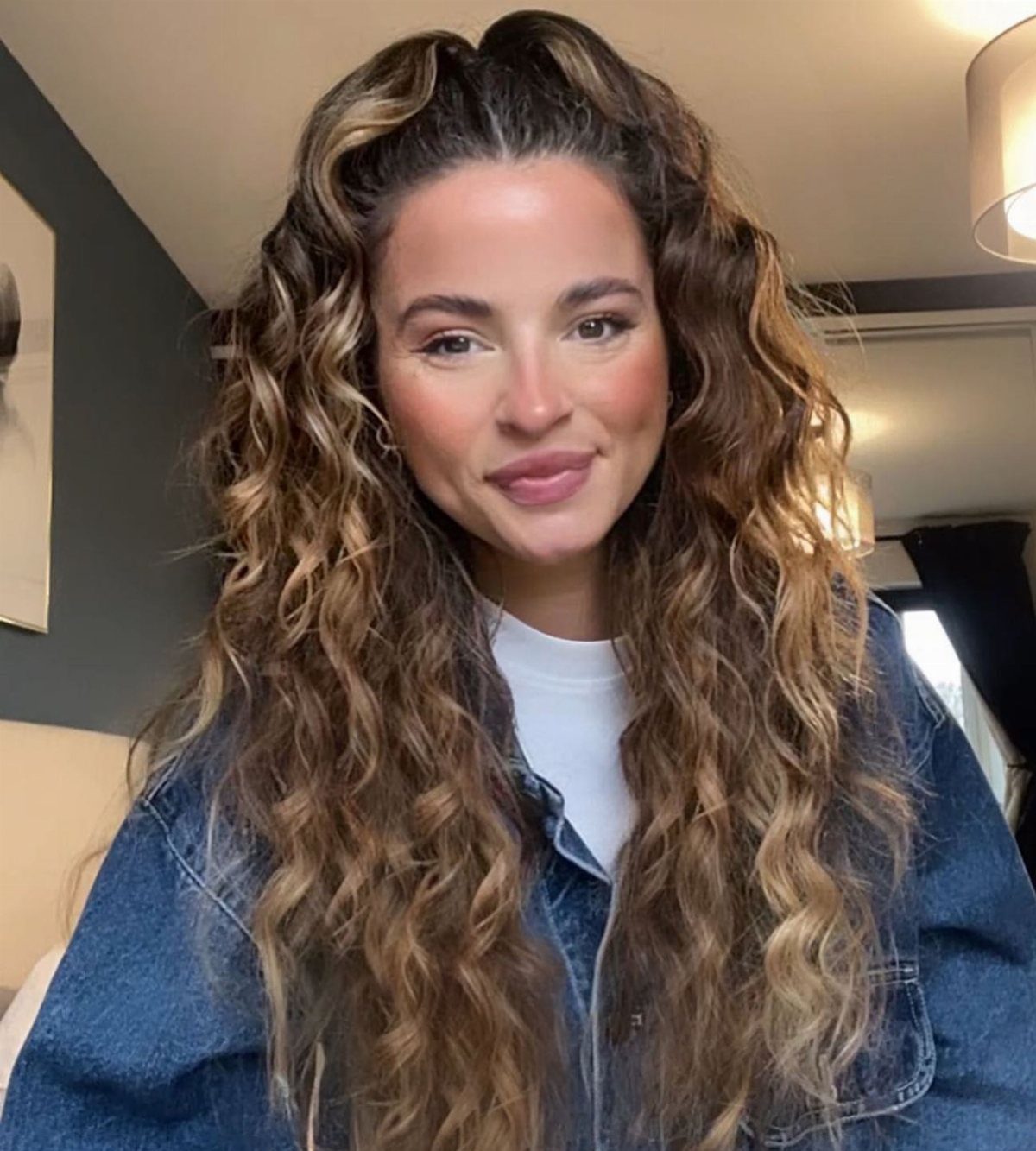
Pulling only the top section back keeps curls off the forehead while the rest of the length stays loose around the shoulders. I like it best for anyone who wants the face clear but doesn’t want to give up volume.
Gather the crown section and secure it at the back of the head, then leave a few curls out at the front so the shape looks soft instead of tight.
It takes about a minute once your curls are already styled.
2. Curly Ponytail
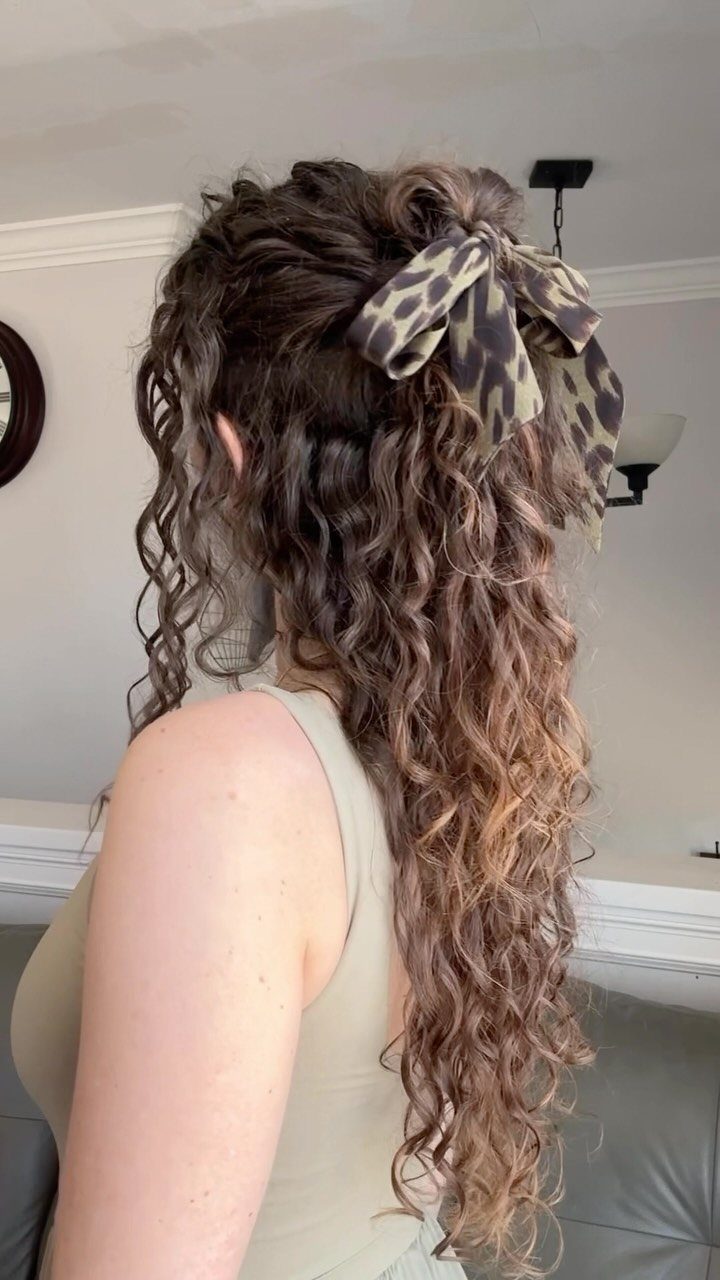
A ponytail is the simplest way to keep curls away from the face, and a bow turns it into a finished look instead of a default.
Gather the hair at the crown or nape, depending on how much lift you want, and let the ends spring up naturally.
I’d skip a tight elastic and choose a bow or scrunchie, which holds the curls without flattening them. Pull a few strands loose at the front if the shape feels severe.
3. Messy Bun
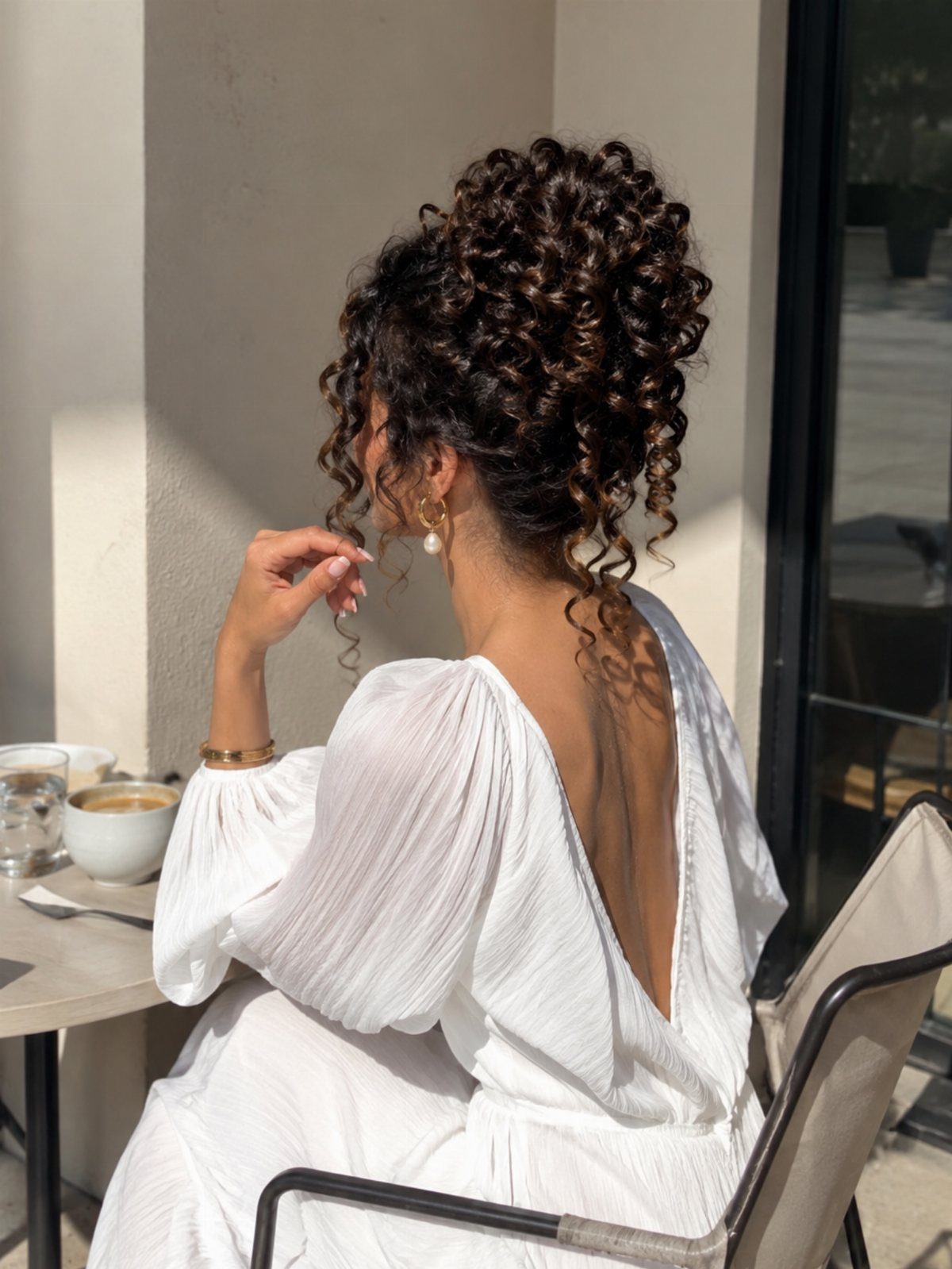
Messy buns suit curls because the texture does the work: no neat wrapping, no sharp parting, just a loose knot stacked high.
Twist the hair up, secure it, then tug a few curls out around the face so tendrils frame it.
This is the lowest-effort style on the list, and the looseness is the point. A bun pinned too tightly loses the soft outline, so keep your hands light.
4. Beach Waves

Beach waves run looser than true curls, with uneven bends that look slept-in instead of set. They suit hair that is wavy to loosely curly, and they work best when you leave the texture alone after styling.
If your curls are tighter, expect a springier version of this look.
I’d avoid brushing it out, since that breaks up the waves into frizz. Hands only.
5. Softly Layered Lob
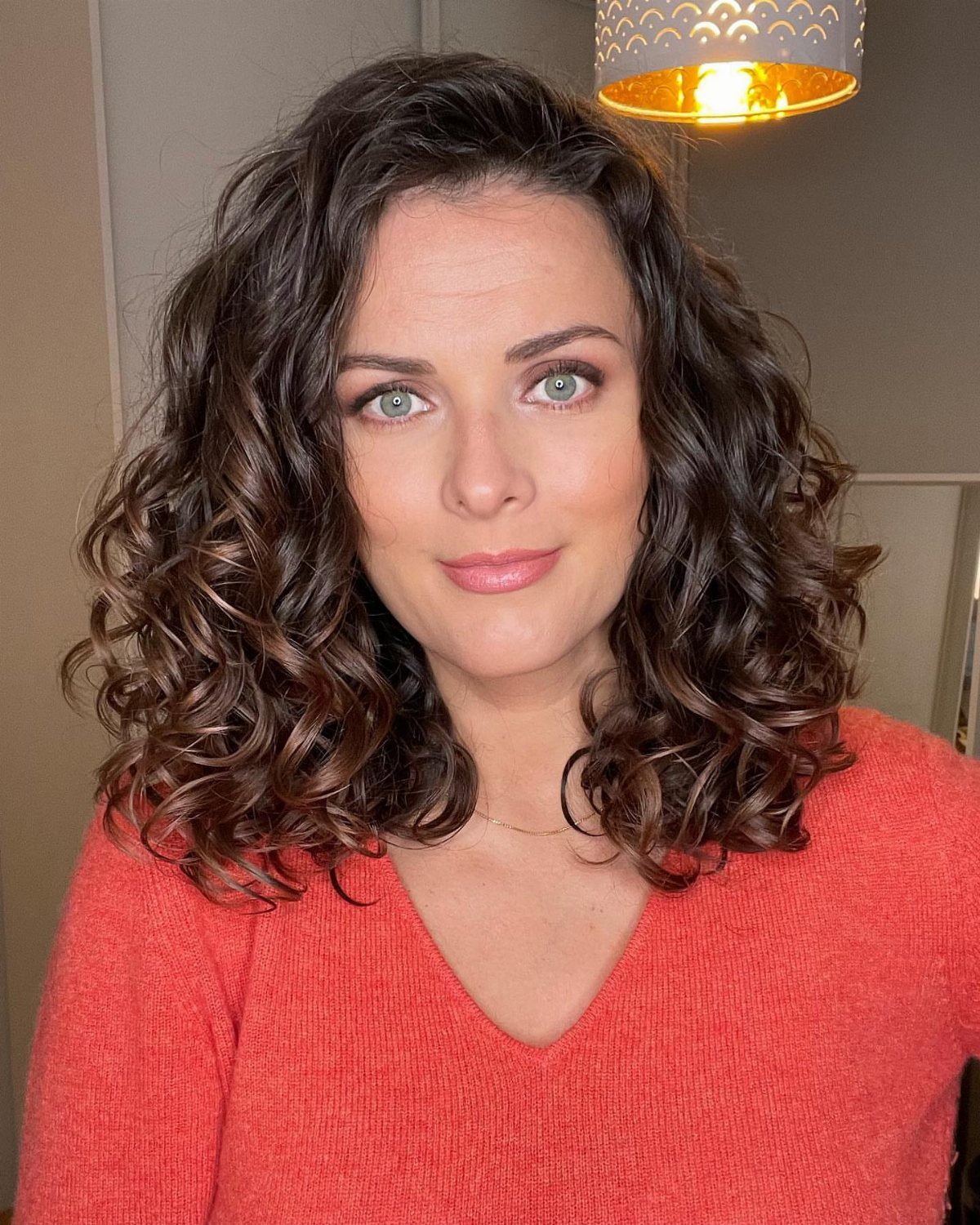
A lob with soft layers gives curls room to bounce without the weight of full length. The layers sit through the middle of the hair, which keeps the shape from stacking into a triangle.
When you book the cut, ask for a stylist who works with curls and cuts them dry or in their natural pattern. Bring a photo, and say you want soft layers instead of heavy, choppy ones.
6. Art Deco Waves
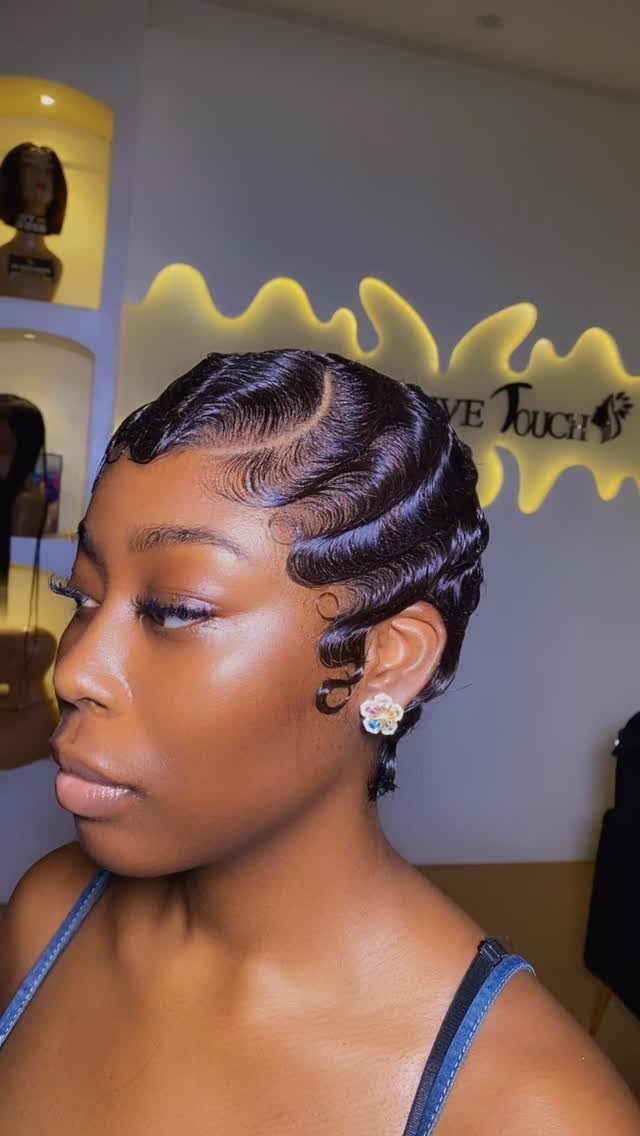
Art Deco waves are a sculpted, rounded shape built from smooth, defined S-curves that sit close to the head. This is a styled look for an occasion, not a wash-and-go.
It takes patience and a steady hand, and I’d leave it to a stylist who knows finger waves.
The glossy finish only holds if each wave is shaped carefully, so plan for more time in the chair than with any other style here.
7. Pixie Cut
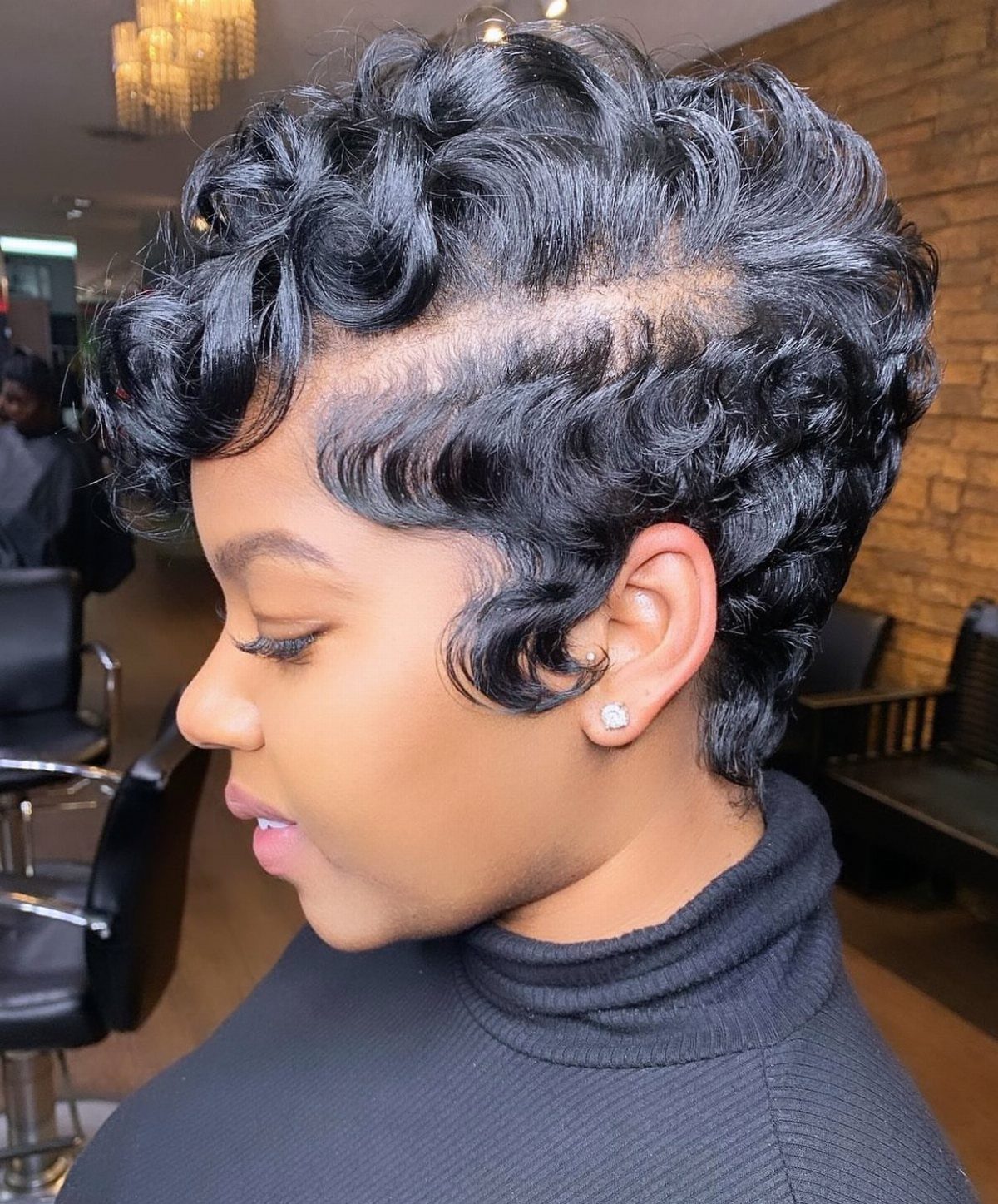
A pixie cut keeps the length on top and tapers the sides short, so the curls get height instead of hanging. That shape shows off volume in a way longer cuts can’t.
Short hair means almost no styling time, and it grows out into a bob without much fuss.
Ask for a stylist who cuts curls in their natural pattern, because the top needs to stay long enough to coil. Cut it too short up there and you lose the lift.
8. Curly Bob
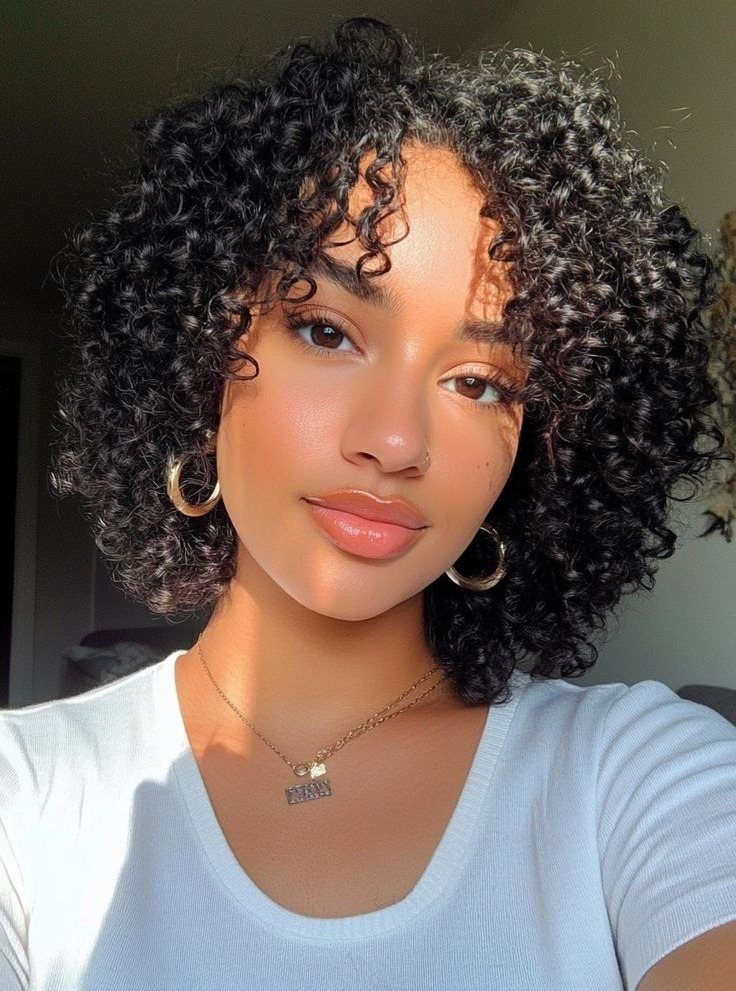
Gold hoops and a plain white tee sit well with a curly bob, since the cut itself is the statement. Kept short and shaped, it lets curls spring up and out instead of pulling them down with extra length.
I like this one for anyone tired of the weight of long hair but not ready for a pixie. Ask your stylist to shape it around your curl pattern, and let it dry without brushing so the outline stays rounded.
9. Curly Shag
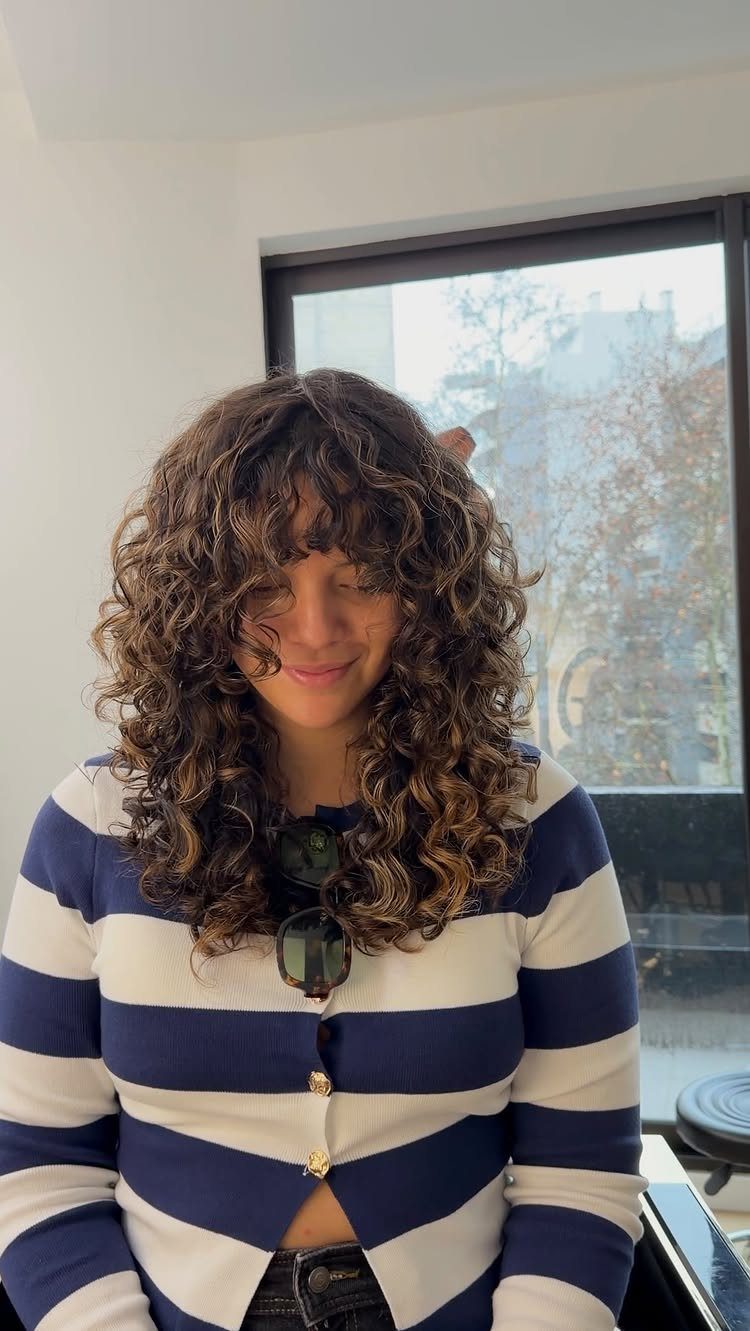
Shags earn their place by adding layers all over, so every curl gets room to move and stack. The result is a full, textured shape with a lot of movement, and curly bangs tie it into the face.
For the cut, bring a photo and ask for layers that follow your natural curl instead of straightening them out. Trims will matter more here than with a blunt cut, since the shape depends on those layers staying balanced.
10. Curly Bangs

Bangs on curls behave differently than on straight hair: they spring up and sit shorter than they were cut.
Adding a fringe works with your natural curl shape instead of fighting it, and it pairs well with a bun or headband.
Have them cut dry, so you see where the curl lands. I’d start a little longer than you think you want, since you can always take more off but can’t put it back.
11. Layered Cut
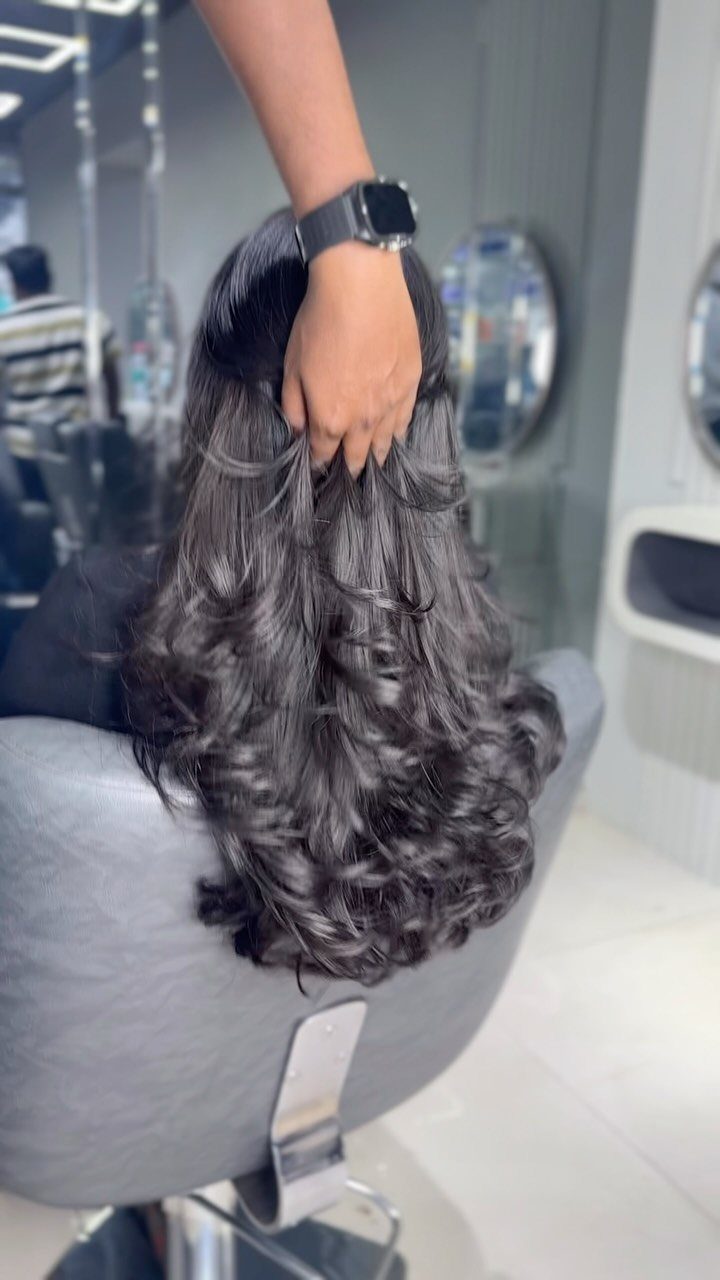
A layered cut spreads volume through the whole head instead of letting it pile at the bottom. You keep your length, but the curls get movement and separation, so the shape lifts rather than hangs.
It suits anyone who wants to stay long and still change how the hair sits.
Find a stylist who cuts curls, and ask for the layers to be placed with your curl pattern in mind. Done well, the length stays and the heaviness goes.
12. Curly Bob with Highlights
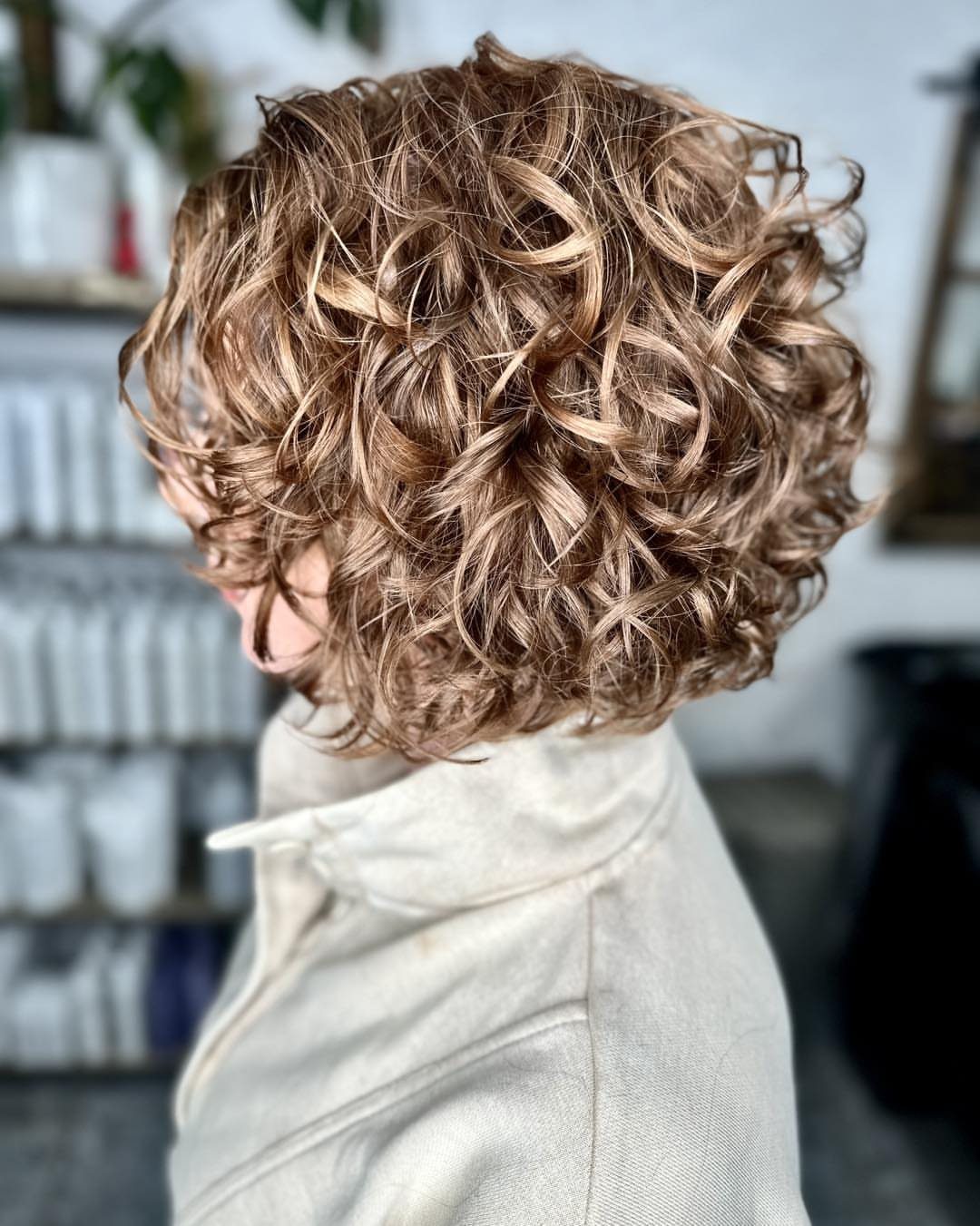
Highlights add depth to a curly bob because light and dark strands catch the light at different points along each curl. On light brown hair, golden blonde pieces give the shape shine and a dimensional look.
I’d keep the lightening soft and placed through the curls, not in heavy streaks. Color also adds a maintenance step to a cut that is otherwise low effort, so ask your colorist how to keep curls healthy afterward.
13. Curly Hair with Side-Swept Curls
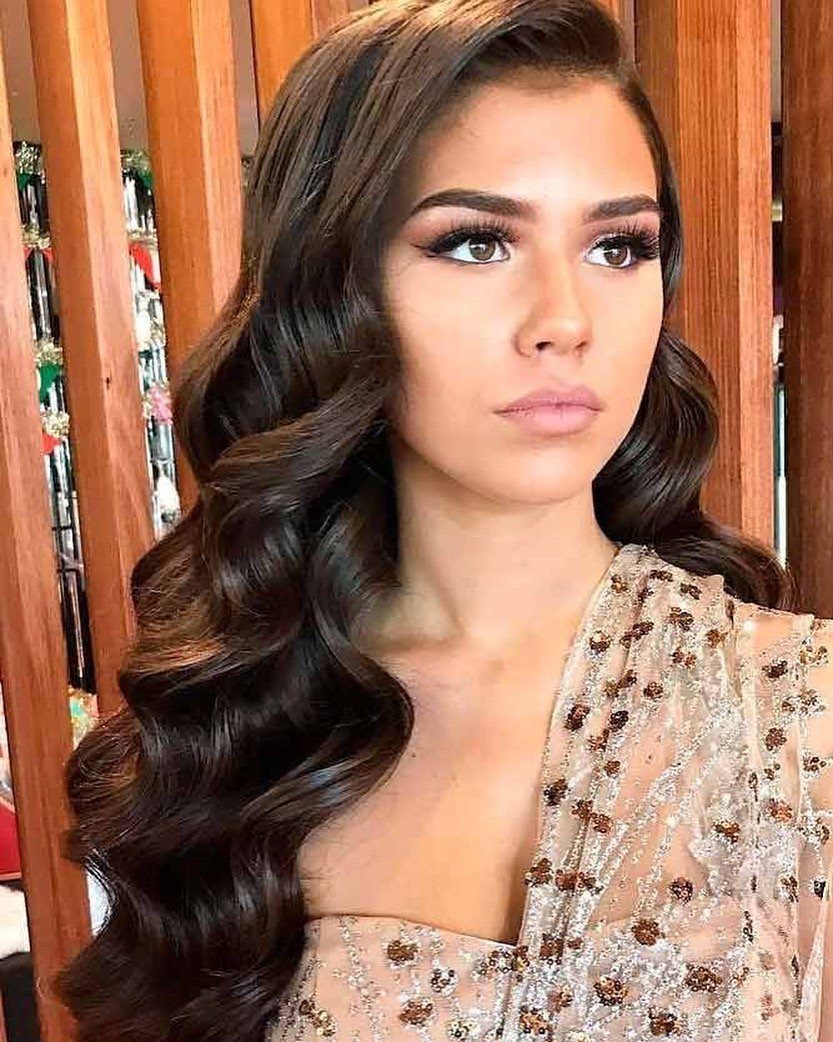
Sweeping all the curls over one shoulder gives long hair a dramatic, dreamy finish, and it pairs well with a dress that has its own sparkle. The off-center part makes the volume on the opposite side look fuller.
Style the curls first, then part off to one side and push the length across with your fingers.
I’d skip a brush, which breaks the curl pattern into frizz. A few pins or a small clip behind the ear help if the sweep slips.
14. Soft Curly Bangs with Layers
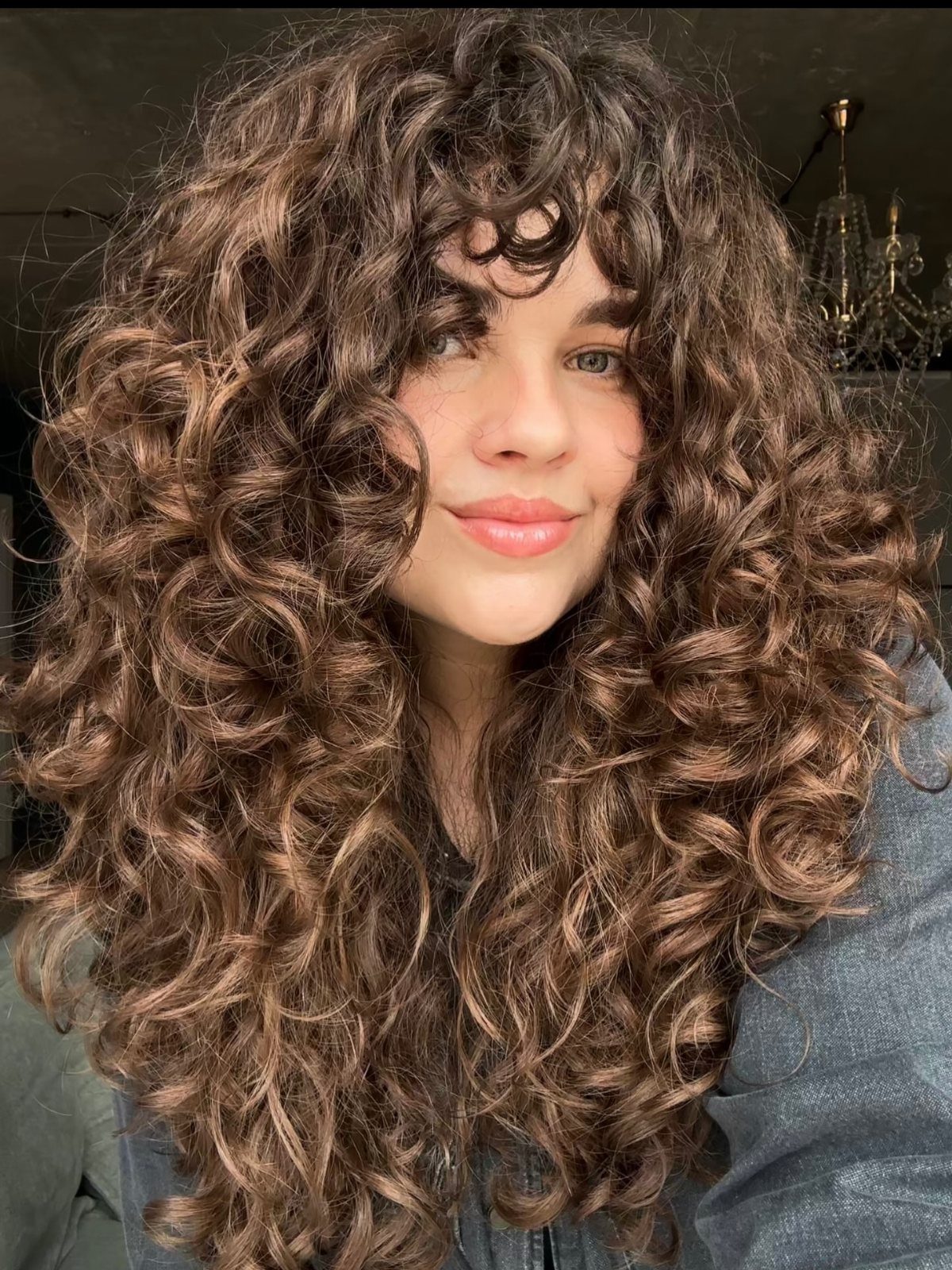
A soft curly fringe on top of layered length is an easy pairing, because the layers lift the whole shape and the bangs blend into them instead of sitting as a separate block.
Curls spring up once cut, so the fringe will land shorter than it looks wet.
Ask for both to be cut dry, with the bangs left a little long to start. Pick a stylist who works with curls and bring a photo of the finish you want.
15. Long Kinky-Curly Layers
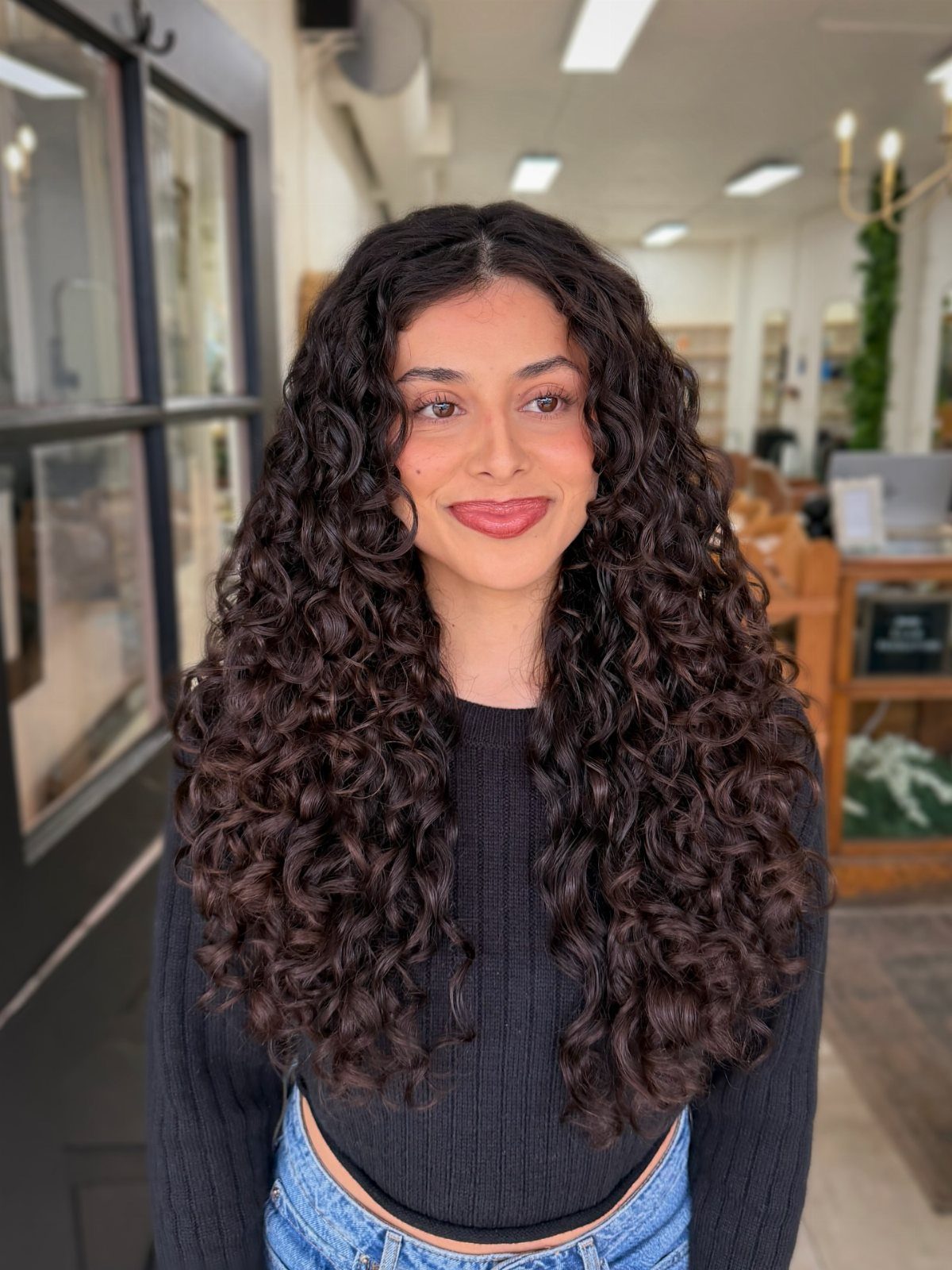
Long kinky curls can sit heavy, so shorter pieces around the face take some weight off and give the shape softness and movement. The length stays, and the curls get room to stack instead of hanging in one mass.
Ask a stylist experienced with tight curl patterns to cut the face-framing layers dry, so you can see where each coil lands.
Skip any plan to brush it out. Regular trims will matter, since the layers only work while they stay balanced.
16. Curly Lob
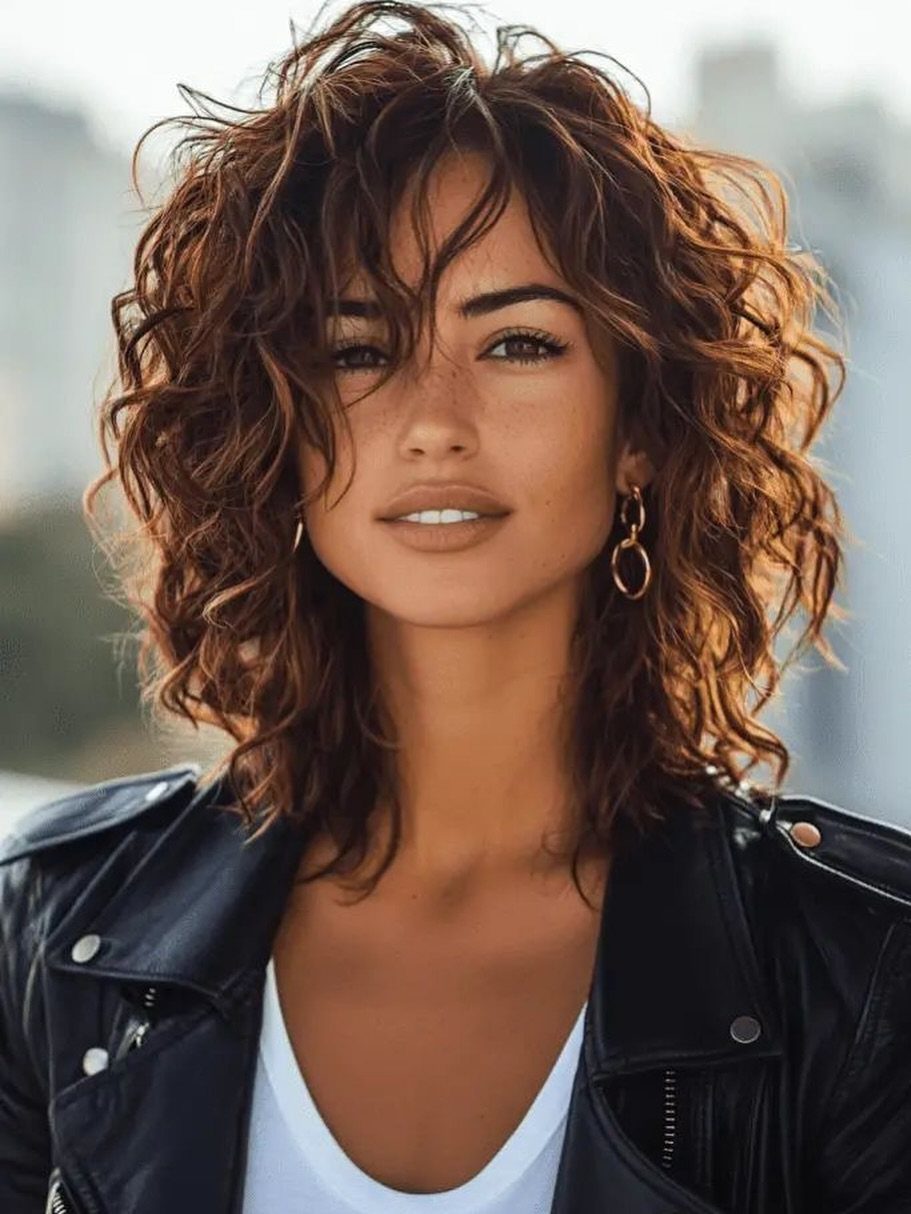
A curly lob sits between a bob and shoulder length, so you keep some weight and movement without the upkeep of long hair.
With bangs added, the shape frames the face, and the length leaves plenty of room to pull it back when you want.
I’d book a stylist who cuts curls in their natural pattern and ask for the length to land at the collarbone or just above. Curls shrink as they dry, so go a touch longer than you think you need.
Choosing a Cut for Curls
Curl pattern should settle the question first. Tighter curls tend to look best in voluminous shapes, defined curls and wash-and-go styles, while looser curls suit softer, beachy looks.
Face shape, texture and hair health come next.
Before the appointment, collect a few reference photos and be ready to talk through your hair history: color, chemical treatments, how often you use heat, and what your routine looks like now.
A stylist who works with curly and coily hair can only judge what the cut will do if they know the condition you’re starting from.
Alternatively, if you have fine, curly and coily hair, a wet cut might be more suitable. Keep in mind that curly hair shrinks when dry, so consider leaving some extra length to account for this.
— ELLE
Curl Care and Heat
Work conditioner through with a wide-tooth comb, then rinse with lukewarm water.
Blot with a microfiber towel, then smooth a curl jelly or cream over damp hair and scrunch.
Running a brush through dry curls breaks apart the clumps and the product on them, so the pattern loosens and the hair turns puffy and rough-looking.
Cutting back on straighteners and curling irons may help curls recover their bounce. Air-dry when you have time, or use a diffuser on low heat.
Sleeping on silk cuts down the friction that roughs up curls overnight, so you wake up with less frizz.
Cutting and Trimming Curls
The cutting method depends on your hair.
Plan on a trim every 8–12 weeks. Curls tend to split and snap more easily than straight hair, and a trim every few months keeps the shape clean while stopping a split end from working its way further up the strand.
If you’re growing your hair out, you can stretch the gap a little, but don’t skip trims. Small, frequent ones are easier on the hair than one big cut after the ends have split.
Frequently Asked Questions
Is it better to have layers with curly hair?
Usually yes, especially on medium to long curls. Cutting layers into curly hair moves fullness up and out along the whole head, so the shape stops pooling at the ends into a triangle and the curls carry less weight.
Ask a stylist who cuts curls to place the layers around your curl pattern, and request soft layers rather than heavy, choppy ones.
How can I enhance my natural curls?
In the shower, detangle with conditioner and a wide-tooth comb, keep the rinse lukewarm, then squeeze the water out with a microfiber towel rather than rubbing.
While hair is still damp, work in a curl cream or jelly and scrunch upward. Keep brushes away from dry curls; the bristles split the clumps apart, pull off the product, relax the pattern and leave a puffy halo.
A diffuser on low heat or plain air-drying is kinder to curls, and giving the flat iron and curling iron a rest lets the bounce come back.
How to ask your hairdresser for a curly hairstyle?
Book someone with real curl experience, and arrive with photos plus a clear idea of the length and shape you’re after. Tell the stylist your history as well: color, chemical services, heat habits and what you do at home now.
Because curls spring up as they dry, a cut that looks right wet will sit shorter, so request slightly more length than seems necessary.
A dry cut lets the stylist see where each curl lands, though a wet cut can suit fine hair better.
How often should you get your curly hair cut?
Plan on a trim every 8–12 weeks. Curly strands break and split more readily than straight ones, and steady trims hold the outline in place and stop a split from creeping up the shaft.
While growing out your hair, the gap between cuts can run a little longer, but skipping them altogether backfires. A light trim more often treats hair better than one large chop after the ends have already split.