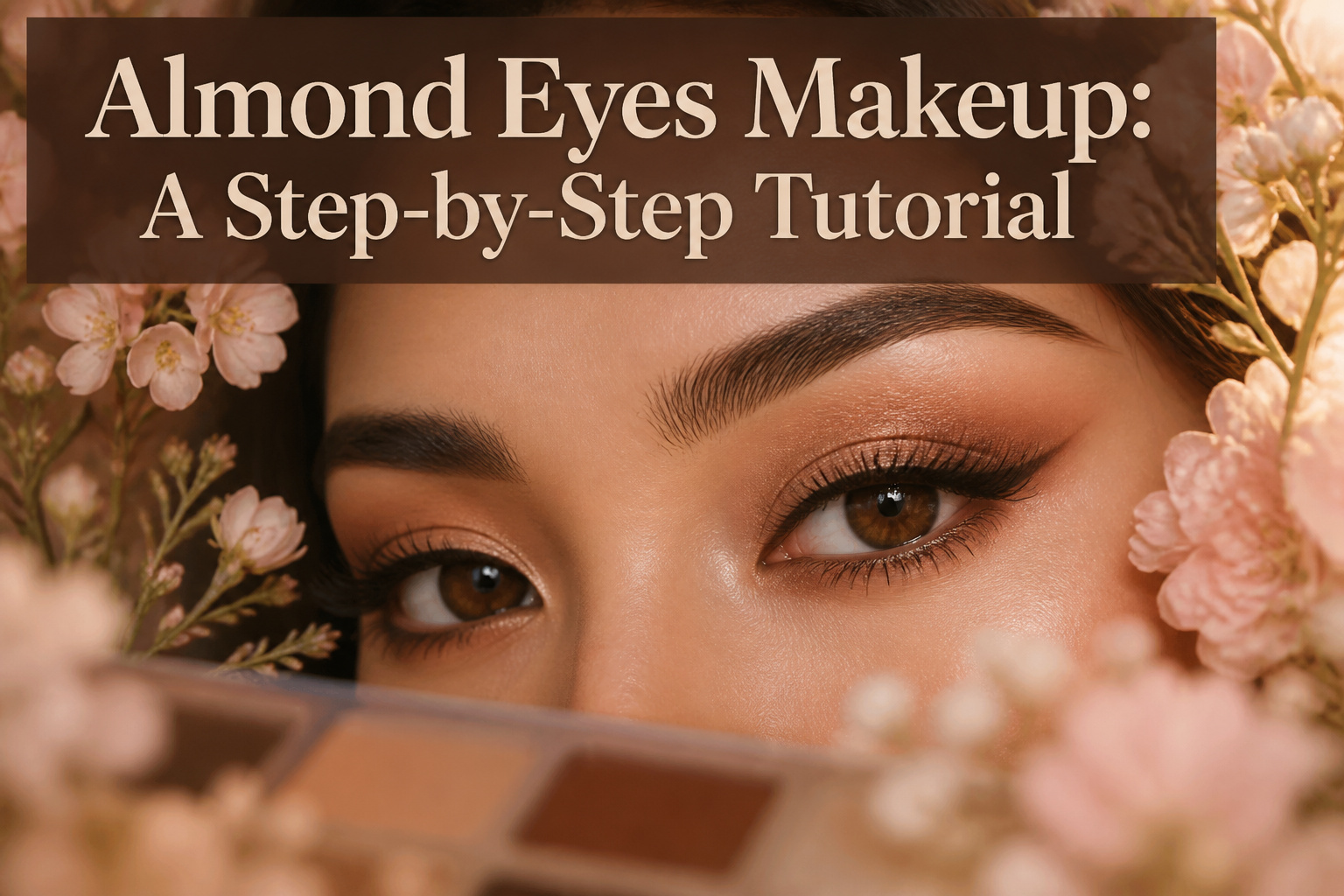
Almond eyes makeup is the technique of tracing and lifting an already-structured eye shape rather than building one from scratch. The catch is that the symmetry that makes almond eyes so balanced also makes asymmetrical fading obvious fast, so a skipped primer or a crease shade two steps too dark can flatten the natural lift entirely. The first time I used a color too deep, I visually pushed my lid down instead of framing what was already there.
Prime Your Lids
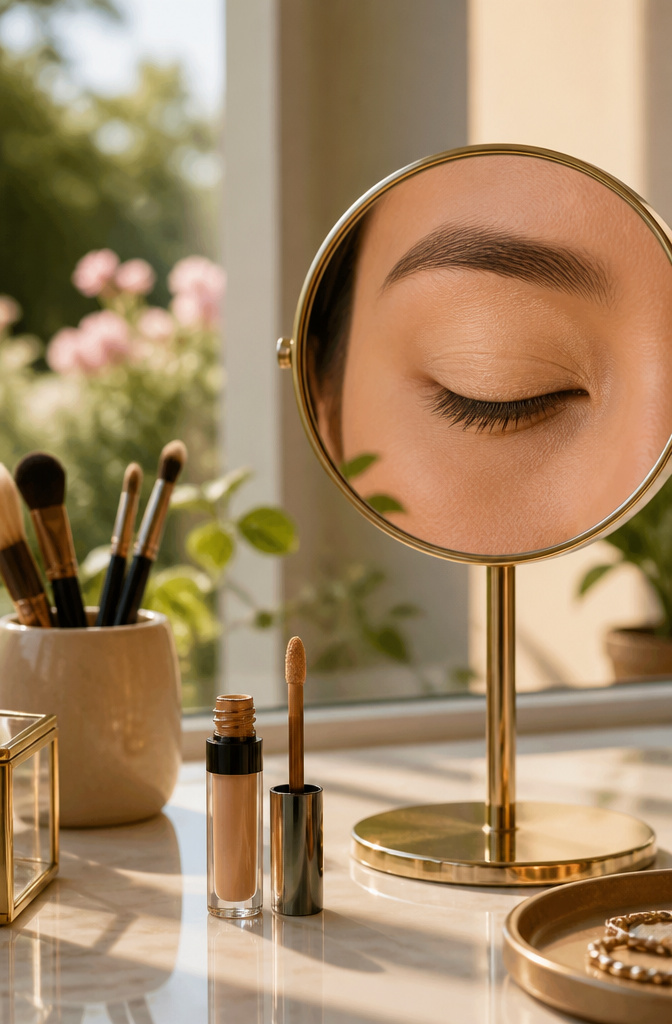
The first time I skipped primer, my shadow had creased into a line across each lid by noon, and I spent the rest of the day looking like I’d slept in my makeup. Almond-shaped eyes have a slight natural fold that sits lower and tighter than rounder shapes, which means any oil migration travels straight to that crease and pools there. An even base matters more for this eye shape because the color has nowhere to hide if it breaks up; the symmetry that makes almond eyes so balanced also makes asymmetrical fading obvious fast.
Eye-safe primer or a full-coverage concealer sets color where it belongs. The L’Oréal Paris Infallible Full Wear Concealer works as well as any dedicated primer I’ve tried, and the 24-hour wear claim holds up on lids if you let it dry completely before layering shadow on top. Blend a thin layer from lash line to brow bone, wait the thirty seconds, and the difference in how pigment adheres is immediate.
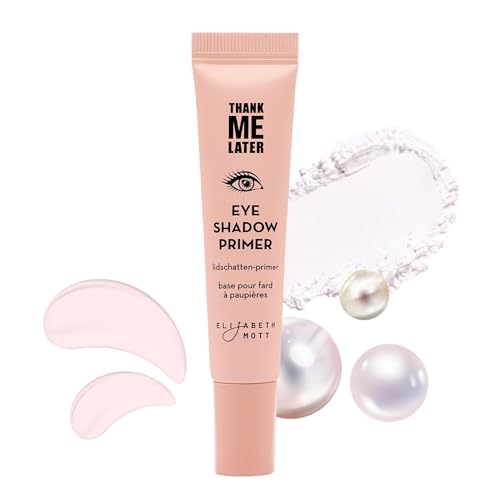
KOREAN BEAUTY INNOVATION: We work with the finest Korean manufacturers to bring the best Korean skincare, korean eye primers and beauty to you; our eye primer for older women and all ages is infused with effective Korean ingredients and breakthrough formulas; cruelty-free, Leaping Bunny approved, dermatologist and allergy tested

LONG-LASTING EYESHADOW BASE: Smooth, creamy primer helps lock down shadow for all-day wear and reduces fading or creasing. Boosts color intensity for vibrant eye looks.

Preps Lids for Eyeshadow: Apply a small amount to each lid to extend the wear of any eyeshadow. Even the loosest glitter pigments adhere with ease.
Apply Eyeshadow
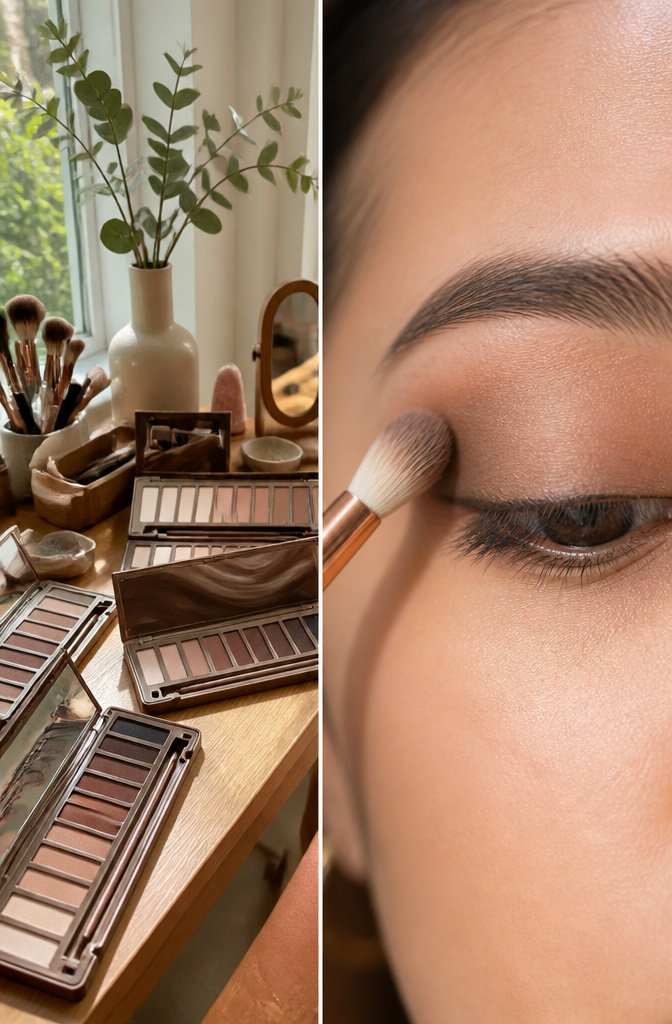
A neutral base across the entire lid gives you the smooth canvas that makes everything else blend cleanly. I use something close to my skin tone, matte or barely shimmery, and sweep it from lash line to brow bone. The Urban Decay Naked collection has the range for this; the lighter beiges and taupes do the groundwork without fighting what comes next.
The medium shade goes into the crease, and this is where I once used a color two steps too dark. I thought depth meant drama, but a deep brown packed into the fold visually pushed the lid down and flattened the natural lift of the almond shape instead of framing it. The almond eye already has structure; the crease shade should trace it, not build a new one. A tone just slightly deeper than the base, blended outward and upward toward the tail of the brow, keeps the eye’s own architecture intact.
Finish with a lighter highlight at the inner corner. A pale shimmer, tapped in with a pinky finger, catches light and opens the eye toward the nose. The gradient from bright inner corner through defined crease to the natural point at the outer edge is what reads as almond, not any single step on its own.

Long-Lasting Wear: Award-winning eye shadow provides up to 12 hours of wear for a flawless look.

BRILLIANT EYE BRIGHTENER: Our versatile cream-to-powder highlighter and eyeshadow stick illuminates and awakens the eyes, providing an instant lift and a soft wash of color. This multi-tasking, long-lasting, waterproof eyeshadow stick with a built in sharpener comes in both shimmer and matte formulas and features Ring Light Technology for a soft, diffused glow. Nourishing ingredients help the formula glide smoothly and stay crease-resistant.

【Rich Pigment & Versatile Shades】Featuring an array of multi vivid shades including black, white, brown, purple, green, and beige, this pressed powder eyeshadow palette is designed for crafting stunning eye makeup looks that range from subtle to bold. Each shade is highly pigmented for impactful color that draws attention
Define Your Upper Lash Line
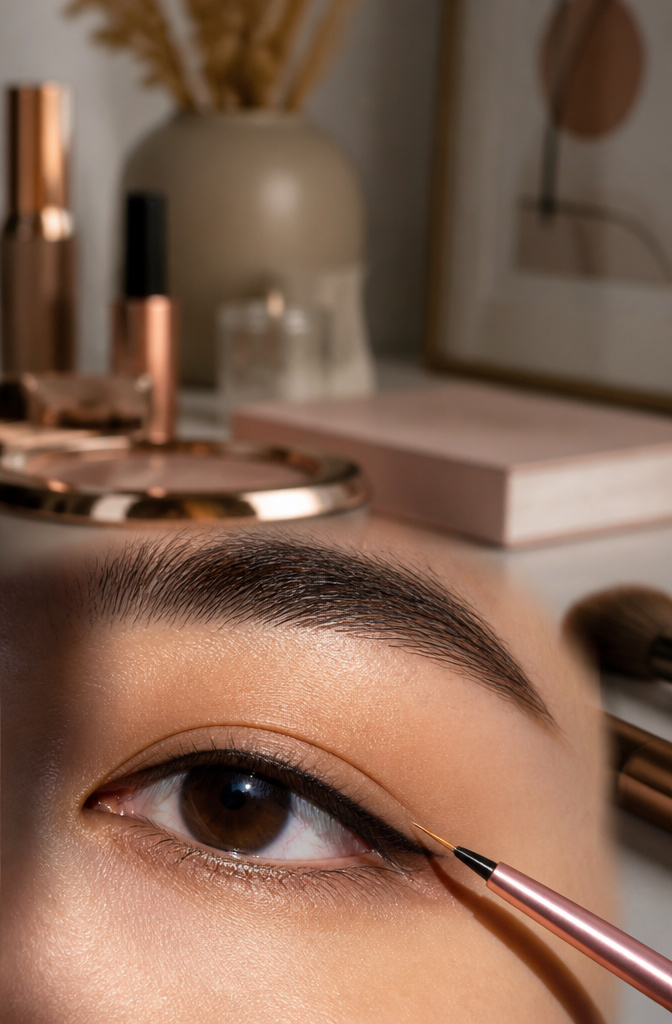
A thin line along the upper lashes thickens toward the outer corner, and the pressure at the inner corner must stay feather-light or the eye closes in completely. The line should barely exist where the lid meets the tear duct, then gradually deepen as it travels outward, reaching its full weight only in the final quarter of the eye. Too much thickness at the start erases the almond shape entirely; too little throughout and the lift you are after disappears into nothing.
The tool that finally let me control this was the REAL TECHNIQUES Fine Liner Brush. Other brushes either laid down too much pigment at once or wobbled on the transition, but the fine tip lets the pressure do the work instead of the wrist. Kim Kardashian keeps her inky black liner similarly restrained at the inner corner, and the effect is what reads as almond rather than round: the eye stays open, the shape stays lifted, and the drama gathers where it belongs.

NUDE-TONED CREAM SHADOW: Touch Base For Eyes is a versatile, nude-toned creamy eye shadow that comes in 3 shades: Canvas, Nude Rose, and Canvas Light.

ALL-IN-ONE PERFECTION: ARTDECO All In One Eye Primer - Your go-to solution for balanced, concealed, and long-lasting eyeshadow. Achieve flawless eye makeup with this light, matte, and creme-textured primer.

Easy to Use:Goes on smoothly without skipping, smudging or pulling, feeling so light you can't even tell you are wearing any. And also easily to remove with makeup remover, fast and clean, never worry about pigmentation.
Create a Winged Eyeliner Look
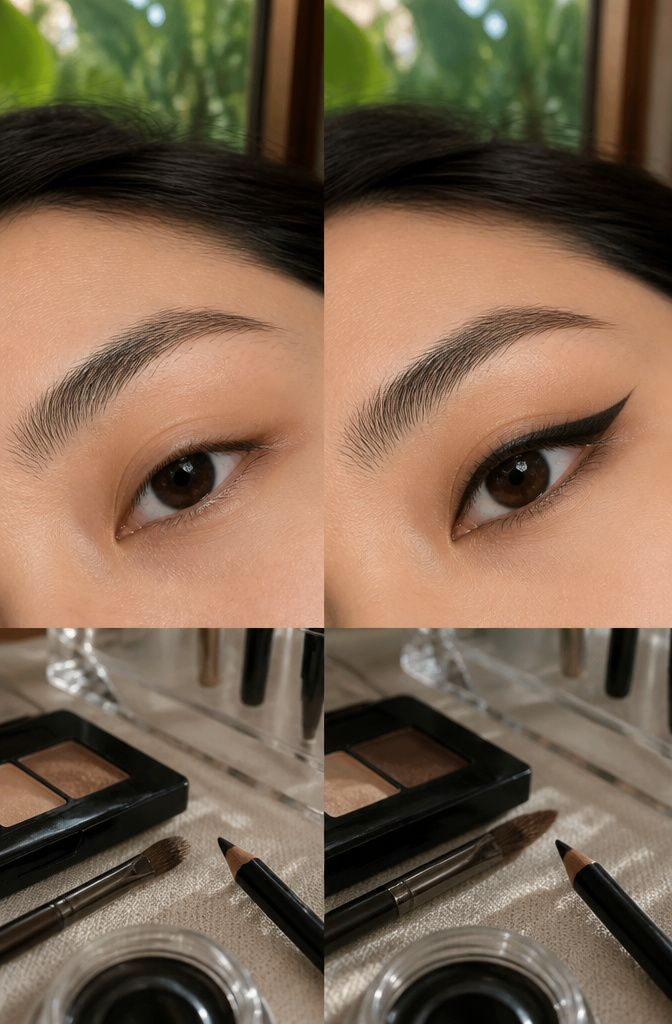
The first time I tried a wing on my almond-shaped eyes, I aimed the flick toward my eyebrow tail the way every diagram shows, and the result was pure cartoon: too high, too long, my eyes looked surprised in the wrong way. The angle fought my natural shape instead of following it.
What changed everything was tracking the lower lash line’s upward curve and letting that set the wing angle. Almond eyes already tilt up at the outer corner; the line you need is sitting right there. Draw the wing as an extension of where your lower lashes want to go, not as a new geometry project.
Wayne’s outside-in method works well with this: start the wing from the outer corner, bring the line inward to center lid, then fill back across. Keep the pencil or brush flush to the upper lash line so the base stays thin and clean. The wing length should lift, not launch; for most almond shapes, that means ending at or just past the brow’s outer edge, never chasing the tail itself.
A straight-across mirror check matters here. Eyes relax open differently than they scrunch in close-up application, so step back and look straight on before you commit to more liner. The wing that reads lifted from two feet away is the one that holds up.

Shimmering Chameleon Eyeshadow & Highlighter Palette-Experience the magic of holographic colors! This highlighter features a mesmerizing chameleon effect, shifting hues from different angles to reveal vibrant, multi-dimensional tones. With every light swipe, it unleashes kaleidoscopic brilliance-effortlessly complementing your mood or outfit to make you stand out in any crowd.
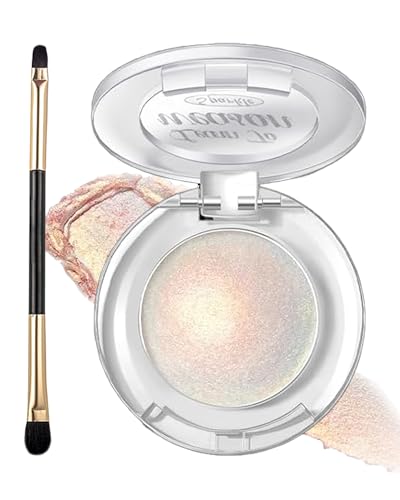
Shimmering Chameleon Eyeshadow & Highlighter Palette-Experience the magic of holographic colors! This highlighter features a mesmerizing chameleon effect, shifting hues from different angles to reveal vibrant, multi-dimensional tones. With every light swipe, it unleashes kaleidoscopic brilliance-effortlessly complementing your mood or outfit to make you stand out in any crowd.

❤【Glitter Highlighter Makeup Palette】 The highlighter palette with great glitter and shimmering effect, it can make you more charming and bling, can immediately lighten the skin,create a three-dimensional appearance.
Curl and Apply Mascara
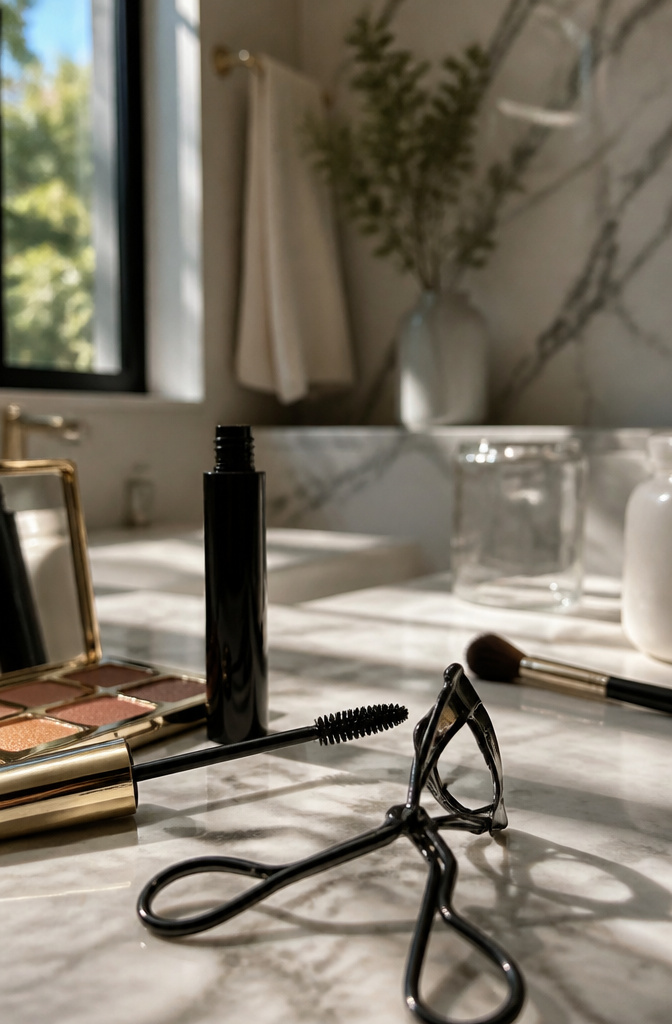
A lash curler with a shallower arc and wider opening catches every lash on the first squeeze, which matters more than brand when the goal is to lift without crimping. On mornings when my lashes are already holding their own, the curler stays in the drawer; flat days, though, the difference between defined and droopy is thirty seconds of pressure at the base.
Mascara goes on after, never before. The wand I reach for has a slender, densely bristled brush that deposits product right at the root and combs upward without clumping the outer lashes, where I want the most length to keep the almond shape lifted. Starting at the base and sweeping up, I concentrate the final coats on those outer corners. The inner corners already catch light from whatever highlight went on earlier; the drama belongs at the wing.

Waterproof and Richly Pigmented: Eyeliner specifically formulated for the waterline to provide gentle, yet intensely pigmented definition to the eyes.
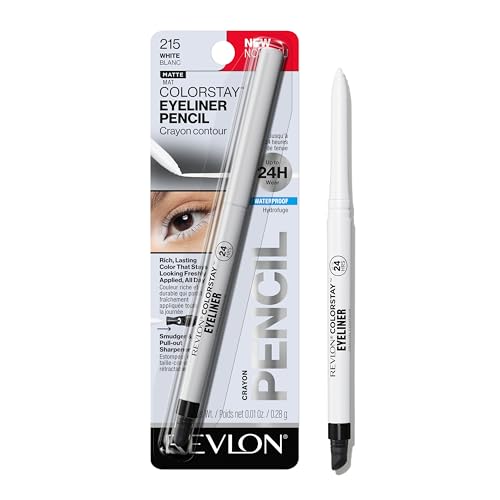
LASTING EYELINER: Rich color looks freshly applied all day long; transfer-proof, waterproof, smudge-proof and fade-proof

LASTING EYELINER: Rich color looks freshly applied all day long; transfer-proof, waterproof, smudge-proof and fade-proof
Highlight Your Brow Bones
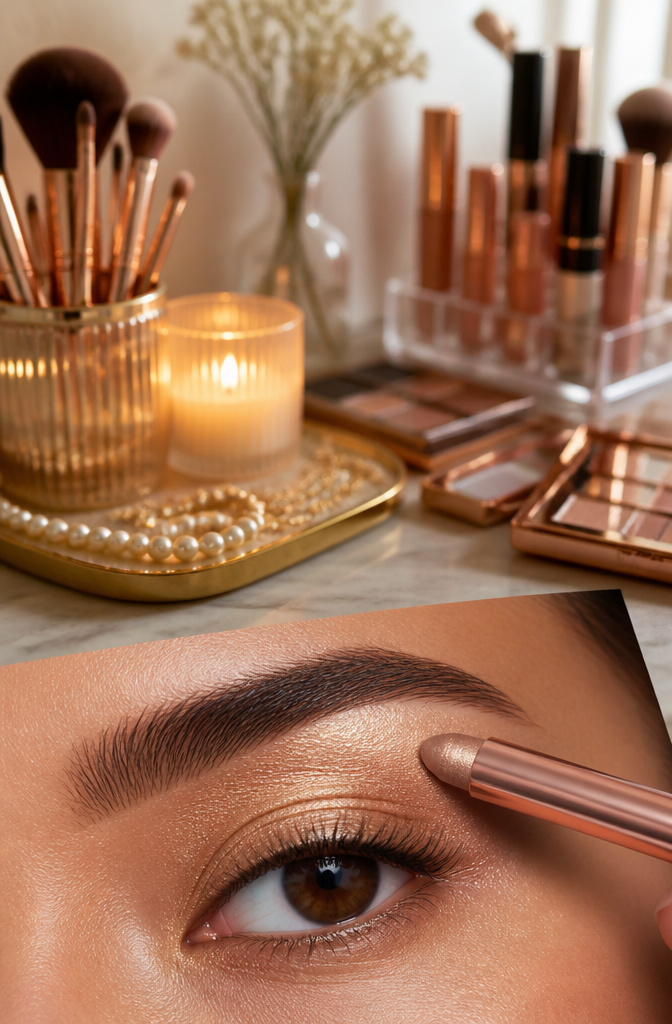
A thin stripe of highlight under the brow arch is what lifts the eye instead of letting it sink back into the socket. I used to skip this step, thinking it was extra effort for a barely-there effect. That changed when I tested it in a bathroom with harsh overhead lighting: one eye had the highlight, the other didn’t. The difference was immediate. The highlighted eye looked awake and forward; the bare eye looked shadowed and tired, almost hollow.
For a creamy option that blends cleanly, the L’Oréal Paradise Le Shadow Stick in Twinkly Rose goes on without powder fallout. It sits under the brow without catching on brow hairs or dropping shimmer onto finished shadow. Tap it on with a ring finger if you’re working around a smoky eye you don’t want to disturb.

MAXIMIZES PIGMENT & COLOR PAYOFF: Meet your eyeshadow's secret weapon for bold and vibrant color. Our Stay Put Eye Primer intensifies the pigment of any shadow—from mattes and shimmers to metallics and gels—ensuring your look pops with professional-grade intensity

24-Hour Wear: Creates a smooth eyeshadow base that helps extend wear for up to 24 hours while enhancing color payoff and keeping eye makeup looking fresh throughout the day.

Long-lasting, Crease-resistant Wear: Urban Decay Eyeshadow Primer Potion creates a smooth, even-looking base that helps eyeshadow stay vibrant and crease-resistant for up to 8 hours. The Original nude formula dries translucent to let eyeshadow color pop while helping prevent fading. Wear alone for a natural nude look or layer under shadow to create a smooth canvas for any eye look, from soft everyday definition to bold, dramatic color.
Apply Eyeshadow on the Lower Lash Line
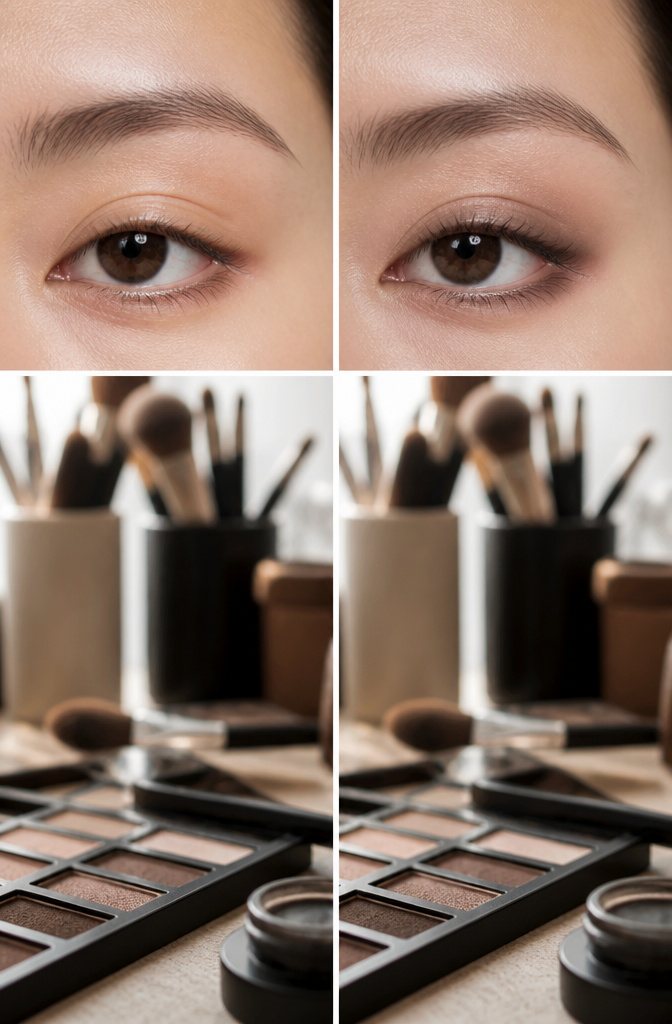
The first time I tried a smoky lower lash line on almond eyes, the result looked less dramatic and more like I’d slept badly. Matching the intensity of the upper lid smudges the clean shape that makes almond eyes distinctive. Now I use a shade just deep enough to connect the upper shadow to the lower lash line without building real pigment there. A soft sweep of matte taupe or the lightest brown in your palette keeps the eye’s natural lift visible. The lower line should read as shadow, not structure. If someone can identify the exact color from two feet away, you’ve laid down too much.

【Smooth Matte Eyeshadow】The rich pigment with soft smooth matte texture powder, we offer endless possibilities for your eyeshadow makeup, suitable for all makeup types.

【Professional-Grade Pigmentation】: This mini eyeshadow single delivers one-swipe intensity in versatile neutrals (Brown Mauve) and bold shades (Purple Taupe). Unlike chalky formulas, our micro-milled powders maintain vibrancy without fading—ideal for mature eyelids that need crease-resistant coverage.

【4 Warm Neutral Shades for Natural Nude, Everyday Makeup & Soft Glam Looks】 This warm neutral brown eyeshadow palette features a curated selection of Champagne Satin, Caramel Shimmer, Mocha Bronze Shimmer, and Cocoa Taupe Matte, offering a complete warm-toned color story ideal for natural nude makeup, soft glam brown looks, warm contour shading, and everyday eye definition. The tones provide a flattering wash of color for beginners, professionals, and mature or textured lids seeking smooth, naturally radiant depth without chunky glitter.
Avoid Excessive Dark Eyeliner
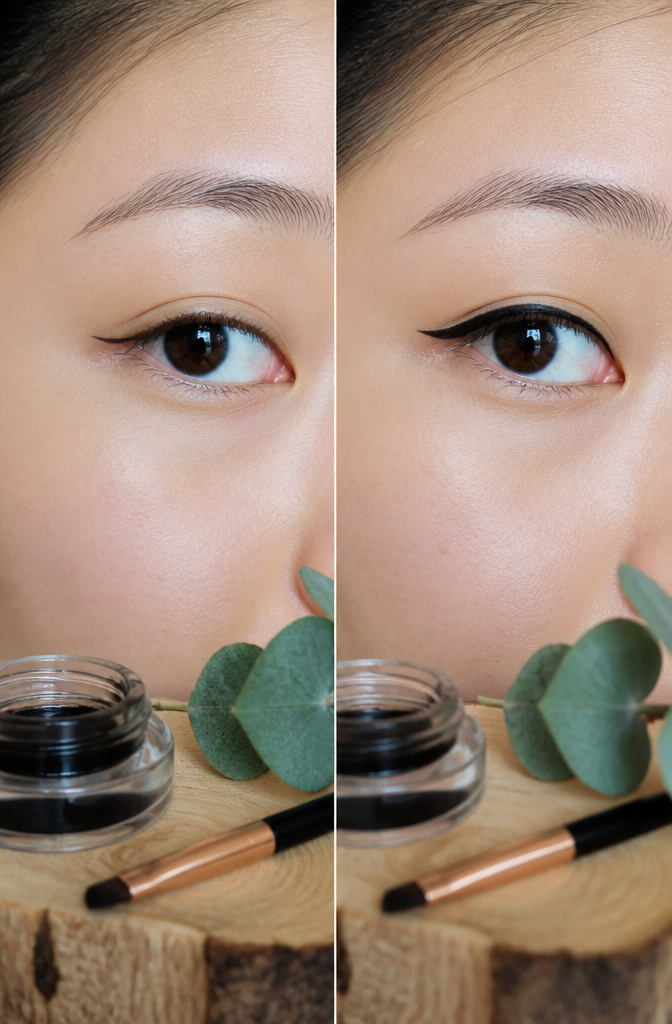
Keep liner thinner toward the inner corners, and the eye keeps its natural width. I broke this rule constantly at first, running dark pencil along the entire waterline because the magazines showed it that way. The result was a smaller, heavier look that fought against the shape rather than working with it.
A makeup artist I spoke with put it plainly: almond eyes already have the architecture. The slight upward tilt, the even width from inner to outer corner, that balanced proportion. Heavy liner, especially dragged all the way inward, is the fastest way to bury that structure under weight. You lose the lift. You lose the openness.
Now I start with almost nothing at the inner third, building gradually so the darkest point hits the outer quarter. Kim Kardashian’s liner follows this same logic, keeping the inky color from dominating the lid space toward the nose. The difference is immediate: the eye reads as larger, not smaller, and the almond shape stays intact. For definition that stays subtle, a thin gel line along the upper lash line does the work without the drama.

Matte Eyeshadow Stick: Enjoy highly pigmented with Wugbc cream eyeshadow stick, featuring a highly pigmented formula that provides bold or neutral eye shadow looks. Suitable for building from soft daytime shades to dramatic evening styles

Unleash Your Style with Matte Eyeshadow Stick: From subtle nudes to striking taupes, our eyeshadow stick offers both matte and shimmer finishes that let you create any look, from everyday elegance to sultry smoky eyes. This cream eyeshadow stick suits all preferences and enhances your beauty effortlessly any occasions

PREMIUM EYELID PRIMER: Crafted with high-quality ingredients such as pearl powder, this eyeshadow primer makes eye makeup stay on all day without creasing or smudging. Use this eyeshadow primer to create ultimate halloween make up and stay spooky!
Understanding Almond-Shaped Eyes
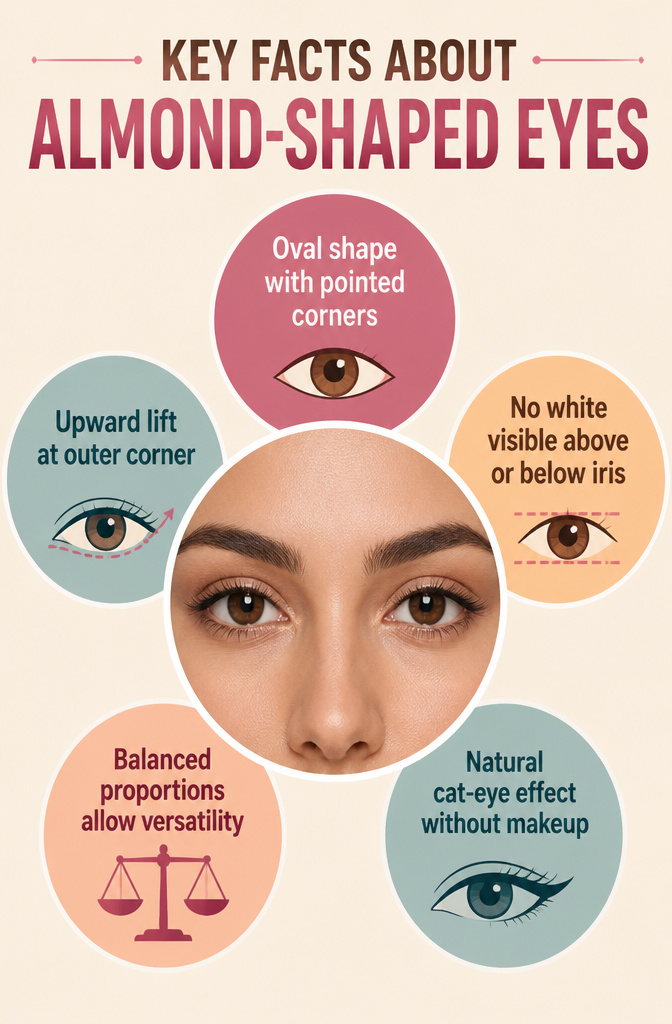
Almond-shaped eyes are oval with pointed inner and outer corners, and the outer corner lifts slightly upward. That upward slant gives them a natural cat-eye effect without any makeup at all. The iris sits between the upper and lower lids without white showing above or below, which is the quickest mirror test to confirm the shape.
I spent years assuming my eyes were just, well, eyes. No particular category. It wasn’t until I tried a friend’s go-to smoky-eye routine and ended up looking oddly sunken that I bothered to check. Held a mirror straight on, looked for the taper, noticed the slight uptilt at the outer edge. The proportions were balanced enough that most techniques worked, but not all worked equally well. That distinction mattered.
Round eyes show more white around the iris and carry a more open, circular form. Hooded eyes have a lid that folds over the crease, hiding it when open. Almond eyes avoid both situations: the crease stays visible, the shape stays elongated, and the natural lift means liner and shadow have a built-in guide to follow. Versatility comes from that balance. You can emphasize the outer corner, keep everything soft and even, or draw a sharp wing that extends what’s already there. The shape does not fight the makeup; it cooperates.

【Chameleon Highlighter Palette】This chameleon highlighter makeup palette has an excellent shimmering effect, instantly brightening your skin tone and refracting more colors at different angles to achieve a diamond-like sparkling look. Gorgeous gloss can make you more charming and sparkling, creating a three-dimensional makeup.

SOFT PEARL GLOW FOR NATURAL MAKEUP: This cream highlighter stick gives a sheer pearl glow for a fresh, skin-like highlight. Ideal for fair to light skin tones and everyday makeup looks that need radiance without chunky glitter.

【Easy to Use】This single eyeshadow glides on effortlessly without tugging or dragging. It applies so lightly that you barely feel it on your eyelids. It can be removed quickly with makeup remover, leaving no stubborn pigment residue behind.
Essential Tools for Almond Eye Makeup
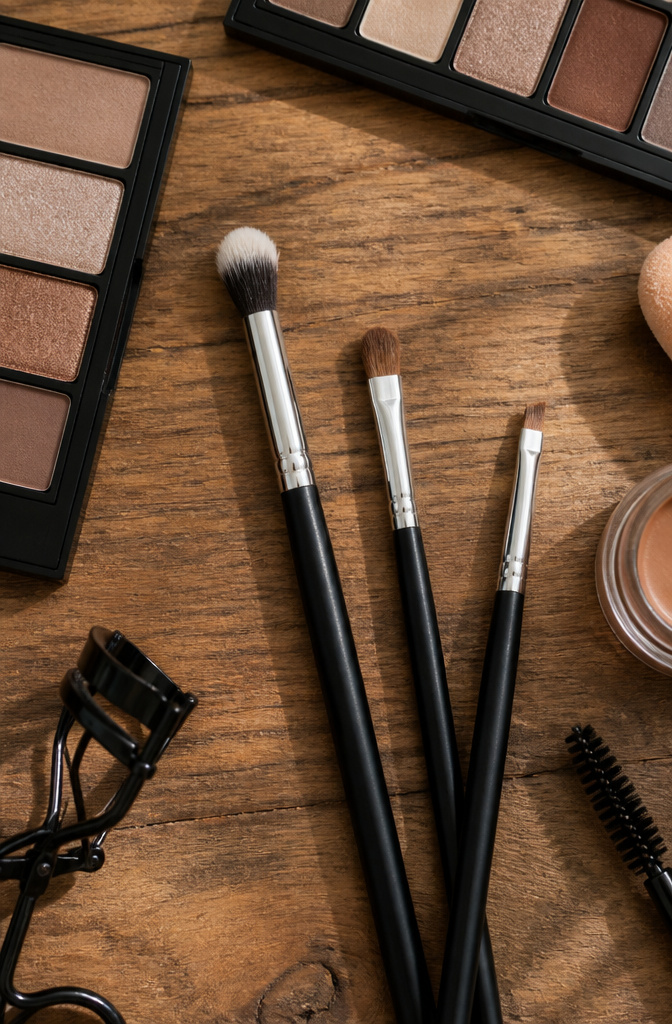
The right brushes make almond eyes makeup faster, not fancier. A blending brush and a flat shader brush handle almost everything. My first set was Real Techniques, bought in 2014 when the line still came in those neon rubber grips. I still reach for two: the Base Shadow Brush, which is really a small shader, and the Fine Liner Brush for lower lash work. The Fine Liner Brush is skinny enough to lay pigment along the lower lash line without depositing too much, which matters for almond shapes where you want definition, not weight.
Eyeliner choice depends on what your hand can control. Liquid, gel, or pencil all define the shape; the difference is forgiveness. A smudger brush, even a cheap one, turns any line into a softer finish if the first pass wobbles.
Eye primer is non-negotiable. It smooths the lid and keeps shadow from sliding into the crease that almond eyes naturally have. Without it, the outer corner work that flatters this shape disappears by noon.
Skip the twelve-brush sets. Four tools, five if you count the spoolie, and you have everything.
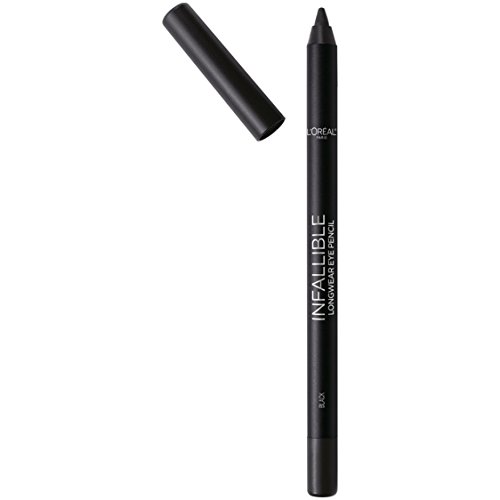
Infallible Waterproof Eyeliner: This long-lasting, smudge-proof eyeliner glides on easily for creamy color that lasts up to 24 hours without smudging

SMOOTH CREAMY GLIDE – NO TUGGING – The gel formula glides on like a dream with zero pulling or tugging on the delicate eyelid area. Achieve crisp, precise lines effortlessly with every stroke. No skipping, no snagging – just smooth application from start to finish.

INTENSE COLOR PAYOFF: The essence Stay & Play Gel Eyeliner is your go-to for vibrant, eye-catching looks. Its highly pigmented gel-like & super soft formula glides effortlessly over the eyelids, delivering bold and captivating color that won't go unnoticed. Get ready to make a statement!
Common Mistakes
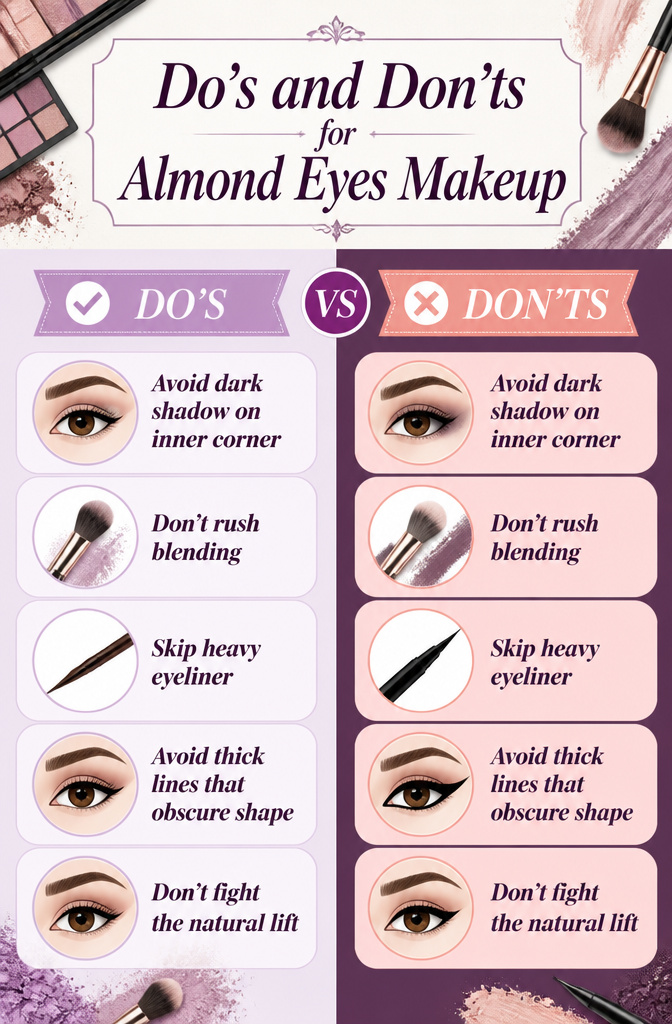
Dark shadow packed onto the inner corner made my eyes look smaller, not larger. I learned that the hard way at a friend’s birthday dinner, checking the restroom mirror and wondering why the sultry look I’d aimed for read as tired. The fix was spacing: leaving some light shade near the inner corner keeps the gradient that lifts an almond shape.
Blending was the step I always rushed. Stripes of color sat where my brush stopped, visible from conversational distance. Cream shadow sticks helped here, their texture forgiving enough to soften with a fingertip before the line set.
Heavy eyeliner flattened everything. A thick band across my upper lid erased the natural lift that defines almond eyes. Switching to a thin line right at the lash line, sometimes in brown rather than black, let the shape do the work instead of fighting it. The difference is structure, not drama.
Frequently Asked Questions
How do you apply eyeliner for almond-shaped eyes?
Keep a thin line along the upper lash line and let it thicken toward the outer corner, where the darkest point should hit in the final quarter of the eye. The inner corner needs almost no pressure at all, or the eye closes in and loses its natural lift. For the wing, follow the upward curve of your lower lash line rather than aiming toward the brow tail.
What eyeshadow colors work best for almond-shaped eyes?
Neutrals like taupe, beige, and soft brown give you a smooth base, while smoky tones and jewel tones work for evening looks. A tone just slightly deeper than your base, blended outward and upward toward the tail of the brow, traces the almond shape without flattening it. Light shimmers at the inner corner and brow bone brighten the eye and keep it looking open.
How can I make my almond eyes look bigger?
Use a pale shimmer at the inner corner to catch light and open the eye toward the nose, and keep liner thin at the inner third so darkness doesn’t shrink the space. Heavy liner all the way across, especially on the waterline, buries the natural lift and makes the eye look smaller and heavier. Concentrate mascara on the outer lashes to keep the almond shape lifted.