Time cost swings widely across these looks: a half ponytail is done in about a minute, while cornrows and two-strand twists mean a long sitting and can stay put for weeks.
Texture and length narrow the choice fast: the Natural Wash-and-Go suits short curls, the Wolf Cut shows off waves best, and the Curly Bob only sits right on hair that truly curls.
Bantu knots give you two looks from one setup, since undoing them leaves springy curls.
1. Side-Swept Curls
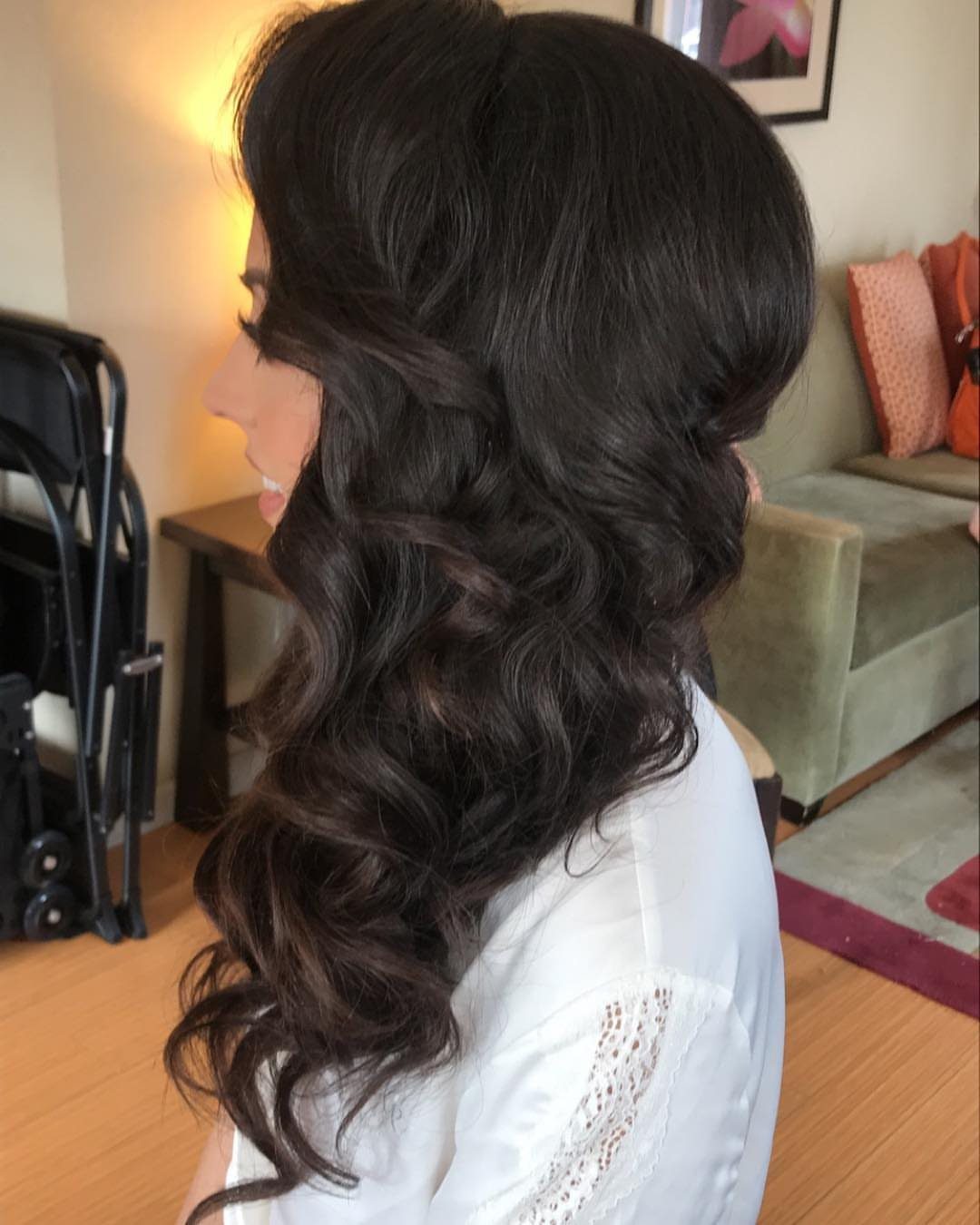
Parting curls to one side and letting them fall over a shoulder gives long hair a soft, lopsided drape that flatters most face shapes.
Because the curls are already doing the work, I would skip heavy product and let the volume sit loose.
Pick the side where your hair naturally wants to fall, and pin nothing. This is a good pick for an evening out when you want length to show.
2. Voluminous Afro
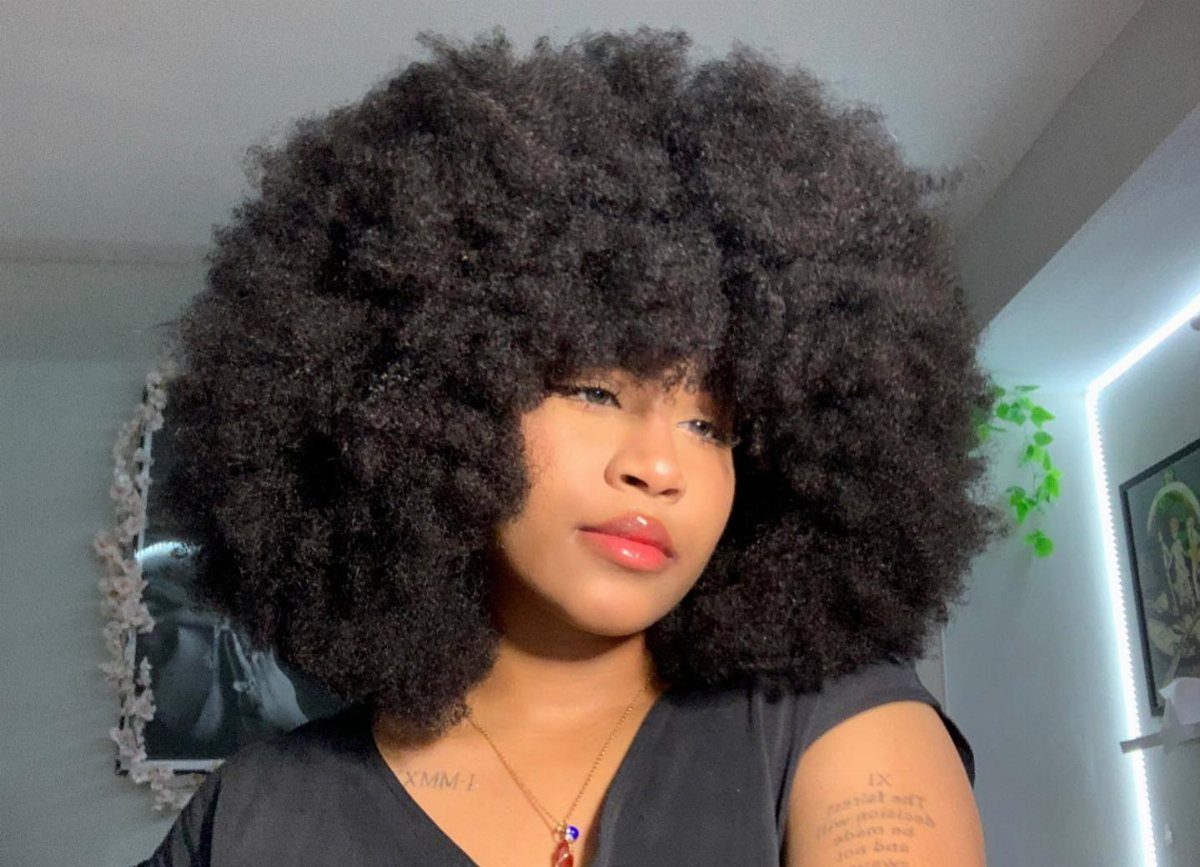
A picked-out afro is all about shape: a full, rounded outline that sits evenly around the cheekbones and forehead and shows natural texture at its biggest.
A wide-tooth pick, lifted at the roots and then around the sides, builds the silhouette without flattening the curl pattern.
I like it best when the outline is even all the way around, so spend a minute checking the back in a hand mirror. It pairs well with a simple top that leaves the hair as the focus.
3. Low Ponytail
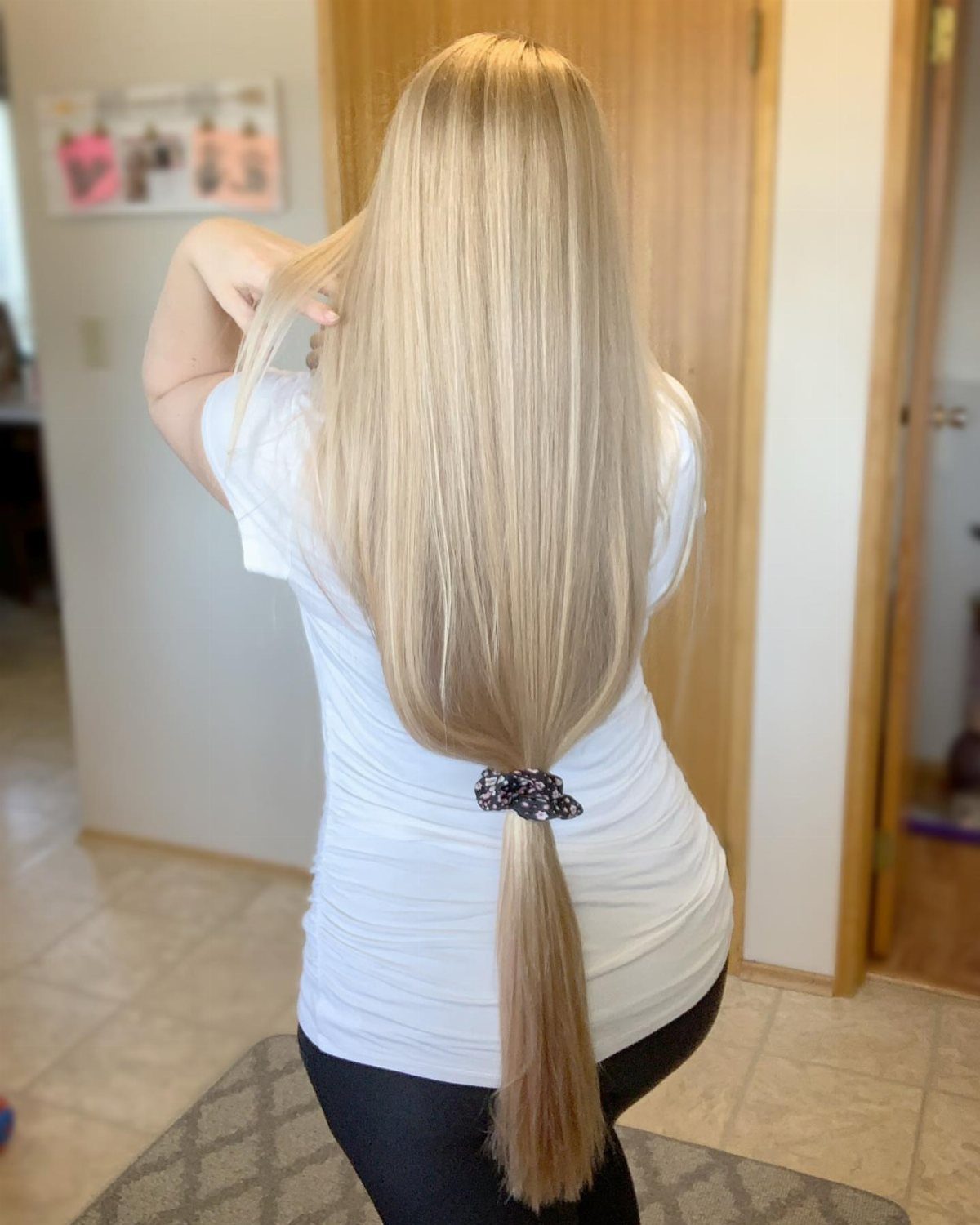
Gathered at the nape of the neck, a low ponytail is among the fastest ways to get long hair off your shoulders and out of your face.
Secure it with a scrunchie rather than a thin elastic; a scrunchie holds without the sharp crease and adds a little pattern.
Leave the ponytail smooth and straight, as it is here, or give it a gentle brush before you tie it. It works for errands, workouts, and everything between.
4. High Bun
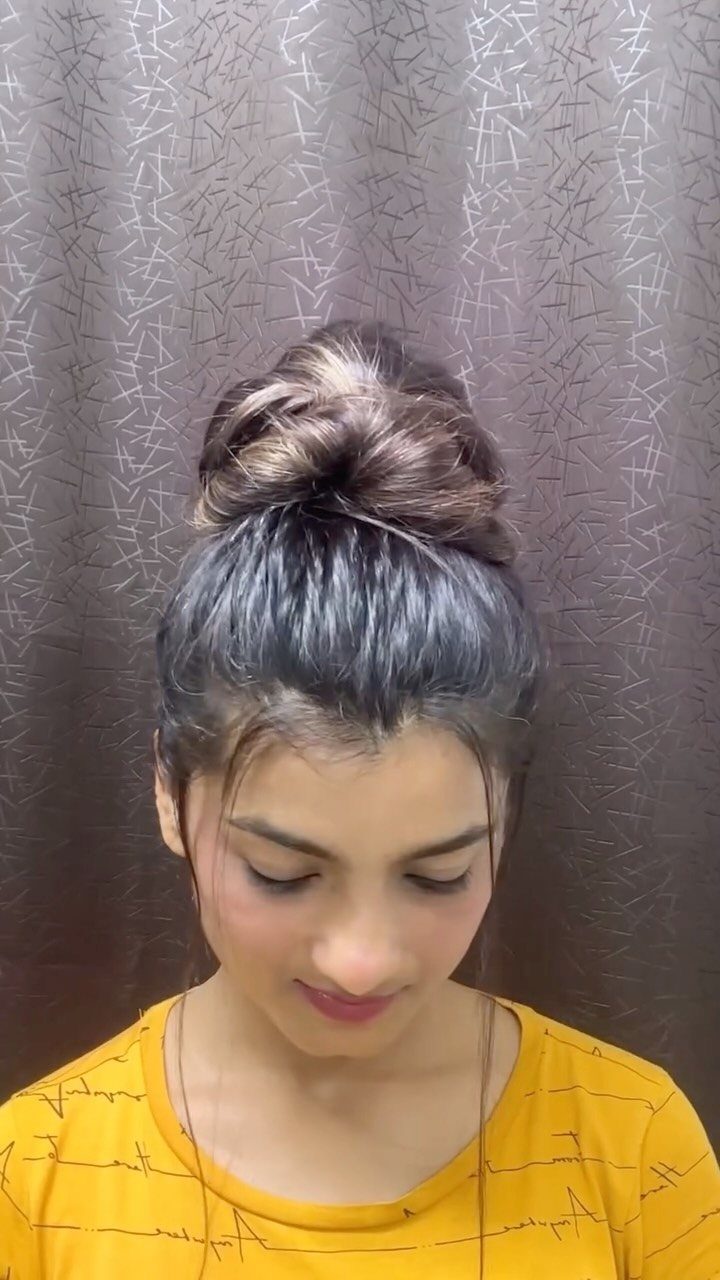
Twisting natural hair as you pile it high gives a bun more body than a plain wrap would.
Gather the hair at the crown, twist the whole section into a rope, and coil it around its base so the shape stays full.
Secure it with pins or a hair tie, then loosen the edges slightly so the bun looks soft rather than tight. Placing it high makes it a good choice for warm days, and it keeps the neck clear.
5. Curly Bob
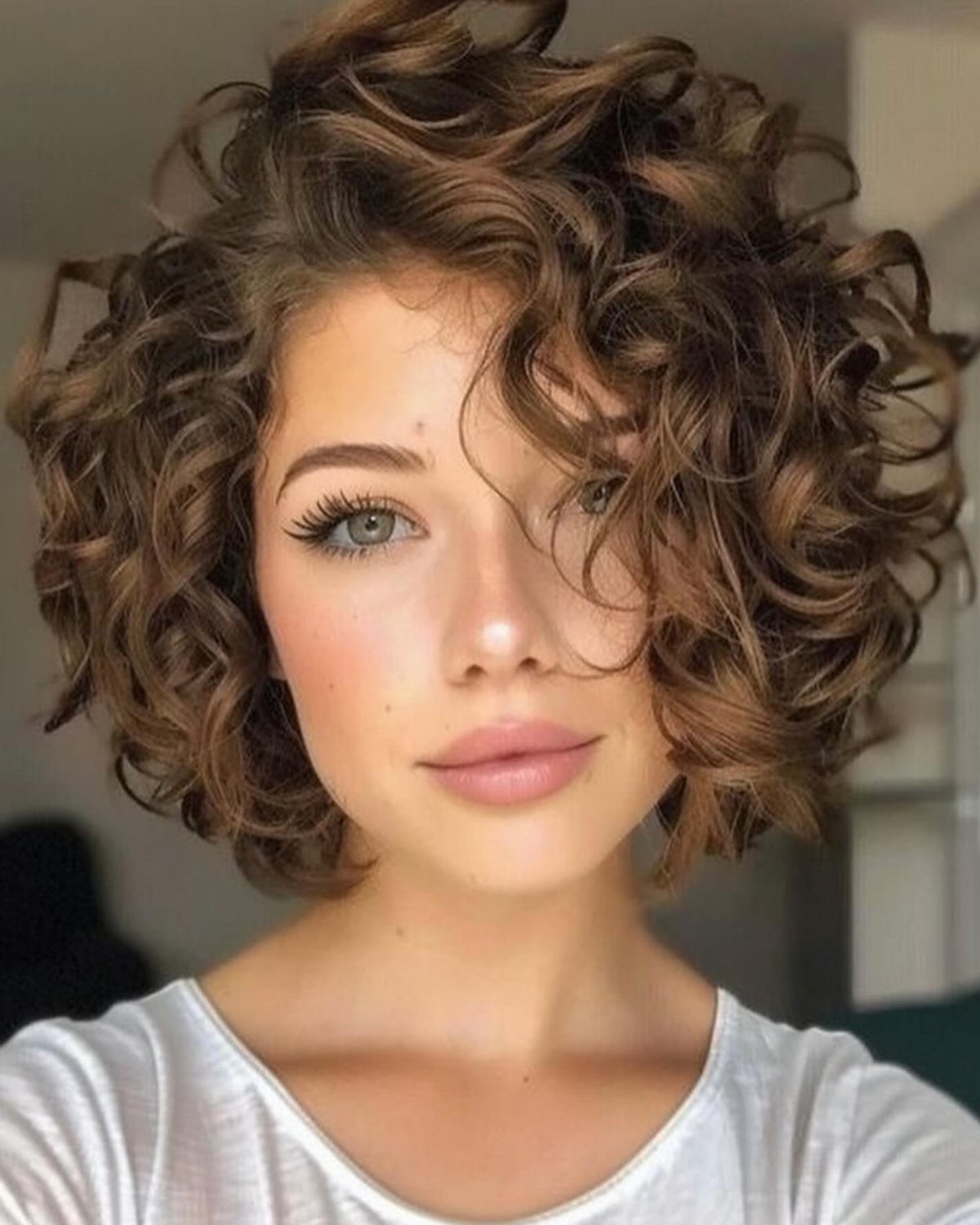
A curly bob works because the cut itself builds shape: a face-framing length lets curls stack and bounce rather than hang under their own weight.
I would ask a stylist who works with curls to cut it dry or with the curls in their natural pattern, so the length lands where you expect.
Short curls shrink as they dry, and that is the trade-off. Expect the bob to sit higher than it looks when wet.
6. Slicked-Back Hair
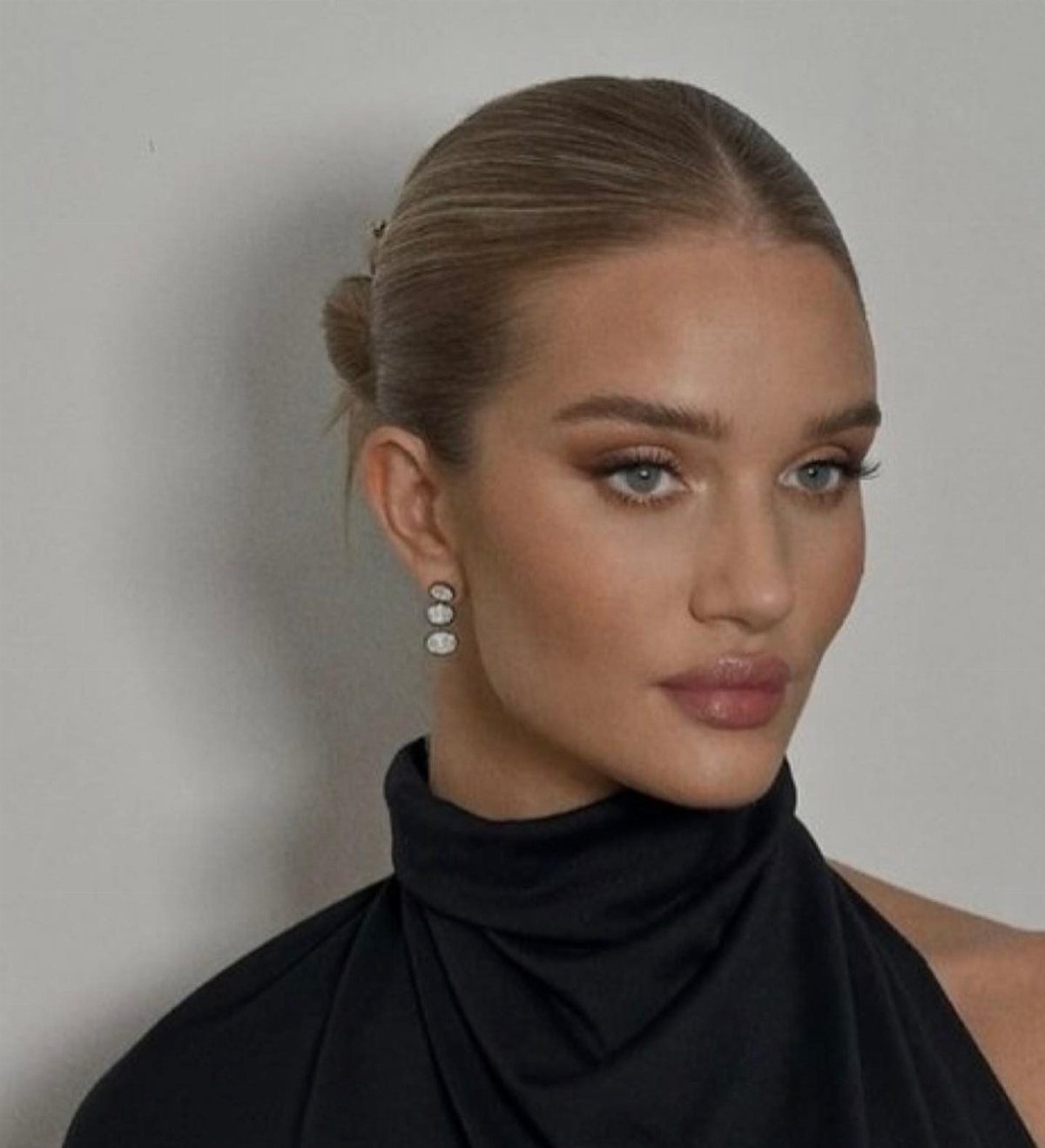
Brushing hair straight back and gathering it into a low bun with a middle part gives a clean, polished finish that suits a high-neck top and statement earrings.
The sleekness comes from smoothing each section flat before you tie it, so work from the front hairline back to the nape.
A soft-bristle brush helps keep flyaways down. This look takes only a few minutes, and it reads as dressed up without much effort.
7. Half Ponytail
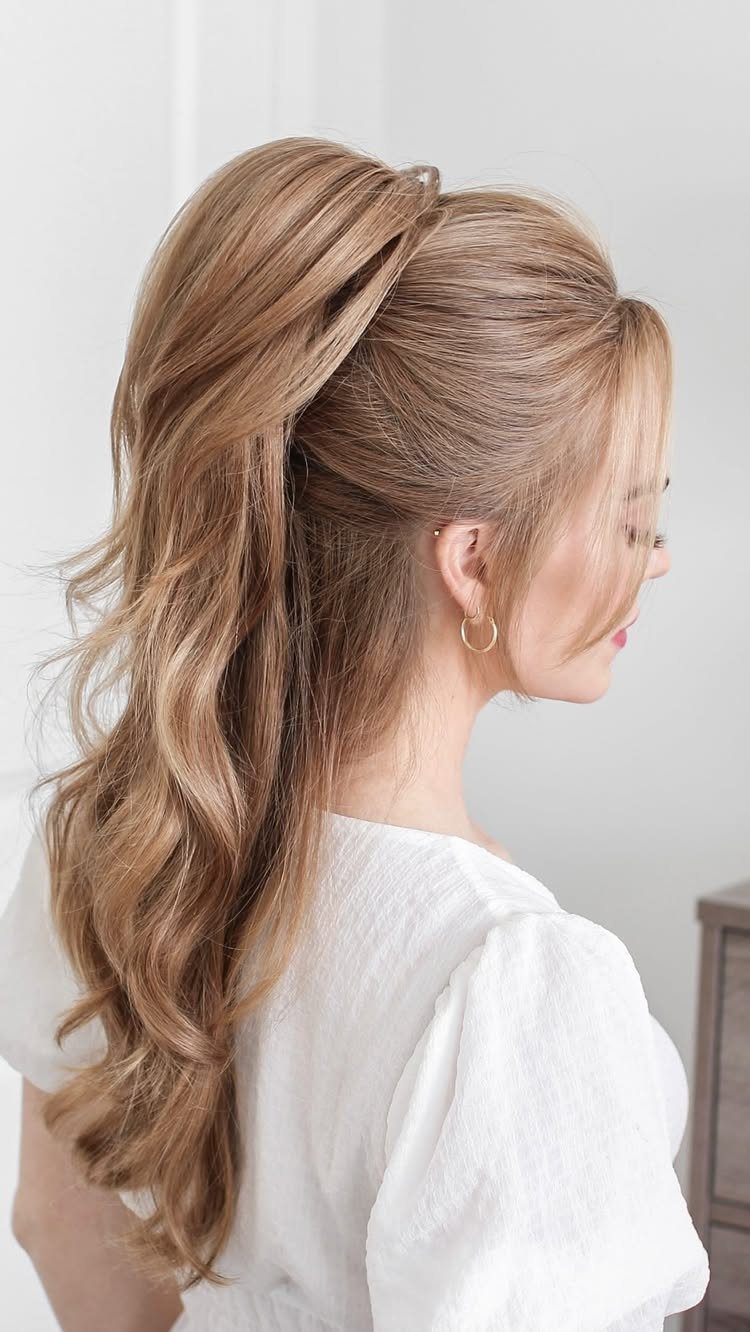
Pulling only the front section of the hair back and tying it high keeps the length loose below while clearing the face.
Wavy hair suits this well, since the untied lengths keep their movement and the ponytail adds a little lift at the crown.
Gather the top section, tie it where the crown begins, and leave the rest down. It takes about a minute, which makes it an easy pick for busy mornings.
8. Natural Wash-and-Go
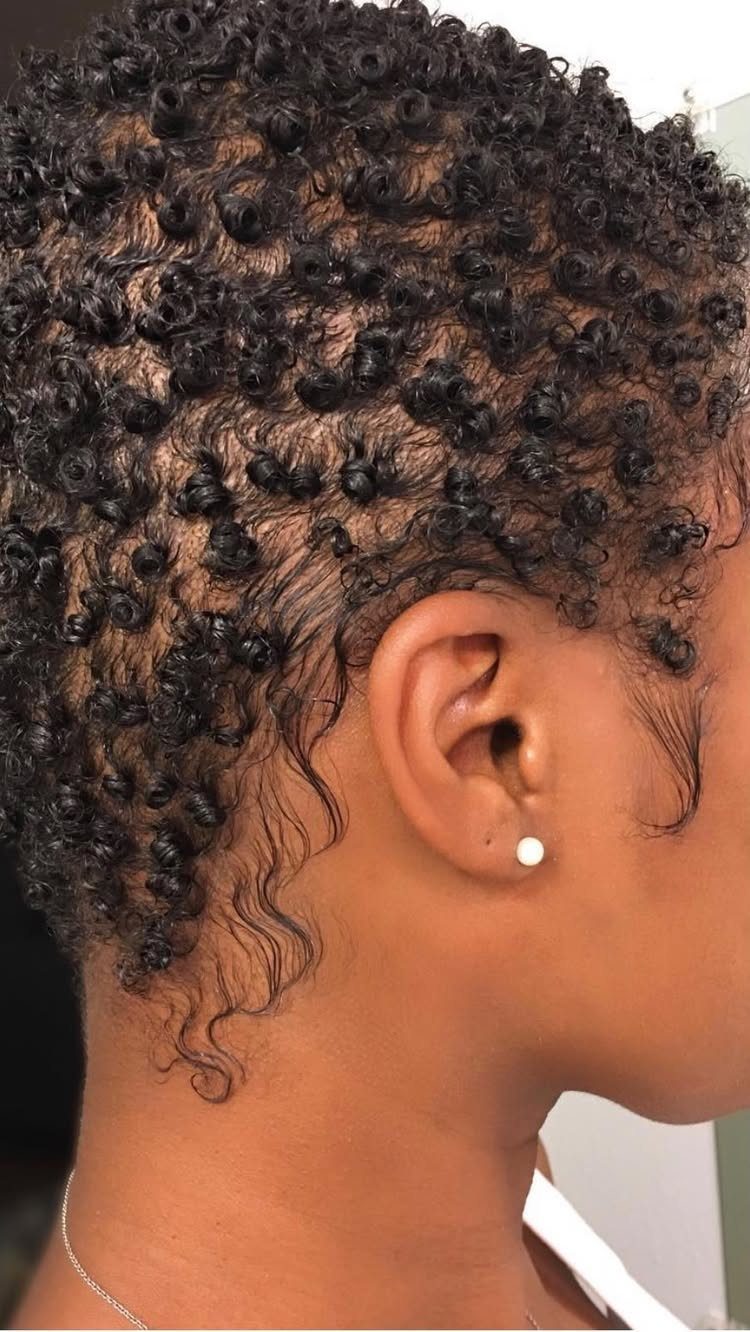
Short curls left to dry on their own end up as small, tight, well-defined coils, and that definition is the whole look.
Skip the blow dryer and the brush once the hair is wet, since both break up the pattern and invite frizz.
Air-drying takes a while, so I save a wash-and-go for the night before or a slow morning, since that wait is the real cost of this style. Short hair like this needs almost no styling afterward.
9. Defined Bantu Knot Curls
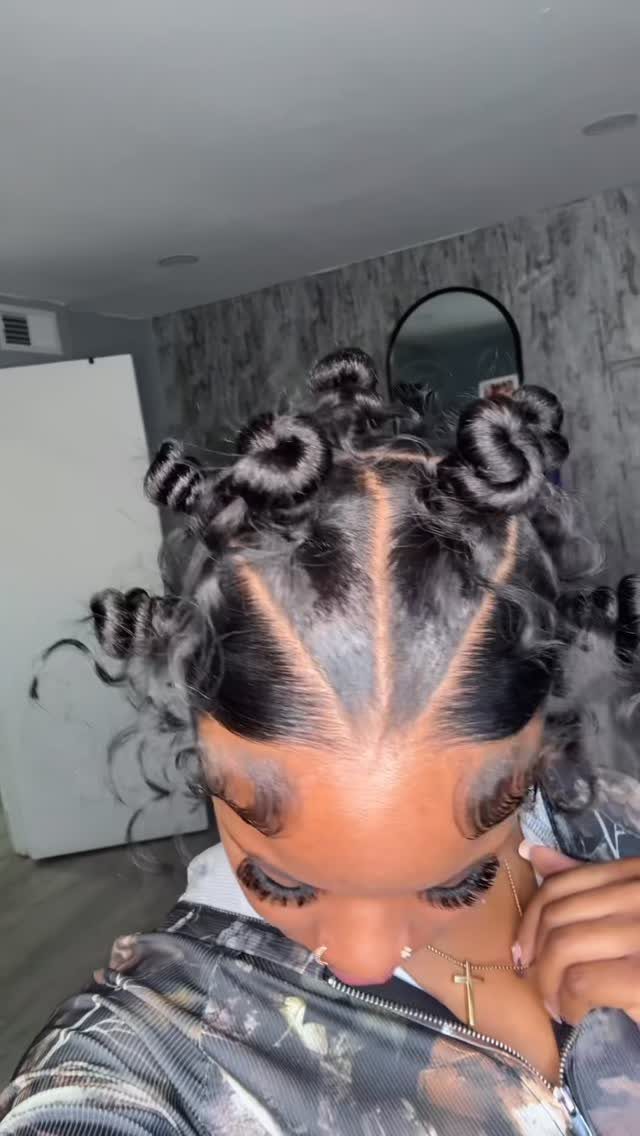
Small twisted knots spread evenly over the scalp make Bantu knots, and the neat parting between them is what makes the pattern look deliberate. Keep the sections the same size so the knots sit in a tidy grid.
Undo them later and the knots become curls with a springy, crimped shape. Leaving them in is a style of its own, so you get two looks from one setup.
10. Twist-Out
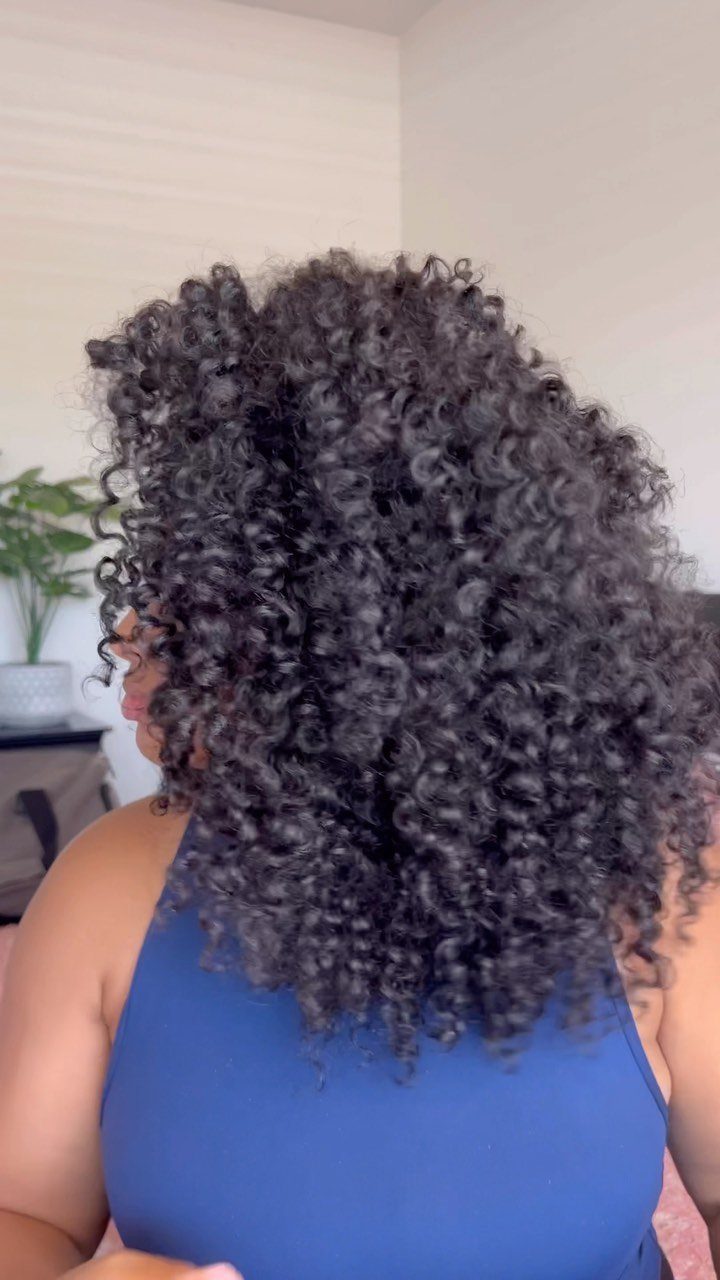
Unraveling twists gives a twist-out its stretched, defined curl and a lot of fullness without any heat.
Separate the twists gently with your fingers rather than a comb, and the pattern stays intact while the volume builds at the sides and crown.
I like it best when the hair is fully dry before you take the twists down, so the curls hold their shape. Fluff lightly and leave it.
11. Micro Bangs
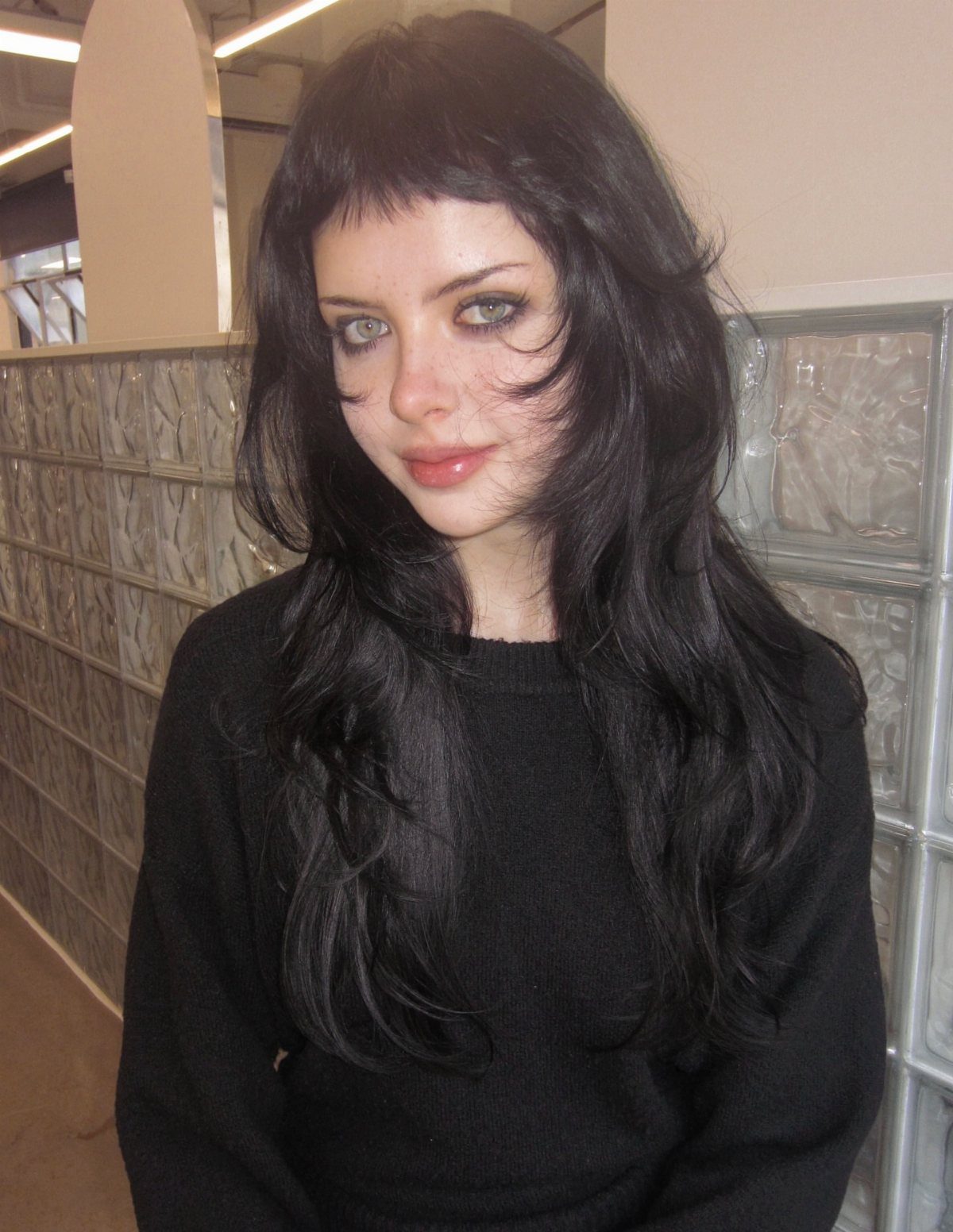
Micro bangs stop well above the brows, and that is exactly why they read as a bold choice. Long, wavy hair behind them balances the shortness, so the fringe becomes the single sharp detail in the look.
Be honest with yourself about upkeep: a cut this short grows out visibly in a couple of weeks and needs regular trims to keep its line. If you are unsure, ask a stylist to cut it slightly longer first.
12. Deep Side Part
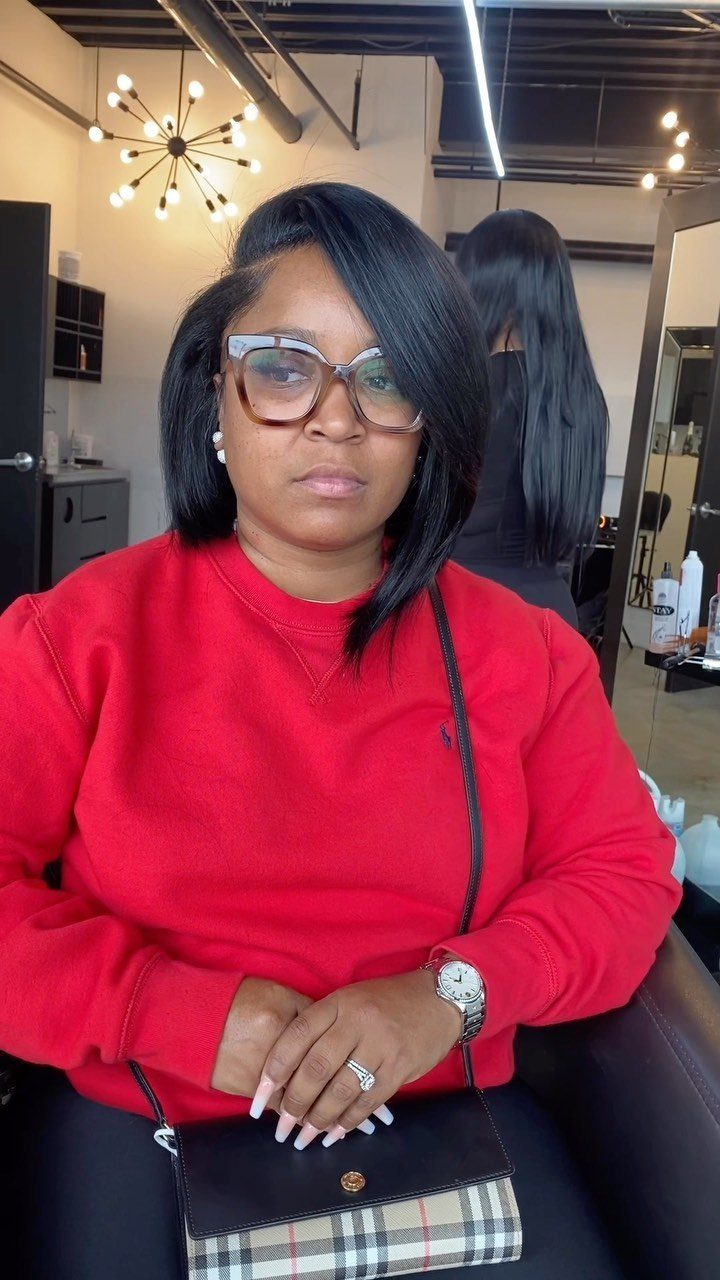
Moving a part from the center to a deep side shifts the weight of the hair, and it gives a bob instant lift at the roots on the heavier side.
It also changes how the whole cut looks without touching the length.
Use a comb to find the part, then sweep the hair across and flip it over for extra height. A deep part suits a sleek bob especially well, and you can switch sides whenever you want a different look.
13. Twist Out with Two Buns
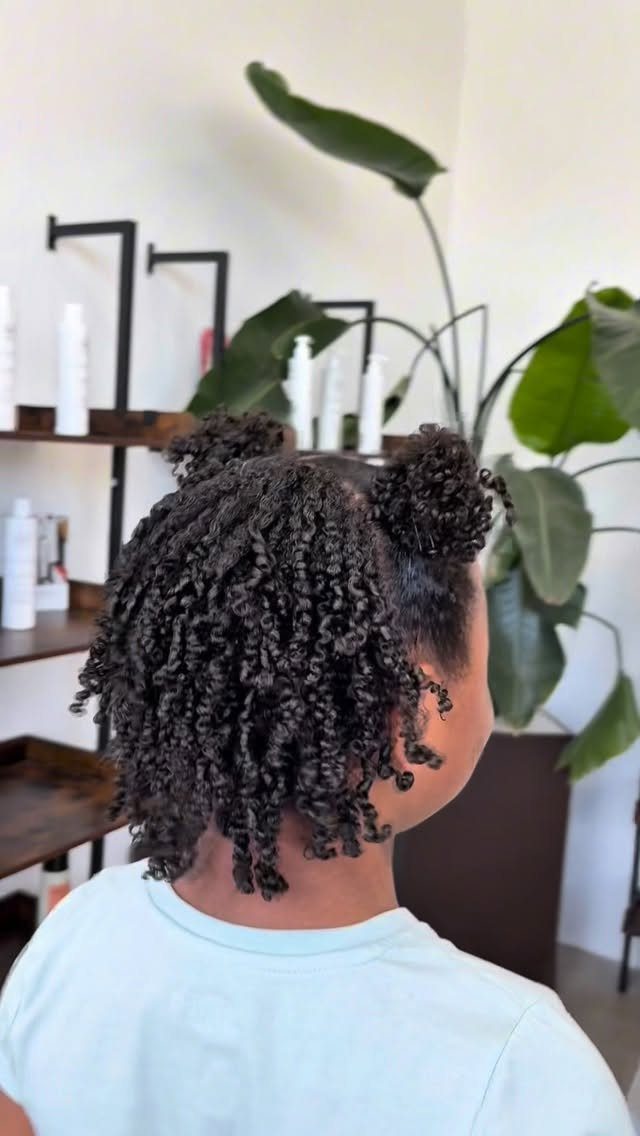
2 small buns sitting on top of a twist-out put the definition of the curls on display while keeping the length off the neck.
Take the twist-out down fully dry, section the top into 2 halves, and wrap each into a bun while the lower curls stay loose.
Buns this size work best on hair with some density. For anyone with shorter or finer strands, I would pin them lightly and leave a few curls free at the edges so the shape looks soft.
14. Afro Puff
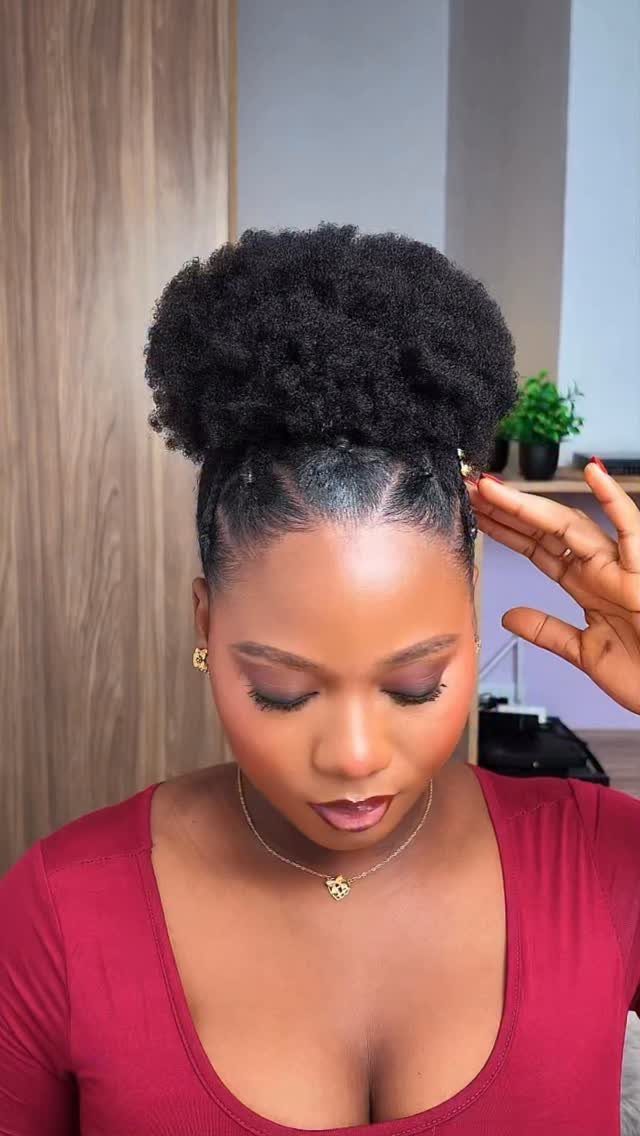
Gathering natural hair at the crown into one round puff is about as quick as a style gets.
Smooth the sides back with a soft brush, then pull the length up and secure it with a snag-free band so the hair doesn’t break.
A higher placement gives the puff more presence and keeps the neck bare. I prefer it with the sides slicked flat, since the contrast makes the volume at the top read even bigger.
15. Patterned Cornrows
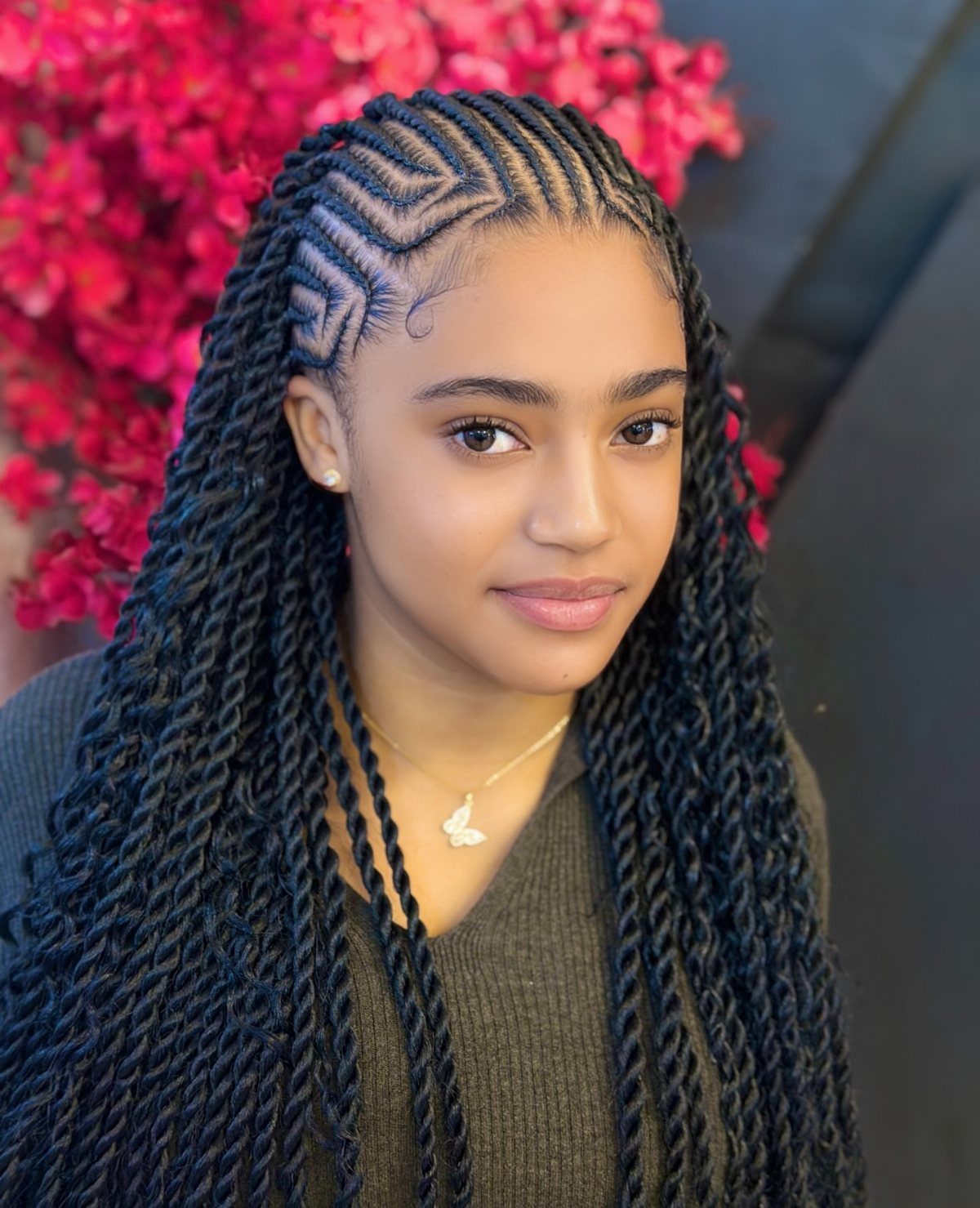
Cornrows lie flat against the scalp in straight lines, curves or geometric patterns, so the design is planned before a single braid is made.
Settle on the pattern first, bring a reference picture to your braider, and ask for the parting to be clean, since crisp lines are what make the pattern readable.
Cornrows take real time to install, and that is the cost. Longer twists at the ends add movement, and the whole style can stay in place for weeks.
16. Frohawk
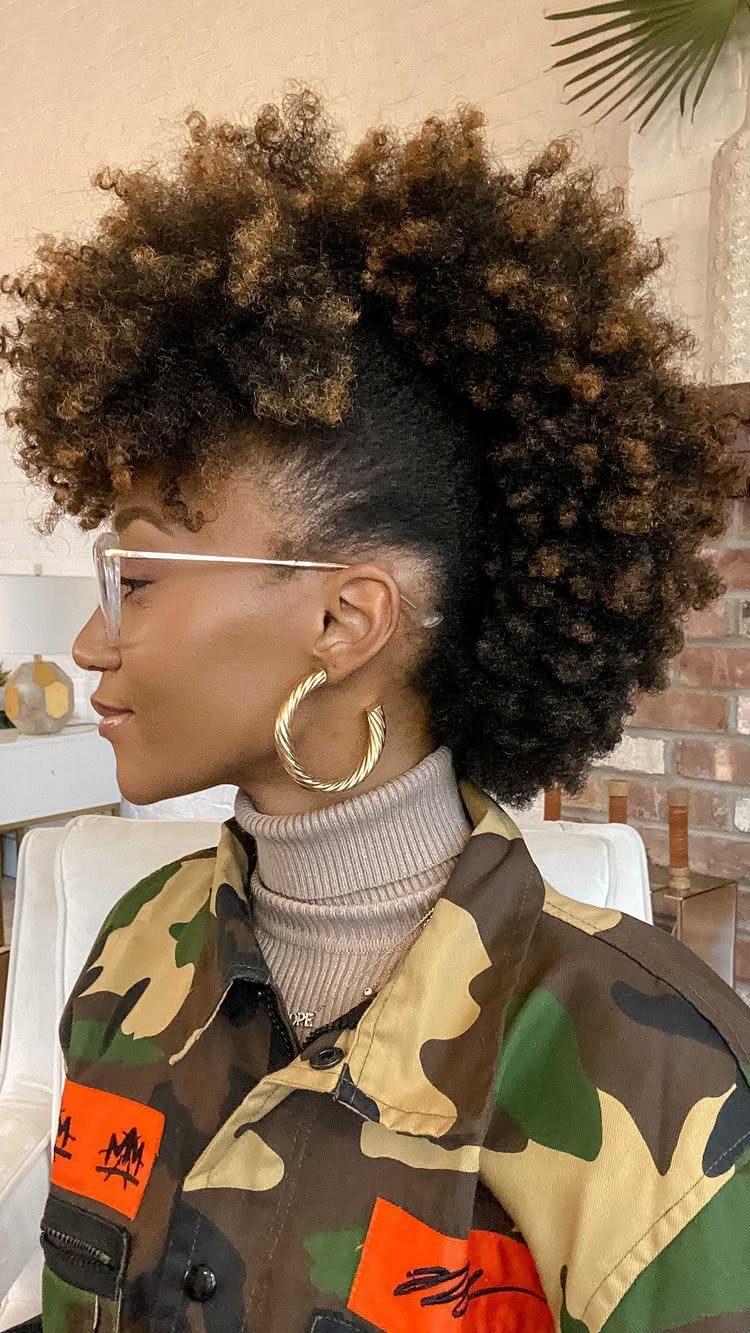
With the sides pinned back or braided, the curls in the middle stand up in a strip, and that is what makes a frohawk look both bold and controlled.
Pick out the center section for height, then secure each side flat so the line stays distinct.
Hair with a good amount of curl and volume gives the strip more presence. Bobby pins work for a quick version; braided sides take longer but feel more intentional.
17. Teeny Weeny Afro
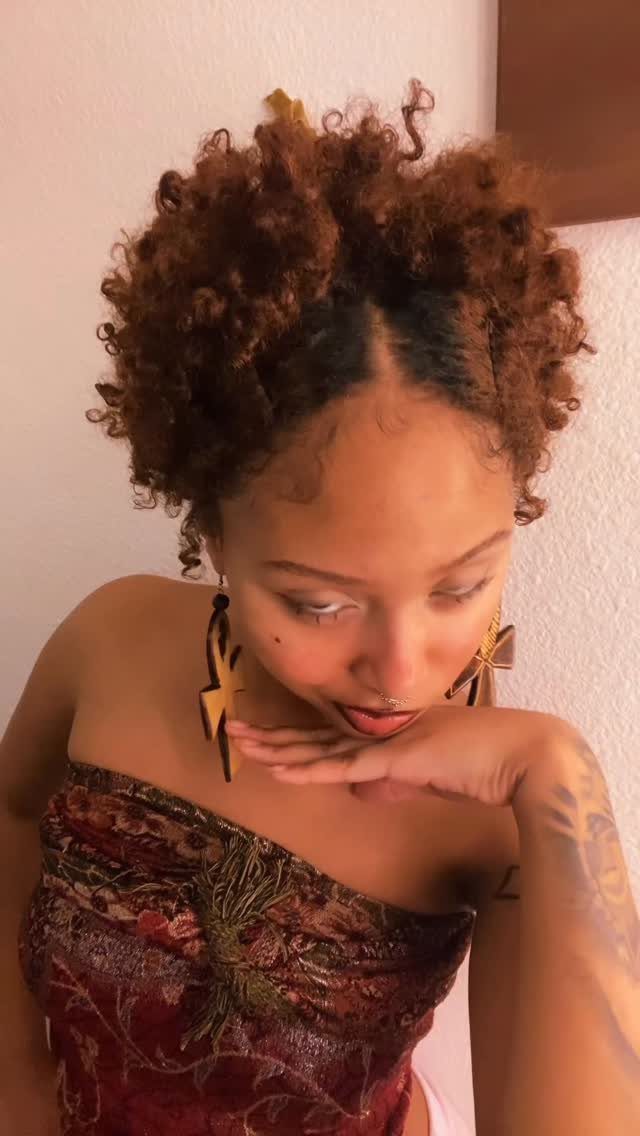
A teeny weeny afro is natural hair kept short and rounded, which is the simplest way to wear it. Daily styling is minimal: a light fluff with your fingers or a pick is enough to keep the shape even.
Its upkeep is regular shaping rather than daily effort, so a trim every so often keeps the outline tidy. Earrings stand out against the short length, which is a reason I like pairing it with a bold pair.
18. Flat Twists Against the Scalp
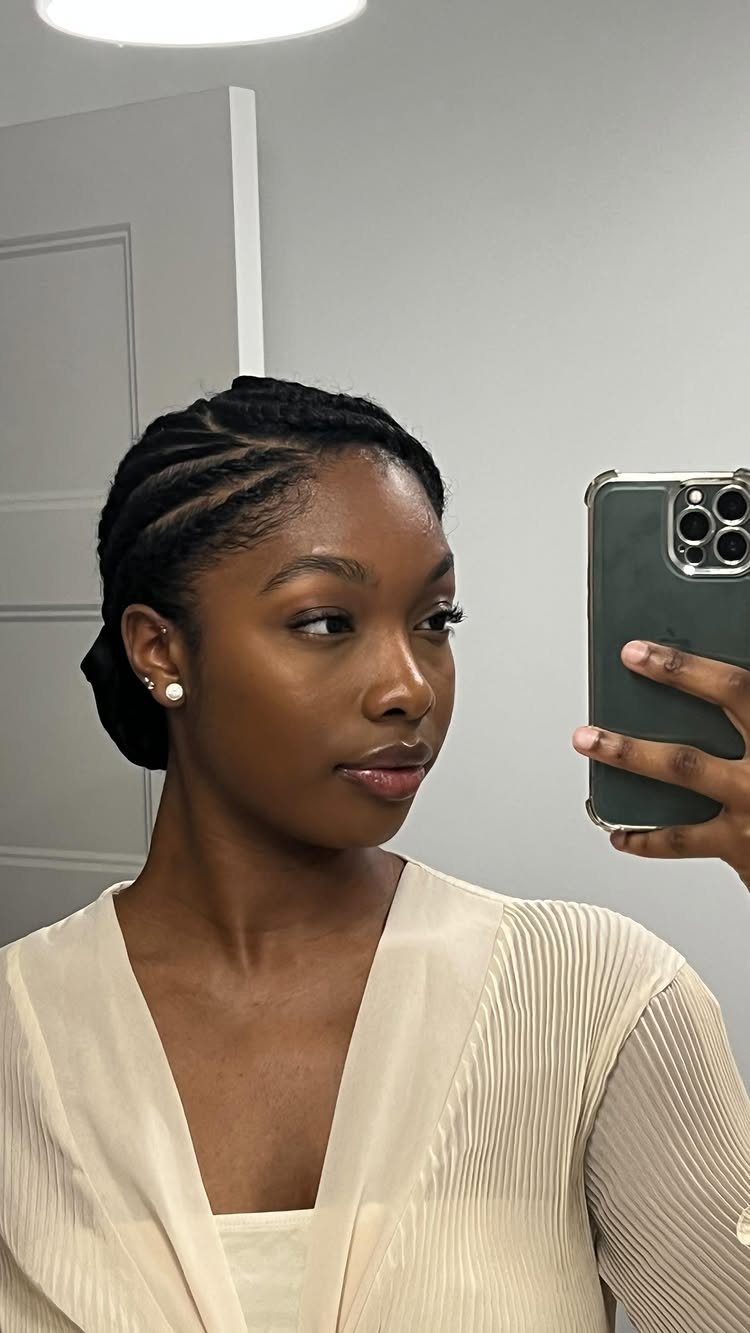
Flat twists work like cornrows made with two strands instead of three: each section is twisted along the scalp, and the lines stay neat and defined.
Part the hair into even rows first, because uneven sections show immediately in a style this close to the scalp.
Moisturize the hair before you begin, and twist with gentle tension to protect the hairline. This style can be worn as is or left as a base for a twist-out later.
19. Braided Crown
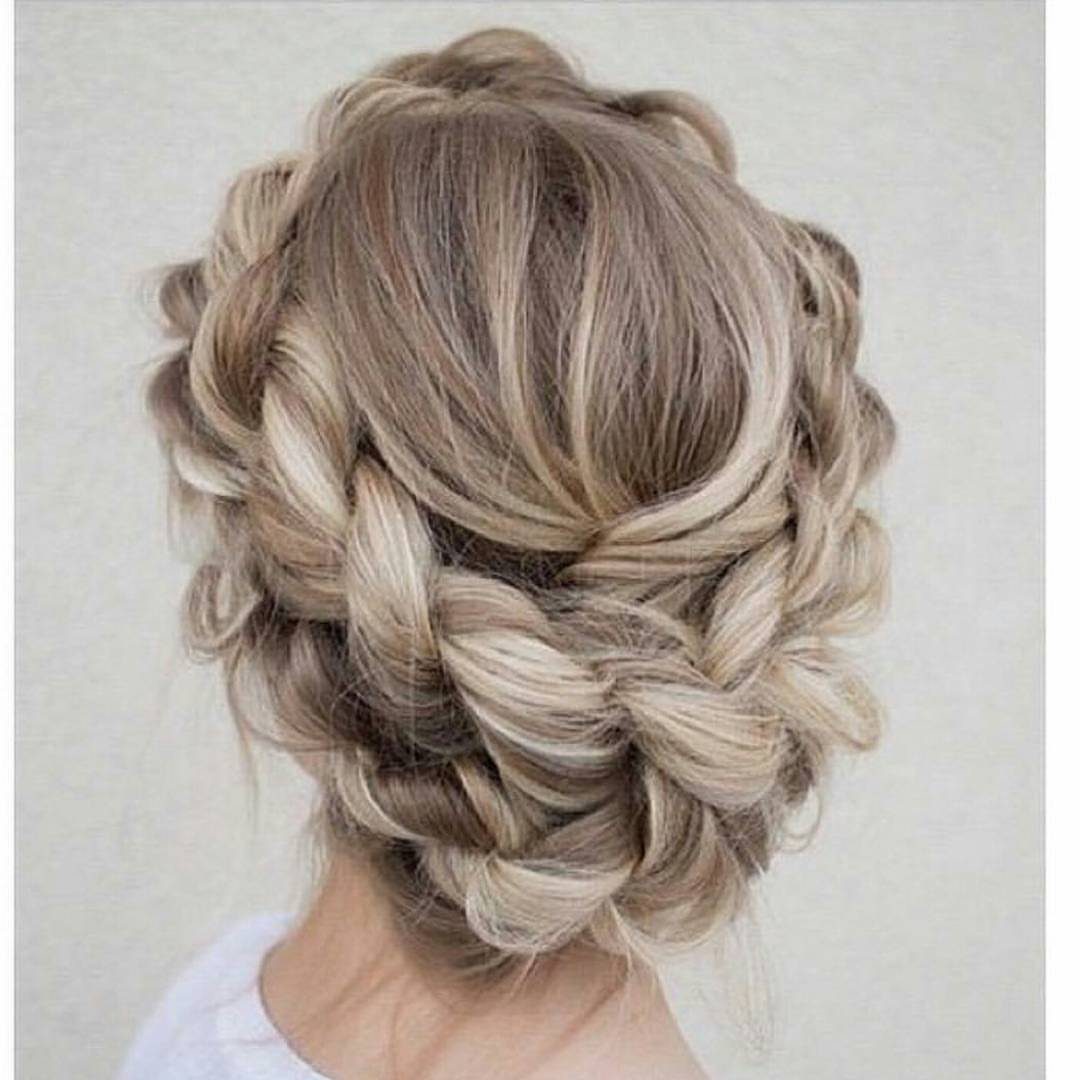
A single thick braid circling the head from ear to ear reads as polished without needing any accessories. Because the braid is the whole design, keep its width even all the way around so the crown sits level.
Pin the braid flat as you wrap it, tucking the end out of sight behind the last turn.
A braided crown keeps every strand off your neck and face, so it holds up through a long dinner and still looks dressed for the occasion.
20. Two-Strand Twists
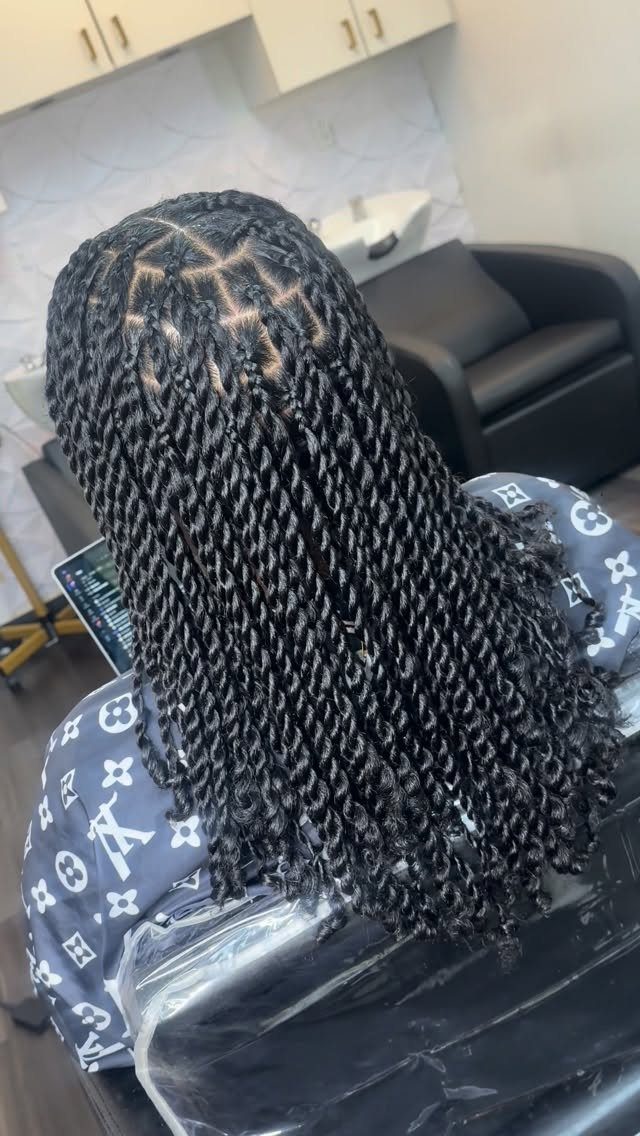
Twisting each section from root to end turns natural hair into a protective style, with the ends tucked into the twist and left alone for weeks.
Twists done with your own hair and no extensions stay light on the scalp, and that lower weight puts less tension on the roots, especially at the hairline.
Part the sections evenly before you start, since uneven parts show right away. Plan on a long sitting, and that time is the cost of the style.
21. Textured Pixie
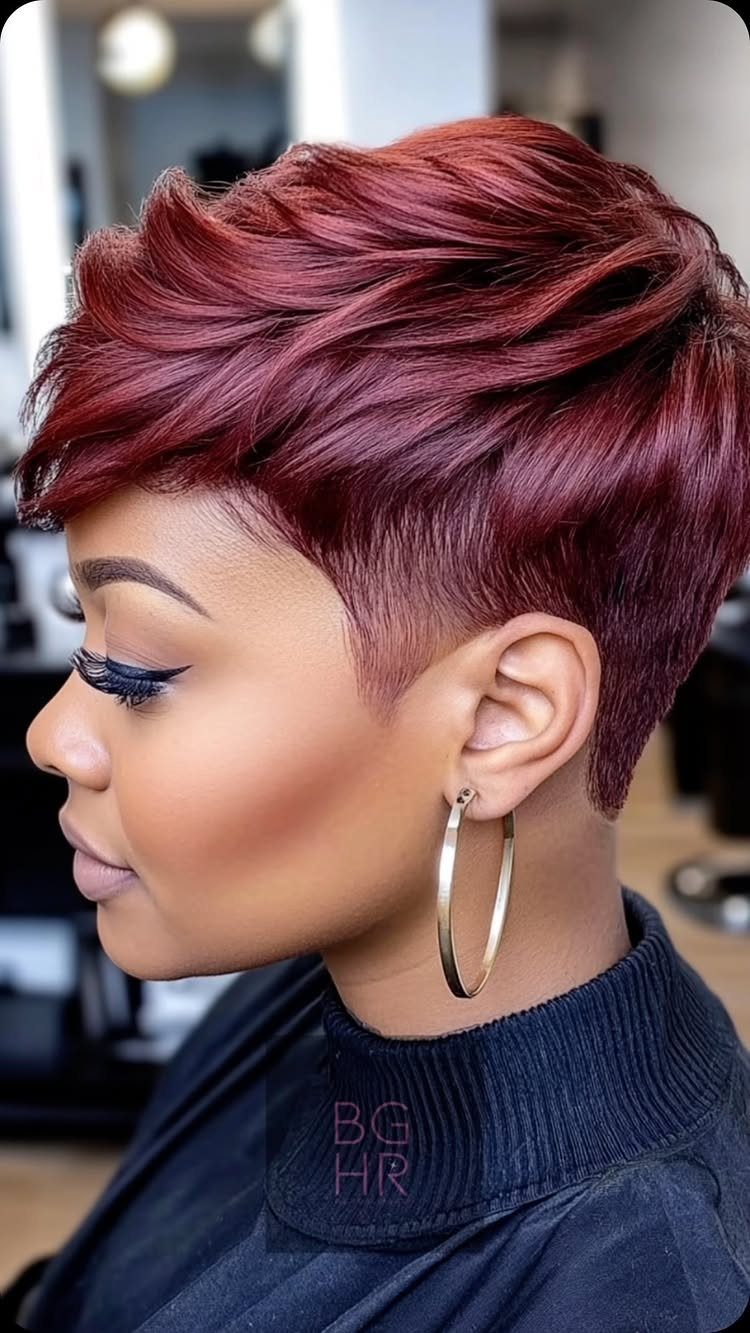
Short on the sides and pushed around on top, a textured pixie is meant to look slightly undone. Work a small amount of paste or cream through the top with your fingertips, then leave it alone.
A deep reddish-burgundy shade, like this one, makes the texture easier to read. Large hoops balance a cut this short, and I would choose them over small studs.
22. Braided Bob
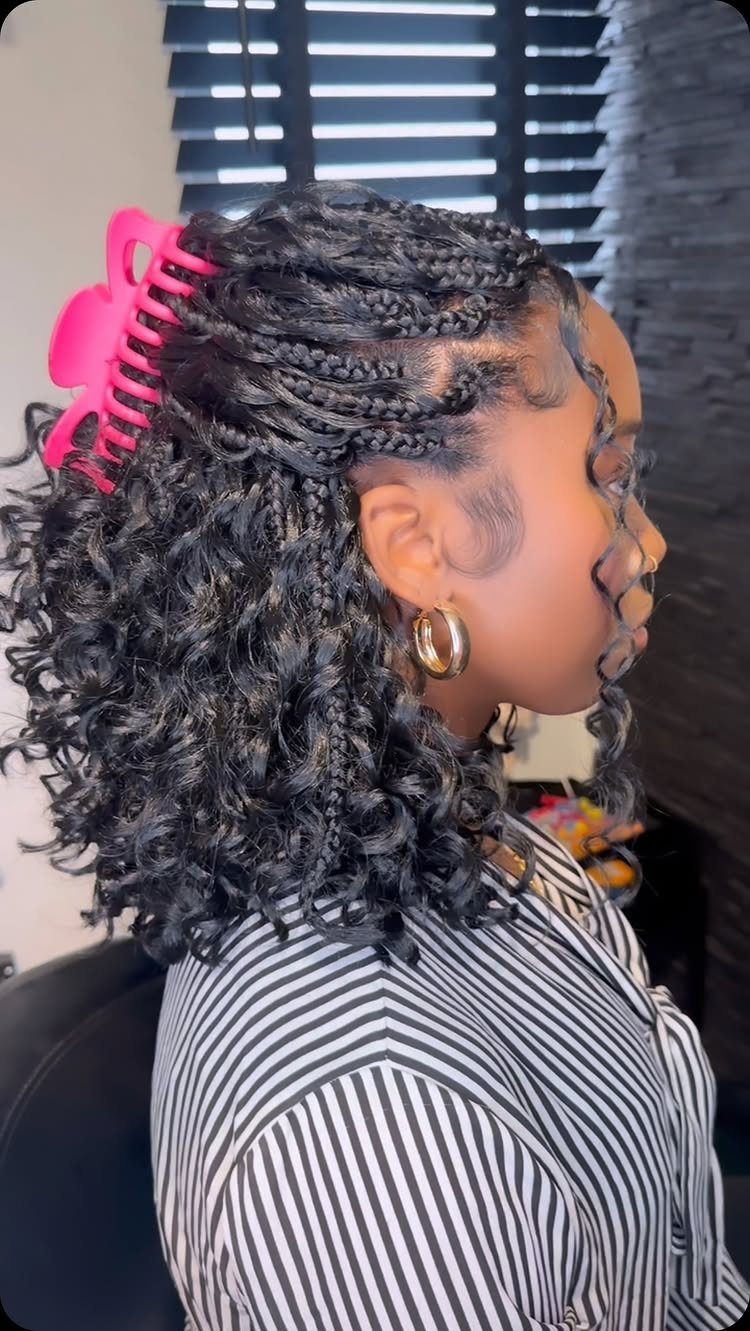
Small braids scattered through a chin-grazing bob, with curly ends left free, give a short cut more detail than it usually carries. Keeping the braids thin and the ends loose makes the length look intentional rather than plain.
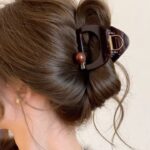
A claw clip holds the top section back and adds a bit of color. Ask your braider to stop each braid before the ends so the curls can spring up.
23. Half-Braided Pigtails
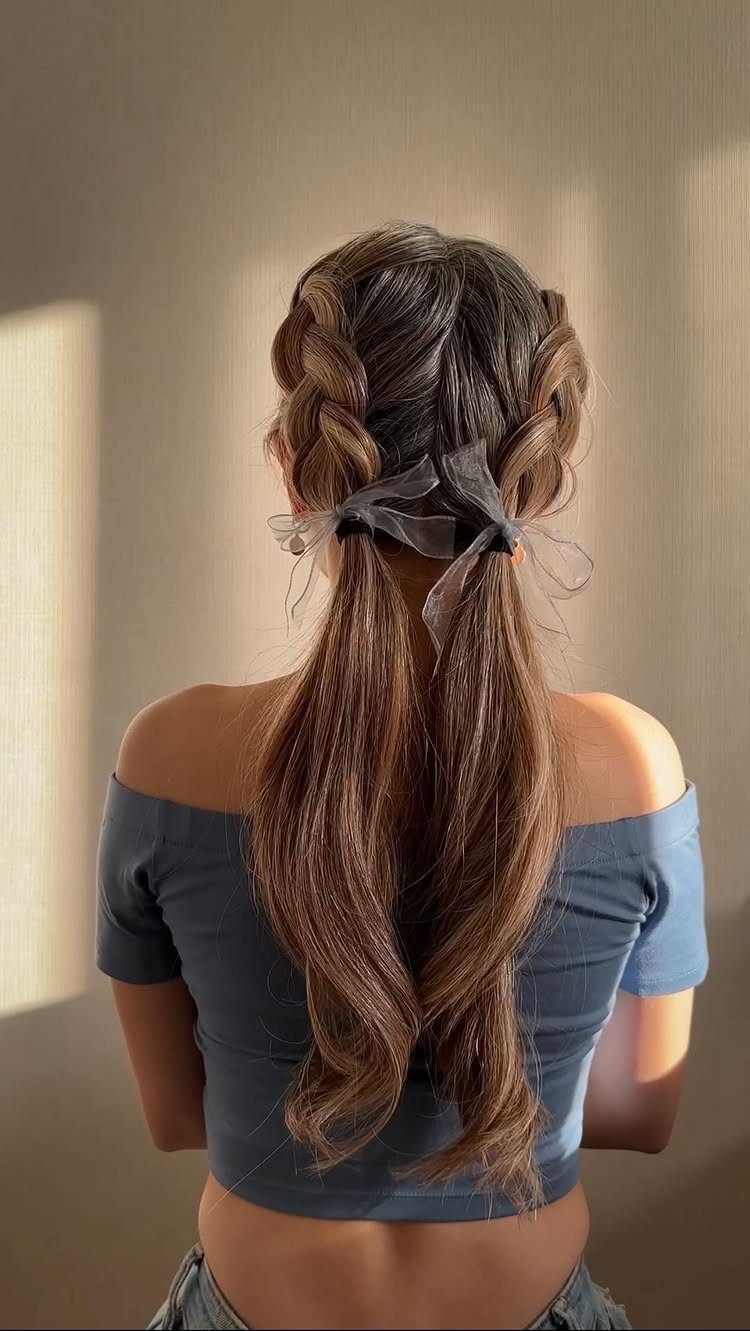
2 French braids that run down and finish at the nape, with the rest of the hair hanging loose, make a youthful pigtail style.
Part the hair straight down the middle first, then braid each side with the same tension so the pigtails match.
Tying each end with a sheer ribbon bow adds softness without weight. I like a ribbon in a muted tone, since it stays quiet next to loose lengths.
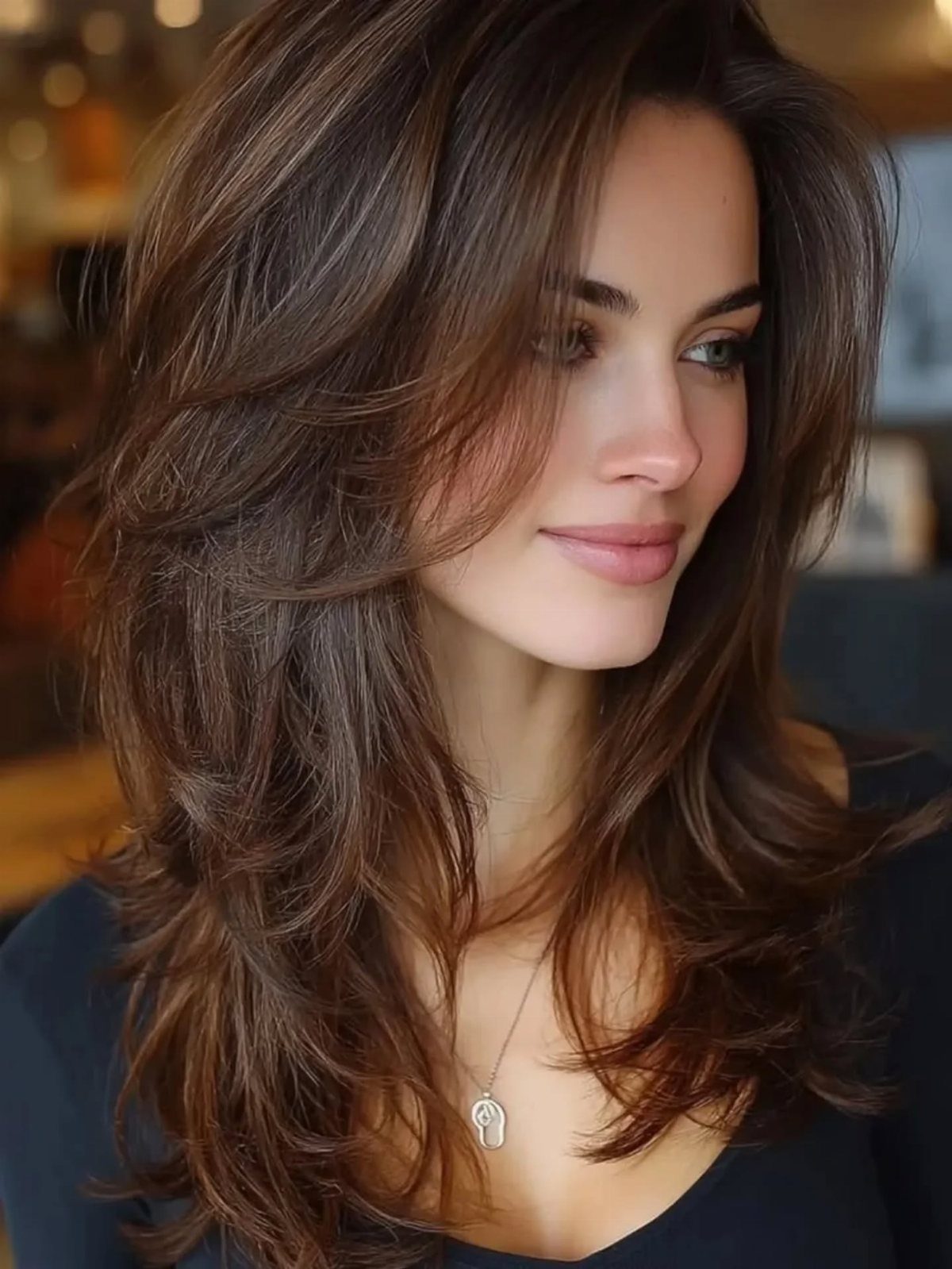
24. Curtain Bangs
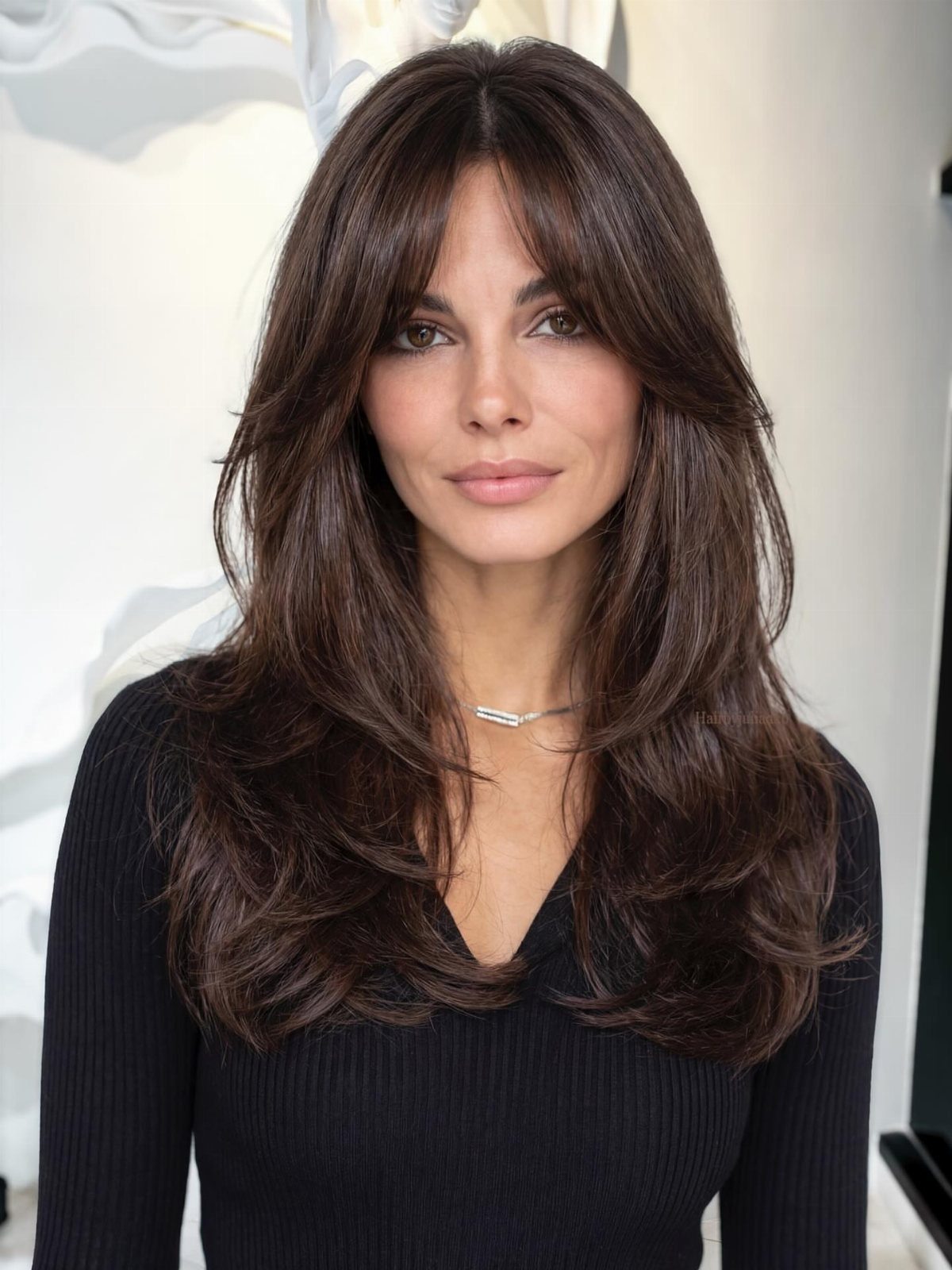
Long, parted bangs that sweep to each side and fall around the cheekbones frame the face without the commitment of a blunt fringe.
They blend into longer layers, so growing them out is far less awkward than with a short cut.
Ask for the shortest piece to start near the cheekbones. Blow-dry them over a round brush, pulling away from the center, to get the soft sweep.
25. Half-Up Space Buns
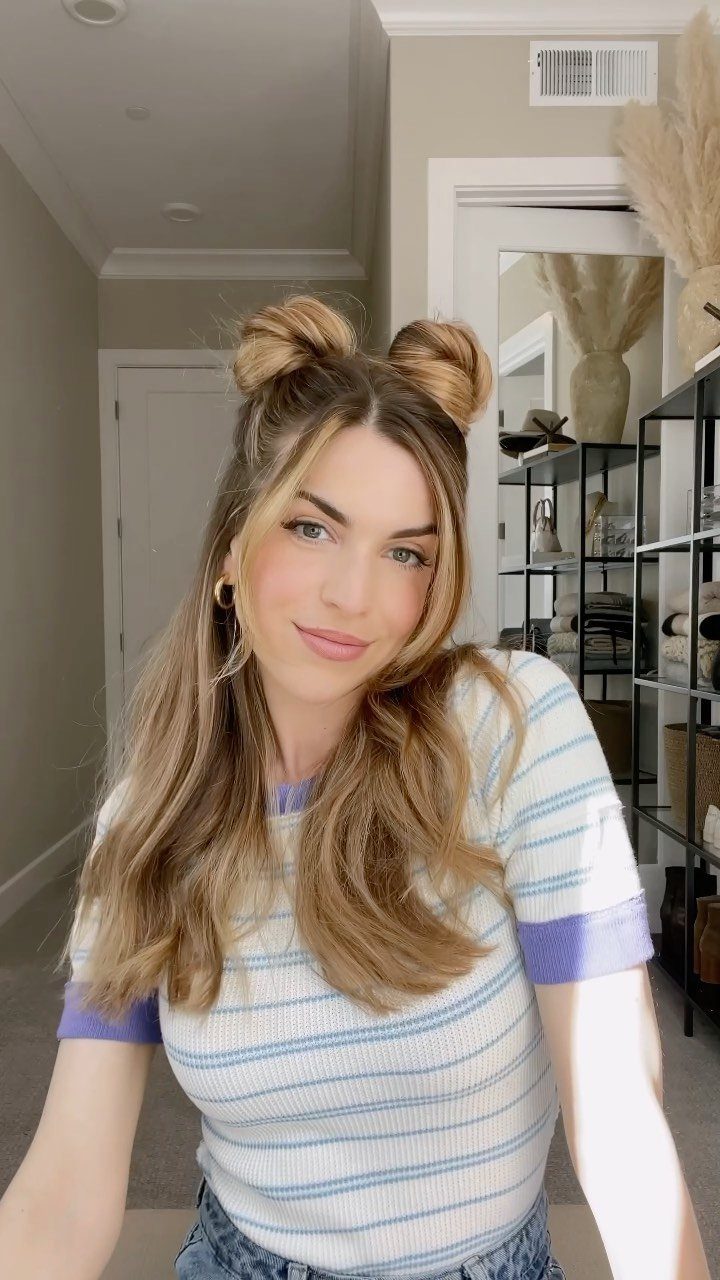
2 small buns pinned at the crown, with loose waves falling below, give shorter hair a playful shape that still feels relaxed.
Split off the top half, divide it in two, and twist each side into a bun before pinning it flat.
Shorter lengths make smaller buns, which I like better than big ones. Pull a few strands loose near the face so the look stays soft.
26. Wolf Cut
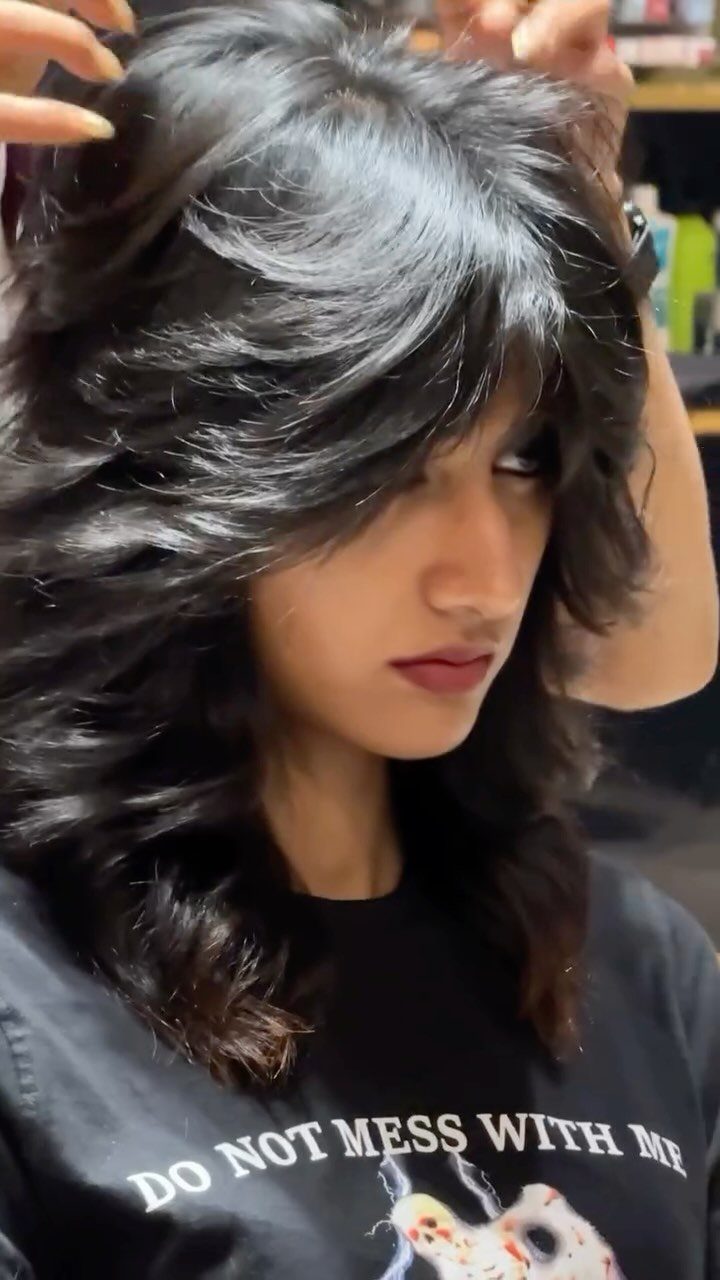
Choppy layers do the work in a wolf cut. Ask for short, uneven pieces through the crown, longer lengths behind, and bangs cut to blend into the front layers.
Wavy hair gets the most from it, since the waves fill out the layers and add volume. Scrunch in a light texture product and let it dry rough; a smooth blow-out works against the cut.
27. Voluminous Ponytail
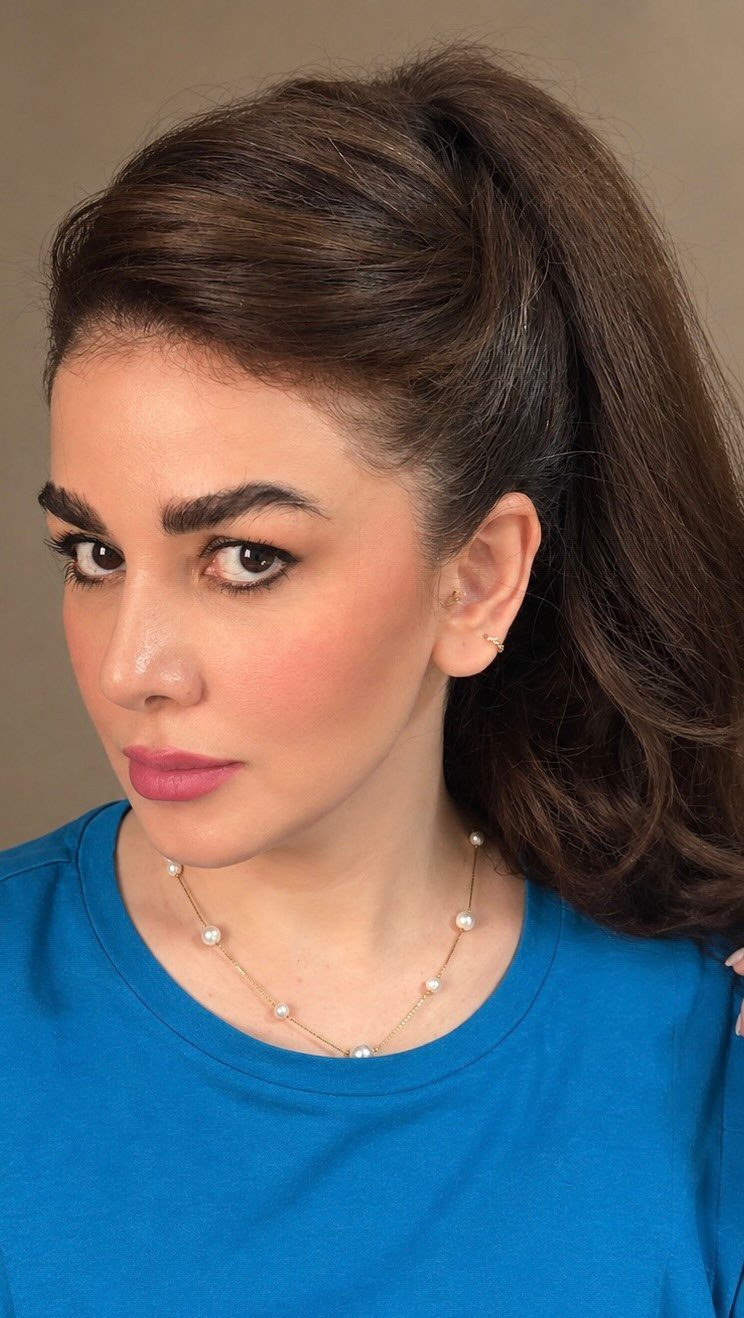
Tie a high ponytail first, then curl the length in sections. Brushing through the curls afterward is what turns them into big, loose waves with real volume.
A soft brush works better than a comb here, because it melts the separate curls together instead of pulling them apart. To hide the tie, wrap a small piece of hair around the elastic.
28. Nineties Flip
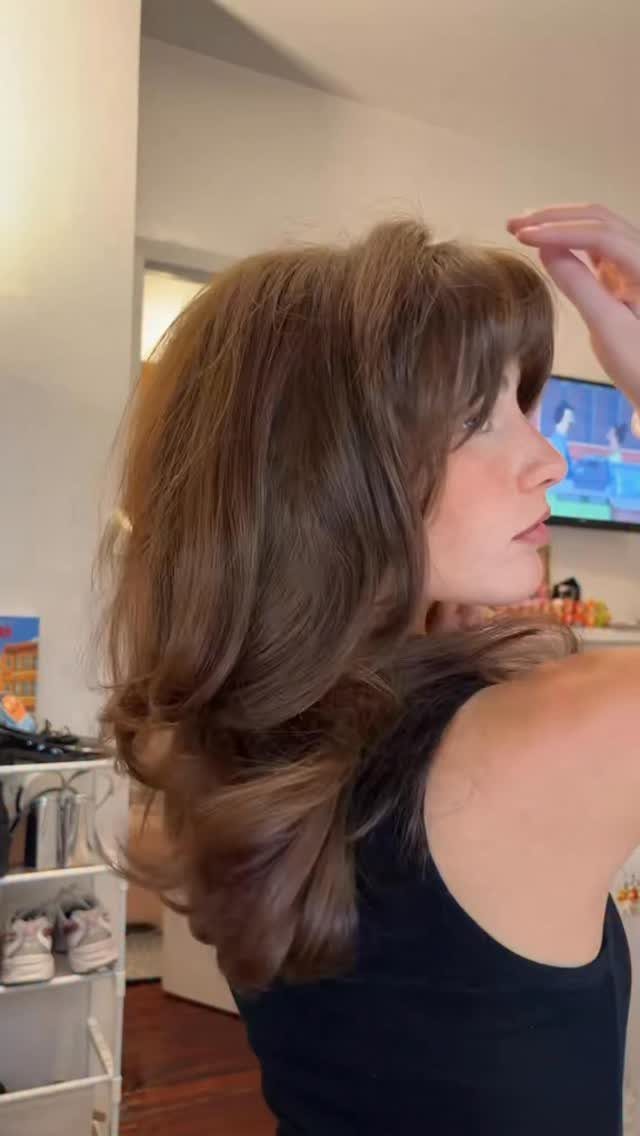
Ends that turn outward, away from the face, define a nineties flip. Medium-length hair is the best fit, with bangs resting softly across the forehead.
Blow-dry with a round brush and roll the ends out rather than under. Once the flip is set, brush as little as possible, since extra brushing flattens it.
29. Low Side Pony
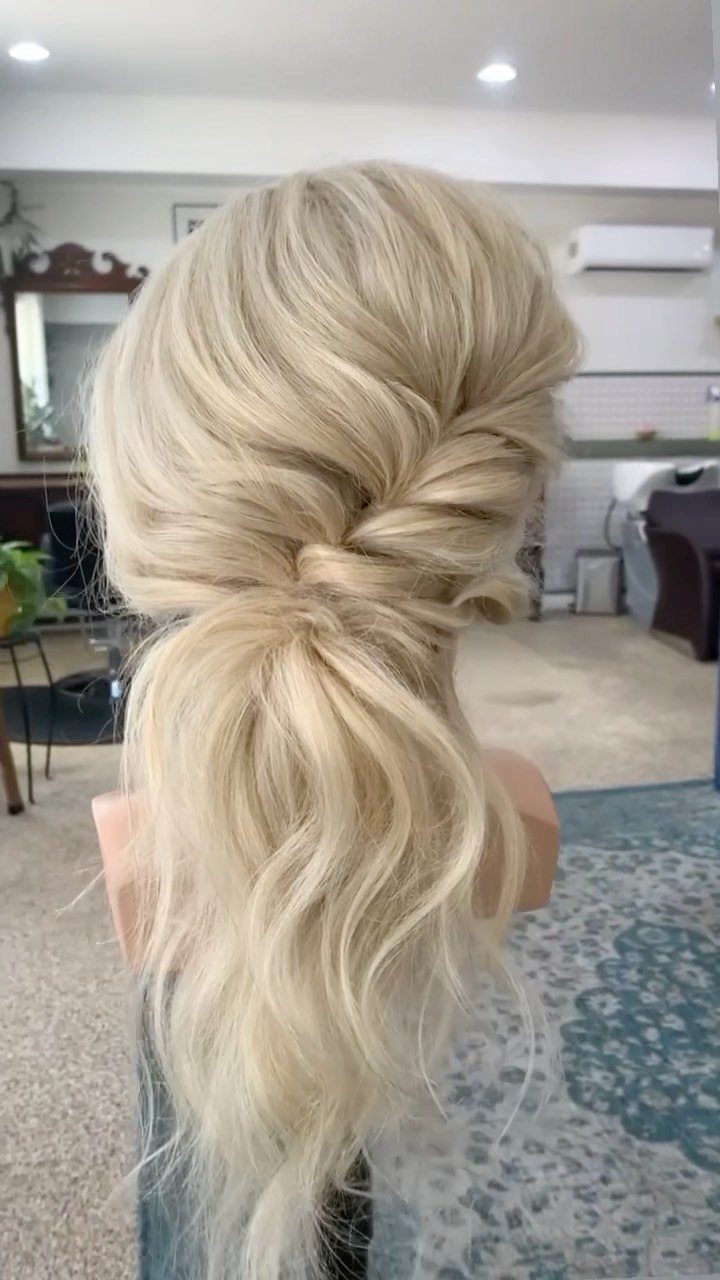
Slide a plain low ponytail off to one side and it becomes a different style. Gather the hair below the ear on your chosen side and tie it without pulling tight.
I prefer it slightly slack, with a little hair left loose at the front. It takes almost no effort, and the sideways placement keeps it from looking like an everyday ponytail.
30. Dutch Braids Into Low Buns
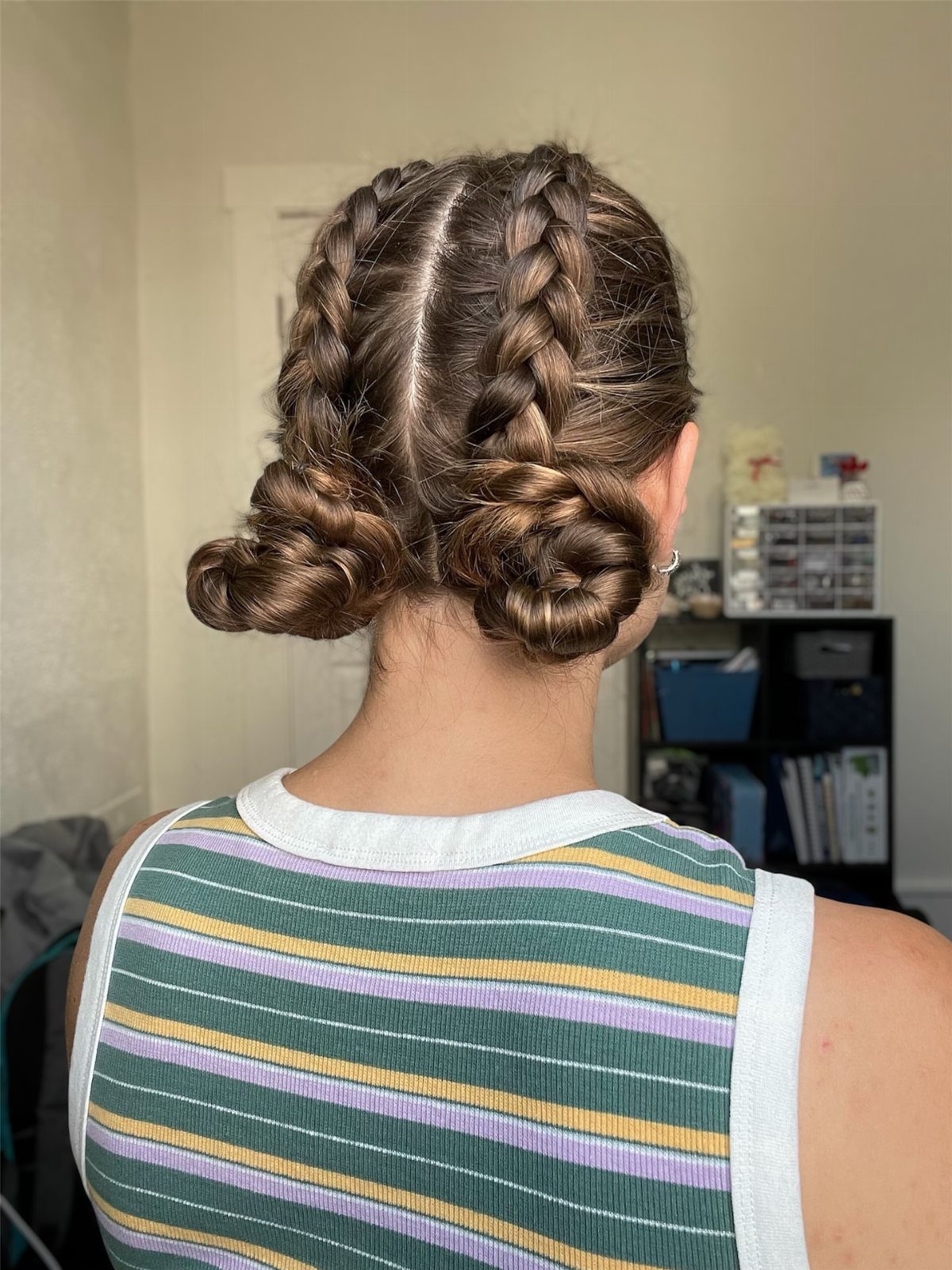
Dutch braids cross the strands under instead of over, so each braid sits raised on top of the hair.
Split the hair down the center, begin each braid at the crown, and pull with equal tightness on both sides so the 2 braids match.
Coil each braid’s end into a low bun at the nape and pin it in place. Pinning the buns at the same height keeps the pair even.
31. Braided Headband with Loose Hair
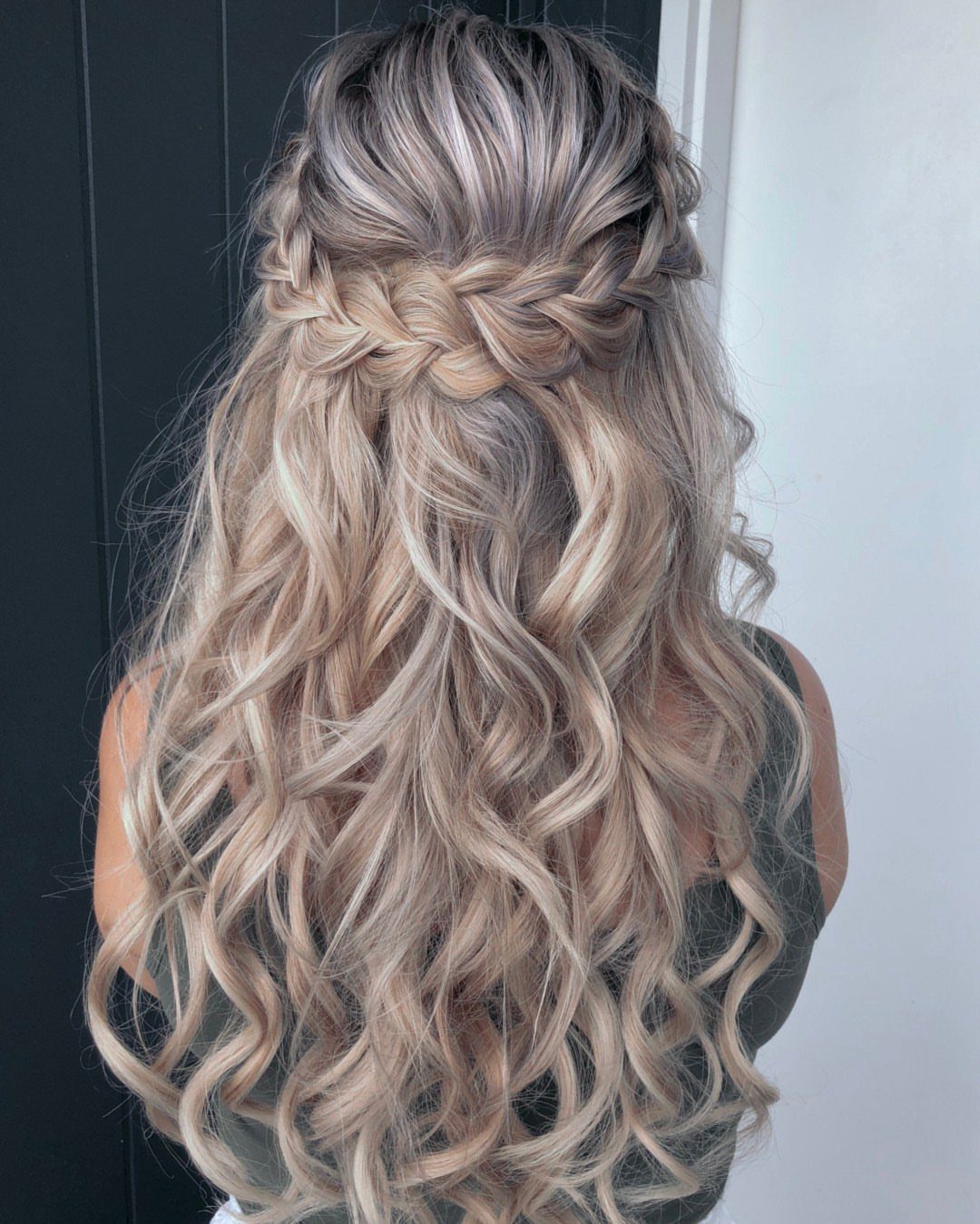
A braid worn across the back of the head like a headband gives long curls a built-in detail while the rest of the length stays loose.
Keep the braid flat and snug against the head so it reads as a band, then pin each end underneath the hair where it won’t show.
Curly hair hides the pins well. A few bobby pins are enough to hold it, and I’d leave the curls untouched below so the braid is the only structure in the look.
32. Curly Hair with Braided Headband
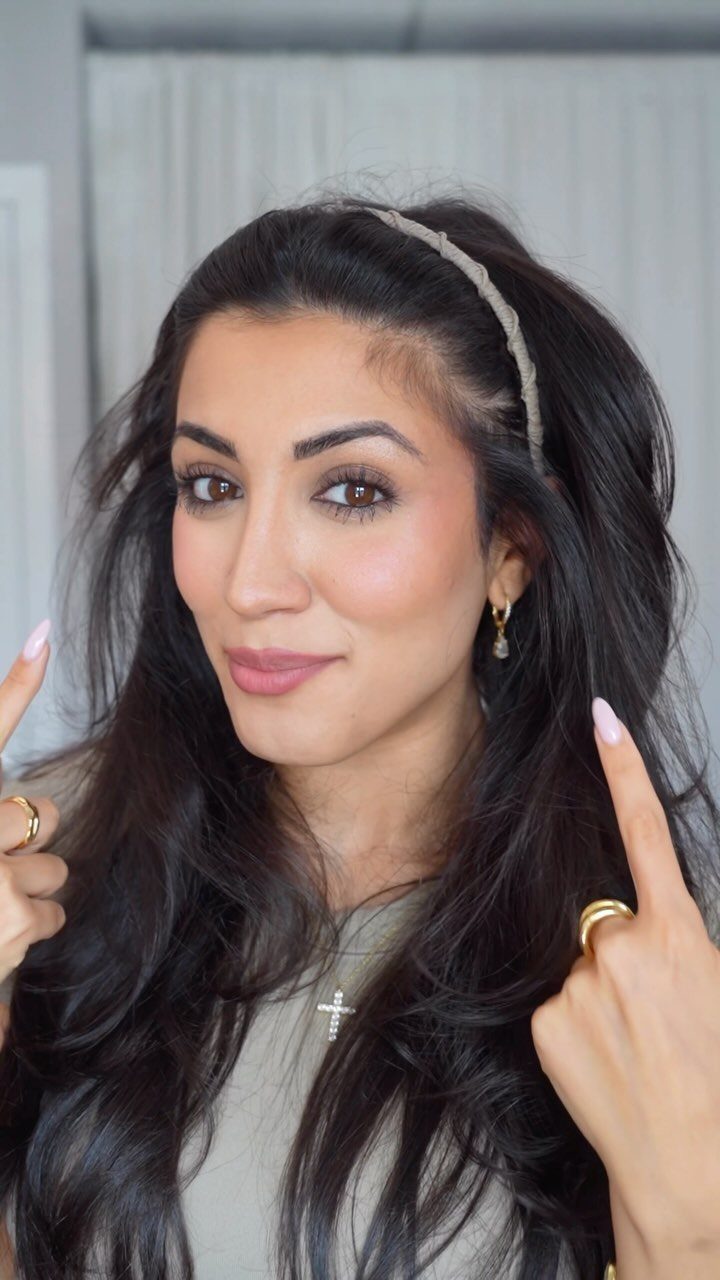
Wavy hair worn loose needs very little to look finished, and a thin braid set like a headband does that job.
Braid a narrow section from one side, take it over the top of the head, and tuck the end behind the opposite ear with a pin.
I like it thin.
A slim braid keeps the waves as the main feature, and a wide one starts to compete with them. Pull a few strands loose at the temples to soften the line.
33. High Curly Bun with Braids
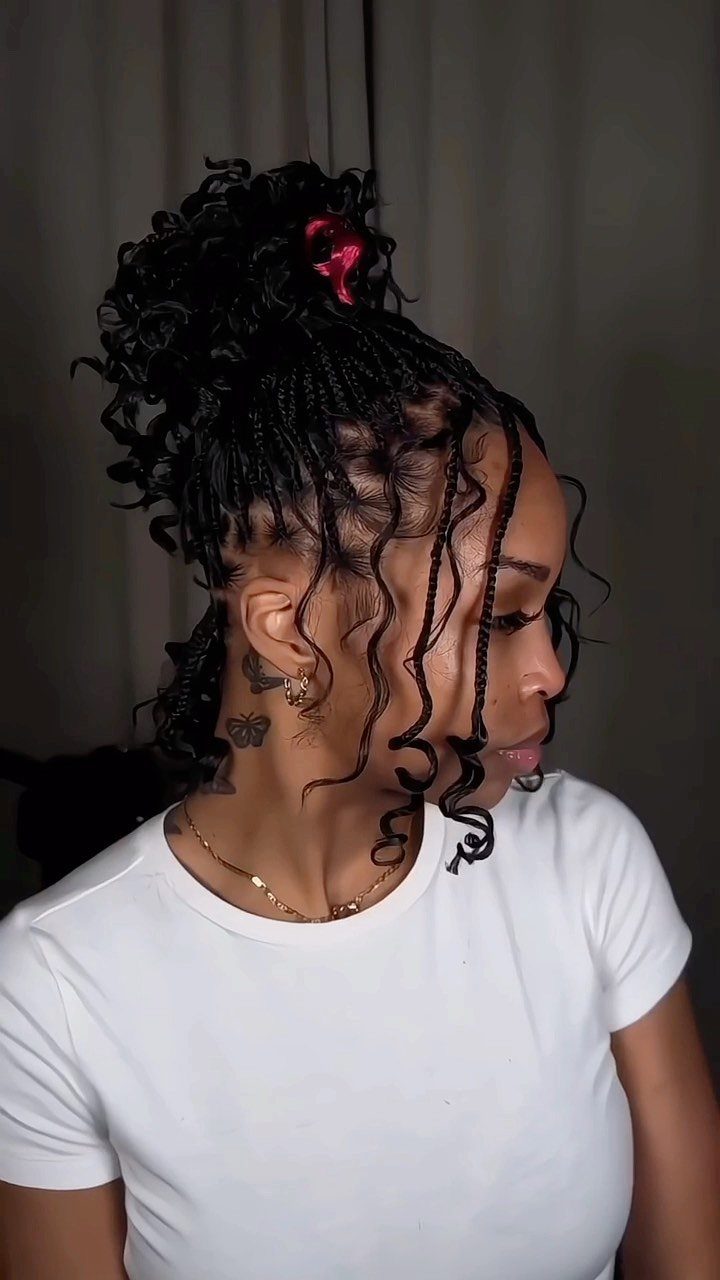
Gathering curls into a high bun while thin braids and loose tendrils stay out along the hairline and temples gives a style that is neat at the top and soft at the edges.
Pull the bulk of the hair up and secure it with a snag-free elastic, then leave the braids and a few curls free.
It keeps the neck bare and takes little time. I’d pin the braids back lightly only if they get in the way; hanging loose, they add the detail that makes this more than a plain bun.
Frequently Asked Questions
How can I style my natural hair at home?
A wash-and-go, a twist-out and an afro puff are 3 easy places to start. Short curls hold their pattern best in a wash-and-go when no blow dryer follows and no brush touches them wet, since either one loosens the coils.
For a twist-out, let the hair dry fully before taking the twists down, then separate them with your fingers instead of a comb.
How to find the right hairstyle for a female?
Start with your hair texture, then weigh face shape, personal style and how much upkeep you will actually do.
Wavy hair suits a half ponytail or a wolf cut, short curls look best as a wash-and-go, and a curly bob works when a stylist who knows curls cuts it with the curls in their natural pattern.
Curtain bangs that sweep past the cheekbones soften the face, and they ask far less of you than full blunt bangs do.
Micro bangs go the other direction: even a couple of weeks of growth shows, so regular trims come with the cut.