Knowing your dress size means taking three body measurements and checking them against the brand’s own chart, not any generic label. The catch is that vanity sizing makes the same number cover different inches from label to label, and shopping by a size you wore elsewhere is where most returns start. I learned that after pulling a tape measure tight across my bust to chase a smaller number, then spending an afternoon with a dress that sat two inches too high on my chest.
Measure Your Bust
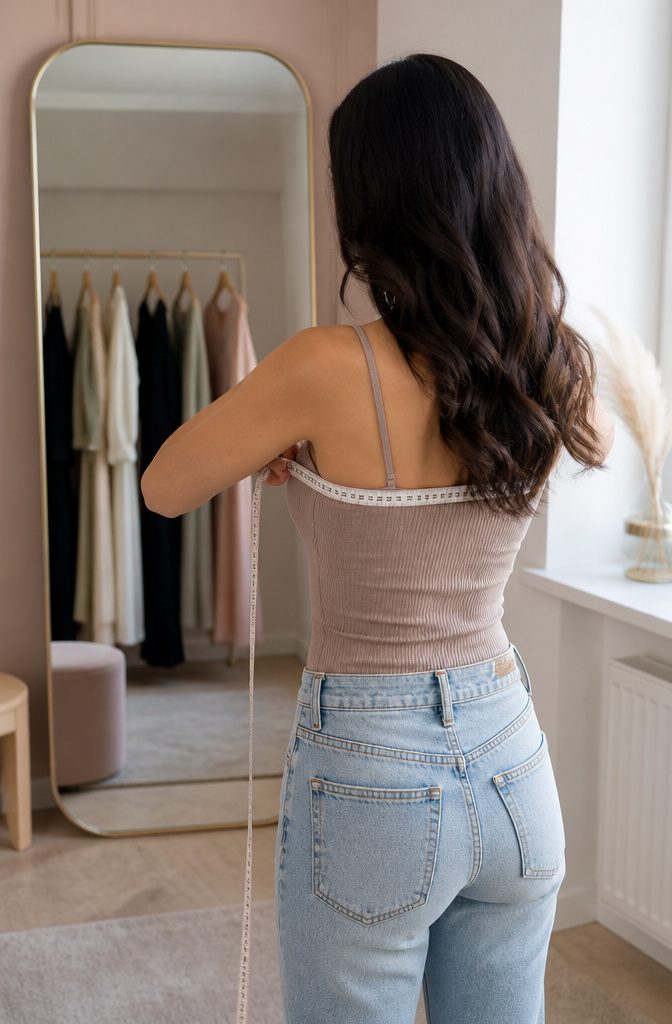
The bust is where most sizing charts start, and it is the easiest place to get a number that does not match your body. Wrap the tape around the fullest part, keeping it level across your back and snug enough to stay put without pressing in. I learned that second part the hard way after ordering a dress that sat two inches too high on my chest because I had pulled the tape tight, chasing a smaller number.
Take this over minimal clothing, a thin tank or well-fitting underwear, not the padded bra or the sweater you will not wear underneath. Arms stay relaxed at your sides. The tape should sit straight, not riding up behind or dipping in front, which is why a second pair of hands helps if you can recruit them. Check the measurement twice and write it down in inches. Most charts round or convert, but the raw number is what you need before you meet their math.
Measure Your Waist
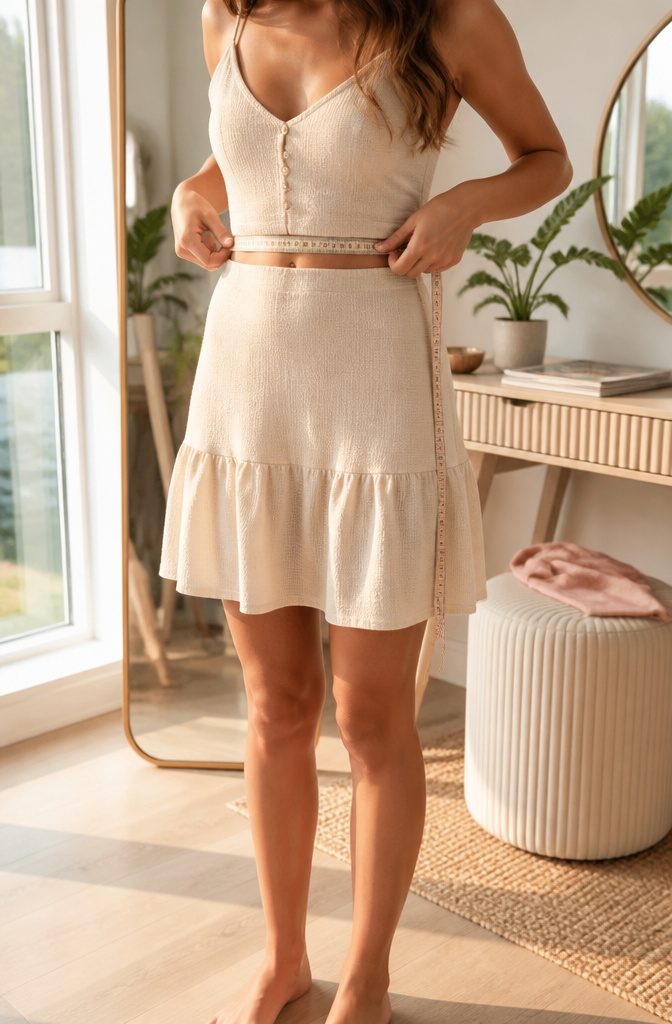
The waist measurement sits higher than most people expect. The narrowest point of your torso is usually about an inch above your belly button, not where your hands naturally rest when you feel for your middle. Stand straight with feet hip-width apart and the tape level around you, then exhale gently before you read the number. That exhale matters; sucking in gives you a dress that pinches by noon.
I used to place the tape at my navel and wonder why fitted dresses gaped at the back waist. Moving it up that single inch changed the fit entirely. If you are measuring alone, check in a mirror that the tape stays parallel to the floor; a tilted tape can add or subtract a quarter inch that becomes a full size in a structured style.
Measure Your Hips
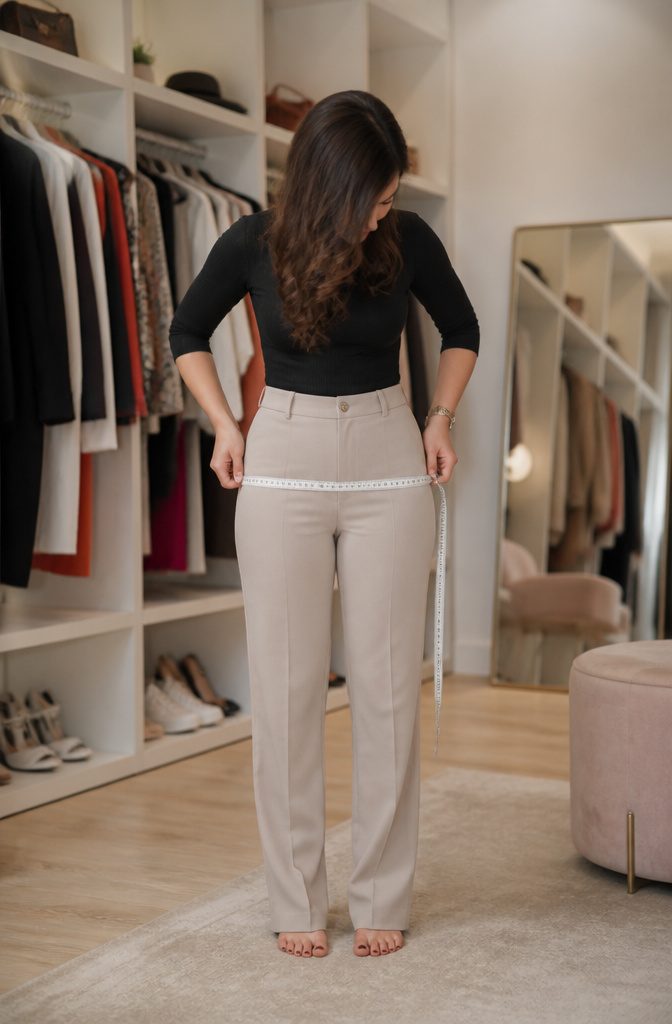
The hip measurement sits about 7–9 inches below the natural waist, though the tape placement matters more than the exact spot you land. Wrap it around the widest part of the hips and buttocks, keeping the tape level and parallel to the floor. I have watched this go wrong in fitting rooms: a tilted tape drops half an inch at the back and suddenly a size chart reads you into the wrong column entirely.
Stand with feet together, weight balanced, and breathe normally. Pulling the stomach in or shifting weight to one hip gives a number that fits nobody’s pattern. This is the third and final measurement you need; taken honestly, it is the one that saves you from dresses that gap at the zipper or strain across the seat.
Use a Size Chart
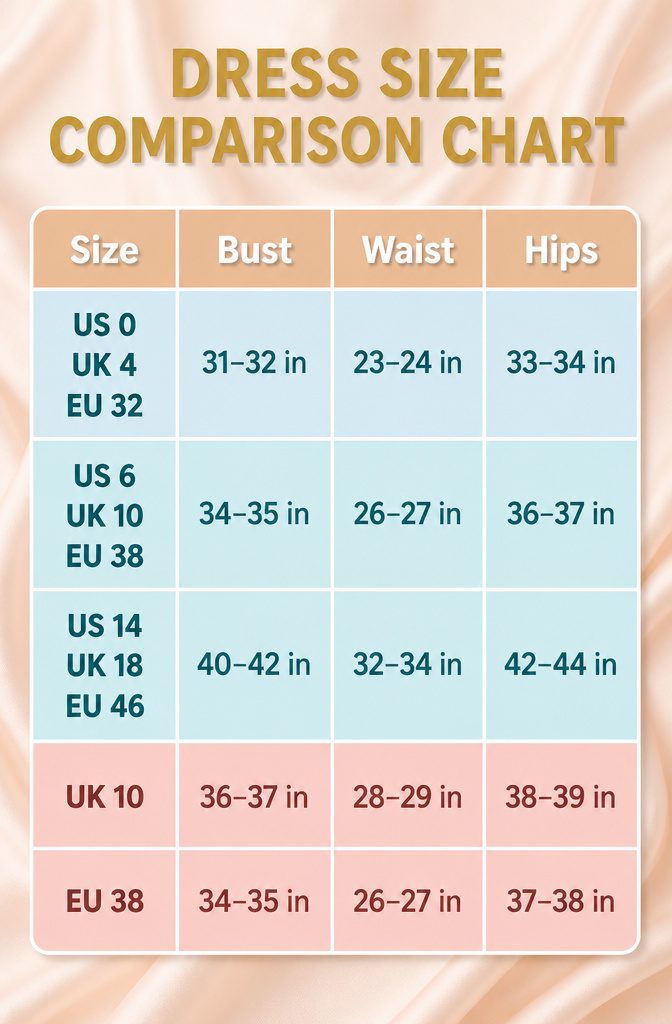
A size chart only works when it belongs to the brand selling the dress. The numbers on a generic "US size 6" mean almost nothing once you switch labels, and the regional systems make it worse. US sizes run 0–20, UK sizes sit roughly two numbers higher for the same body, and EU sizes cluster in the high 30s to low 40s. A US 6 is a UK 10 is an EU 38, but the inch ranges still do not line up exactly.
Here is how three common sizes translate across the systems most US shoppers encounter:
| Size | Bust | Waist | Hips |
|---|---|---|---|
| US 0 | 31–32 in | 23–24 in | 33–34 in |
| US 6 | 34–35 in | 26–27 in | 36–37 in |
| US 14 | 40–42 in | 32–34 in | 42–44 in |
| UK 10 | 36–37 in | 28–29 in | 38–39 in |
| EU 38 | 34–35 in | 26–27 in | 37–38 in |
Match your largest measurement first, especially in woven fabrics with no stretch. If your hips hit US 14 but your waist hits US 12, the 14 is the safer buy; a tight hip on a structured dress does not ease out with wear. I have ordered by my waist alone and spent an afternoon with a seam ripper. Always check the chart on the actual product page before you add to cart.
Choose Your Size by Fit
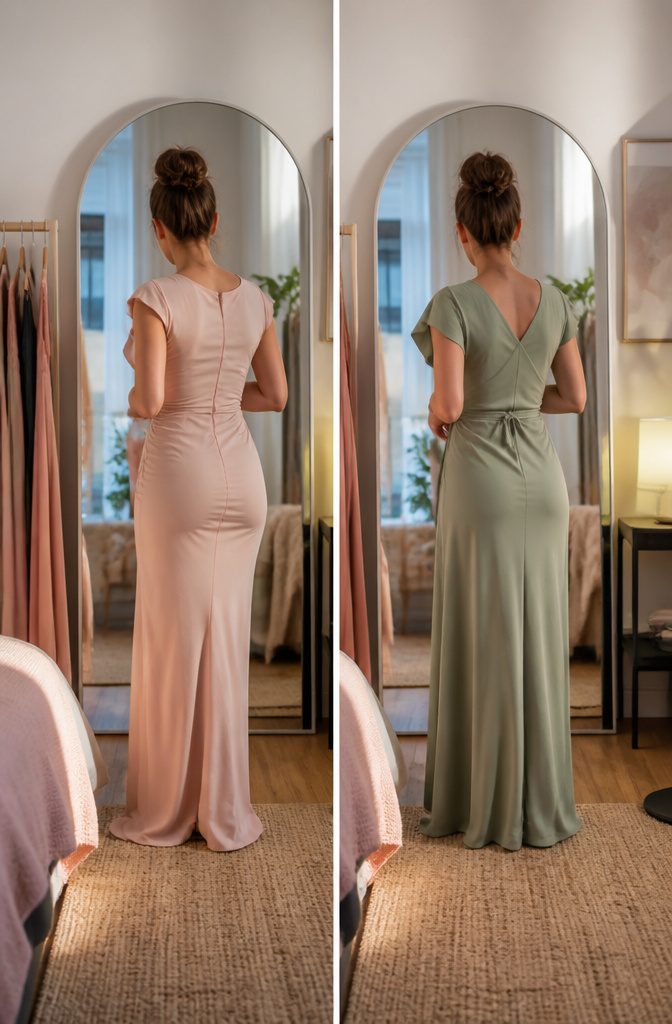
Choosing the size that matches your largest measurement is the move that saves most returns. If your bust lands in a 10, your waist in an 8, and your hips in a 12, take the 12 and tailor the rest. A slightly loose dress takes a belt; a too-tight one sits in the closet.
Between sizes, size up rather than forcing the smaller number. Breathable cotton may relax a touch with wear, but relying on stretch to fix a clearly wrong size is a mistake that shows up in the mirror.
Fabric and cut change the math. Stretchy knits sometimes let you size down, while woven, structured fabrics demand a precise fit from the start. A relaxed A-line forgives more than a fitted waist midi, so check the fit notes for that specific dress model rather than trusting the number on another label.
Plus sizing starts at 14W, with proportions cut for curvier figures rather than simply scaled up. The measurements run differently there, and standard misses sizes stop being useful once you cross that line.
How to Measure Without a Tape
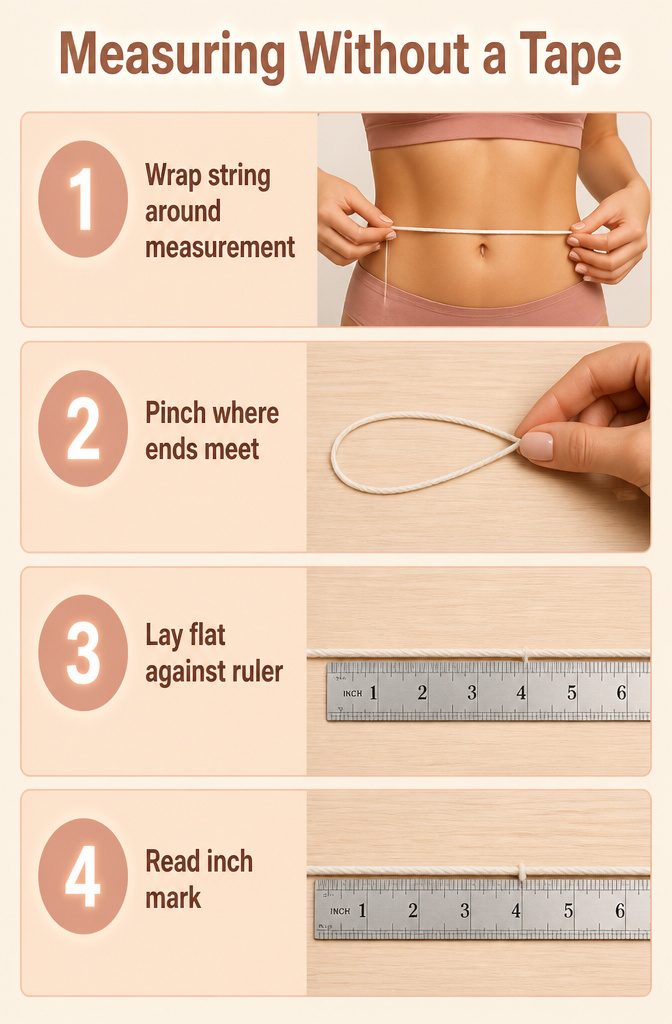
A non-stretchy piece of string and a standard ruler will get you close enough when no soft tape is on hand. Wrap the string around your bust, waist, or hips, pinch where the ends meet, then lay it flat against a ruler to read the inch mark. The catch is stretch: yarn or elastic cord gives a false number, and even a snug pull on a cotton shoelace can shave off half an inch that matters between sizes. Phone measurement apps exist, but in my experience reading through how-to pages, they drift enough that a store’s size chart becomes a coin flip. The string method works for an emergency order, yet the same sources that suggest it still recommend confirming with a proper dressmaker’s tape before buying anything fitted.
Signs a Dress Is the Wrong Size
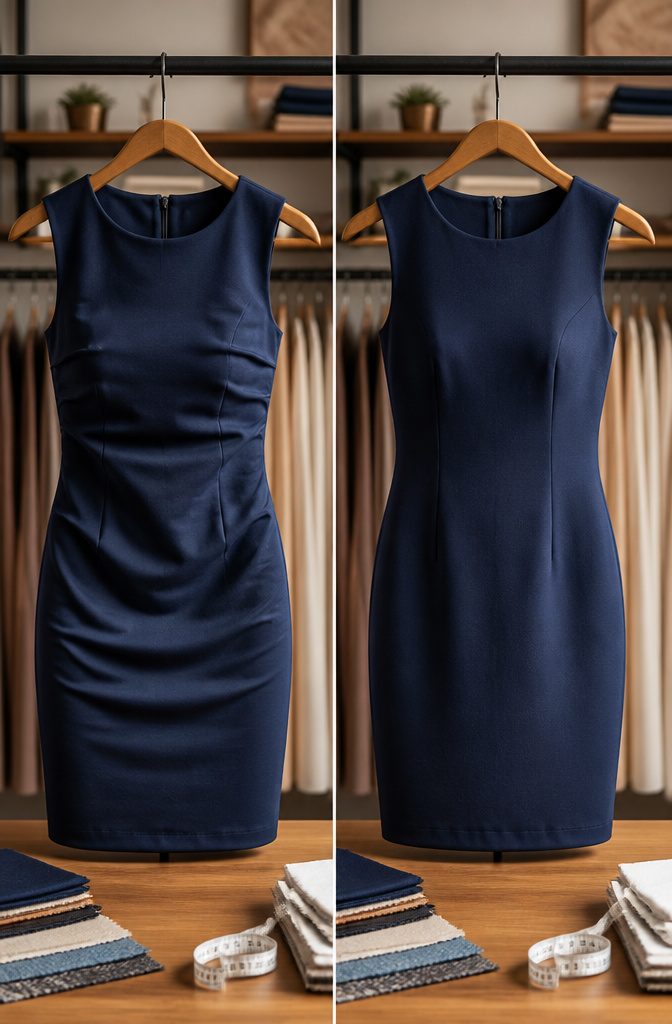
Gaping at the back or bust means the dress is too large, and the fabric will not settle no matter how you adjust the straps. Pulling across buttons, zippers, or seams means it is too small, and the tension will distort the line of the garment within an hour of wearing it. These are the fit indicators that matter most when you cannot try before buying, since a size chart tells you only where to start, not how the cut will behave on your body.
A zipper that needs force to close, horizontal wrinkles at the hip or waist, or a hem that rides up when you walk all point to the same problem: the dress is fighting your frame rather than skimming it. Shoulders slipping past the seam line, armholes revealing your bra, or fabric pooling at the lower back signal the opposite, that the structure has nothing to hold onto. The waist seam falling below your natural waistline is another giveaway; it means the proportions are scaled for someone longer through the torso.
When you spot these signs, the fix is usually one size in either direction, or a shift to a more forgiving silhouette like an A-line if your hips and waist sit far apart on the chart. A tailor can adjust straps and side seams, but the starting point has to be close enough that the garment is not working against you.
Why Brand Charts Differ
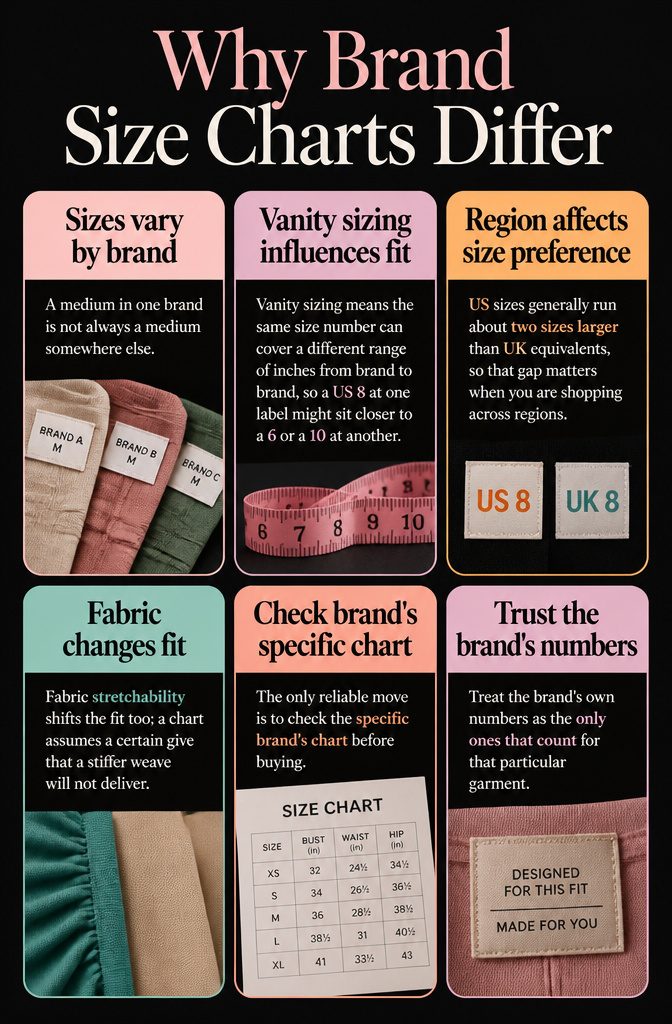
A medium in one brand is not always a medium somewhere else. US numeric sizes run 0–2 for extra small, 4–6 for small, 8–10 for medium, 12–14 for large, and 16 and up for plus, but those numbers map differently onto actual bodies depending on who made the dress. Vanity sizing means the same size number can cover a different range of inches from brand to brand, so a US 8 at one label might sit closer to a 6 or a 10 at another.
The only reliable move is to check the specific brand’s chart before buying. US sizes generally run about two sizes larger than UK equivalents, so that gap matters when you are shopping across regions. Fabric stretchability shifts the fit too; a chart assumes a certain give that a stiffer weave will not deliver. Treat the brand’s own numbers as the only ones that count for that particular garment.
Frequently Asked Questions
How do I measure my bust, waist, and hips correctly?
Wrap the tape around the fullest part of your bust, keeping it level across your back and snug without pressing in. For your waist, find the narrowest point, usually about an inch above your belly button, and measure after a gentle exhale. For hips, wrap around the widest part of your hips and buttocks with the tape parallel to the floor, standing with feet together and weight balanced.
What if my measurements fall between sizes?
Choose the larger size, especially in woven fabrics with no stretch. A slightly loose dress can be tailored or belted; a too-tight one will sit unworn in your closet. If your measurements span multiple sizes, match your largest measurement first and plan to tailor the rest.
How do I use a dress size chart?
Match your raw inch measurements to the closest row on the brand’s specific chart for that exact dress, not a generic table. US sizes run 0–20, with UK sizes roughly two numbers higher and EU sizes in the high 30s to low 40s for the same body, but the inch ranges still do not line up exactly across labels. Always check the product page before adding to cart, since vanity sizing means the same number covers different inch ranges from brand to brand.