
The occasion decides which of these dresses is yours: small-scale florals, polka dots and houndstooth suit daytime, while the sparkling black cocktail dress, the red satin and the deep V-neck belong to evening.
Hems stay short across the list, with one red midi stopping just below the knee for anyone who wants more coverage.
Gloves are the accessory that makes a short dress read as old Hollywood, and the short black dress with gloves proves it.
1. Wide-Neckline Full Skirt
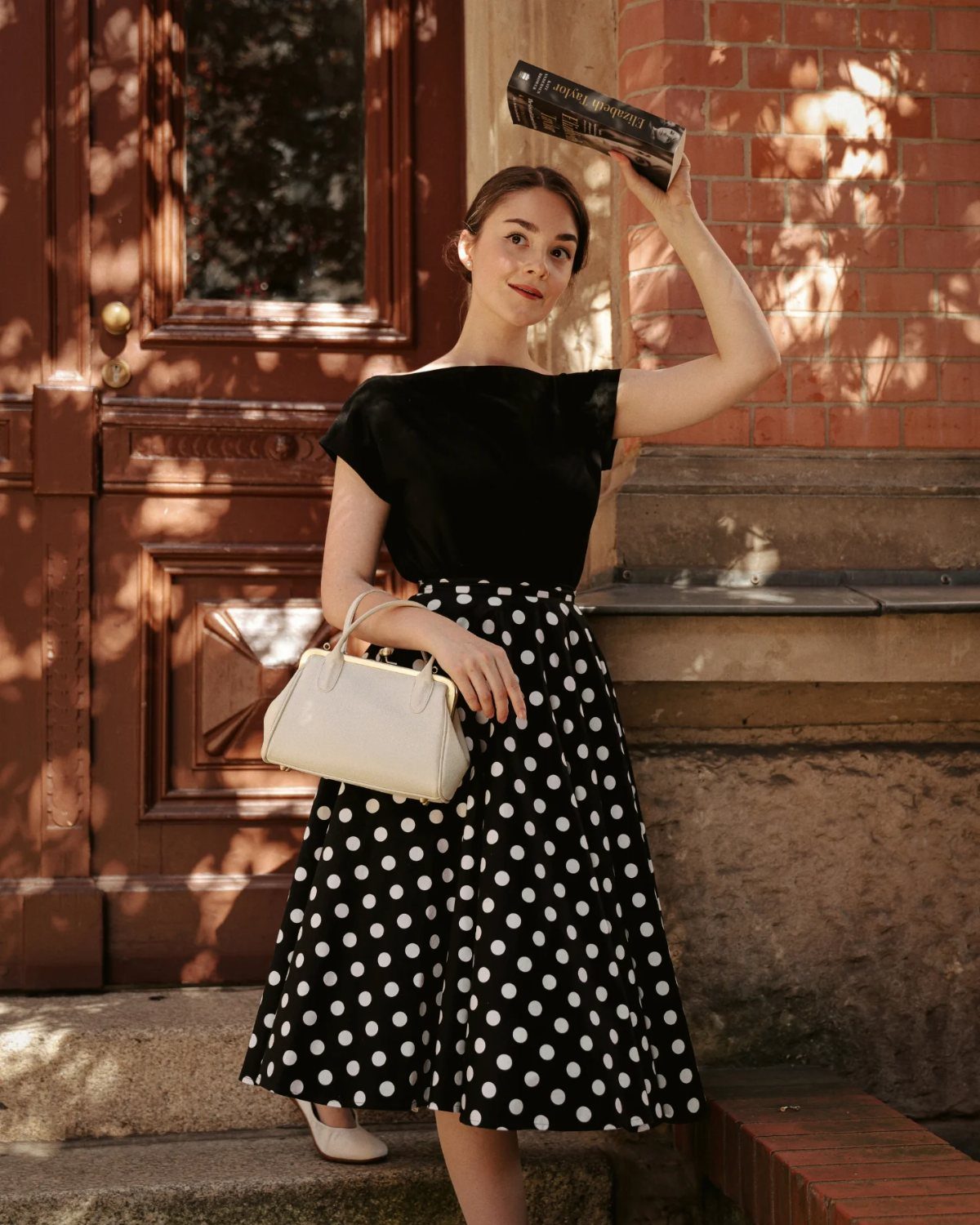
A wide neckline paired with a full skirt makes the skirt do the talking, so I keep everything above the waist simple.
Pairing a solid black off-the-shoulder top with a white polka-dot full skirt keeps the pattern in one place and lets the neckline frame the collarbones.
Because the skirt adds volume at the hip, a fitted top keeps the shape from looking boxy. Short hemlines like this one also show off the full skirt’s movement better than a longer cut would.
2. Cinched-Waist Floral Dress
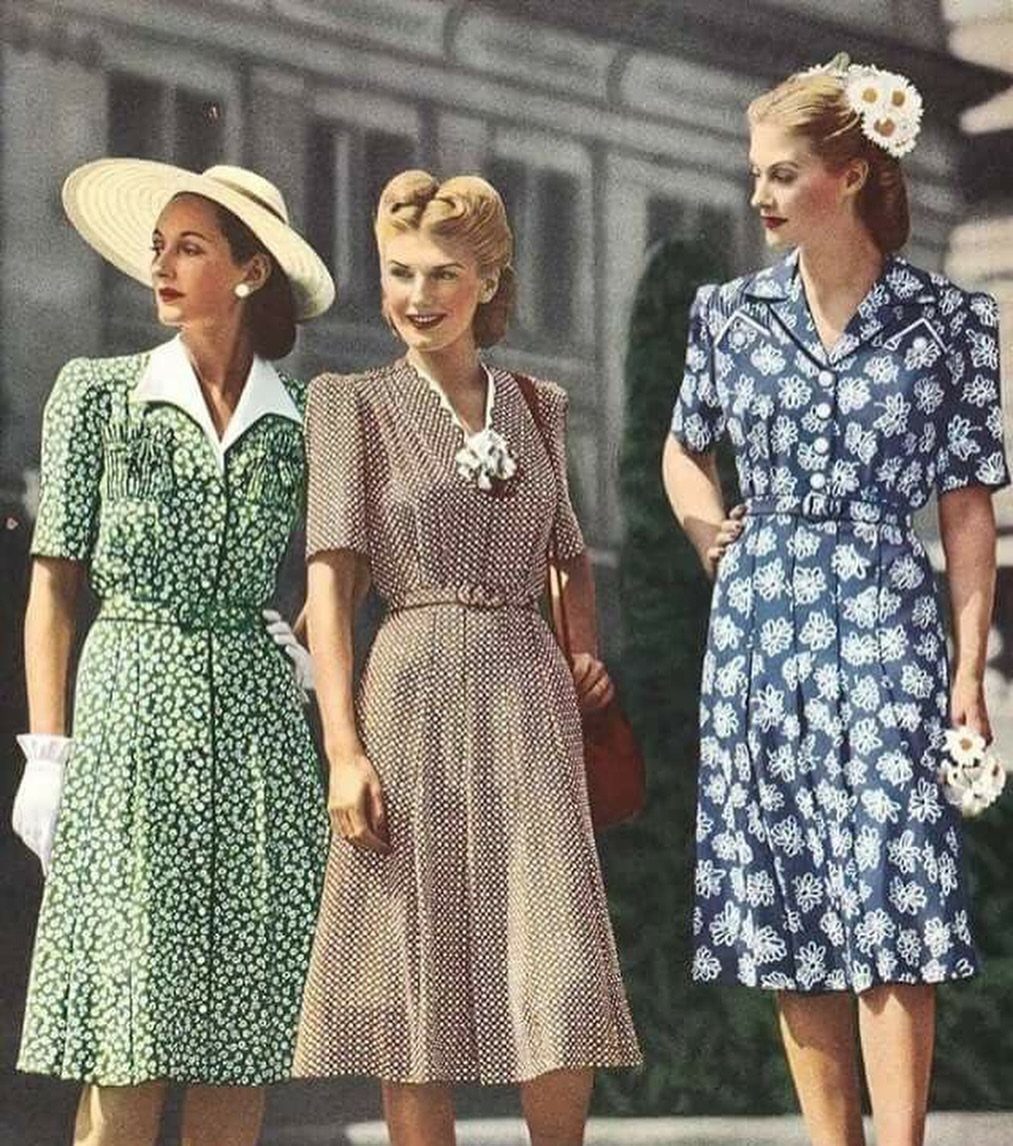
Florals in a small, delicate print look best when the waist does the structuring. A cinched waist gives a short dress a clear shape, and the print stays soft rather than loud.
Muted colors like sage green, brown and dusty blue suit this style well, since the cinched waist and the floral print already supply the interest.
I’d pick a shade you already wear near your face and let the pattern stay quiet. A short hem keeps the proportions light.
3. Deep V-Neck Evening Dress
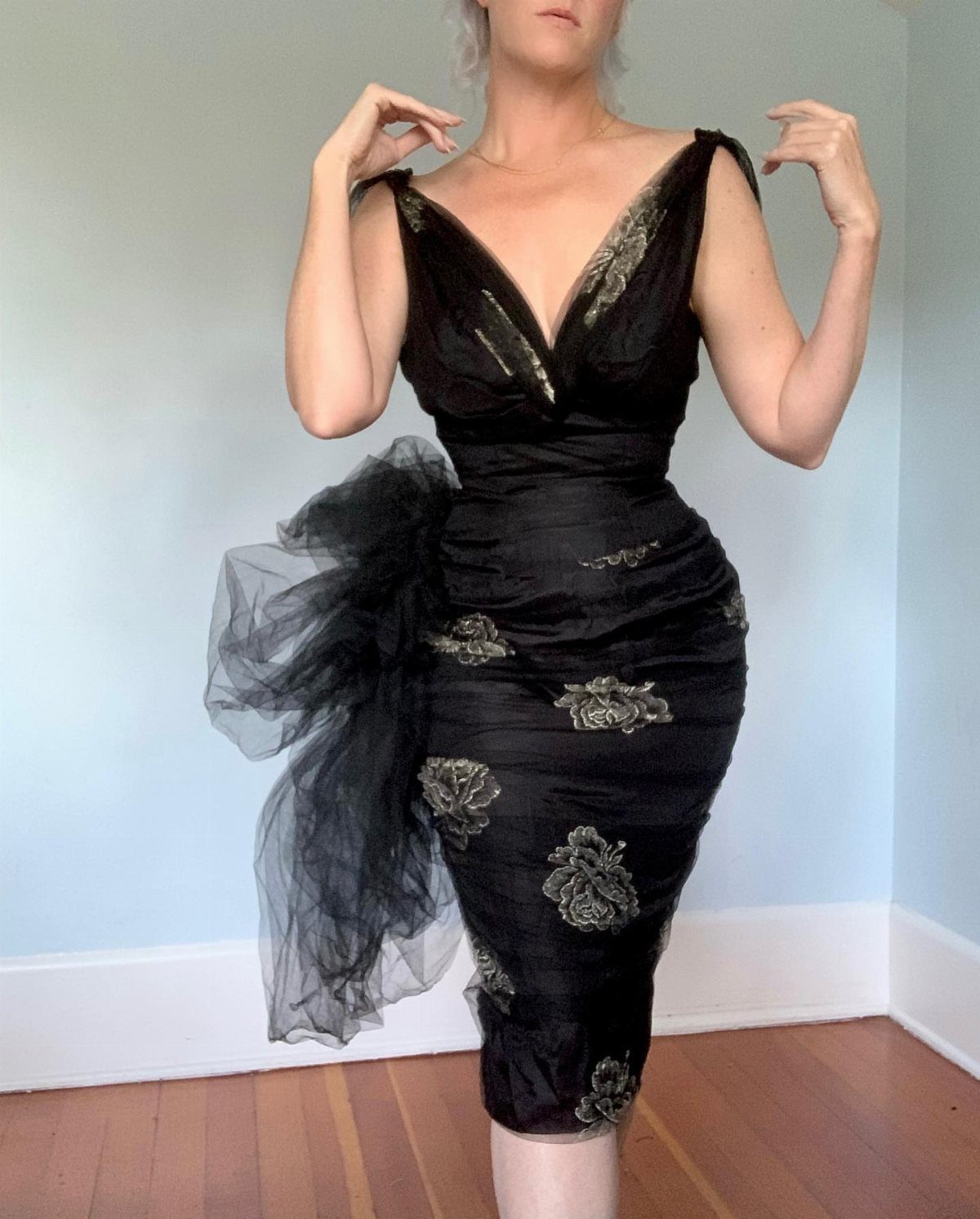
Black, knee-length and cut into a deep V: this is the evening version of the old-Hollywood short dress.
I’d skip a necklace entirely, since the V already frames the neckline.
A knee-length hem suits formal occasions without the weight of a gown, and a bow gives the hip some interest, which moves the focal point away from the chest.
4. Scoop Neckline
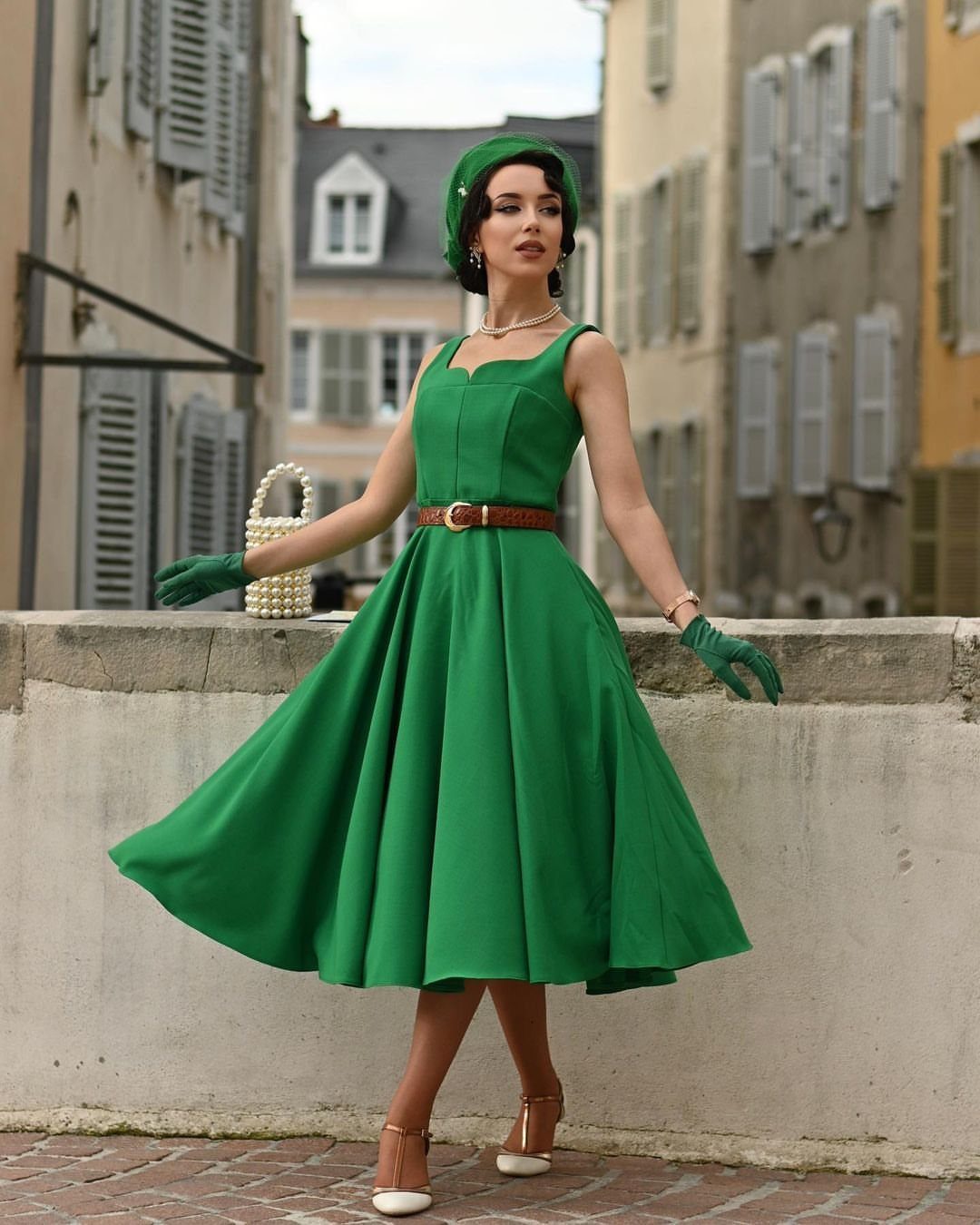
A scoop neckline draws a soft curve across the collarbone and visually lengthens the upper body, which helps a short dress look longer through the torso.
Gloves and a beret finish the look without crowding the neckline, and I like that the neckline is left clear. If you have a shorter torso, a scoop is a flattering alternative to a high neck.
5. Small-Scale Floral Dress
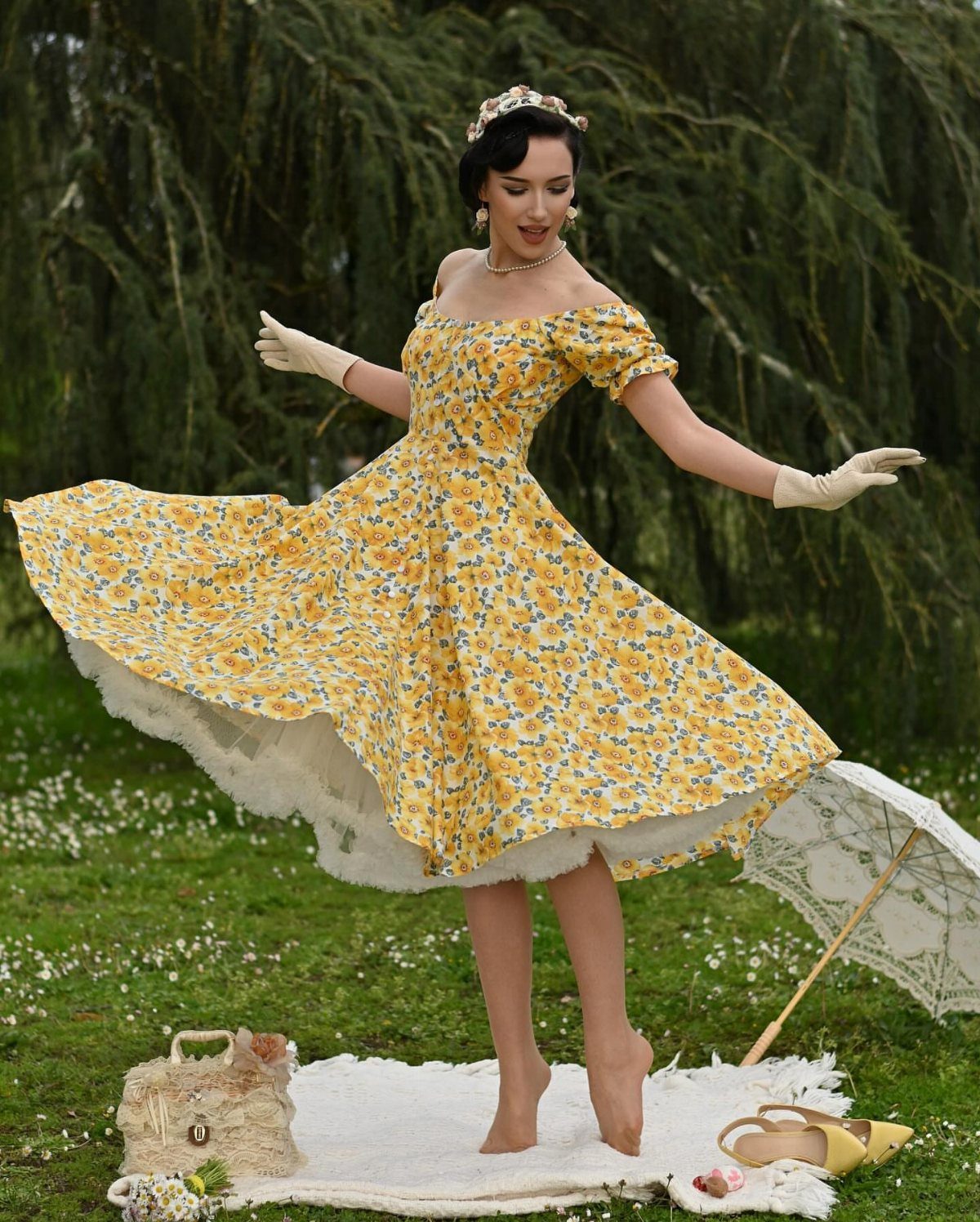
Small florals on a short, full-skirted dress read as sweet rather than busy, and yellow keeps the whole thing bright.
For everyday wear I’d drop the tiara and parasol and keep the gloves, which carry the old-Hollywood feeling on their own. A full skirt in a small print suits daytime occasions best, like a garden party or brunch.
6. Polka-Dot Vintage Dress
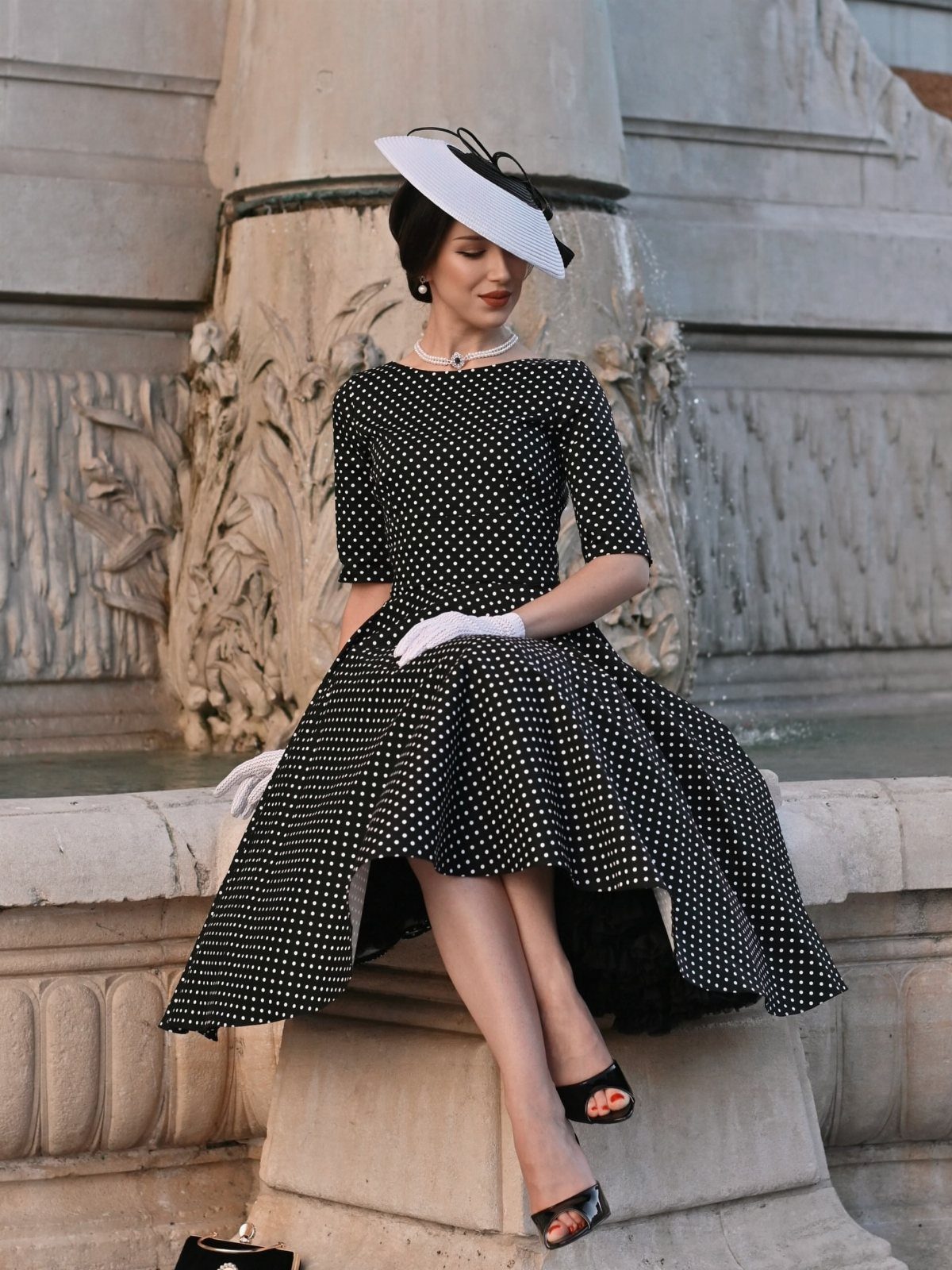
Polka dots are about the easiest way into vintage dressing, and black and white is the classic pairing. A white hat and gloves echo the contrast of the polka dots and tie the whole look together.
I’d keep accessories in the same 2 colors so the dots stay the focus. This works for daytime events and casual dinners, and it’s a safe pick if you’re unsure how much vintage styling you want to take on.
7. Short Black Dress with Gloves
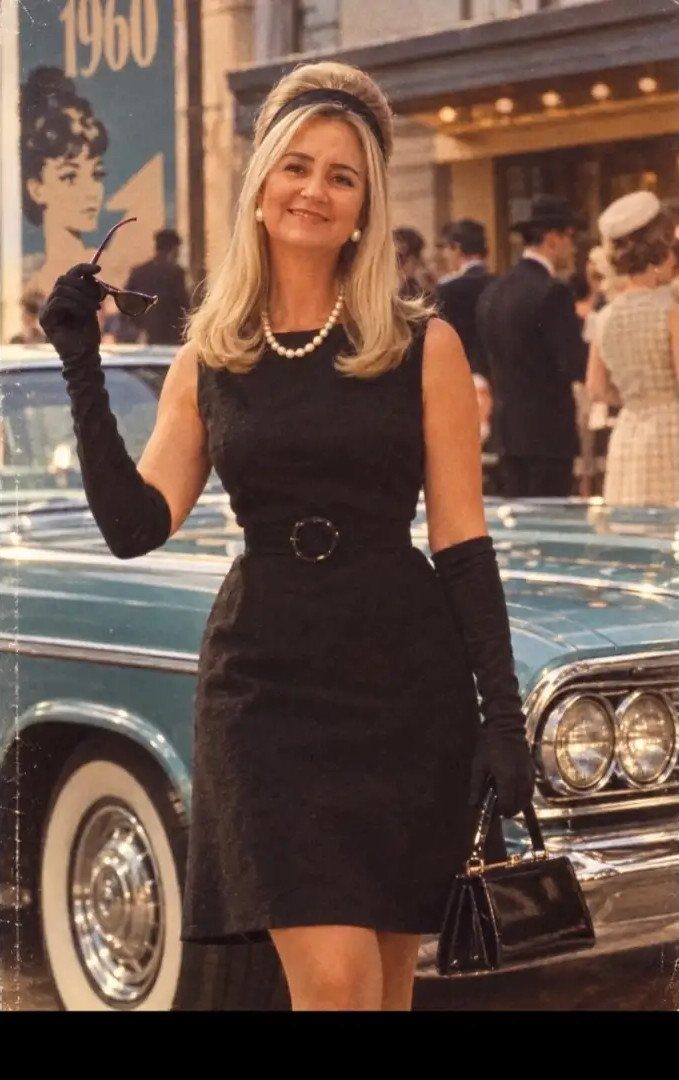
Long gloves and pearls carry this look, so the dress itself can stay short, black and plain. I’d wear the pearls and skip every other piece of jewelry, since the gloves already add detail at the arm.
Pearls sit best against a neckline with some fabric around it. On a deep V like the earlier pick, I’d leave the neck bare.
8. Red Vintage Midi Dress
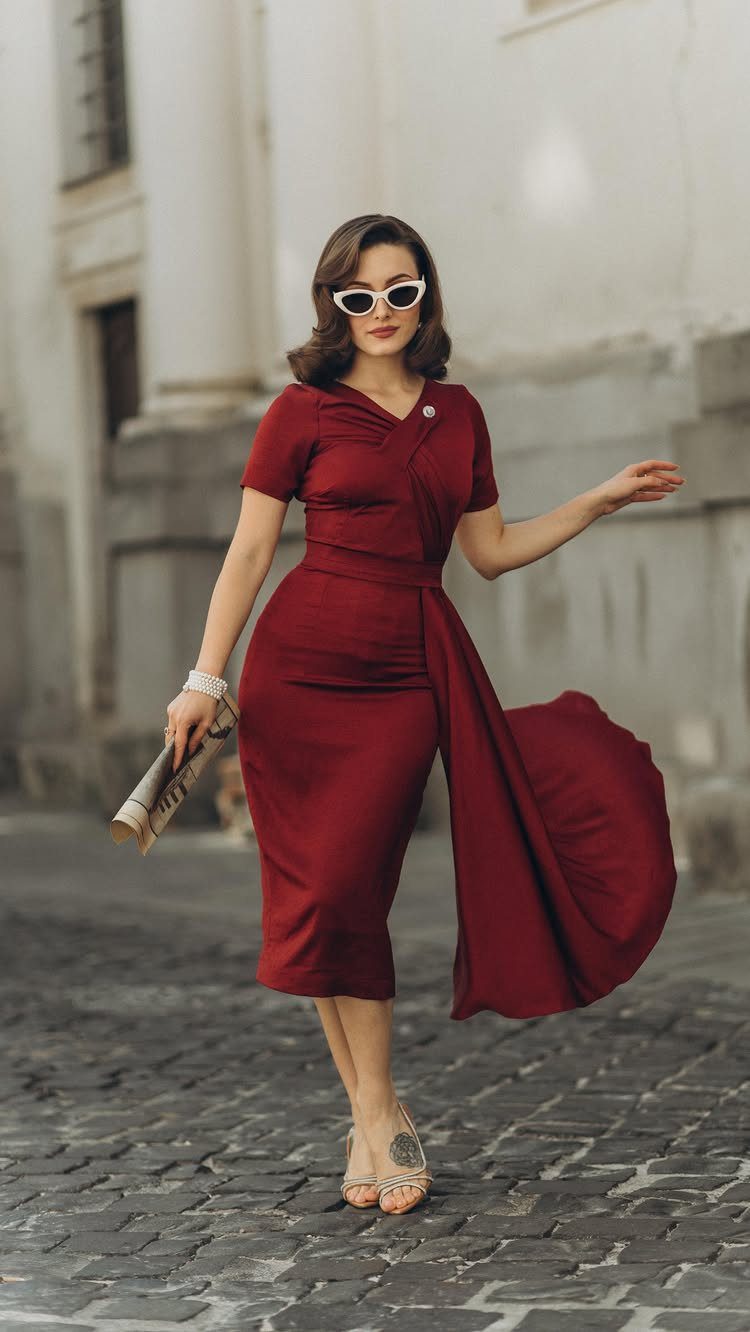
A defined waist is what makes a red midi read as vintage instead of just a casual sundress.
With short sleeves and a hem below the knee, it’s a daytime shape, and white cat-eye sunglasses add contrast without bringing in a second loud color.
If you’re petite, check where the hem lands. I find a length just below the knee easier to wear than one that stops mid-calf, and a heel helps either way.
9. Houndstooth Vintage Dress
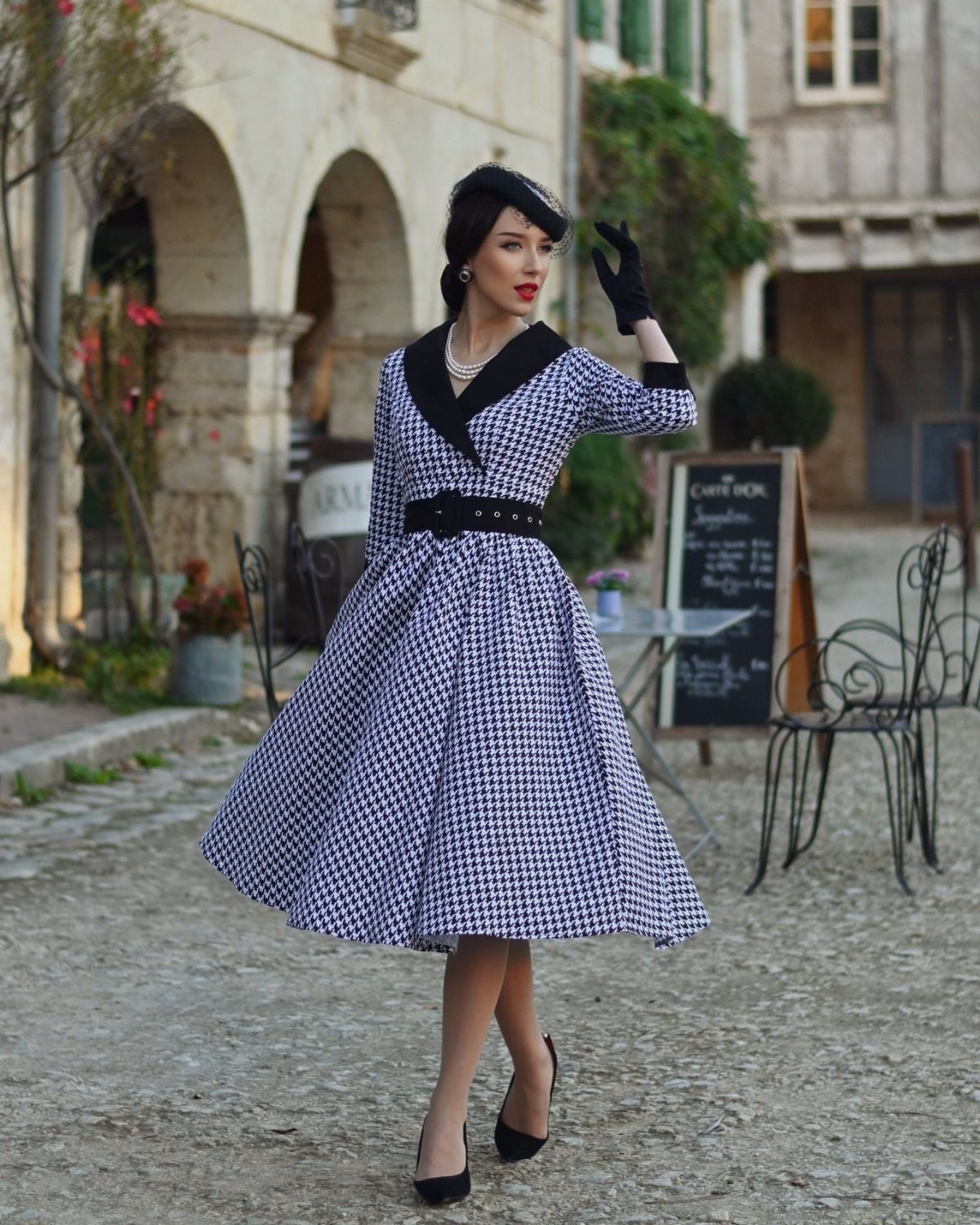
Black holds this houndstooth together. The collar and belt frame a busy blue-and-white pattern, and gloves and pumps in the same black repeat that frame at the hands and feet.
I’d match the black across every piece, because a slightly different shade next to the collar shows up quickly. Pattern this strong leaves little room for jewelry, so I’d skip it.
10. Grey Dress with Pink Belt
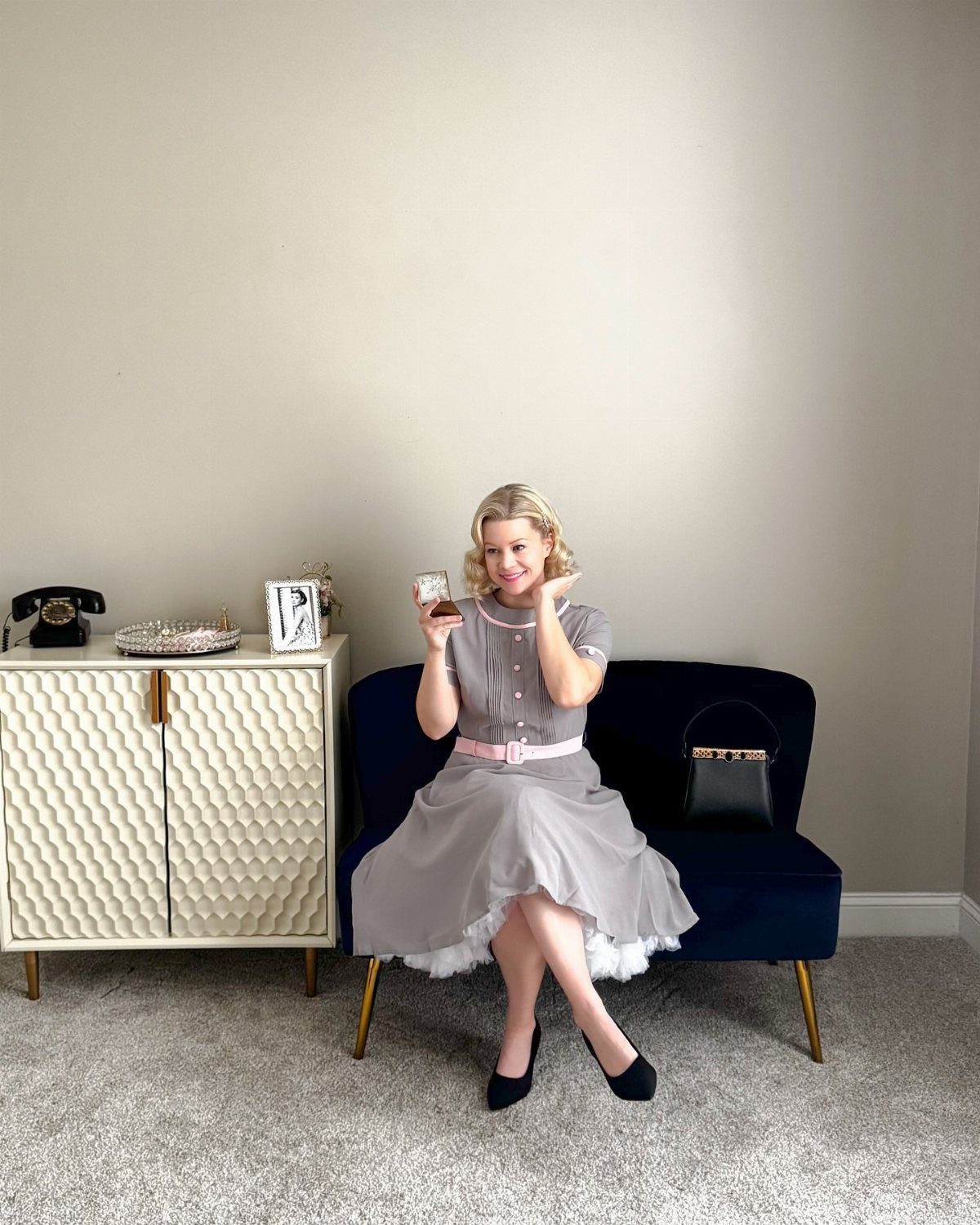
Grey is a quiet base, and a pink belt is the one piece that gets to be loud. Worn at the waist, it marks the narrowest part of the body and gives a short-sleeved dress a clear shape.
I’d keep everything else neutral, as the black pumps do here. A second bright accessory would compete with the belt, and one color accent is enough.
11. 1950s Full-Skirt Dress
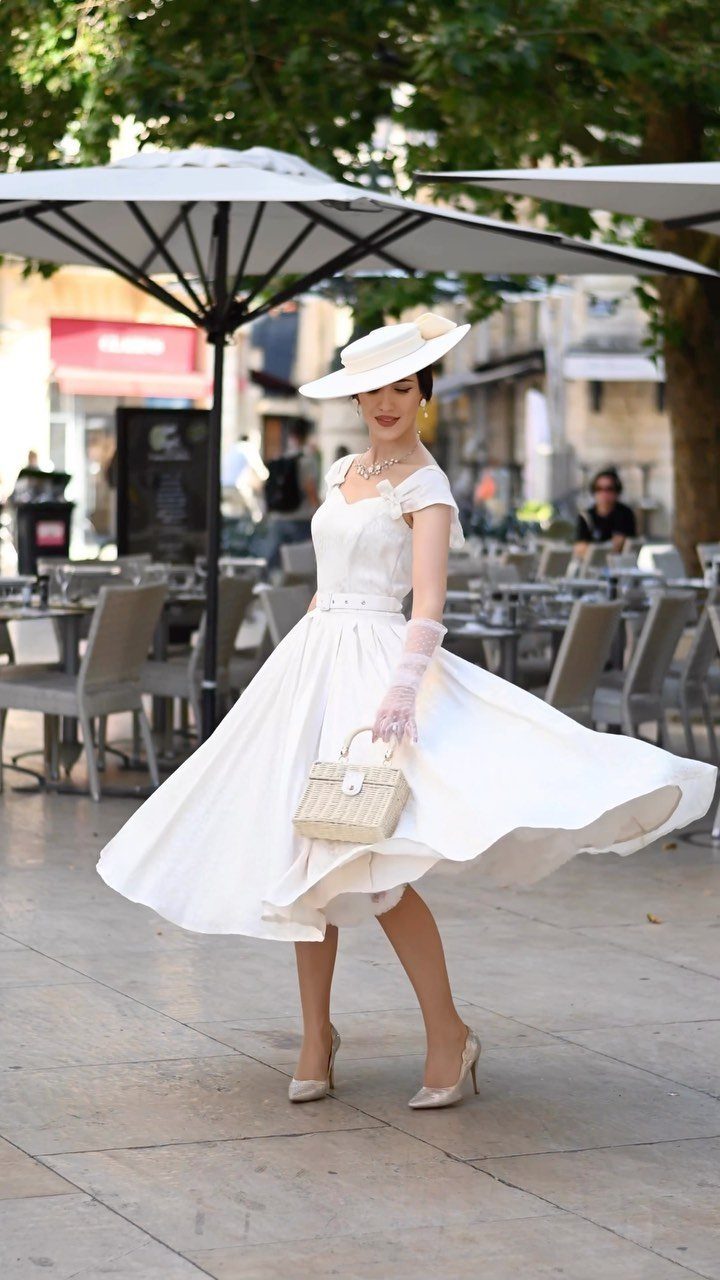
White, a full skirt, gloves and a wide-brimmed hat add up to a lot of look, so I like the handbag kept simple and the heels easy to walk in.
The brim is the largest accessory, and it needs a plain neckline and a bag that doesn’t compete.
A short hem keeps the full skirt from swallowing the legs. It’s a good fit for a café patio or a daytime event.
12. Short Heart-Print Dress
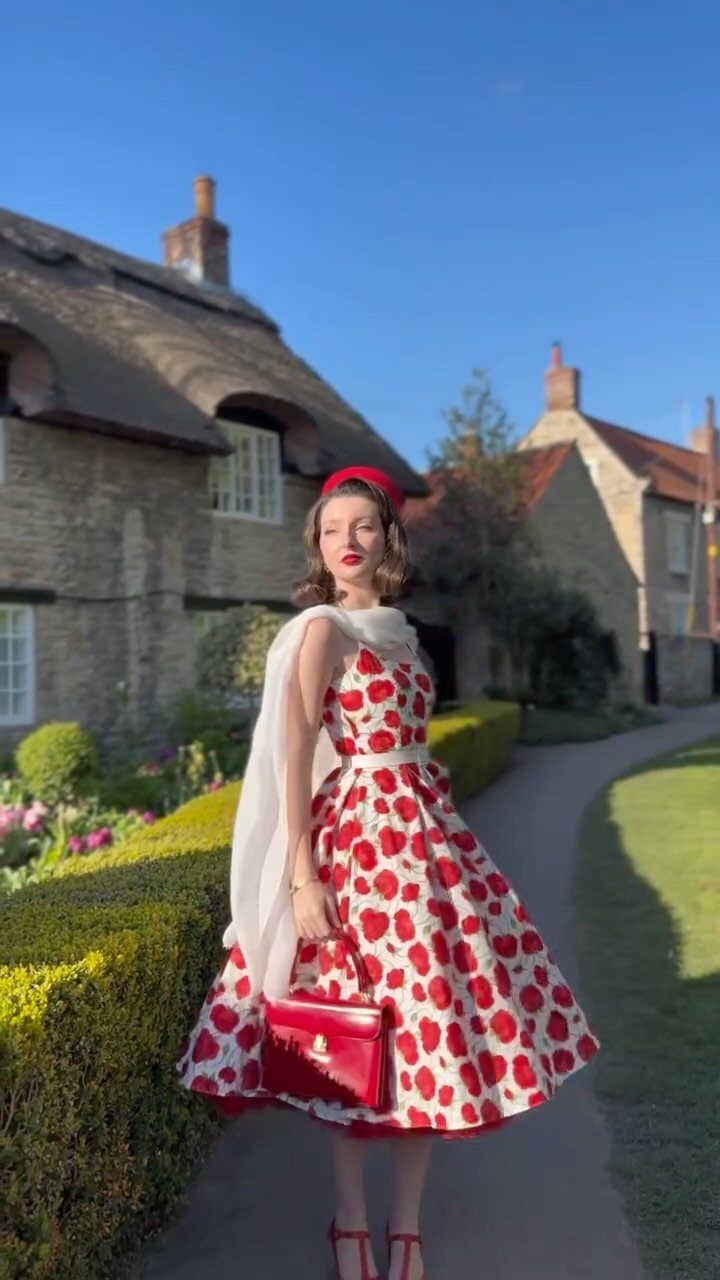
Red hearts on white give you 2 colors to repeat, and this look repeats both. The headband and heels pick up the red, and the shawl picks up the white, so the print never feels stranded on the dress.
I’d stop at those 3 accessories. With a full skirt and a pattern this playful, a short hem and one shawl for cooler evenings are plenty.
13. Sparkling Black Cocktail Dress
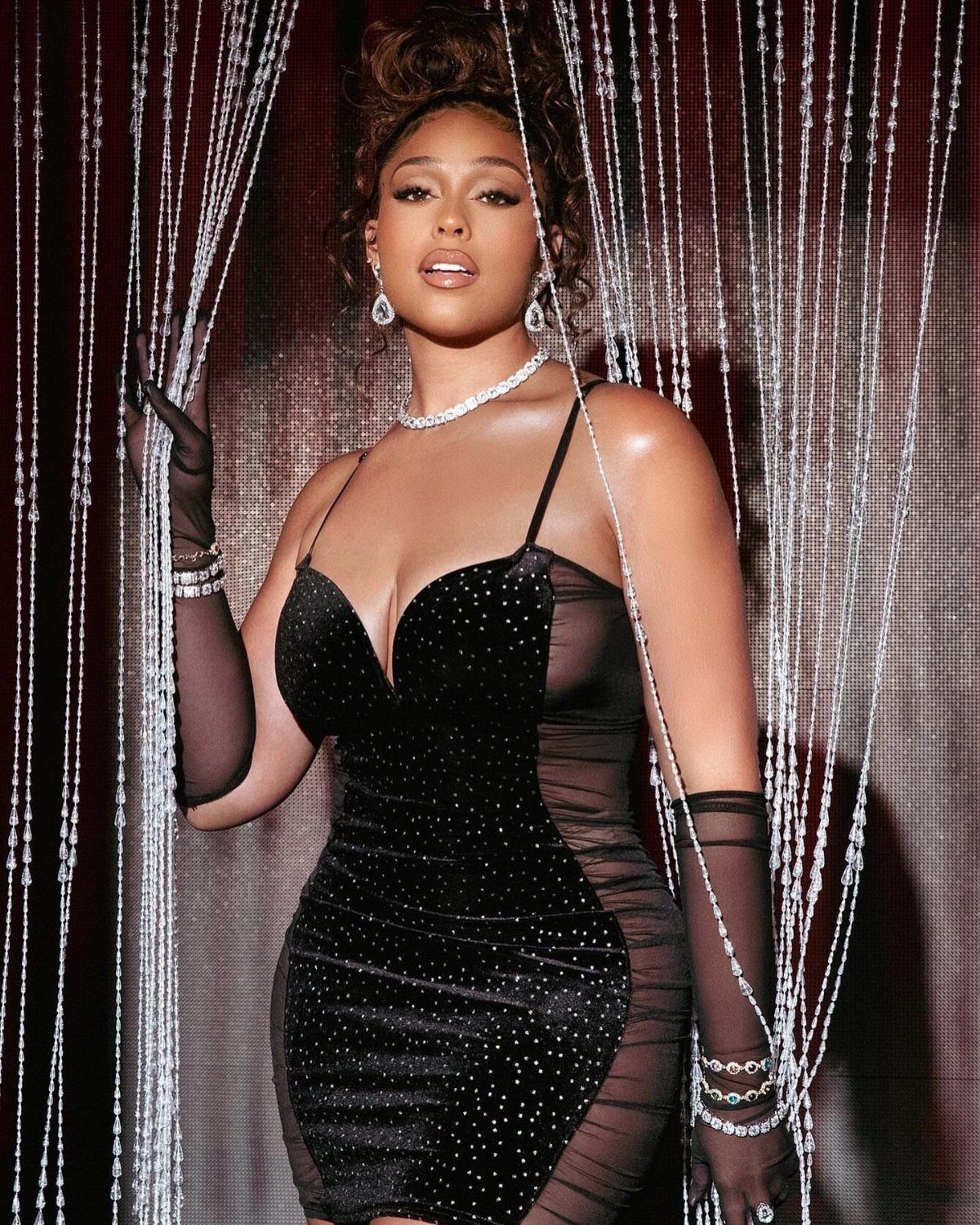
Sequins do the work on a short black cocktail dress, so everything around them can stay quiet. Sheer gloves suit the shimmer because they add length at the arm without a second texture to compete.
I’d put the statement jewelry in one place only, a bold earring or a bold necklace, since sequins already catch the light. Black keeps it formal enough for an evening out.
14. Short Red Satin Dress
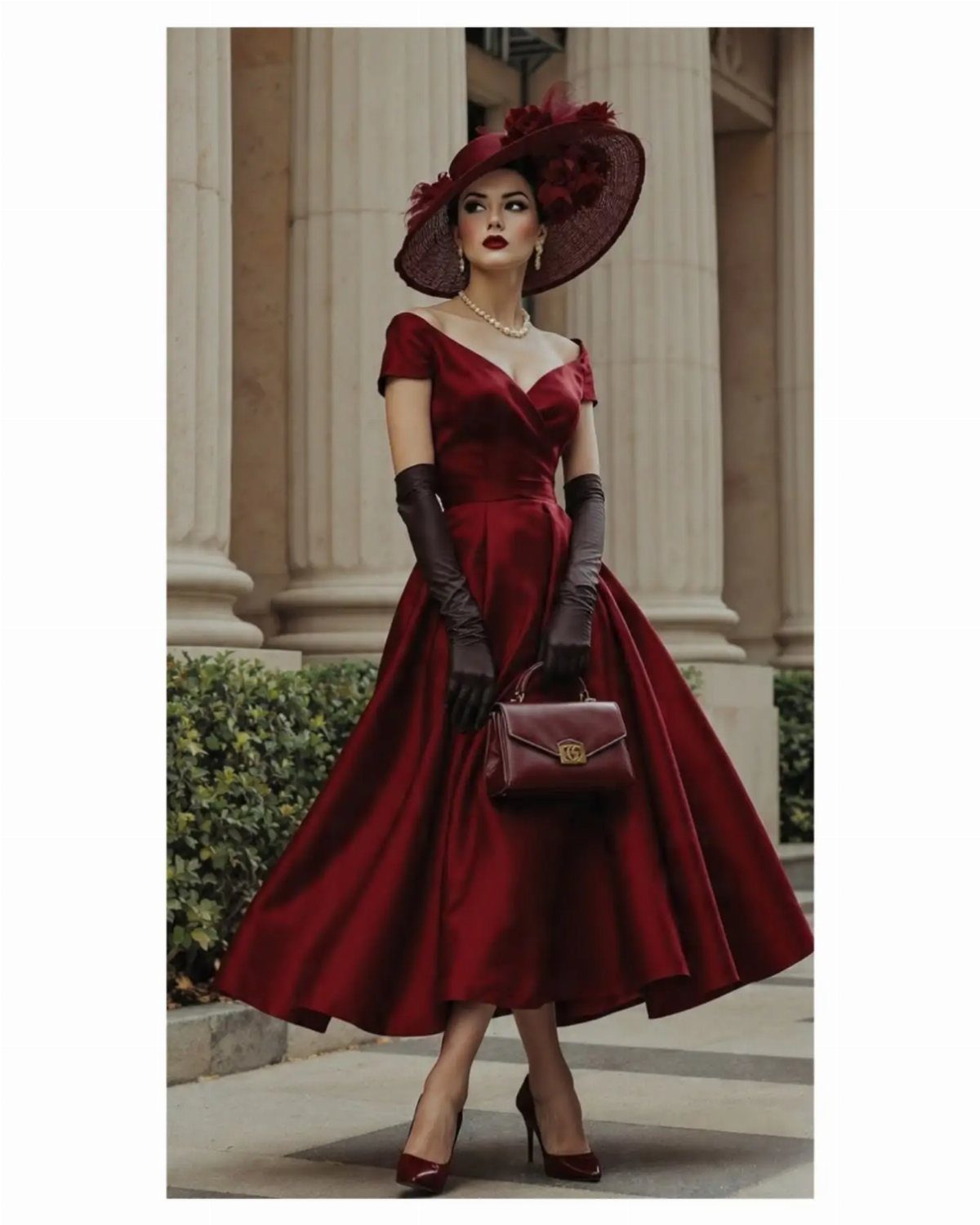
Satin gives a short red dress a liquid shine, and a full skirt keeps that shine from clinging. Long gloves, a feathered hat and pearls all belong to the same period, so none of them looks like a costume add-on.
Of the three, the hat is the piece I’d weigh most carefully: with a brim this wide, I’d keep the neckline simple and let the pearls stay small. Red this bold needs no extra color.
15. Short Floral A-Line Dress
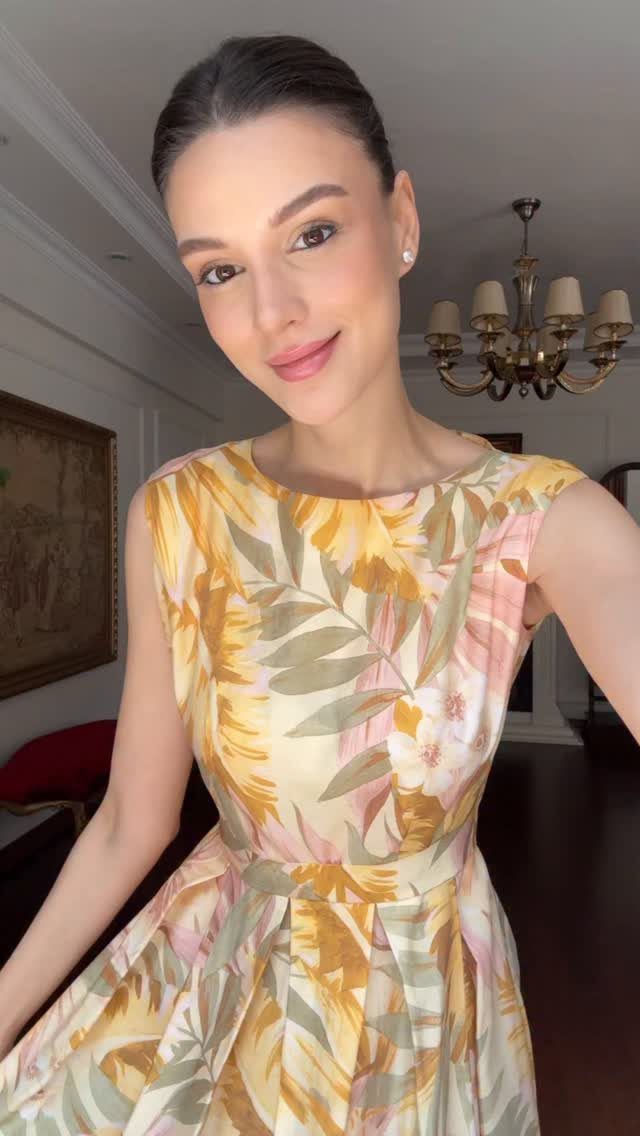
Sleeveless, short and cut in an A-line, this dress moves easily from a daytime outing to dinner. The yellow and pink print carries the color, so shoes and bag can stay neutral.
To push it toward evening, I’d add a pair of heels and a small clutch, and nothing more. An A-line skirt skims the hips instead of clinging, which makes it one of the simpler vintage shapes to wear.
16. Red Dress with Overskirt
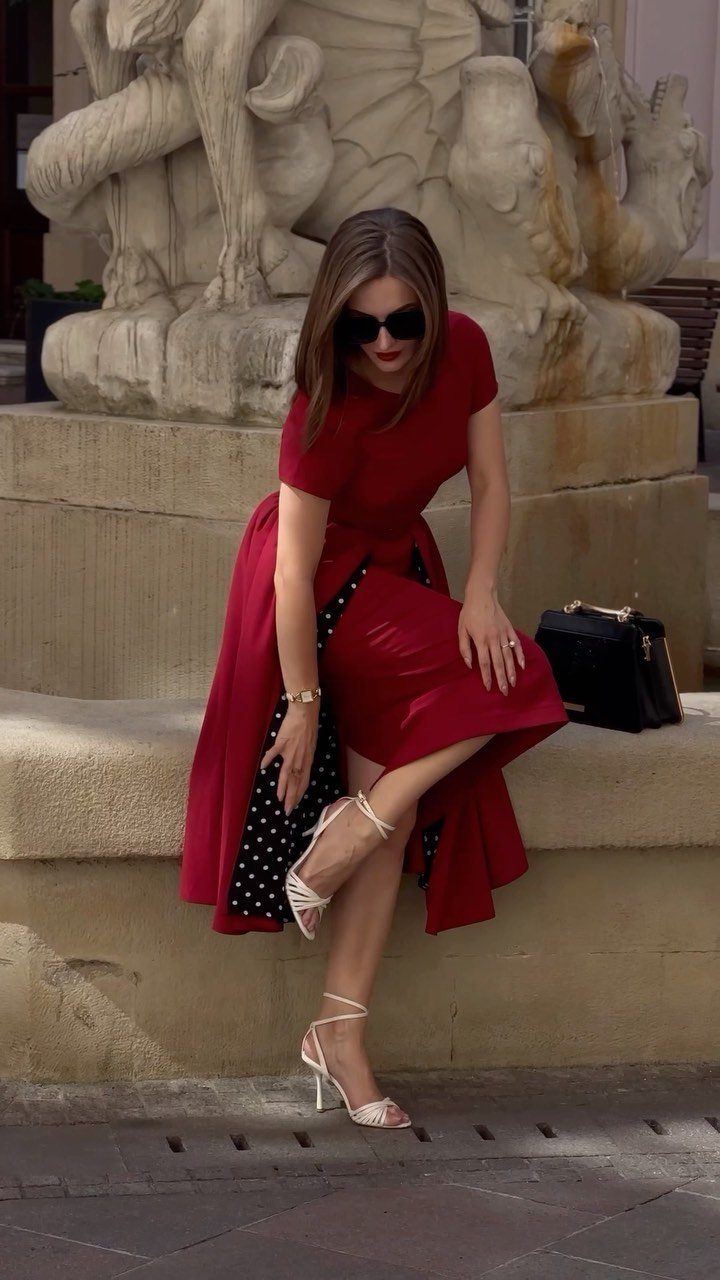
A long trailing overskirt over a short red dress gives you two lengths in one outfit: legs showing in front, drama following behind. That contrast is the whole appeal, and it reads best when the dress underneath is plain.
White heels keep the red from getting heavy.
I’d choose this for an event where you’ll walk, turn and be photographed, since the overskirt only earns its length when it moves. Seated for hours, it’s more fabric than you need.
17. Short Red Floral Dress
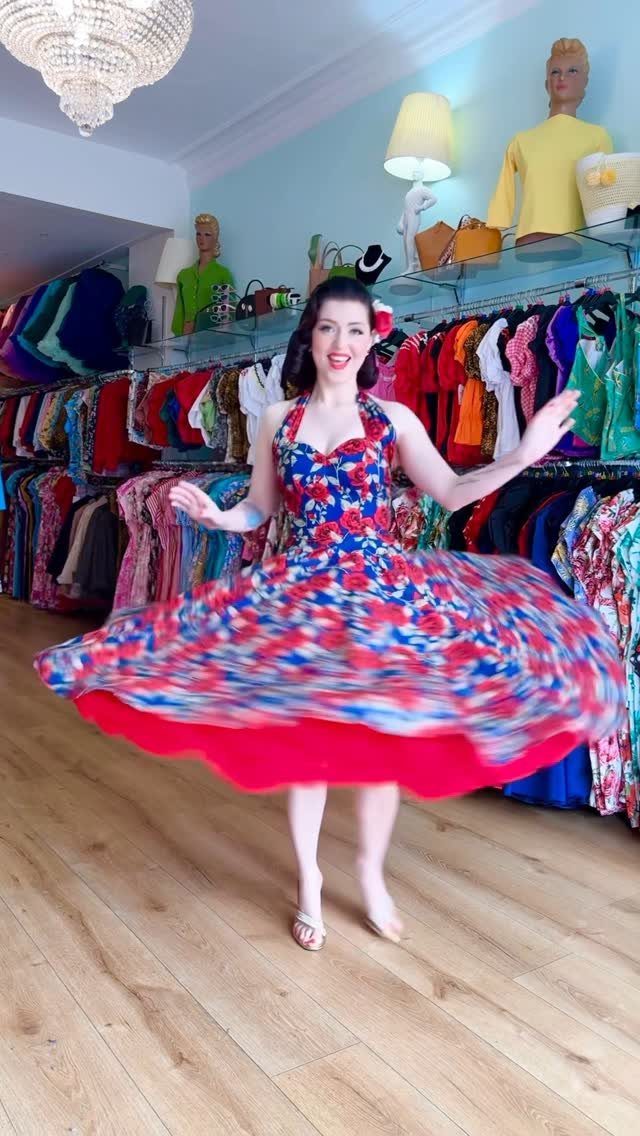
Red and blue florals are an unusual pairing, and a flared skirt is what lets the print show. When the skirt spins, the pattern spreads out instead of sitting flat.
A vintage-inspired hair accessory finishes the look, and I’d pick one in a color already in the print so it ties in. Short hemlines suit this kind of movement, because there’s less fabric to catch when you turn.
Frequently Asked Questions
What dress length is best for a short woman?
Hems that land just above the knee or sweep the floor stretch the leg line the most, and mid-calf is the length that cuts it short.
If you love a midi, I’d stop it just below the knee instead of mid-calf and wear a heel. Either choice keeps the leg reading as one long line.
What dress styles make a short woman look taller?
Raised waistlines, V necklines, vertical seams and a single color from shoulder to hem lengthen the frame the most, and shoes that match the dress extend the line further.
A scoop neck opens the chest and gives a short-hemmed dress extra visual length down the torso. A-line skirts work well too, since they skim the hips instead of clinging.
What should petite women avoid in evening dresses?
Skip mid-calf hems, oversized prints, heavy horizontal beading, thick belts in a contrasting color and extra fabric volume. For a full skirt, I’d keep the hem short so the fabric doesn’t hide your legs.
What is the difference between petite sizing and regular sizing?
Petite sizes mostly adjust length, with shorter torsos, sleeves and inseams, and leave the width close to regular sizing.
The waist, bodice length, strap length and hem all sit higher, so the dress falls at the spots its designer intended on a frame of about 5 feet 4 inches or under.