
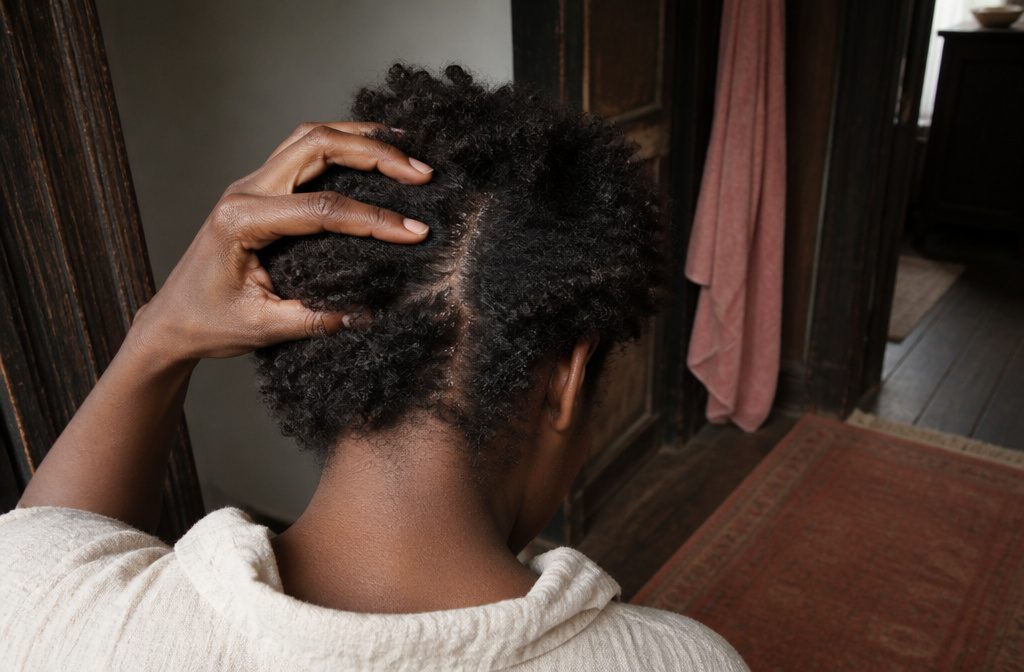
A dry scalp on Black hair is a moisture shortage: tight curls and coils slow scalp oil on its way down the strand, so the scalp can feel tight while the lengths turn brittle.
Small, dry flakes point to dryness, but larger, oily or yellowish ones suggest dandruff, and flakes that persist after moisturizing may be seborrheic dermatitis.
Why Black Hair Gets Dry
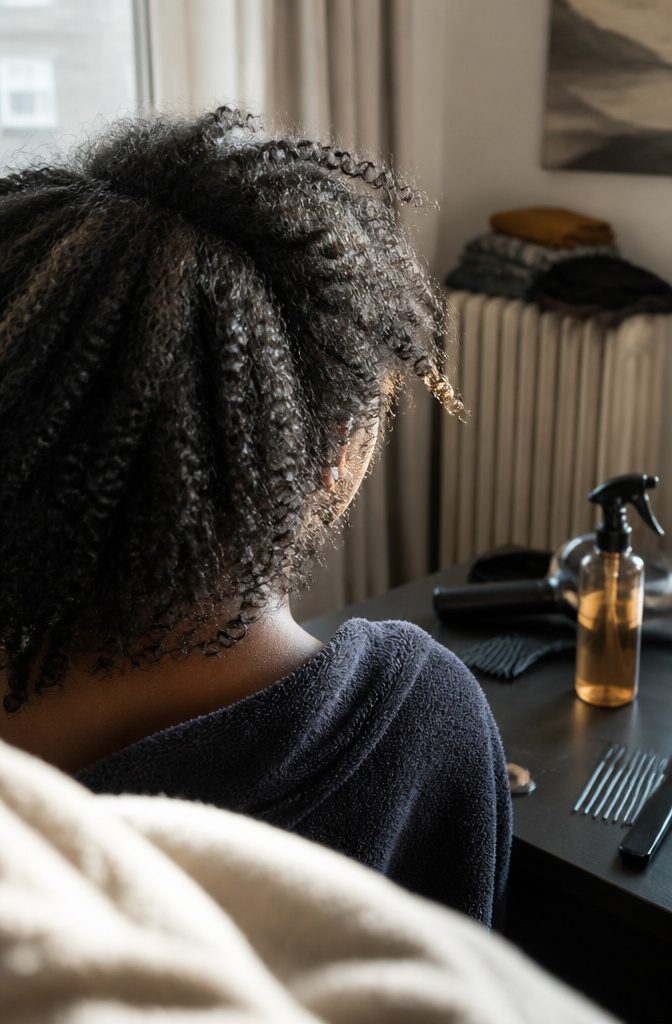
Tight curls and coils give scalp oil a long, winding path, and it rarely reaches the tips. The scalp can feel dry and tight while the lengths stay brittle, which is why the two problems so often show up together.
Other triggers stack on top. Shampoos with sulfates or alcohol strip the oil that does show up, and washing too often does the same.
Heavy styling products build up and can block pores. Flat irons, blow dryers and curling irons pull out moisture, especially without heat protectant, and relaxers or dyes add inflammation.
Cold, dry air drains what is left. Shampoo and heat are the two I’d check first, since both are easy to change.
Dry Scalp or Dandruff
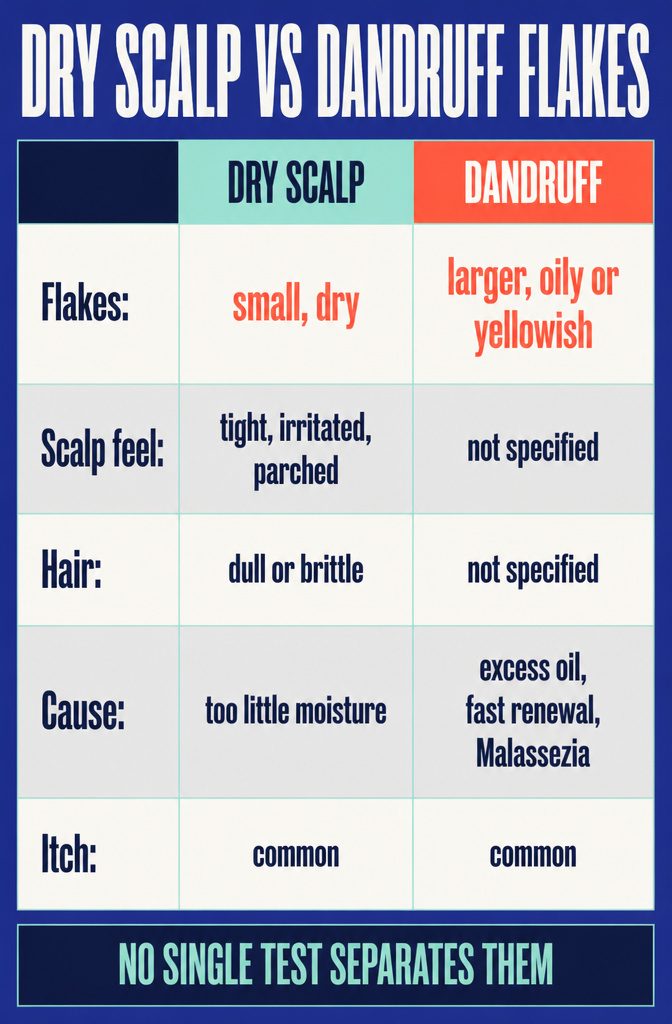
Flake size is the first thing to check.
Small, dry flakes that look like shed dry skin point to a dry scalp, while larger flakes that look oily or yellowish point to dandruff. Itchiness shows up with both, so it settles nothing.
| Dry scalp | Dandruff | |
|---|---|---|
| Flakes | Small, dry | Larger, oily or yellowish |
| Scalp feel | Tight, irritated, parched-looking | n/a |
| Hair | Dull or brittle | n/a |
| Cause | Too little moisture | Excess oil, fast skin cell renewal, Malassezia fungus |
| Itch | Common | Common |
Treat this as a guide, not a diagnosis. No single test separates the two, so judge flake size, flake look and scalp feel together rather than leaning on any one sign.
Everyday Care for a Dry Scalp
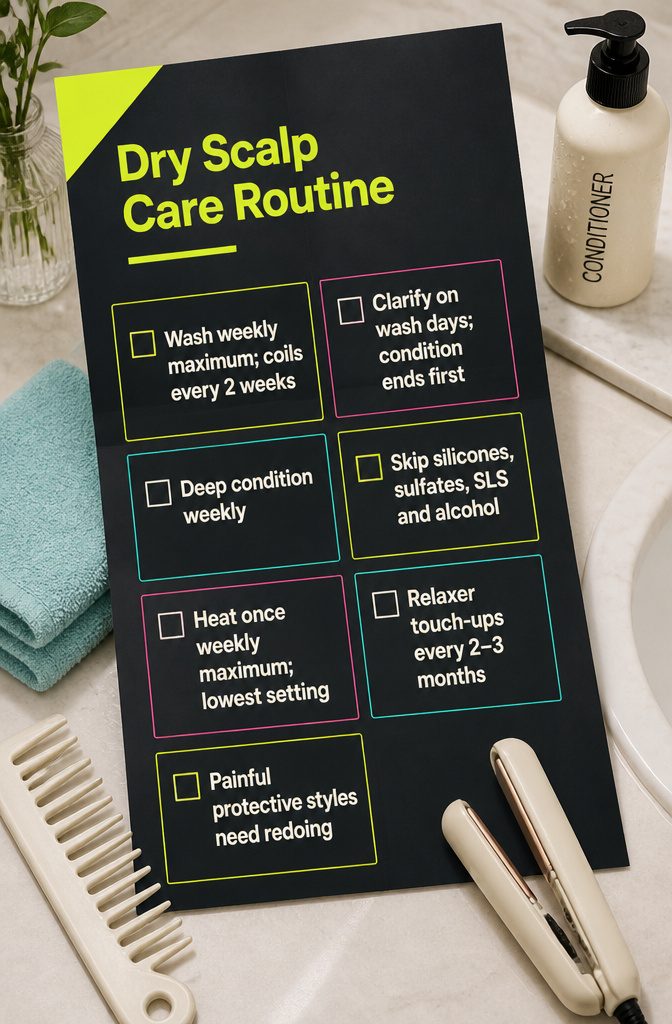
Washing once a week is the ceiling, and tightly coiled hair can stretch to every 2 weeks. A clarifying shampoo at least weekly clears gel and leave-in buildup, but it strips, so follow it with a moisturizing conditioner, ends first.
That weekly rule clashes with a 2-week rhythm; for coiled hair I’d let the longer gap win and clarify only on wash days. Add a weekly deep-conditioning treatment, and skip silicones, sulfates, SLS and alcohol.
Press or straighten once a week at most, with a ceramic comb or iron on the lowest setting that gives the style. Relaxer touch-ups come every 2 to 3 months, on new growth only.
Protective styles should never hurt. Pain equals damage, so have the stylist redo them.
Targeted Scalp Treatments
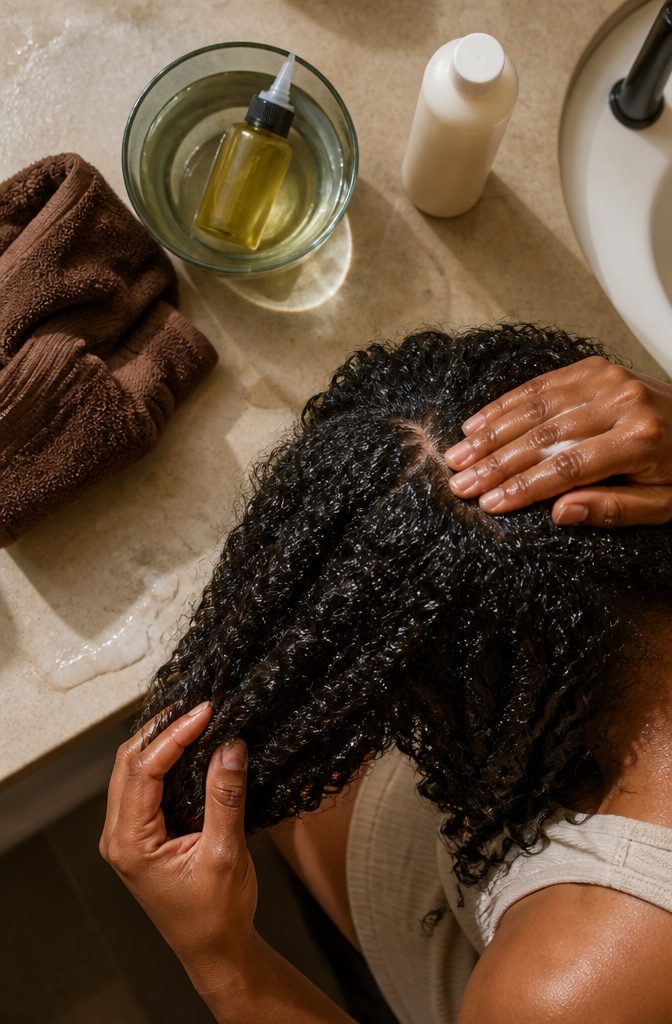
Hot oil is the treatment I’d start with, twice a month. Pour about 3 tsp (15 mL) of coconut, avocado, jojoba or castor oil into a squirt bottle and set it in about 2 inches (5.1 cm) of hot water.
Work it from the ends to the roots and scalp, then leave it on for 1 hour before rinsing and shampooing.
Between treatments, an anti-itch shampoo with oatmeal and honey calms irritation, and spearmint, nettle or aloe vera add moisture. When itching flares, rub 1–2 drops of an argan, jojoba or sunflower oil serum into the scalp.
Flakes that keep returning call for a medicated shampoo with pyrithione zinc, selenium sulfide or ketoconazole. Dab a little behind your ear first and wait 24 hours to see how skin reacts.
When to See a Professional
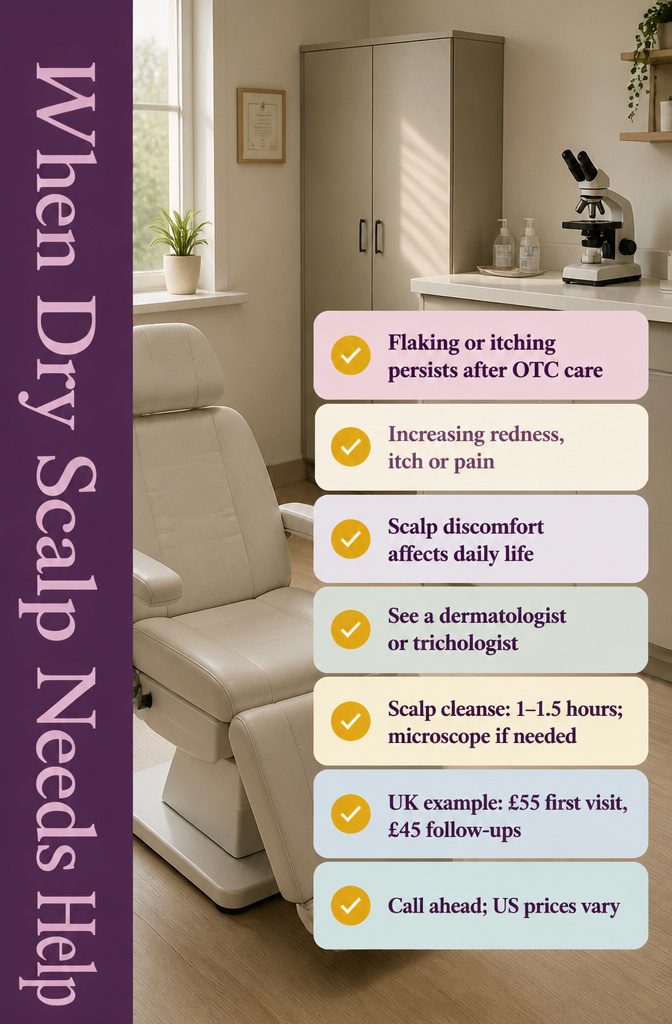
Home care stops being enough when any of these show up:
- An over-the-counter treatment has not eased the flaking or itching.
- Redness, itching or pain is increasing, which can signal seborrheic dermatitis or psoriasis rather than simple dryness.
- Your scalp leaves you uncomfortable or self-conscious enough to affect daily life.
- A dermatologist or trichologist is the right person to see. A dermatologist may prescribe a topical ointment or a prescription shampoo after working out the cause.
- Some trichology clinics offer professional scalp cleansing. The version I found removes crusting, runs about 1 to 1.5 hours, and includes a microscope exam if needed.
- As a UK example, that service costs £55.00 for the first visit and £45.00 for follow-ups. US clinics will price differently, so call ahead.
Eczema and Seborrheic Dermatitis
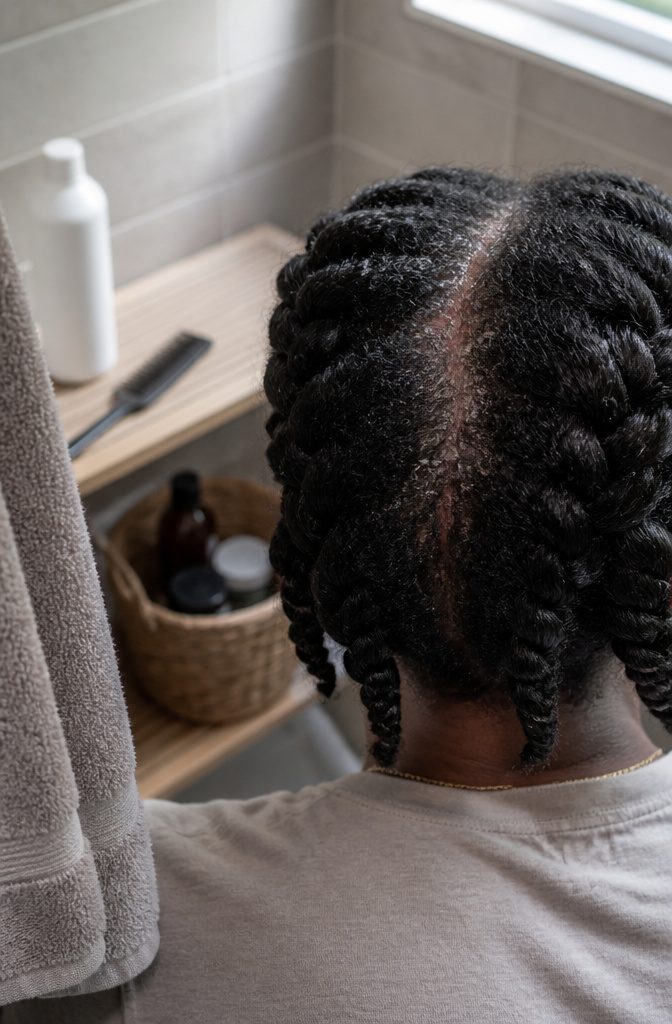
Seborrheic dermatitis is a type of eczema, and it can pass for dandruff. Dry flakes, a rash, itching and burning often show up together, so a scalp that keeps flaking after you moisturize deserves a closer look.
Prescription shampoos are the next step.
Two antifungals are used: ciclopirox 1% (Loprox) and ketoconazole 2% (Nizoral). A steroid shampoo, clobetasol 0.05% (Clobex), can also help, and it can be alternated week by week with the ketoconazole shampoo.
Treatment should fit your hair, not just your scalp.
Texture and style change how much washing and handling your strands can take before they break, so I’d ask the prescriber to build the routine around that. Hair carries personal and cultural meaning, and a good plan respects it.
Natural Oils and Ingredients
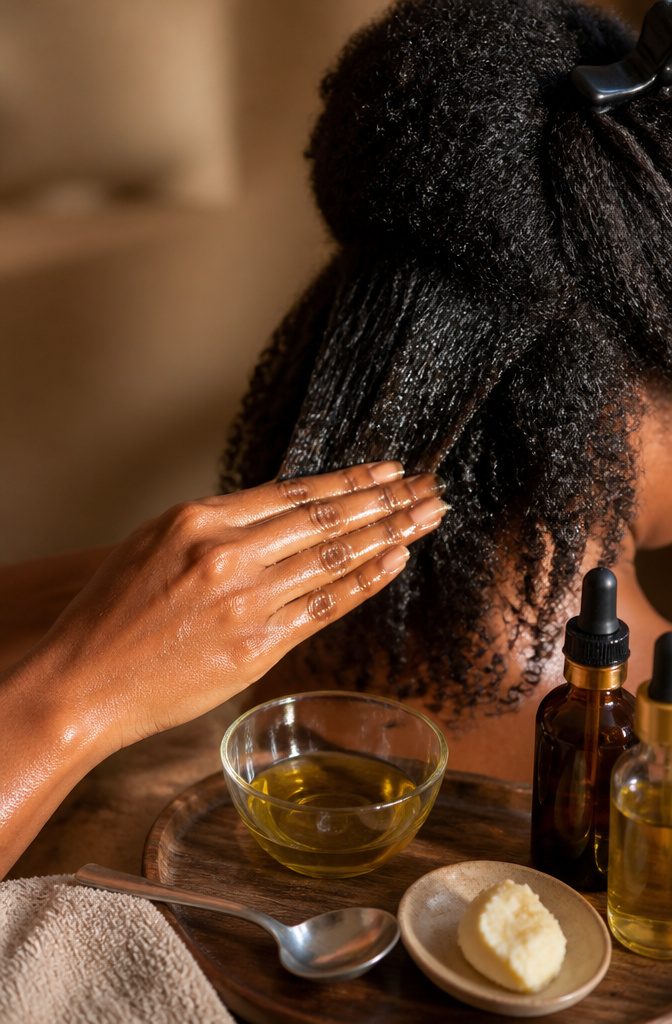
Argan, rosemary and black seed oil are the three to reach for before shampooing, since shampoo is drying and a layer of oil first softens the blow.
A couple of drops rubbed between your palms, then worked into the scalp, is enough.
Rosemary needs dilution: mix 2 to 3 drops into 1 US tbsp (15 mL) of a carrier oil like olive or castor. Used straight, it can cause irritation or an allergic reaction.
Chebe butter, rice water, Karkar oil and shea butter turn up in plenty of routines too.
One caution applies to all of them: oil left on the scalp can mask dryness, and it may make the dryness worse. I’d keep that in mind before adding another layer.
Frequently Asked Questions
How do I moisturize and treat a dry scalp on 4C or other Black hair?
Wash no more than once a week, and tightly coiled 4C hair can often wait 2 weeks between washes.
Follow any clarifying shampoo with a moisturizing conditioner, add a deep-conditioning treatment each week, and try a hot oil treatment twice a month.
Skip shampoos with sulfates, SLS or alcohol, and keep heat styling to once a week at most. Go easy on oil applied straight to the scalp, since it can mask dryness and make it worse.
What vitamin am I lacking if I have a dry scalp?
A diet low in vitamins and minerals can add to a dry scalp, and the ones tied to scalp and hair health are vitamins A, C and E, zinc and biotin. Drinking enough water also helps keep the scalp moisturized.
If flaking or itching keeps getting worse after you change your routine, see a dermatologist, because redness, itching or pain can point to seborrheic dermatitis or psoriasis rather than a nutrient gap.
What causes dandruff in Black hair?
The causes are the same as in any hair type: excess scalp oil, fast skin cell renewal, and the Malassezia fungus that lives on the scalp naturally.
Malassezia breaks the oil down into irritants, and a sensitive scalp reacts with flaking and itch.
Dandruff flakes tend to be larger and look oily or yellowish, unlike the small dry flakes of a dry scalp. Flakes that keep coming back call for a medicated shampoo with pyrithione zinc, selenium sulfide or ketoconazole.