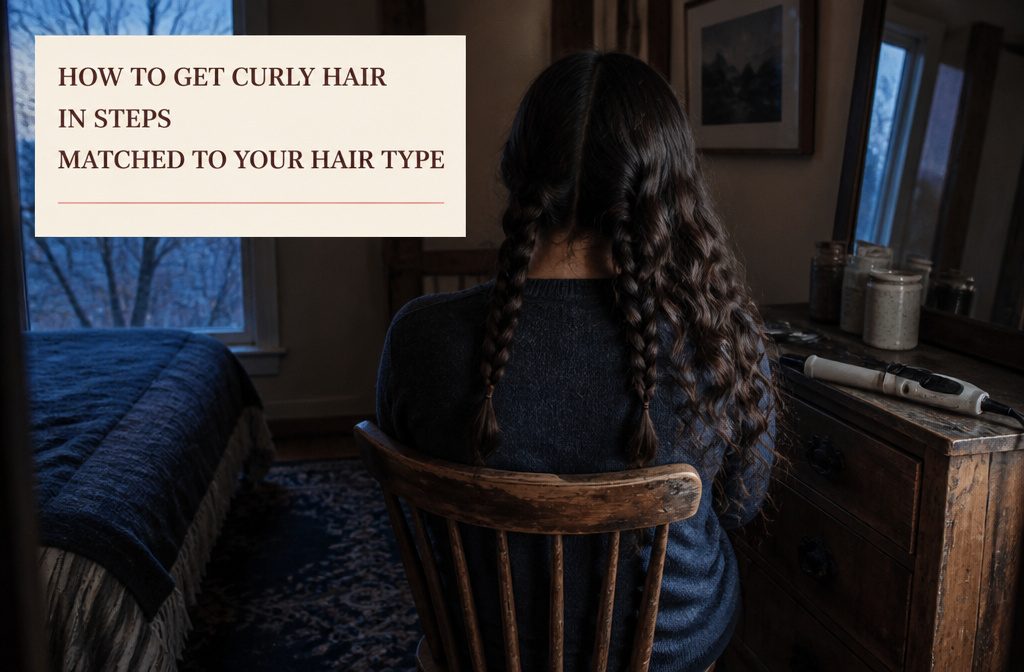
Curls on straight hair take a night with braids or twists, or about 8 seconds per strand with a ceramic iron kept at 180 °C (about 356 °F) or lower.
The step people get wrong is drying: touch the curls before they’re fully set and a defined pattern turns fuzzy. The Curly Girl Method needs at least 2b waves.
1. Choose a Method by Hair Type
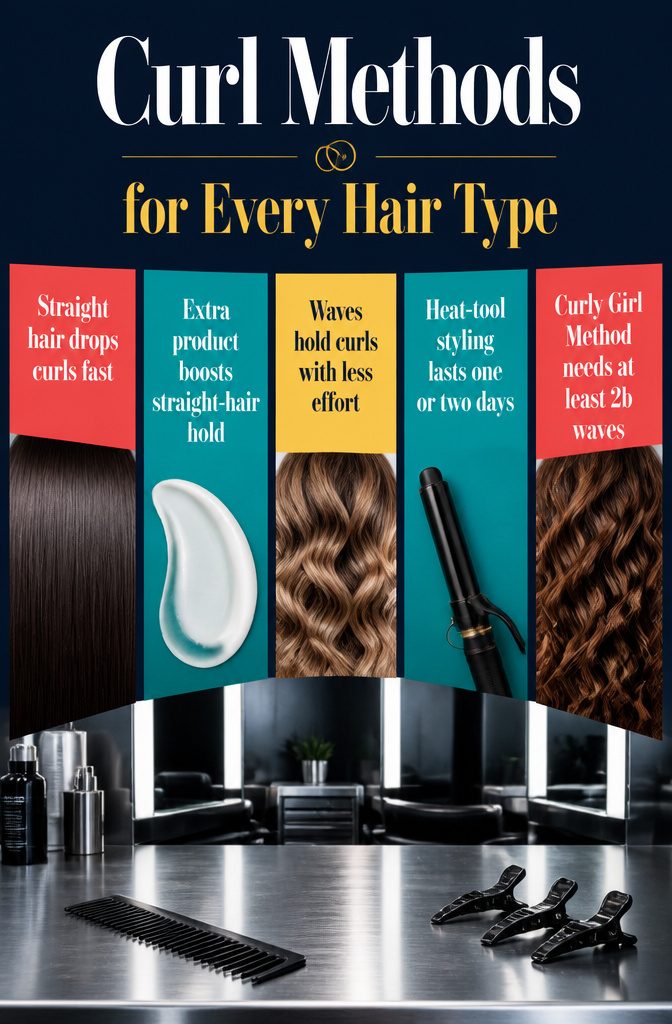
Natural texture decides the result before any tool does. Straight hair resists curl and drops it fast, so it needs extra product for hold; wavy hair holds a curl with less effort.
Heat tools are the quickest route, but styling alone lasts a day or two.
Braids, ribbons and rods set overnight and spare your hair. For very straight hair and a single evening, I’d pick clip-ins: instant curl, no styling time.
The Curly Girl Method only enhances a pattern already there, at least 2b waves, so it can’t create curls on straight hair.
A curly-cut specialist can shape that pattern, and a stylist who feathers the ends with a razor or scissors helps them flip into curl.
2. Prepare Your Hair
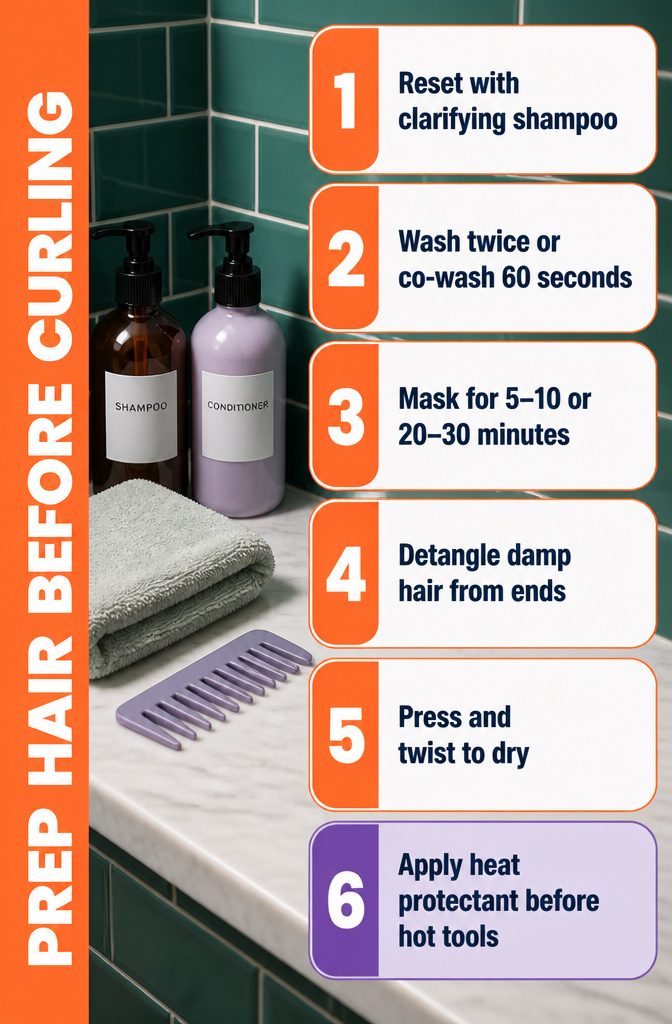
- Reset once with a sulfate-based clarifying shampoo to clear silicone buildup, since about 90 percent of hair products contain silicones. Repeat after any silicone or wax product.
- Wash twice with a gentle sulfate-free shampoo, or co-wash by massaging the cleansing conditioner into your roots for at least 60 seconds.
- Mask for 5–10 minutes in a regular routine, or 20–30 minutes for deep conditioning.
- Detangle damp hair with a wide-tooth comb, starting at the ends.
- Dry with a microfiber towel or cotton T-shirt.
- Apply heat protectant before any hot tool.
Stylist Lee Stafford is blunt about step 5:
Simply take your towel and press and twist the hair rather than roughly rubbing it back and forth.
— ELLE
Rubbing pushes the cuticle up, which is where frizz starts.
3. Create the Curls
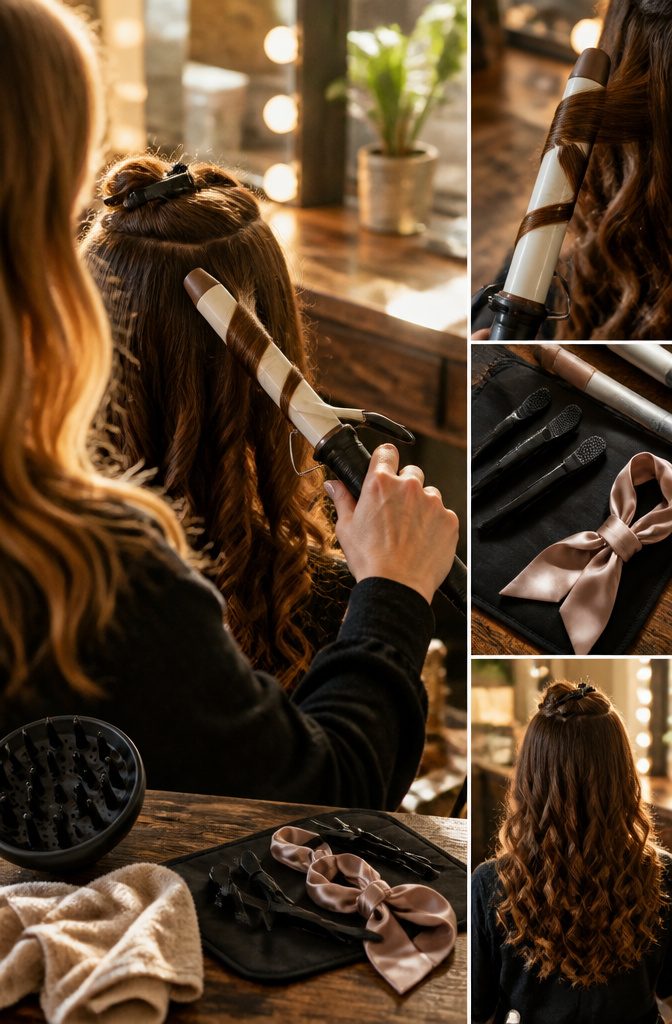
Heat curls fastest; heatless costs a night but spares the strands.
- Straightener: 2–3 cm (about 1 inch) sections, rotating the tool 180–360 degrees.
- Curling iron: 32–38 mm (about 1.25–1.5 inches) for loose curls, 19–25 mm (about 0.75–1 inch) for tight, held 5–15 seconds. Ceramic gets 8 seconds per strand, no repeat passes.
- Diffuser: low to medium heat, my pick for hair that already bends.
- Overnight braids or twists on slightly damp, not soaking, hair; satin ribbon, sock and rag curls work the same way.
- Plopping: 20 minutes (Curly Girl: 5–15), then scrunch waves.
- Curly clip-ins are instant: 100% Remy human hair, AAA grade, single-drawn. Wash sulfate-free, diffuse on low, store on a hanger or in a silk bag.
4. Set and Dry the Curls
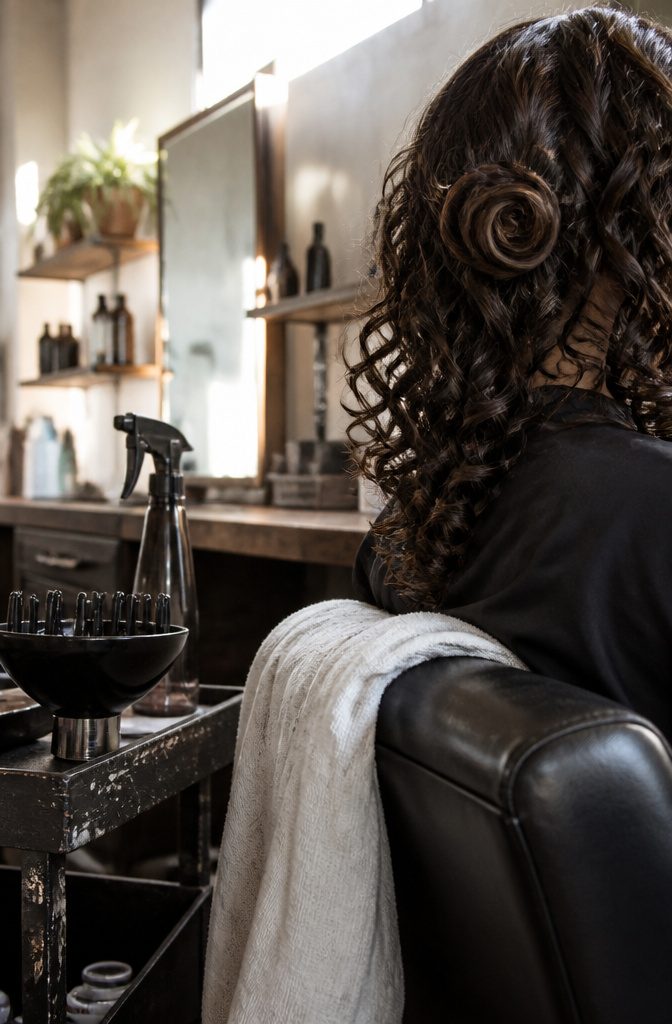
Heat-styled curls set as they cool, so hands off until they do. Pinning each curl up while it cools helps it hold its shape, and a light-hold hairspray goes on only once it’s cool.
For natural curls, air-dry or diffuse on low heat, and don’t touch them while they dry.
Disturbing the curl mid-set is how a defined pattern turns fuzzy. Heatless styles follow the same rule: leave them in place until the hair is completely dry, then unravel.
Once hair is 100 percent dry, scrunch gently with your hands to break up the stiff gel coating.
After diffusing or heat styling, finish with a 15-second blast of cool air to seal in moisture. It adds almost no time, and I wouldn’t skip it.
5. Maintain and Refresh
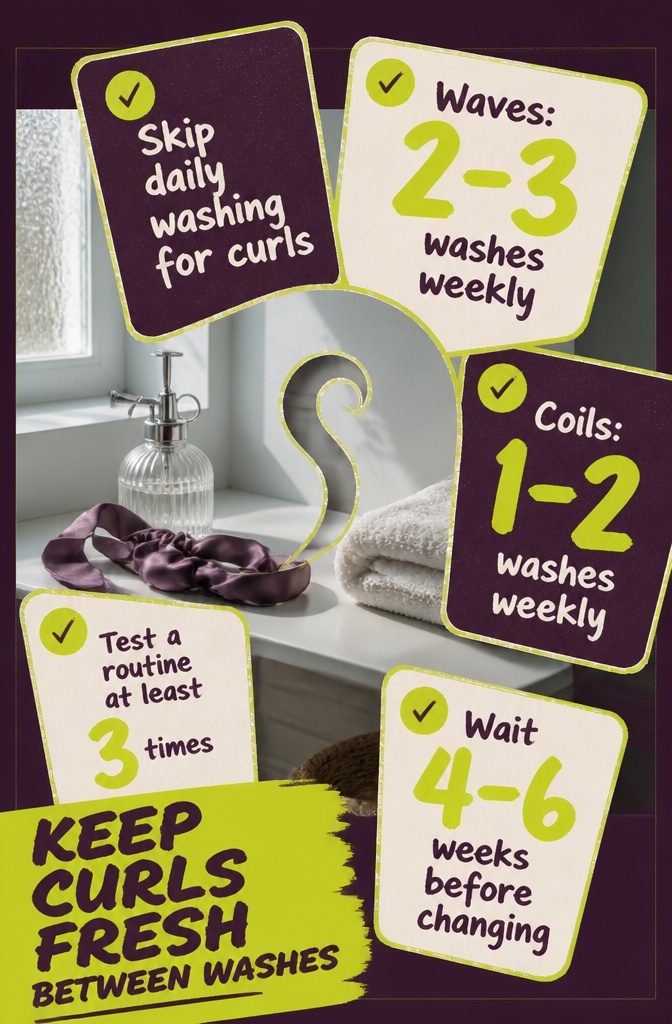
Between wash days, these habits keep the shape:
- Hairspray: Use a curl-specific hold spritz or one very light mist of low-alcohol spray. Strong, high-alcohol formulas dehydrate curls.
- Overnight: Loose twists or a satin ribbon protect the pattern while you sleep.
- Refresh: Mist lightly with water or a curl refresher spray, scrunch, and air-dry. If you wet your hair daily, don’t saturate it. Garnier Curl Nourish Curl Air Dry Cream defines and hydrates for up to 48 hours.
- Washing: Wavy hair does well at 2–3 washes a week and coily hair at 1–2. Coilier hair can go once weekly, while fine, oil-prone hair can go every other day. I’d skip daily washing for any type.
- Testing: Run a routine at least 3 times, then give it 4–6 weeks before changing anything.
Heat Protection and Limits
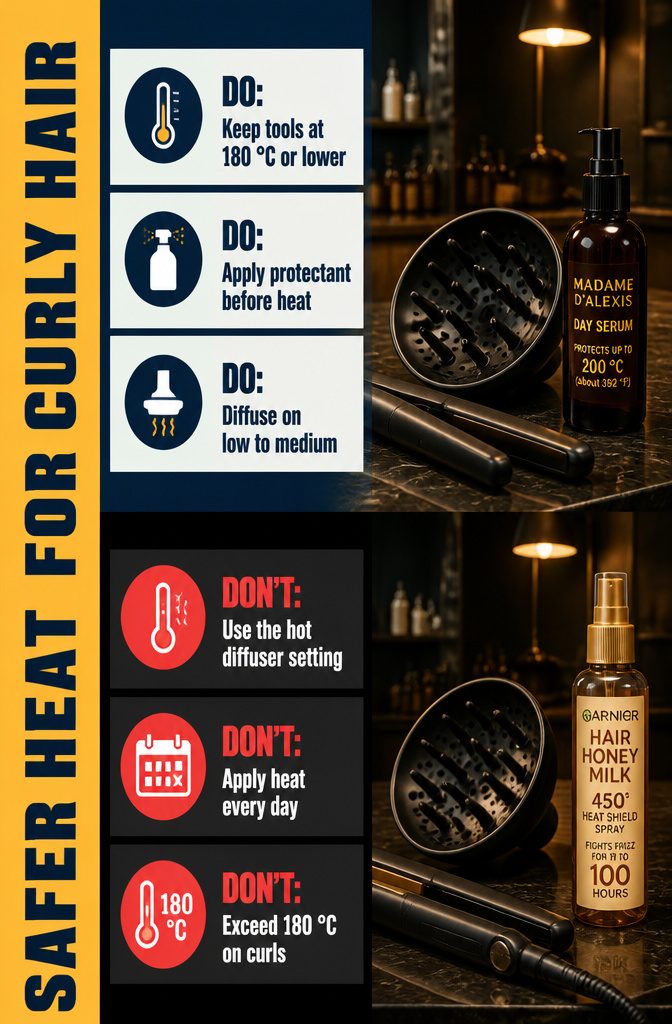
Keep a flat iron or curling iron at 180 °C (about 356 °F) or lower. Above that, dehydration and damage climb fast, especially on curly, coily, colored or porous hair.
A heat protectant belongs underneath: Madame d’Alexis Day Serum goes on the mid-lengths and ends and protects up to 200 °C (about 392 °F), while Garnier Hair Honey Milk 450° Heat Shield Spray fights frizz for up to 100 hours.
A diffuser is the gentler tool. Run it on low to medium heat, and I’d stay off the hot setting.
Daily heat of any kind, including hot water and hot air, leads to breakage over time. Save the tools for the days you want them, and air-dry or refresh your curls with products the rest of the week.
Moisture Against Frizz
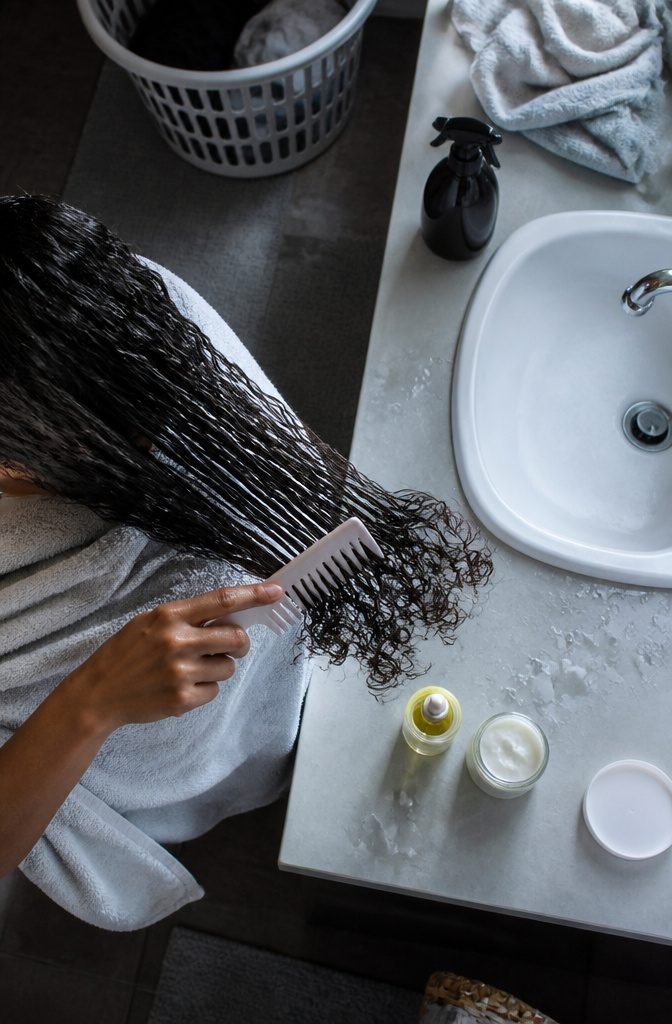
Frizz starts when the cuticle loses water, so each step below either adds moisture or protects what’s already there.
- Apply a hydrating leave-in while hair is still wet. Work it through with a wide-toothed comb, concentrating on the ends and lengths.
- Layer in L.O.C. order: liquid or leave-in, then oil, then cream to seal it in.
- Choose a leave-in with humectants, which pull water into the strand.
- Deep condition weekly if hair runs dry, or twice a month if it holds moisture well.
- Before diffusing, mist with a spray bottle of half water, half Charlotte Mensah Manketti Oil Conditioner.
- Swap the bath towel for a soft, low-friction fabric. Terry loops rough up the cuticle and let water escape faster.
- Once the curls are set, keep your hands out of them while they dry. Touching breaks up the clumps.
Frequently Asked Questions
How can I make my hair have curls?
Match the method to your natural texture. Heat tools like a curling iron or straightener are fastest, while overnight braids, twists or satin ribbons on slightly damp hair take a night but spare your strands.
For very straight hair and a single evening, clip-ins give instant curl with no styling time.
How do I bring out my natural curls?
Use sulfate-free products and a routine suited to your curl type, then scrunch or plop your hair while it’s wet.
Air-dry or diffuse on low heat, and keep your hands out of the curls until they’re completely dry. Touching them mid-set is what turns a defined pattern fuzzy.
How can you get natural curls in 5 minutes?
Tilt your head back, lightly mist your hair, work in a small amount of lightweight styling product, and scrunch.
Hold the hair under a warm diffuser for a few moments to set it. For a heat-free version, quick twists are the gentlest option.
Is curling your hair without a flat iron or curlers really effective?
Yes, if the hair is prepared properly.
Use slightly damp hair, a light product, gentle tension and enough time for the curl to set. Braids, twists and satin ribbons left in overnight give good results, and you should unravel them only once your hair is fully dry.
How often should curly hair be washed?
Wavy hair does well with 2–3 washes a week, and coily hair with 1–2.
Fine, oil-prone hair can be cleansed every other day if needed. Daily washing is best skipped for any type, since it strips the natural oils curls rely on.
Can I use heat on curly hair every day?
No. Hot water, hot air and hot tools all count as heat, and repeated exposure leads to breakage over time.
Keep irons at 180 °C (about 356 °F) or lower with a heat protectant underneath, and use heatless styles or a refresh on the other days.
How can I refresh my curls between wash days?
Mist your hair lightly with water or a curl refresher spray, scrunch, and let it air-dry.
You can wet your hair daily this way, but don’t saturate it. Loose twists or a satin ribbon at night help the pattern last until the next wash.
How do I avoid frizzy curly hair?
Add moisture first, dry gently and leave the curls alone while they dry.
Apply a hydrating leave-in to wet hair, blot with a microfiber towel or cotton T-shirt instead of rubbing with terry cloth, and keep your hands out until the hair is dry.
Frizz starts when the cuticle loses water, so each step should add moisture or protect what’s there.
How do I hydrate curly hair?
Deep condition weekly if your hair runs dry, or twice a month if it holds moisture well.
Between treatments, use a leave-in with humectants, which pull water into the strand. Apply it to wet hair, concentrating on the ends and lengths.
What is hair plopping and how do you do it?
Plopping wraps product-coated wet hair in a cotton T-shirt or microfiber towel to absorb water and help define curls.
Place your hair in the center of the cloth, fold it over, tie it and leave it for about 20 minutes (5–15 if you follow the Curly Girl Method). Then scrunch out the waves.
What is the Curly Girl Method step by step?
Start with a reset wash using a sulfate-based clarifying shampoo to clear buildup.
Next, cleanse with a gentle sulfate-free shampoo or co-wash, then condition and apply your styling products. Finish by plopping or scrunching out water, then diffuse on low heat or air-dry.
Does the Curly Girl Method make hair curlier?
No.
It enhances a curl or wave pattern you already have, at least 2b waves, and cannot create curls on naturally straight hair. For straight hair, a heat or heatless curling method is the route to take.
Why is my hair curly one day and not the next?
Curls usually fall when something disturbs or dries them out.
Common causes are touching them while they dry, strong high-alcohol hairspray, silicone buildup and lost moisture. Straighter hair also drops curl fast, so it needs extra product for hold.