What decides the style is how much forehead you’re willing to show.
The wet look and the sleek high bun comb or pull the bangs straight back and leave the hairline fully exposed, while textured bangs and curtain bangs with face-framing layers keep the fringe in place and blur it into the hair around it.
Effort runs from a single clip or a baseball cap to a low braided bun with the front sections woven in.
1. Sweep Bangs Sideways
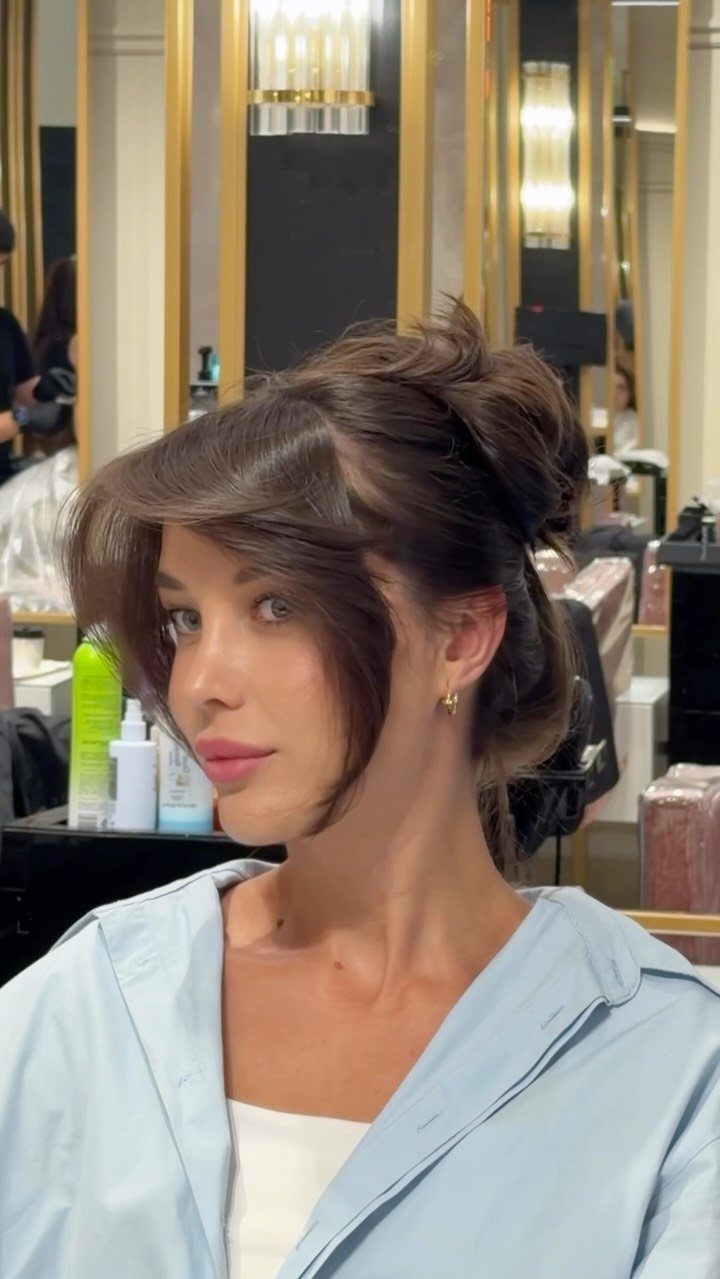
A brush and a part do most of the work here. Sweep the fringe across your forehead to one side so it clears your eyes and merges with the hair around it.
Swept sideways bangs pair best with an updo, since a bun or twist pins the fringe flat and leaves the rest of the hair out of the way.
The swept section reads as part of the shape instead of a leftover, so the bangs look chosen rather than hidden.
2. Twisted-Back Bangs
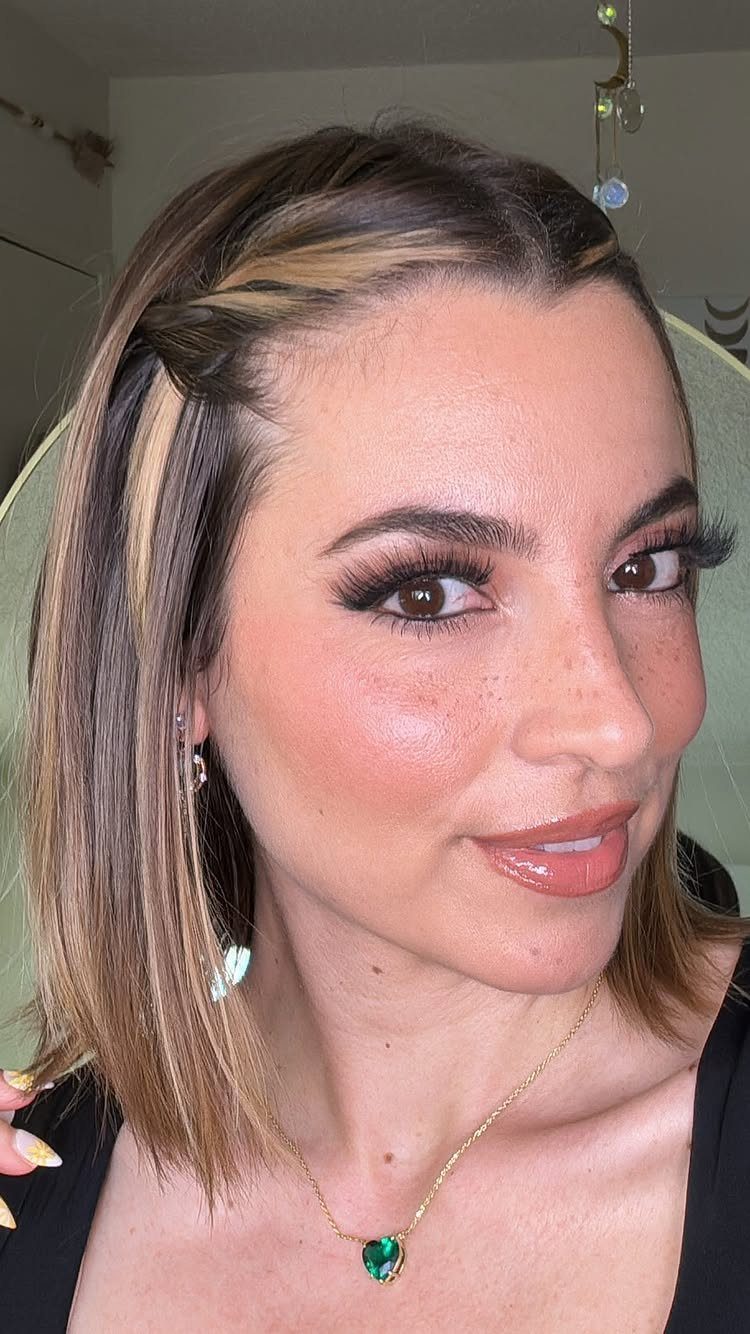
Take the fringe, twist it away from your face toward the side of your head, and pin it flat. Match the pin to your hair color so it blends in.
I prefer a loose twist over a tight one, since it looks softer at the hairline. On highlighted hair like this, the twist also shows off the lighter and darker strands.
3. Wet Look
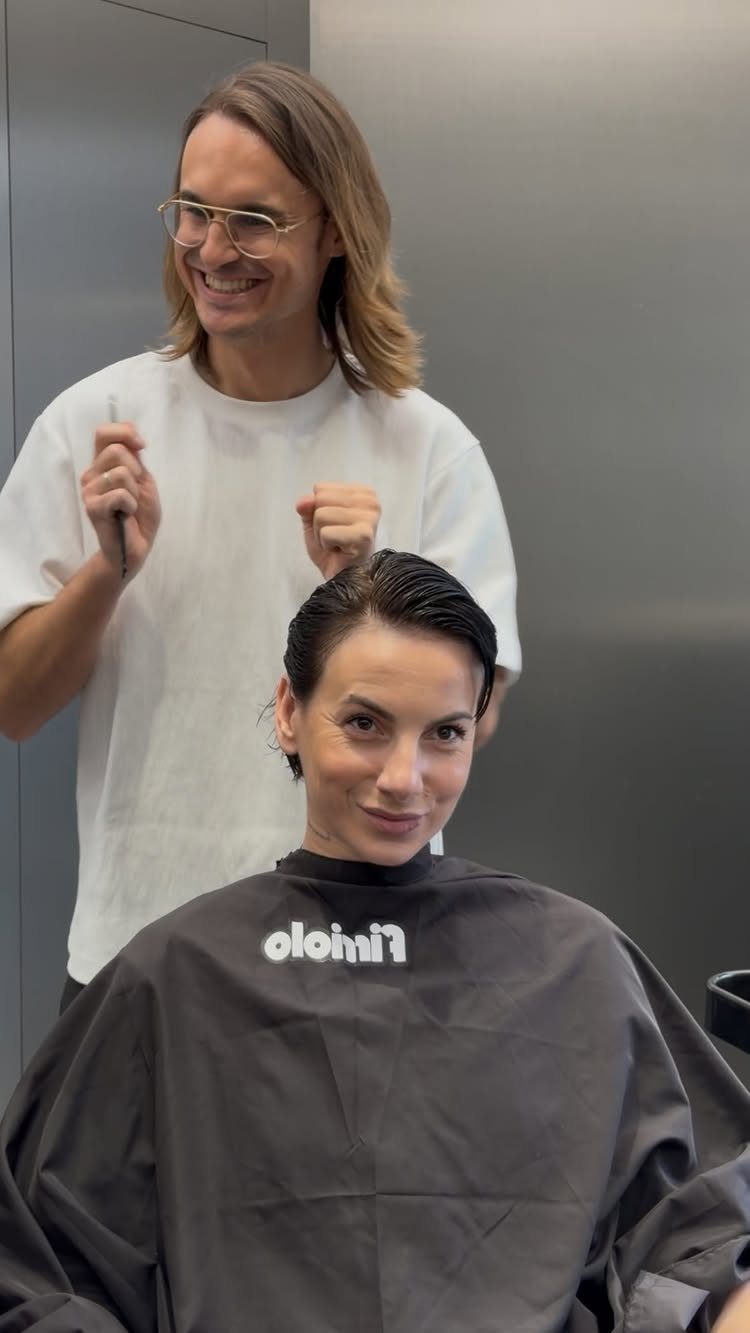
Nothing stays on the forehead in a wet look, which is why it hides bangs so completely. Work a styling product with hold through damp hair and comb everything straight back, fringe included, in the same direction as the rest.
It’s a bold choice because your whole forehead is on view. The glossy finish suits dark hair especially well.
4. Textured Bangs
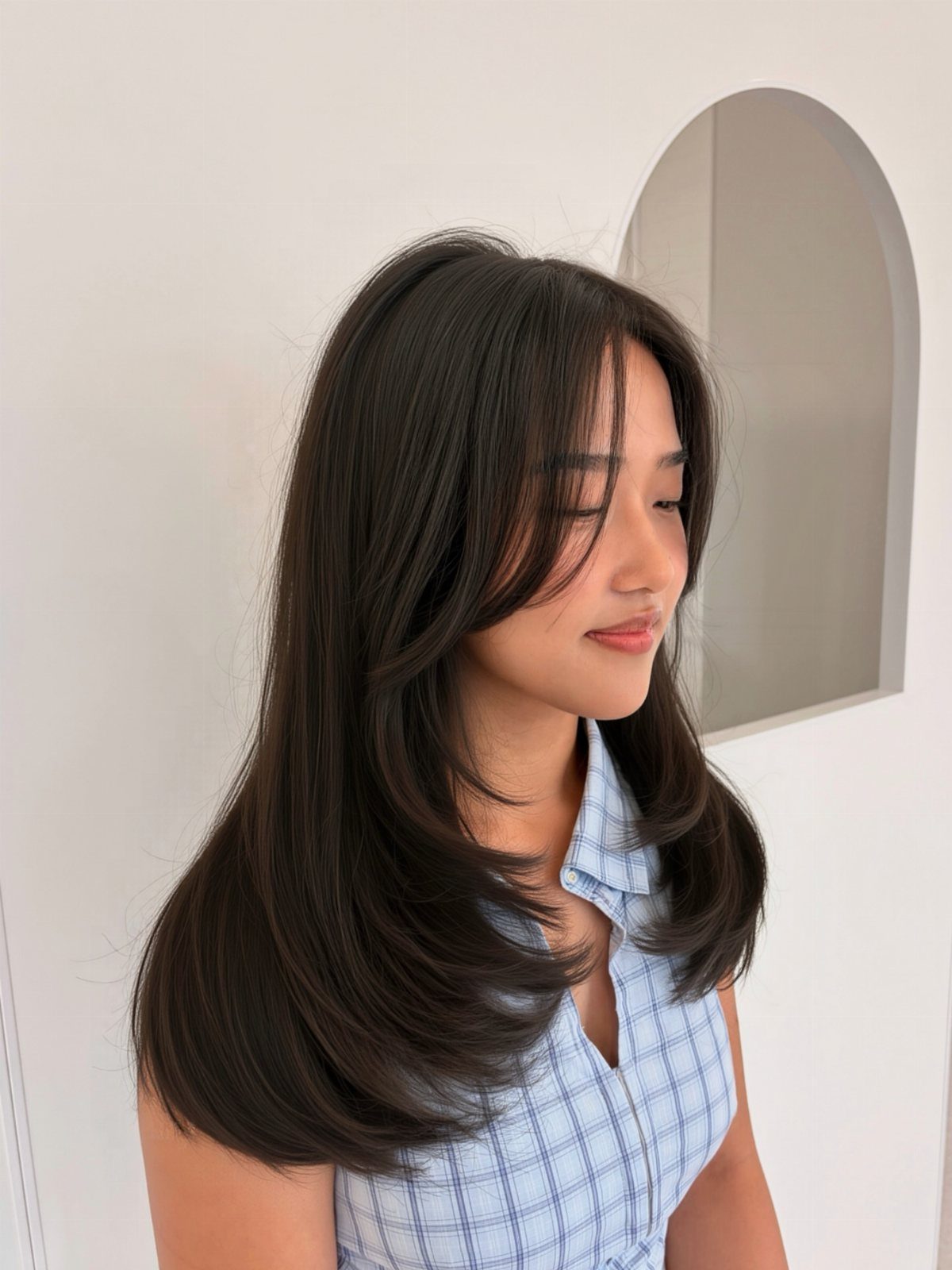
Volume is what lets these bangs blend into the hair around them. Curl the face-framing strands so they bend outward, away from the face, then loosen the curls with your fingers.
A curling iron or rollers will do it, and you can use whatever you already own. Keep the shape airy rather than polished: a stiff curl draws attention back to the fringe.
5. Curtain Bangs with Face-Framing Layers
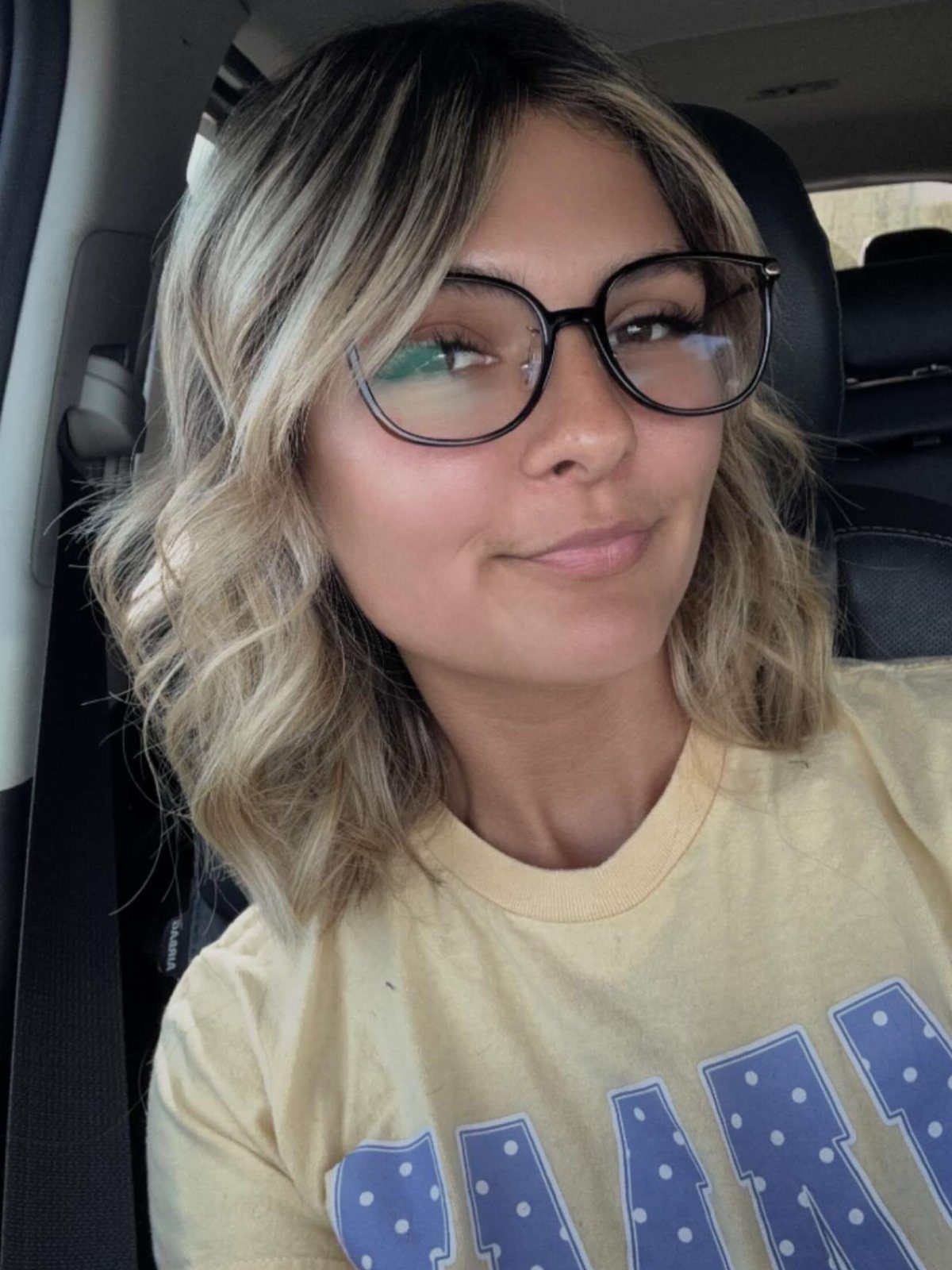
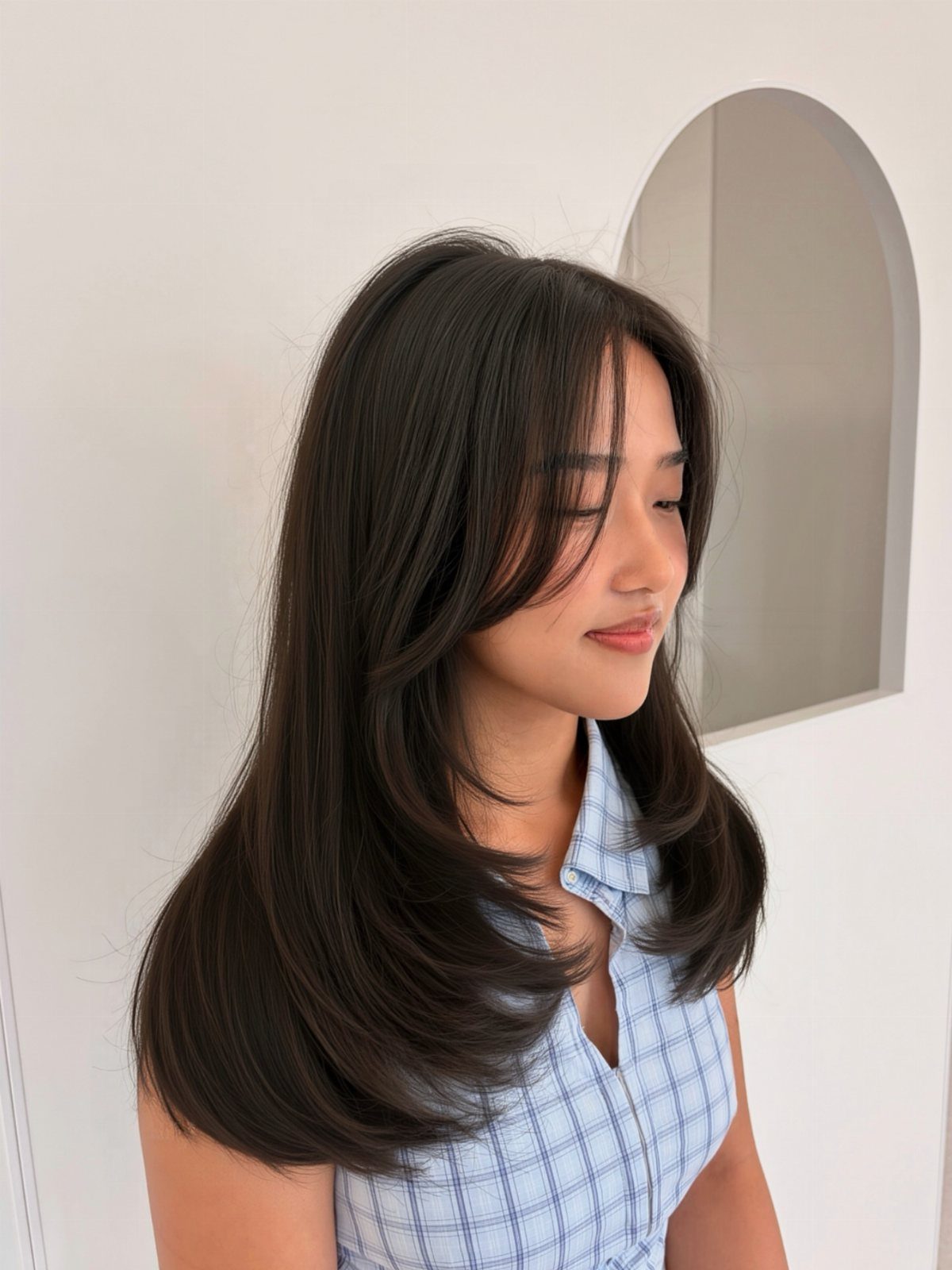
A center part is what sends curtain bangs to either side, so start the part at the crown and let the front sections fall open on their own.
Then cut or style the face-framing layers so the bangs flow into them with no visible line where one ends and the next begins.
Loose waves help here, because the movement blurs the line where the bangs end and the longer layers begin. Glasses sit comfortably over this shape, since the sides sweep clear of the frames.
6. Sleek High Bun
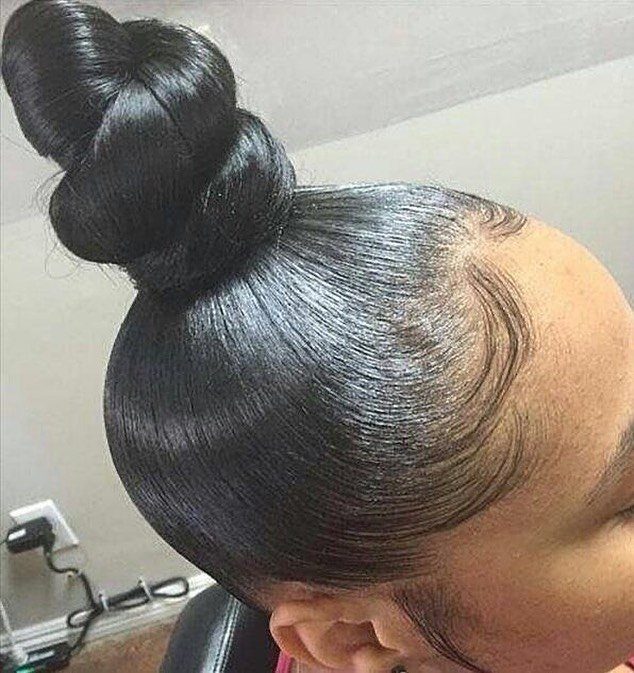
Bangs have nowhere to go in this style. Pull all the hair, fringe included, tightly back from the forehead, smooth it with a brush and a little product, and secure it high on the head.
Pins can catch any short pieces that slip free. It leaves the forehead fully exposed, so I’d pick it when you want the bangs gone completely and a clean, polished finish.
7. High Ponytail
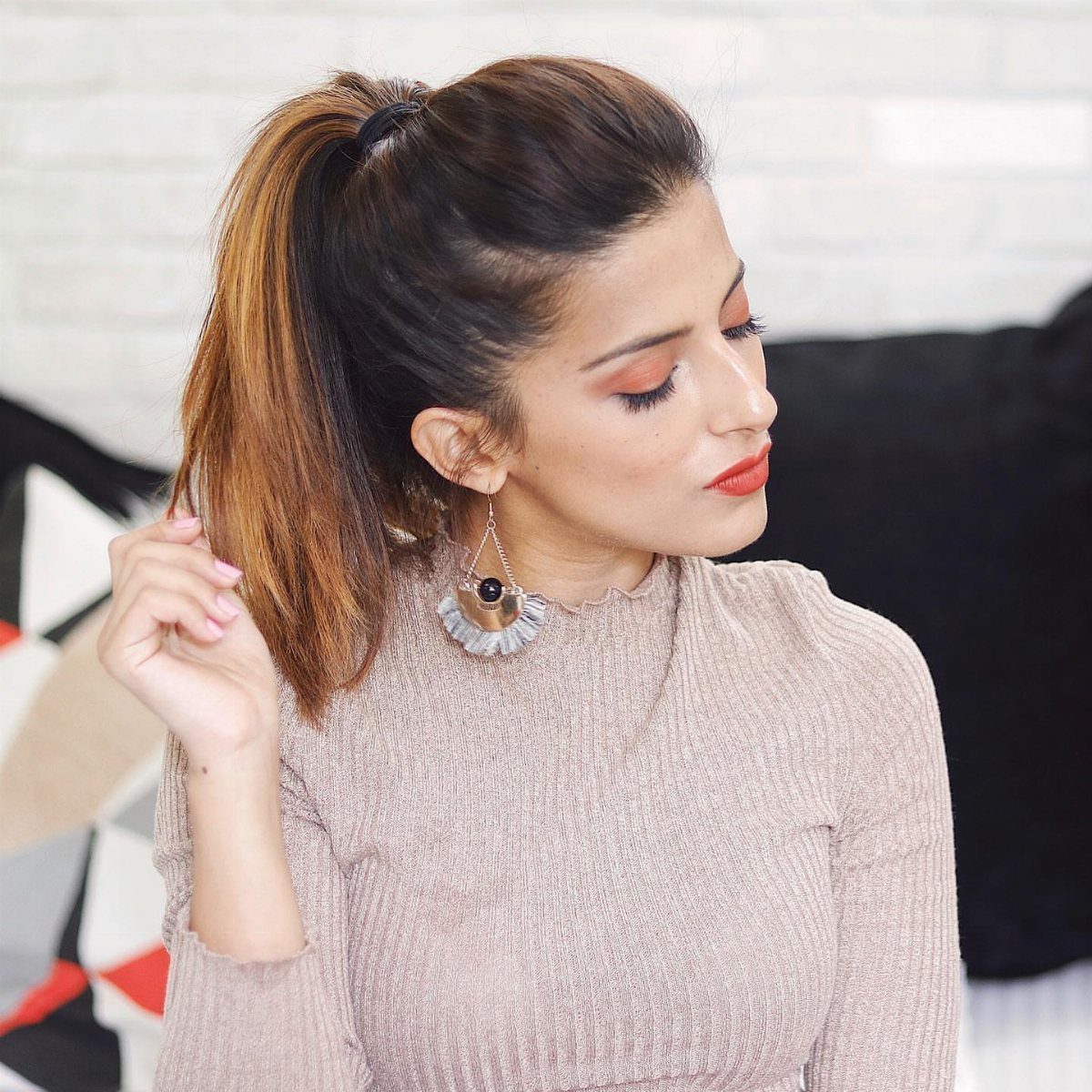
Pull everything, fringe included, up and back into one tie at the crown. Brush the front sections firmly toward the ponytail so no strands drop onto the forehead.
A high pony is the quickest fix for bangs that are annoying you when you only have a minute. A bit of smoothing product on the front keeps short pieces from springing loose.
8. Pin Bangs Back
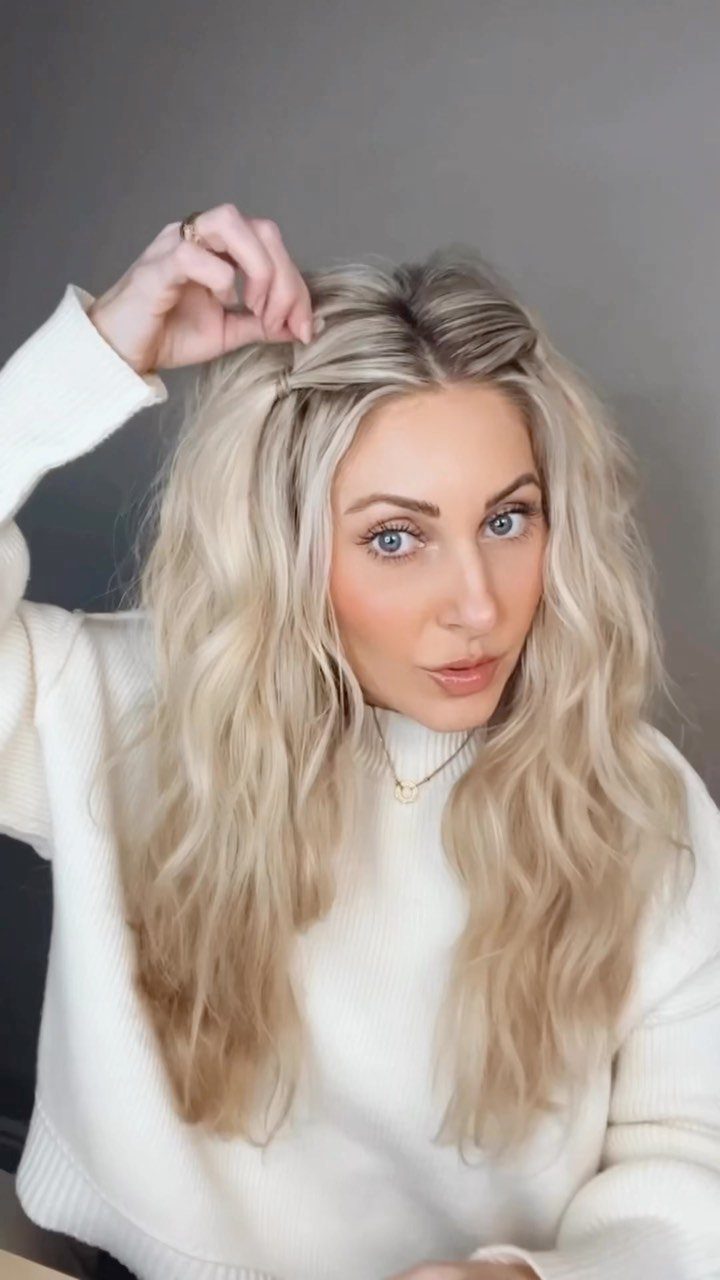
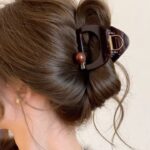
A single clip can move bangs out of sight fast. Twist or flatten the front section, then slide a clip in at an angle so it holds near the hairline.
Loose waves behind the clip keep the look relaxed. A plain clip in a shade close to your hair is the smarter pick over a decorative one, since the job is to hide the fringe, not decorate it.
9. Low Braided Bun
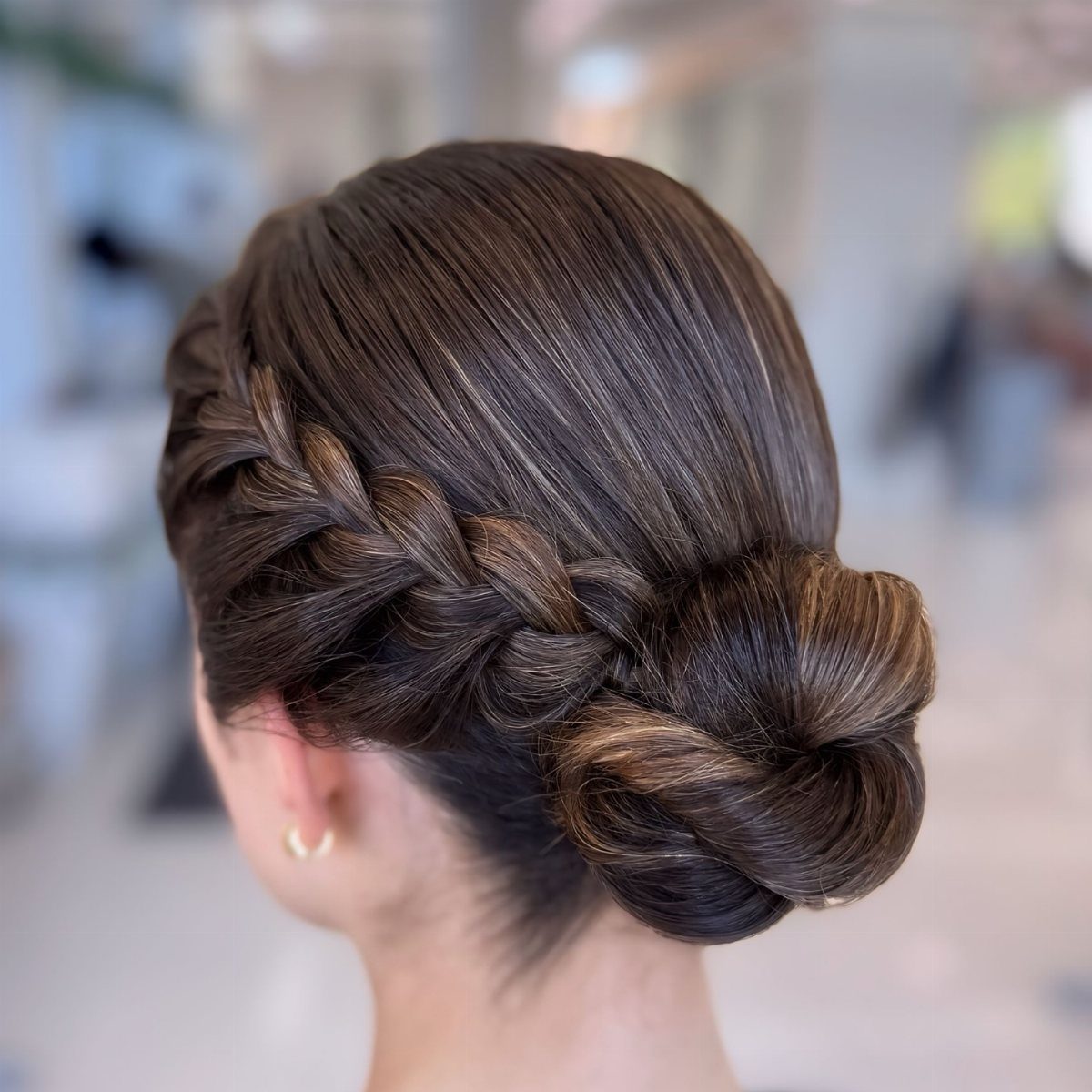
Braid the hair to one side, then wrap it into a low bun at the nape. Run the front sections into the braid so the bangs get woven in rather than left to fall.
Smooth the hairline with a brush and a little product before you pin. Polished buns like this look best on days you want a neat finish, and extra pins at the base keep the shape tidy.
10. Messy Bun with Strands
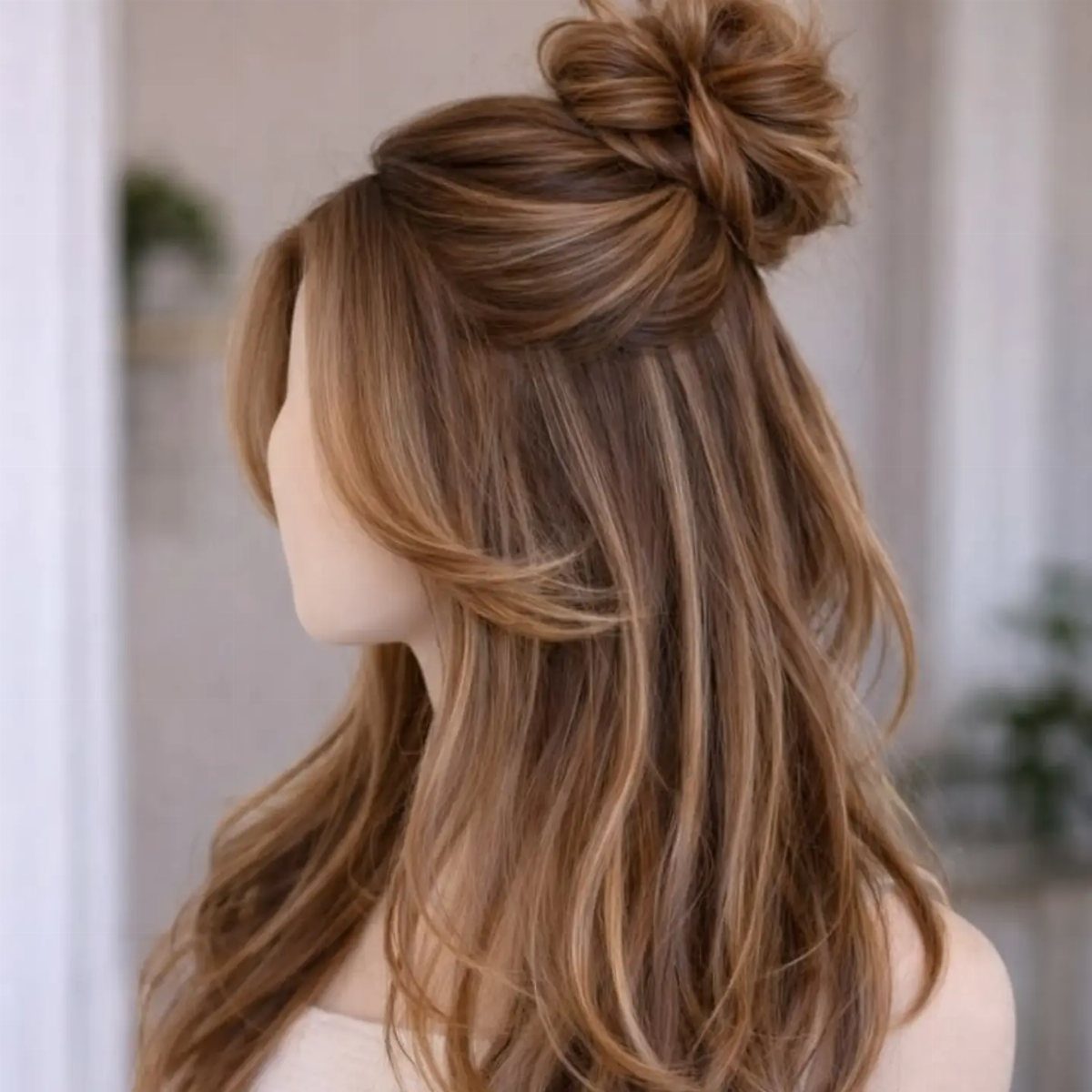
Leave a few long strands out of the bun, and the bangs have something to blend into.
Gather the hair high, twist it loosely, and pull the front pieces down so they frame the face instead of ending in a blunt fringe.
Looser is better here. A tight, neat bun pulls the bangs away and shows the hairline, while a soft one lets the front strands cover the forehead.
11. Wear a Headband
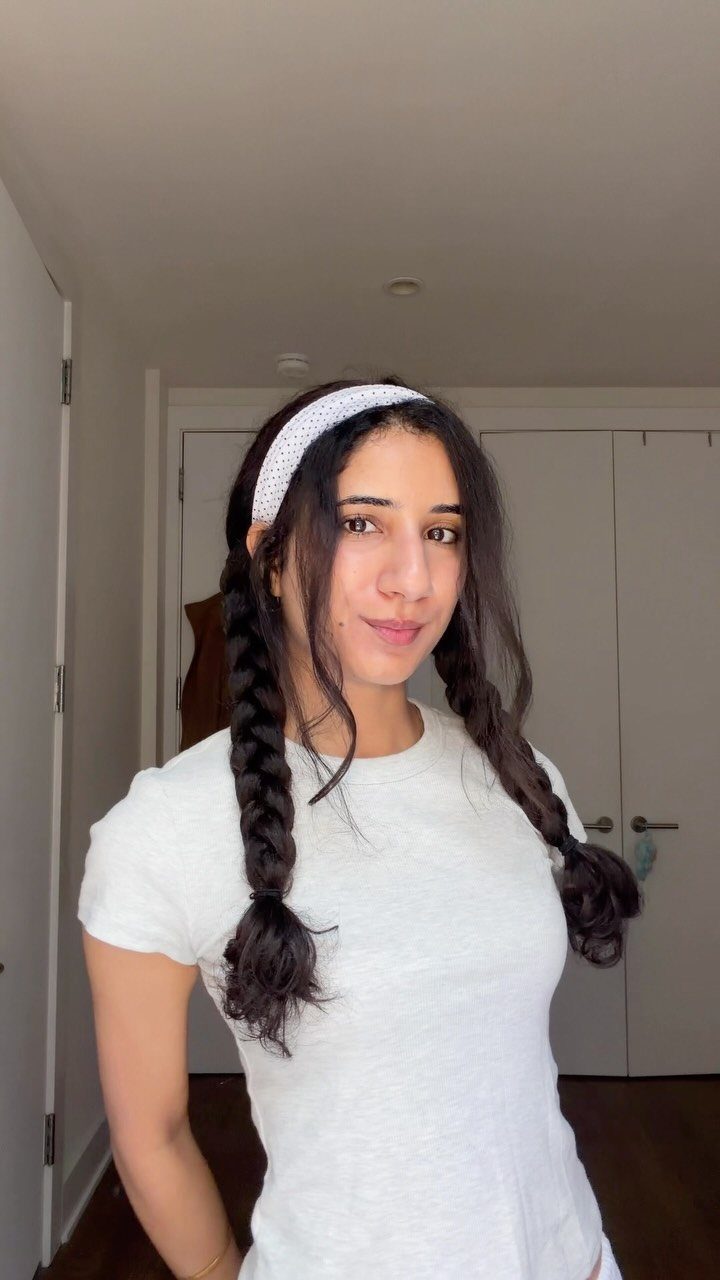
Slide a wide headband back over the fringe so it sits at the hairline and holds the bangs against the rest of your hair.
A plain band in a solid color is my pick; it reads as an accessory rather than a fix.
If short pieces poke out at the front, tuck them under the band with a fingertip or a pin. This takes under a minute and works with loose hair or braids.
12. Wear a Hat
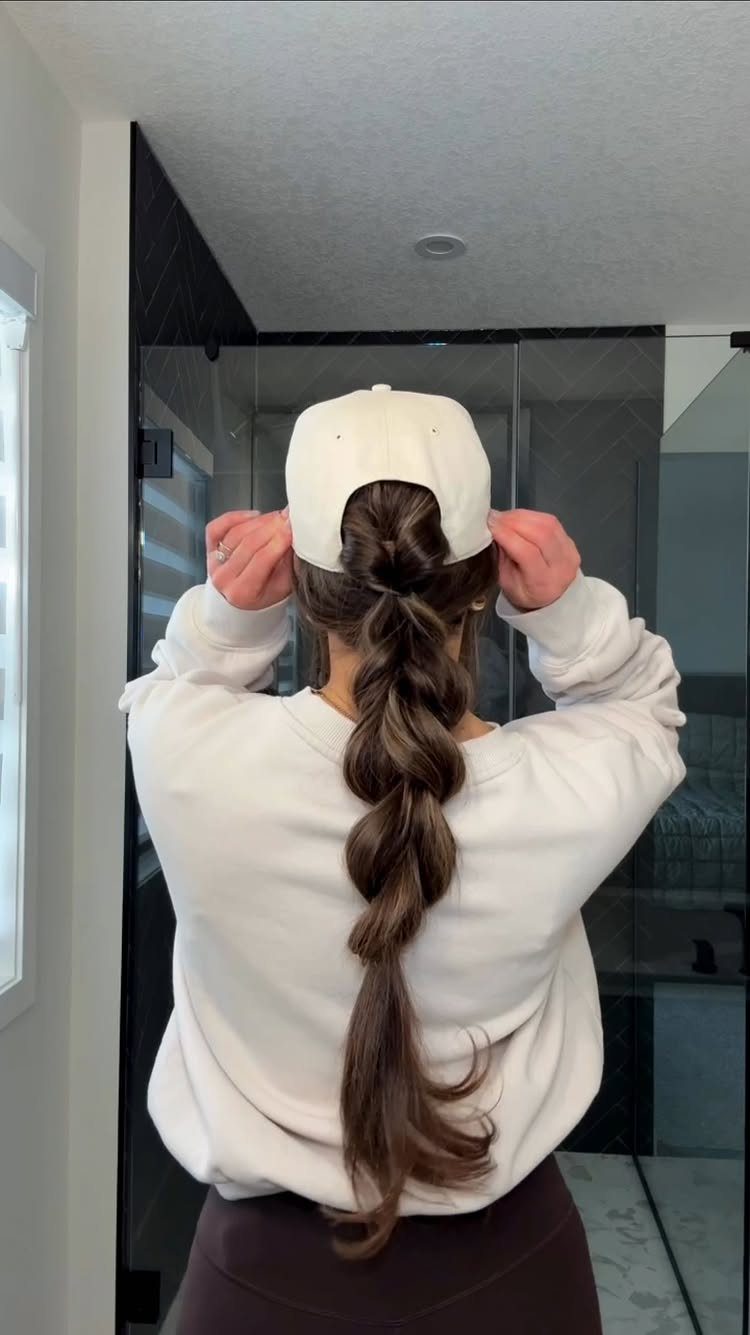
A baseball cap hides bangs completely: tuck the fringe up under the brim’s crown and let the rest of your hair hang or braid down the back. Put the cap on first, then tuck in stray strands with your fingers.
It’s the easiest option here for a bad hair day, though it only works where a hat is welcome. A long braid keeps the back tidy.
Frequently Asked Questions
How to hide a bad fringe?
Sweep it to one side, twist it back and pin it flat, or slide a wide headband over it. For a no-fuss fix, pull everything, fringe included, into a high ponytail or bun, or put on a baseball cap.
Looser styles like a sweep or a twist blend the bangs into the surrounding hair, while a tight bun or a wet look clears the forehead completely.
How to hide bangs of different lengths and types?
Short, growing-out, blunt and side-swept bangs all respond to the same moves: braids, twists, a sideways sweep, pins and accessories.
Extensions can also cover them. Match pins and clips to your hair color so they blend in, and pick a plain clip over a decorative one, since the aim is to hide the fringe.
What are curtain bangs?
A center part (or one a half inch or so off to the side) lets the front hair fall in two soft curves over the forehead, much like a pair of open drapes.
Because they are cut longer than blunt bangs, usually grazing the cheekbones, the ends are tapered so they blend into the layers around the face.
How do I know if curtain bangs suit me?
Face shape and hair texture decide it. On round faces, curtain bangs visually narrow the cheeks, and on square or long faces their wispy shape softens and balances the look.
Natural waves let them fall well with little effort, while straight hair needs a round brush or flat iron to bend the ends into a soft swoop.