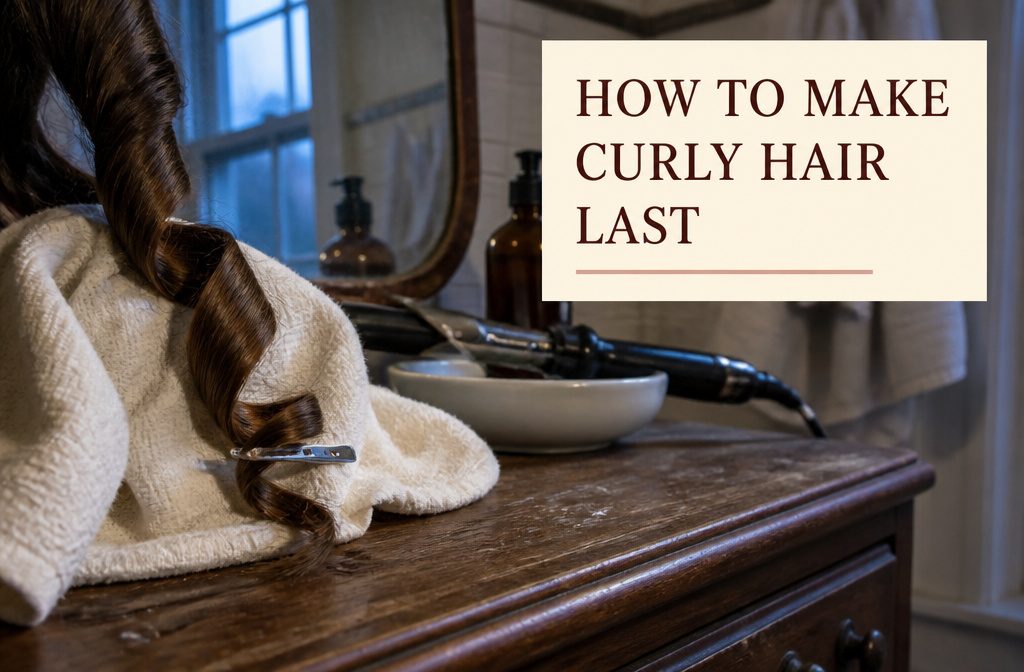
Curls that last 2, maybe 3, days take a heat tool set no higher than 392°F and patience at the end: clip the curls and let them cool completely before release. Letting go early is where they go limp.
Styling also can’t change your natural curl pattern. Only a chemical permanent does.
1. Start With Hair Type and Goal
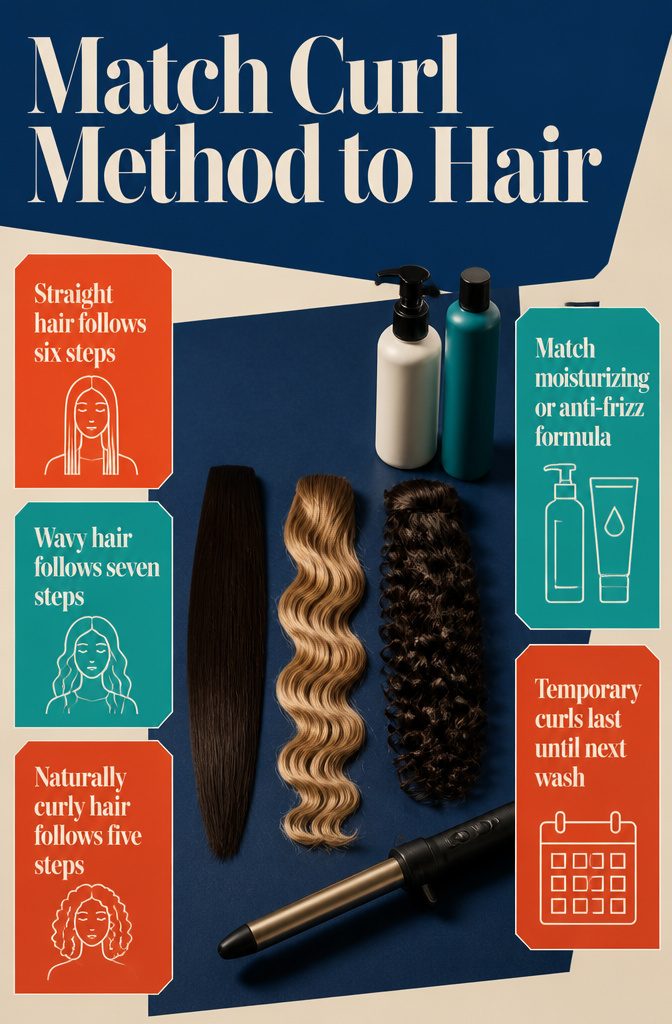
Starting texture decides the method. Straight, wavy and naturally curly hair each follow a different routine: 6 steps for straight hair, 7 for wavy and 5 for hair that already curls.
Product choice splits too, between moisturizing formulas and anti-frizz ones, so the bottle you grab should match what your hair does on its own.
Desired curl size matters just as much, since a tight spiral and a loose beach wave call for different tools and different effort.
Set expectations before you buy anything. Temporary styling cannot permanently change a natural curl pattern, and a curl cream will not make straight hair permanently curly.
Only a chemical permanent does that. I’d treat everything else in this guide as a look that lasts until the next wash, and plan around that.
2. Prepare and Protect the Hair
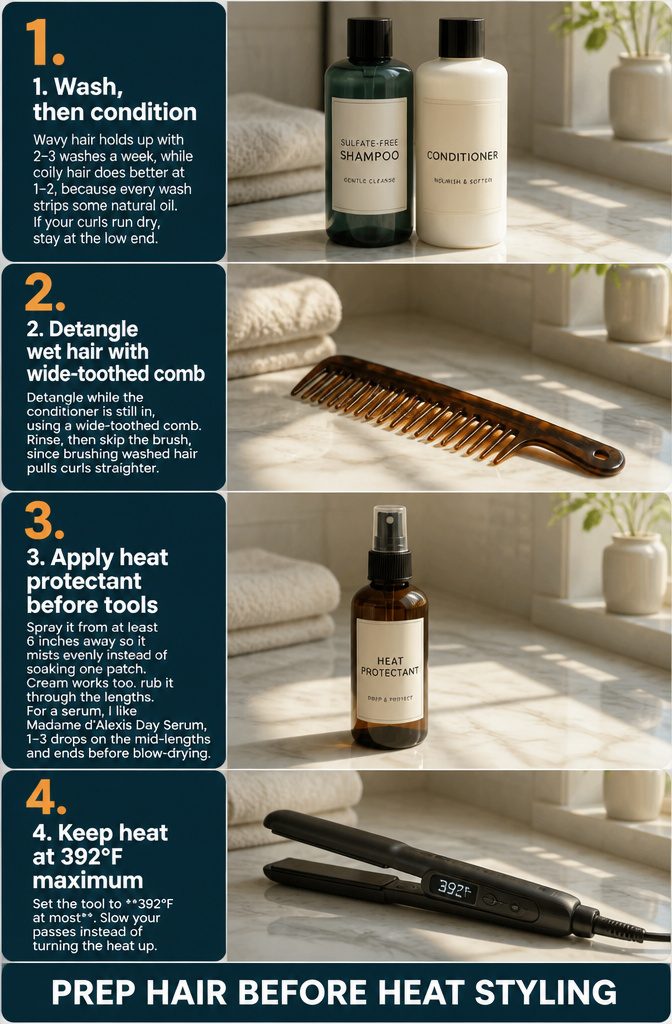
- Wash with a gentle, sulfate-free shampoo, then condition. Wavy hair holds up with 2–3 washes a week, while coily hair does better at 1–2, because every wash strips some natural oil. If your curls run dry, stay at the low end.
- Detangle while the conditioner is still in, using a wide-toothed comb. Rinse, then skip the brush, since brushing washed hair pulls curls straighter.
- Apply heat protectant before any hot tool. Spray it from at least 6 inches away so it mists evenly instead of soaking one patch. Cream works too: rub it through the lengths. For a serum, I like Madame d’Alexis Day Serum, 1–3 drops on the mid-lengths and ends before blow-drying.
- Set the tool to 392°F at most. Slow your passes instead of turning the heat up.
3. Choose a Curl Method
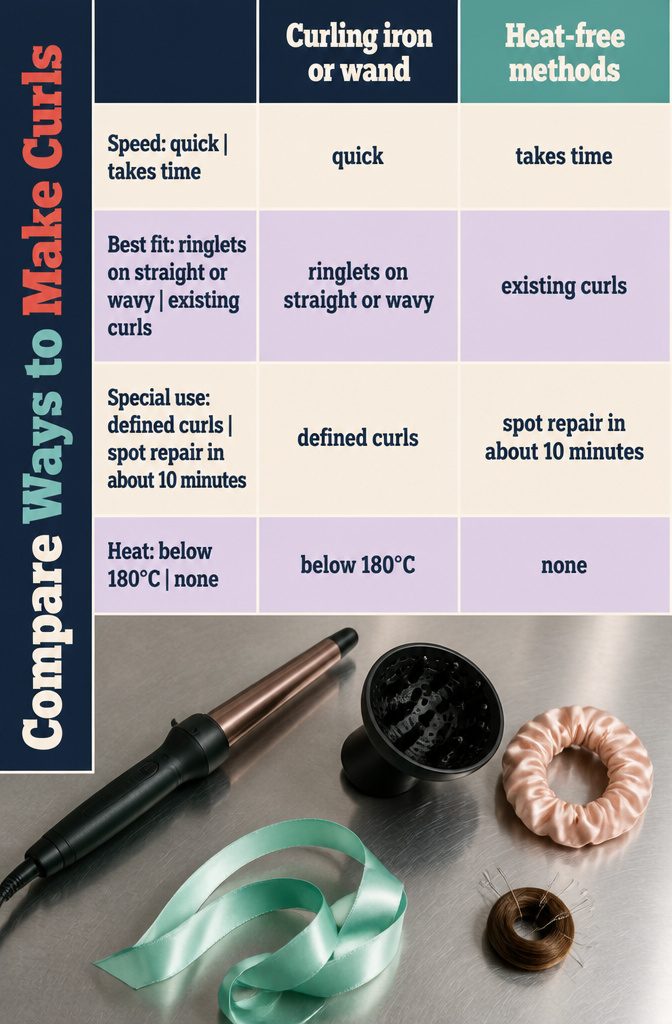
Heat is quick but costs you some hair health, so match the method to the goal.
- Curling iron or wand: Set it to low or medium, under 180 °C (about 356 °F), over heat protectant. I’d choose this for defined ringlets on straight or wavy hair.
- Ponytail hack: Leave the front pieces out, gather the rest into a high ponytail with a soft scrunchie, then curl the tail in 4–8 sections. It’s the fastest route on long hair.
- Diffuser: Scrunch in a light product, then diffuse briefly. It suits hair that already has some curl.
- Braids, twists, rollers, plopping, satin ribbons: All need slightly damp hair, gentle tension and time. Quick twists are the gentlest heat-free choice.
- Pin curls: Coil a flat section into a small bun, pin it, and wait about 10 minutes. This works well for spot repairs.
Daily heat of any kind breaks curly hair, so keep tools for special days.
4. Form the Curl
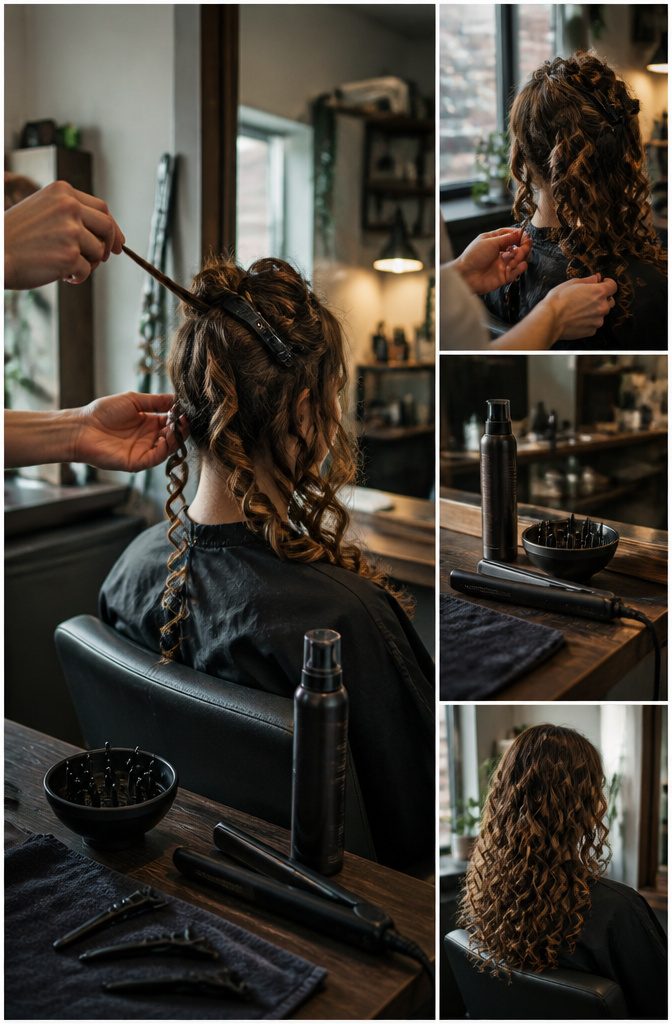
Mousse on damp hair, then an upward scrunch, is the simplest route for natural texture.
Straight hair needs more help: air-dry it about 90% of the way, then diffuse on the lowest setting, cupping each section in your palm and scrunching up.
With an iron, wrap small sections like a spiral instead of clamping, and hold 3–4 seconds. Leave about half an inch of the ends straight, since fully curled tips look styled.
For staying power I’d pick the ribbon curl: slide a flat iron down the section with a half turn. It lasts for days and softens into a beach wave.
For the ponytail hack, pin the front pieces out and curl the rest of the hair in sections. Long hair takes 4–8 sections in one high ponytail.
Short hair gets 4 ponytails with 2–4 sections each. Let it cool completely, then loosen with your fingers.
5. Set the Curls, Then Finish
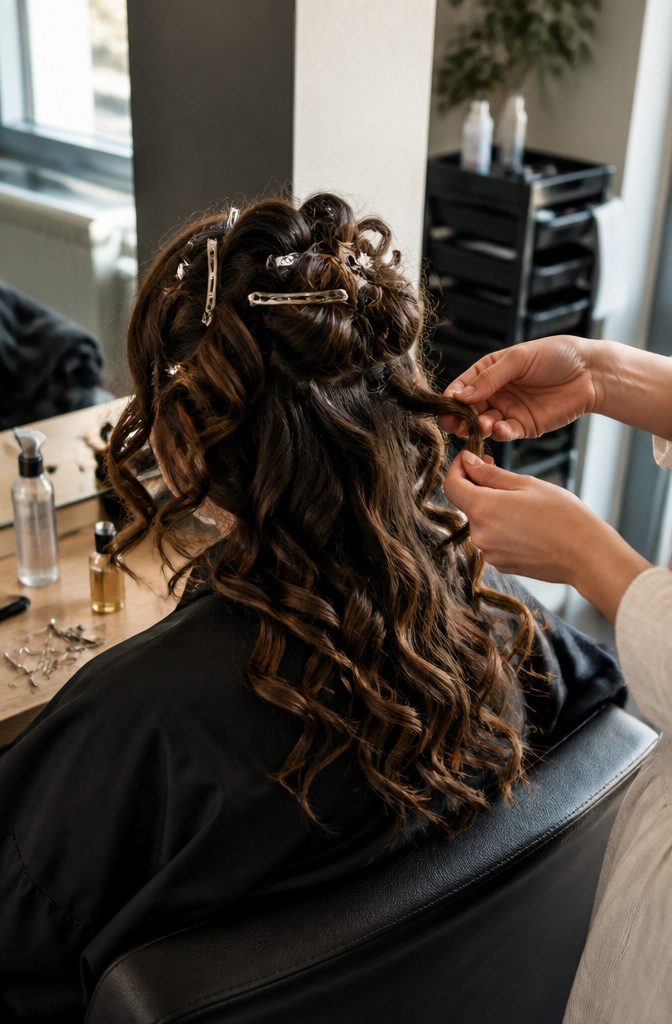
Curls set only if left alone. Air-dry until a gel cast forms, then scrunch it out.
Hot-tool curls should be clipped and cooled completely before release; the longer they stay clipped, the bouncier they get. Pin curls need about 10 minutes before the bobby pins come out.
The crunch is temporary:
I just use my hands or a microfiber towel to gently scrunch my hair and break up any strands that clumped together when drying.
Do this before any finisher goes on.
Hairspray handles hold, so use a little.
For frizz, Nume’s Argan oil or half a pump of OUAI Hair Oil works on the ends, not the roots. Finish by pulling curls apart with your fingers for a looser shape.
6. Maintain and Refresh the Result
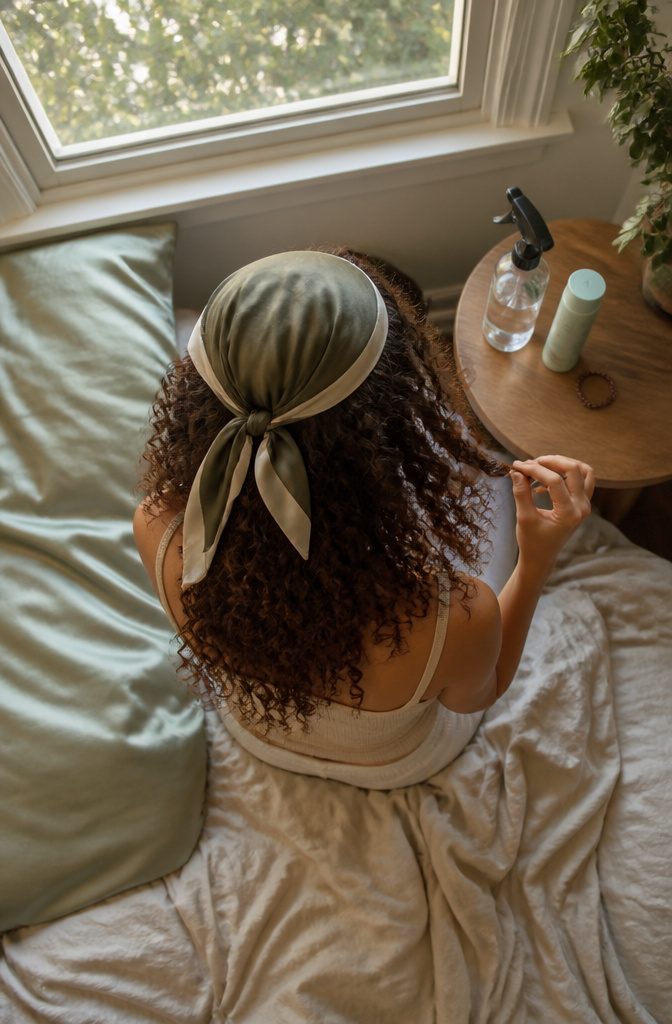
Well-set curls can last 2, maybe 3, days without restyling if you protect them between washes:
- Sleep in a satin scarf or a loose bun on top of your head. Tight elastics and rough pillowcases flatten the pattern.
- Two days after washing, mist lightly with water or a curl refresher, scrunch, and let it air-dry. The curls regain bounce without feeling weighed down.
- Use dry shampoo at the roots on day 2 or 3 to absorb oil, so the curls themselves stay untouched.
- Curl Nourish Air Dry Cream defines and hydrates for up to 48 hours, which suits tighter curls.
- Limit repeated heat. Reheating the same curls every morning is the fastest way to lose them, so touch up only the loose pieces.
Gentle Drying and Handling
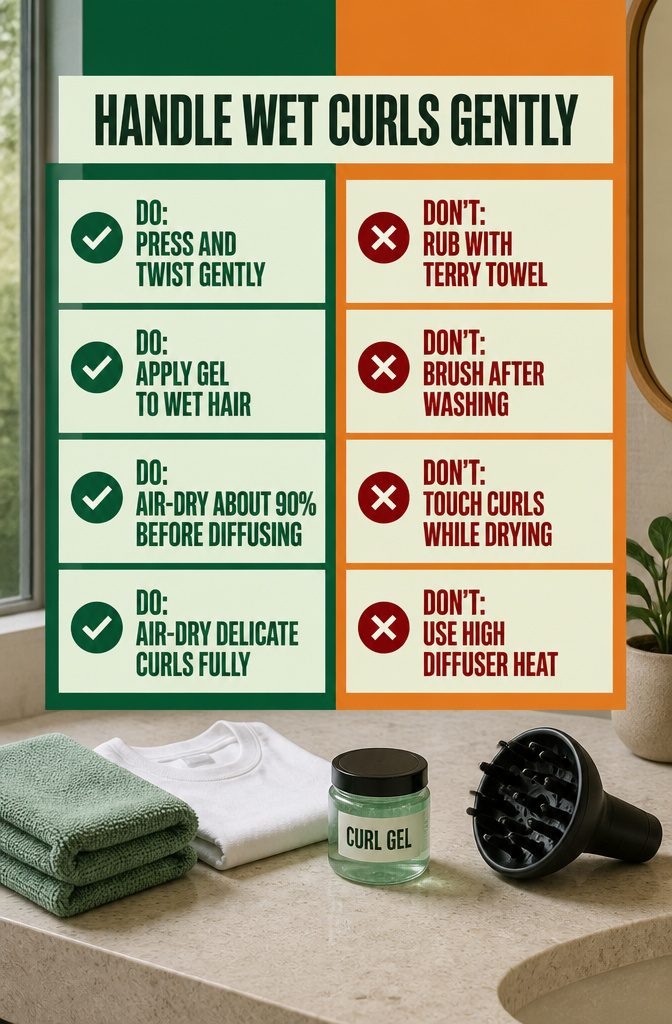
Frizz is decided mostly by what touches your hair while it is wet.
- Swap the terry towel for microfiber or a cotton T-shirt. Terry pulls moisture out of curls, and dryness shows up as frizz.
- Wrap, then press and twist gently. Rough rubbing causes tangles. Shake the hair out and finger-comb.
- Skip the brush after washing. It pulls curls straighter.
- Put gel on still-wet hair, and use plenty. I’d rather err on too much, then adjust next wash.
- For diffusing, air dry about 90% of the way, then use the lowest heat setting, cupping sections in your palm and scrunching upward. Dry, delicate curls do better air-dried entirely.
- Keep your hands off while it dries. Touching disturbs how curls form and adds frizz.
Iron Barrel and Section Sizes
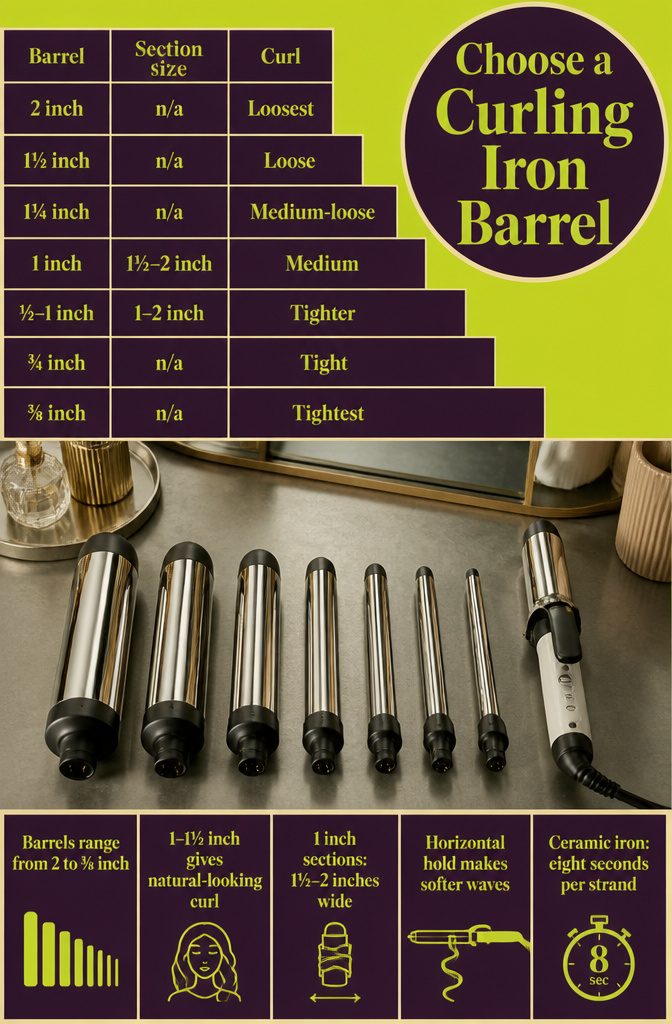
Barrel width sets curl size more than anything else, and the range runs from 2 inch down to ⅜ inch. For most heads I’d pick a 1-inch to 1½-inch barrel, which reads as real curl without tipping into ringlets.
| Barrel | Section size | Curl |
|---|---|---|
| 2 inch | n/a | Loosest |
| 1½ inch | n/a | Loose |
| 1¼ inch | n/a | Medium-loose |
| 1 inch | 1½–2 inch | Medium |
| ½–1 inch | 1–2 inch | Tighter |
| ¾ inch | n/a | Tight |
| ⅜ inch | n/a | Tightest |
Hold the iron horizontally for softer waves and vertically for tighter curls. A ceramic iron needs only eight seconds per strand.
Trim Every 6–8 Weeks
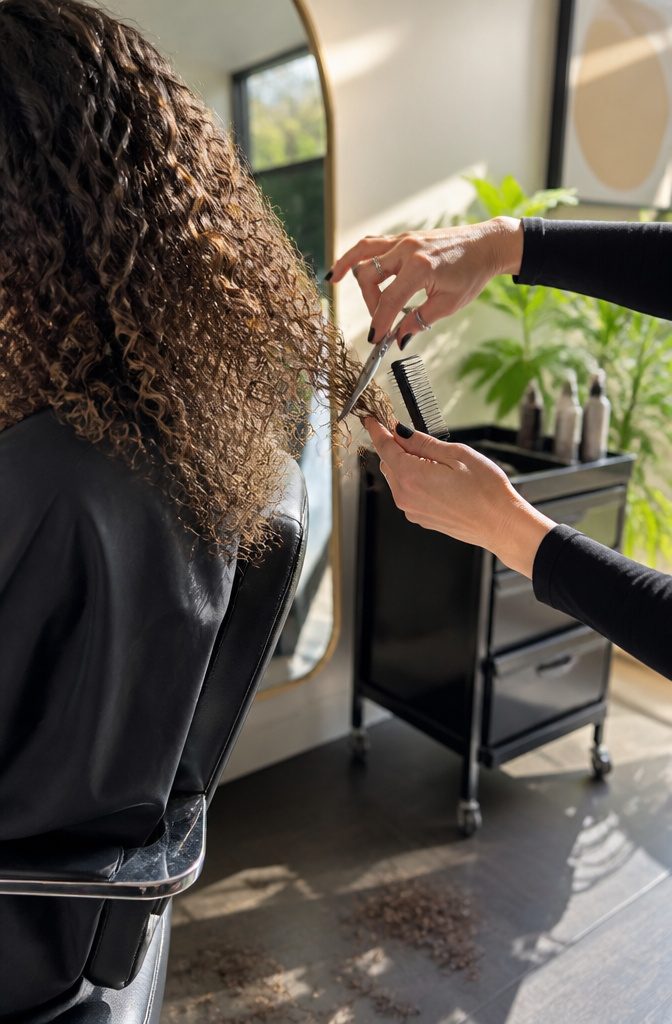
Heat-damaged ends are usually the first part of a curl to go limp. Dryness and damage sap elasticity, so a strand that has taken repeated passes from a curling iron or straightener can’t spring back into shape.
Cutting those ends off is what restores bounce. Book a trim every 6–8 weeks, and ask your stylist about feathering the ends, which lightens the bottom edge so curls don’t sit heavy.
A trim makes curls look fresher and move better, but it won’t change your curl pattern.
Straight hair stays straight, and a loose wave won’t tighten into a coil because the ends are clean. If heat styling is still in your routine, you’ll be trimming off the same damage again within a couple of months.
Frequently Asked Questions
How do I make my hair curly?
Match the method to your starting texture. Use a curling iron or wand for defined ringlets on straight or wavy hair, a diffuser if your hair already has some curl, or heat-free braids, twists and rollers on slightly damp hair.
Put heat protectant on before any hot tool. The curl lasts until your next wash, because styling can’t permanently change your natural pattern.
How can I make my curls curlier?
Work mousse into damp hair and scrunch upward, then air-dry about 90% of the way and diffuse on the lowest setting.
With an iron, a smaller barrel gives tighter curls: ¾ inch is tight and 1 inch is medium. Don’t brush after washing, since that pulls curls straighter.
Can curl cream make straight hair permanently curly?
No.
Curl creams shape hair only until the next wash. A chemical permanent is the only way to get permanent curls, and it can thin the hair.
Does curling hair without a flat iron or curling iron really work?
Yes, when hair is slightly damp, handled lightly, held with gentle tension and given enough time to set.
Braids, twists, rollers, plopping and satin ribbons all give good results without heat. Quick twists are the gentlest option.
How can I get natural curls in 5 minutes?
Lightly mist your hair, work in a small amount of lightweight styling product, scrunch, and hold a warm diffuser on it for a few moments. If you’d rather skip heat, quick twists are the gentlest option.
What’s the best product for curling long hair?
Choose something lightweight that defines curls without weighing them down: a dry oil or a leave-in serum on the lengths and ends. Madame d’Alexis Day Serum, at 1–3 drops on the mid-lengths and ends, is one example.
How do I prevent frizz in curly hair?
Moisturize first, then seal it in with a few drops of dry oil or serum on the lengths.
Dry with a microfiber towel or cotton T-shirt, and keep your hands out of your hair while it dries. Frizz is decided mostly by what touches your hair while it’s wet.
How long do curls last, and how do I make them last longer?
Well-set curls last 2, maybe 3, days. Sleep in a satin scarf or a loose bun on top of your head, and on day 2 mist with water or a curl refresher, scrunch and air-dry.
Dry shampoo at the roots on day 2 or 3 soaks up oil without disturbing the curls.
Can I use heat on curly hair every day?
No.
Daily heat from hot water, hot air or hot tools can lead to breakage. Save heat tools for special days and use protective styles or a curl refresher on the days between.
How often should I wash curly hair?
Wash wavy hair 2–3 times a week and coily hair 1–2 times. Every wash strips some natural oil, so stay at the low end if your curls run dry.
Should I separate curls with my fingers or flip my head upside down and shake?
Separating with your fingers is the better choice.
Wait until the curls are fully set and any gel cast is scrunched out, then pull them apart gently. The best method still depends on your hair type.