Whether you can do the style yourself sorts these 7 looks better than hair length or occasion does. Alone at a mirror, the Half Up Half Down Curly Ponytail and Side Braids with Curls are the two I’d start with.
Half Cornrows and Small Braids Among Curls are the two that send you to a professional, and both mean a long afternoon in the chair.
In most of these, the curls stay loose beside the braiding, and that contrast gives the style its shape.
1. Half Up Half Down Curly Ponytail
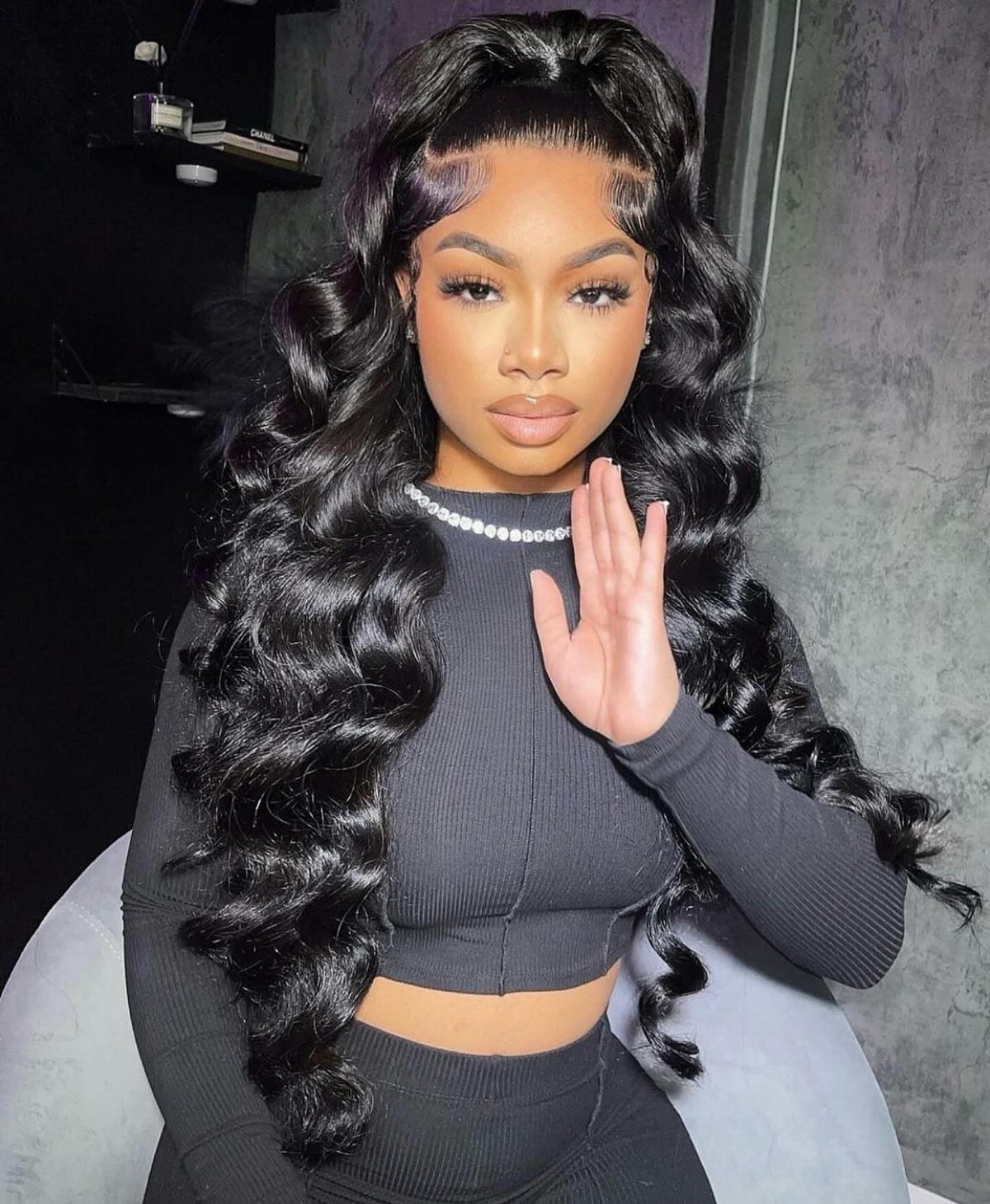
Sleek on top, full underneath: this ponytail pulls only the front and crown section up, so the face stays clear while the curls fall down the back.
Gather the top section at the crown and leave everything else alone. I’d skip brushing the ponytail itself, since its curls are what keep it from looking flat against the loose hair.
This is the easiest look on the list to do at home, and the one I’d pick for a morning with no time to spare.
2. Crown Braid
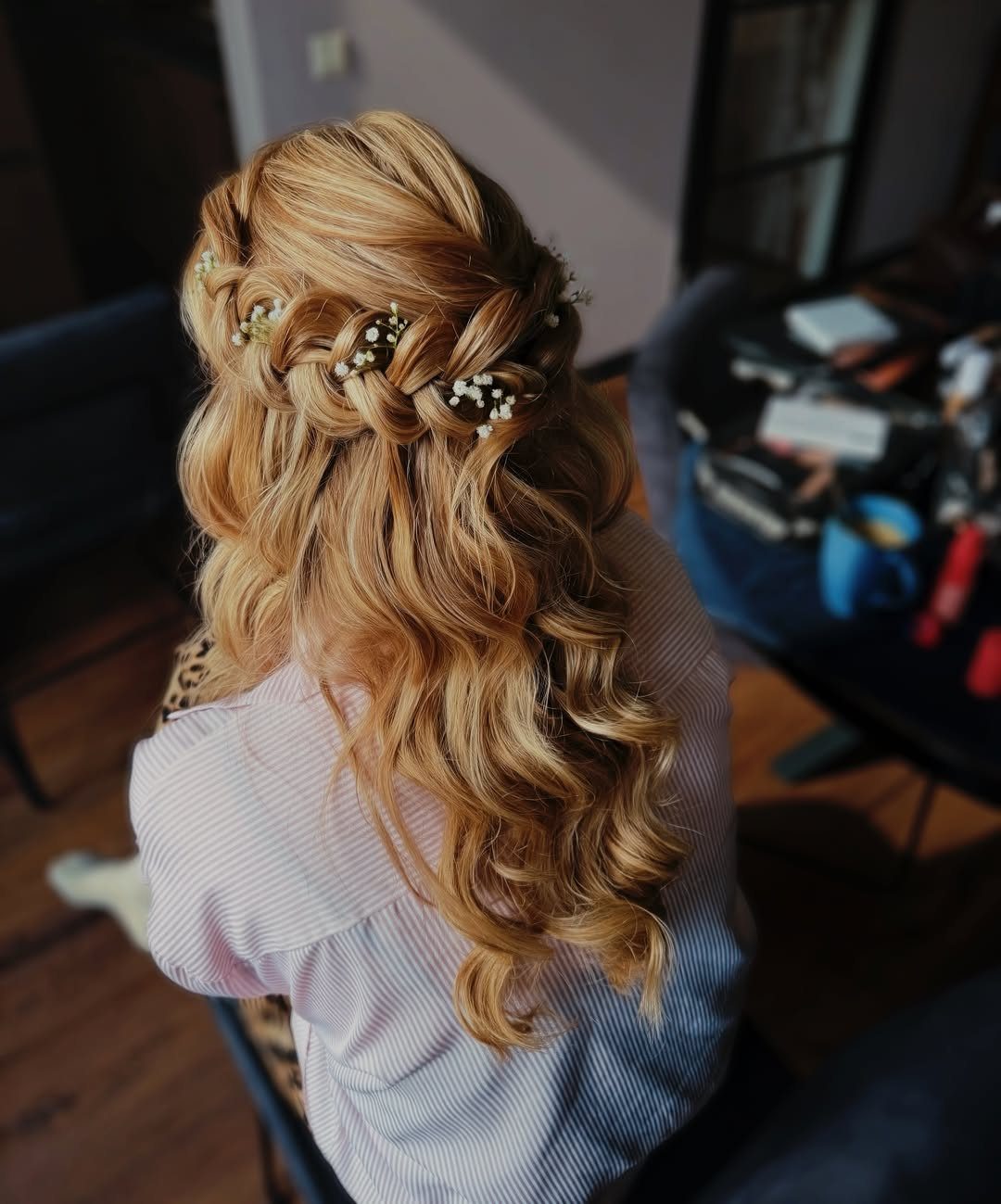
A crown braid runs straight across the back of the head, pulling the front sections away from the face while the curls hang loose below it.
Small white flowers tucked along the braid, baby’s breath being the classic choice, are an optional addition that suits a crown braid well. I like them because they soften a braid that can otherwise read as strict.
Keep the braid snug and leave the curls beneath it untouched. The contrast between the neat line and the loose hair is the whole look.
3. Waterfall Braid
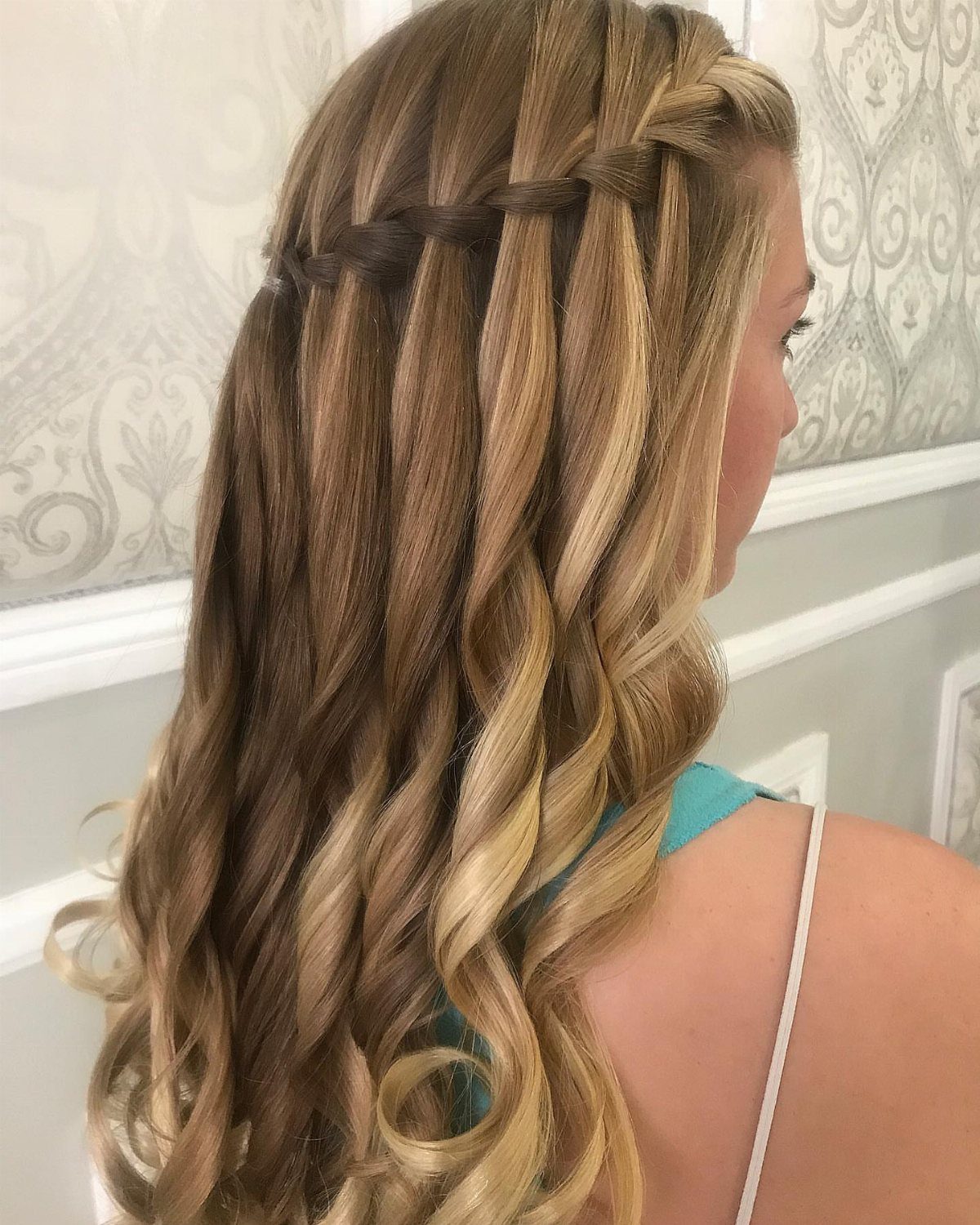
Every pass of a waterfall braid lets one strand fall out, and those dropped strands melt into the curls below. The result is a soft, curved braid line across the back instead of a tight rope of hair.
Curly hair hides small gaps well, which makes this friendlier than it looks.
Still, it takes a few tries to get the rhythm of picking up a new section each time. I’d practice on a day with nowhere to be.
4. Half Cornrows
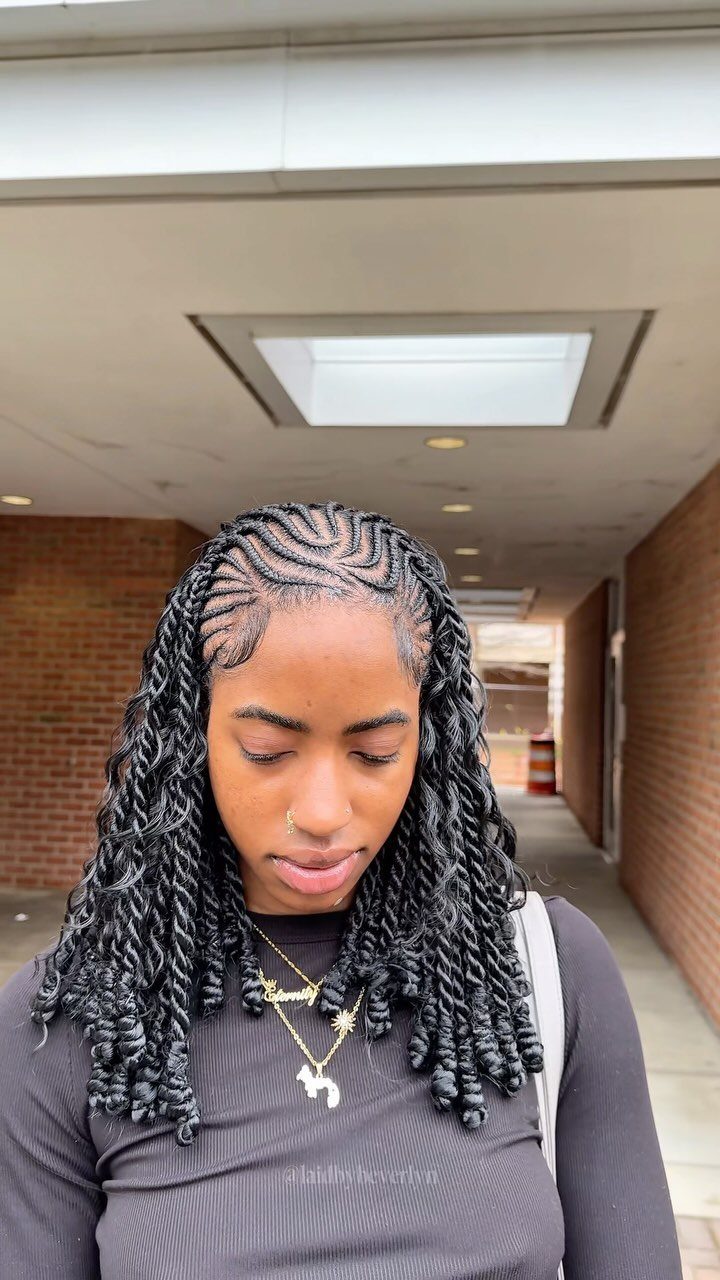
Cornrows laid across the top keep the scalp section neat, and long curly twists carry the length down over the shoulders.
Cornrows are precise work, and I’d book a practiced braider rather than attempt them on my own head.
What you can do at home is the rest: keep the twists defined and loose so the contrast with the flat braids stays clear.
Gold necklaces suit this look well.
5. Side Braids with Curls
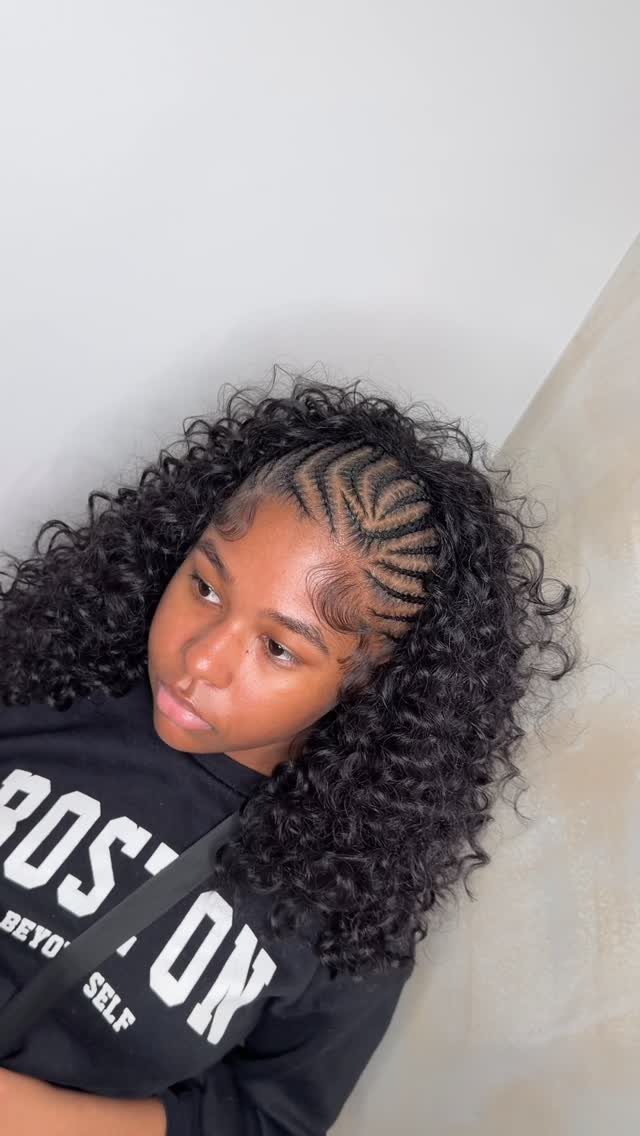
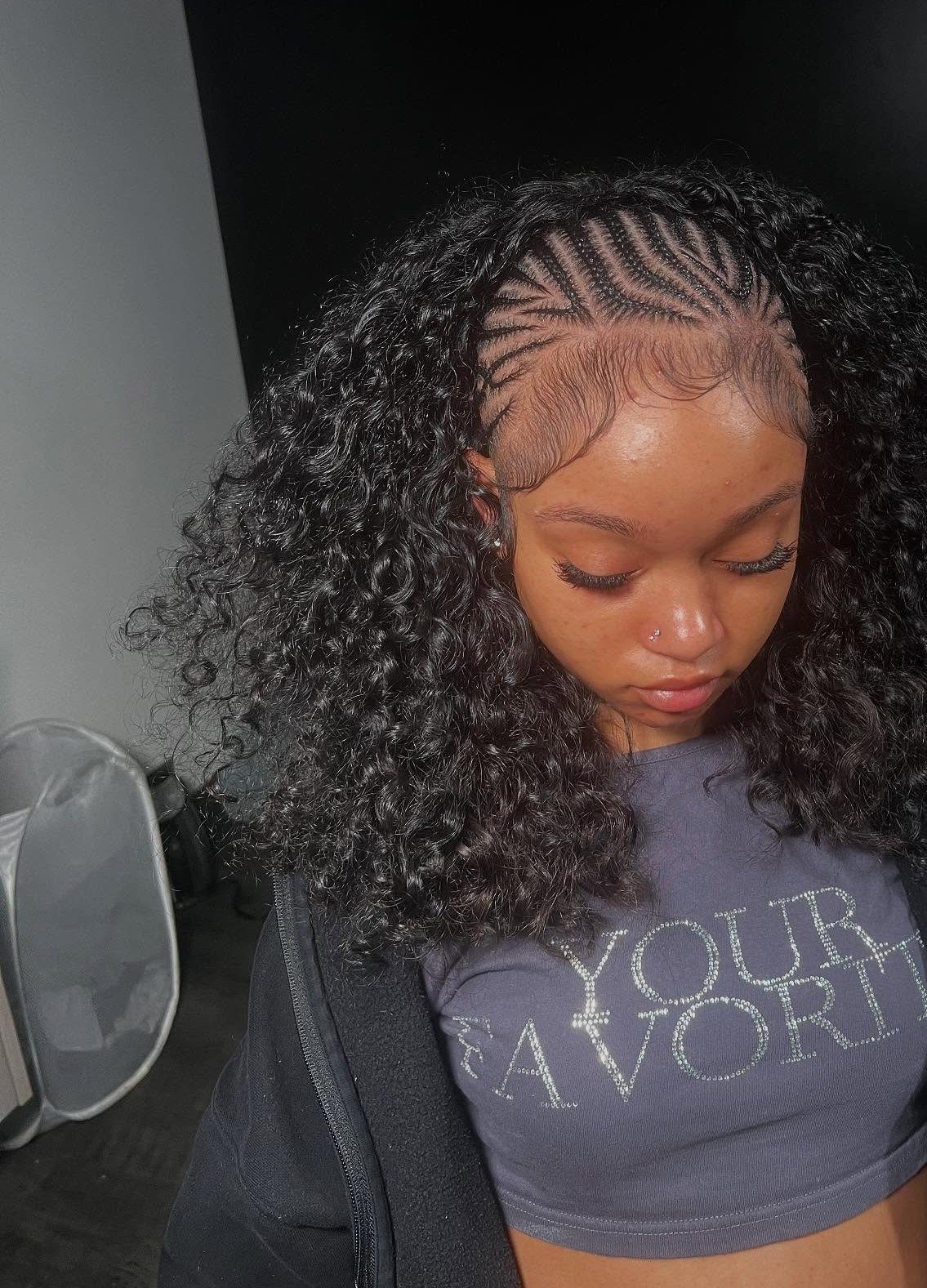
Braids sit along one side of the head, while the remaining hair stays big, tight and curly.
The volume is what makes it work. Fluff the curls out rather than smoothing them, so the braided side looks like a deliberate contrast and not a section that got left behind.
A loose side braid is forgiving enough to do alone at a mirror, so this is one of the two styles I’d start with. Asking for them on the side you part toward balances the look.
6. Half-up Braid with Curls
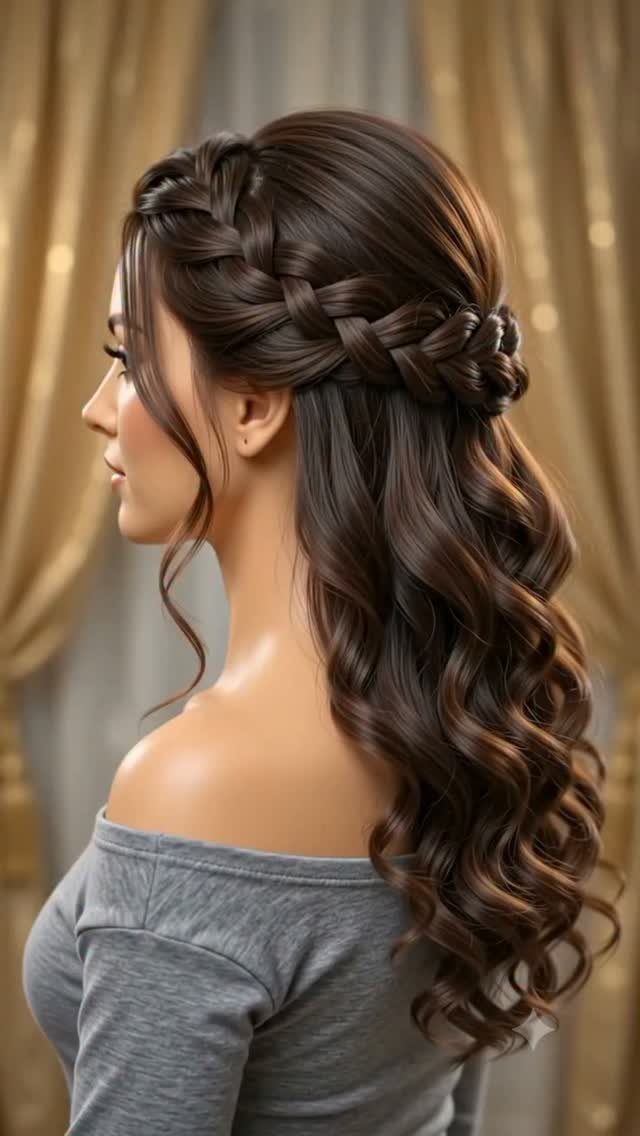
One braid at the side, pinned back from the face, with long curly waves falling behind it: this is the softest version of the half-braid idea.
It suits long hair best, since the braid needs length to sit visibly against the waves.
A single braid is also easy to do yourself in a mirror. I’d braid loosely and tug the edges slightly so it blends into the curls.
7. Small Braids Among Curls
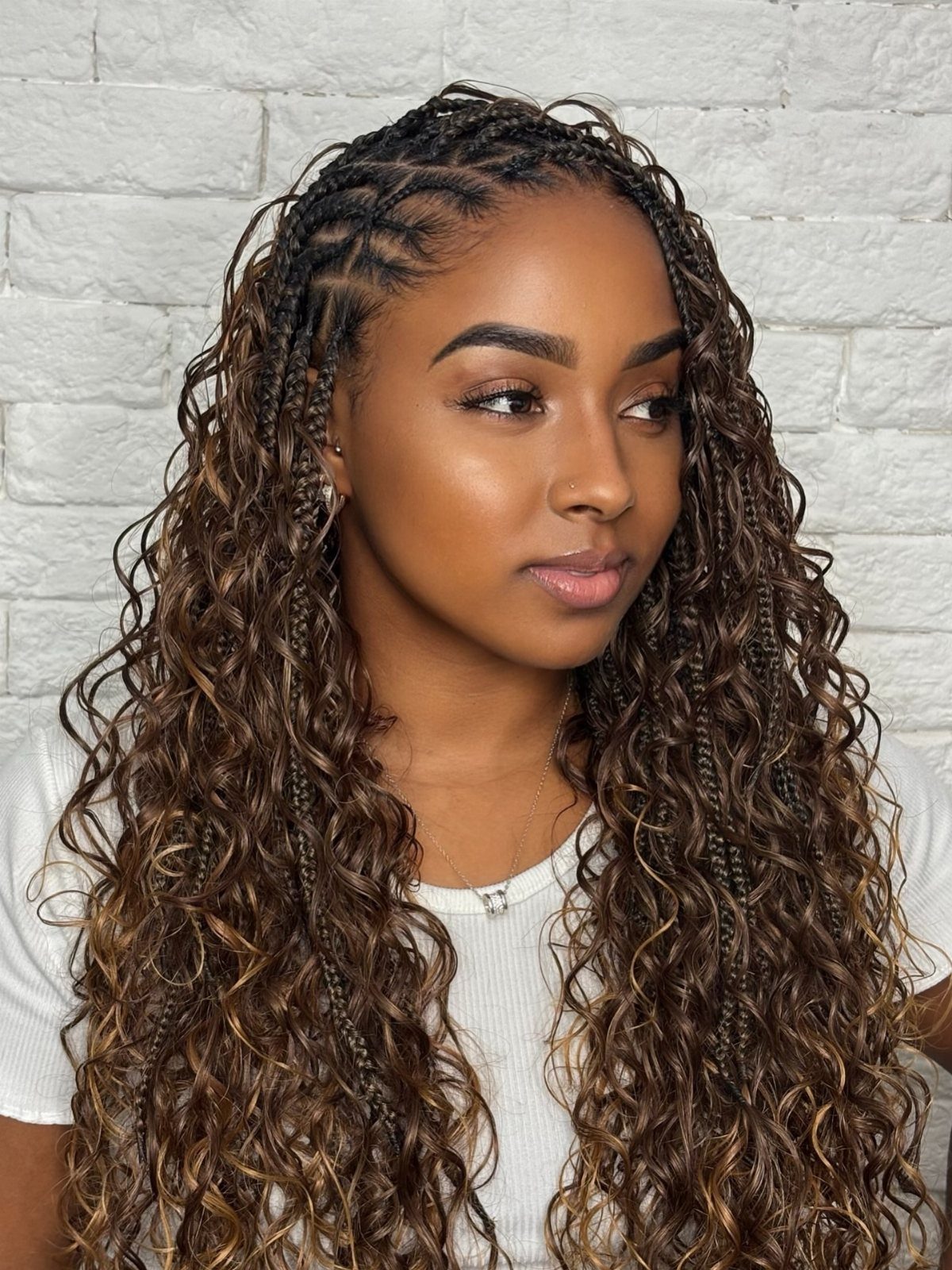
Fine braids scattered through long curls give the hair a detailed, almost woven look, with thin lines of pattern showing between the loose spirals.
Thin braids are slow to make, so I’d count on a long sitting, and a practiced braider will get a more even result than a mirror and 2 arms.
Leave the curls between the braids free and defined. That contrast is what keeps the braids reading as detail instead of a second texture fighting the first.
This works best on mid-to-long hair, where the braids have room to show.
Frequently Asked Questions
What type of braid is best for curly hair?
A waterfall braid or a crown braid. The waterfall is forgiving because curly hair hides small gaps, though picking up a fresh section on each pass takes a few tries to get right.
A crown braid works best kept snug across the back with the curls below left loose. Cornrows demand clean, even parting and steady tension, so a stylist who braids them often is worth the booking.
Is it better to braid curly hair wet or dry?
A loose waterfall braid sits best on curls that are dry and already defined, since the pattern stays put and the braid doesn’t flatten it.
Crown braids work better on curls that are just barely damp, because the slight moisture helps the strands cling and lets the ends tuck flat under pins.