Defined, clumped curls take one wash day a week, including 10–15 minutes of plopping in a cotton T-shirt.
Most people lose them at the drying stage, when a hand in half-dry hair breaks up the clumps. Gel can only hold what moisture built, so skip the weekly deep condition and it has nothing to work with.
1. Cleanse and Condition
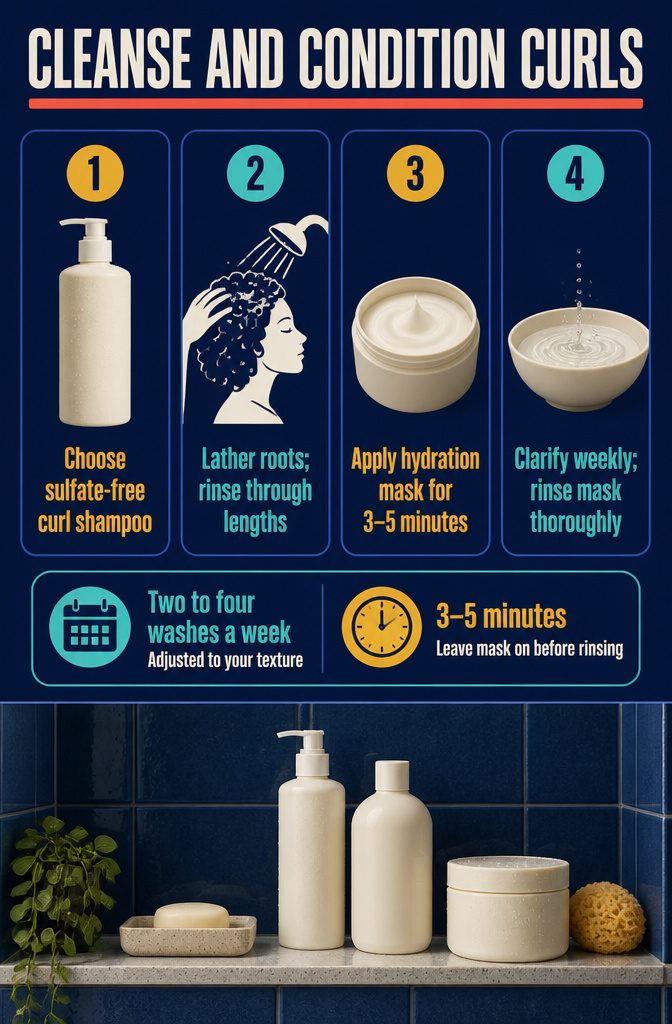
Choose a sulfate-free shampoo made for curls. Sodium lauryl sulfate can be harsh enough to cause frizz.
Two to four washes a week is a sound starting point, adjusted to your texture. Work the lather into the roots, where hair gets oiliest, and let it rinse down the lengths.
Co-washing, which means cleansing with conditioner alone, is the gentler alternative and suits very dry hair best.
Once a week, use a clarifying shampoo to clear product buildup from scalp and strands. Then apply a hydration mask and leave it on for 3–5 minutes before rinsing.
No single cleansing method fits everyone.
Dry hair leans toward co-washing, while hair that turns oily at the roots usually needs real shampoo. I’d begin with the schedule above and change one variable at a time.
2. Detangle Gently
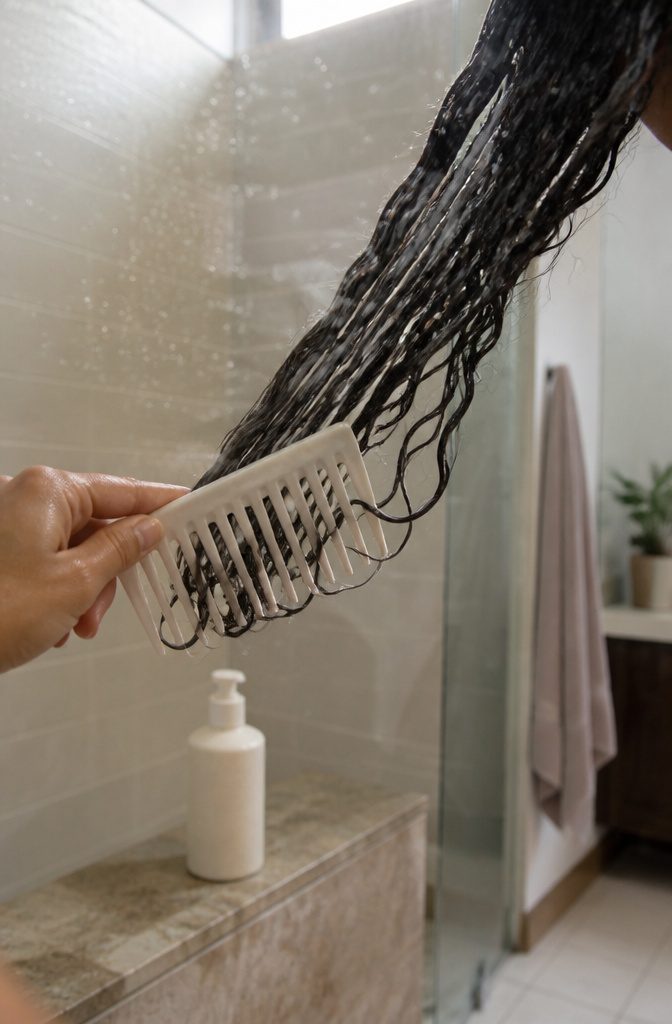
Detangling happens before any product touches your hair, and it is a separate job from shaping.
Knots left in place catch on cream or gel and drag curls apart as you apply, so clearing them first makes application smoother and leaves the curl pattern undisturbed.
Wet curls are fragile, so use a wide-tooth comb on wet hair, ideally in the shower with conditioner still in. Work from the ends upward while the slip is at its best.
Once products go on, the rule flips, and Davines says it plainly:
It’s better to avoid using a brush or comb at this point.
— Davines
Finish all combing before you style. After that, use only your fingers.
3. Remove Excess Water
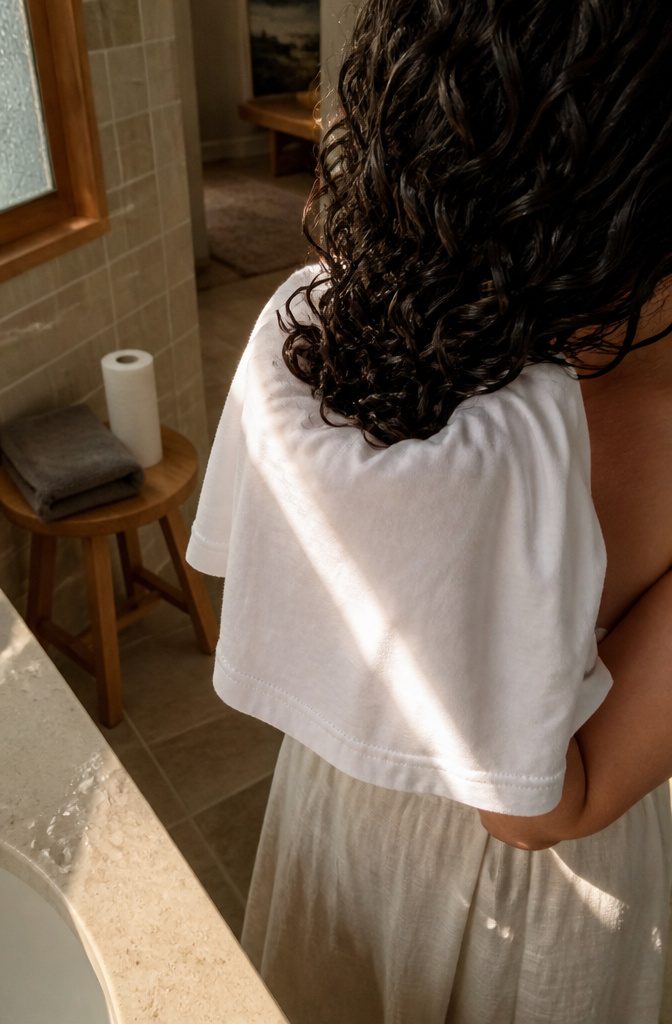
Terry cloth is the wrong material for wet curls. Its tiny loops catch on the strands and roughen the cuticle, which shows up later as frizz.
A cotton T-shirt, a microfiber towel, a soft cotton towel, or even paper towels will take the water out without the snag. I’d reach for the T-shirt first, since most people already own one.
Skip the rubbing and gently squeeze each section instead. Then plop: wrap the hair in the shirt or towel and leave it for 10–15 minutes.
Cotton plopping holds the curls in their natural shape while they lose water, and it limits friction the whole time. Paper towels suit a quick blot.
4. Apply Products in 6–8 Sections
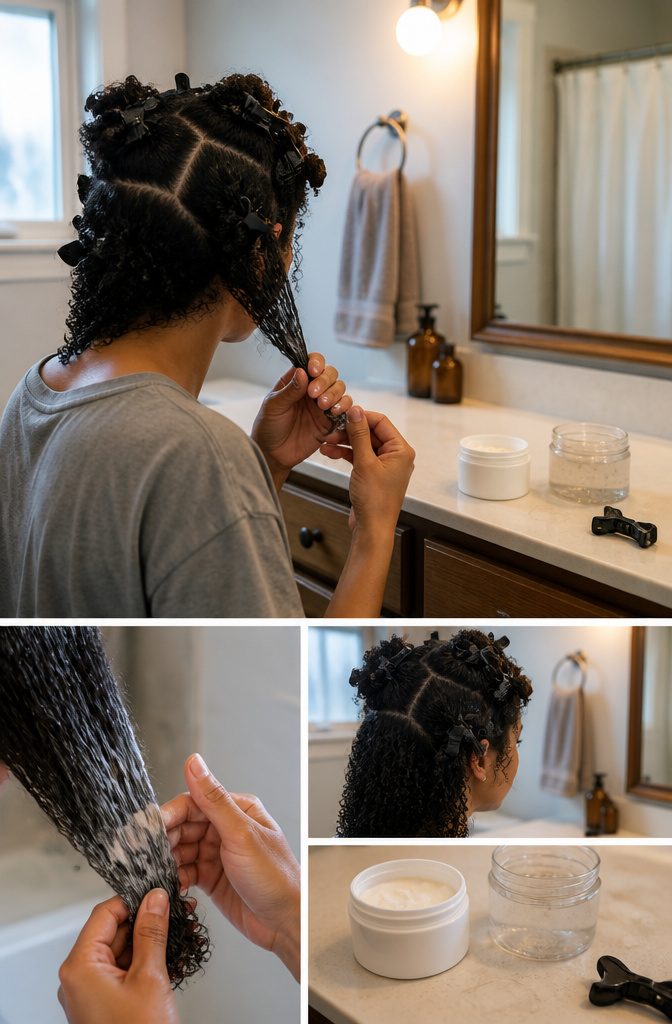
Split wet or damp hair into 6 to 8 sections, closer to 8 for thicker hair, so no patch gets skipped.
Work through one section at a time with a leave-in or cream: a dime-size amount for short hair, a quarter-size for long. Take more if your curls are thick.
For clumping, I’d layer gel over lotion. The lotion gives a soft hold, and the gel on top pulls curls into groups, calms frizz and adds shine.
A curl definer fits in the middle, and a flaxseed product goes last for light hold, mostly on the outer layers.
No product order is universal, so shuffle the layers until your curls respond. Stop adding hold once hair feels stiff or crunchy.
5. Shape the Curls
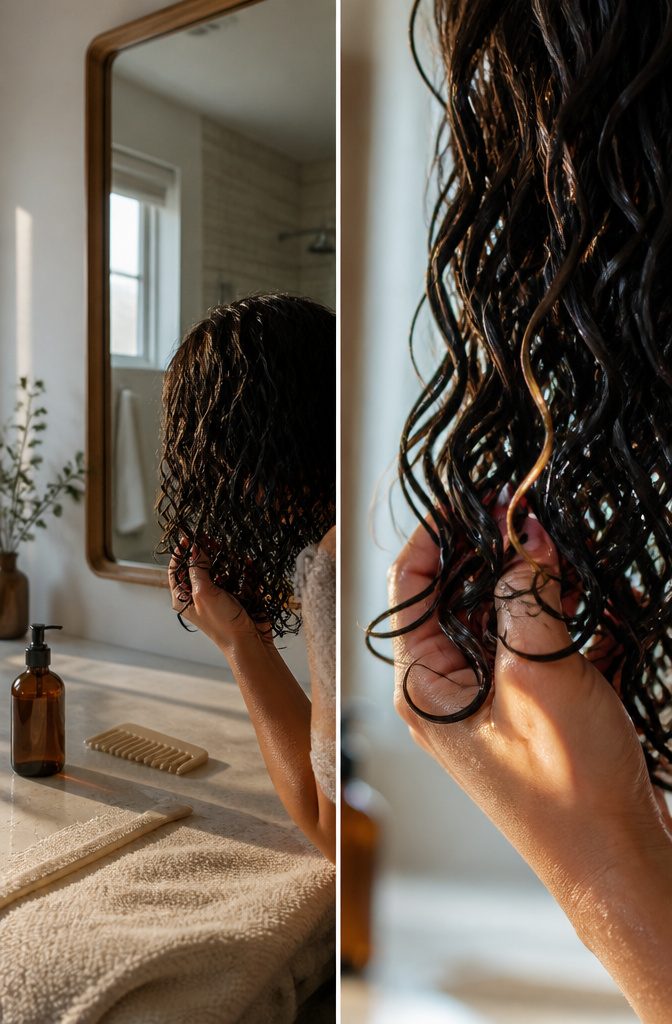
Section size sets curl size: small sections give tighter curls, larger ones looser. For ringlets, take pieces between 0.5 and 3 inches wide and coil each around a finger, following its natural curl.
Coiling is slow, so I’d save it for face-framing pieces. Raking and scrunching are the fast methods: feed product through with your fingers, squeeze, then scrunch upward until the dripping stops.
Praying hands and squish to condish spread product evenly and get curls clumping. Pinching the root while brushing diagonally builds bigger clumps.
Shingling and two-strand twists take longest and give the most definition. After two pumps of serum, a wide-tooth comb smooths a section before you shape it.
No firm rule matches a method to a hair type, so I’d start with rake and scrunch and add one technique per wash.
6. Dry Without Touching
Air-drying leaves the least frizz, so it wins whenever the morning allows it.
If it doesn’t, let the curls air-dry for roughly 20–30 minutes first, then finish with a diffuser on a low or cool setting, with heat protectant already in the hair.
A diffuser spreads the airflow evenly, so the strands don’t get flattened.
Hover diffusing keeps the nozzle moving around the curls without touching them. Pixie diffusing rests each section of hair on the diffuser head and holds it there.
Whatever the method, keep your hands out of your hair until it is completely dry.
Touching wet curls ruffles the cuticle and brings frizz. If one curl needs fixing, wet it slightly and reset it.
7. Protect the Definition

Curls lose their shape through friction and tension overnight, so the finish matters as much as the wash.
- Once the hair is completely dry, smooth in a second, small layer of serum for softness and frizz control.
- Swap a cotton pillowcase for silk or satin. The slicker surface means less friction, so less frizz and damage.
- Pineapple the curls: gather them on top of your head with a silk or satin scrunchie. Keep it loose, because a tight band brings tension and breakage.
- Add a bonnet or scarf if you shift a lot in your sleep. It covers the hair and blocks rubbing.
- Mist on a light moisturizing spray or revitalizer before bed.
My pick for most people is the pillowcase plus a loose pineapple; the bonnet is extra insurance. The full routine runs about once a week, on wash day, and these habits carry the definition between washes.
Why Moisture Drives Definition
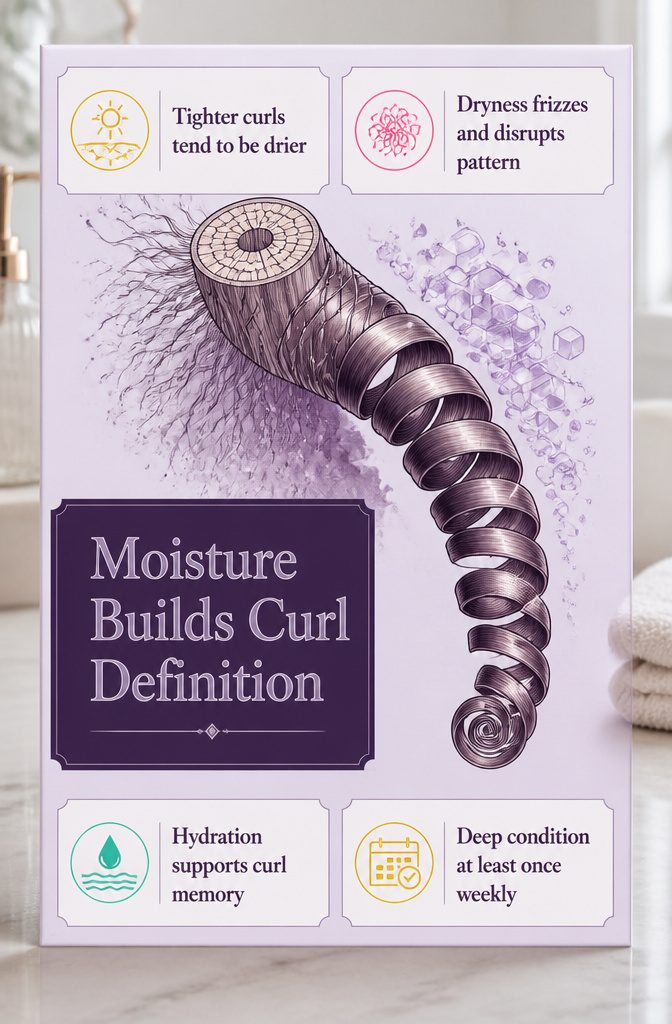
Natural oils take longer to travel down a curly strand, so the tighter the curl, the drier the hair tends to be.
Dry hair frizzes and loses its pattern, which is why definition starts with water in the hair, not with the gel on top.
Curl memory, a curl’s ability to return to its shape, depends on texture, hydration and hair health.
Damaged hair loses keratin, and that weakens both its structure and its memory. Hydrated, healthy hair holds a pattern far better, and you can see it: the curls reflect more light, look shinier and feel softer.
I’d put conditioning on the calendar and leave it there: deep condition at least once a week. Skip it, and no styling product will make up the difference.
Products and Their Jobs
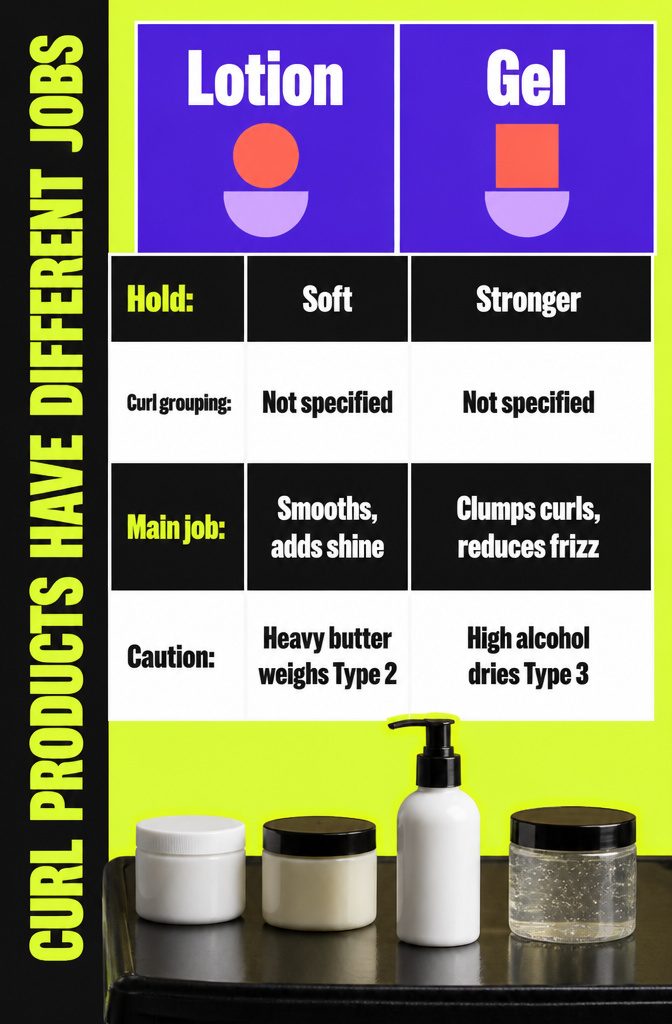
Layering gel over lotion gives the most definition: the lotion sets a soft hold, and the gel on top clumps curls harder while cutting frizz and adding shine. Cream and leave-in cover moisture.
| Product | Main job | Hold |
|---|---|---|
| Leave-in conditioner | Hydrates | n/a |
| Curl cream | Moisturizes, controls frizz | Soft |
| Lotion | Smooths, adds shine | Soft |
| Gel | Clumps curls, reduces frizz | Stronger |
Ingredients shift by curl type:
- Type 2: aloe vera and a light oil like argan or jojoba.
- Type 3: shea butter, coconut oil and glycerin.
- Type 4: mango butter, castor oil and honey.
Skip heavy butter-based formulas on Type 2 and high-alcohol products on Type 3. The first weighs waves down, and the second works against the moisture those curls need.
Handle Curls Gently
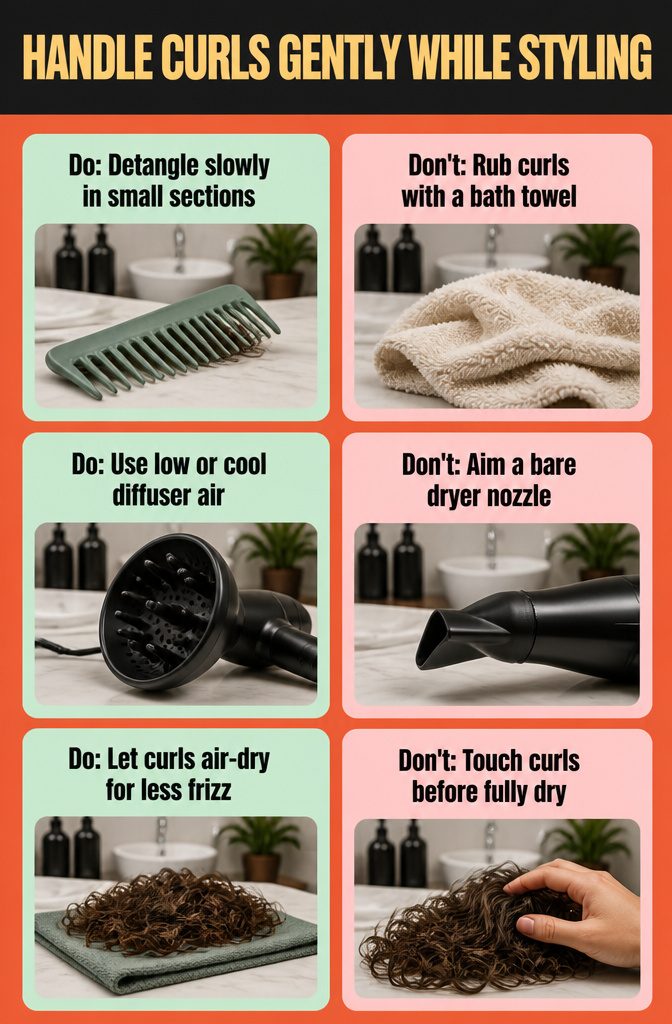
Friction roughs up the cuticle, and that shows up as frizz, damage and breakage, so each habit below is about cutting it down.
- Do work through knots slowly, one small piece at a time. Yanking a brush through a tangle snaps strands.
- Don’t rub with a regular bath towel. Terry cloth is made of tiny loops that catch on curls, so I’d skip it for a t-shirt, paper towels or a microfiber towel.
- Do keep heat low. Air-drying gives the least frizz. If you’re short on time, use a diffuser on low or cool air with a heat protectant.
- Don’t point a bare dryer nozzle at your curls. A diffuser spreads the airflow gently, and a nozzle doesn’t.
- Don’t touch your hair while it dries. Handling curls before they’re completely dry ruffles the cuticle and breaks up the definition you just built.
Frequently Asked Questions
How do you get curly hair defined, and what order should the routine go in?
Wash with a sulfate-free shampoo and condition, detangle with a wide-tooth comb while the hair is wet, then squeeze out water with a cotton T-shirt instead of a terry towel.
Next, apply lotion or leave-in and gel in 6–8 sections, shape with rake and scrunch, and let the hair dry without touching it.
Moisture drives the result, so deep condition at least once a week. A silk or satin pillowcase at night helps the definition last between washes.
What does it mean when curls are defined?
Defined curls hold a clear pattern and clump into distinct groups instead of puffing out into frizz.
They also look shinier and feel smoother. Hydration is what keeps that pattern in place, since dry hair frizzes and loses its shape.
What is curl cream and how does it work?
Curl cream is a styling product that moisturizes curls, controls frizz and gives a soft hold.
It smooths the outer layer of the strand, so curls look neater and shinier without the stiffness a gel can leave. For stronger definition, layer a gel over it.